Metro 2033: 4A Engine impresses
Digital Foundry pulls it apart.

In a market dominated by Unreal Engine 3, any kind of new cutting-edge technology is instantly of interest to Digital Foundry. The 4A spec sheet we received from THQ contains all kinds of wonderful - as you might expect from the people also responsible for the technological underpinnings of the S.T.A.L.K.E.R. X-Ray engine.
You'll find the complete spec at the foot of this blog entry and it makes for overwhelming reading. Indeed, you might be forgiven for thinking it's more of a wish-list than a complete, fully-featured engine, but the preview Xbox 360 code sitting inside the DF test kit suggests otherwise. Here are a few teaser shots taken from our captures:
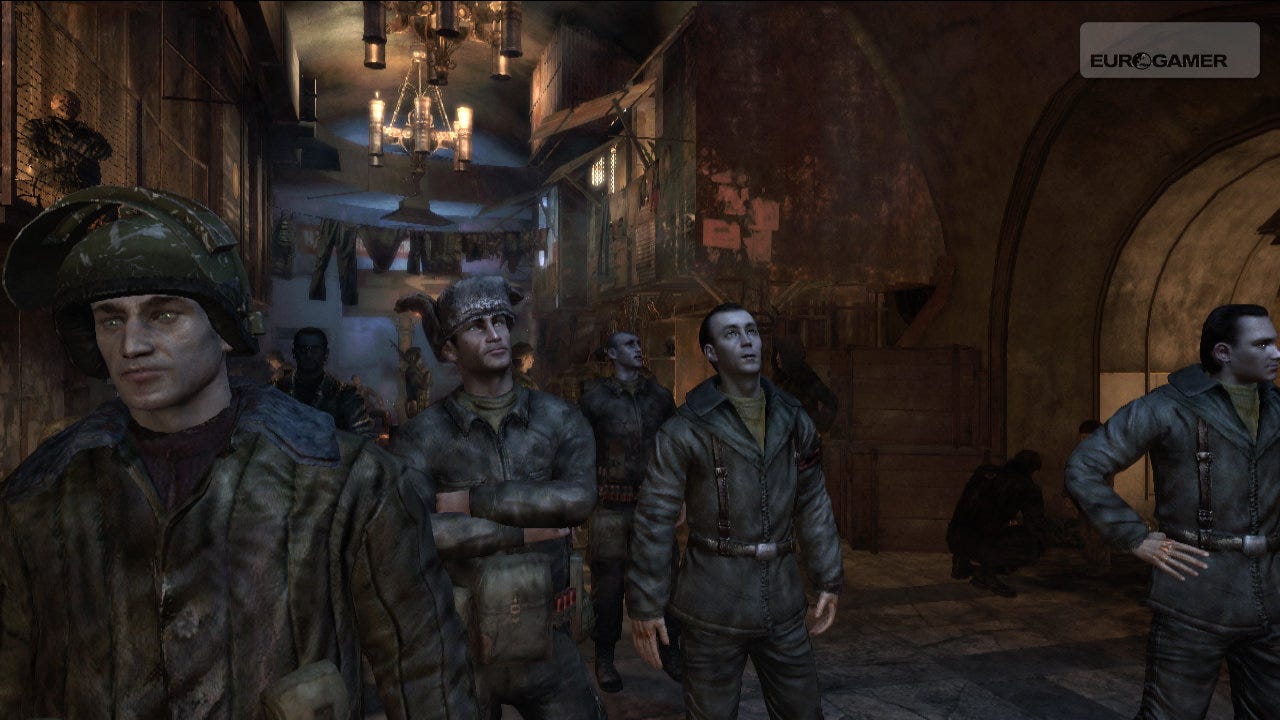
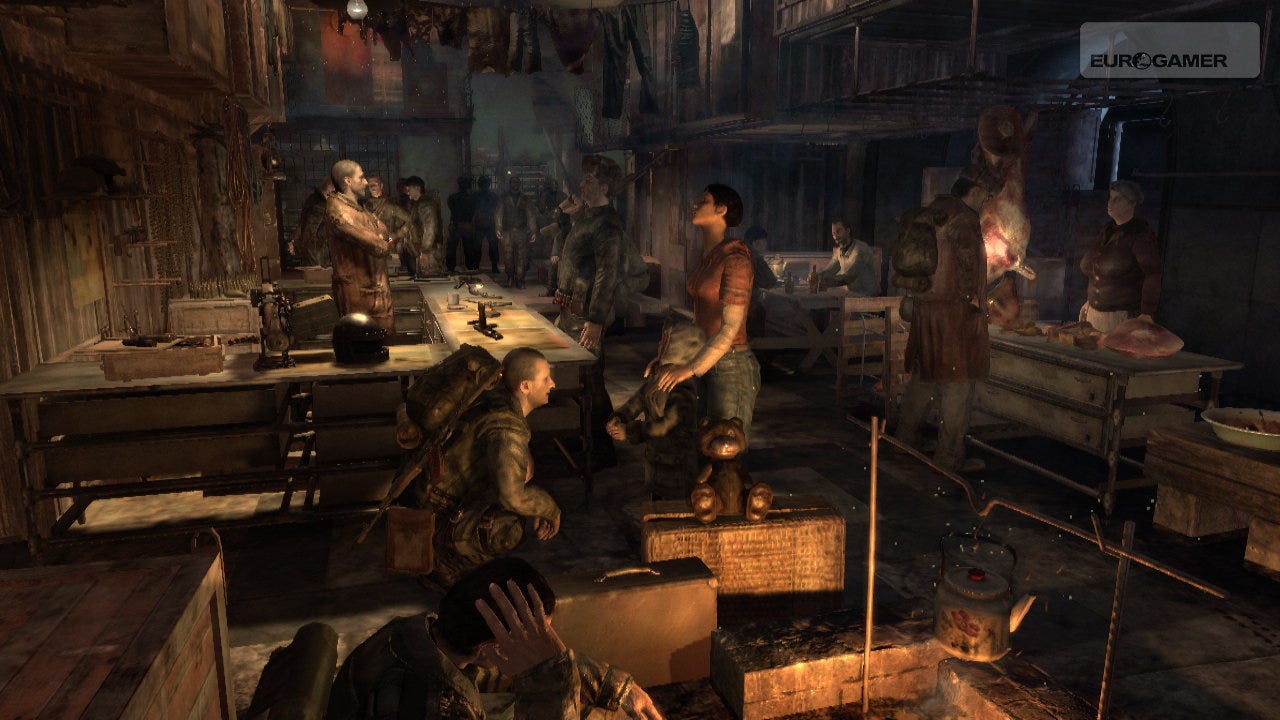
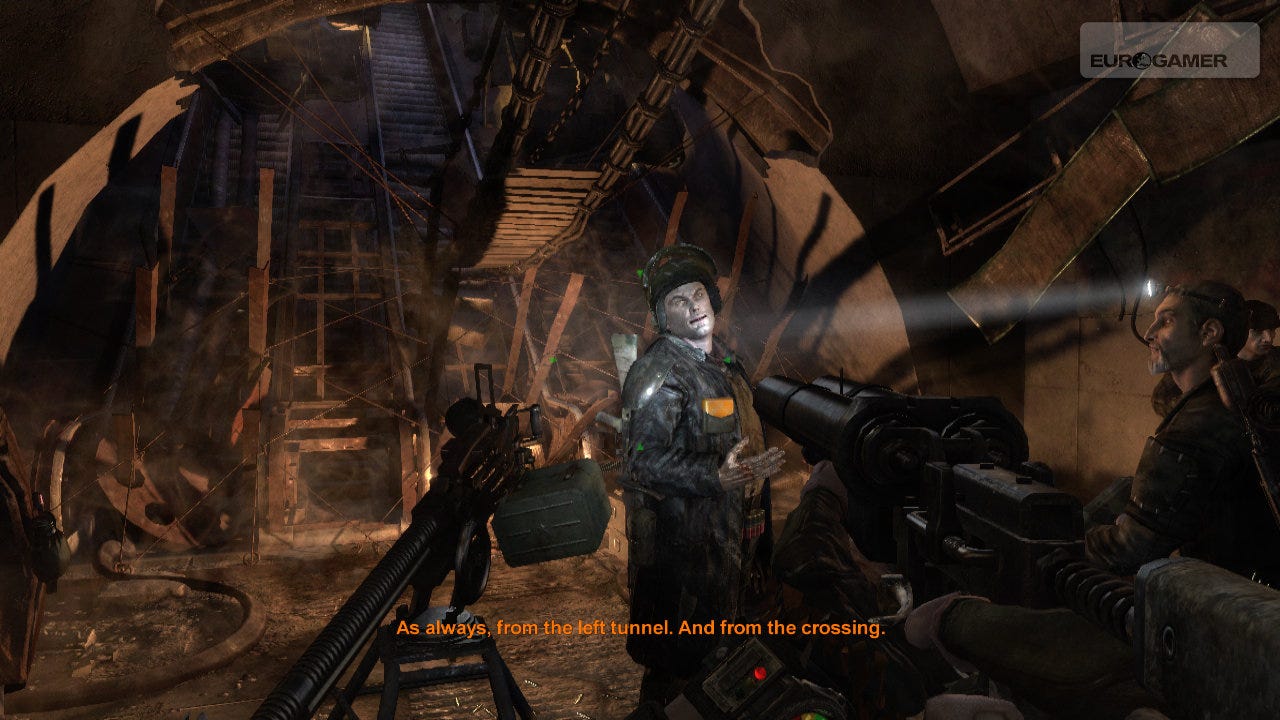
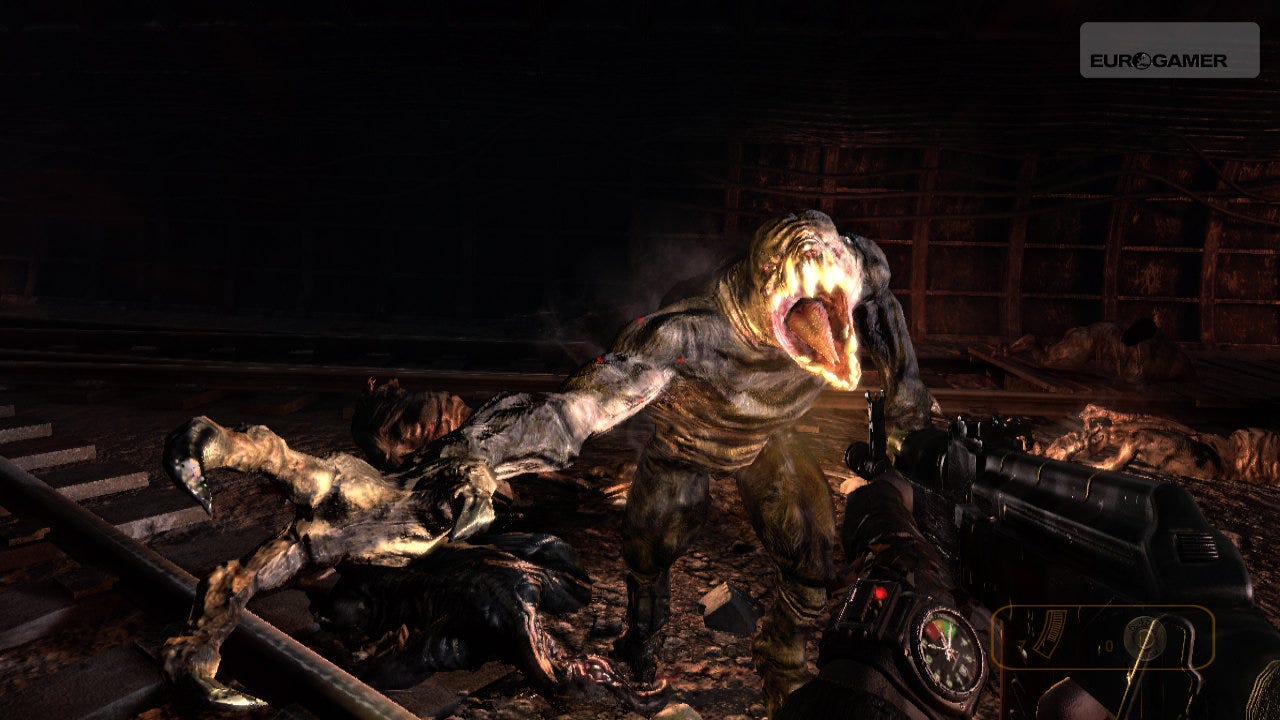
Tomorrow, Digital Foundry will be taking a look at the brand new engine technology and talking in-depth with the firm's chief technical officer, Oles Shishkovtsov. Find out about the genesis of the engine, the performance potential of the tech on Xbox 360, the plans 4A has for DirectX 11 on PC, and hear what Shishkovtsov has to say in his assessment of Guerrilla Games' Killzone 2 engine.
In the meantime, to whet your appetite, here's the spec that inspired the story...
4A-Engine is a complete game development framework designed for Xbox 360®, PLAYSTATION®3 and DirectX9/DirectX10 - equipped PCs, providing the vast array of core technologies, content creation tools, and support infrastructure.
[Editor's note: 4A recently announced support for the new APIs in DirectX 11 too, which will be supported in Metro 2033. Also be aware that while the 4A engine supports PS3, Metro 2033 will launch just on 360 and PC.]
Rendering
Using innovative visualisation technology, based on human visual system (HVS) perception and response.
- The gamma-correct, linear colour space renderer
- High dynamic range rendering (HDR) Using floating-point buffers, allowing for tone mapping, exposure adaption, and blue shift, for camera/eye perceptual rendering
- Advanced deferred shading - allows hundreds of lights in frame, in huge, complex scenes
- All lighting is fully dynamic (including sun and skies), ability to use light-shaders, with dozens of special effects
- Umbra and penumbra - Correct soft shadows, including shadows correctly curved on bumped surface. Shadows from semi-transparent objects like particles.
- Weather and day/night model, including light scattering model and god-rays
- Volumetric fogging and lighting, even in animated, non-constant density media
- Global illumination effects and real-time reflective lights
- Parallax occlusion maps and real (geometric) displacement mapping
- Hierarchical per-pixel occlusion culling
- Real-time colour correction, film grain and noise, correct depth of field
- Velocity preserving motion-blur on a scene with millions of polygons and complex shading detail (including object blur)
- Deferred reflections - allows a lot of planar real time reflections in a single frame, like water, glass, etc.
- Ambient occlusion calculated on both the global scale (pre-calculated) and in real-time in screen space (SSAO)
- In addition to standard MSAA, the engine features analytical anti-aliasing (AAA) and "deferred super-sampling" modes which have much lower impact on frame-rate, while correctly ant-ialiasing all surfaces and not just edges
- Renderer is highly multi-threaded for multiple CPU cores.
- Plus: per-pixel lighting, bumpy reflections and refractions, animated and detail textures, shiny surfaces, cosmetic damage using albedo and bump blending, soft particles, etc.
Physics System
Powered by nVidia PhysX technology, can utilise multiple CPU cores, AGEIA PhysX hardware, or nVidia GPU hardware.
- Tightly integrated into the content pipeline and the game itself, including physical materials on all surfaces, physically driven sound, physically driven animations
- Rigid body and multi-jointed constructions. Breakable fences, walls , sheds and other objects. Thousands of different physical entities simulated per frame.
- Cloth simulation, water physics (including cross-interactions)
- Destruction and fracturing, physically based puzzles
- Soft body physics on selected special game entities
- On hardware-accelerated PhysX platforms engine implements full physically correct behaviour of particles such as smoke, debris, etc.
Audio
Multi-threaded high dynamic range Audio system with constant memory usage and data-driven design
- 3D sound positioning, spatialisation and attenuation
- Sound path tracing and transfer approximation for correct occlusion and obstruction perceiving.
- Reverb, low-pass/high-pass filtering, pitch shifting - all auto-calculated based on sound-path and adjustable by multi-layer environment zones, scripting or programmatically
- Dynamically reconstructing audio graphs
- OGG-vorbis compressed with adjustable quality, multi-threaded decompression
AI and Gameplay
- Deep story-driven experience, dynamic and remarkable missions
- Different gameplay styles stealth/brutal, different combat settings
- Group behaviour (including support for information sharing and creating dynamic groups of agents that act together)
- Designer-friendly visual scripting system, enables designers to script levels and control advanced AI behaviours using the Flow-Graph visual scripting system, placing most AI gameplay control in their hands.
- Efficient pathfinding for dynamic environment
- Advanced 3D topology dynamic analysis
- Virtual vision, hearing, "smelling" - realistic, believable and time and memory efficient implementation enables characters to sense objects in a natural way, depending on the object velocity, luminocity, etc.
- Multi-threaded Animation system controlled via visual scripting and flow graph
Streaming Technology
-
Engine streaming optimised for DVD, including access-based asset packaging and pre-fetching
Requests reordering for seek time optimization
All major resources can be streamed, including meshes, textures, sounds, animation data etc.
All assets can be compressed and decompressed in multiple threads.
[Editor's note: CPU cores/threads mentioned usually means both normal CPUs and Synergetic Processing Units (SPU).]