This Great Fantasy
Akitoshi Kawazu on producing FF XII.
The many surprising changes to the Final Fantasy series which Square Enix introduces with Final Fantasy XII are a little less surprising when you look at the pedigree of those involved in creating the game. The original man at the helm of the project was Yasumi Matsuno, creator of Ogre Battle, Final Fantasy Tactics and Vagrant Story; having never directed a "number series" Final Fantasy title before, he was given the roles of both director and producer on XII, and immediately set about the creation of a game which would bring to life the world of Ivalice (from FFT and Vagrant Story) and redefine many core things about the series as a whole.
Matsuno departed midway through the development of the game - reportedly due to ill health, although he subsequently left Square Enix and is now rumoured to be working on a Wii title for an independent developer. He was replaced as producer not by a Final Fantasy veteran, but by Akitoshi Kawazu, whose last work on Final Fantasy was when he directed Final Fantasy II on the NES. Since then, Kawazu has worked as the series director on the SaGa games - and when he was parachuted in to oversee the continuing development of Final Fantasy XII, he therefore had little inclination to try and drag Matsuno's changes back to the series' roots.
"To begin with, Matsuno-san and I are very much both game creators - to step in halfway through a project that someone else has started and expect to be able to finish that in the exact same way that they had planned, is not something that is necessarily completely realistic," he explained when we met him in London last week.
"But then, I wasn't necessarily doing the same thing that Matsuno-san had been doing up to that point. My primary goal at the time was to see the project through to completion, and to give encouragement and support to all of the members of the staff that were still there."
However, the question many fans of Matsuno's previous games - all of which were cult hits in the West - will want answered is whether or not the final product is the game Matsuno himself would have made, had he remained on the project.
Kawazu thinks for a moment. "No," he responds, "I don't think that you can say that. Of course, the directors that were there and took over once he was gone, Ito-san and Minagawa-san, certainly they had worked with Matsuno-san before and they were very much familiar with what his original plans for the game were. But still, ultimately, they were making decisions, and it's going to end up in a slightly different place than had Matsuno-san stayed with the project to the end."
Those Who Fight Further
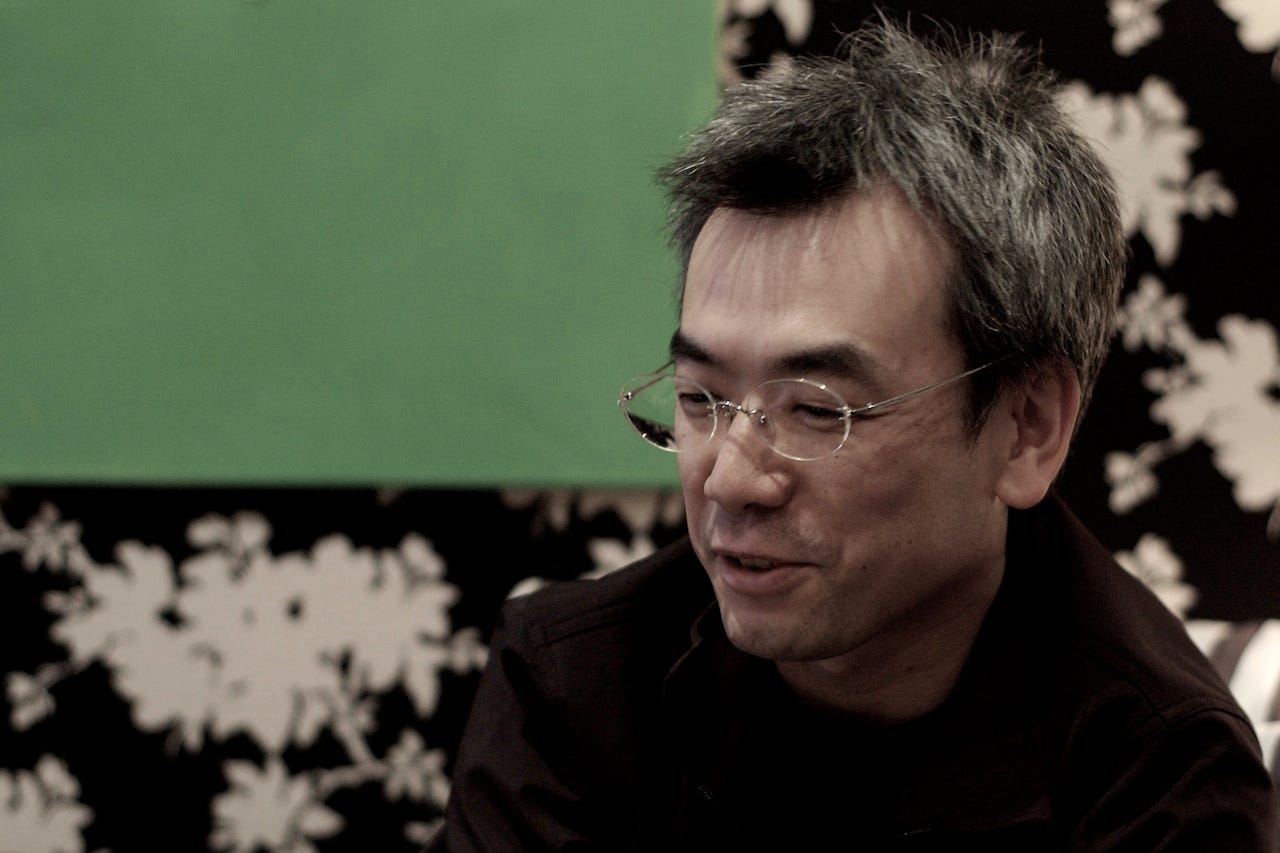
Akitoshi Kawazu.
Looking then to the primary changes that Matsuno, and latterly Kawazu, introduced to the game, the most blindingly obvious is the new battle system - which does away with turn-based mechanics and random encounters, both of which have been staples of Final Fantasy since the very first game on the NES. Why did the team choose to make such a major change - and why now?
"The design concept of the game was to have the player very much be exploring and walking around the world itself," Kawazu explains. "The decision to move to a system where the monsters were also already present in the world, in the same way that NPCs and towns were, and then the player would walk around among them in a similar fashion, made the switch to a real-time system a very natural one."
The battle system in the game is complemented by the License Board, which is a brand new system of character development that offers far more customisation and player control than other Final Fantasy games have granted in the past. Although in some respects it's an evolution of Final Fantasy X' Sphere Grid, in other ways it's a completely new system - so why make such a dramatic change to the well-liked Sphere Grid?
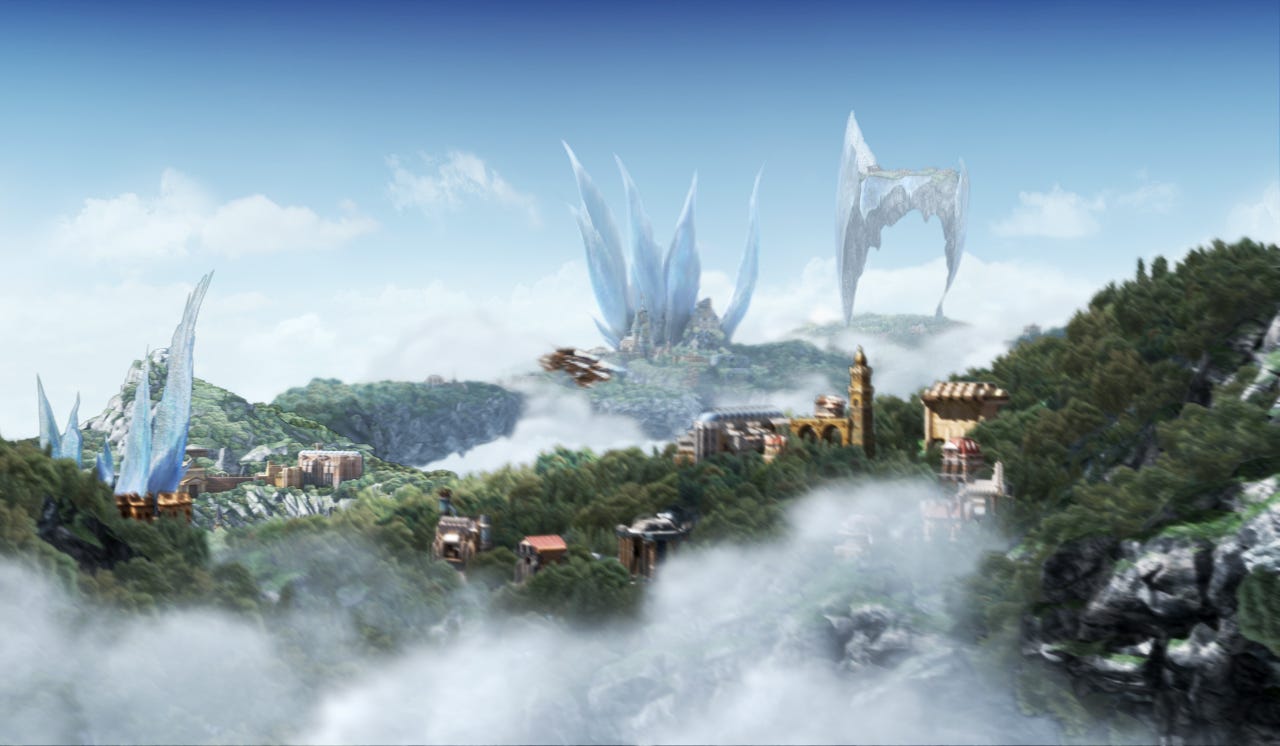
"From the very early stages of the game, there was a plan to make a board-style development system, but the road that led to the system you see in the game was a very long one," says Kawazu. "It was developed looking at the other aspects of the character development and battle system in general."
"If you look at the sphere grid from FFX, the roles that the characters are going to play are already very much pre-determined by the starting positions on the board. The battle director, Ito-san, when he was making FFXII's license board, his design philosophy was very much to give players the freedom to make characters the way that they want to."
"That is, of course, a different design perspective from the sphere system in FFX," Kawazu continues. "So, for example, if you want to have Balthier focus on healing and Fran focus on dealing your damage, or vice versa, you're free to do that. If you want to have Penelo wield massive hammers and clobber the enemy, you can do that too. That's largely Ito-san's own design philosophy showing through in the game."
The Skies Above
Having created the world of Ivalice in Final Fantasy Tactics and Vagrant Story, Matsuno also chose to set Final Fantasy XII - a much more detailed and involved tale - in that universe. However, previous Final Fantasy games have always invented new worlds in which to tell their stories - so didn't the team find it restrictive to be working in a world with which some players would already be familiar?
"I don't think that you could really say it was restricting," Kawazu responds. :Although it is in the same world that titles like Final Fantasy Tactics and Vagrant Story took place in, it is somewhat different from those worlds - and as we were making Final Fantasy XII, we took liberties with it. So for example, you'll see summon creatures that are different, such as Exodus from FFV, and things like that."
He pauses for a second. "As we were going along, of course, we used it as a basis," he concludes. "But we didn't allow it to restrict the creative license."
Building Ivalice, while it was informed by previous games to be set in the world, involved drawing inspiration from many sources. While Final Fantasy X was largely influenced by designs and culture from Okinawa and nearby Pacific islands, for Final Fantasy XII, the designers looked further afield.
"The art directors on this game, like Minaba-san and Yoshida-san - unlike FFX, they wanted to make a very broad game with a lot of different cultures present in it," Kawazu says. "Although there are certain specific regions in the real world that are used for inspiration, for example Istanbul in Turkey - that's one source they drew on for a lot of their stuff - they really wanted every region and every kingdom in it to have its very own unique feel."
Another element of the game which draws on a rather more international set of influences than previously is the voice acting - with the conventional all-American cast being replaced with one which boasts many English and Scottish actors in key roles. While detractors will point out that several of the Evil Empire type characters are English - a common theme in US films - several of the heroes also have English accents, and the spread of different regional accents in the game is massive.
"Basically, that came about as a result of the localisation staff's desire to put in very specific accents and dialects for different regions in the game," Kawazu says. "From our perspective in the development team, since, as I mentioned earlier, from an artistic and design standpoint we really wanted to have a lot of different cultures present in the world of the game, we felt that this was actually a really good match for the game that we had created."
Winning the Rainbow

Speaking of localisation, there's a strong feeling throughout the game that Final Fantasy XII marks a return to an almost European martial theme; one which, perhaps, will be more accessible to many gamers in the West than the Gaia-philosophy of previous games. Is this a conscious decision, given the growing success of the series in the West? Does Square Enix now take care to make games for the world, rather than just for Japan?
Not according to Kawazu - who claims that the firm had never really made games just for Japan in the first place. "When we're making the game we really don't think in terms of Japanese players, American players, European players," he says. "I think if you stop and start looking at features, and saying, this will work in Japan, this won't work in America, this will work in America but won't work in Japan - then it's very difficult to make anything at that point."
"Ultimately, we're making all of our decisions based on what we think will make for the best game," he concludes. "I think this is something that's true not just in gaming, but in general when you're creating something - you have to make something that first and foremost, you think is appealing and is going to have an interest to people. In that regard, we really don't think about what particular market group we're developing something for."

One market group that is feeling hard done by regarding Final Fantasy XII, however, is Europe - where the game won't be seen until early next year, almost twelve months after the Japanese launch. This has the distinct feeling of being back to the Bad Old Days of incredibly slow localisation - so why the hold up, and is this going to be a recurring problem for Square Enix?
"Naturally, in a perfect world, we would also love to have the game released simultaneously worldwide," Kawazu concedes. "Realistically speaking, there are a lot of reasons that make that impractical. One of those is of course the sheer volume of the content in the game - it's very huge. Another is that the Japanese development team working on the Japanese game are the same people working on all of the localised versions as well, and so, on the one hand, up until the point when the Japanese version is released, they really want to focus on getting that version to have every feature that they want in it and to be as perfect as possible. Up until that point it's very difficult to start working or thinking too much about the localisation side of things."
"For them, too, though, it's frustrating to have to work on it for another year after the launch of the Japanese version - there's a real feeling of, at what point will this project end! There is very much a movement within the company to try and shorten the time it takes to do that, but there are a lot of practical things that make it difficult and hopefully in the future it can be made a little bit shorter."
Final Fantasy XII is out in North America this week, but we won't see it in Europe until early 2007. In the meanwhile, you can whet your appetite with our review of the US version of the game.
You may also like...
-
Happy Action Theater Review
-
ModNation Racers: Road Trip Review
-
Sony confirms PS Vita 1st Party digital only game prices
-
Call of Duty: Black Ops has best game ending ever, says Guinness World Records
-
Mass Effect 3 Demo: The First 20 Minutes
-
Why Devs Owe You Nothing
-
Tim Schafer: publishers aren't evil
-
Halo 4 Master Chief action figure flaunts new suit design
-
DICE working on multiple Battlefield 3 fixes
-
EGTV: Eurogamer playtests PlayStation Vita
-
App of the Day: Monkey Bump
-
Face-Off: Final Fantasy 13-2
-
Apple begins Foxconn factories inspections
-
Sony's $50m Vita marketing campaign targets PS3 owners
-
UK Top 40: Kingdoms of Amalur: Reckoning beats Darkness 2
-
Fallout: New Vegas dev asks fans what game they would like it to Kickstart
-
Retrospective: Star Wars Episode I Racer
-
Digital Foundry: PS3 Skyrim Lag Fixed?
-
Metal Gear Solid 3D demo on eShop this week
-
Activision: games are relationships, "brands in people's lives"
-
Metal Gear Solid 5 expected between April 2013 and May 2014
-
Making FIFA Street in the FIFA engine's image
-
FIFA Street footage pits France vs. Germany
-
Ridge Racer Unbounded delayed by four weeks
-
Gotham City Impostors Review


Comments (9) Latest comment 5 years ago
Comments threads automatically close after 30 days, but please feel free to continue chatting on the forum!
Comment below viewing threshold Show
/prays really REALLY hard.
Comment below viewing threshold Show
taken from the man himself, i think PS3 can read upto 200GB Blu-ray discs max, so personally they have no excuse on the PS3.
Comment below viewing threshold Show
200 GB Blu-ray discs are highly experimental and I doubt very much that even a firmware upgrade would allow the PS3 to handle these in the future as the laser probably isnīt cut out to handle them. Iīm hoping it can read 50 GB discs though but these are very new to the market so who knows.
Comment below viewing threshold Show
I get it! I get jokes! /Taps boss music on desk
He says "very much" too often. Other than that, it was a good read
I don't think simultaneous launches will ever happen with games with as much localized content as FF, unless they withhold the release in Japan for a while. Which wouldn't make much sense. I guess simultaneous US/UK launches will be possible though in the next generation, since the refresh rates will be the same (I think?).
Comment below viewing threshold Show