Homeworld 2 Review
Rob investigates another 'world.
Version tested: PC
Remember the start of Star Wars? The chances are that you, like me, are too young to remember it from the cinema the first time around (and if not, sorry for making you feel old just there... granddad), but regardless; there's something inescapably cool and stirring about the moment when the bottom of the Star Destroyer creeps into view at the top of the screen, dwarfing Princess Leia's rubbish little ship and etching into the minds of a generation that if you're in deep space, being pursued by an outsized Dairylea triangle is a bad thing. More than all of NASA's best efforts, it's this scene in Star Wars that we have to thank for bringing a very important fact to the attention of creative types everywhere - namely the fact that ships knocking the crud out of each other in outer space looks mighty fine.
One bunch of creative types upon whom this message wasn't lost is Relic, the enterprising chaps who turned around several years ago and sprang upon us a game called Homeworld. Taking the basics of PC real-time strategy and transposing them into a fully 3D space environment, Homeworld was remarkable for achieving a system that allowed for 3D strategic thinking without becoming excessively complicated, and striking a superb balance between the realism of space combat and the realities of what it takes to make a fun strategy game - and it helped that the whole affair was stunningly gorgeous to look at, with a decent graphics engine, nicely designed ships and dramatic combat scenes.
A Space Odyssey
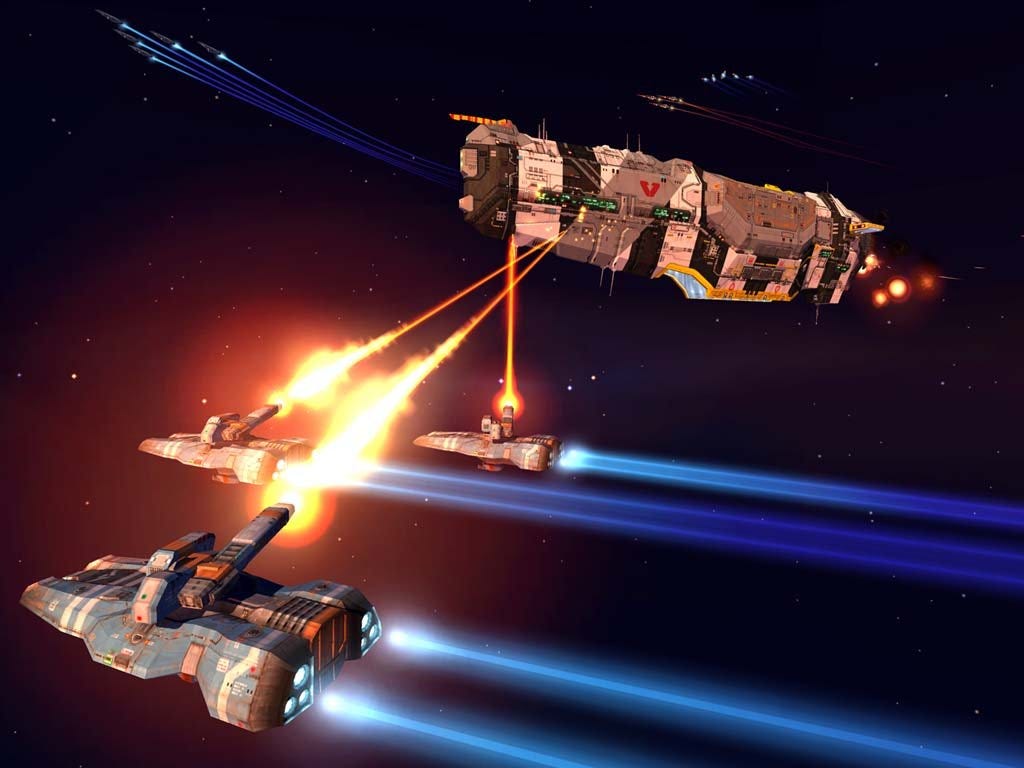
A few years down the line, and surprisingly enough, 3D space combat strategy titles are still every bit as thin on the ground as they were when Homeworld first arrived. In general, you'd expect a plethora of clones to follow in the footsteps of something as clever as Homeworld, but in fact the official sequel arrives on a market where the only real competition is its elder sibling - and the only real move forward for the genre (or sub-genre, or whatever you want to call it) is Cataclysm, a mission pack for Homeworld which introduced some nifty time control systems.
Given this situation, the chaps at Relic didn't really need to pour innovation into Homeworld 2 in the way that they did with the original. A lick of digital paint, a new plotline and some tweaks to the interface, and off you go - sequel by numbers, and just about enough to keep the devotees of the original game happy. This is pretty much par for the course with sequels, and we shouldn't really have expected much of a leap over the brilliance of Homeworld - but yet somehow it's hard to escape a crushing sense of disappointment when Homeworld 2 turns out to be exactly that, an almost direct clone of the first game with just enough touching up and modification to justify the sequel tag.
The story is a direct continuation of the first game, and charts what happens to the Hiigarans after they manage to find their home planet. Peace doesn't last long for the race (wouldn't be much of a game here if it did) and they're attacked by the warrior Vaygr race, forcing them to build a new mothership and get embroiled in yet another war. The story is solidly written and presented, and does have a real space opera feel to it - even if it does feel a touch contrived compared with the simple but emotive and beautifully narrated quest in the first game. Comparisons with the original title aside, however, the story is certainly interesting and it kept us going through the entire single-player campaign - which is saying something, given how keyboard-smashingly frustrating many of the missions in that campaign can be.
The Final Frontier
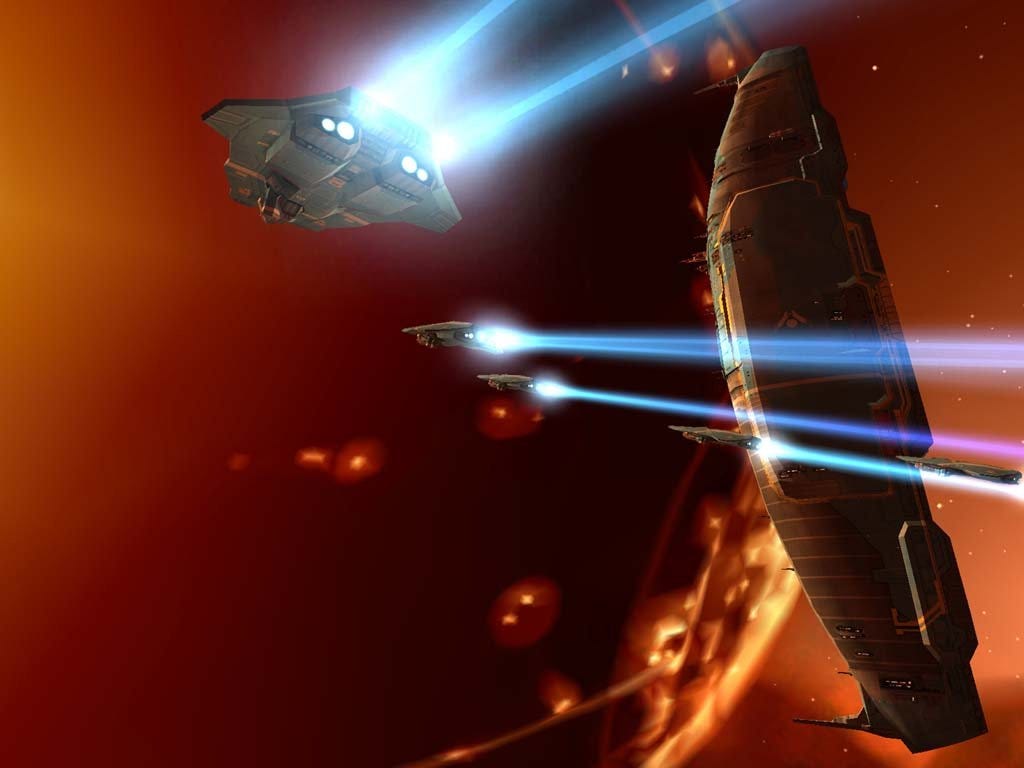
The interface to the game hasn't really changed significantly since the first title, although that's a good thing in our eyes. Homeworld's interface solved a basic problem regarding unit positioning and tracking in 3D space, and there was simply no need to reinvent the wheel for the second game, so anyone who got to grips with Homeworld will be right at, er, home. The remainder of the hugely stat-heavy interface comes in the form of panels which can thankfully be rolled away when not in use - although in order to navigate around quickly, you'll probably find it's best to keep a bewildering array of panels open on your "desktop". This does have the effect of obscuring the game's lovely graphics, sadly, and it's a good idea to run in a very high resolution if your system can cope with it, since this makes information management altogether more sensible. It's a bit of a shame that having come up with such an ingenious solution to the 3D movement issue, Relic were seemingly incapable of coming up with something as elegant and simple when it came to managing the massive wodges of information and controls the game seems to require.
It's not this interface which causes the frustration we referred to a moment ago, however. Although it can take some getting used to, the Homeworld 2 interface can certainly be learned, and once you're over the slightly steep learning curve and getting to grips with the keyboard shortcuts (many of which have changed from the original game, much to our annoyance) it's actually not a particularly difficult game to play in this respect. No, our frustration with the game arose entirely from the mission design, as each of the fifteen campaign missions seems to have been designed around the needs of the narrative rather than the needs of the gameplay - with the flow of strategy being constantly interrupted by scripted events, of which you generally get very little advance warning.
This can throw off even the most carefully thought out strategies, as your cunning plans for dealing with one massed group of enemies are foiled by the sudden appearance of a scripted event that turns everything on the map on its head. On one hand, you could argue that this means you have to plan for all manner of different contingencies. On the other hand, by about halfway through the campaign this has really, really started to grate, and it's the closest we've ever seen an RTS game get to the "quicksave and try again" mentality of some badly designed FPS games. Effectively the only way to beat many of the game's missions is to retry them with full knowledge of when and where scripted events will occur - hardly ideal for a strategy title.
No One Can Hear You Scream
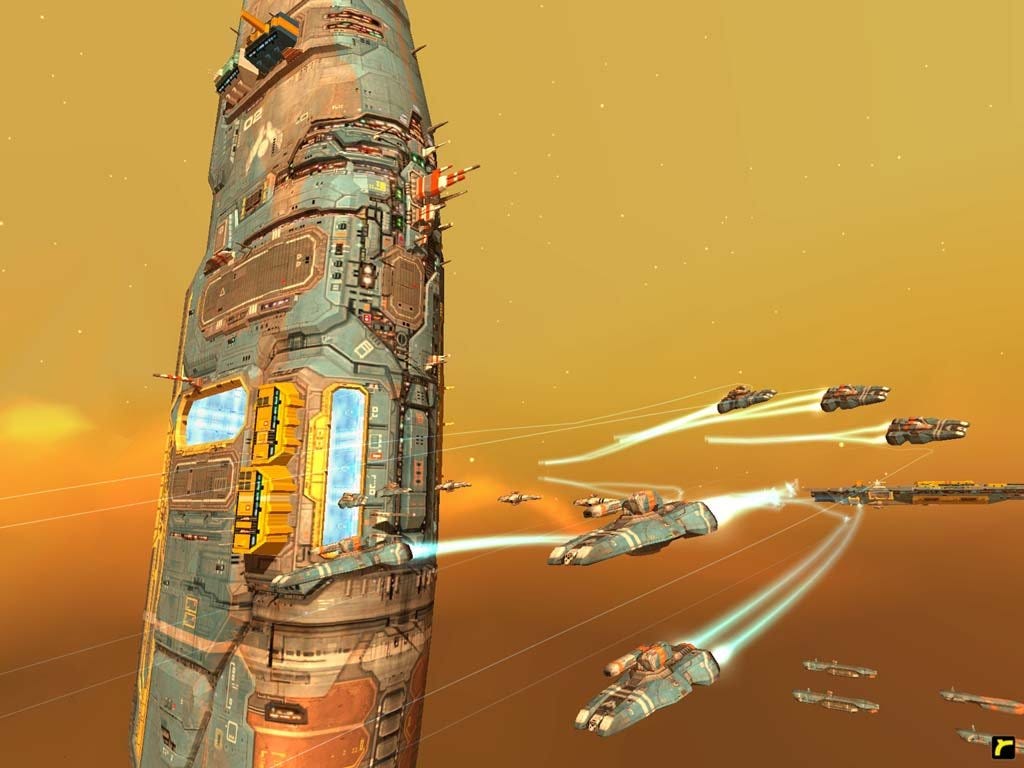
These flaws are annoying, but they're certainly not show-stoppers for the game - and it's worth bearing in mind that we're being very critical here since this is a title that sets itself up as a sequel to a truly superb game. Other aspects of the game almost go without saying - graphically, for example, it's absolutely stunning, with detailed ships, varied environments and great battle effects. Admittedly it's not quite up there with the likes of X2: The Threat, but it's an entirely different type of game and it's quite a spectacle to watch full-scale battles unfold in front of your eyes.
Other aspects of the game have also improved - such as the AI of your fleet, which has received a much-needed overhaul and is now far less likely than before to have you flinging your mouse across the room. The most basic change is that AI now seems to be aware of the simple rock-paper-scissors mechanism that underlies the combat in the game, and units intelligently select the targets that they're best equipped to deal with when they're left to their own devices - meaning that even if you're attacked by surprise (another damn scripted event, then), your idling fleet will engage the enemy in a fairly effective way without you having to micro-manage each wing or ship.
Of course, the game features extensive multiplayer options - and given the huge flaws with the single-player game, we were happy to note that multiplayer appears to be very much a case of "ain't broke, don't fix". Sadly, this does mean that playing Homeworld 2 in multiplayer isn't actually all that different from playing the original. The graphics are better, there are new units and new options to explore, etc, but this is very much an incremental upgrade rather than a complete overhaul. It's still a lot of fun to bash at on a LAN, but there's an inescapable sense of déjà vu about the whole affair.
Stardust Memories
Homeworld 2 is a good game. There's no doubt about that. It's extremely polished, very competently executed, and is based on an extremely well thought-out game design and some very clever interface decisions. The key problem is that just about all the good things about it are lifted straight from the original Homeworld, and there's really not a lot in the "enhancements" to this sequel which distinguish themselves above the first game. In some respects it's simply not as good as Homeworld; the single-player campaign in particular is a major disappointment, and although the graphics are very lovely to look at, they're certainly not as impressive for 2003 as Homeworld's were for 1999.
Taken on its own, Homeworld 2 is a game that deserves to be played, and it's certainly head and shoulders above the average PC strategy title. However, we can't simply assess the game on that basis. The fact of the matter is that Homeworld 2 is very disappointing; it's tall only because it stands on the shoulders of a giant, and while fans of the first game may be able to make do with what is effectively a second serving of the same game, we'd advise everyone else to go and track down a copy of the original game on budget instead. The law of diminishing returns has truly made its mark here.
6 / 10
You may also like...
-
Mass Effect 3 Demo: The First 20 Minutes
-
Face-Off: Final Fantasy 13-2
-
Why Devs Owe You Nothing
-
Retrospective: Star Wars Episode I Racer
-
Digital Foundry: PS3 Skyrim Lag Fixed?
-
Game of the Week: Catherine
-
Who Killed Rare?
-
Gotham City Impostors Review
-
App of the Day: Ascension: Chronicle of the Godslayer
-
Face-Off: The Darkness 2
-
Kingdoms of Amalur: Reckoning Review
-
The Darkness 2 Review
-
Ultimate Marvel vs. Capcom 3 Vita Review
-
Epic's Sweeney on graphics tech: "the limit really is in sight"
-
EA evaluating FIFA Street features for FIFA 13
-
Grand Slam Tennis 2 Review
-
App of the Day: Sir Benfro's Brilliant Balloon
-
One Piece: Unlimited Cruise SP Review
-
Catherine Review
-
Sony admits "dropping the ball" with Demon's Souls
-
King Arthur 2 Review
-
Mass Effect 3 FemShep trailer debuts
-
Skyrim patch 1.4 now live for Xbox 360
-
Metal Gear Solid: The "Lost" HD Remasters
-
Skyrim patch 1.4 performance tip: make a new manual save


Comments (28) Latest comment 8 years ago
Comments threads automatically close after 30 days, but please feel free to continue chatting on the forum!
Comment below viewing threshold Show
Wasn't too keen on HW, it had a novelty value that wore off very quickly for me (well, once I realised it really was just a typical RTS underneath the incredibly appealing setting and design, and I'm no good at RTS's).
I tried the demo of HW2, but it failed to immerse me.
Still adore the ship design though, I've always loved that 60's and 70's sci-fi book cover art style. I've still got all my old Harry Harrison novels
Comment below viewing threshold Show
That makes 8/10 for Halo seem generous...
(oh shut up me)
Good review, though, lots of valid criticism ... yeah replaying levels knowing the up and coming scripted events is rather like the quick-save-before-rounding-a-corner issue in FPSers. That was probably a mistake on the part of the original designers.
However, I still think the thing is a work of art...
...if only you could fly each individual ship and walk around their bridges...
Comment below viewing threshold Show
The graphics aren't that much better compared to HW1 when you boot it up for the first time, but the more I played it, the more I loved them, and I dare say it's the most visual stunning game I've played this year, and delivers an aesthetic experience hardly any other game can match.
Unit Ai is indeed very good, the game gets rid of nasty micro-management without giving you the feeling you're out of control. The main problem I had with the game was that the single player missions were stupidly scripted sometimes.
A very solid 8/10 imo.
Comment below viewing threshold Show
When I read the first positive sentences, "Homeworld 2 is a good game. There's no doubt about that. It's extremely ... ", I would only expect a poor score like 6/10, when the following arguments are sharp like a knife. But missing originality and innovation? Come on... to enhance gameplay elements, to polish and to add instead of using great innovations is a poor but common characteristic for the most games today. Think of Max Payne 2! I love it, but it couldn`t impress me as much as the first part.
I think, you aplied double standards in the case of Homeworld 2. Or why do you argue that "it's certainly head and shoulders above the average PC strategy title"?
It is really no top-title, no hit, but it is a really god RTS-game - 8/10 seems to be fair; maybe 7/10, when you really hate sequels.
Comment below viewing threshold Show
My gripe with the game is it's just too hard, a game where you have to learn where the "surprises" come from is just straightforward bad level design. 6/10 is unfortunately the right score for a much anticipated game.
Comment below viewing threshold Show
And Mission 12 is an absolute dog... spare me whoever wants to say OH MAN I BEAT THAT IN 10 MINUTES YOU MUST SUCK because it's a real problem. If you have a large fleet at the start of that mission the 'reactive balancing' kicks in and gives the Vaygr an absolutely unbeatable fleet of ships. I had 8 enemy battlecruisers and 12 enemy destroyers come at me, along with an absolute shitload of corvettes and fighters. The only way to progress is apparently to replay the previous mission and come into Mission 12 with a SMALL fleet so that it doesn't populate so many enemies. What a load of arse.
I was disappointed with this game, needlessly hard and frustrating when the original was so calm, atmospheric and restful to play.
Comment below viewing threshold Show
Depends how you look at it. I didn't review Max Payne 2, and this all goes back to the whole "a review is one person's opinion" thing. This person just happens to think that when a sequel to a well-received game is actually worse than that game, and seems to have made little effort to improve over it, that's a fairly major sin.
As it happens I'd rate Max Payne 2 over this, because it does improve over its predecessor in some ways at least. That said I'd never have given it 9/10 in a month of Sundays. 7/10 at best, for about four and a half hours of vaguely distracting entertainment and a sense that you've really done it all before. But like I said, I didn't review it
Comment below viewing threshold Show
Thank you for the fast statement. Max Payne 2 would have received 7/10? Okay: I have to retreat instantly from my reproach, that YOU have been inconsequent. When your axe of critic reaches every sequel in the same way, your arguments gain weight.
Just to emphasise: I really like the personal style of Eurogamer. And I like clear scores, which differ from IGN etc.
But anyway: Couldn`t the reader argue, that EUROGAMER is applying double standards, when he compares the different scores for sequels?
Comment below viewing threshold Show
Excellent review - it's about time somebody stop mindlessly giving praise for Relic for the game, and actually spot the design mistakes made in single player. Single player should be fun, not an exercise for frustration.
Having said that, I love this game, and play this regularly multiplayer with my mates. It's a blast in multiplayer
Comment below viewing threshold Show
This is one feature I truly looked for in many printed mags or gaming sites, and hardly ever found:
A second opinion. (congrats for Halo PC, btw
I mean, there is more than one person at Eurogamer that has an opinion on anticipated titles like Max Payne 2, but only one review is published. I would really like someone to add its line when the views differ. Like you did. Just now. Only not at the proper place nor time.
Comment below viewing threshold Show
it's about time somebody stop mindlessly giving praise for Relic for the game, and actually spot the design mistakes made in single player
I take it you don't read firingsquad, Chris?
Comment below viewing threshold Show
It's really a matter of time. When the Max Payne 2 review went up, I hadn't played the game enough to be able to write a second opinion with any confidence that I was being fair to the game. We only do second opinion pieces when two members of staff have genuinely played the game enough to review it - and given the amount of stuff that we have to review, this doesn't happen very often!
(That said I think it's going to happen again this afternoon. Stars must have aligned!)
Besides, the comments threads give you a second opinion! And a third and a fourth and a fifth and a sixth opinion...
Comment below viewing threshold Show
5/10 is average. Anything above that is, well, above average. Unlike many gaming websites, we've put quality control mechanisms in place when hiring staff to ensure that they can count all the way from one to ten
I take your point about the Star Trek RTS nonsense - but I wasn't even counting them, really. As far as I'm concerned the biggest competition for Homeworld 2 is, well, Homeworld - and it utterly fails to live up to the standards of that game.
Comment below viewing threshold Show
may i just add that it could have been two score: 9.5/10 for a player who hasn't played Homeworld 1 and a very justificated 6/10 for the others.
Comment below viewing threshold Show
By the way, for real time strategy reviews, the question of the balance of the game should come up more often in my opinion. Just like graphics takes and breaks a first person shooter, the balance of a rts lives and dies by its balance. Of course, in this case, the question doens't apply - since Homeworld 2 has a quite simple rock, paper, stone system.
Comment below viewing threshold Show
However, the amazing narration, atmospheric sound and inspiring visuals made it so you didn't really mind that. Plus, the 3D thing had never been done before and was indeed pulled off well for a first try.
So I'm really disappointed that relic couldn't push this further... they showed that they could do try out a new idea and pull it off. Not repeating that for Homeworld 2 shows they've lost their edge IMO.
By the way here's a question for people who've played it... every space game I know has a drawing-distance. Granted, there are technical limitations in play, but in space there is no atmosphere or fog (except maybe in those pretty, pretty, pretty Homeworld nebulas). Distant objects can still be represented by a simple, tiny sprite. This bugged me for example in Freelancer, where the jump gates would pop into view. If they had simply replaced distant gates with a quad, you would've had this awesome space-highway feel as you see a bunch of gates extending in front of you.
So does Homeworld 2 still suffer from this, or have they attempted to keep distant objects visible in some way?
Comment below viewing threshold Show
I too found it odd how you couldn't see your mothership, an 11 km tall banana ship, from any distance greater than 20km without fading into the fog. It was quite amusing towards the final missions where when I hypered into the next mission my line of frigates abreast stretched so far to the horizon that you had to jump the camera to the limit of the viewing distance (the last visible frigate) TWICE, in order to get to the end of my thin red line.
This is, however, no longer a problem in HW2. As long as you have that MASSIVE enemy cruiser formation on your sensor-net, then you can see them slowly rumbling towards your armada. I've even taken some brilliant screenshots (if I do say so myself
You really do get an excellent sense of scale (especially if you turn of the NLIPS (?) non-linear perspective scaling option), since the draw distance is pretty much infinite.
In the end, it's more of the same. Except that some of the missions are far too difficult, where you have to fight 5 to 1 odds, and the computer doesn't suffer from the same unit, as well as the fact that you have to go through with SHEER BRUTE FORCE! Missions 12 and 13 were especially painful, used about 50k of resources constantly rebuilding my losses on them. Definately not a stress-relief game, especially since the long calm-after-the-storm resourcing sessions have been snipped from the game (why isn't it even optional?).
At 1024*768 it runs surprisingly well on my ol' machine though (1ghz, 384mb SDRAM, Geforce 2 GTS 64mb), only slowing down during major battles or when there are lots o' misty nebulae/dust clouds and particles on screen.
Comment below viewing threshold Show
All in all v. enjoyable.
Anyone know if a HW:3 is planned? May have to try and pick up the earlier two.
There where only really two, poss three missions around the middle third that gave me headaches the rest was, wouldn't say easy, but not too much of a problem. Found the last couple of missions disapointinly easy though.
Need to practise in the 'skirmish' mode though as my mate wants to play me and I'm worried he'll kick my arse.
Anyone recommend any similar titles to look out for, or any HW:2 mods worth downloading?
Comment below viewing threshold Show
Haegemonia is another space RTS and is really cheap now - I haven't played it though. Fantastic graphics, good gameplay, but nothing spectacular as far as I remember the reviews.