DC Universe Online

SOE Austin's John Blakely.

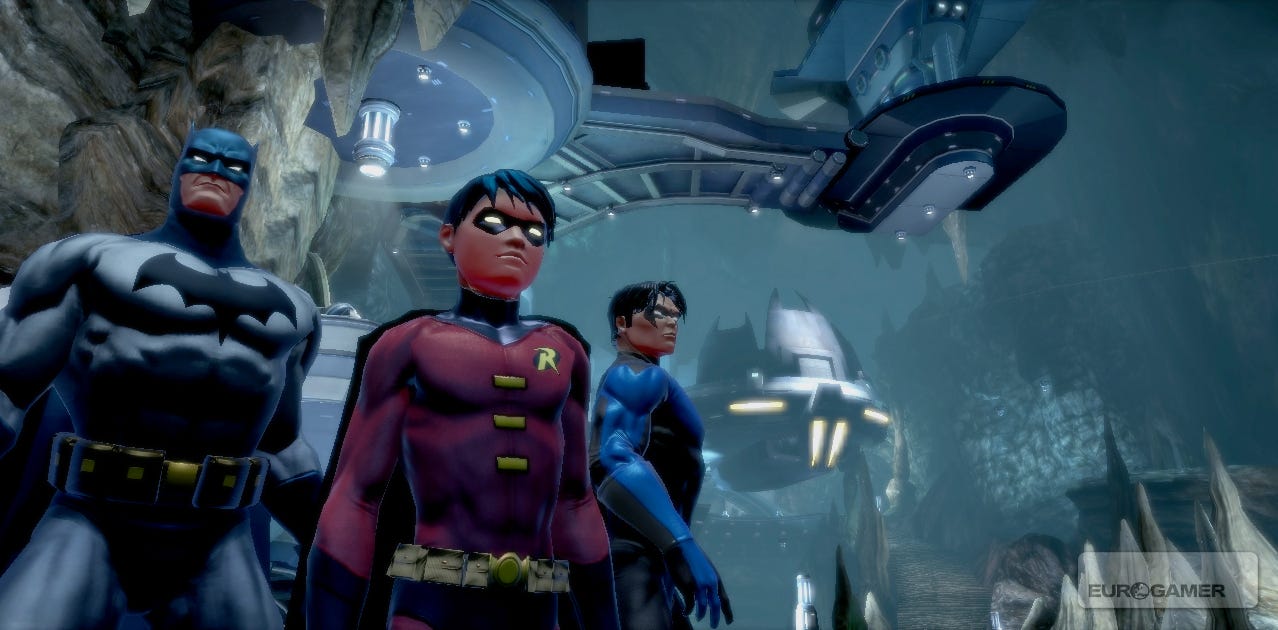
As vice president of development at Sony Online Entertainment's Austin studio, John Blakely has seen the release of both licensed MMOs, with Star Wars Galaxies, and console MMOs, like EverQuest Online Adventures for the PS2. Now, as executive producer on the studio's forthcoming DC Universe Online, due out for both PS3 and PC, he has to do both at once. We caught up with him at SOE's Las Vegas Fan Faire to see how the game is progressing, and discuss the current state of the MMO scene.

Eurogamer: SOE seems to keep titles that are under-performing live a lot longer than other companies. Is that a conscious strategy?

John Blakely: It's a business decision. We look at what's going on and say, "Hey, look, there are audiences for content." Some of those audiences are going to be bigger than others and some of them are going to carry others, but as long as the audience is there and the product is there, it takes so long to create these products, we may as well continue to serve that audience.

The terminology around MMOs has even changed. When I worked on EverQuest II, we talked about "shipping" the game. Now we want to "launch" them. It's akin to building a ship and then travelling on a long journey with your players. It doesn't mean that it's always going to be perfect and it's always going to be finished, but you have to make sure the keel is water-tight.

When you're making a single-player game, you get a regular chance to make improvements with sequels. Whereas every decision we make, regardless of when we made those decisions, we have to live with them. There are repercussions, positive or negative, for changing them, and we've had both. There's no business I know where I'm dealing with products people made decisions about eight years ago, and I'm still living with those decisions.
1

Eurogamer: Given the changes that have been made to games like Star Wars Galaxies during its lifetime, when you release a product as ambitious as DCUO, is it frightening to think how much it's going to change too?

John Blakely: One of the things I preach to the team is, we need to be nimble; part of that is really listening to feedback from the players. Right now, we're the experts on DCUO, but when we launch, they become the experts. It's about harvesting the feedback, and working out how to apply that. It's changing from creators to participants: how we manage this product, and how do make sure the audience is happy, rather than saying, "this is our creative vision", and then trying to shove it down somebody's throat.

Eurogamer: Are consoles harder to patch, due to the certification process?

John Blakely: Our studio in Austin is much less impacted by this kind of thing, because we already work with partners, like LucasArts. So we're already used to having to go through extra approval processes. I had a rough start when I started working on Galaxies. People would say, "Can you patch this?" and I'd agree, and I didn't really think to ask our partners, and then they call me up and say, "Excuse me? What the heck is going on here?" Certainly the console adds an additional step to that, but it's not going to be disruptive to our culture.
Eurogamer: You've shown DCUO at Comic-Con, which I imagine is the most terrifying kind of audience for this product, how did that go down?

2

John Blakely: It couldn't have gone better. One of the things we felt with this is that you can only talk about it so much, the most effective way to talk about the core of the product is to get people to try it and play it. Comic-Con was really a great reaction, but it was scary for us. I was losing sleep. As a producer, I had to make a few decisions early on in the project, so I was like a proud father: nervous. But with the first five minutes I knew we were going to have a good showing. People were coming in and picking up the controller, younger fans, older fans, male and female, and they were engaged immediately.

Eurogamer: Did they mind that they couldn't play Batman?

John Blakely: I think they understood why. That will continue to be the most asked question about this. I think once we explain that this shared world exists, and we're going to open a door to this world and let you step into it, Batman is already living in the world - you can't play him because he's already there. Once you realise you can fight alongside Superman and Batman, people get it. And it makes the world more persistent that he's out there doing things.

Eurogamer: Are you ready to talk about a payment model?

John Blakely: We haven't decided on one. If you look at all of SOE's products, we have several ways of charging people for content. We have a good idea internally of what we're going to do, but we're also going to watch the console market and see how that evolves, and how PC evolves. We're looking at stuff like Free Realms, which is free, but you're going to have a subscription, which will allow access to certain areas, and then you can also buy cosmetic items.

Eurogamer: How early in development do you have to decide on the pricing structure?

3

John Blakely: I tell my team: make a great game. There are different ways to pay for things, but fundamentally people won't pay for things if it's not worth it. We wanted to make a superhero game which is fun to play moment-to-moment, and then people want to play tomorrow with their friends. We took that kernel first and hopefully got there, and now we're looking forward to integrating those business cases into the product.

Eurogamer: Has SOE's approach to licensed products changed after Star Wars Galaxies?

John Blakely: It's changed a lot. Serving the license is our top priority. Early on, a lot of early license games, we were holding stuff back. You're not going to see Darth Vader until you've worked your way through a lot. That doesn't pay off. If this is DC Universe, when can the player get to see those characters? We really wanted to not try and force-feed a game type into that IP. Rather, we took the IP and tried to think what you'd want to do within that, and then integrated the MMO parts that work with that.

Eurogamer: Do you have any idea why Microsoft's Marvel MMO didn't happen?

4

John Blakely: These games are hard to make. They're hard to run and hard to develop. It takes a lot of things going your way. I can't speculate on what happened, but I do know this isn't easy. With SOE, we've been able to execute on that, sometimes better than others and we've certainly taken our lumps and learned our lesson. We have a lot of tools and infrastructure dedicated to making these products, so hopefully we understand what kind of risks we're taking. It's no less risky, but we're better prepared.

Eurogamer: With consoles, you have a migratory audience. How do you keep people coming back?

John Blakely: You have to make sure there are reasons to come back. They can be content. They can be that there's nothing else like that, or that you've gained a skill and can show it off. We're trying to show all those reasons. It is a very competitive landscape, so the players win, because ultimately we have to work harder to get their attention.

Eurogamer: With DCUO up on stage at E3, what has being integrated into Sony's Worldwide Studios rather than reporting to Sony Pictures been like?

John Blakely: It's a level up, certainly. It is exciting, because it's a worldwide audience, and a very recognisable brand. I take it very seriously, because we want to deliver the quality that they've established. Sony first party have always had a high bar of quality, so there's a lot of pressure, but there's also a lot of attention. A lot of people are aware of us now.

Eurogamer: That SOE idea of supporting games through the thinner times - is that still going to be possible on a console?

John Blakely: Absolutely. There are still thousands of people playing EverQuest Online Adventures, which is on the PS2, with a lot more hurdles to get through to play it, but we still have passionate players. It really just boils down to wanting to have players connected to SOE.

Eurogamer: Has World of Warcraft been good for SOE? Would you be creating this range of games if you were still on the top spot?

John Blakely: It makes us hungrier. Because we were on the top and now we're not, it humbles you and makes you ask yourself questions and challenge assumptions. Maybe you thought your assumptions were always correct because you were doing it the best, right?

Culturally, it's definitely changed us. It makes us more aggressive and forces us to innovate. With EverQuest and EverQuest II, they were pretty much the same game, but now we're exploring multiple spaces, because there is this big juggernaut there. If we want to go up against the immovable object, that's one type of strategy, but if we want to look for other opportunities, that's another one. WOW's been a great thing for the industry, it's raised the bar for the level of polish, and it's brought in millions of new players. The market's growing, and we all love that.

5

Eurogamer: NCsoft Austin is downsizing, and yet you're releasing a broad range of new games. Is this a difficult time for MMOs?

John Blakely: I have to point to our bosses, who have always been able to manage us through difficult spaces. There have been tough decisions along the way, but they've always made sure we had the ability to weather these waters. Also, there's the talents of our teams, who learnt lessons so we've always been just a little bit ahead of everyone who's still gaining knowledge. That allows us to be a little bit more agile. We've had lean periods, but we're coming out of that and getting back in touch with our audience. Now we can try and add new audiences.

Eurogamer: Has there been a decision to take MMOs away from fantasy?

John Blakely: I think so, mainly because we've been the pointy tip of the spear for a long time. With an MMO, players build a relationship. It's more marriage than quick fling. In a relationship, people get to see the flaws. We realise that our players, after playing these kind of games for ten years, want something different. And we want to tackle different problems. So we're all coming to this point together.

The newer entries are chasing WOW, that big beast, but we're saying, that big beast is going to have a momentum of its own, but there's other opportunities here, and the players will be excited about that. You play a lot of "Me too" games, and you're, "Okay, there's different graphics and terms, but I can figure this out in the first ten minutes and now I'm bored."

6

Eurogamer: What does success look like in a post-WOW world, particularly with a different product like DCUO?

John Blakely: There's a business case for success, a critical case for success, and then delivery on the licence. We definitely have our metrics set up, and we know that WOW is something special. We have success in other products. I pay my teams royalties and have for years, and that means commercially, they're successful. You don't have to be a WOW - we'll never shy away from that kind of success or not be ambitious enough for that - but that's not the definition of success. So with DC what we want to do is make sure the game is commercially successful on both platforms, delivers a high Metacritic score, and make sure we can engage an audience for years to come. That's what we look at in terms of success.

John Blakely is vice president of development at Sony Online Entertainment's Austin studio

Comments (8)

Comments for this article are now closed, but please feel free to continue chatting on the forum!

  • Loading...hold tight!