When Jeremy Clarkson's great-great-grandson ponders the key automotive-related events of the late 20th/early 21st century, sighing wistfully while gazing upon a once-blue Earth as he whizzes silently in his fuel cell powered podcar through a Martian Google-built biosphere, he's likely to single out 23 December 1997 as a momentous date.
It wasn't the day Fiat produced a car with a set of electrics that remained fully functional for longer than it's taken you to read up to this point, or the moment Porsche suddenly realised it had been looking at its engineering blueprints back to front and thus been building the 911 with the engine at the wrong end. Rather, it marks the release of Gran Turismo for the PlayStation in Japan.
The background of the first Gran Turismo should be well known but briefly, for those asleep at the back, it goes something like this. Development by Polyphony Digital - then still Polys Entertainment - began in 1992 and would take the team of just seven half a decade to complete. Rather extreme by game development standards (Sony can't at least claim it didn't know what it was letting itself in for with the series) but not bad when you're accomplishing history. In its defence, the studio did also have to get a game ready for the Japanese PlayStation launch at the end of 1994 - Motor Toon Grand Prix - along with a sequel a couple of years later. Although neither title proved exceptional, they provided an opportunity to sample the handling model at the core of the GT series in its most primitive form.
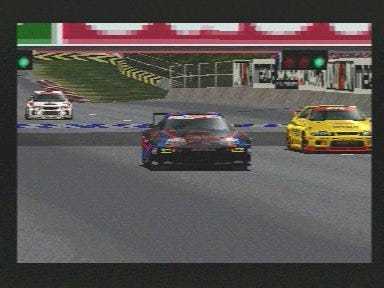
Gran Turismo replays set a new standard that all driving titles would try to emulate (with few succeeding).
Aside from a quick detour to play with robots and then motorbikes, Polyphony has gone on to do nothing but Gran Turismo, steadily refining the concept and pushing each iteration to new heights (while dragging Sony's financial directors' blood pressure along for the ride). So gradual has been the evolution that little has changed with regards to the essence of the GT games - if you've played any Gran Turismo, the content and structure of the series' originator will feel very familiar.
That makes it easy to easy to forget just how much impact the first Gran Turismo had when it rolled into retail. The series has been around so long, in fact, that there's a whole generation of gamers that will have missed its inception - all they've ever known is the post-GT era and they'll no doubt find it hard to realise what all the fuss was about. But as the best-selling PS title ever, with overall sales of 11 million, GT caused something of a phenomenon within the gaming community and beyond - Nissan UK felt it necessary to write to gaming mags attributing the vast increase in the general public's awareness of its Skyline GT-R model to the game's massive popularity, for instance.
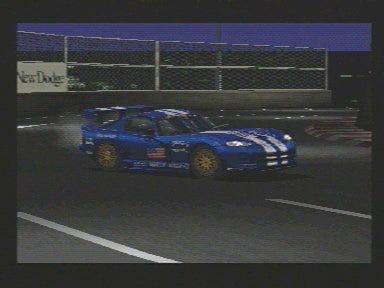
The car's the star - never before had a console game placed such emphasis on recreating the driving experience.
Ultimately, it came down to content. GT's 170-odd licensed cars made a mockery of every driving game released up to that point (even if most appear to be made up of variants of the Mazda MX-5, Nissans Silvia and Skyline, and Subaru Impreza), while its graphics provided the then most realistic depiction of four-wheeled awesomeness (as you'd expect, perhaps, given the team's privileged insight into accurately estimating the power of PlayStation). Supporting the realism was then the most detailed and convincing handling model to have graced a console title, with intricate real-world dynamics such as weight transfer, suspension response, and understeer/oversteer characteristics expertly conveyed via exquisite use of the DualShock's rumble function.
Weld the whole lot together, throw in an almost overwhelming tuning system bolted onto a hefty RPG-like structure, and a selection of delicately designed tracks, then wrap it up with the most cinematic replay system seen at the time - and the result ended up rather magnificent. Players would systematically finish a race and then sit through the playback of their performance, admiring the unprecedented visuals and authentic physics at work.
But to fully explain Gran Turismo's astronomical success, we need to look at the bigger picture. The timing coincided with developers becoming increasingly au fait with leaving 2D gaming behind, and with driving games - as is so often the case with new generation of hardware - very much at the forefront of this polygonal transition. Efforts such as V-Rally and, subsequently, TOCA Touring Car Championship signalled the arrival of technically advanced, reality-based driving experiences on console. By the time GT turned up, the road it sped away on was pretty well paved.
Undoubtedly the car selection, which included everyday models just about anyone could identify with, played a massive role. At a time when nearly every driving title featured just race-prepared or supercar examples, here was a game that enabled Joe and Jane Average to jump into the virtual interpretation of the car they had parked on their drive.
The automotive theme ensured widespread appeal, too (there's a reason why driving games have traditionally always remained in the top three most popular genres) but the level of realism and the nature of the content brought on board car lovers who dabble in games, not just gamers who are into cars. And the RPG tuning structure, aside from instigating an urge to screech onto the tarmac to find out how a newly installed part now made your ride sound, handle and perform - an intrinsic attraction at the core of the GT experience - also acted as a natural difficulty curve by getting players to progressively work their way up to more powerful machinery.
True, arcade driving aficionados at the time pointed out that if what you wanted was realism, you should get into one of the cars and go for a drive. They argued video games should be about pure unadulterated fun and escapism, not boring pseudo recreations of everyday life. The key flaw in that argument - other than the obvious irony at the heart of such criticism, which we'll deal with in a moment - is that you can't thrash cars on real roads without running the risk of being booked by the police, killing yourself, or worse, killing others.
Roll with it: GT's then exemplary car mechanics at work.
Alternatively, not everyone can rent, let alone buy an Aston Martin DB7. Even those that can wouldn't be able to experience a Mitsubishi FTO LM Edition, regardless of how much money they were willing to spend - available only as a reward from one of Gran Turismo's championships, this memorable 4WD beauty is a fantasy creation by the GT team in a bid to come up with the perfect race vehicle.
By today's standards Polyphony's early effort may have been some way from reality, but for those willing to strap themselves along for the ride, Gran Turismo offered a glimpse of what it might be like to own one of these machines and beyond - tinkering long enough in the tuning shop could see you create a 1000bhp monster from a family saloon to then find out what it would take to tame such a beast.
Perhaps most crucial, then, is the game's aspirational quality. Not only could you drive your dad's Honda Prelude without having to beg him for the keys, you could stick 20 or 30 thousand under the hood, fit a zaust the size of the Eurotunnel, wrap the rims in race rubber and head down to a circuit of your choice in order to decimate the competition.
In case you forget what's important in GT's world, check out how much space the HUD is taking up.
Like any game, it isn't perfect. Turning up at events with massively overpowered machinery and winning effortlessly is actually one of the game's key failings - both structurally and morally. Then there's the crushingly drone-like AI (even by the day's standards), the limited number of cars per event (just six, forcing artificially induced close pack racing), and the overall cold, impersonal feel.
On a more serious note, GT's influence - or specifically its success - was such that it sparked an overzealous response from publishers keen to emulate the revenues Sony enjoyed. The resulting efforts were mixed to say the least, but the most undesirable effect of this was that it took far too long for arcade-styled driving examples such as Burnout to break back into the limelight.
Unquestionably, though, when it comes to this game the positives annihilate their counterparts. The driver/car/track purity at the heart of GT's engine ensured a driving experience that captivated players in a manner that no other console title had previously managed. It may be difficult to appreciate now, and if you were too young to have witnessed the pre-GT era, know that it wasn't a desolate, Iron Curtain-styled epoch. We had fabulous fun with Chequered Flag, Pitstop II, REVS, OutRun, Formula One Grand Prix, Virtua Racing, Daytona, The Need for Speed, SEGA Rally, TOCA and countless other favourites.
But know also that the titles that followed Gran Turismo, the titles you grew up with - be it Metropolis Street Racer, the Project Gotham series or the Forza family - not to mention those that your children will subsequently come to cherish, owe their existence to a revolutionary game that, when it first appeared on a cold December day in 1997, both redefined what could be achieved with the genre on a home console while fundamentally altering the course of driving game development forever.
