Funcom's Ragnar Tornquist
"Nothing is too crazy for this game."


Titles like The Longest Journey - dreamy, personable, and quietly erudite - have granted Ragnar Tornquist a reputation as an unsettlingly grown-up presence in single-player game design. His latest project, The Secret World - which we preview today - sees him turning his attention back to MMOs following a previous stint on Anarchy Online, and he has a typically idiosyncratic agenda. Classes and levelling are out, and in their place are a promising tangle of factions and ancient allegiances, a culturally omnivorous conspiracy narrative, and a carefully partitioned PvP structure with RTS overtones. We sat down with Tornquist at this year's Penny Arcade Expo to get a sense of how such an enormous project is coming together.
It's a challenge. The funny thing is, I'm not sure it's the exact opposite, however. Yes, The Longest Journey and Dreamfall are very linear narratives, but there's a lot of story-by-exploration in there, a lot of moments where the story progresses with the player going out, meeting characters, and moving forward in an exploratory fashion. You pick up the threads here, here, and over there before continuing the linear narrative: MMOs are basically just an extension of that. You might say that we embed a lot of stories in the game that players go out and 'harvest', in a way. We have a lot of interesting elements around that. We have story-based gameplay which I wouldn't say is unique to us, but it certainly asks a lot more of players who want to focus on that.
There is definitely still a linear narrative in The Secret World, however: a narrative that's there if you choose to go through the game following it. You can go off into the world, fight monsters, explore areas and get bits of story here or there, or you can follow the main threads right through the game, and you get this story which will pick up again in expansion packs and content upgrades. But we're still testing the ground in terms of our approach to this story, and that's still something we're going to be working out as we go forward into alpha and then beta stages: we're working out how to realise all this.
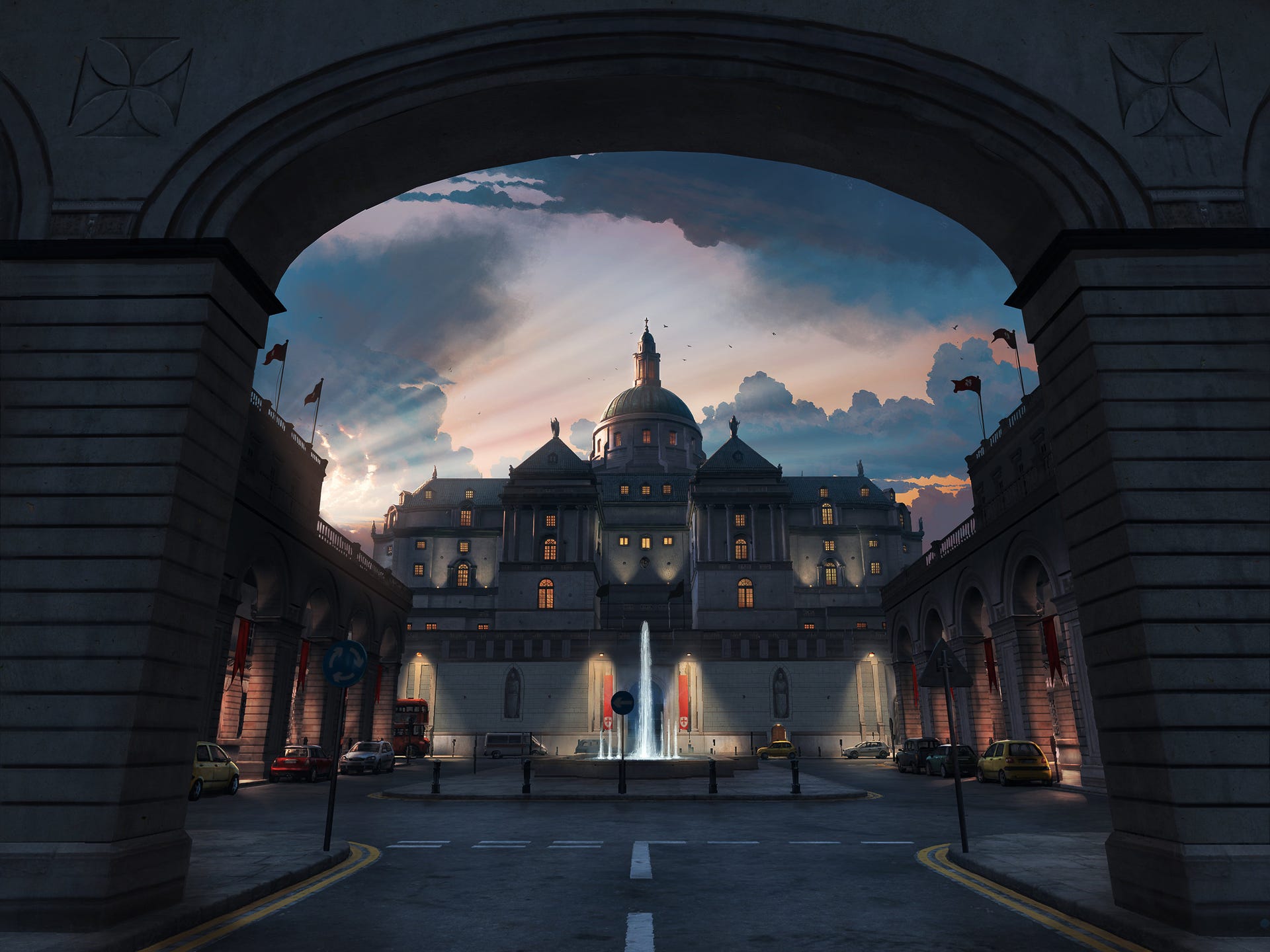
Yes, that's a very specific choice we made. We like to cater to as many people as possible. I myself am mostly a PvE player, I'm not a PvP player, but to ensure that both groups get what they want, we didn't want to put a lot of PvP into the open world. We wanted to focus on PvP in its own way to make it significant, and our solution to that was the Hollow Earth where you fight other factions for control of resources and area. So the Hollow Earth is more about the player-driven battles with RTS elements, while the upper world is more about the linear narrative and missions and that progression. That said, we're going to use the Hollow Earth for a lot of other things, too.
If you just want the narrative stuff, absolutely. Even though Anima, which is mined in the Hollow Earth, is used in skills and stuff like that, you can buy that from other people, or get it from your cabal, which is like your guild. It will be available on the open market, so you won't have to do PvP at all if you don't want to.
There's a lot of ambiguity in there. The secret societies have been in development for three years now. We started working on them at the moment we started working on the game, so it's been a long process. They might seem ambiguous, but we do a lot of things to simplify and delineate them, however, even if people don't notice.
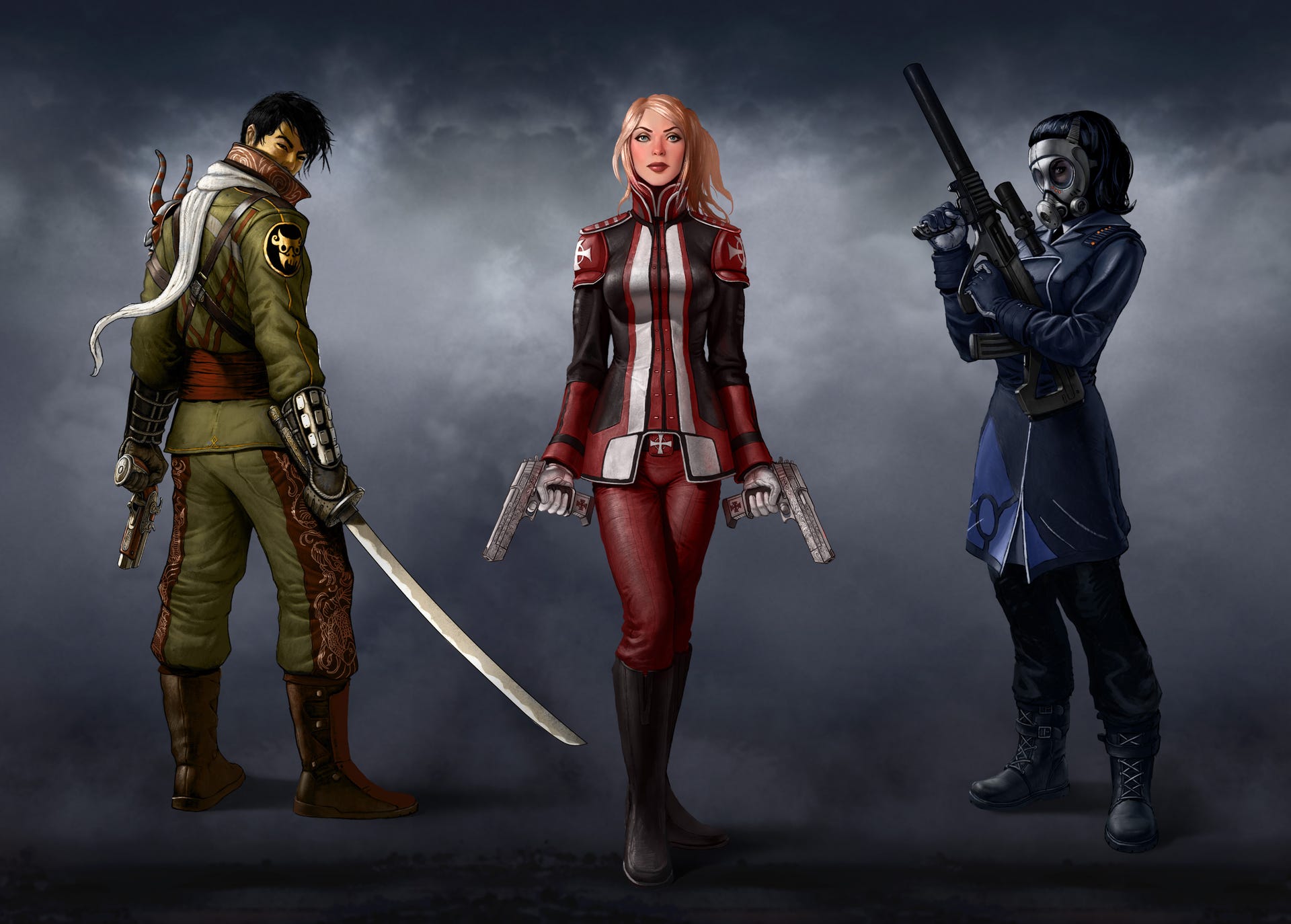
If you look at their emblems, Dragon is a circle, Templar is the square, the Illuminati is the triangle, and it's green, red, and blue. It's these very defined things that we iterate and iterate on to make it clear, because on a story level, like you say, it's more diffuse: there are good guys, but not really; bad guys, but not really. They have these sort of woolly goals, and I think that's part of the appeal.
We want you to feel part of a world where the conspiracies are so dense and the politics is so thick that, when you join the secret society as a novice at the very beginning, it's this vast organisation, and you'll have no idea how it works initially. That drives you to progress through the ranks, meeting new characters along the way. When you start, you have a very low-level society contact to interface with, and you progress all the way to the top. And you learn more and more about the real agendas. So yes, it's something we did on purpose, and we think it's going to be more complex for people and more interesting too. It's not black and white, it's all shades of grey, against a very, very black darkness.