From Dust
Earth to earth.

From Dust is a different kind of god game. In most examples of this rarefied strata of strategy game - including its closest relative and direct inspiration, Peter Molyneux's classic Populous - the player-god is a blend of accountant, general and town planner who manages resources, shapes cities, counts off prayers and wars with rivals. A manager, in other words; a director of human affairs.
From Dust's god - known as the Breath - has the same aims: the survival, settlement and progress of its people. But it's both more hands-on and more remote, giving only the most basic instructions to its nomadic tribe of followers while directly manipulating nature instead: shaping rivers, moulding earth and rock like putty, creating order from chaos, coaxing life from barren dust.
The game's designer, elusive Frenchman Eric Chahi - who hasn't released a game in 13 years - is a keen amateur geologist, and it shows. The terrified and displaced tribesmen crawl out of a hole in the ground to find themselves in a fantastic setting resembling the Earth many millennia before human existence. They speak of following in the footsteps of elders, yet the planet is tortured by volcanoes and tsunamis, apparently suffering the birthing pains our own did as it coughed up landmass and life.
It's elemental stuff, nothing less than a video game creation myth. (It's an odd coincidence that From Dust appears shortly after Terence Malick's rapturous invocation of the beginning of all things in his film The Tree of Life - and you could argue that Chahi's vision is the more coherent.) If god games should inspire awe, then From Dust towers over the petty, hand-to-mouth, human agenda of its predecessors.
But it's also a simple game, if generous in scope for a download title (it's released on Xbox Live Arcade this week, PC on 17th August and PlayStation Network some time in the future.) You must use the Breath to protect the tribesmen and help them navigate a series of dangerous but contained environments, settling villages on their way to a portal and the next stage of their journey.
The Breath, represented by a circling tadpole of a cursor, can suck up and deposit huge quantities water, earth and lava. Earth bridges gaps, diverts rivers and spreads vegetation from colonised villages. Lava cools into walls of impregnable but barren rock.
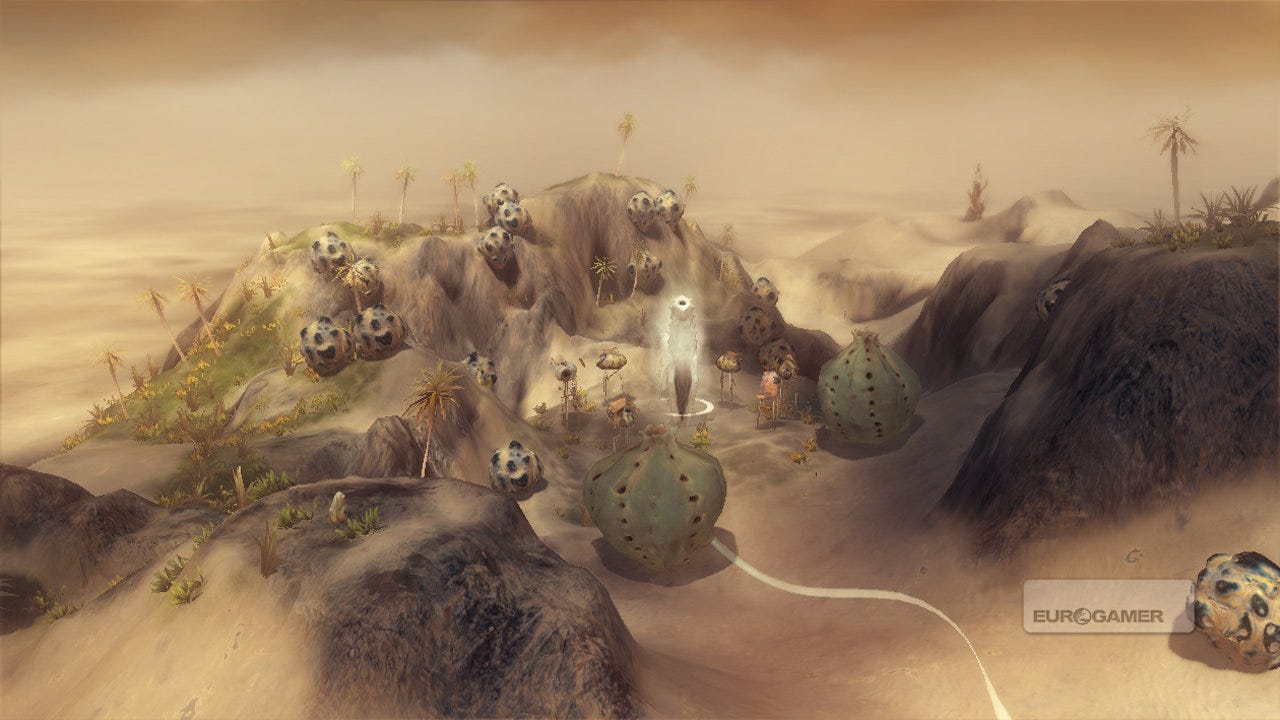
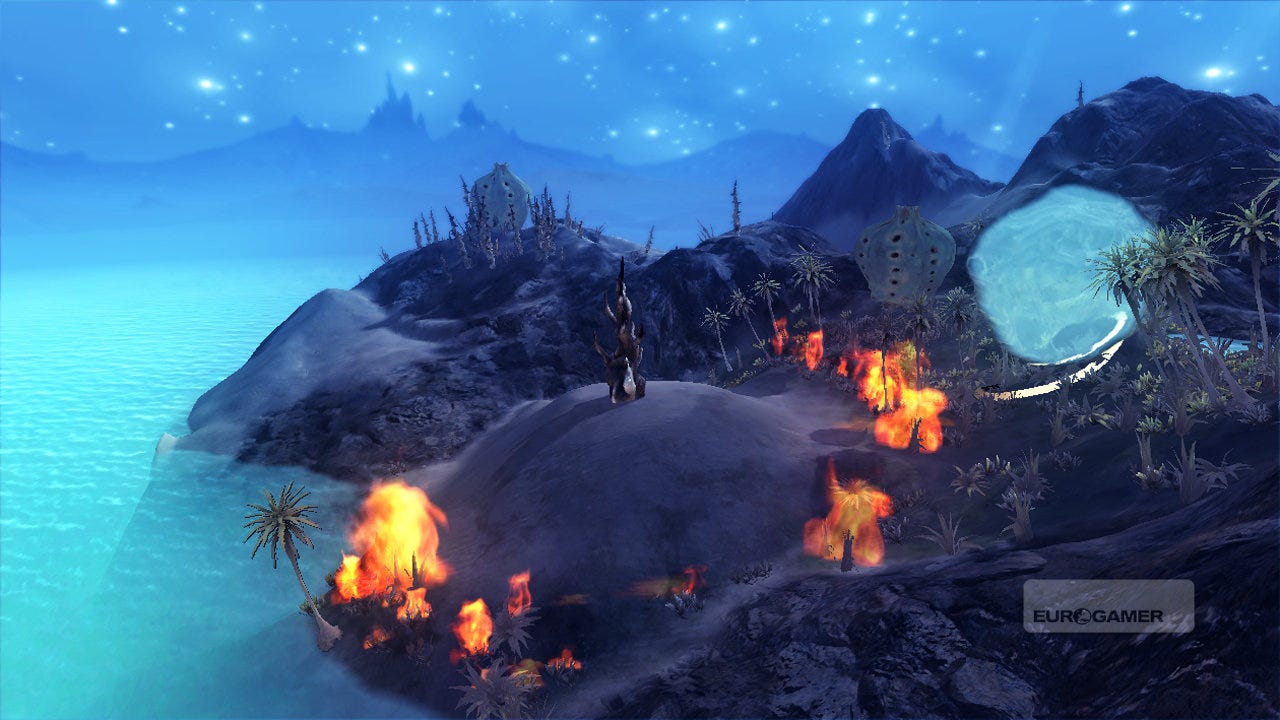
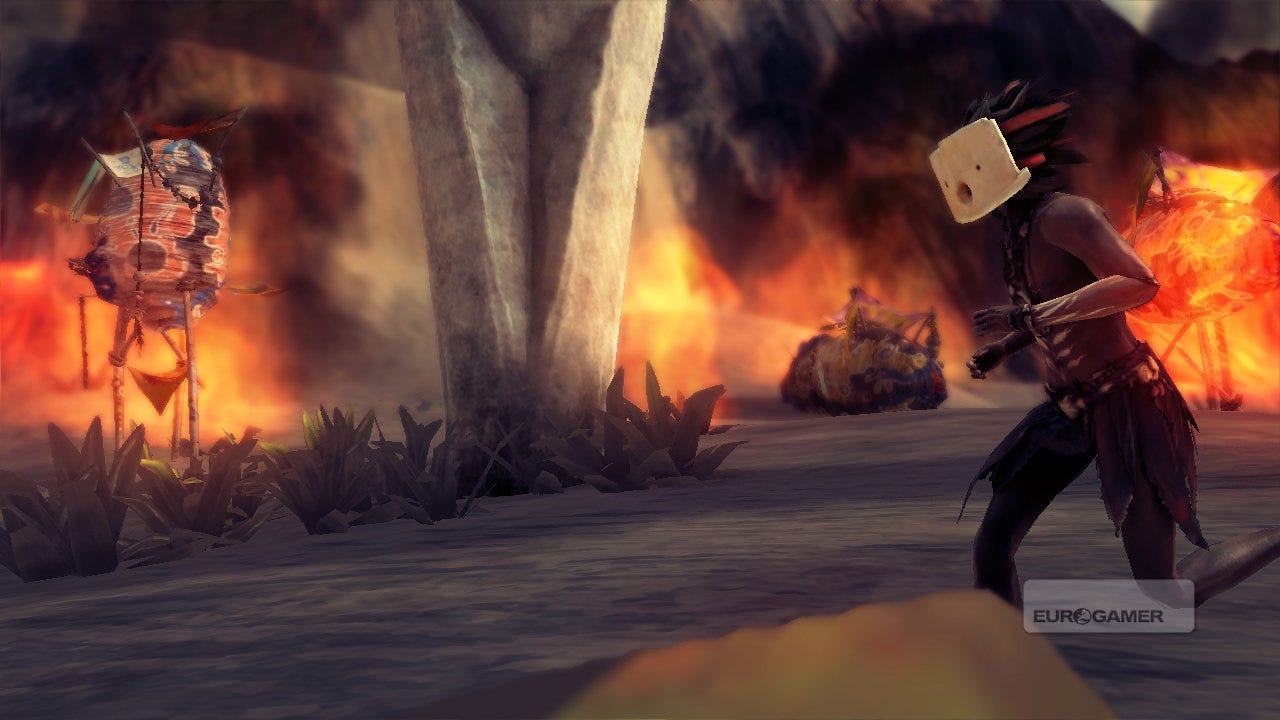
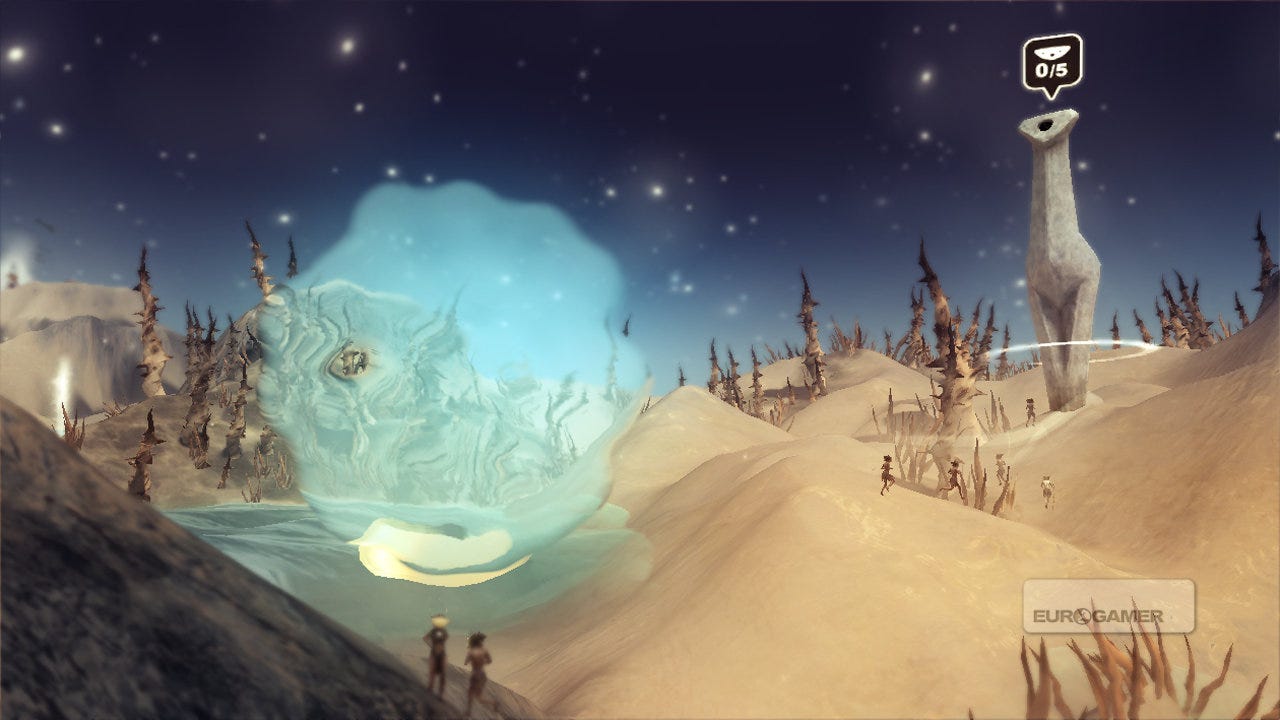
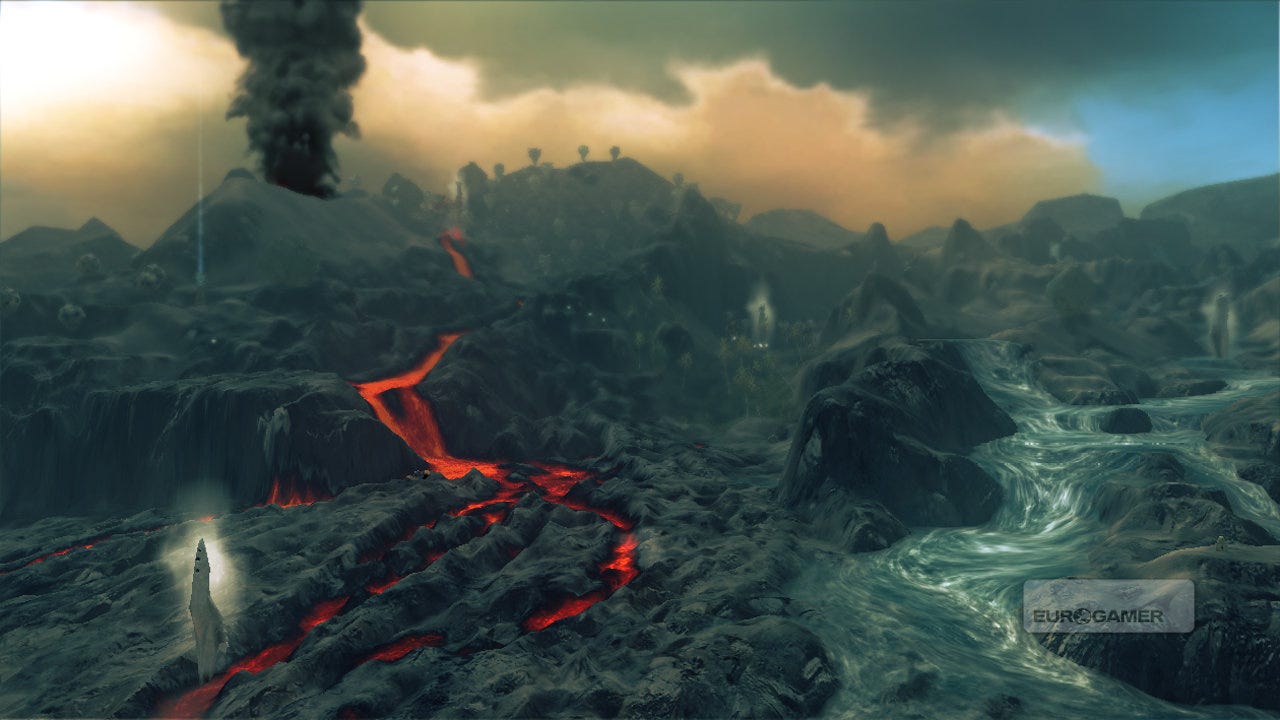
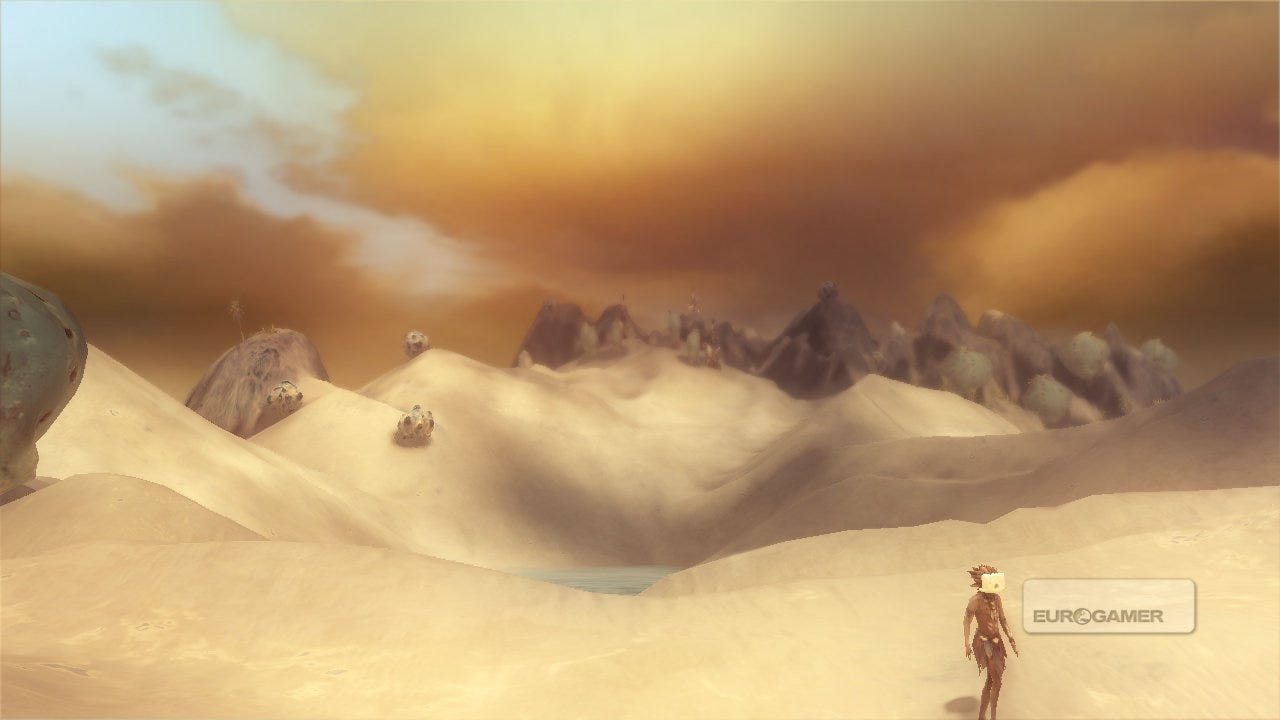
The interaction of these three elements is at the core of From Dust, and it's realised in a breathtaking living simulation conjured by the coders at Ubisoft's Montpellier studio. Like Q Games' excellent PixelJunk Shooter did in two dimensions before it, From Dust taps into the hypnotic spectacle of real-time fluid dynamics for some truly awesome sights: the first time you witness one of its titanic tsunamis is guaranteed to set your hair on end.
But the game doesn't just subject you to waves and eruptions. It allows you to study and toy with these intuitively understood yet unpredictable elements, using them to solve a series of situational riddles. Displacement, erosion, sedimentary deposit, landslide, wildfire, tide and flood - you watch them all at work and, as the Breath, try to bend them to your will.
Despite the levels' small size, From Dust is more of a sandbox than almost any 'open world' game, and it practically defines the concept of emergent play (as referenced by the title of one of its best chapters.) It's not so much about having multiple solutions to a problem as an infinite variety of ways a single solution might play out. But you do have a selection of additional tools at your disposal.
Each level is dotted with totems and prayer stones. Direct five tribesmen to a totem and they will establish a village; direct a village's shaman to a stone and he will bring back knowledge, enabling the village to resist flood, perhaps, or fire. A village needs to be settled and maintained at each totem for the portal to the next chapter to open. Once settled, most villages grant the Breath a power.