Yakuza: Dead Souls Review
Don't scream it's over.
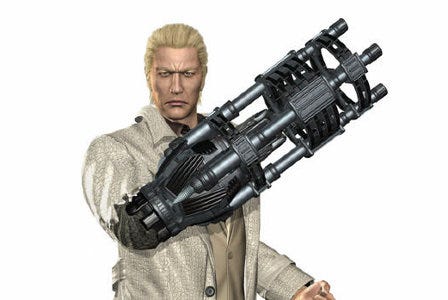

Editor's note: This (slightly edited) import review of the Japanese version of Yakuza: Dead Souls (titled Of the End) was originally published in July 2011. We present it again to mark the release of the game in Europe and North America this week. To the best of our knowledge, it's accurate with respect to the Western version of the game.
So this is goodbye... or so we thought. The Yakuza series makes too much money for Sega to abandon it, and since Dead Souls was released in Japan as Of the End last year, a full-blown Yakuza 5 has been announced. But if the publisher isn't saying farewell just yet, Dead Souls feels like game over for Kazuma Kiryu and Kamurocho.
If true, it's the latter that will probably be most sadly missed, an idea that seemed unlikely after the first game. The Dragon of Dojima instantly struck a chord with many, particularly those who'd been looking for someone that shared the endearingly phlegmatic temperament of Shenmue's Ryo Hazuki. Kiryu-chan's coolness under pressure made him an instant hero, a pacifist persistently drawn into conflict by those who'd wronged him. It was impossible not to love a guy who suffered the insults of street thugs with impassive grace before teaching them a lesson in how to club someone about the head with a gigantic traffic cone.
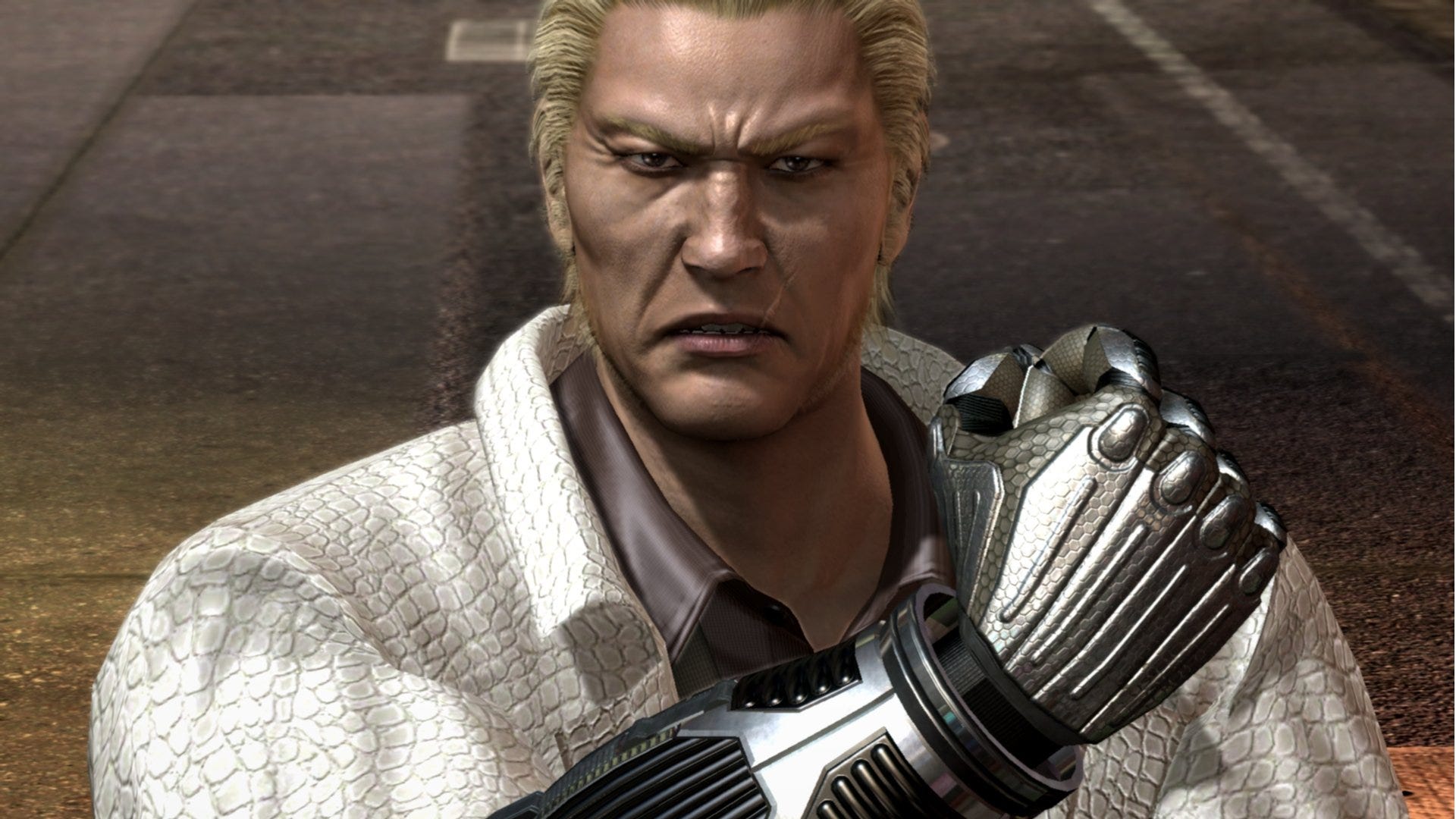
Yet Yakuza 4 proved that you could tell an interesting story without him - three-fifths of the game passed by without his absence feeling conspicuous, and when he did turn up he was strong in the fight but his blank-faced sermons made him seem a little dull next to the likeably rough-hewn loan shark Shun Akiyama.
But if familiarity bred a little contempt for Kazuma, that wasn't the case for Kamurocho. Revisiting this detailed approximation of Shinjuku suburb Kabukicho over four games turned out to be stroke of genius; for fans it was like returning to a favourite holiday destination, delighting at the changes while being able to navigate the bustling streets without referring to a map.
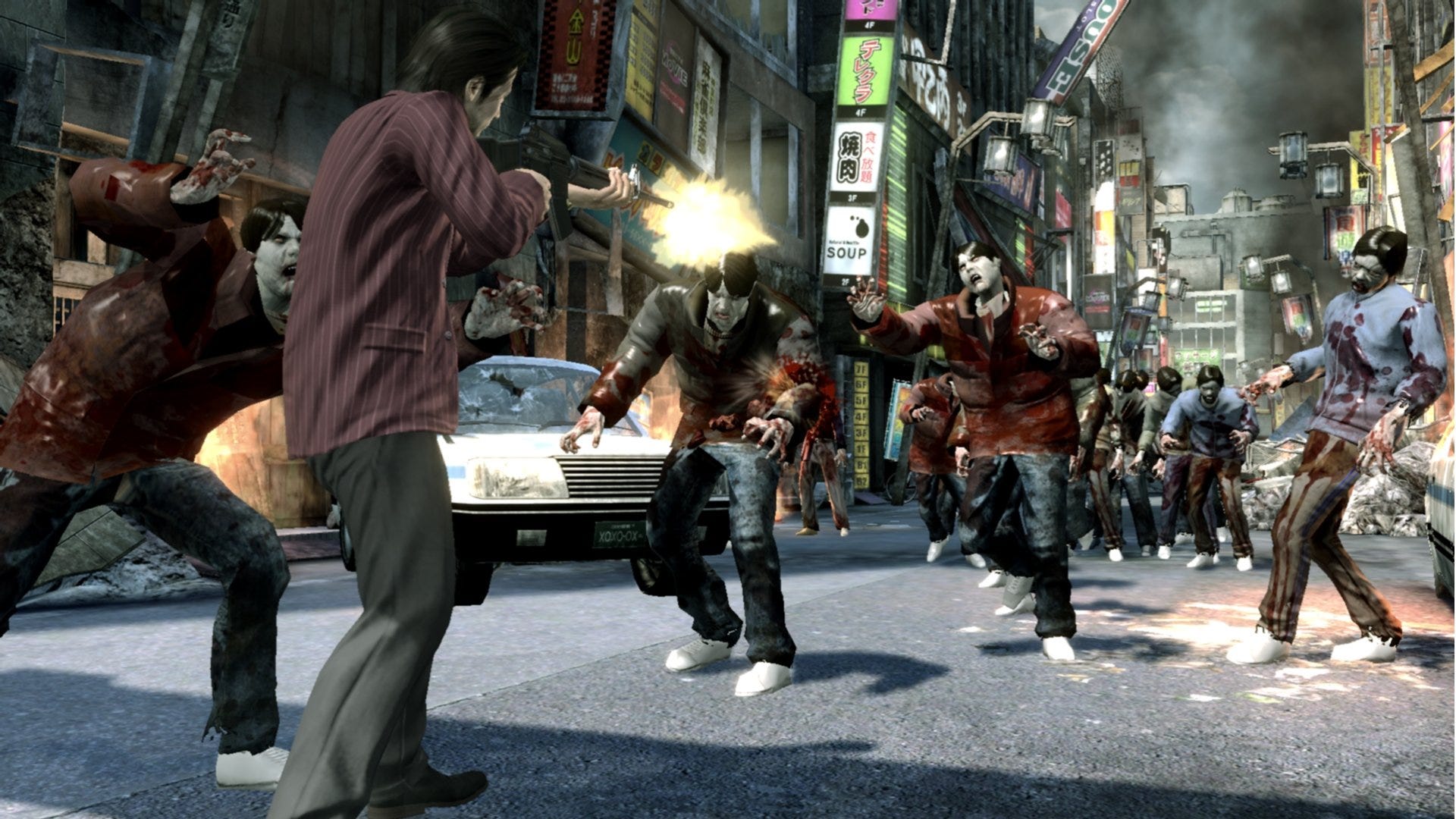
So it's not a little upsetting to see it as it is here. A zombie plague has ravaged the city, leaving whole blocks destroyed. A large isolation zone spreads from Showa Street in the south to Shichifuku Street in the north, taking in the whole of Tenkaichi Street and Theatre Ave. The most famous neon arch since McDonalds is half-collapsed, light bulbs flickering. New Serena Building is burned out.
Developers often take an iconoclastic glee in their destruction of major cities, but there's a note of sadness here; a depressing end, if end it is, to one of the all-time great game locations. The colour palette adopts more muted tones, and as such the place loses the vibrancy that made it so appealing. Admittedly, that makes sense in the context of the story - a city is hardly going to feel full of life when a third of its population is undead.
Curiously, you can happily stroll around half of Kamurocho and not realise there's anything wrong, apart perhaps from the occasional fleeting glimpse of the gargantuan metal barriers keeping the brain-munchers caged. Juxtaposed with such outlandish elements, the series' rightly lauded verisimilitude jars a little.
It seems there's an acceptable level of fantasy within an otherwise realistic location, and this has sailed past the tipping point. This kind of conflict has always been a part of Yakuza's world ("What, Haruka's been kidnapped? I'll be there in a sec, I just need to finish this 17-year-old single malt, then grab an AiAi plush from the UFO Catcher at Club Sega") but its logical extreme has been reached here. Half of Tokyo is milling about without a care in the world whilst, three blocks away, huge bat-things are spewing gobs of acid at tanks.
Elsewhere, Dead Souls delivers plenty of what's expected from a Yakuza game. Heat actions, extensive cut-scenes, Boxcelios, Kamiyama's weapon mods, an encounter at the batting cages and an epic finale atop Millennium Tower: all those boxes are ticked, but there's a different approach to combat this time. Fists and feet have been replaced with guns and grenades, poignantly illustrated when Kazuma finally shows up and attempts to take on a group of zombies in a bare-knuckle brawl before realising that headshots are the only way to make them stay down.
While the weapons are loud and meaty, the rough-edged brawling of Yakuzas past has been replaced by clumsy third-person shoot-outs. Each character has some nominal melee moves, but they're next to useless, barely delivering any damage, instead used mostly to clear space. It's quite a shock after the thrillingly crunchy combat of the previous games.
Some mistook the lack of lock-on for a lack of finesse, but there's always been a real art to Yakuza's street wars. It may never have been as fluid as a Bayonetta or a God of War, but especially on tougher difficulties the need to dodge, block, parry and counter made it far more than a simple button-basher. Refined over four games, it grew into a fighting system that was confident and engaging enough for Nagoshi and co. to explore four disparate fighting styles in Yakuza 4.