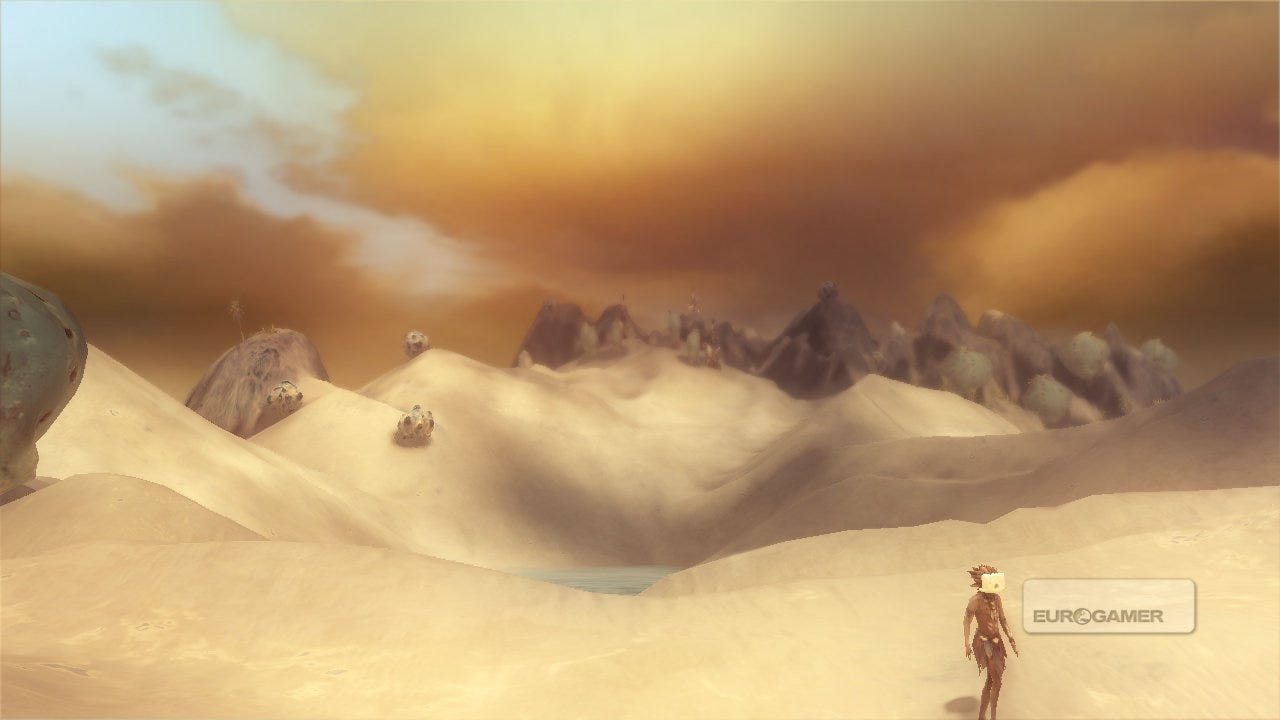
Game designers are gods, conceiving new realities before coding them into being. They set their dimensions and boundaries, the rules that bind them together and the shapes and colours that eventually fill them.
Then, when their creation is fully-formed, they invite us to step into these realities, to live under their designer vision, gifted with free-will, albeit one subject to the systems they have so meticulously arranged.
Eric Chahi, designer of Ubisoft’s forthcoming XBLA title From Dust, is just one such god. His seminal Amiga title, Another World – the game with which he found fame in 1991 - offered a gateway into another dimension where we could walk the contours of his imagination.
But while all games are god games, only some games are God Games.
Peter Molyneux first conceived of the idea of creating a reality in which the player could play as God. Populous – another Amiga title – set the player as steward of a populace, able to save or smite, bless or burn with touch of a divine cursor. And yet, the term God Game was always something of a misnomer. It implies power, dominion, freedom to exert one’s omnipotent will. But in almost every instance, God Games had us chasing after humans, running errands for them, micro-managing their wellbeing.
Perhaps for this reason, we grew tired of omnipotence. It was always a bit too much like babysitting, the creation ruling the creator. So Molyneux’s final stab at the genre, Black and White, became the last mainstream God Game in the orthodox sense (Spore was something else entirely). The genre’s creator, it seemed, was also its destroyer.
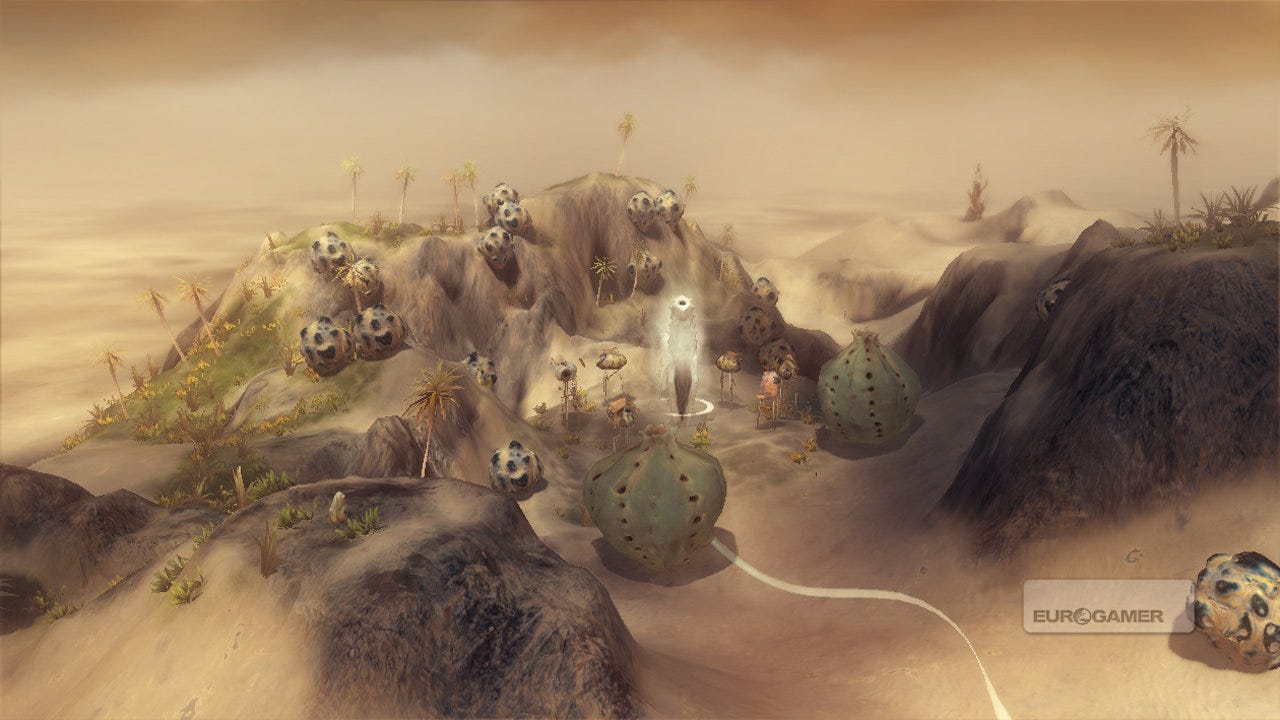
From Dust, then, is a title that works on various levels. In it you play as a God, raising a clutch of primitive tribesman from dust to glory. But this is also a game that seeks to resurrect its genre from a dusty grave, not to mention Chahi’s own career in the games industry, which has largely been in hiatus since 1998.
It starts before the beginning, before the word, with “The Breath”. The game opens at the foot of a totem pole on the edge of a remote peninsula. A gaggle of tribesmen and women encircle it, worshipping in their primitive tongue while frothing waves roll and roar around. The Breath is your reach into the world, your personification: a black dot stand-in for a mouse cursor, with a glowing fire tail snaking behind like a crimson streamer.
To begin with all you can do with the Breath is hoover up sand. Squeeze the L-trigger and you’ll scoop up the dust from the ground, forming a giant whisking ball of sand. Using the Breath cursor you can move and drop the sand, making a hill where before there was just a valley, a sinkhole where there was a plain.
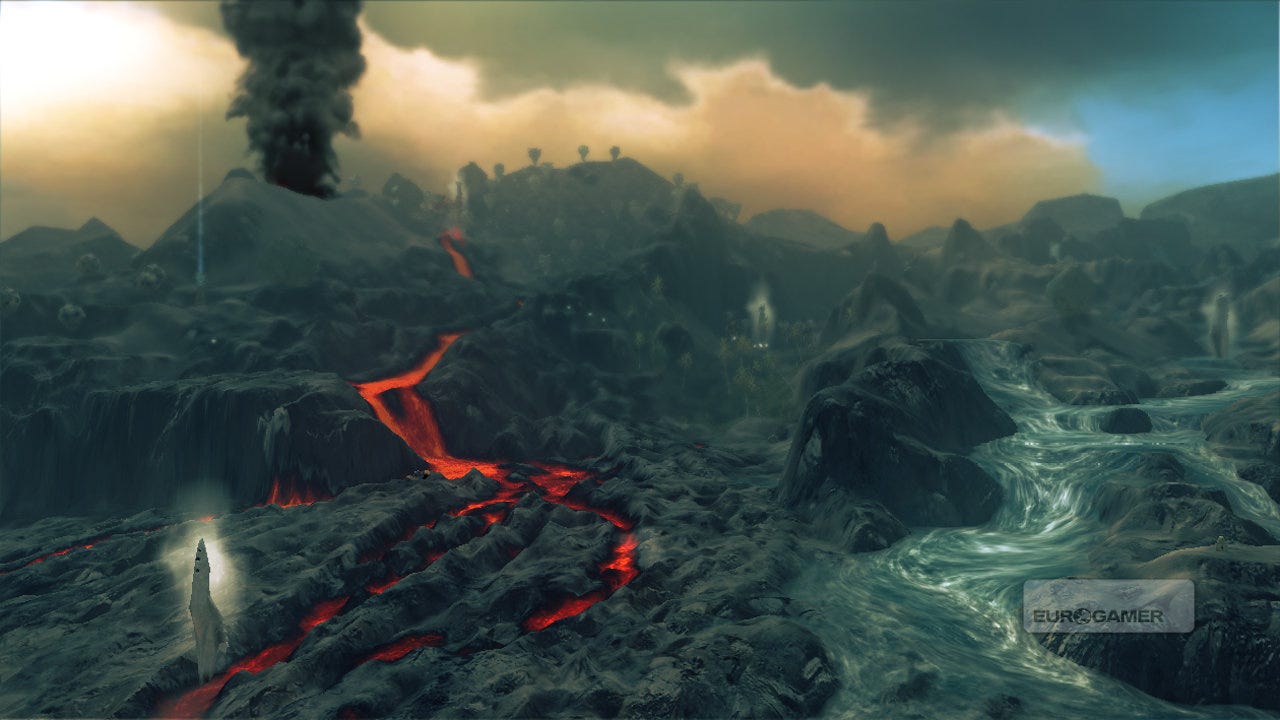
Chahi’s approach to the long lost genre is traditional: your role as a God is as a shepherd, the tribesmen the flock that you must guide from A to B while attempting to keep them safe. At first this means building sand bridges to allow the tribe to cross wide rivers. But in time you are able to drain lakes of water, and even scoop up lava.
In this sense From Dust is closer to Lemmings than Black and White, although mercifully your nomads will have the sense to wait for your intervention before charging headlong into dangerous rapids. There aren’t really any moral dilemmas here – at least, not in the introductory section of the game we've had access to – so you don’t have to choose whether to be a benevolent or cruel supreme being so much as simply ensuring you are an attentive one.
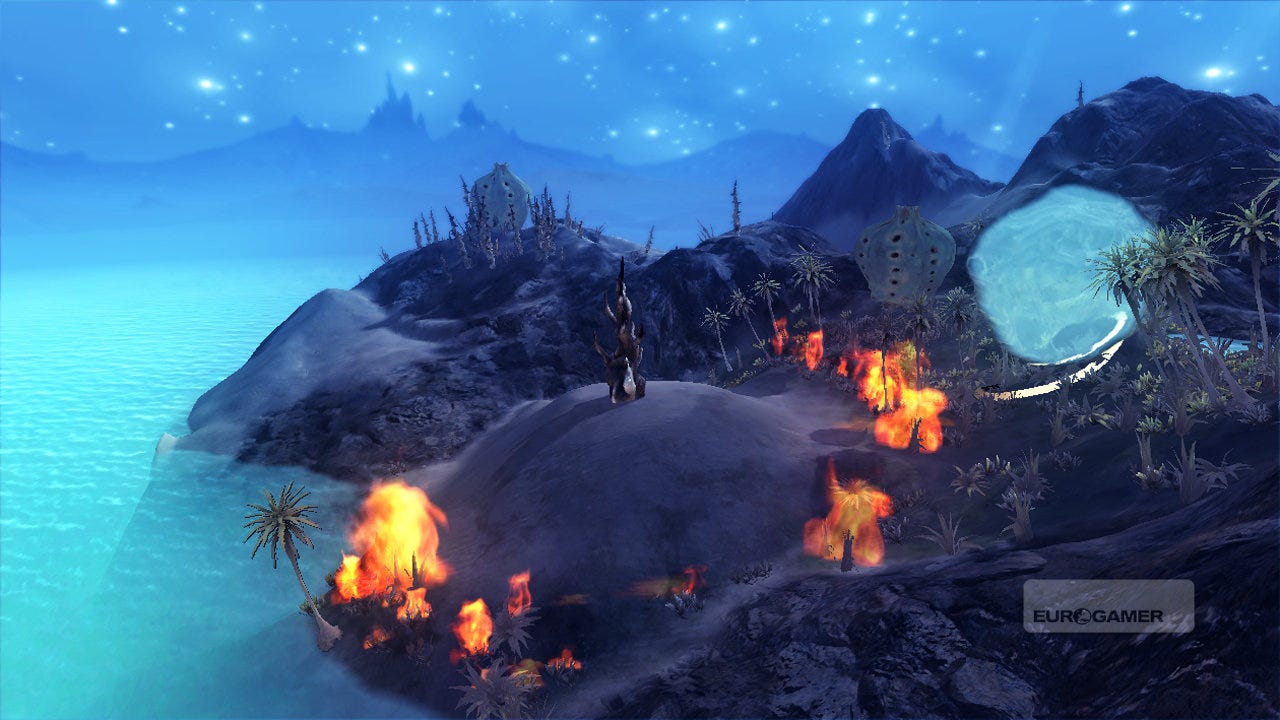
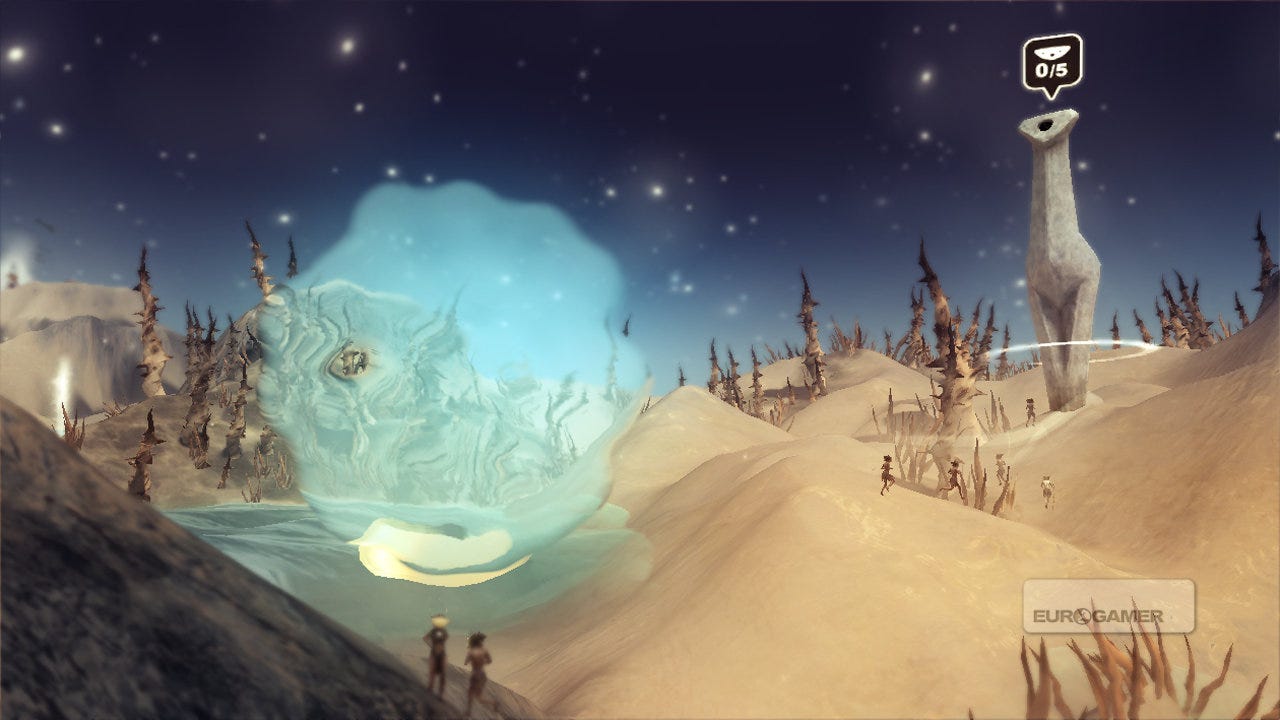
Totem poles are the objective markers. Lead your nomads to a new totem pole and they will settle a village there, sometimes granting you a new power as they do so. Out from the village greenery begins to spread, rejuvenating the barren land around like a welcome cancer. Sprinkle sand over rocky outcrops and new palm trees will be able to spread across the environment.
While the safety of your tribesmen is your primary objective, restoring life to the environment is a pleasing secondary one. A green gauge sits in the bottom left of the screen, filling up as you aid the rejuvenation of an environment. When this gauge fills past a certain point, animals move in, living alongside your tribesmen, and signifying the unlocking of new stories and challenges.
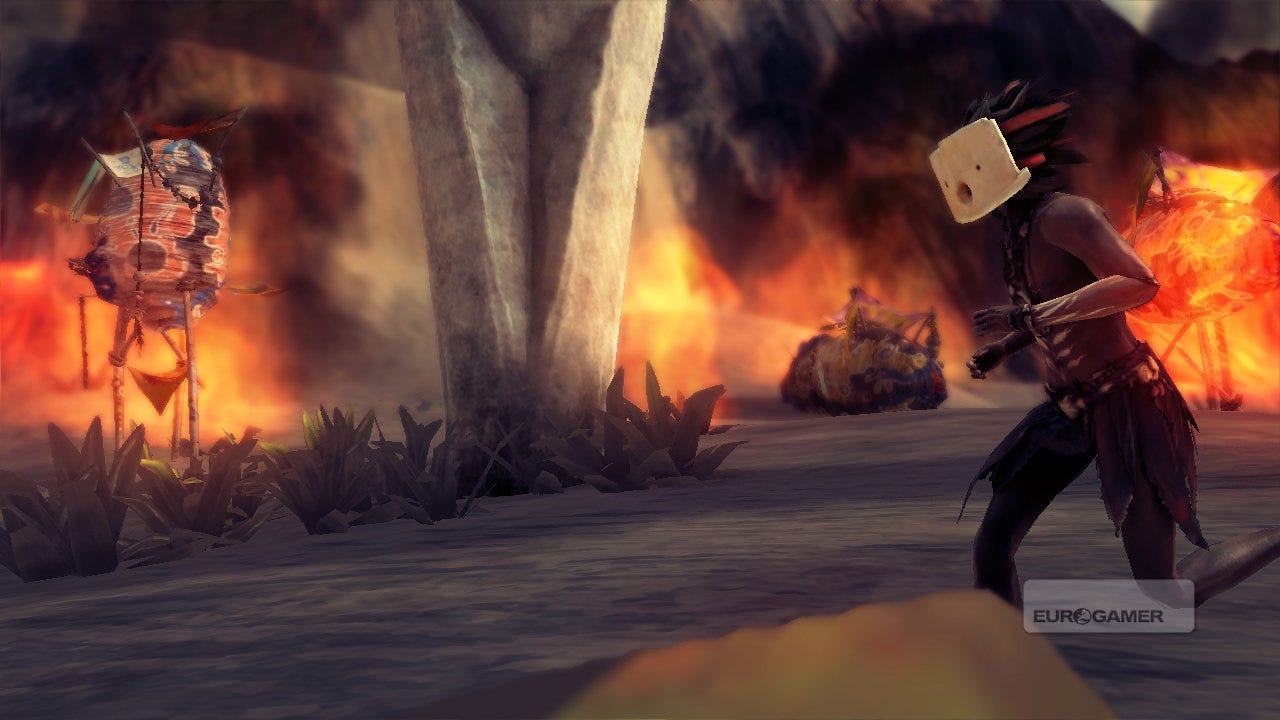
But you never settle for long. This is a game about passage, your people constantly moving from location to location as they grow and develop in exodus. From Dust’s world is a cruel world to boot, and the chafing between man and nature is the conflict in which the gameplay is born. So you must send a tribesman to seek out an ancient relic to protect the tribe when the tsunami hits. If he returns to the group in time then, as the giant waves swallow the coastline, the tribe is protected by a bubble, which never breaks as water slaps against it.
Chahi and his cohorts at Ubisoft Montpelier have lavished attention on the engine. As a result the physical response of the world as you change it has a sharp, realistic quality. Tonnes of sand disperse when dropped, sliding out before settling into new shapes. Meanwhile the water slops and splashes with pleasing believability, making this a tactile game, and one that allows for emergent gameplay.
Want to divert a river over a rock crop? You need only scoop up sand and drop it into a tributary to see what happens. It’s here that your god powers are at their most enjoyable and playful, and you can take a break from the tiring work of salvation to simply mess around with your creation, and it’s here that From Dust appears to strike a welcome balance.
Your people are in need of a saviour and the peril in which they live provides the sense of keen urgency that gives the game edge and bite. But the secondary work of rejuvenating the islands, sprinkling sand over rock to facilitate the spread of life is a pleasant, calming pursuit. The rhythm of save and build is mesmerising and for the first time in a long time, makes god’s work seem appealing. As such, this is a second coming that all can anticipate eagerly.
From Dust releases for Xbox 360 on 27th July. A PlayStation 3 release will follow.