Alice: Madness Returns Review

Stuff it back down the rabbit hole.

Version tested: Xbox 360

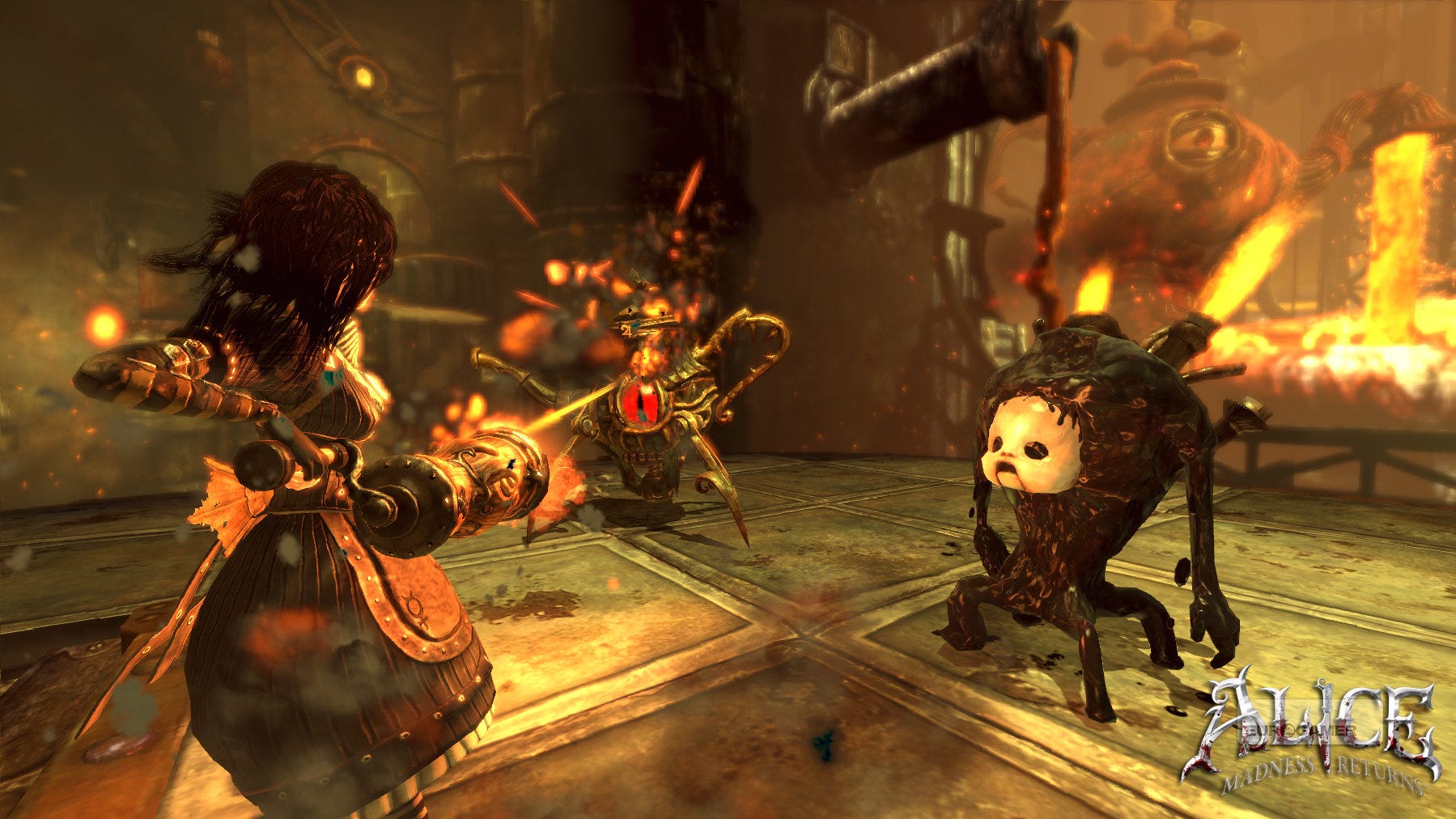
All is not right in Wonderland. The Mad Hatter's domain has become a Communist industrial complex, where giant, living, unblinking teapots have been repurposed as parts of a rickety production line. The Walrus and the Carpenter have taken to performing in a slutty undersea cabaret that hides a gory secret. Worst of all, a massive train shaped like a cathedral on wheels is thundering through the world, leaving destruction and lakes of leathery tar in its wake.

No, sorry, I got that wrong. Worst of all is that exploring Wonderland is, in practice, about as full of wonder as watching paint dry. Paint the colour of blood and dreams, but paint nonetheless.

The first American McGee's Alice, released all the way back in the year 2000, was a passable platformer that was hoisted up and carried by its twisted Wonderland setting. The game asked, if Wonderland represents Alice's imagination and psyche, what would happen if Alice went mad?

And so it told the grim story of Alice's family dying in a fire, and the poor girl continuing to hallucinate from inside a Victorian mental asylum. At the end, Alice quite literally hunted down and murdered her own madness and was released from the real-world asylum.

Alice: Madness Returns sees Alice wandering through the streets of London and continuing to hallucinate, and a terrible evil arising in her mind once again. It's an evil that makes a little less sense this time around, but to say any more would be to spoil some of what little there is to be spoiled in this game. Madness Returns has a lot of problems, but they can all be summarised in a suitably nonsensical way: this game is nowhere near mad enough, and it's also not quite sane enough.

Let's start with the latter: it not being sane and sensible enough.
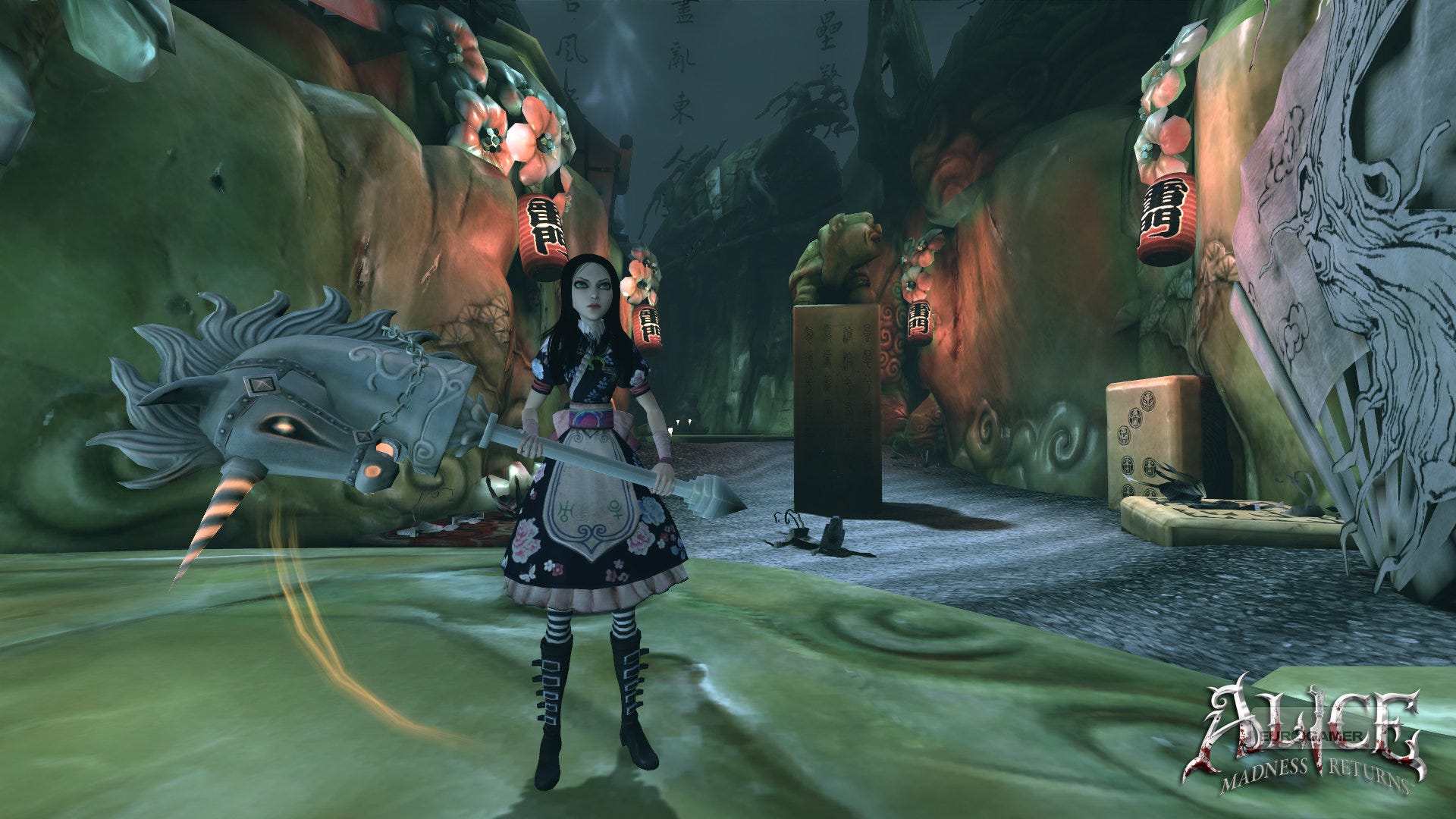
Simply put, this is just not a great example of ordinary, tried-and-tested game design. Each level of Madness Returns is broadly split into platforming segments, puzzles and combat. The level design of the platforming sections is fine, in the sense that you can and will jump from one floating platform to another without clipping through the floor, but it's mostly uninspired. Similarly, the puzzles are of that sad breed where they don't involve any actual brainpower - you'll find a lever or button, use it, and it will open up a new path through the level that will speed you onwards.

There are plenty of tiny, hidden side paths throughout each level that reward curious players, but the rewards often aren't worth the time spent traipsing to get them. You might find a 'Memory', representing a tiny scrap of dialogue from Alice's history, and you'll probably find an arbitrary number of the teeth used to pay for weapon upgrades that may or may not justify your time spent getting to them. Weirdest of all, you might find one of the game's hundreds of bottles. I collected these with the eagerness of a boy scout until I realised that they served no purpose at all.

Where Madness Returns does shine is in its combat, which offers polished, weighty action that can be tremendously rewarding on those occasions when you emerge from a crowd of enemies without a scratch.

Each of Alice's weapons, which range from a Pepper Pot gatling gun to a deflective umbrella, is mapped to a different button. And while each fight is only ever as complicated as using the right weapon on the right enemy at the right time, things can get tense once you've got several different enemies all circling you. In what is either an homage to or a blatant theft from Bayonetta, Alice actually dodges by morphing into a cloud of butterflies, accompanied by a bit of slo-mo if you dodge at the last second.

As a whole, the game is a sober example of design, but one that still isn't practical enough to realise that platforming means more than arranging platforms in a line. Then we have the other problem - it not being mad enough.

The original American McGee's Alice wasn't such a great a game either, but the setting gave it momentum. The setting rewarded you for each underwhelming jumping segment, fight or puzzle with a new and monstrous re-invention of a familiar character, or a new locale, weapon, surprise or cut-scene.

American McGee's Alice even had what's still my favourite weapon in any game ever. The Blunderbuss was a pantomime gun of such absurd power that when you pulled the trigger the apocalyptic blast of shrapnel would kill everything in your field of vision.

As much as Alice: Madness Returns follows in the original game's footsteps, it has none of that unhinged generosity. Your reward for finishing another rubbish jumping segment is, more often than not, yet another rubbish jumping segment.

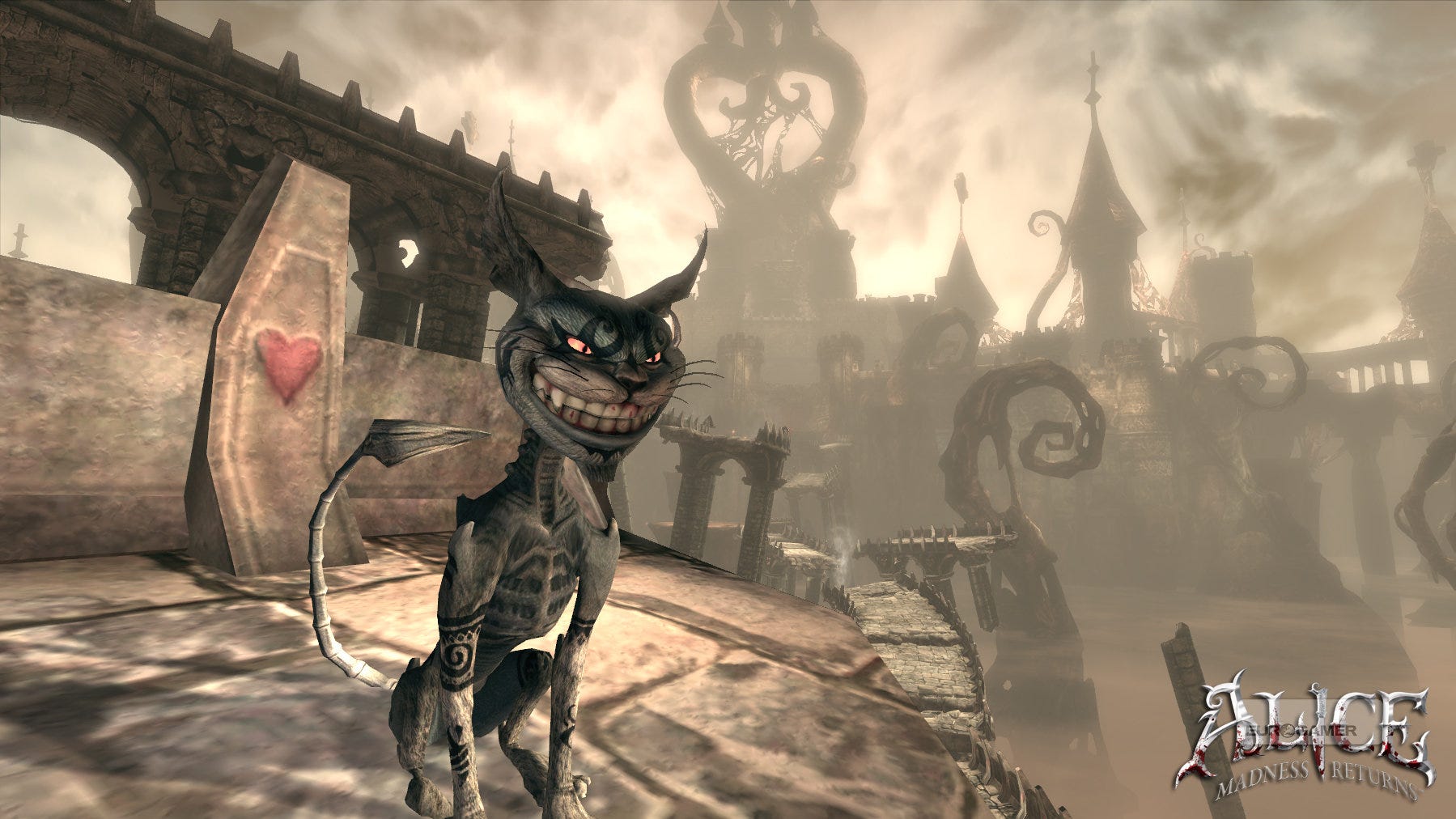
While Madness Returns looks thrilling in screens and trailers, what you're seeing there is almost all of the assets that the game has to offer (you're also seeing the PC version, which is slightly prettier than the console versions). Those are the environments that you'll see, repurposed and arranged in different ways, for hours on end.

With its ostensibly wondrous setting, this game should have felt like a celebration of creativity. Instead it feels cynical and even cheap, as if it were the official game of a Hollywood movie that was never made. The strangest thing about this is that there's probably almost enough content here to make for a pacey and surprising 12-hour game - but it's all spread out over 22 hours instead, making the game's title irritatingly apt.

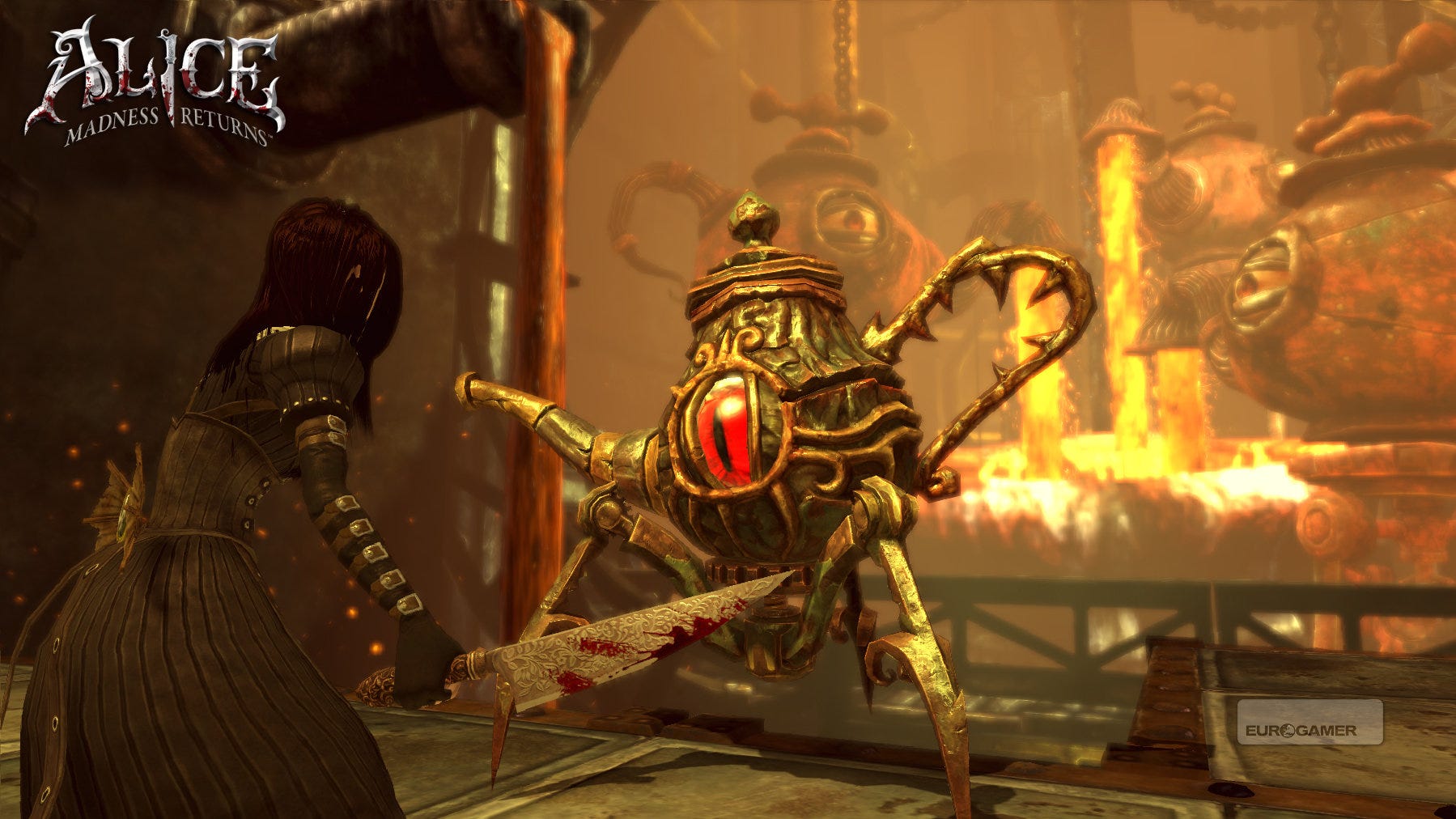
Madness Returns? You bet it does. Those same sodding art assets, set-pieces and enemies return to you over and over again, like undercooked bits of food that aren't content to sit in your stomach. The amount of padding in this game is absolutely bizarre. If you didn't think duelling a teapot with an eye could get boring, this game will teach you otherwise. It will teach you to hate teapots with eyes. And then it will keep you behind after class to fight multiple teapots with eyes in a dozen slightly different arenas.

On the plus side, the game gives you a Tea-Pot Cannon. And a whopping four other weapons.

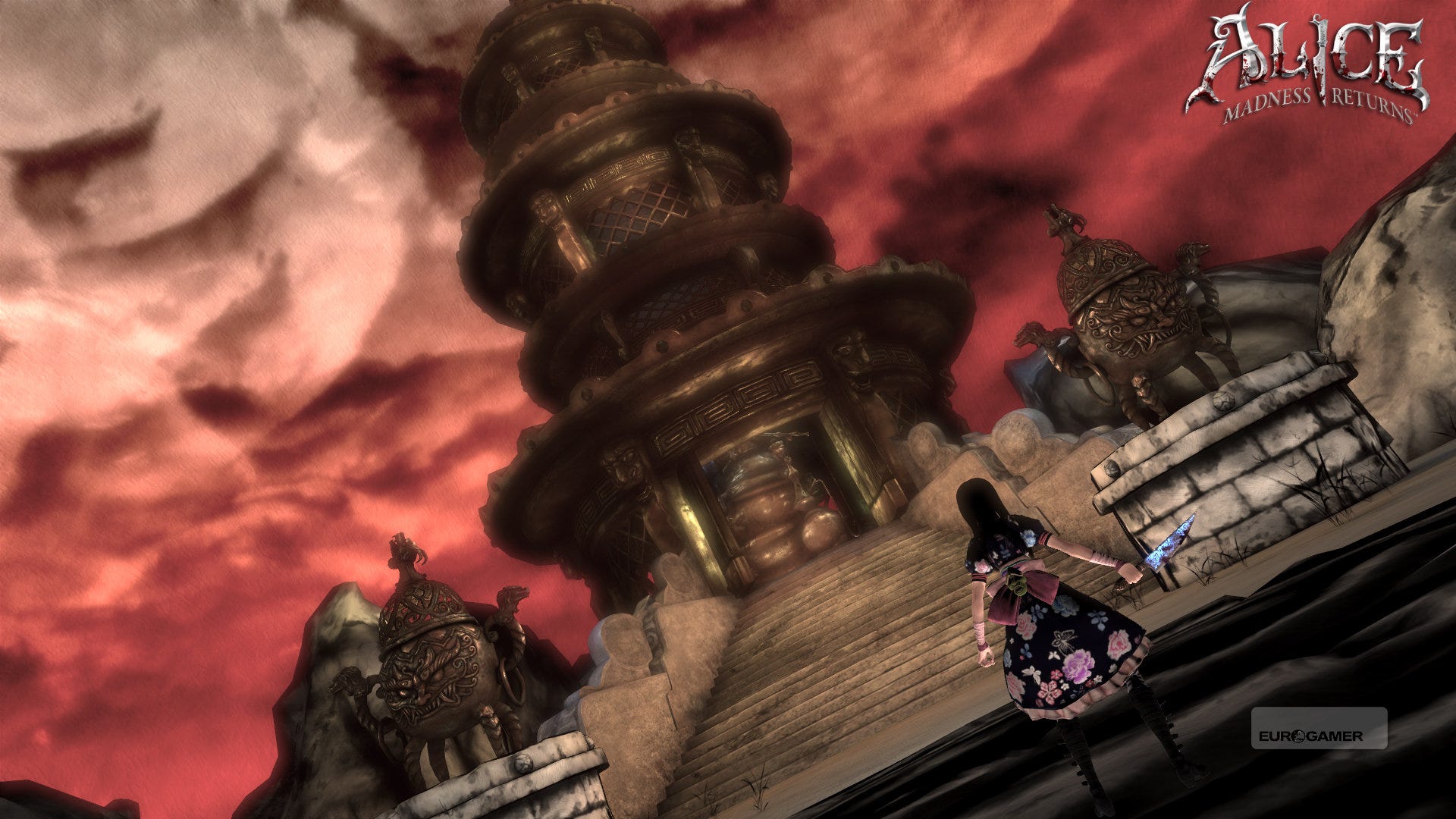
One area where Madness Returns does try to innovate is in the brief, linear stretches of Victorian London you wander through before Alice lapses back into her fantasy world. While nothing at all happens in these short levels, you can see that the mundane objects that Alice is exposed to in real life shape the hours-long chapter of Wonderland that you're about to play through. A fish frozen in a block of ice down by the docks will make an appearance in Wonderland as a new enemy, for example. A brief glance at the East Asian art belonging to Alice's lawyer even turns into a world made entirely of asian art, with Alice climbing a jade mountain and battling samurai wasps.

It's a nice idea, but like the rest of the game, it falls into disrepair after Madness Returns' opening few hours. The further you push into the game, the more the ideas feel hollow, unfinished and unloved.

If you are in love with the look and theme of this game, it is in no way inconceivable that you could happily go frolicking and slashing your way through it in a relaxed, mindless kind of way. Everybody else should look elsewhere for their moody thrills. Alice? Let me tell you - she's got problems.

5 / 10

Read the Eurogamer.net scoring policy

Comments (121)

Comments for this article are now closed, but please feel free to continue chatting on the forum!

  • Loading...hold tight!