Street Fighter x Tekken: the Killian opinion

What's it all about? Capcom's fighting game guru explains.

As Capcom's senior community manager, Seth Killian is charged with spreading the good word about all his paymaster's games. But it's Street Fighter IV, Marvel vs. Capcom 3 and now Street Fighter x Tekken that are his speciality. Killian knows his fighting games.

At Capcom's recent Captivate showcase event, amid the deafening roar of Hadoukens and Shoryukens, Eurogamer sat down for an eight-way chinwag with the man who is so good at fighting games that Capcom named Street Fighter IV's boss after him.

Read on to discover just what makes Street Fighter x Tekken tick – from the man who knows best.

Eurogamer: What will seasoned Street Fighter players first notice is different about SFxT?

Seth Killian: If they play the Street Fighter characters they'll feel at home. You have a team-mate and you have to manage both of their life bars, so in that respect it's different from some other tag-team fighting games or a Marvel vs. Capcom, where if you lose one partner, the next one comes in by default.

If you lose anybody in this game you've lost the round. That's a throwback to a Tekken Tag system where you've got to keep both players alive. So it's dynamic as far as switching. You can't just focus on your one character.

There's also no built-in comeback mechanic, like an Ultra meter. You've got one bar, used for all of your different techniques, which is important. Beyond that, the Focus Attack buttons are now used to tag. You can use those tags in somewhat of a Focus-like way in terms of Focus Cancelling, so your Focus Cancelling skills will still be useful to you, but it's not quite the same thing.
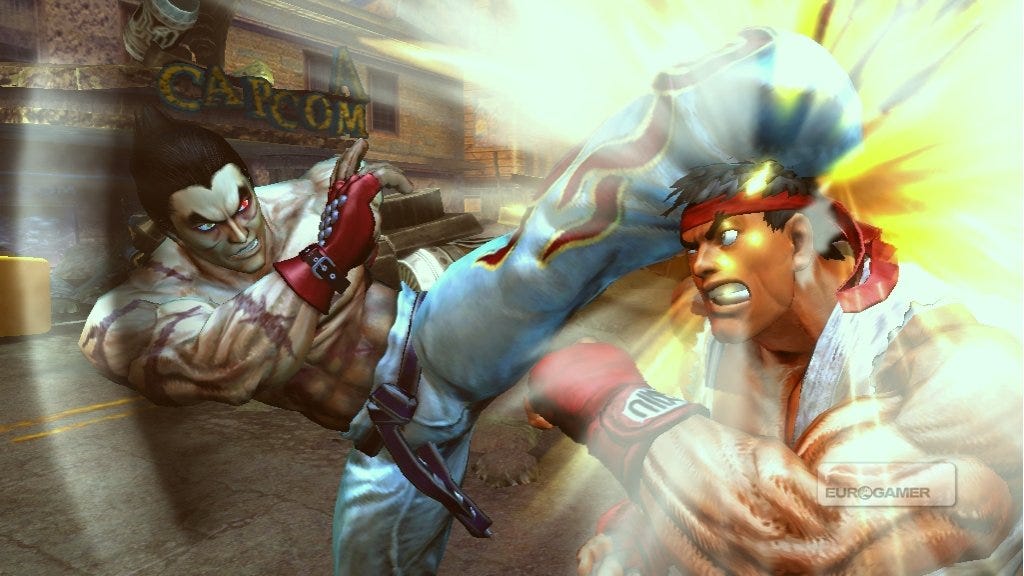
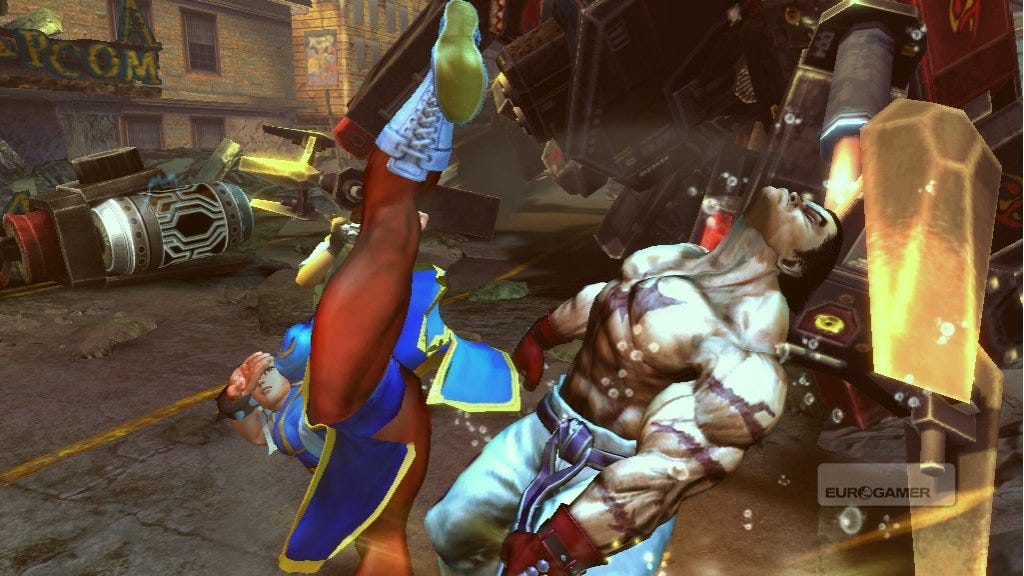
Eurogamer: What does the new life bar system mean for the kind of game SFxT is?

Seth Killian: You have to watch yourself, basically, and be mindful of not only where your life bar is, but what kind of damage your opponent can potentially be doing, and then find a way to bring in your team-mate safely.

You can just tag normally – it's pretty fast. But it's not completely safe. There is a little refractory period where you're vulnerable. So you want to find situations where you can tag.

One of the ways you can do that is by tagging in during a combo. You can be creative and cover your tag or, even in a block string, throw a fireball and tag behind that.

The way I find myself losing most often is because, I'll have a third life, but I'm up against a strong opponent who can do a third of a life, and given the amount of bar they have and the characters they're playing, they can easily do a third of my life.

It's not that they haven't earned it. Certainly they hit me, I lost. But I might have another character with 70 per cent life still, and it would be smarter to have them in there facing that. You have to manage that.

It's a more dynamic process. In Street Fighter it's always mano a mano. You've only got the one life bar to worry about. In most circumstances it's not coming back no matter what you do. In this game you have to look at your combined life bar and be a little smarter.

That's how I find myself losing so often, when I have the purely Street Fighter mentality. It's not that I shouldn't have lost. It's that I didn't have to lose if I'd been smarter with the tags.

Partner-specific combos are not supported.

Eurogamer: How would you describe the game's rhythm?

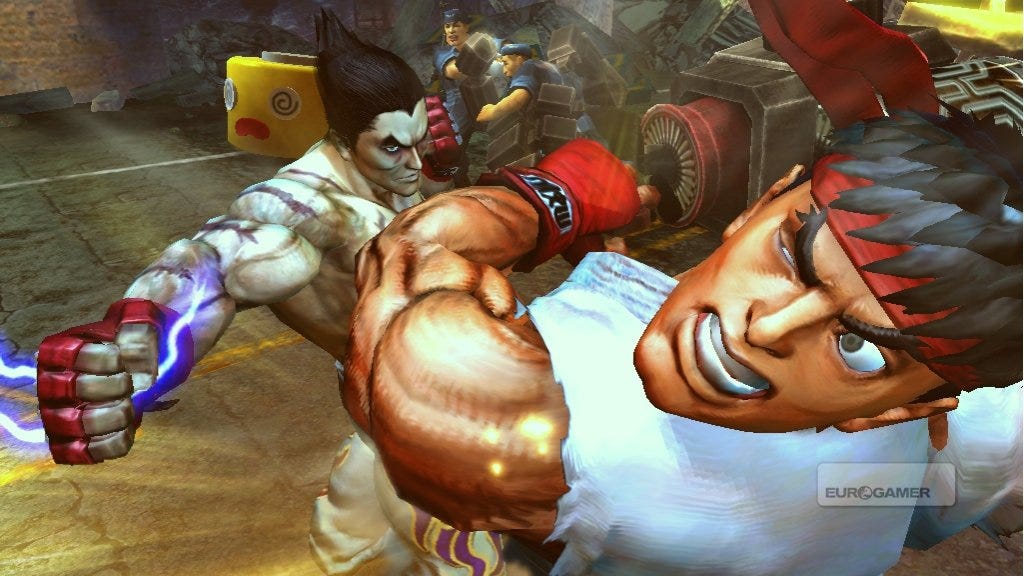
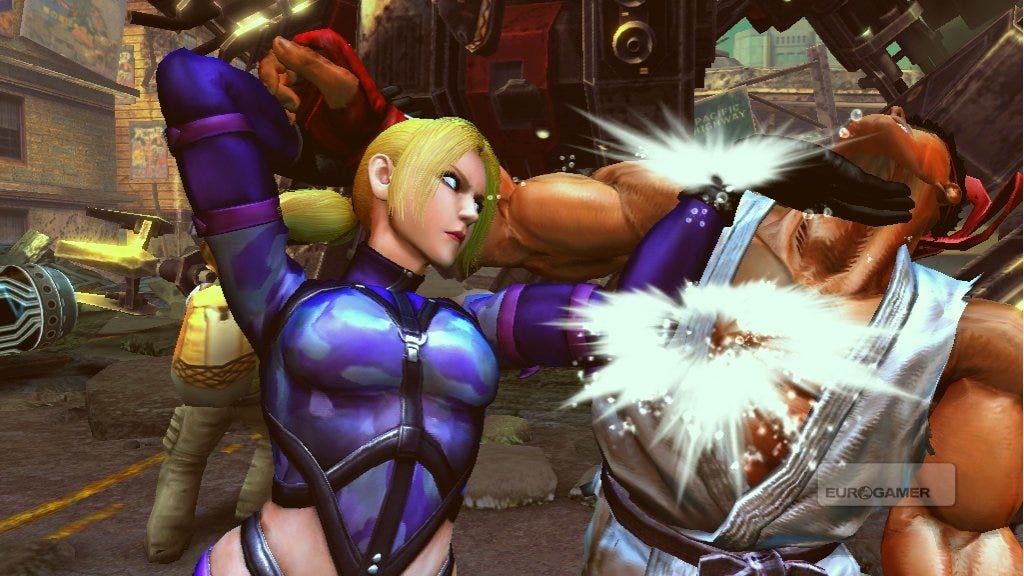
Seth Killian: It's a bit more of an in your face game because the Tekken characters don't have projectiles, for the most part. It's more of a mid-range game than a full-screen game. It's more down and dirty, where you want to be up close.

Obviously the Street Fighter characters have projectiles and those can be used in the traditional ways to make interesting match-ups. But I've focused more on the Tekken side just because they're new to me. I haven't played a Tekken game seriously since Tag. I gave up at 4.

Eurogamer: That was the bad one.

Seth Killian: Jin was very strong. I'll say that. I didn't much like Jin and I didn't much like losing to Jin, so I gave up and stayed very busy with a lot of other fighting games.

But to me it feels more immediate and up close. That may be an artefact of the fact I'm using more of the Tekken characters. But Marduk has a nice long-range grab that's really quite fast. That's dangerous at range. The Tekken characters definitely have some ranged options, but not in a Dhalsim or even a Guile or Ryu way.

Eurogamer: How does the visual style differ from Street Fighter IV's?

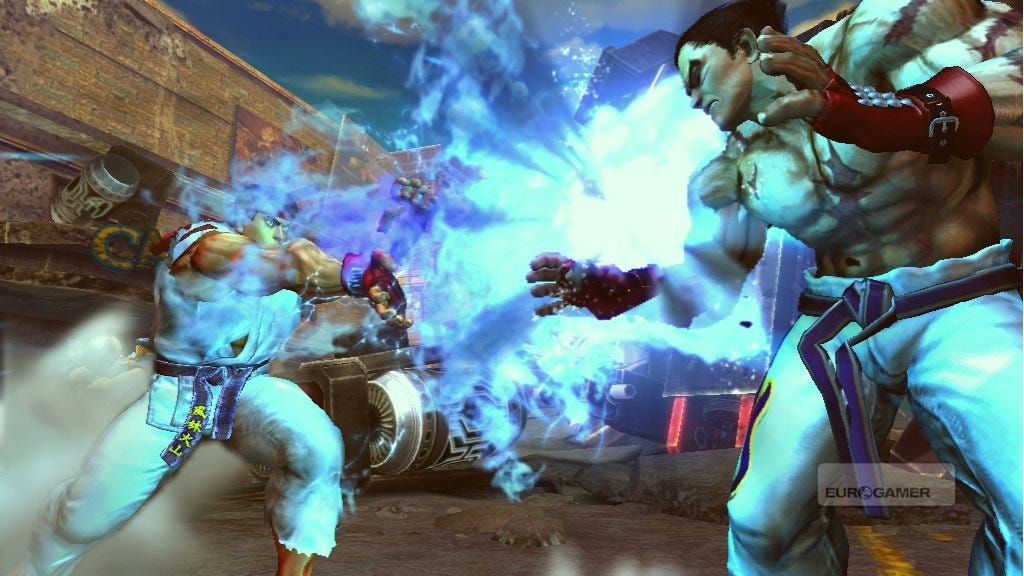
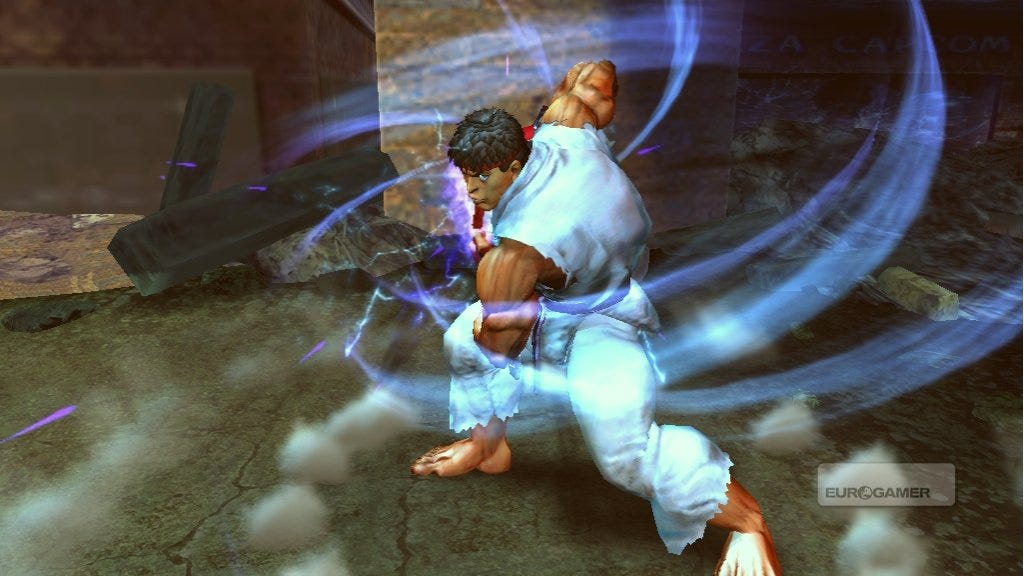
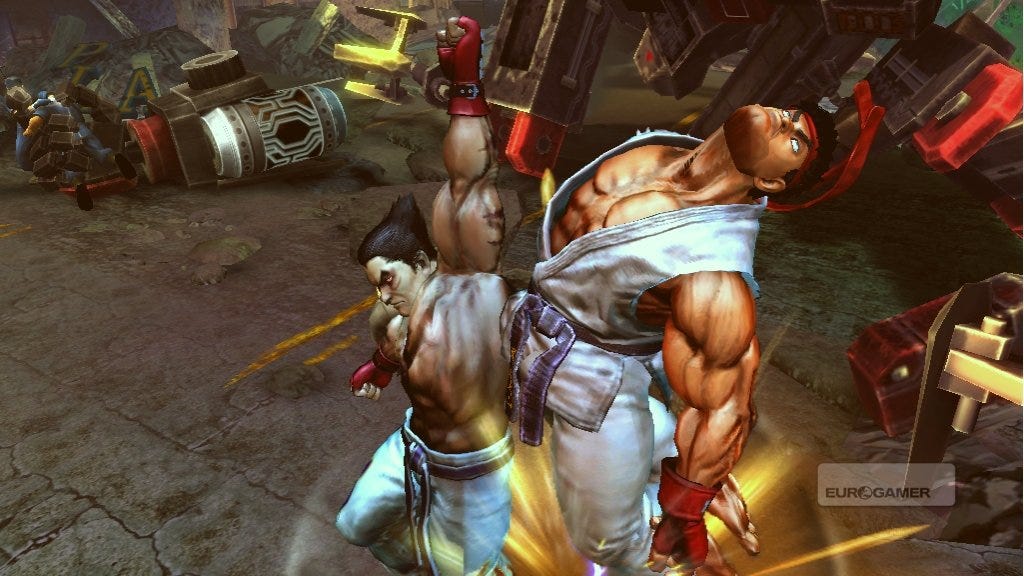
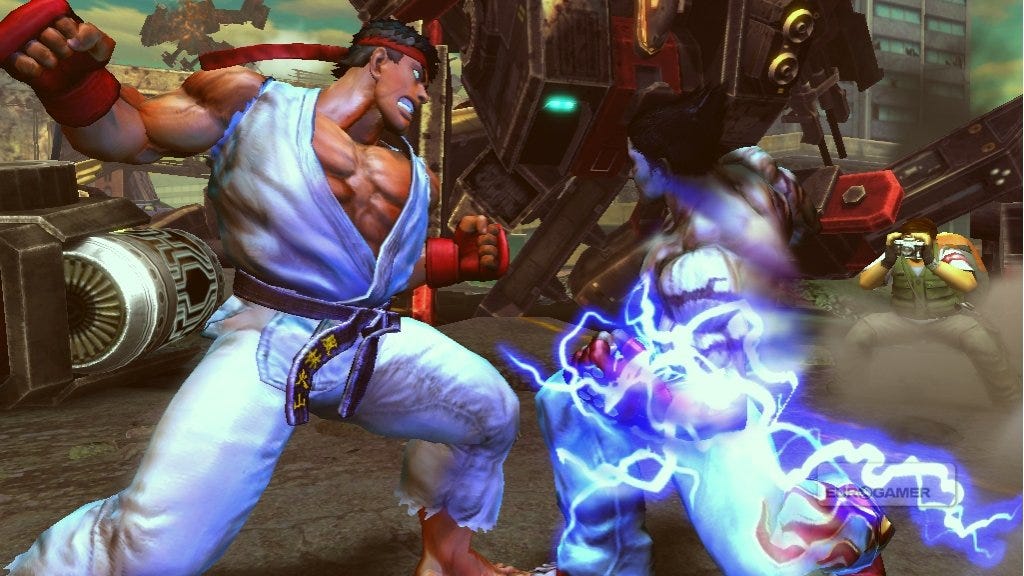
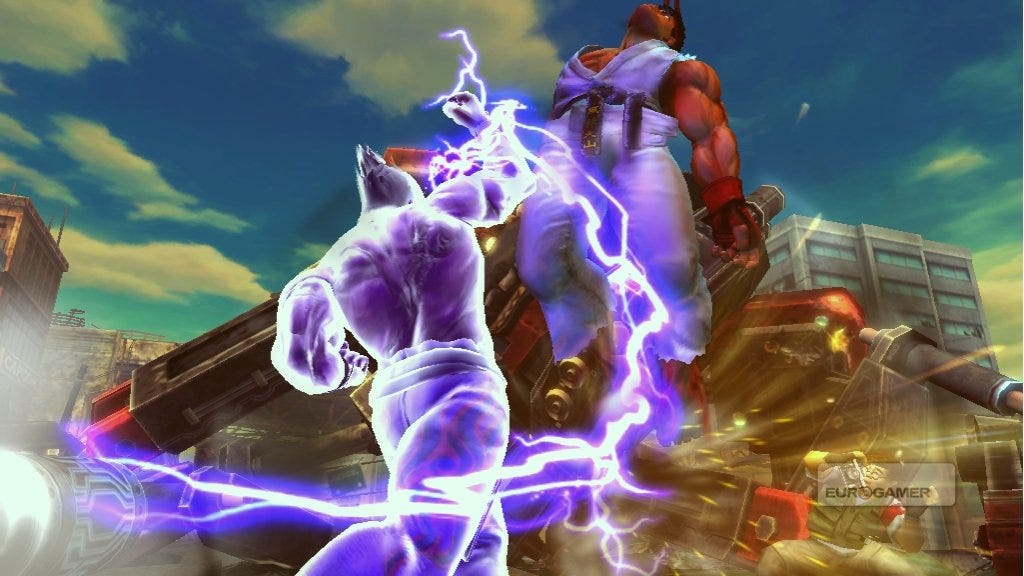
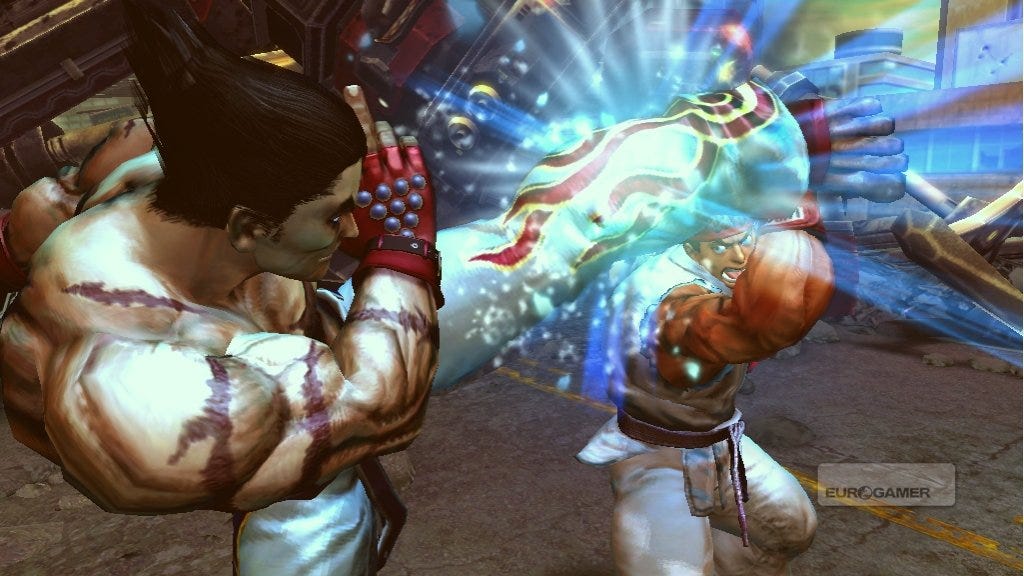
Seth Killian: The touchstone the team is working from is this liquid feel, although I don't feel that's quite brought to bear in the game yet. It's getting there. You remember in Street Fighter IV they had this ink thing, which only emerged towards the tail end of the game. It wasn't very inky at the beginning. They're looking at different liquid touches as well as what you've seen, to match the gameplay with what you've seen in the trailers.

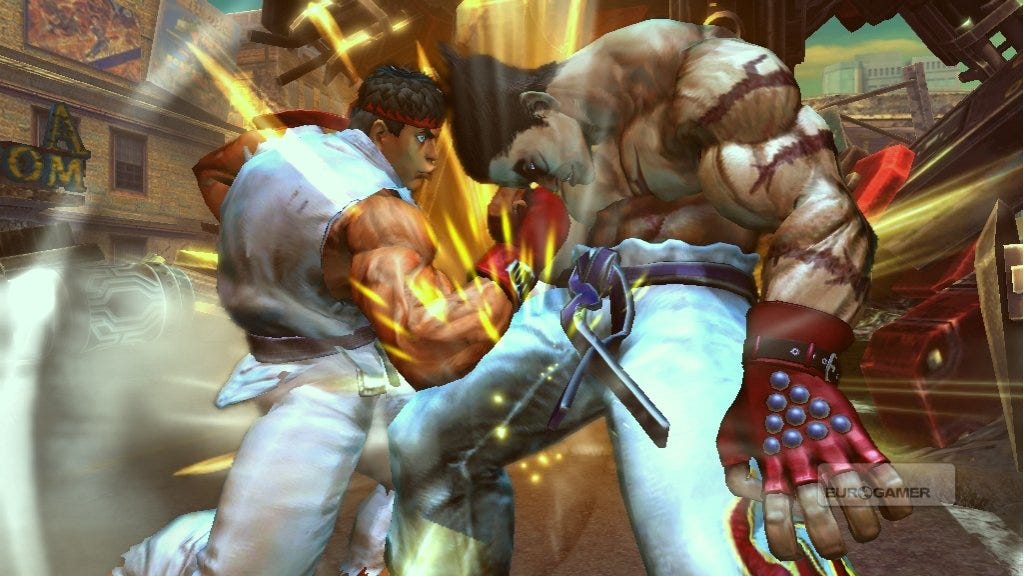
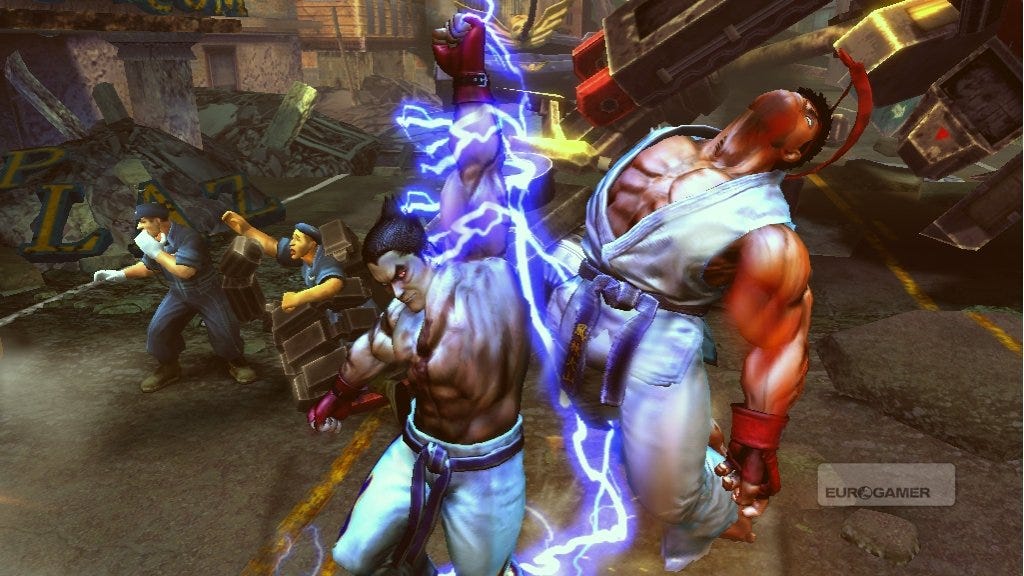
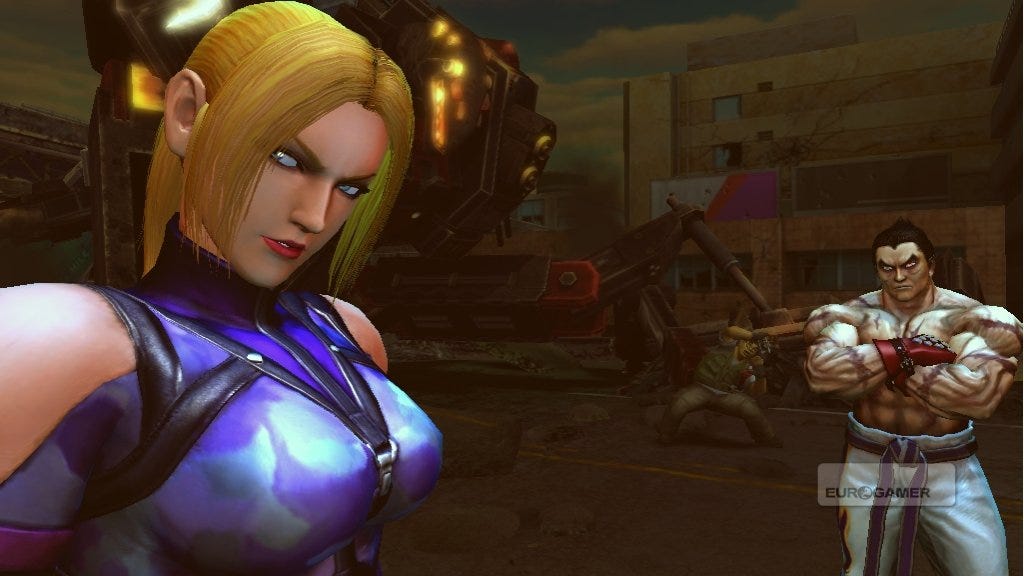
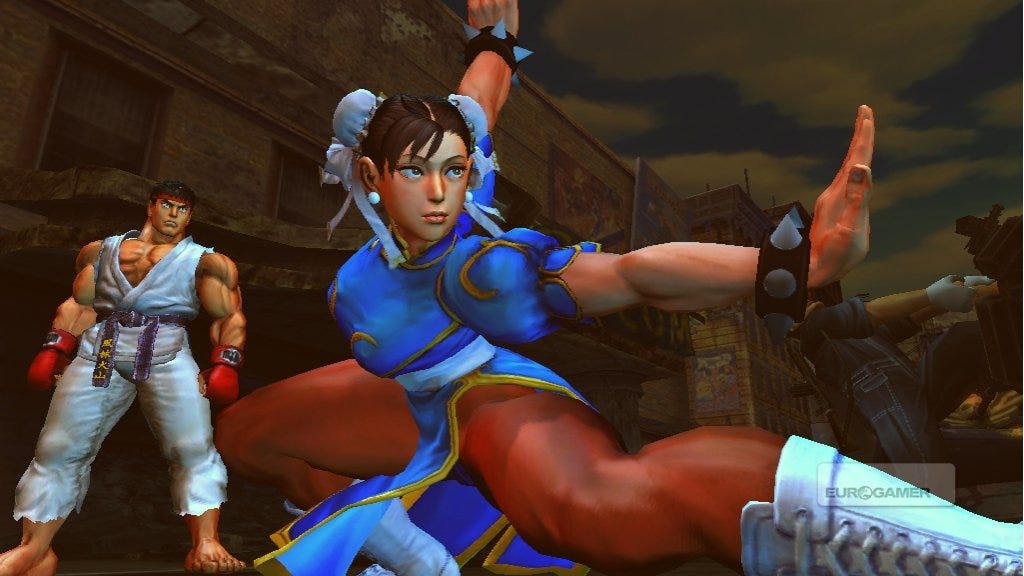
To me it seems brighter and dirtier. Like, a little grungier, almost. That's an artefact of the backgrounds that are finished. The destroyed landscape, with the Cyberbots mechs running around, definitely lends itself to a grungy feel because it's destroyed buildings and rubble.

And then the Dino Crisis touchstone, with the dinosaurs and fences. That also has a slightly destroyed look to it. It's not pristine.

Eurogamer: What tips do you have for Street Fighter players to help them get into the game?

Seth Killian: I don't think it's that different. Even the Tekken characters have Street Fighter-style special moves. A number of them. Those will all be there.

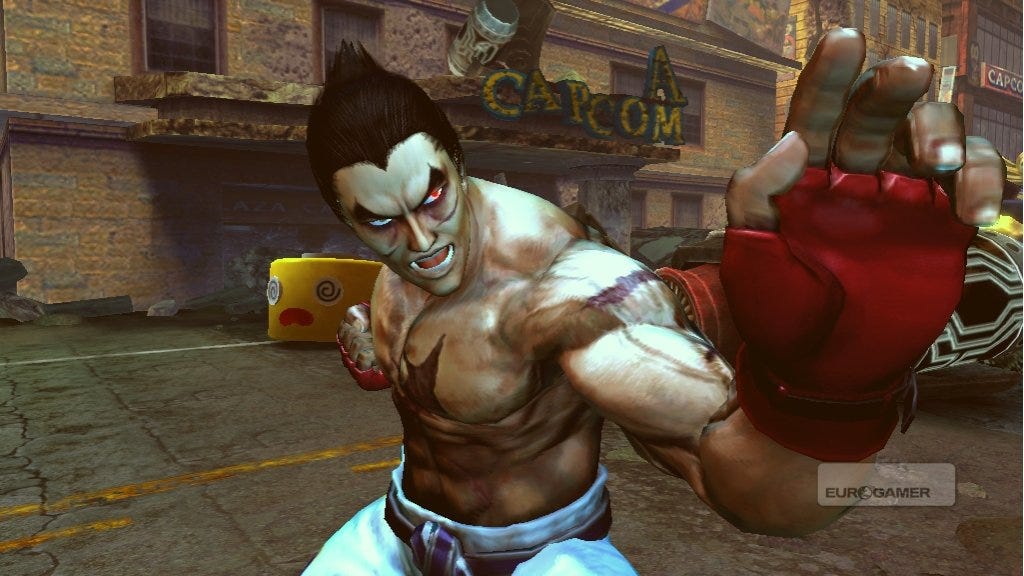
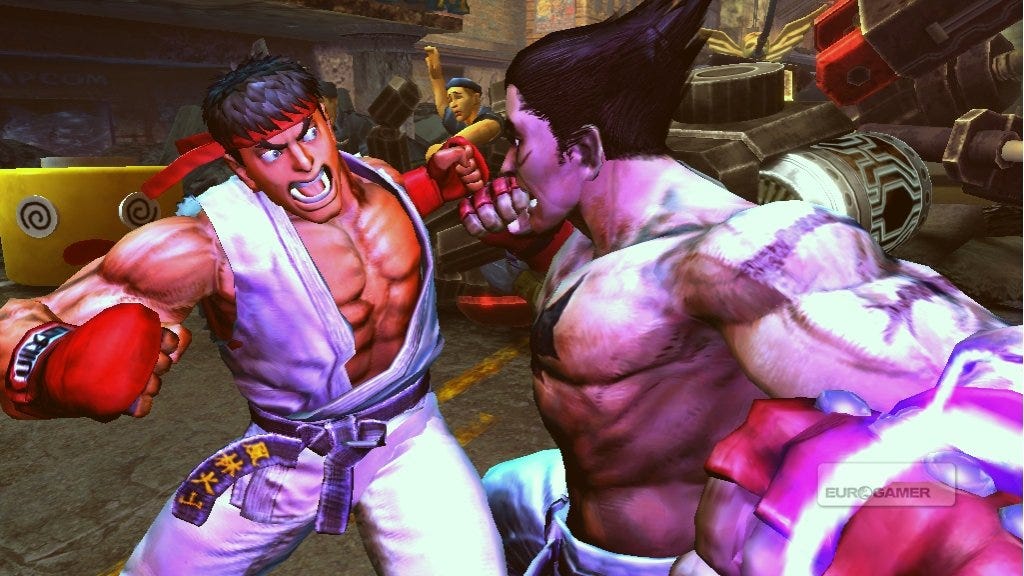
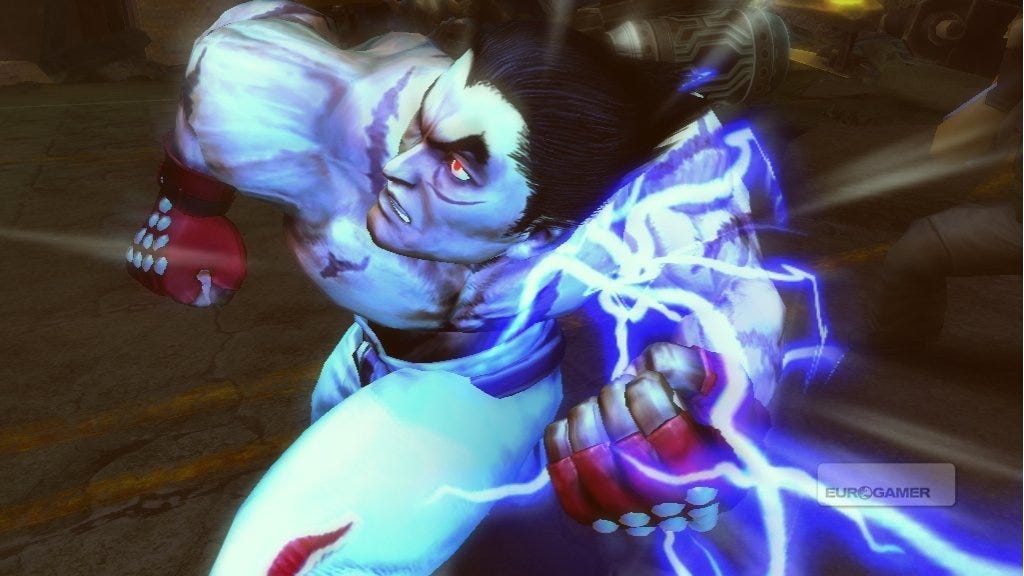
So in some ways you can think of them as Street Fighter characters, but they've also got these Tekken-like abilities. Kazuya can do some of his traditional tricks and mix and match with Tekken-style combos.

The way I push that into my Street Fighter brain is to think of them as unusual special move inputs, which is really what they are in Tekken. It's no different than a Street Fighter special move. It's just a series of buttons. Same thing here.

It's fun for me to watch people coming at it more from the Tekken perspective, because they slide into that bit of it easily. I've blocked off things I would associate with Tekken as, this is just an unusual special move input, rather than a whole new way of approaching it. I hope it works out well for both sides. It hasn't caused me any problems.

And there are a lot of hybrid combos. In Tekken, you never begin a combo by jumping in at somebody. That's a pretty big thing in this game. Jumping is still an important technique.

So, you begin with the jump in, do maybe some Tekken strings, cancel into a special move, followed by a Tekken string and something else from there. And that's not even to begin cancelling in between the two characters.

For me, in my little lizard brain, I've boxed the Tekken stuff as an unusual special move. But ultimately it's no different. There are a lot of similarities from a broad fighting game standpoint, or a game theoretical standpoint, between Tekken and Street Fighter, although the controls are quite different. That's what keeps people in their respective camps.

I've been pretty excited with what the team has done to try and bridge that. Talk to the Tekken hardcore and see how they like it. They'll have a bit more of an adjustment than the Street Fighters. It's set in a primarily Street Fighter engine, but with plenty of Tekken flourishes that will make them feel right at home.

Eurogamer: Will this game be played in tournaments by high-profile players?

Seth Killian: We're definitely beginning with those guys in mind. In some ways Tekken controls are a little easier. The bar is lower because it's hitting buttons rather than necessarily a stick input as well, which has always been one of the advantages Tekken's had as a series.

If you mash buttons in a Street Fighter game you look very bad. If you mash buttons in a Tekken game, to an experienced player you might still look bad, but you can do some cool things just out of the gate. We definitely are aiming directly at making a game that's going to have those kinds of competitive chops. No question.

Eurogamer: Any changes made to classic Street Fighter characters? Do they play differently?

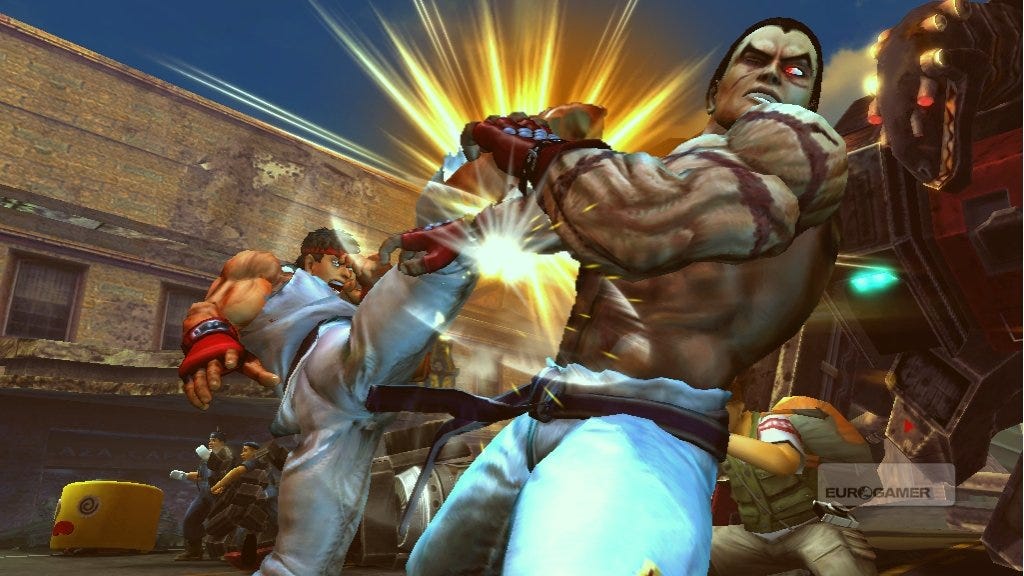
Seth Killian: Ken's Hurricane Kick is OK in other games and a worthwhile technique. But in x Tekken it's potentially much more valuable because it keeps the opponent frozen in one place for so long, so you can bring in a team-mate while that's happening and set up other interesting things off of there. It's the same move, but because of the engine changes, it means something else.

Eurogamer: Street Fighter IV revived interest in the fighting game genre. Are we in another fighting game golden age akin to the early nineties one, or is this a false dawn?

Seth Killian: In many ways it's looking backwards. It's missing some of that completely immediate impact, but ultimately it's actually much better than it was then, because it's wiser. It's smarter as a scene, and it knows what came before, and it saw the rise and the fall and some of the mistakes that were made. Even though they were great games, it wasn't responsive to the audience and the market.

Another big difference is that now we've got the internet. In some ways these are... They're not connoisseur games, but they give you what you put into them. The more you invest into these games, the more they give you back.

Two people can watch an amazing Street Fighter replay, be it on YouTube or in the game, and have different experiences based on their depth of understanding of the game and what the players are doing and how clever they can be.

But for the people on the inside, they've always known how amazing these games can be. With the way things are right now, companies have an excuse to be back in the fighting game space because they're games that can sell well. So as a business proposition they can be successful.

And then the community has that to rally around, and then has the tools to show off what they're doing. They're just a really smart bunch of players. For the people on the inside, we've always known it's this amazing thing. But it's quite difficult to communicate to people on the outside, and it takes some investment.

Today the games are still challenging, but it's easier to get in, and it's easier to see why you would get in. That's the real difference. What is it that's so exciting about this? When I got into Street Fighter II it was exciting because the game was a box of mysteries and looked like nothing else. That doesn't happen as much today.

Information goes so quickly it's hard to have mysteries. Everyone at this point knows anime. Even though we try and keep a fresh visual style, it's never going to have quite the same impact as it might have been back then.

But at the same time, rather than just looking up to a few guys in the arcade, you see this whole international community of people that aren't just excited, they're smart, they're inventive, and some of them are loud mouths, and some of them are villains, and some of them are heroes. You have something to shoot for.

The brotherhood that is fighting games is clearer and has more of a presence than it ever had. That's part of what bonds you to the game. It's not just the game, it's the people who play it. They invest the meaning into the game.

You can look at any sport and it looks a bit silly from the outside. But when you see the traditions around it, you see all the investment, you see the people struggle and practice, you see the excellence in the sports men. The same thing is happening for fighting games, in the best possible way.

The scene is wiser and more poised for a bright future than it could possibly have been as a new kid back in the early nineties. I feel more optimistic now than ever before. Just the fact that it was able to come back like this points to this untapped well of enthusiasm. We're in good shape.

Comments (22)

Comments for this article are now closed, but please feel free to continue chatting on the forum!

  • Loading...hold tight!