Version tested: Xbox 360
Regardless of the specific sleights and shuffles, the secret to every great illusion is always the same: hide the effort. It's here that Gray Matter a game that's as much concerned with magic as it is science, and equally obsessed with imagination and memory really struggles.
Somewhere, in amidst the muddle of threadbare technology, a fiddly UI and a convoluted narrative, you get glimpses of a game with real style and substance. The sheer difficulty in holding this wayward enterprise together, however, appears to have been too much.
Gray Matter is ambitious, literate and unusual. Sadly, it's also compromised, unconvincing and often dull. It can't hide the effort that's gone into putting it together, and therefore the illusion that makes the best adventure games so memorable is all but missing.
Gray Matter is the latest offering from Sierra On-Line design legend Jane Jensen. As creator of the Gabriel Knight series, she's a household name, but only, alas, in the kind of households that have a dream catcher and an antique globe in the living room. Her new game retains a handful of classic Jensen motifs it's a mystery story with roots in history and pseudo-science but throws in new characters and a fresh setting, shifting its attention from the US to Oxford and its ancient colleges.
The story kicks off on a suitably dark and stormy night, with American illusionist and ex-goth Samantha Everett breaking down en route to London, where she plans to work her way into the scarlet folds of the Daedalus Club, a secretive group of possibly rather sinister magicians. Seeking refuge from the rain, she ends up at Dread Hill House, a spooky mansion perpetually lurking beneath radioactive skies, where neurobiologist Dr David Styles is pursuing his research into Cognitive Abnormalities and needs an assistant.
Pretending to be that assistant, Sam eventually realises that something's awry with the frosty and disfigured Styles. His nightly visualisation experiments, conducted on a group of university students that Sam has helped recruit, are wreaking havoc in the real world, while the good doctor's dead wife appears to be reconstructing herself as memory turns to matter. What follows from that point on is a kind of point-and-click marriage of Umberto Eco and Andrew Lloyd Webber.
Gray Matter's technical and graphical failings are probably the most understandable of its shortcomings. Kicked between various publishers and developers during its lengthy production, Jensen's game wobbles early, and wobbles often.
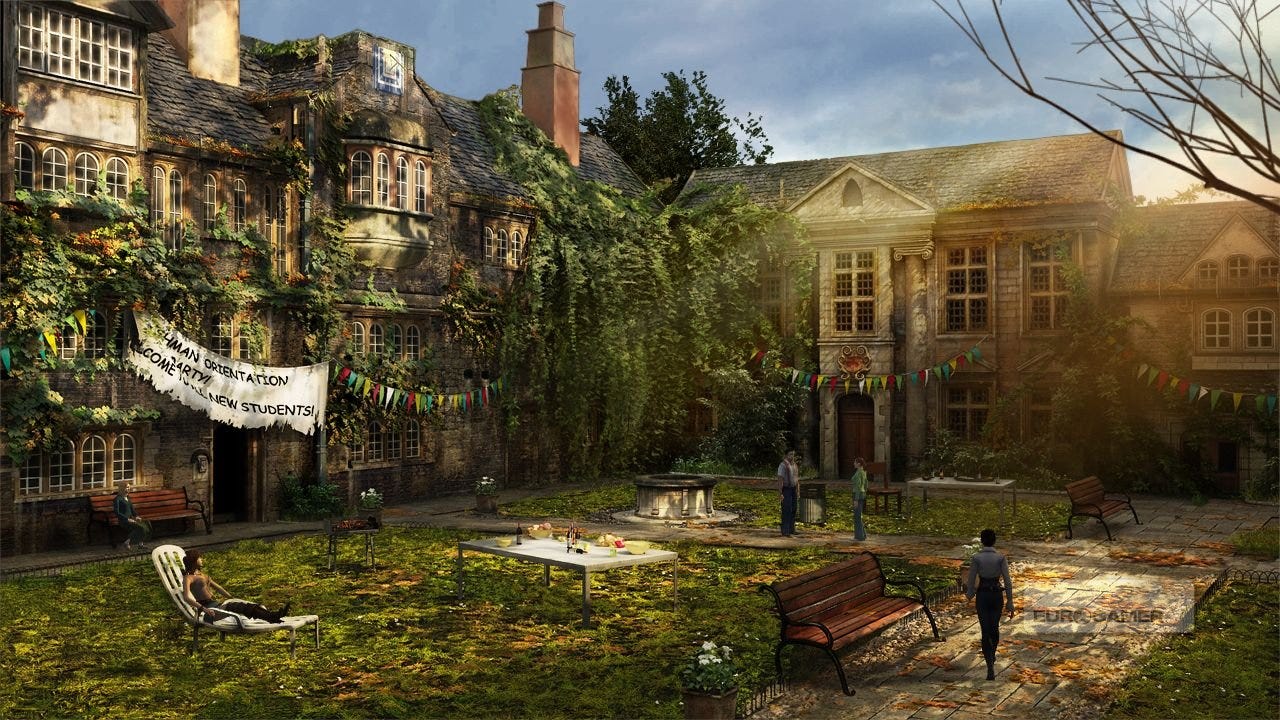
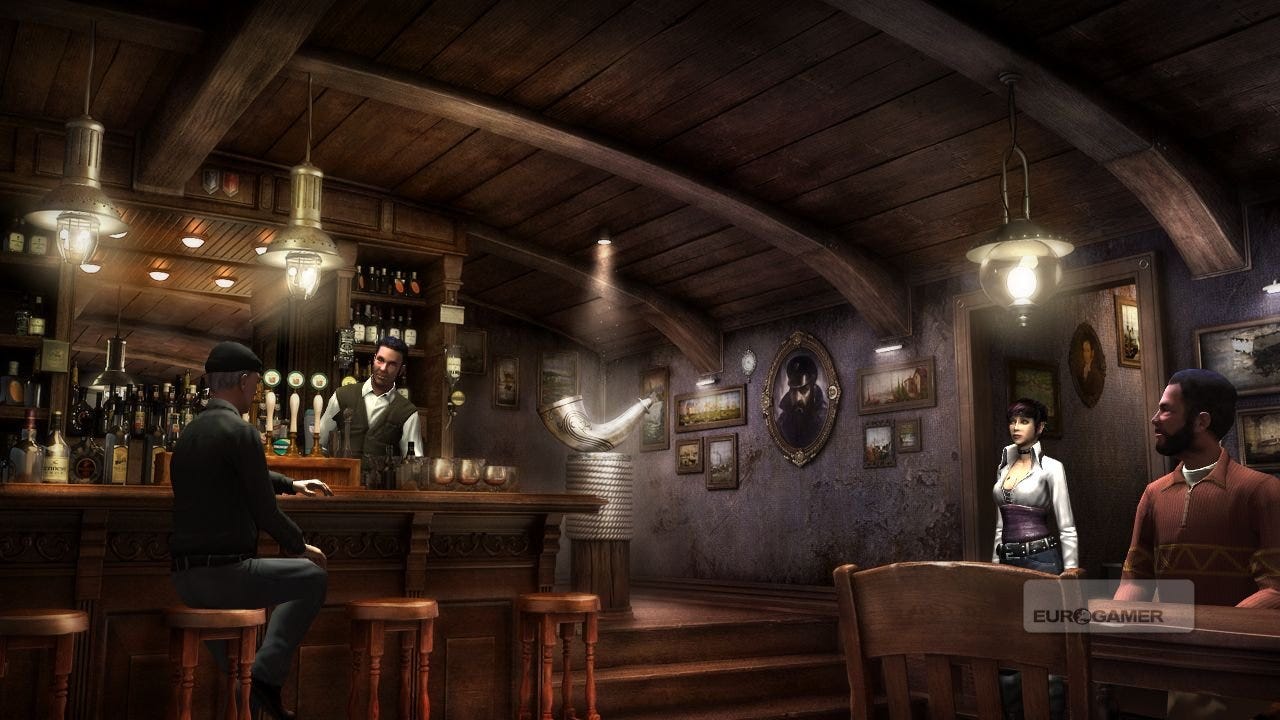
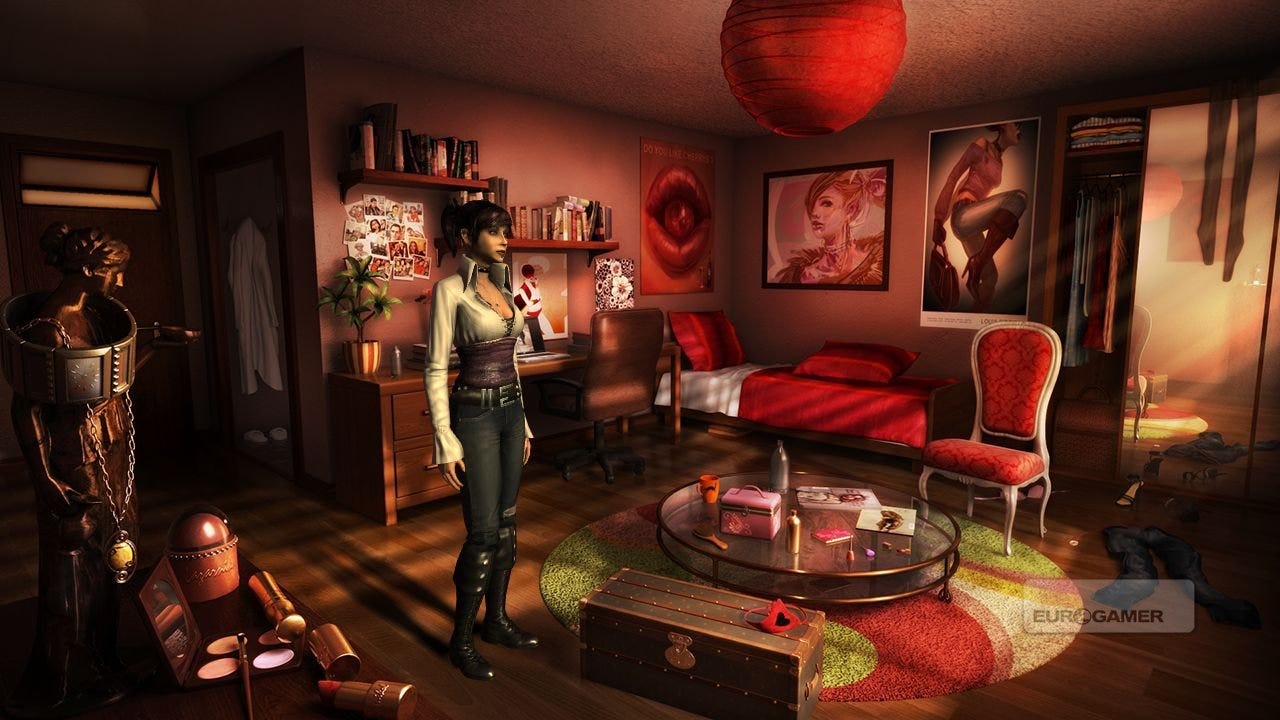
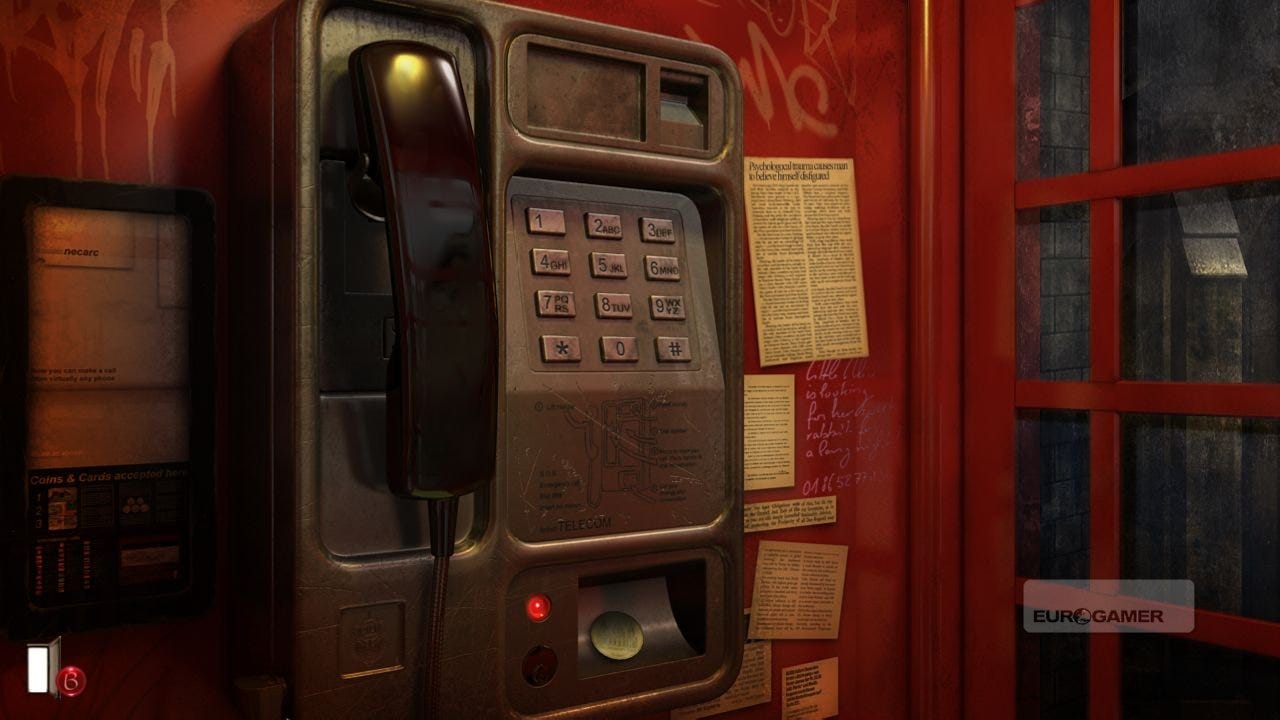
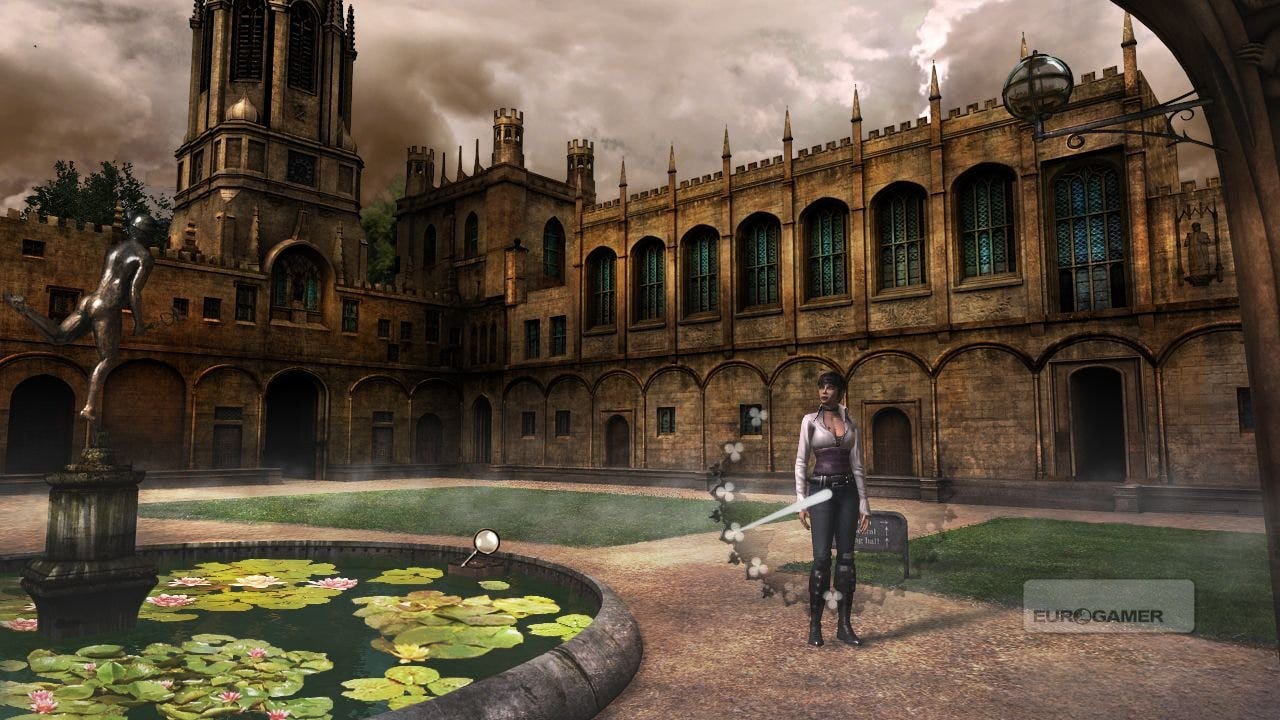
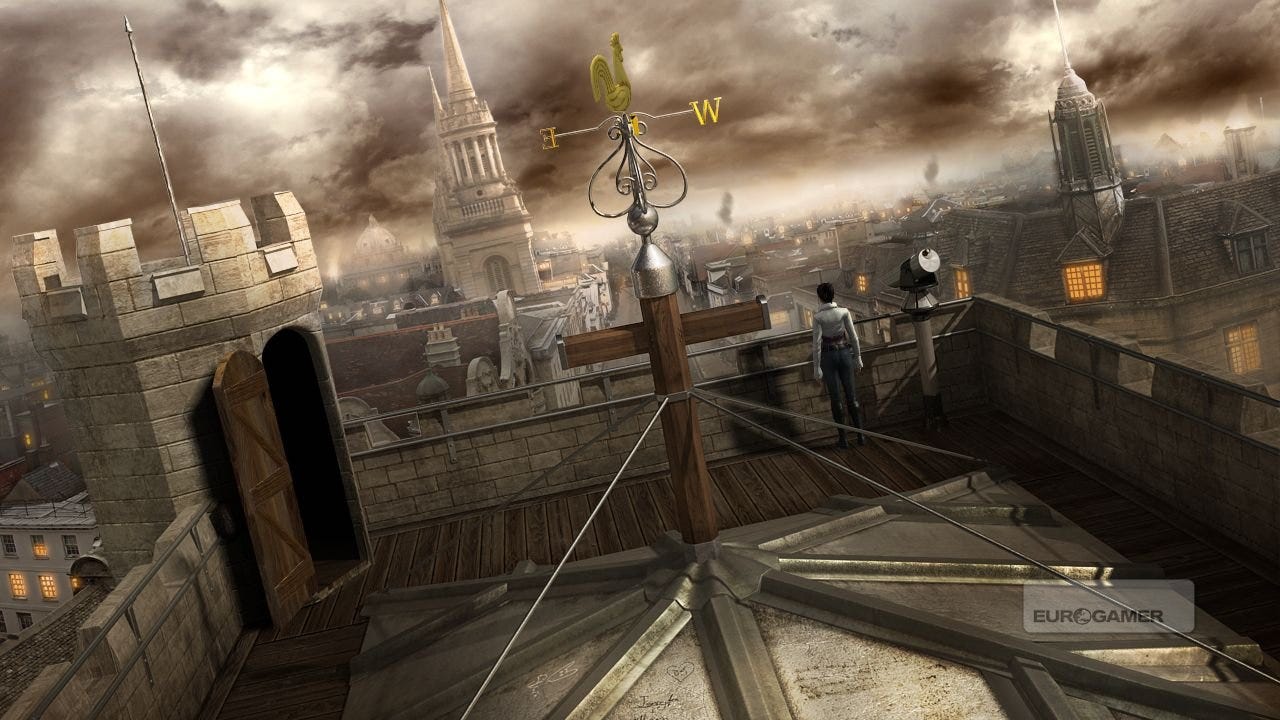
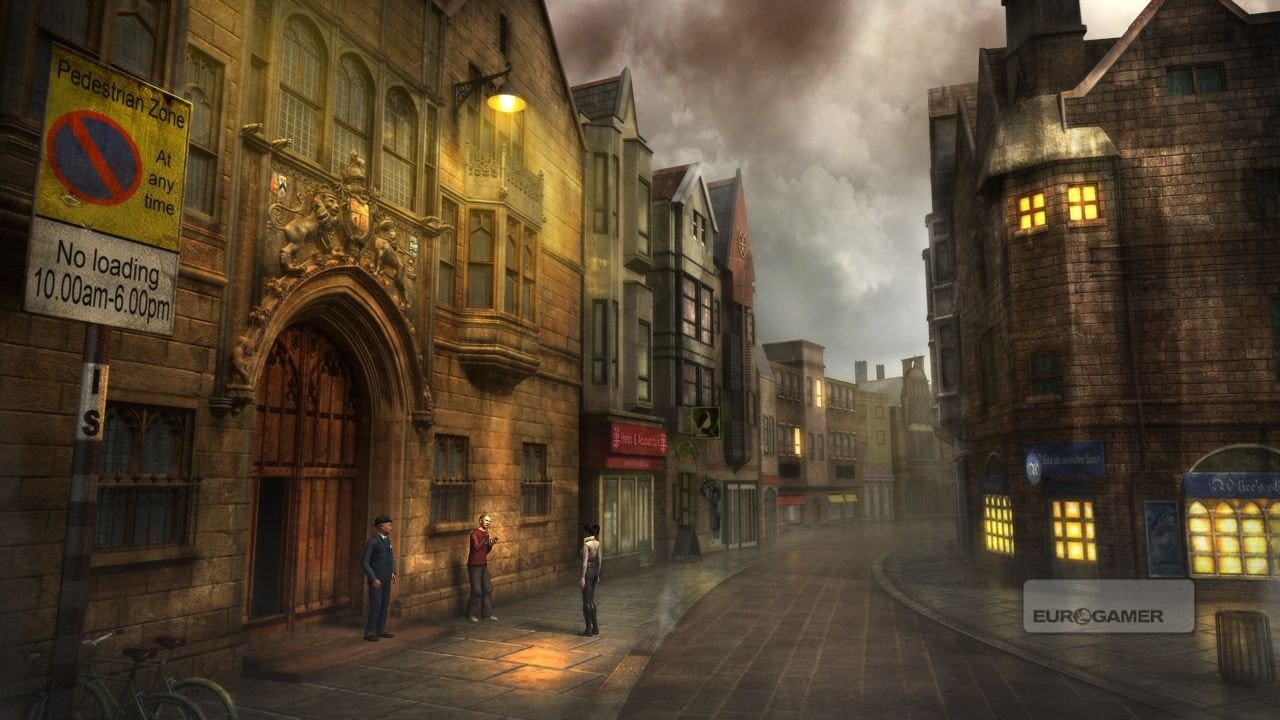
The static backgrounds have an eerie prettiness to them with their thick drapery and dusty congregations of house plants, but the CG characters, poorly lit and blandly designed for the most part, float on top of them unconvincingly. As such, the game's 2D and 3D assets coexist in a ghostly state of perpetual awkwardness, like divorcees who, through some kind of sitcom contrivance, find that they must share a small bungalow together.
Animation is weak throughout watching a character turn around or navigate a table and chairs can be so painful you'll want to push your way through the screen and help them. And while the music, by Jensen's husband and long-time collaborator Robert Holmes, is moody and likeable, it's partnered with stilted voice acting and sound effects of such bizarre poor quality that if you close your eyes it can be hard to tell exactly what's going on. Checking a locked door sounds like someone breaking open a fresh Kit-Kat, while morning coffee is accompanied by an audio clip that suggests Sam's being force-fed snooker balls.
These issues are forgivable by themselves, but they undermine Gray Matter's dramatic aspirations in a depressing manner, with the game's final confrontation being particularly poorly served. Thanks to muted sound, a limp cloud of particle effects and the seizure-style acting of the marionette cast, what was presumably intended as an earth-shaking supernatural display of apocalyptic intensity comes across with all the weight and drama you'll get from the business end of an ageing hair dryer.
(This drama isn't helped, incidentally, by a weird Arkansas hillbilly's interpretation of contemporary England, where the signposts are made of wood, the constables are called Reginald, and every shop door has a tinkly little bell at the top.)
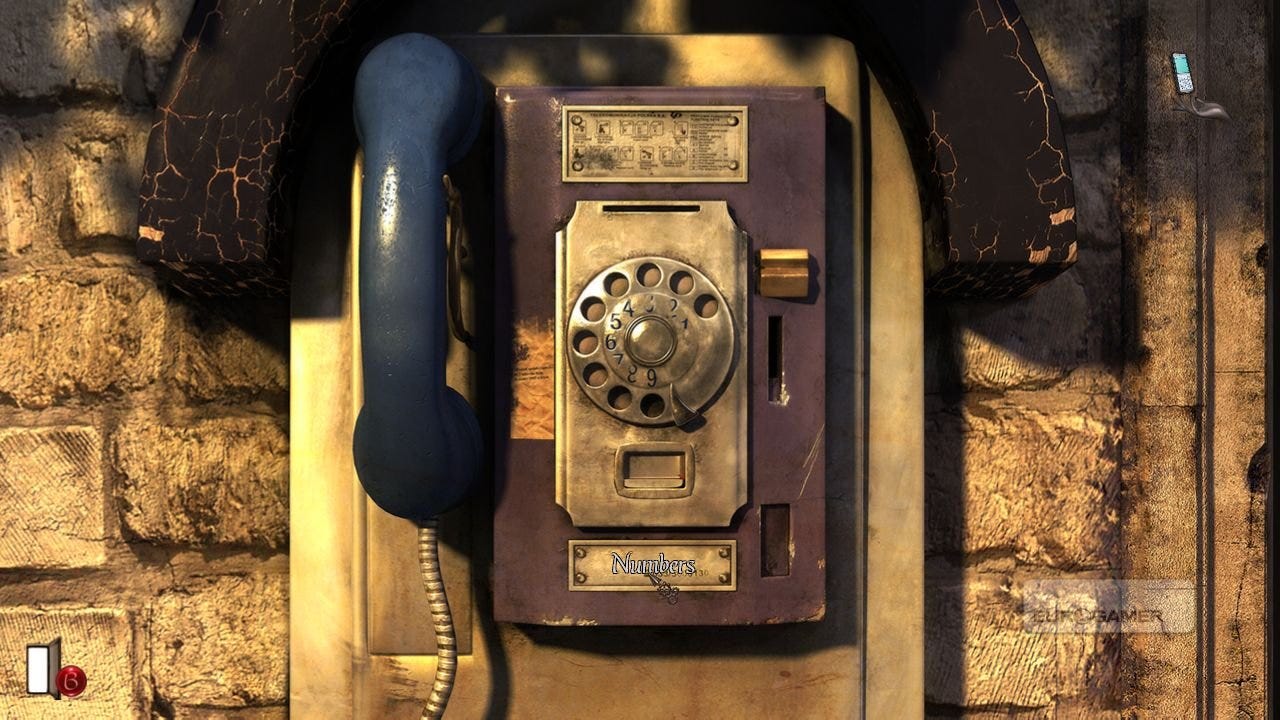
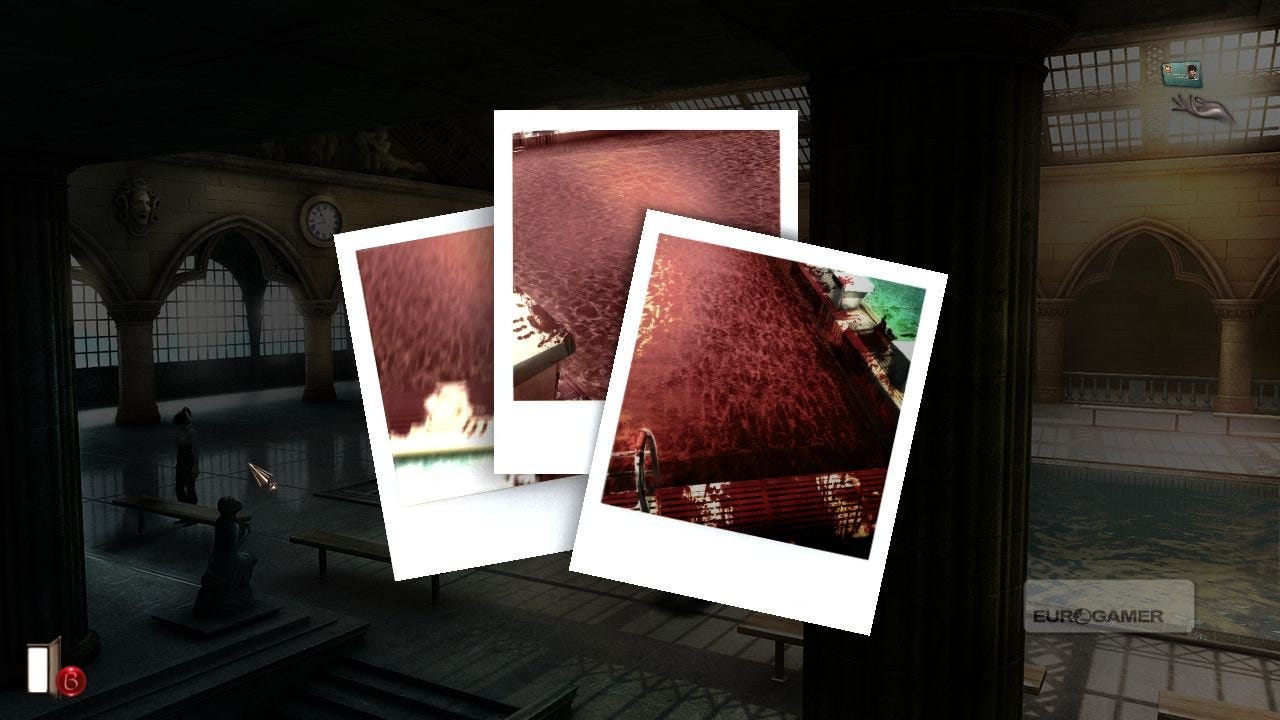
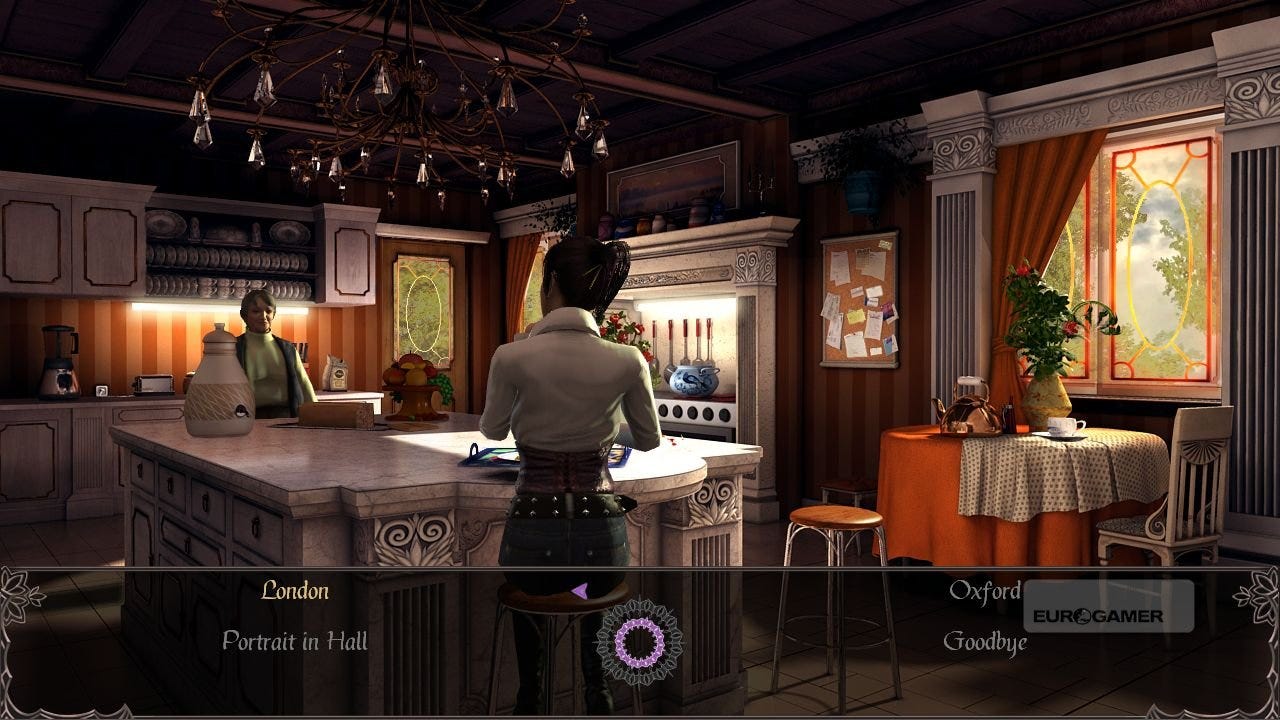
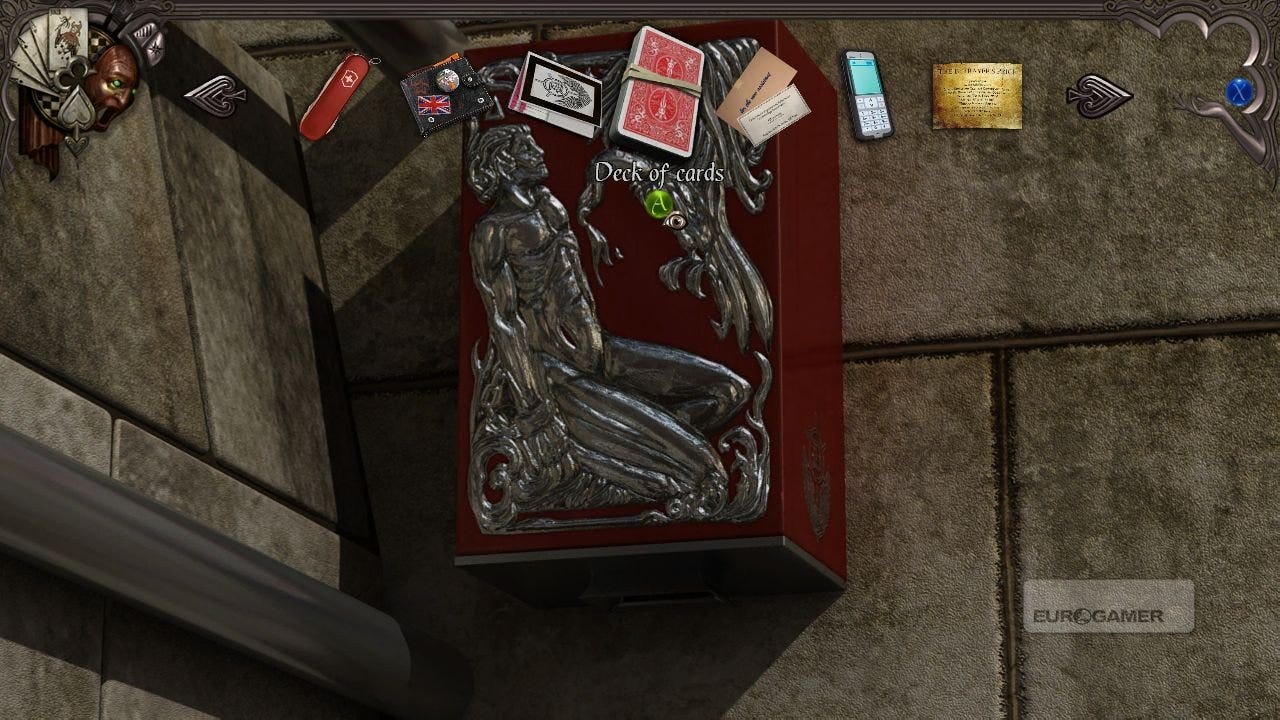
As with the presentation, so with the interface. Gray Matter's PC incarnation uses the fairly standard single-button click for interacting with the environment, but the 360 port opts for a radial menu that allows you to zip between all available hot spots in a room. You'll get the hang of it over the course of the game's first few hours, but while the designers do their best to map the position of in-game objects to the correct parts of the wheel as often as possible, they fail just as regularly. Actually trying to move the arthritic characters about by themselves is a nasty business, so, compromised as it is, it's best to work from this radial menu whenever you can.
If it's tempting to put most of these problems down to the game's difficult gestation, it's harder to explain why Gray Matter's story and characters can often seem so underdeveloped. Erudite and intriguing in concept, Jensen's latest narrative frequently plays out as a drafty kind of soap opera, its plot twists growing increasingly silly and its characters too thinly conceived to carry you past the rough patches. The supporting cast of college students, magicians, rival professors and housekeepers are a rabble of shrill stereotypes, while Styles is grumpy rather than mysterious and only Sam emerges with any kind of likeable clarity.
As Gray Matter ping-pongs between the two leads in alternating chapters as Sam tries to unravel what's going on and Styles attempts to bring his dead wife back through recreating specific memories the results vary. Sam's sequences are often witty and clever, covering classic adventure game territory as you bypass irritating secretaries, work your way into locked rooms, and follow a trail of playful clues left for you by the Daedalus Club.
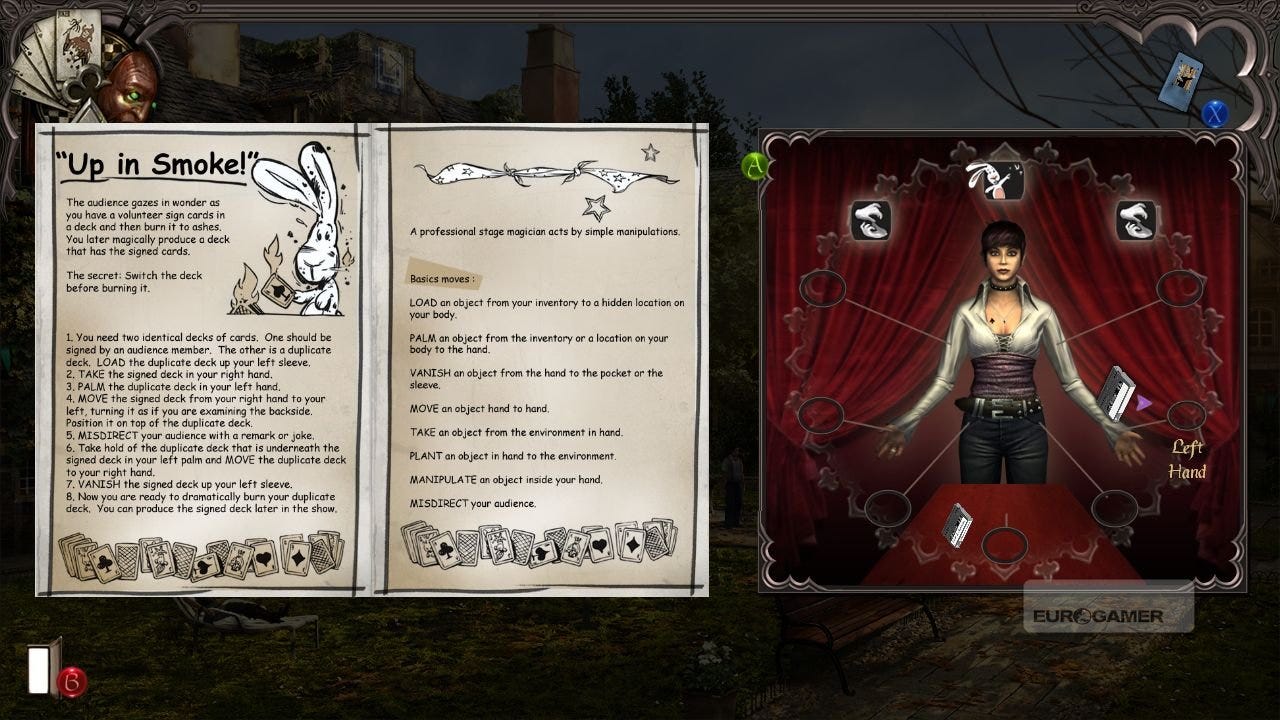
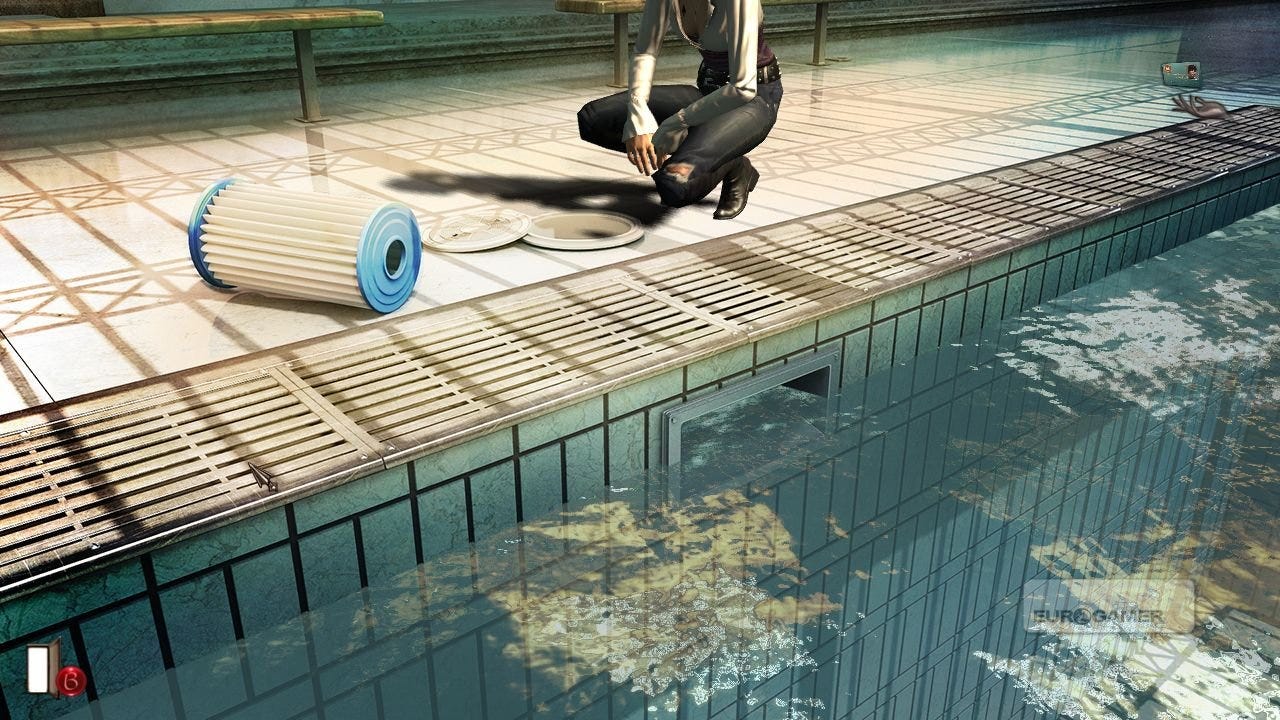
Here, Gray Matter's innovation lies with Sam's magic skills, meaning she'll often be called upon to play reworked tricks on people to get what she wants she'll gamble with an unfriendly handyman in a rigged game of chance, say, or pinch an ID card from a pal with a clever sleight. Sam's repertoire is limited to a book of a dozen or so illusions, and after you've selected the right one for the right occasion, you have to coach her through the intricacies of performing it, moving objects from the left hand to the right sleeve, for example, and choosing when to misdirect. As a spin on programming-style puzzles, it's smart, if limited, stuff and helps to enliven some of the game's more prosaic moments.
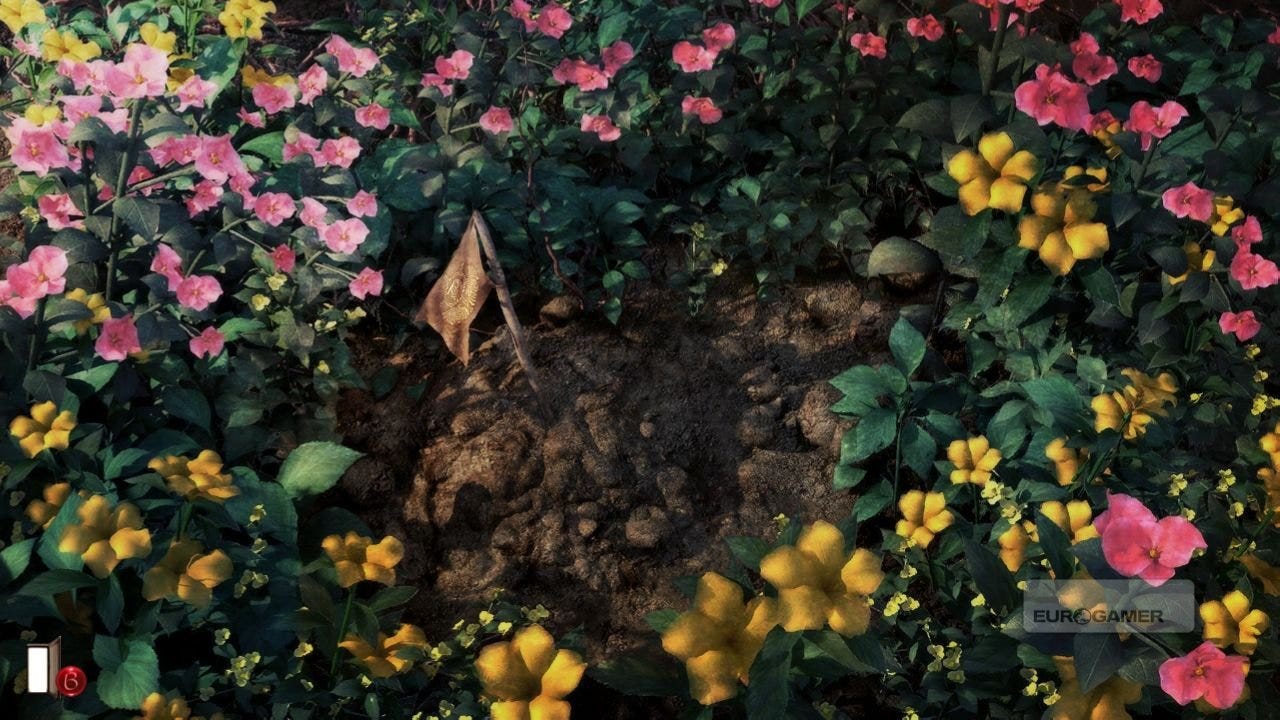
The Styles sections are considerably less entertaining, however, as you wander around Dread Hill House and a nearby park, searching out triggers that will allow him to rebuild his memories. It feels less like an adventure game and more like you're being asked to act your way through a low-budget movie that you haven't been given the script to
It doesn't help that Styles and his late wife's relationship is filled with naff clichιs like initials carved on trees (do this, incidentally, and a rule of narrative dictates that at least one of you will die young) while flashbacks forever seem on the brink of blossoming into either very soft pornography or a Herbal Essences advert. I'm no doctor, Styles, but why not knock this thought projection bunk on the head, forget about your wife rendered in the game's rudimentary 3D modelling, she'd be a grotesque knock-kneed horror, anyway get rid of your stupid faux-anime haircut and just move on?
Moving on is ultimately something this game has trouble with. Its creaky, theme-park England and its stuffed-shirt students mark Gray Matter out as an unashamedly old-school adventure. But it's also a linear and arthritic experience with few opportunities to work outside of the prescribed solutions to any puzzle, and a strict timeline that drags you through the narrative chapter by chapter with little in the way of distraction or character development.
The end result is one of those strange games that I suspect will be more fun to look back on in a few months than it is to play right now. Fittingly given Gray Matter's preoccupation with memory and its shortcomings it will probably be quite nice to reflect on the lazy sunlit sprawl of rooms that makes up Dread Hill House when you can forget that you never had anything particularly interesting to do there, or to recall hanging around the quad at St Edmund's College when you don't have to actually talk to anybody nearby to inch the plot forward.
Gray Matter's not a bad game so much as a disappointing one, then. And the disappointment is all the sharper because it's so obvious that the designer is capable of much more.
6 / 10