DiRT 3: “The Americanisation might have gone too far.”

Codemasters on bringing the rally back.

It's been three years since Codemasters launched DiRT 2. Back then, rallying was a different beast. Influence from the X-Games and the popularity of Ken Block YouTube videos put the development team on a path to radical commentary and gnarly menu screens.

But now it's all grown-up. Here, in a sweeping interview with Eurogamer, chief games designer Paul Coleman reveals how DiRT has grown-up, too

Eurogamer: Is the rally genre as popular now as it was during the PlayStation One days?

Paul Coleman: Rally is seeing a resurgence. It had a lull over the past few years. WRC was a bit tired with Sébastien Loeb consistently winning every year. Fan and spectator numbers were considerably down, but with the rule changes this year, with Ken Block making appearances in WRC last year on a temporary basis and now coming in on a more permanent way, we'll see a real resurgence in the way rally is seen in the world.

The steps we're taking with DiRT 3 are a move to reflect the popularity of rally and the fact the fans out there wanted more rally content in the game. We're responding to that. It's the right thing to do based on what rally's doing in the world.

Eurogamer: How has the game evolved from the previous one?

Paul Coleman: We've taken the professional motor sports feel of DiRT 1 and some of that action sports attitude we had in DiRT 2 and fused them together to create this more professional feeling rally game that also introduces some of those street cool elements, such as Ken Block's Gymkhana driving.

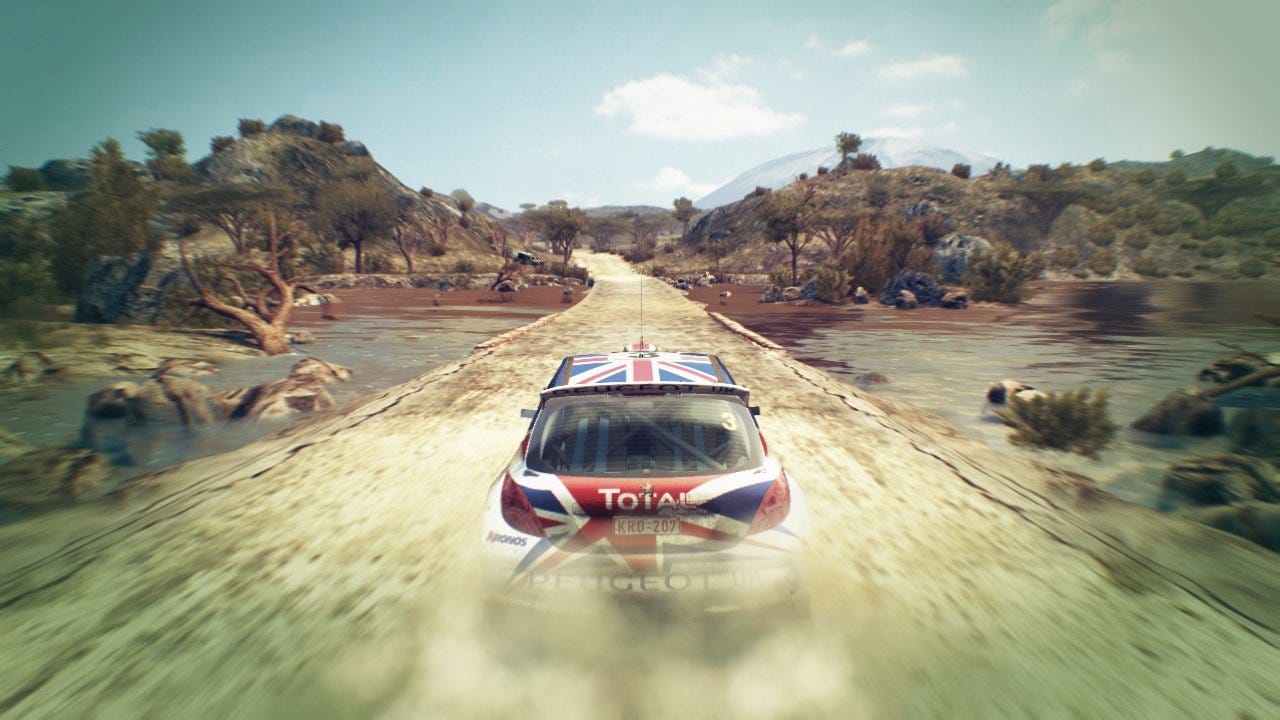
Normally we'd go off and make a GRID game in between our DiRT games. This is the first time we've had the opportunity to go from one DiRT game straight into the next. We've been able to do more work on developing physics and the weather conditions, stuff we've brought in from Formula One as well that's helped us. We're just, essentially, trying to create the definitive rally experience.
Eurogamer: What have you learnt from Formula One that will impact this game?

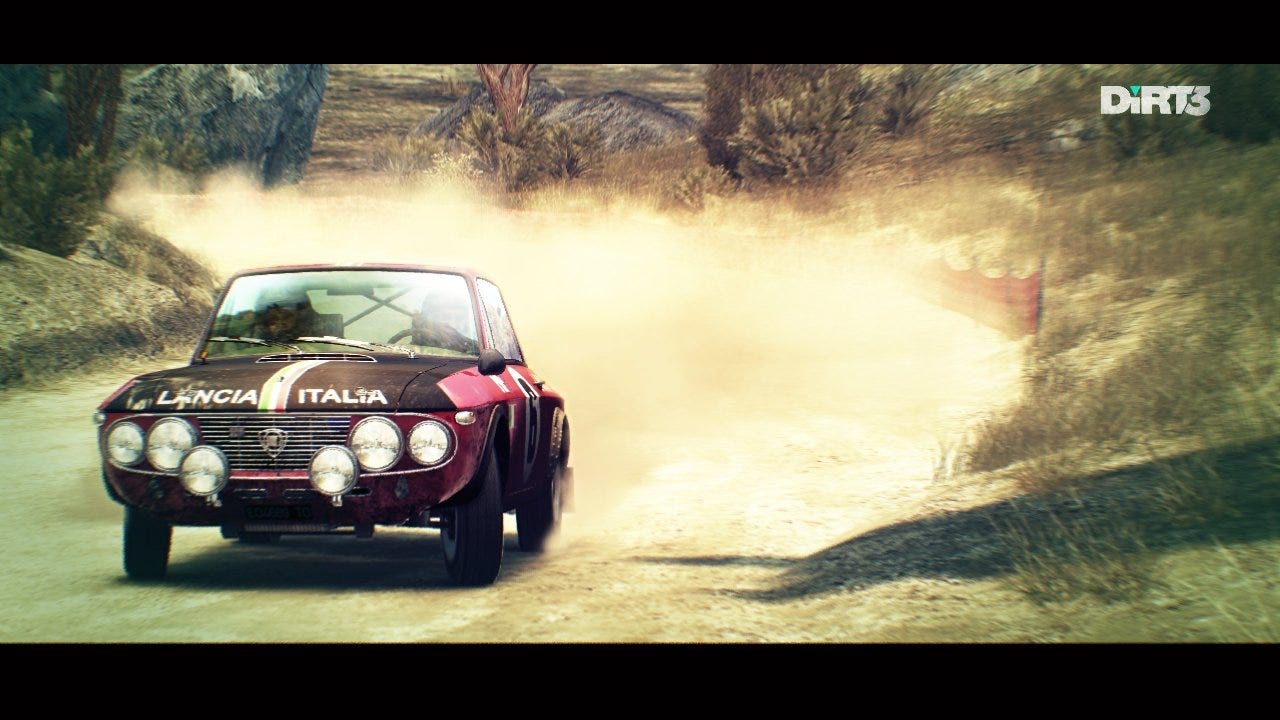
Paul Coleman: We used more rally drivers as consultants in the development of the game, finding out from Kris Meeke and Ken Block what it takes to be a rally driver, how rally cars actually behave. Yeah, we can do rally driving in Wales and spend a day behind the wheel of a Ford Escort Mark II, but until you actually drive one of these cars on the limit in competition, you don't get to fully appreciate those nuances.

Kris Meeke was hugely helpful because he's doing a testing role at Mini at the moment. His mindset is in developing and improving systems, so when he comes into the studio, he fits right into sitting down with our vehicle-handling designers helping them improve the systems they have in place.

In terms of technology we've taken from Formula One, it's mostly their weather system we've brought across. However, where in Formula One it was necessary to have races that developed and the weather conditions changed during an actual race, we're using it to have different weather conditions on different stages.

A stage could have three different weather conditions associated with it. However, that stage will only ever hold that one condition because our stages are shorter, and we want to give a feeling of progressing through a rally event.

You might start a rally stage in the morning, then have a rainy afternoon, then a sunset and then finally a stage at night with the headlights. We're using the technology they've developed in a slightly different way, but it's been very useful to us.

With rally you've got multiple surface types. When you throw rain down on mud, gravel, grass, it affects those surfaces differently than it does a tarmac surface. We have puddles developing. We've taken what they've given us and we've moved on.

Eurogamer: How do you describe the game's handling model? There seems to be a tug of war between sim and arcade.

Paul Coleman: It's the challenge of being placed in the middle between the guys who just want to pick up a game and play it, and the guys who want that full on simulation experience.

We've made improvements to our physics that have made the car handling more realistic. Suspension's greatly improved. It's enabled us to raise the centre of gravity on a car so we can model weight shift more accurately. This means you can throw the car into a corner and swing it from left to right, perform a Scandinavian Flick and use that weight shift to maintain a drift around the corner.

That also feeds into the Gymkhana driving. What we find is players who do rally and then go to Gymkhana and then come back and do rally again, are improving their rally experience by learning how to throw the car around.

In terms of the two mindsets of gamers, we found a lot of novices picked up DiRT 2 but were getting frustrated with the difficulty of the handling. I know it's not exactly simulation, but it was still challenging to those newcomers to the series.

The way we've approached it for DiRT 3 is to improve the physics and the realism of the handling, but apply a series of driver assists to the handling model. A novice player is assisted, stabilised, they're given a visual racing line as well as throttle management systems and braking assists and stability control.

Those novices get their arcade experience while the more simulation driven and hardcore element. And the people who really appreciate the finer nuances of a car-handling model get that improvement they've been seeking as well.

DiRT's developers and drivers weigh in on the game's realism.

Eurogamer: There's more emphasis this time on rally, but how will that manifest itself in the game experience?

Paul Coleman: The first thing to say is we haven't taken away from the other disciplines. We've merely added a significant amount more rally to the game. In DiRT 2 we only had 41 routes through the whole game. We've now got over a hundred routes, and 60 per cent of those are rally. So we've taken the route count we had for DiRT 2 and added another 60 odd rally routes.

That means we've far more variety and ability to put in rally events that keep the player on their toes and give them new stuff to do. DiRT 2 had an issue where players were constantly repeating the same track over and over again.

We've tried to alleviate that with DiRT 3 by making sure the variety is there not just in the number of tracks, but the weather conditions and the time of day effect that mean you'll go to a stage maybe three times through your entire career - but each time that stage will look and play differently because of the weather and the time of day.

In terms of the career mode and the decision-making the player gets to do, if you are a real rally fan you can focus more on those point to point events, such as rally events and trailblazer events. You won't be able to have just a rally play-through and not have to touch any other disciplines, but we're aware some players don't like the Landrush trucks. The choice is there. We're aiming for players to only need to do 60 per cent of the career to get to the end of it.

With the career being 60 per cent rally, you could predominantly do rally to get to the end of the game and leave those other disciplines behind if that's what you want to do. But we'd like players to at least sample a little bit of everything. Trying Gymkhana for the first time might make them fall in love with that new discipline and do all of those Gymkhana events.

Eurogamer: Was too much made of the Americanisation of DiRT with DiRT 2?

Paul Coleman: We were firm on our direction choice on DiRT 2. That was represented in the way we made the front end, the way the music choice was made, and the events and style of how you interacted with the other drivers in the game.

We wanted it to feel you were at an X-Games-style event. When you watch skateboarders finish their run in those events they're all patting each other on the back. Yes, they're competing against each other, but they're a community and they're all friends with one another. We wanted to try and bring that into the world of racing because we saw guys like Travis [Pastrana] and Ken and Dave Mirra starting to bring that style of competition to rally.

Looking back, we may have gone too far in that direction. Having just gone on a press tour to the US, some of the Americans wanted more rally as well. In that respect we did miss the mark.

But in a way it's great for us because it means a lot of the guys from the studio who felt we were over Americanising things now have the opportunity to go hardcore on the rally. We can still represent the other disciplines we introduced to those newcomers so they're not going to be disappointed.

Rally itself is growing. Ken is moving away from the X-Games and those types of events. Travis is now doing NASCAR, so he's not even competing in rally any more. We can start moving back to the European centric WRC-style rallying and not be concerned we're going to lose audience in America as a result.

More on DiRT 3

Eurogamer: Need for Speed: Hot Pursuit's Auto Log feature felt groundbreaking. Does DiRT 3 have something similar?

Paul Coleman: We looked at the way Ken Block represents himself globally. A lot of that is due to his Gymkhana videos on YouTube. He's had over 90 million hits with his videos. We looked at that aspect of showing off. That's the way we've driven our community elements.

We want players to upload videos from any replay in the game or even the instant replay during a race, the idea being they can go into a replay, press the YouTube button, select a start and an endpoint in the video and then upload that directly to YouTube.

That'll go to their YouTube channel and to our DiRT community channel. We'll choose best crash, best overtake and maybe even hand out prizes. The player will be able to distribute that video through their own social media, be it Facebook or Twitter, showing their friends the cool stuff they've been getting up to in our game.

We attacked it from a different angle for DiRT 3 to try and draw more people into the series so you don't both have to be playing the game to get these updates and find this competitive element. You might just be sat on Facebook checking out your friend's status, and he's suddenly posted this cool video of him sliding around in a Gymkhana course in this game he might never have heard of. It's an opportunity for us to spread our message through those social media channels.

Auto Log I must admit has very much interested us, but we were far enough through development to not be able to respond to it in quite the way EA have managed to do. But we're looking at it for future titles.

We do have our stats system we brought in with DiRT 2, and we'll hopefully push those stats to a Facebook app. The idea is you can have a competition between two people who have a Facebook account and happen to be playing DiRT 3. You'll be able to scrape the stats from that and it'll face them off within Facebook rather than within the game.

It also means you'll be able to create a car club outside the game, use Facebook as your way of interacting with the people in it, but use DiRT 3 as a meeting place to then go and race. So we are doing stuff, but nothing to the integrated level of the EA way.

Paul Coleman is chief games designer of DiRT 3 at Codemasters.

Comments (67)

Comments for this article are now closed, but please feel free to continue chatting on the forum!

  • Loading...hold tight!