In the shadow of Black Ops

What hope for Breach and the downloadable shooter?

Next week a gaming behemoth lands in our waters. Call of Duty: Black Ops – a game with pre-order numbers big enough to cause retail waves that'll surge higher and further than even those generated by Modern Warfare 2.

So with the masses secure in the cosy embrace of Call of Duty's unlocks and ranking systems, and the resurgence of Medal of Honor alongside it, is there room at the inn for military shooters without a franchise to back them up?

A moment's silence, if you will, for downloadable first-person shooters. There they sit on virtual shelves, waiting to be sucked through pipes into the warmth of your living room.

Yet increasingly it seems no one wants them. No one gives a second thought to these poor, weeping camouflaged games sitting unloved in the PSN and XBLA HQs. Blacklight: Tango Down? An unreturned call. MAG: a few evenings out and a liaison in a dimly lit car-park, maybe. Battlefield 1943? Great, but over the long haul something of a one night stand for gamer and EA alike.

"Breach is a military shooter, so my assumption is that anyone who comes to it has already played Call of Duty," explains Peter Tamte. As the president of Atomic Games, he's a man soon to paddle in the treacherous dark waters of multiplayer black ops soldiery - where the letters C,O and D lurk ever-discernibly beneath the surface.
1

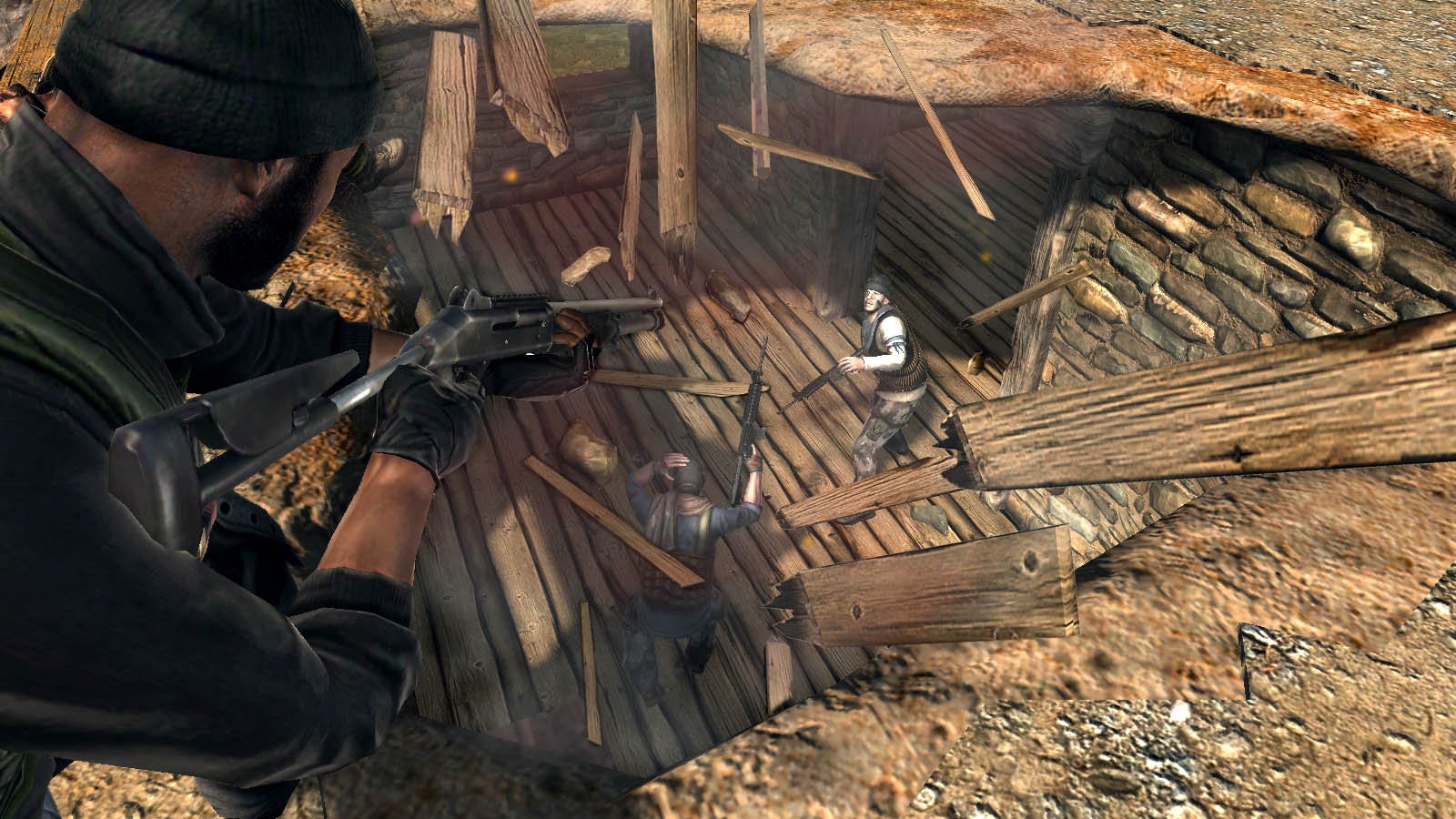
Only said to blow the bloody doors off. And, indeed, ceiling.

"That's part of our challenge, across the board – it doesn't matter about the price, we've got to give people who've already played the mainstream games a reason to play ours. There's no point in making a game, unless you've got a fresh experience."

Breach is a game born out of troubled circumstances. Its tech came out of the development of Six Days in Fallujah, a game that prompted a storm of controversy when the Eye of Sauron that is the mainstream media noticed its rather headline-friendly moniker.

Publisher Konami quickly exited stage left, and the project went down - yet apparently not out, since Tamte assures that the game very much remains a going concern in search of publishers and investors.

How, then, is Breach going to persuade habitual Call of Duty players to part with 1200 MS come next January? After the somewhat unimpressive splashdown of Blacklight: Tango Down, lumbered with some terrible matchmaking and the concrete boots of Games for Windows Live attached to its PC iteration, XBLA shooters are seemingly even harder to care about than before.

"Their pitch was all-value, and there are people who will respond to that – 12 maps for very little." So says Tamte when prompted to comment on the opposition, amidst a little eye-rolling at its blue-screen-of-death flashbangs from this correspondent.
2

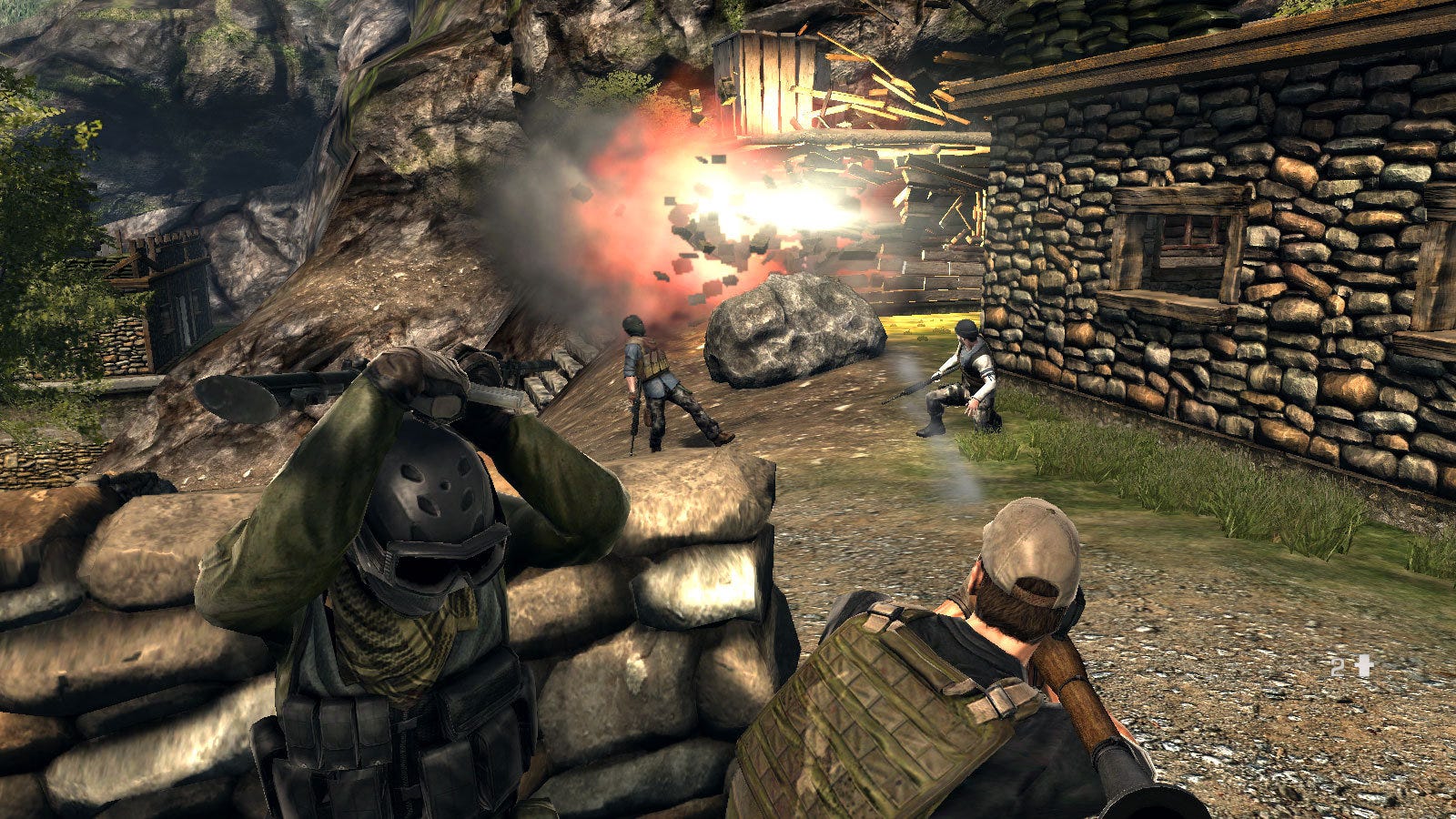
Rocket launchers can be picked up throughout each level in Breach, with hilarious consequences.

"Our point is that that's fine, but we want to create a game people haven't played before."

Breach's schtick, then, is destruction – a ball taken from the feet of Battlefield: Bad Company and run with. Aim a rocket launcher at a wall in Breach and you'll create a hole in the level that'll stay there till the end of the round. Unlike in Bad Company it won't be the same cookie-cutter demolition each and every time – and lumps can be knocked out of interior walls as well as exterior ones.

Breach will even allow you to shoot individual bricks out of walls to create your own sniping positions. Several pages are also taken from Red Faction's destruction handbook in the way that parts of buildings can be collapsed on your rivals by knocking out support struts and blowing holes in floors and ceilings.

Sure, this effect is localised and i'ts primarily man-made structures on each level that can be pummelled. But it's a neat trick, and one that easily feeds into the second string to Breach's bow – the active cover that lets you dive behind broken scenery and poke your gun round the edges in a far more organic and sneaky fashion than in other multiplayer shooters.

Borrowing military ken from their range of military training simulators, meanwhile, another of Atomic's concepts is to introduce a suppression system – meaning that if there's heavy fire on the steadily degrading cover you're hiding behind, you'll find it harder to aim and your screen will shake.

It's all good stuff, but more than anything it feeds into an awareness of just how stale the downloadable shooter market is – so fearful are developers of the competition. It's perhaps understandable when interesting games like Bloody Good Time appear then worryingly begin to circle the plug-hole, and a game like MAG's praise-worthy ambition sadly over-reaches itself.

When creating a downloadable game that'll tumble out into the same birthing pool as Call of Duty or Medal of Honor, there's also the risk that some will see it as an ugly baby.

"When EA or Activision make their shooters they put three hundred artists on it," says Tamte. "I can't afford to put three hundred artists on it! So we're trying to make a game that's aesthetically pleasing, but I can't compete head to head against the graphics of those games..."

Seemingly, the only proven FPS victors over XBLA and PSN are retro remakes and re-releases: Duke Nukem 3D, Doom, Perfect Dark and BF1943.

3

Falling masonry damages you, but won't hurt as much as bullets.

"BF1943 became the fastest selling digitally downloadable game. It sold great on PS3, it sold great on 360," agrees Tamte. "But BF1943 was still just a stripped down version of a retail game... and that's consistent with the strategies of all the big publishers. They're all telling their investors that their strategies are built on selling expensive games that are mostly sequels.

"Our goal is to do exactly the opposite of that. Our goal is to disrupt the way that videogames are priced, and to contribute to an environment where original content can flourish."

However, perhaps it isn't just the fear of creating a shooter without the vast resources and art teams of an Activision or EA that keeps original content away from those dusty virtual FPS shelves.

As Gabe Newell highlighted recently with his comments about working with Xbox Live being 'a trainwreck', there is simply no way, with the current set-up, that a shooter can truly evolve: console downloadable titles still live and die in the traditional cut-and-thrust retail market.

If a game like Team Fortress 2 on 360 had been given oxygen through updates that went beyond Microsoft's download framework, then right now we would perhaps be looking at a very different picture.

4

Breach will let you shoot out individual bricks, letting you make your very own sniper's nest.

With the format as it currently is then 'a Counter-Strike' (in terms of its spread and its evolution, if not its initial creation) cannot happen on console – and that really is something that both Sony and Microsoft will have to look at as their online services continue to expand.

Without that room for experimental and ever-changing shooters it's no wonder the FPS market is entirely dominated by triple-A military monoliths, the ones that descend on a yearly basis with expensive map-centric care-packages dropping in beside them at regular intervals to crush the resistance.

In truth, a game like Breach might win its place and a loyal following, but it won't dent a world obsessed with midnight launches, adverts on during the football and coverage on BBC breakfast news.

There is, however, a whiff of a shooter under-current that I dearly hope will show itself as tenable against the might of the big boys. I'll be the first to admit, however, that before the revolution begins we need a few more downloadable shooters that a) are good and b) someone actually dares to make. Who's up for that?

Breach is currently planned for simultaneous release on PC and Xbox 360 in January 2011.

Comments (34)

Comments for this article are now closed, but please feel free to continue chatting on the forum!

  • Loading...hold tight!