Need for Speed: Hot Pursuit
The drift shift.

I tap the brake and pump the throttle and the sleek McLaren's headlights swing to the inside of the broad, sweeping bend. The British supercar seemed a little nervy to begin with, but once you have a feel for its delicate balance, you can tip it into gloriously pliant 150mph drifts.
I sweep past a Bugatti Veyron on the inside; that fat tarmac torpedo has epic power and oceanic grip, but it just can't dance like this. The drift goes on. The corner seems to last forever. Twilit clouds spiral by above. Surely we're going in circles now.
Maybe we are. Matt Webster, senior producer of Need for Speed: Hot Pursuit, boasts that "we've got a wonderful [corner] that goes around two and a half times, which is pretty cool". The mind boggles. Is it some kind of corkscrew? Or has Criterion, the house of Burnout, simply bent the laws of time and space in the quest for the ultimate powerslide?
I wouldn't put it past them. The 100-plus miles of road in the fictional Seacrest County have been sculpted entirely around the 250mph-plus cars that will be eating them up in this, Need for Speed's return to aspirational open-road racing and police pursuit. Seacrest is a microcosmic California with the cities and choked interstates surgically removed; arid desert, snow-capped mountain, palm-lined beach-front and tall pine forest are linked by loose ribbons of asphalt that swoop and curve rather than twist or tangle.
It's no Paradise City (although the grass is green and the cars are pretty). The environment is one area where Hot Pursuit differs from Criterion's first attempt at open-world racing, Burnout Paradise. It's also where it diverges from even the better Need for Speeds of recent years (Most Wanted springs to mind). There is absolutely nothing urban about it: no street-tough cut-scene posturing, no low-riding custom tuners, no mobile phone branding, no gritty city backdrops - nothing, in other words, to slow you down.
That includes any attempt to force you to roam Hot Pursuit's open world. Although a free drive mode is available, Hot Pursuit's career interface jumps you straight to events from a map, while its multiplayer works through a straightforward lobby system.
So it's not that reminiscent of Paradise or Test Drive Unlimited, which asked you to uncover events through exploration. "We knew that people did find it difficult navigating; we thought that people would build mental maps quicker, but the truth is, they don't," says Webster. Need for Speed is aimed at the broadest possible audience, he explains, and most people understand conventional game structures better.
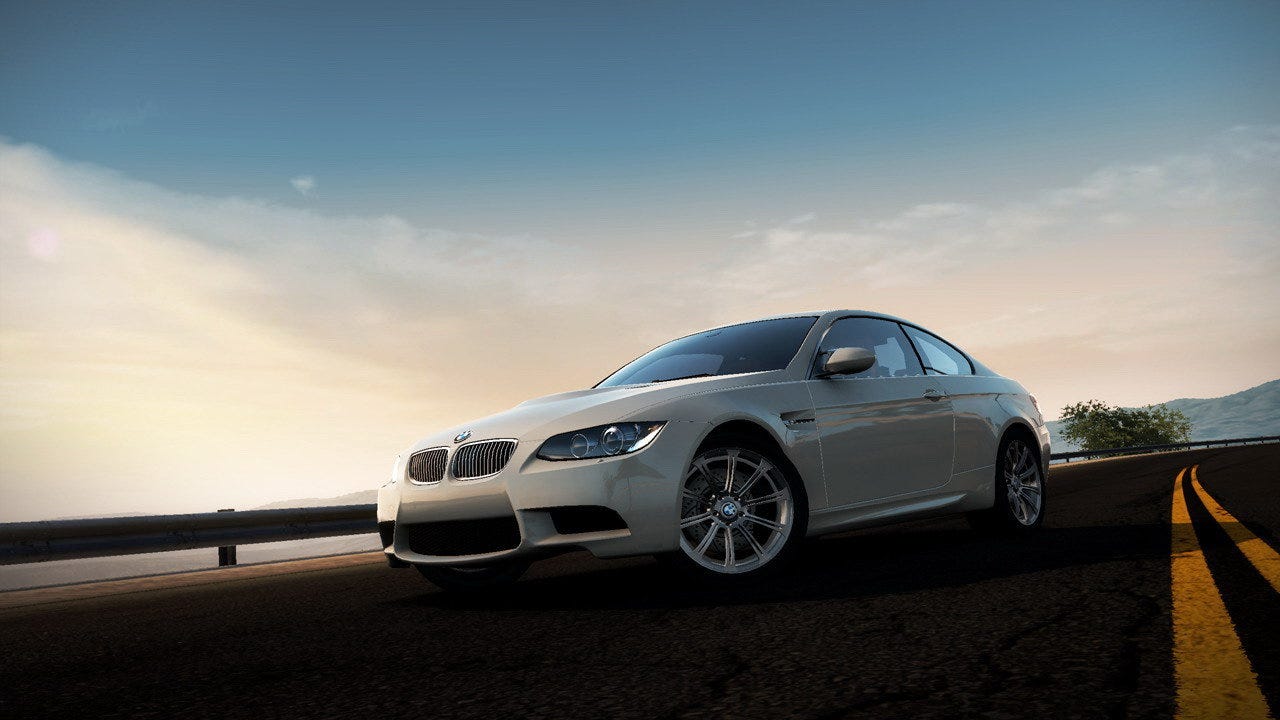

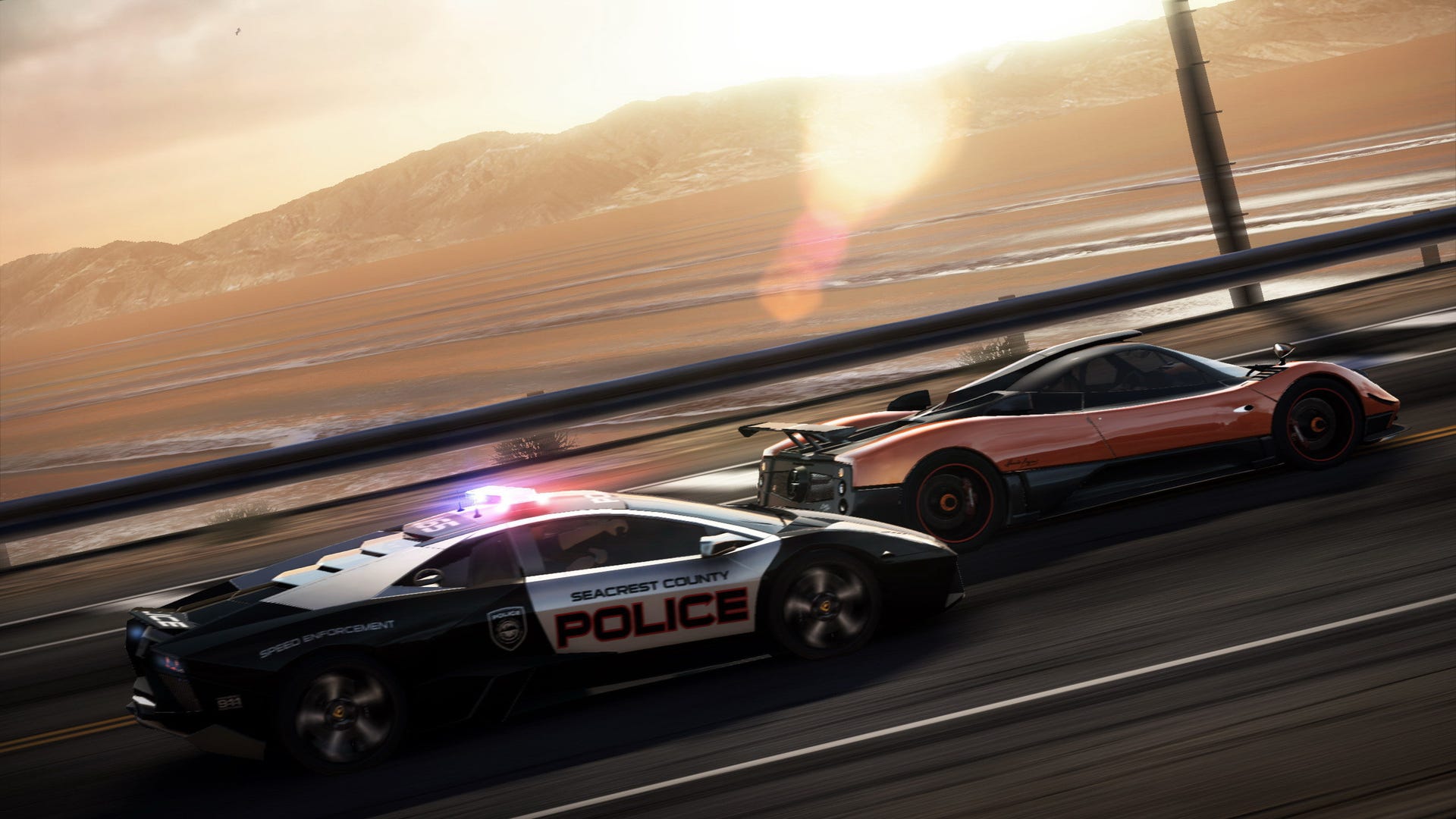


What it is very reminiscent of is classic Burnout, stripped to the basics. The breezy Americana of the surroundings; the tactile, drifty handling; the crunchy impacts and takedowns; the snaking point-to-point courses; even the way you charge your car's nitro boost through drifts, near-misses and braving oncoming traffic. Hot Pursuit is Burnout 2 in a Project Gotham party dress. Webster confirms it when I ask after Criterion's powersliding inspirations, expecting the usual nods to OutRun and Ridge Racer. "Just Burnout, really," he says with blunt pride.
So where does Need for Speed come in? Well, there's the extremely exotic licensed hardware, for one. Z4s and Boxster Spyders are about as pedestrian as things get in the starting Sports category, while the second event in the Racer career puts you behind the wheel of the Pagani Zonda Cinque Roadster, which had a production run of five and a million-dollar price tag in the real world.
Webster says Criterion hasn't had any trouble with car manufacturers over the game's larger-than-life crashes and damage modelling (many events will see you cross the line with battered panels flapping loose). They're fine with it as long as the cars look cool and keep going fast, he claims. Ferrari is the only notable absentee.
Police chases are the game's other Need for Speed signature, although Hot Pursuit is the first game in the series to let you play as cops. On the side of the law, you'll start in butch American muscle cars (as well as the iconic squad car, the Crown Victoria, often underestimated according to Webster) but eventually converge on the same hypercars as the racers: Veyron, Zonda, Koenigsegg CCX and so on.
Criterion has advertised separate, full-length career campaigns for Cop and Racer, although in the latest build all events are accessed from the same map. Racers participate in straight Races, Time Trials, Previews and Duels as well as Hot Pursuit, Interceptor and Gauntlet events. Cops get Preview, Hot Pursuit and Interceptor as well as Rapid Response.