Splash Damage's Paul Wedgwood
Brink's director on delays, ambition and the pressure of game development.

Rage drew the biggest crowd at QuakeCon 2010 - and it wrote the biggest headlines while it was at it. Simultaneous demonstration on multiple platforms! The end of "when it's done"! But all in all we would say Brink was the most assured game on display. It's a team-based multiplayer shooter with bold new ideas about movement, story and player incentives, and right now it already looks slick and polished, even though it's not out until spring 2011.
Splash Damage founder and the game's director Paul Wedgwood was certainly in his element demonstrating it. You may remember Wedgwood from his presentations at last year's Eurogamer Expo, and the one-time mod maker was on similar form as he showed off two new levels - the Aquarium and an assault on a Security forces tower - while attendees were also invited to play a Container City level in the Vendor Area next door to QuakeCon's famously massive LAN party.
Earlier in the week we got our own chance to play around on Container City, and we also caught up with Wedgwood to talk about Brink's delay, the unique obstacles the Bromley-based studio is having to overcome in realising its goals, and the pressures and challenges of going from a medium-sized independent developer to a massive, multiformat studio supported by one of the world's most ambitious publishers.
We just felt like the game would benefit best from being released in spring 2011. Just genuinely. There isn't really any good gossip or anything to give.
Because the game has such a strong multiplayer component, the longer that we're in alpha or beta the better, so the plan isn't to spend that time working on additional features or anything - we've still gone alpha a couple of months ago, we're still pre-beta at the moment - but we're just really focused on balancing and polish.
I think that Bethesda really understand that - look at Morrowind or Fallout 3 - and it's the way id Software always did stuff as well. If you get the opportunity to get your feature set done and then just stop and look at what you have and take a decent amount of time making it right, then you end up with something that's so much better for everybody.
In previous generations if you released six months earlier or six months later you could look like a last-generation game. But I think for the top five shooter developers in the world, all of them approach technology in their own way and end up with something that looks really good for the game they're making.
We've done things with Brink like sparse virtual texturing that allows us to have double the resolution of textures that we had in Enemy Territory: Quake Wars, or significantly higher polycounts and cinematic-quality characters. Gamers understand that at the same time as trying to achieve those things graphically we have 16 characters on-screen all the time, and there is a limit to how much you can do with visuals without taking away from that stuff - and the game's about interaction first and foremost. But I'm pretty pleased with the way the game looks.
The other thing is that in this cycle art direction plays a much greater part in how you present your game. Previously you had 900 polygons to draw a character with, so all the art director could do was choose a colour for it to be and maybe have some impact on the texture. Now we normal-map the entire game, so everything is high-poly. That forces you to hire artists with strong traditional art skills like sculpting, who tend to be graduates from fine art colleges.
One of the things we've solved with Brink, which is an incidental benefit of the SMART movement system, is that in past shooters if we just wanted to do this room full of tables and chairs, they would have got in the way, so everything would have to be a fixed height to support jumping, and you couldn't slide under anything. In the end you would remove everything from the room that would impede the progress of the player. Although we didn't design it with that in mind, when we came up with the movement system we found it removed those artificial constraints, so the level designers were able to add more to the maps during the block-out stage and introduce more cover, concealment and fortification.
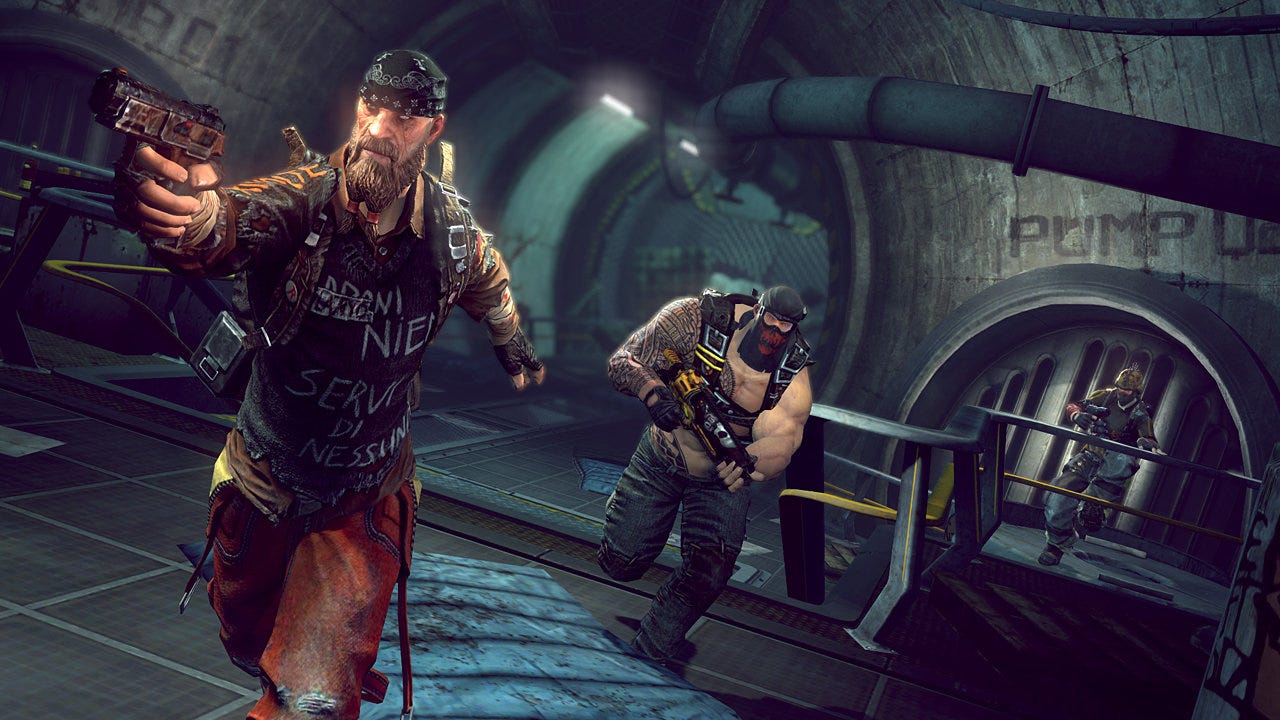
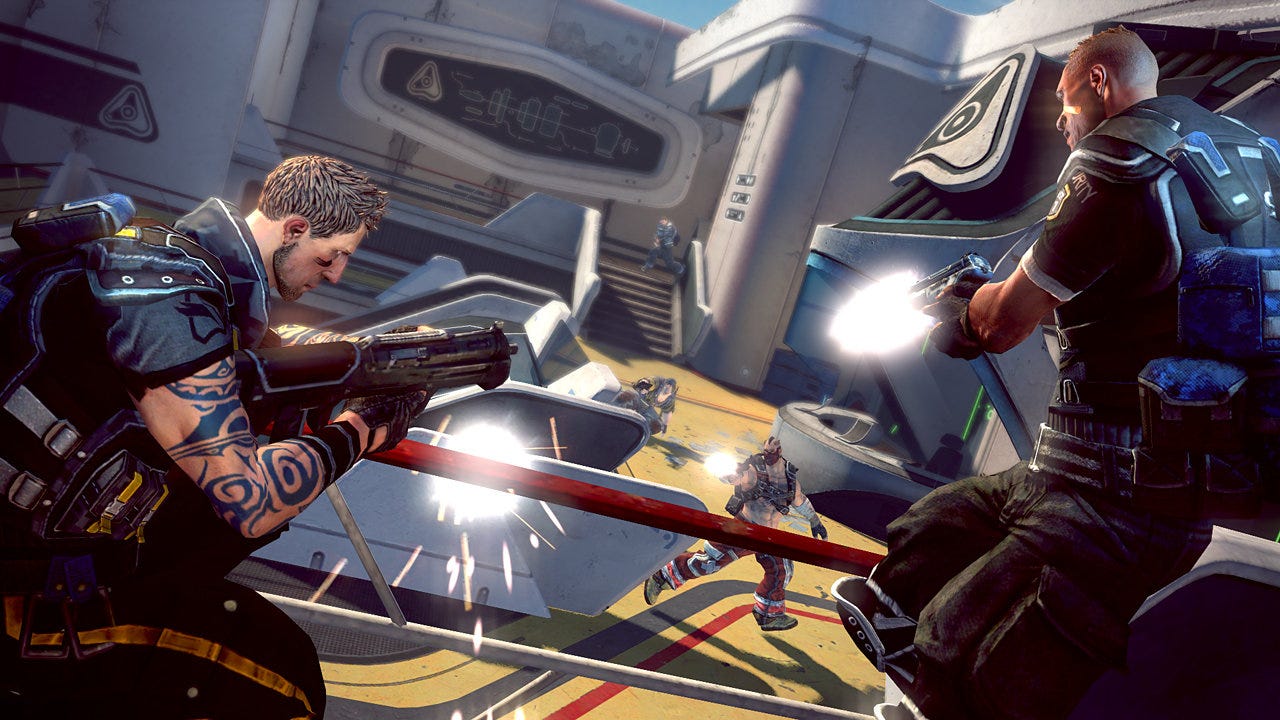

Blurring the lines between offline and online gaming, we're lucky, because coming at it from a multiplayer perspective we're not trying to add humans to replace the AI of a single-player campaign. That would be a nightmare, because all humans as enemies would want to do was grief you as you try to progress. We're lucky because we're just adding AI into multiplayer, which is that little bit easier.
Then of course we have our narrative to drive the story, which feels more like a traditional single-player shooter but doesn't have the same challenges if we had been a single-player shooter developer. We could have been really proficient at single-player and never solved this problem.
I suppose the second thing on the accessibility side is that all of us were newbies once - I spent months learning how to circle-strafe and use splash damage in Quake 1 before anyone would even let me try out for their clan. But the truth of it is that run-and-gunning is actually easy to pick up, and I think it's a mistake to nerf a game in the belief that that's what makes it more accessible. You should still be bold and deep in the execution, but what you want to do is find other accessibility challenges.
For instance, the people who play together in an organised match online have an amazing sense of satisfaction at achieving something together. We're doing two things to encourage people to play online. First by rewarding players for doing things that help other people, so we treat players as inherently selfish and bribe them. We also have a mission system that has them all doing the right things to coordinate together. You can take a group of strangers, who in any other shooter would just be headshot five times, teabagged five times and insulted over VOIP, and have them join a multiplayer game of Brink and enjoy themselves and feel like they're contributing to the team effort.