The Godfather Review

First refusal.

Version tested: Xbox

When the dust settles on Electronic Arts' Godfather videogame, it will be remembered for being way too short, far too easy, too damned repetitive and far too in awe of Grand Theft Auto to be held up as anything other than a rather lightweight copycat offering.

For some time now, the hope was that EA was going to make a game that paid tribute to the Mario Puzo novel and the Francis Ford Copolla films. With unprecedented contributions from actors including the late Marlon Brando, James Caan and Robert Duval, there looked every chance that EA might actually pull this one off.

Looking back, the promising pre-release chat spoke of how it was a game that would stay true to the story, where morals counted, where you "feel the consequences of your decisions", where the game world has a "memory". Despite all the movie tie-in let-downs over the years, we wanted to believe it. When EA put the game back five months, it looked even more likely that the company was serious about its ambitions.

Quote, unquote

We hate reminding people of old quotes, but EA's David De Martini confidently stated back in February 2005 that The Godfather game would be more about "moment to moment on-foot gameplay than on a whole bunch of stealing of cars and driving around" where there would be "10 to 20 per cent driving", where the ultimate aim was to be the Godfather of Godfathers, and where they "didn't want the police to just be this generic force that just went to five stars".
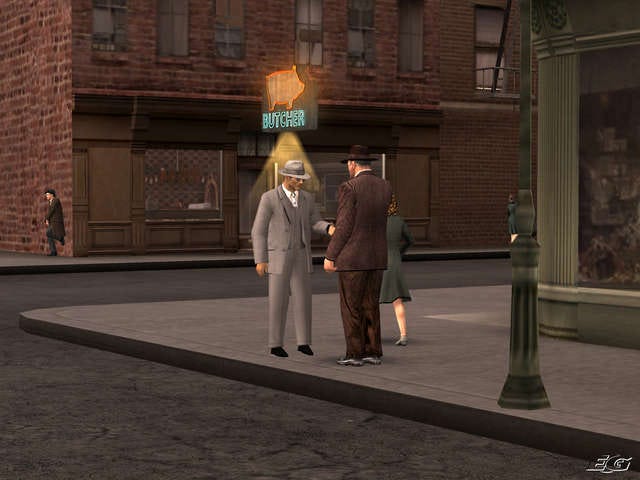
'The Godfather' Screenshot butcher

A butcher in more ways than one.

If that had been the case, the game could have been so much better. EA knew what it had to do, but the fact is it didn't even come close to realising most of these lofty ambitions, and we're left reflecting on another glorious missed opportunity.

First of all, the game's main story mode is simply way too short. Although 25 missions might sound reasonable, the first quarter are exceptionally brief and straighforward tutorial escapades that run you through the basic melee combat, extortion, shooting and driving mechanics. With that under your belt, you'll blitz the rest in five or six hours, leaving you with little more than a big clean-up operation that's only a challenge because of the sheer volume of tasks to complete.

The Godfather's also just far too easy to ever truly get under your skin. There are several reasons for the distinct lack of challenge, but it's all down to the way the game tries to address some of the criticisms of GTA. For a start, failing on a multi-stage mission doesn't force you to go right back to the beginning, but merely the last checkpoint. Secondly, the game's largely excellent combat system makes it an absolute breeze to cap enemies by allowing you to auto-lock-on to any threat, and easily pop out from behind cover. On top of that, the enemies are pretty suicidal, and to make matters even easier, there are enough health pick-ups to make up for any damage you do incur. In short, the game does a pretty grand job of eliminating frustration, but by doing so it allows the player to romp through the entire meat of it in less than half the time of any normal game, or about a tenth of the time it took us to finish San Andreas' hundred-odd story missions.

Mission possible
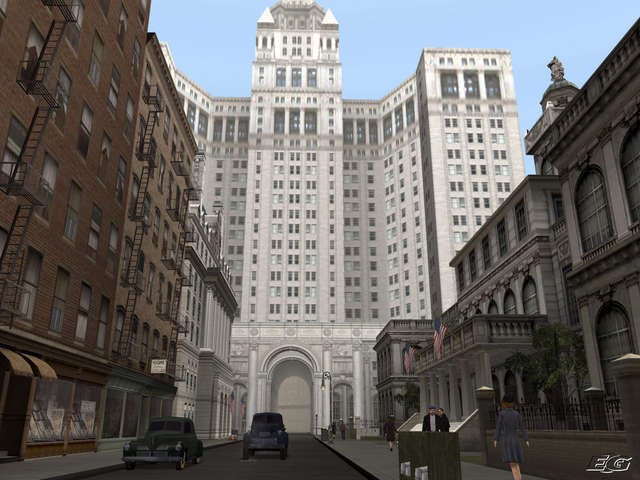
'The Godfather' Screenshot partofit

I want to be a part of it.

If the missions were hugely memorable, we wouldn't mind the brief stay of the story mode, but by and large they follow a fairly familiar routine that generally involves capping a posse of anonymous goons, followed by the main man you're after and then getting the hell out alive.

The progress you make certainly makes your rise to the Corleone Don fairly swift, and as a result you'll enjoy being able to increase your stats in one of five main areas (health, shooting, fighting, street smart, and speed), but you'll never feel a significant benefit even when you're pushing level 50.

Once you've got the main story mode cleared, the game tempts you with the prospect of so much more to come. It coaxes you into believing that something magical awaits players who want to 'own the map' and becoming the Don of NYC, then utterly fails to deliver. The map certainly gives you the impression that there's loads to do, as do the game stats that claim you've only cleared 30 per cent.

For a start, there's all those extortions to pull off (83 of them), rackets to uncover (56 in total), warehouses to take down (eight), hubs to infiltrate (four) and eventually the ultra-heavily guarded compounds (again, four - representing each of the main rival families).

Repeating ourselves
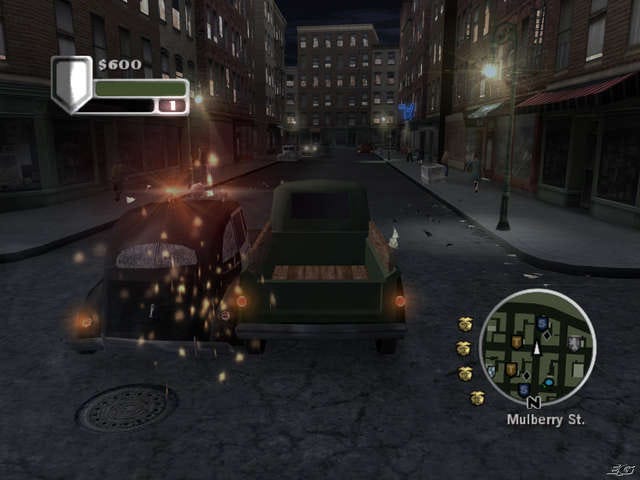
'The Godfather' Screenshot cops

New York City cops: they aint too smart.

But, coming back to the point about repetition, doing all of these tasks takes iron will and persistence - not because they're tricky, or in any way annoying, but just because you literally have to do the exact same thing over and over and over and over and over and over... 15 hours on, you'll be Don of New York, but you'll wonder why on Earth you went to all that effort. There's no payback, no awesome sense of completion, just a map with nothing more to do, and some stats to look back on. Hrmph.

The extortions are the most pointless of the micro tasks, and also the most tedious. To start with these are quite fun because your influence isn't that great. When you intitially walk into your average New York flower shop, bakery, restaurant, club or hotel and demand protection money, it isn't likely to be met with a positive response. This actually sets up some of the game's most intruiging set-pieces for a while, with the player forced to think how to change their mind. Do you, for example, grab hold of them and smash their head against the cash register until they give in? Smack them about a bit, or maybe see what else might change their mind? Being able to dangle them over ledges, strangle them a bit, force them through plate glass windows or put their head in an oven is all very Punisher-eque, and a lot of fun for a while.

But after a while, your influence and levels of respect grow to such an extent that they agree immediately, rendering the whole process utterly futile, but completely necessary if you want to be the elusive Don of New York.

Tied in with these extortions are the rackets. Most of the time these are hidden in another part of the same building where the extortions take place, and only become accessible if you've sucessfully pulled off the task at hand. A quick visit through the back door/basement/upstairs club normally reveals a host of goons that you have to take down before you finally get to the man you need to buy out. But as much as each one of these feels like a mini-mission to begin with, it also becomes apparent that as long as you get your respect levels up and keep Vendetta relations peaceful, you can skip all these encounters and run up to the guy you need to buy out. After 50-odd of these, you'll be questioning your own sanity.

Bullets

It doesn't end there, though. To truly wipe the other families off the map, you have to take down each and every one of their strongholds, starting with their warehouses, progressing through to the hubs, and eventually to their compounds. Each one is heavily guarded, starting with road blocks, and stretching through every part of the building, meaning you have to come fully prepared for a huge scrap.

Now, unlike the missions, these enounters are less forgiving in that once you're dead, you have to start over, no matter whether you've taken down one goon or 50, making these arguably the most frustrating, but also the most challenging and rewarding segments of the entire game. Approaching the first goon from afar, targeting them and romping through an army of rivals is actually hugely satisfying, especially once you've bought the three-star weapon upgrades that give you better range.

Perversely, the relatively low-level Warehouse takeovers are actually among the hardest you'll come across, and by the time you've bombed all four compounds you'll probably wish you'd have just done those to begin with. But although these sub-missions are probably the highlight of the game, again, the fun you'll have with them is somewhat tarnished by the inherent repetition. Two or three warehouses would have been fine, but by the eighth you're cursing the padding that's rife within the bulk of the game. After four hubs and four compounds, you'll truly have seen the back of these suicidal enemies.

On top of that, you're also expected to pull off 20 contract hits, which are, again, like mini-missions that task you with driving to a point on the other side of the map to, for example, shoot a guy in the knee, shoulder and then the head for revenge. Some have special conditions that gain you extra money and respect (like performing a strangulation or making it look like a traffic accident by throwing them off a bridge and so on), but like the main missions themselves, they're all over far too quickly, are too easy, and generally involve way too much unecessary (and time consuming) driving.

Parallel Lines

'The Godfather' Screenshot cheesewire

Mind if I test my cheesewire out on your neck old bean?

Which brings us onto the driving itself. Whether it was EA's intention or not, one way or another you'll be doing a heck of a lot of driving during The Godfather. It's not that the game's obsessed with cars (most handle the same, and even look broadly similar), but more that the map's actually quite sizeable, and getting from point A to B is going to be impractical otherwise. It's a shame, then, that the handling model is alarmingly basic and not even unrealistic in a particularly fun sense. The game seems to delight in making a huge fuss every time you have a tiny prang with so much as a wooden box, with spectacular litter, glass, wood and spark eruptions that send the frame rate south and eventually just grate. In addition, there's nearly always something to crash into or knock over at every turn, with suicidal pedestrians constantly running across roads, or cars somehow getting in your way, causing you to constantly change cars as yet another one bursts into a spectacular ball of flaming death.

Inevitably comparsions to GTA will be drawn as soon as anyone plays The Godfather, and the immediate conclusion will be that it looks better, but fails in almost every other respect. On a superficial level it adopts the same sandbox approach, but neglects to adopt so many of the the genius ideas inherent in Rockstar's classic series. For a start, there's no branching storyline at any point, and the city itself - although fully accessible from the beginning - is linked by over-long bridge structures and confusing overlapping road networks that make it a real chore to get from one section of the city to the other. In fact you'll waste an enormous amount of time purely because of this.

Another slight disappointment is how under-utilised the star names are during the story mode, with their appearances largely restricted to brief between-mission cut-scenes, rather than fleshing out the missions themselves. Quite how much these Hollywood big names got paid per minute would be an interesting fact. It's especially pertinent, as Rockstar always refuses to publicise which voice actors it uses, yet they all seem to end up doing masses of voice acting regardless. Here, it's fanatastic to see the likes of Brando, Caan and Duval reprise their roles, but you just long for them to play a more meaningful part in the proceedings. For the vast majority of the time you're surrounded by consistently recycled goons, and that's hardly ideal for a game that has such rich characters to draw upon.

Mob rule

'The Godfather' Screenshot brando

Brando makes a rare in-game appearance.

The decision to put a generic mobster in the lead role of the game is a good one, though. Predictably, EA borrows the Tiger Woods Gameface system to give you a reasonable degree of (Italian Amercian) customisation, and it works brilliantly, just as it always does. You can't quite make the monster you want to, but it's fun trying it, nevertheless - certainly it's an area that EA dominates, and this game is another fine example of how to personalise the experience in a meaningful way.

Looking back on EA's claims, it's as though the brief for the game was turned on its head halfway down the line. As discussed, there definitely is way too much driving required, which by necessity results in constant car theft, the police are completely generic (and way too easy to escape from - simply driving to any safehouse immediately reduces the star rating to two, for instance), the game has no real memory of your actions (heat and vendetta ratings are extremely easy to reduce), and as a result the talk of there being consequences to your actions is, to borrow a phrase, baloney.

On the postive side, EA has at least borrowed some of the most obvious moments from the movie for some of the missions - notably giving you the chance to plant the horse's head, for one - and there's a particularly cool moment towards the end of the story missions where the game thoughtfully cuts back to the events of the baptism of Michael Corleone's niece. But, like we keep saying, all this does is make you hanker for this kind of quality throughout, not in tiny dribs and drabs.

Despite all the game's mishaps, repetition and missed opportunities, the one main saving grace is that the combat is actually fun enough to nullify the overwhelming repetition. There's something peculiarly satisfying about the mechanics that make it a huge amount of fun in isolation. Approaching one of the epic takedowns armed with the Assassin pistol, and taking down an entire gang one by one is something we never tired of. Being able to wall hug and quickly fire around corners, as well as properly fire back from behind boxes is exceptionally well handled - especially when you're being shot at from all sides and manage to quickly take down a whole load of them in succession.

Gangs of New York

'The Godfather' Screenshot execution

The execution styles in the game are probably the highlight. We like the hats off one best.

The Godfather's also one of the better-looking games of its type too, with a generally stunning vision of 1950s New York making the game a good exercise in gaming tourism (Xbox shades the PS2 version, but not massively, and the PC version is the best of the bunch visually, but with shonky controls). Sure, the pop-up can be fairly alarming at times, and the stock interiors that EA uses for practically every business in the game feel a bit cheap, but on the whole it's a fine-looking game that pushes the hardware well. Certainly, the lack of load-times is a big plus, and something you'll be grateful for.

Regardless of whether you're a Godfather aficionado, EA at least succeeds in making the game an entertaining one, but that feels like a backhanded compliment when the result deserved to be leagues above merely 'above average'. What we've ended up with is game that offers a decent amount of fun, with great combat, occasionally inspired set-pieces, but sub-par driving and a half-baked story mode with barely enough variety to fill a long evening. Beyond a few hours with the game it's abundantly clear that what's left is so repetitive and so lacking incentive to finish off, it's like you're playing a game that was some way off being finished. Whatever the truth of the matter, it's painfully evident that EA has much to learn from its first steps in this most lucrative of genres, but has done just about enough to paper over some of the cracks. Worth a rental, for sure, but more than that is questionable.

6 / 10

Read the Eurogamer.net scoring policy

Comments (57) Latest comment 6 years ago

Comments threads automatically close after 30 days, but please feel free to continue chatting on the forum!