Halo: Reach

Who's laughing now?

"You are a cybernetic warrior in the future." Who can forget the words of Bungie, introducing Halo during the first Xbox E3 press conference in 2001? And, oh, how we sneered. Could you make it sound any more generic? What's that? You're "fighting with a small group of human soldiers against the group of aliens"? Next!

It's easy to forget just how hostile the reaction from a great many was to Microsoft joining the console market back then. And so, like a textbook study in confirmation bias, detractors seized on every word of that uncertain E3 debut and spat it back in the face of this hubristic American interloper.

In the case of Halo: Combat Evolved, neither Microsoft nor Bungie helped the cause with a disastrous live demo of the game on the show floor, the code possessed of a framerate so appalling it should never have been allowed anywhere near the press.

You don't need me to fill in the rest of the story. Suffice to say, nine years on and one of the most successful franchises not just in gaming, but all entertainment, is now so synonymous with Xbox that there's a limited edition console coming that plays actual Halo sound effects.

Dear cybernetic warrior in the future: I'm sorry.

Thoughts turn to Halo's (Xbox) origins as Bungie nears the end of its long journey through the universe. Reach, of course, is the studio's Halo swansong as it flees Microsoft's nest and heads out into the less certain world of multi-platform, new-IP development.

As community manager Brian Jarrard walks the press through the latest demo, we learn just how close to the end we are. "The game's going into certification this week," he says. "Things are winding down very quickly."

In what's likely to be our final good look at the game before the review stage, we're served a hands-on with new multiplayer maps and modes and a detailed look at Forge World; given an early glimpse of the stunning new trailer; and, best of all, guided through the opening 15 minutes of the Campaign.
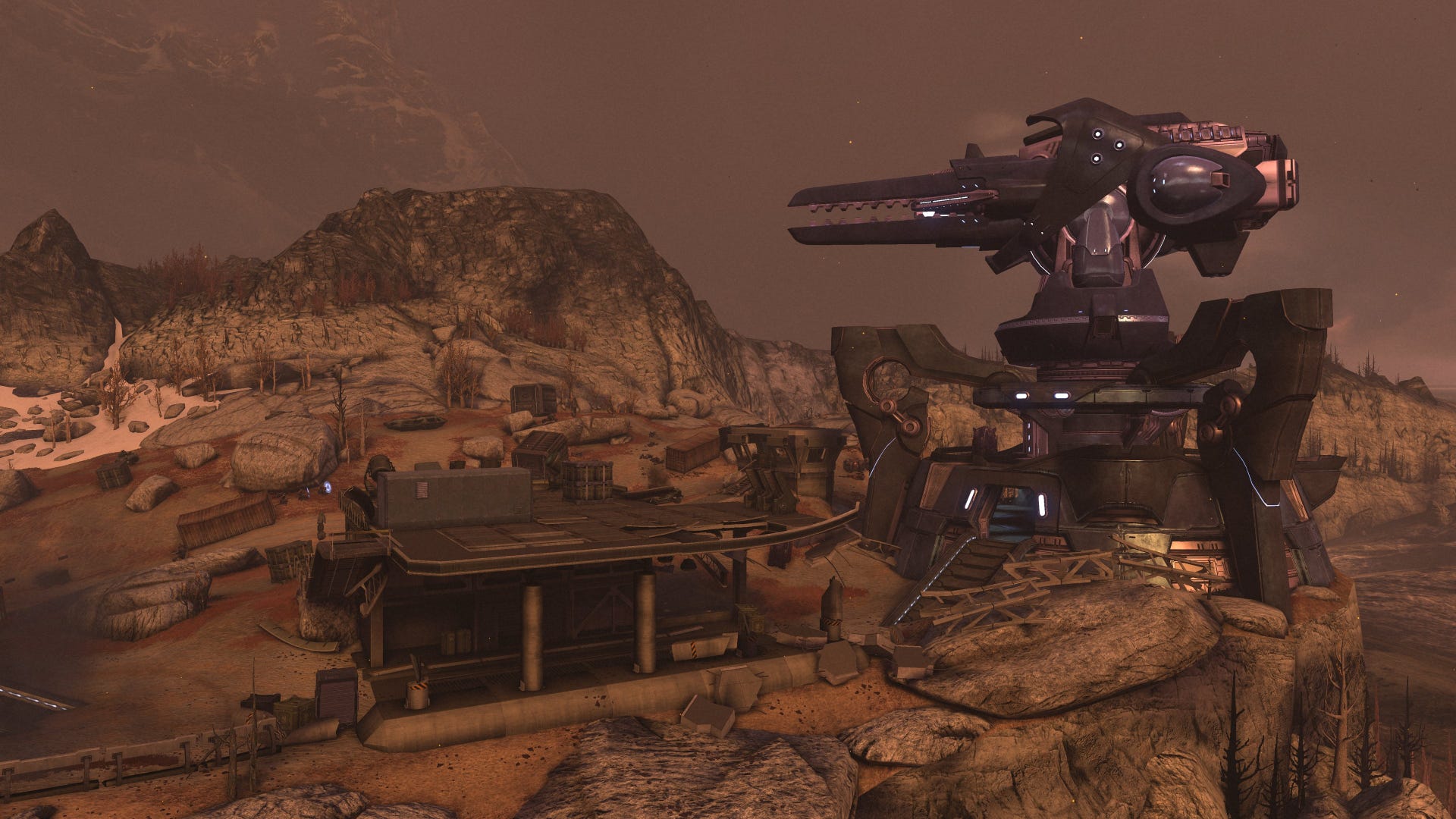
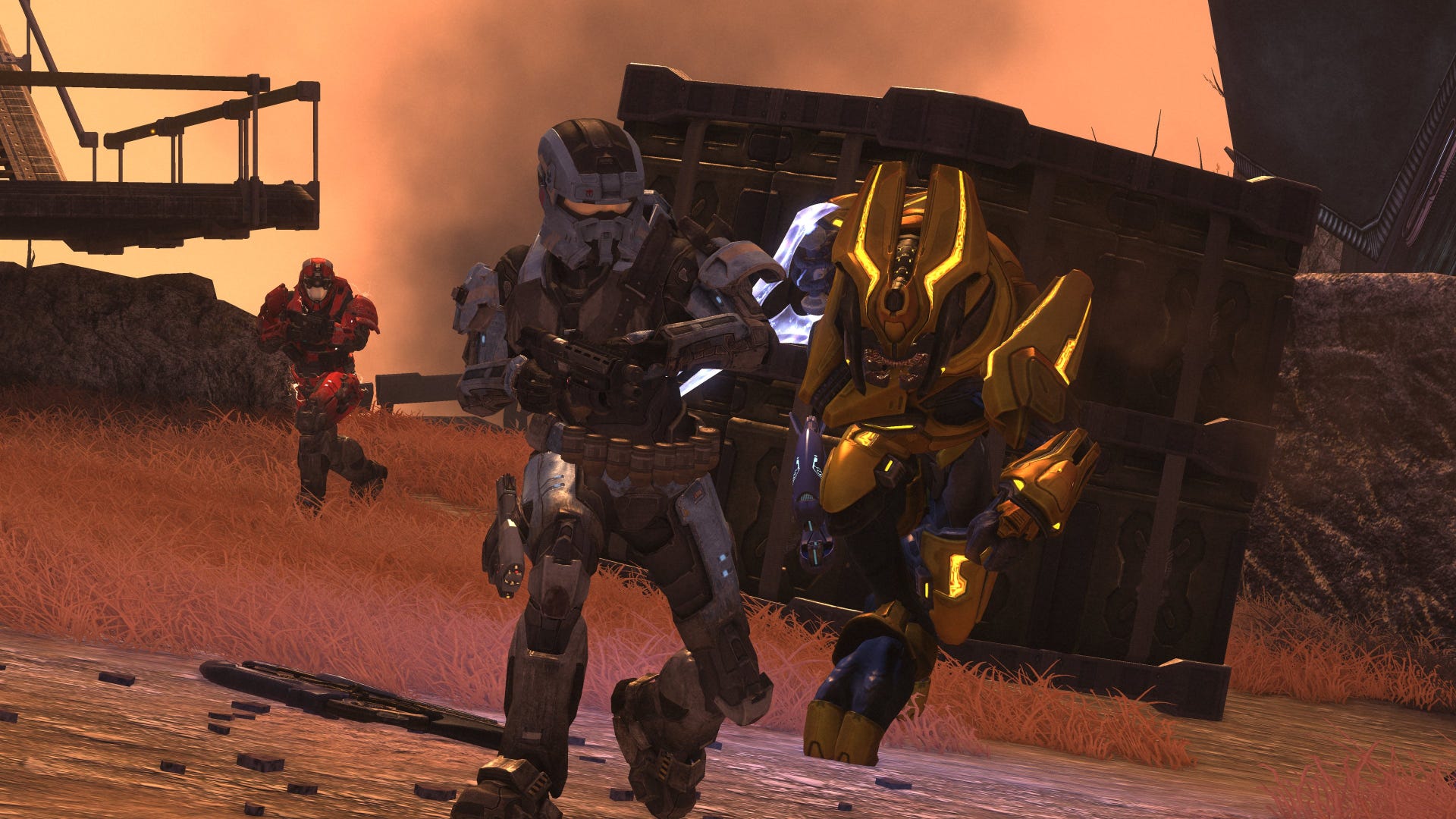
Firefight we've seen before, and it stands proud on the main menu screen alongside Campaign, Matchmaking, Custom Game, Forge and Theater. Jarrard is keen to highlight the "incredible amount of customisation options" in Firefight, and takes us through a range of them to prove the point.

The composition of squads can be defined (all Hunters, all Elites and so on); what comes in the initial wave; which skulls are activated. Three custom skulls can be created from scratch, with traits that can be made to apply to a specific squad. Jarrard suggests doubling shield strength or running speed - or the negative opposites - as examples.

Next, we're shown how AI behaviour can be tweaked, right down to what Bungie calls, delightfully, "shootiness". Settings for this are Normal, Marksman and Trigger Happy, self-evidently determining how often and how accurately AI will fire at you.

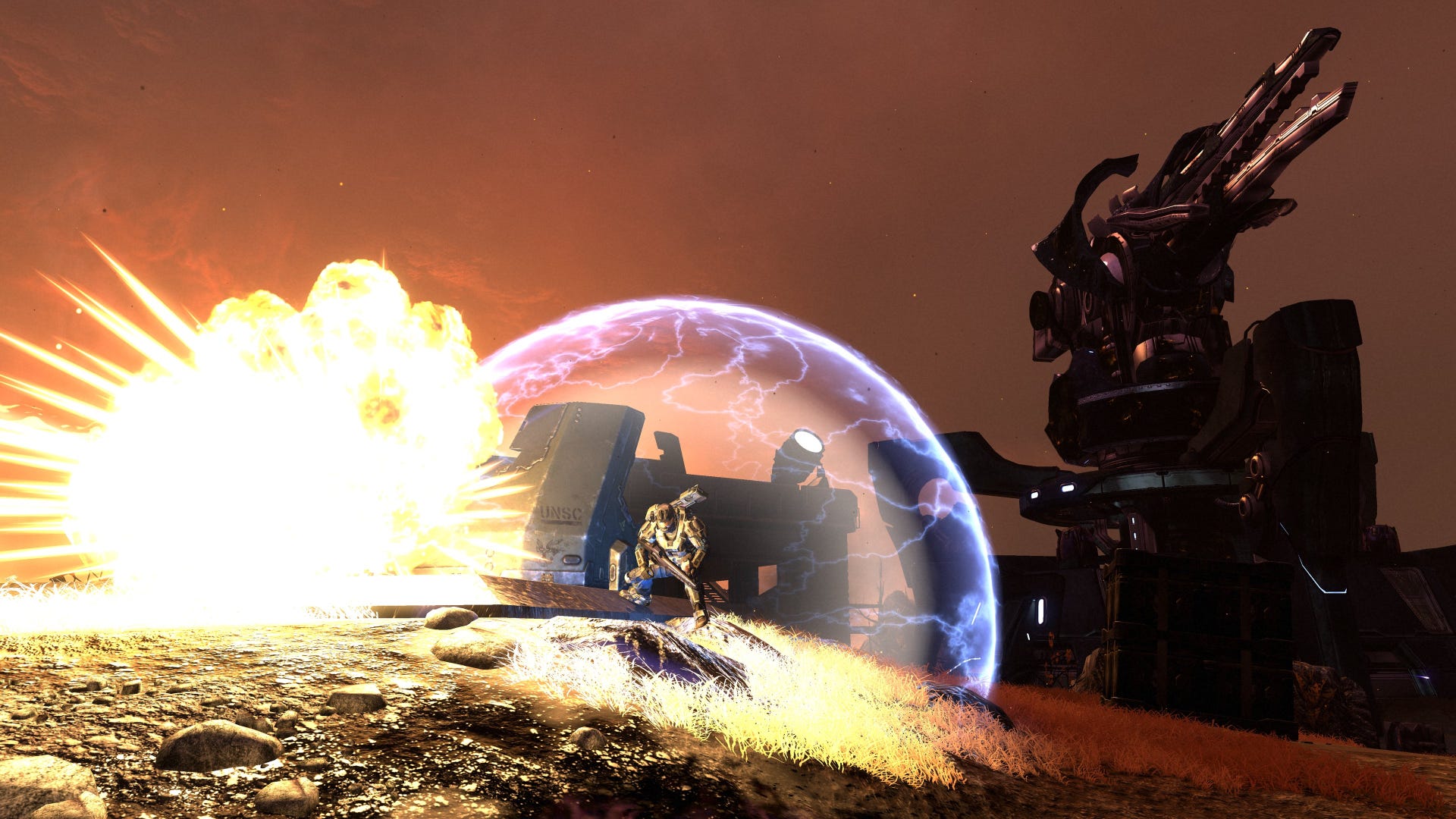
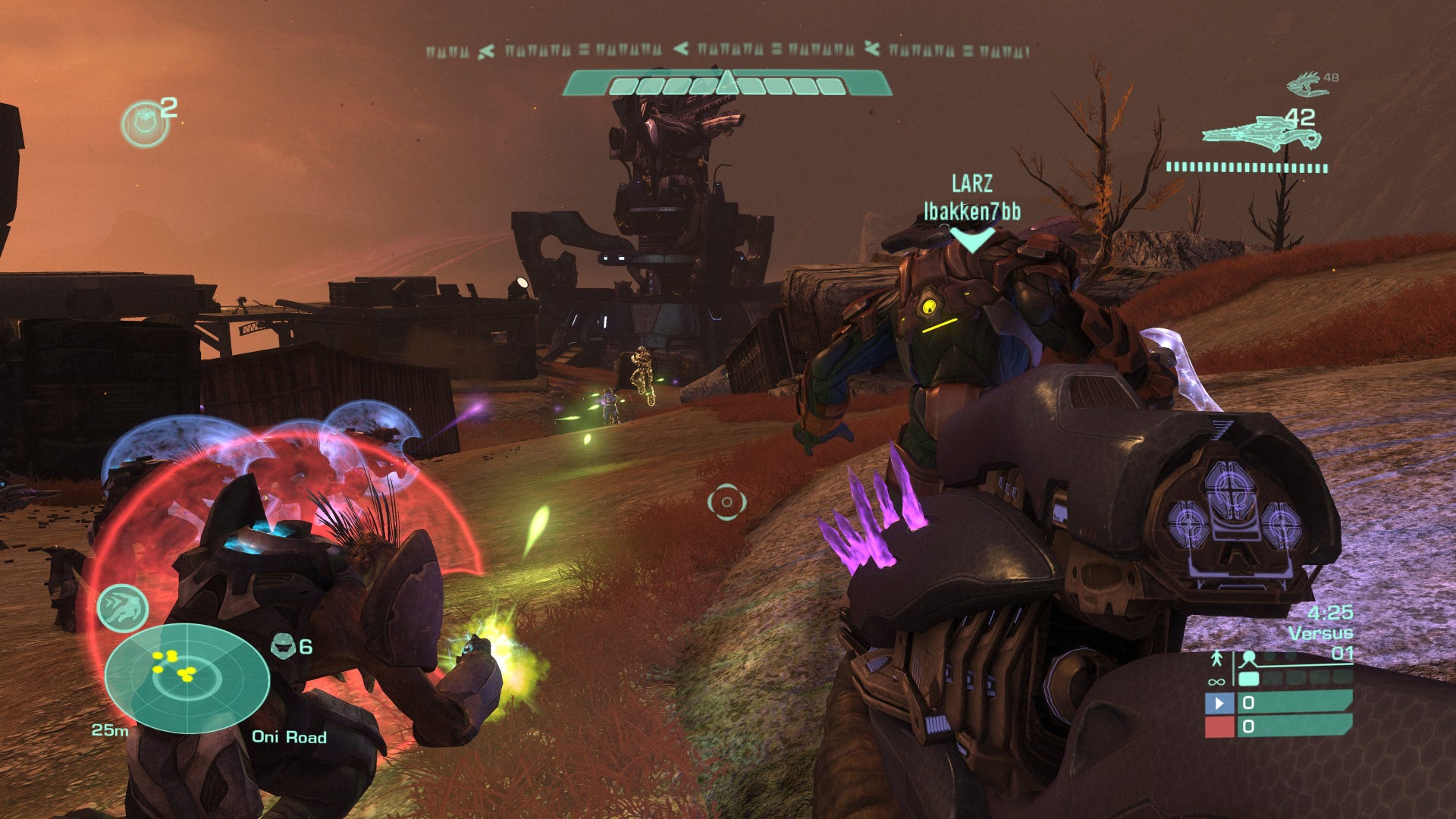
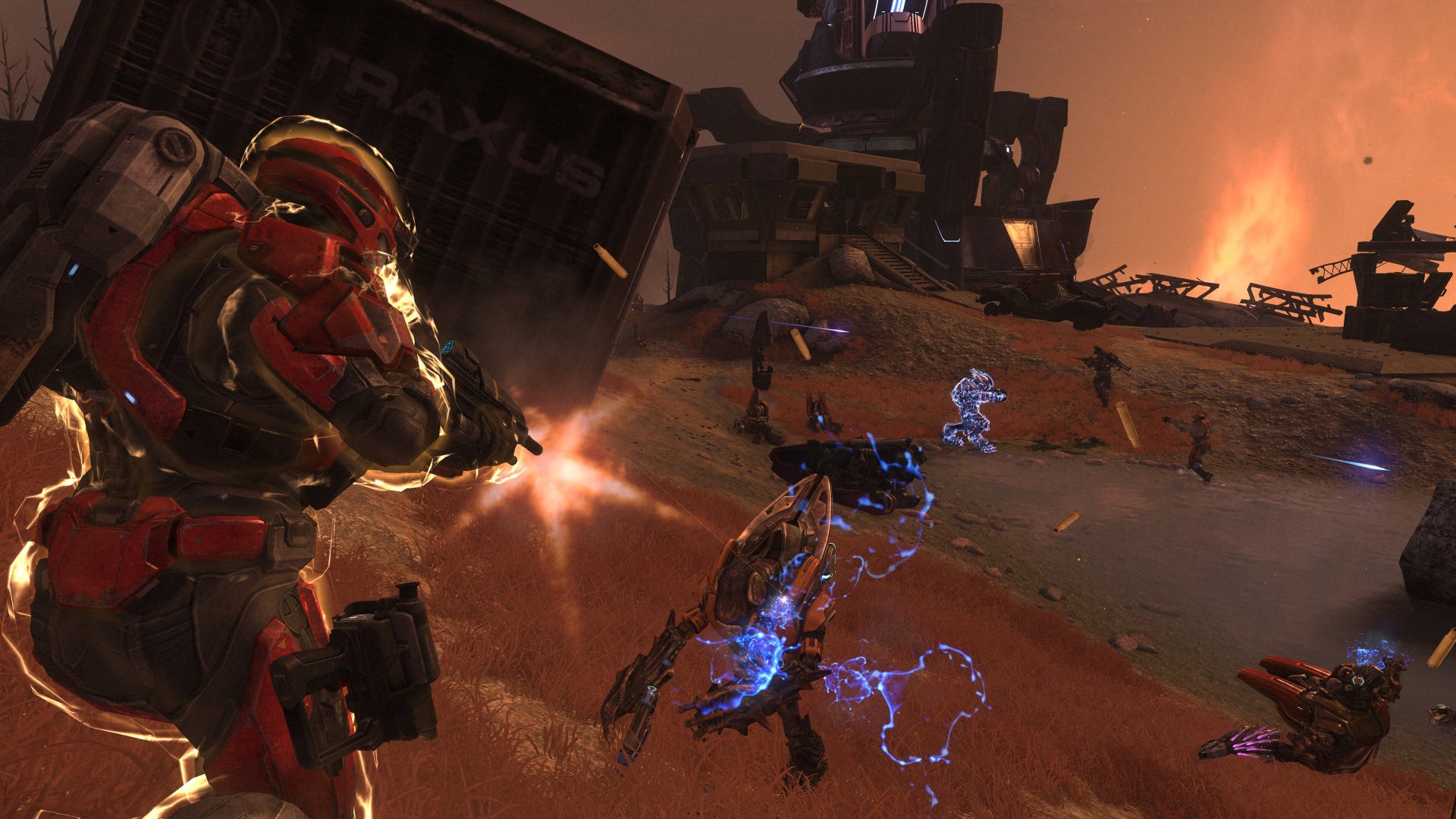
In a twist to the standard Firefight formula, a Versus option has been added where players take runs as Spartans and Elites, switching at the end of each round. And two further new Firefight modes are available to try out: Rocket Fight and Gruntpocalypse.

As you might imagine, the former arms everyone with a rocket and infinite ammo and the experience is as raucous, breathless, ludicrous and cathartically entertaining as it sounds. Gruntpocalypse, meanwhile, is enormous fun. You must defend against wave after unremitting wave of beefed-up Grunts, which, at point of expiry, burst into a fluttering cloud of confetti and the sound of children cheering.

Forge, Halo's map-editing facility, first appeared in Halo 3. For Bungie's finale this becomes Forge World: in Jarrard's words, "exponentially larger than Sandbox" and - in a fitting gesture to fans - "based on a Halo ring itself", which will once again dominate the skybox.

And that's far from the only nod to the series' roots. Part of the custom map is a recreation of classic Combat Evolved multiplayer map, Blood Gulch. Now, of course, you are at liberty to rebuild as you see fit. Similarly, Halo 2's Sanctuary map has been reconstructed to the "exact same dimensions", as has Ascension, also from the second instalment.

Jarrard promises the editing tools are far more flexible and user-friendly than Halo 3's, which he describes as "a house of cards" - get one bit wrong and everything collapses. He then zooms out with the camera, high above Blood Gulch, to show the vast scale of the map, all of which is accessible, all of which can be built upon.

Five pre-designed Forge maps will be available out of the box. Beyond that, it's up to your imagination and credit haul, with cash exchanged for countless items and effects that will no doubt be added to extensively post-launch. The community, as Jarrard sees it, will "shape the future of the experience months and years after release".

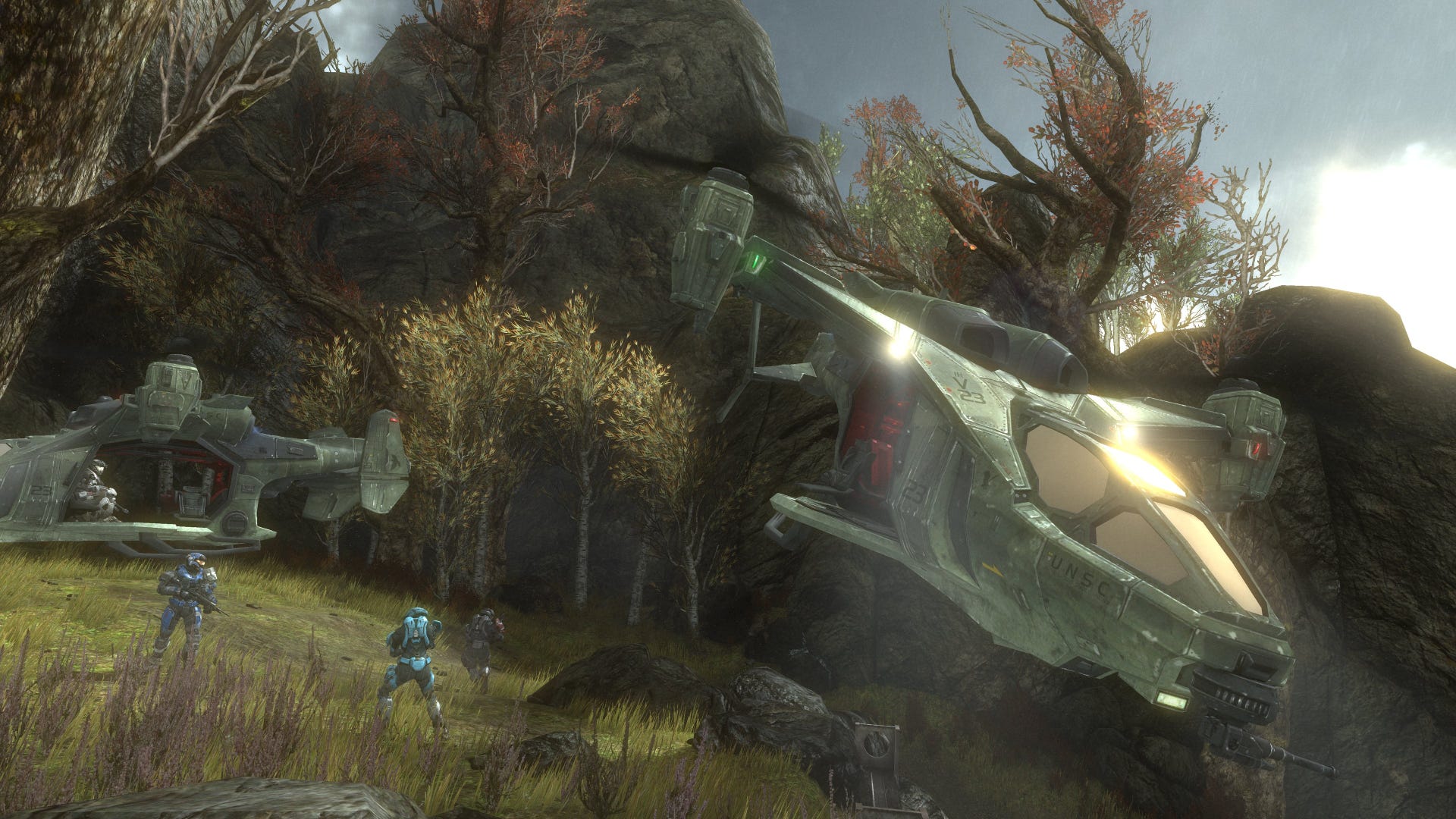
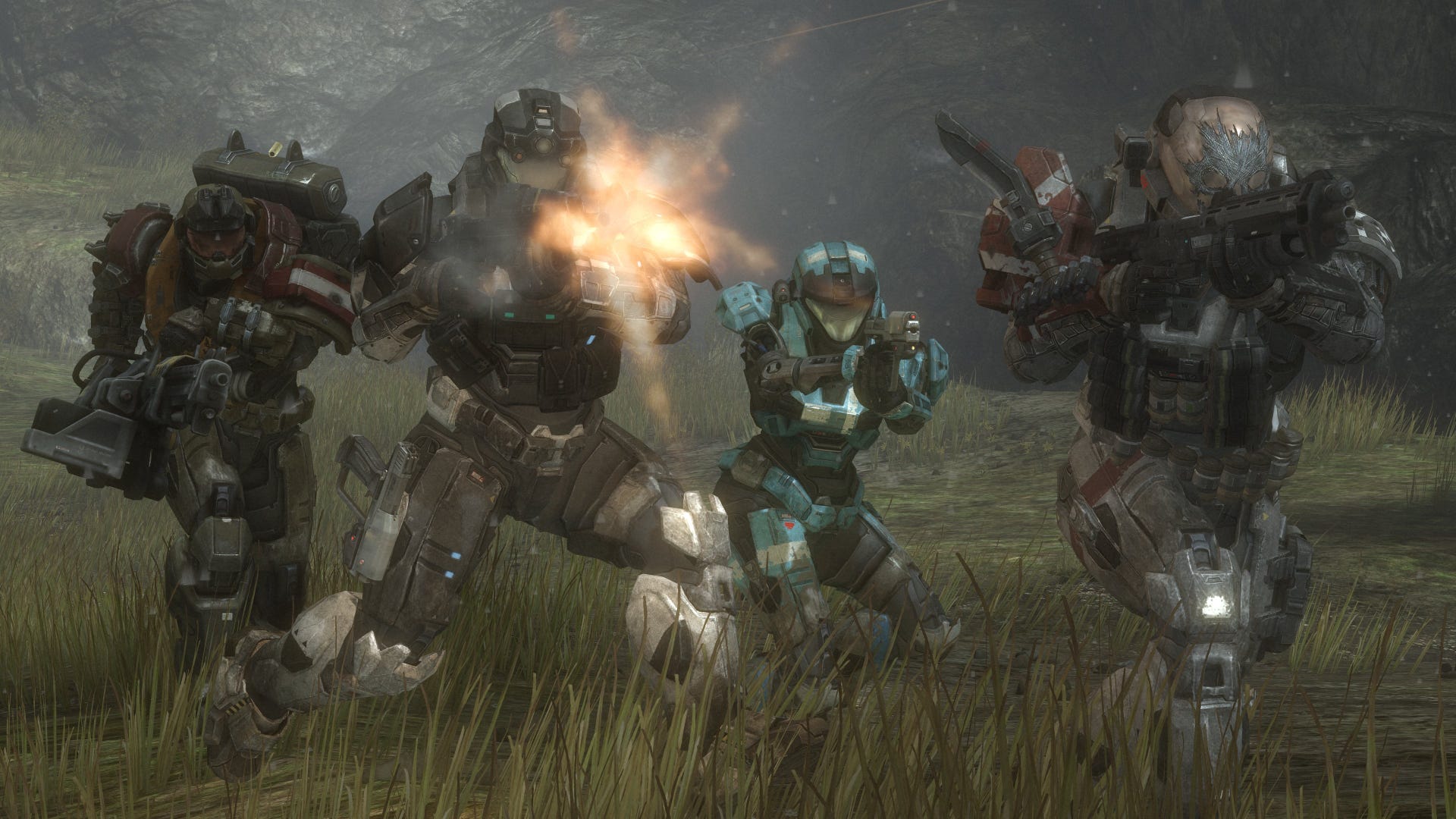
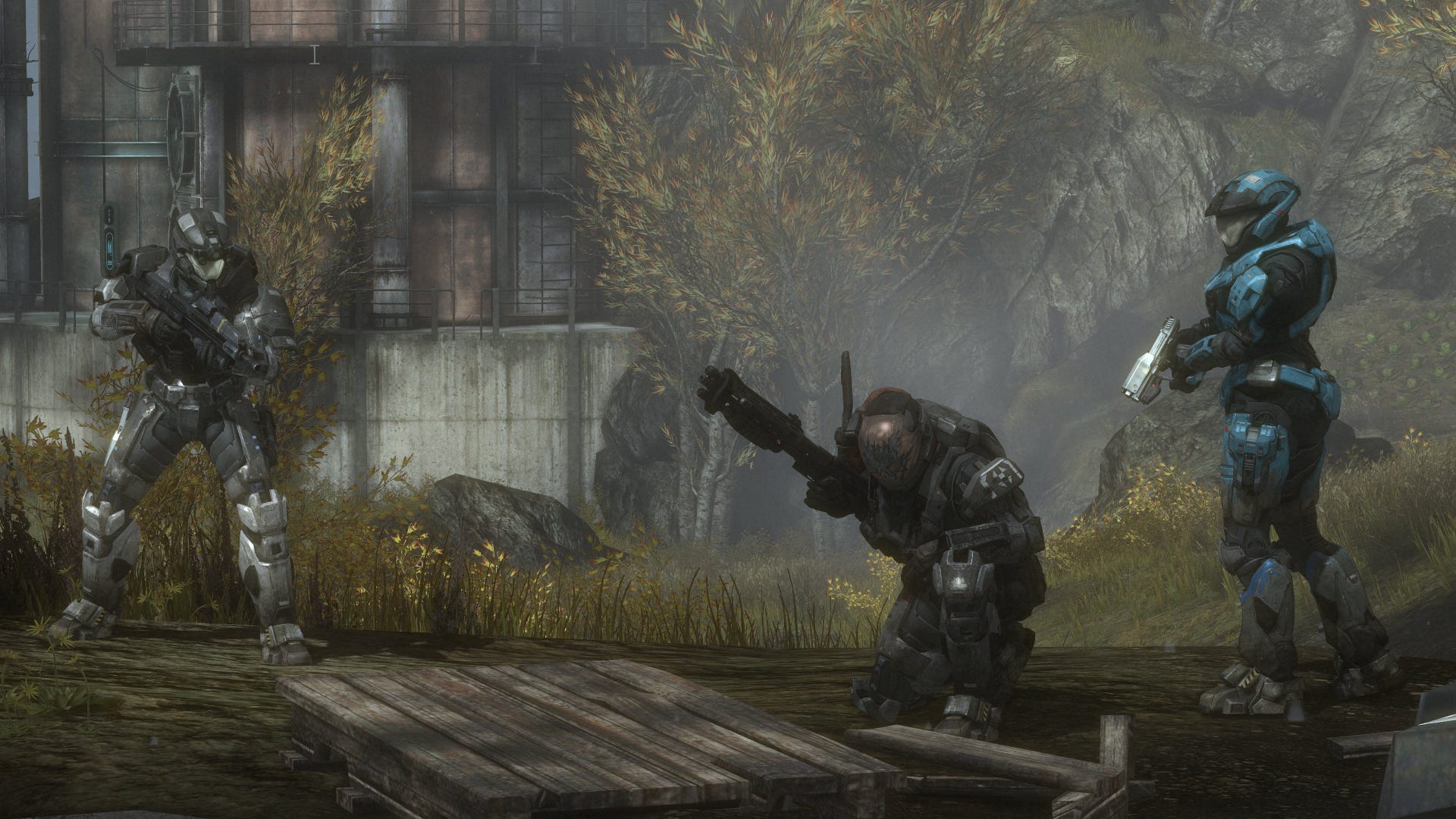
Finally, Bungie's lead mission designer Niles Sankey seizes the controller and launches into the opening of the main campaign. A good chunk of the opening cinematic has already been released, as the player joins Noble Team on the planet's surface and quickly embarks on a mission to investigate a distress beacon.

Start the finished fight.

If the myriad trailers haven't already convinced you, Halo: Reach is breathtakingly beautiful at times, its in-engine cut-scenes produced with cinematic flair, underpinned early on by the haunting restraint of Marty O'Donnell's masterful score.

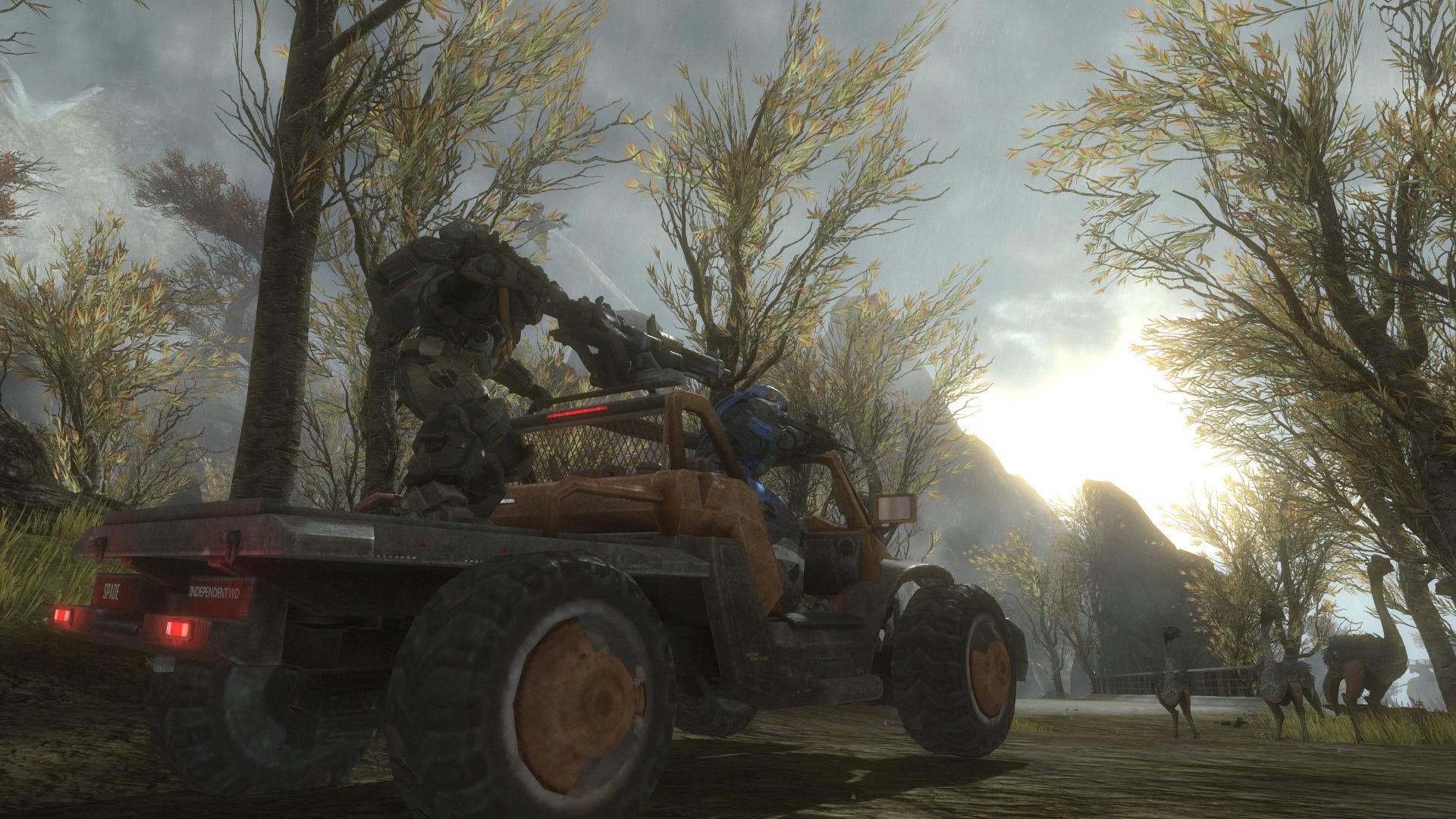
I won't spoil the details of the set-pieces, but the verdant carpet of life rolled out across Reach is teeming with indigenous wildlife, most notably weird ostrich-like creatures which charge around in isolation or in groups.

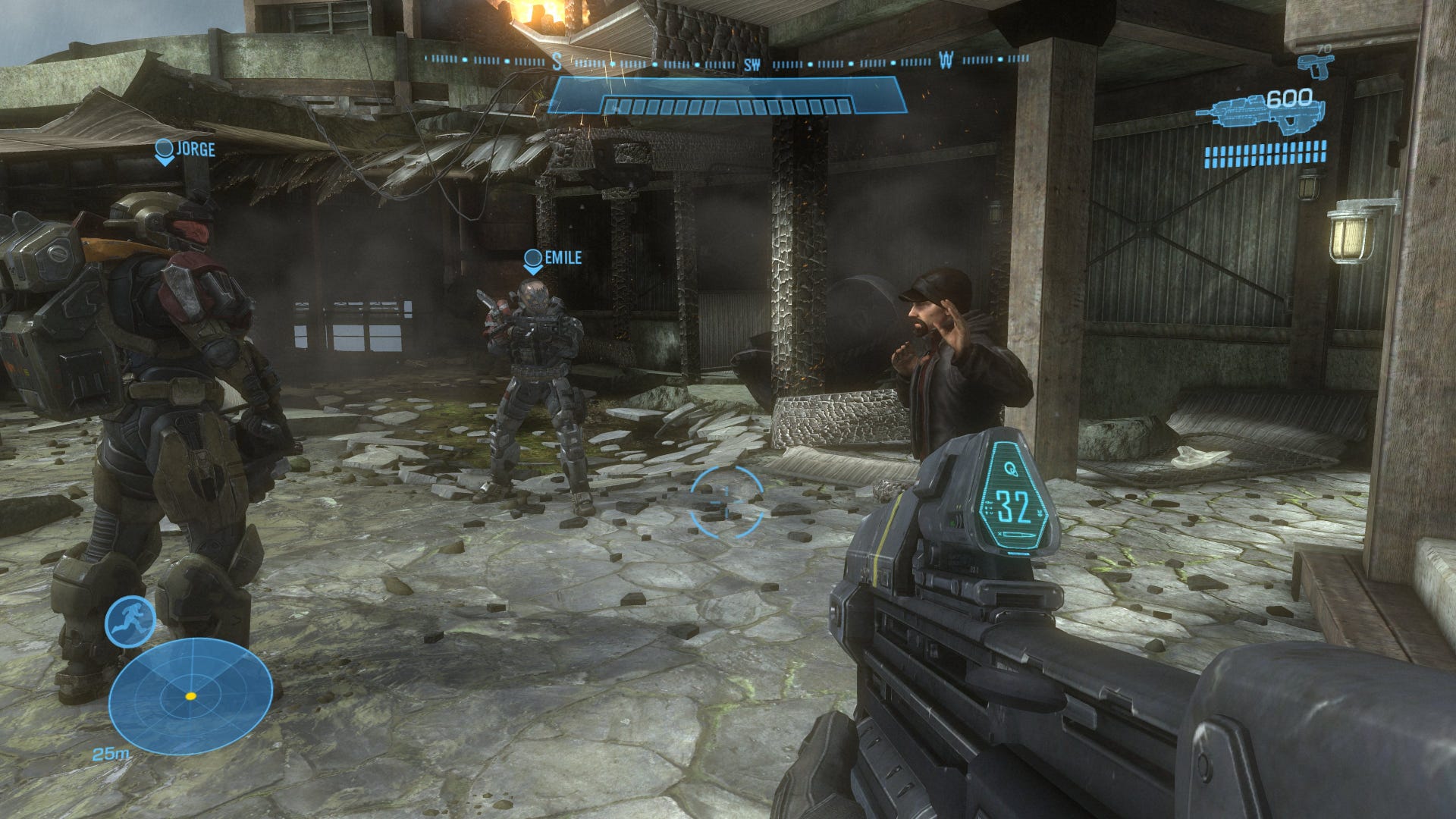
You will also encounter a civilian population throughout the campaign. Its narrative purpose is to highlight the tragedy of Reach through their experiences as the story unfolds; but there's a wider impact on gameplay, too. The example we see is an abandoned civilian vehicle which Noble Team discovers and quickly adapts into a makeshift Warthog.

The mechanics of Halo, even viewed as a spectator, are now so back-of-hand familiar there's little concern over the core experience, which Bungie has refined now for the best part of a decade. Similarly, the multiplayer is a largely known quantity and nothing among the new features has to this point suggested they will do anything other than enrich and deepen that part of the experience.

But for many Halo fans, including myself, the Campaign is king. Bungie has explicitly and repeatedly linked the experience of Reach to that of the original and unforgettable Combat Evolved. Having delivered the strangely empty and incoherent ODST in the interim between Halo 3 and Reach, there's a palpable sense that, acutely aware this is its well-deserved but final encore, the team has pushed itself to include everything it has always wanted to.

Whether that approach has energised Bungie to produce another masterpiece, or tipped it towards nervous over-elaboration, we'll know for sure in a little over a month.

But if one thing's clear, it's that nobody's laughing at Bungie's cybernetic warriors now.

Comments (89)

Comments for this article are now closed, but please feel free to continue chatting on the forum!

  • Loading...hold tight!