Fable III Preview

You rule.

"Our job at Lionhead is to surprise and shock you," says Peter Molyneux, kicking off his presentation of Fable III at Microsoft's X10 event in San Francisco. Does he shock us? Not quite. Does he surprise us? Absolutely.

We're surprised by some of the details: unique, morphing weapons that can be traded online, customisable magic based entirely on equipment, the removal of RPG staples like experience and a health bar, and the subtle reach of the Touch system, the emotional heart of the game. More than that, we're surprised at the extent - almost exponential - to which Lionhead is increasing Fable's scale and ambition while relentlessly pursuing an agenda of extreme simplicity and accessibility. Surprised, and very excited.

"More than half the people that played Fable II understood and used less than half the features in the game," Molyneux says, recalling an eye-opening piece of research that changed his whole approach to the sequel. "As soon as you see that you think, 'Oh my God, what a talentless bastard I really am'."

So the HUD fades away, the combat is ruthlessly simplified, and in a stunning move against the prevailing winds that have blown XP from RPGs into virtually every other genre in recent years, the whole concept of gaining experience which is spent on new abilities has been scrapped.

Instead, your hero's growth, your increasing power in the fantasy land of Albion, will be mainly represented by the number of followers he or she has. This (as well as being an amusing echo of Twitter mania) ties in with Fable III's theme and its narrative arc: the road to power, and what you do with it when you get it.
1

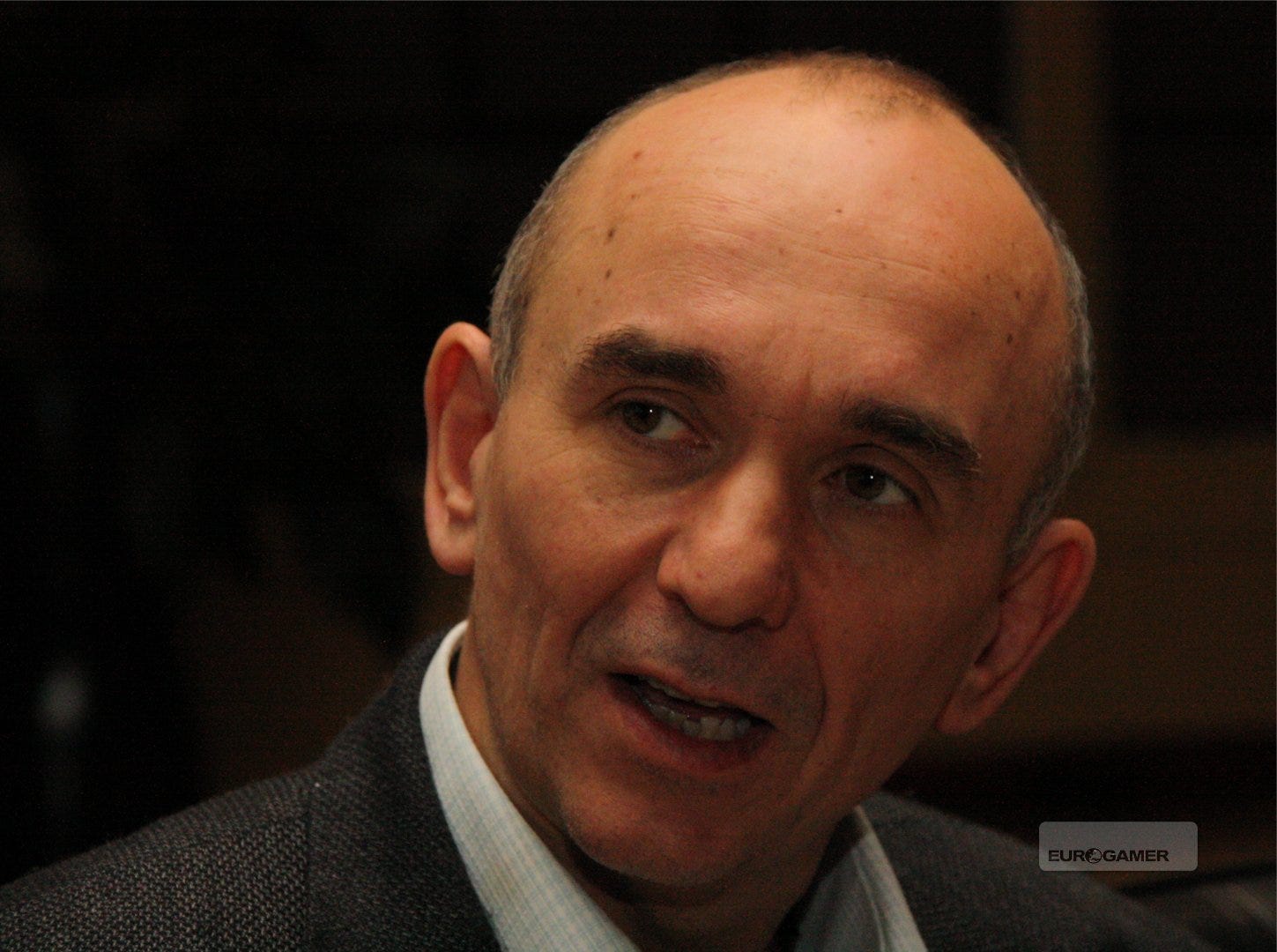
Peter Molyneux, yesterday. Literally.

"I want you as a player to feel powerful, I want to give you the ability right all the wrongs in the world," Molyneux says. "I could just give you the normal story, the Hero's Journey. That's pretty much what every film, book and certainly game does - why is it always like that? If it's all about power, the problem is the end of [that story]. I want to feel like the bloke who defeated the bad guy."

The is a bad guy to defeat, naturally: Logan, a king whose tyrannical rule has turned Albion, the bucolic fantasy England of the first two Fable games, from a medieval idyll into an industrial nightmare.

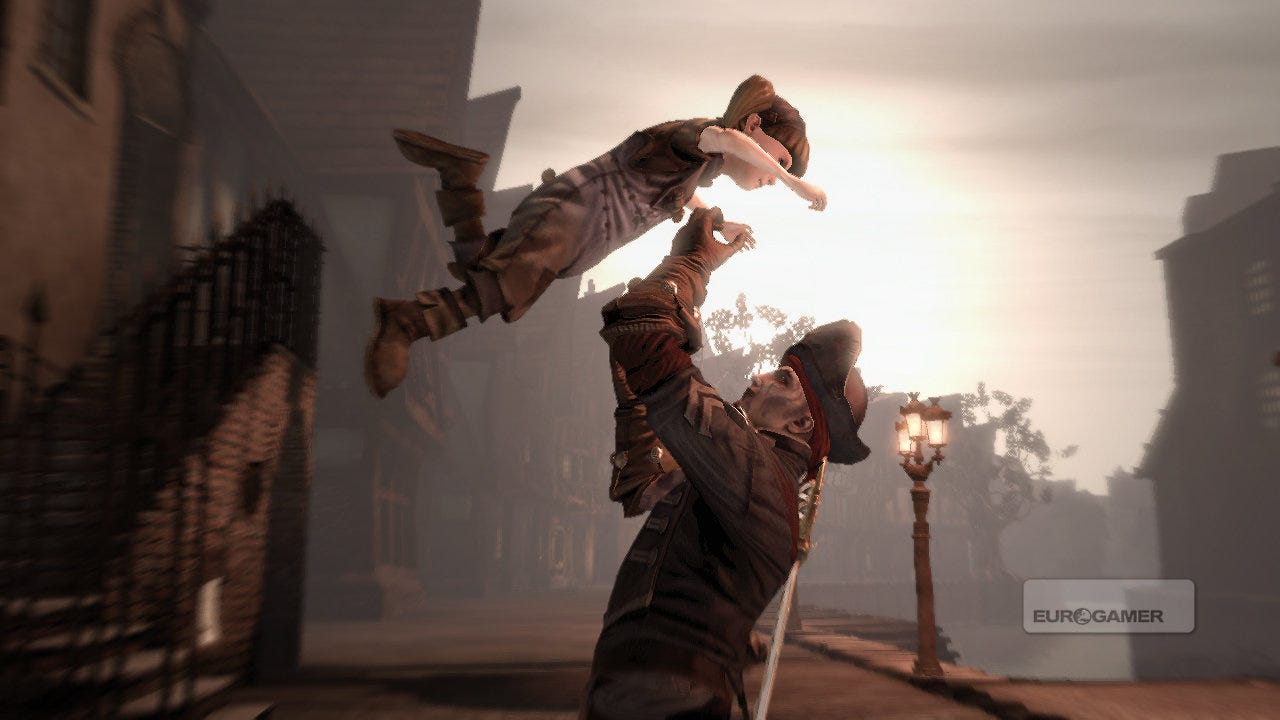
Molyneux's colleague fires up the game and shows us scenes more reminiscent of Dickens and Lowry than Tolkien. We're in a city choked with grime and beggars, dominated by dark red-brick factories and workhouses with tall smoke-stacks. Our hero has a Napoleonic, piratical flavour, with a one-armed frock-coat, a tricorn hat and a cutlass on his back. It's 50 years after Fable II, and the industrial revolution has just arrived.

You will defeat Logan about halfway through the game - and for Molyneux, what happens next is what's most interesting. You'll defeat him by persuading the people of Albion to follow you and believe in you, which will give you the power to overthrow him - but to persuade them, you're going to have to promise "whatever it takes," he says.
2

Matchstalk men and matchstalk cats and dogs not pictured.

"You're going to promise to turn all the factories into schools - then when you're on the throne you're going to have to deliver those promises. Will you become worse than [Logan] or better than him?"

Molyneux doesn't elaborate on how ruling will work, whisking us on to the topic of Touch. Touch arose out of his dissatisfaction with Fable II's gimmicky expressions which, he felt, were ultimately only good for fart jokes. Touch is "your emotional connection with everything in the world". It might involve hitting someone or hugging them - but, in what Molyneux freely admits is a nod to ICO, its main expression is through holding hands.

His colleague demonstrates. The hero's wife asks him to find their lost daughter. He uses his dog companion to do this through a new system Molyneux actually calls "context-sensitive scenting", allowing the hound to track down people and things within the world. (A couple of other things have changed about the dog, apparently, but Molyneux won't say what.)

Child found, our hero scolds and then hugs her with Touch, before taking her hand and leading her back through the streets. She's still an independent AI character throughout this time, chatting away, commenting on and responding to the environment.

A darker example occurs when he leads a beggar who's defaulted on a debt to a factory to sell him, effectively, into slavery. Initially he confidently takes the player's hand, but as soon as they're through the factory gates he needs to be dragged kicking and screaming, saying that if he's left here he'll be dead in two weeks.

You can use Touch in any situation, in combat, when you're king - dragging characters to dungeons or the gallows. Molyneux hopes Touch will drive home the emotional weight of such decisions, and says it's absolutely central to Fable III. "Touch is the first thing taught in the game," he says. "You can apply that trigger anywhere, at any time."

He's evasive on how it will be controlled, however. There will be visual cues not in the current build of the game, such as glows around people you can touch, and "we've replaced functionality of the A button to an extent", but it's not clear how you'll be able to change the tone of your physical interactions. This is one area of the game where the promised support of Natal, Microsoft's new motion-sensing device, might come into play.

Combat is "a lot simpler and more accessible," says Molyneux, with a one-button system that unleashes light attacks with fast taps and heavier ones you build up by holding the button down. This isn't capped at all, so you could hold down the button for hours to deliver a "thermonuclear explosion" if you wanted, and the same system works across melee weapons, guns and magic.

In the demo, a half-naked hero with a giant axe who's clearly taken the evil path butchers opponents with heavy, slow-motion finishing blows. We're in a dungeon, a huge, high, open and atmospheric cave that will be fully navigable. There's a surprising amount of blood spattering about; the gore level adjusts to your moral alignment since, quite simply, evil players of the previous games wanted to see more blood, and good players wanted to see less. Phantom wings flash behind the hero as he strikes, the size and colour of which will show your power level and alignment.

3

Touch screen.

But that's just the least of the visual representations of your achievements and choices in Fable III. As in its predecessors, your character will morph, but instead of physical attributes being dictated by stats (a particular problem with female avatars who tended to end up looking like "shot-putters", Molyneux says) they will be influenced by weapon choice.

"If you want to be big and strong use a big weapon. If you want to be lithe and slender and graceful, use pistols and swords. If you want to be magical and mysterious, use magical objects like rings."

In the game's most visually striking change, those weapons (including magical objects) will now morph with you. They'll be unique, bearing your gamertag and changing according to how they've been used, and how much.

They'll have their own alignment, dripping with blood or glowing with a holy aura depending on how many innocents they've killed. Very aligned weapons will start singing of things that have happened to them when you take them out, a reference to Michael Moorcock.

Weapons' size is dictated by the number of kills and appearance by what enemies they've slaughtered - an axe that has killed a lot of Hobs will look like it's made out of Hob parts. They'll even have detailing drawn from your gamerscore.

4

Cave story.

"We're just bored of making more weapons for you," Molyneux says. He recalls how dispirited the team at Lionhead got when considering the 200 weapons they were going to have to design to beat Fable II's tally of 150. "People are going to be bored," he remembers thinking. "Why don't we get you, the gamer, to craft the weapons? You craft them by using them. Any weapon will reflect the way you use it and what you've done with it."

You can even trade a weapon online, selling to other players in whose hands it will continue to grow and change, although it will always bear your name. We ask if this means there'll be some sort of auction house, an economy tying Fable III's players together, but Molyneux, with a visible effort, dodges the question. "Something like that," he says, explaining that he can't go any further without digging into the online side of Fable III for which Lionhead appears to have very big plans that it's not ready to talk about.

He does mention that online co-op is a "really big feature"; that Touch can be used with other players invited into your world, and that you can even marry them; that they'll bring their own morphed weapons and dog with them into your world; and that players will no longer be tied to a single camera or area, but will be able to split up and do entirely separate things within the same game world.

If Lionhead can make this most individual and personalised of RPGs a truly social, connected game - something it never quite managed to do with Fable II - it will be a great achievement. We're anxious to know more, but in truth, our heads are already spinning.

It was a typically Molyneux presentation, stronger in suggestion and rhetoric than hard detail. But Fable III's ideas are bold and clear, and the game on the screen was solid and handsome and bursting with character. The king might just have found his crown.

Fable III is due out exclusively for Xbox 360 this "holiday season".

Comments (121)

Comments for this article are now closed, but please feel free to continue chatting on the forum!

  • Loading...hold tight!