Saturday Soapbox: Failure is Not an Option

The consequences of not having enough consequences.

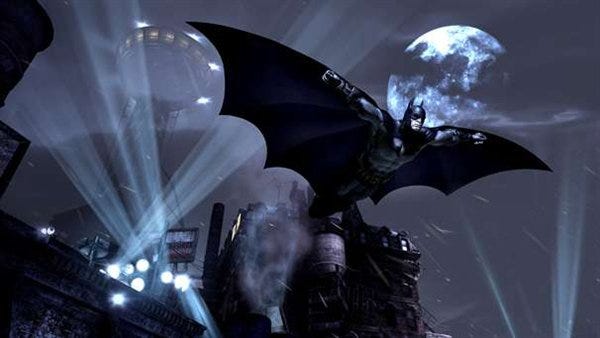
"Batman must save Gotham," says everyone's favorite butler/surgeon/IT guy Alfred during the third act of Batman: Arkham City. He's not kidding. If I allow Bats to fail at rescuing even one of serial killer Victor Szasz's hostages it's off to the game-over screen. Retry or quit, there is no fail.

But why not? I understand it would spoil Rocksteady's authorial intent if I were to say, cut the rope suspending the bipolar mob boss Two Face over a vat of acid. He's a main character in a licensed game. Killing him now would not only be totally against Batman's ridiculous moral code, it would also mess up any plans the developers might have to include him in the inevitable Arkham 3 (Arkham County, anyone?)

Szasz's victims, however, aren't integral to the plot. Lacking even names, they're only notable for what they represent; innocent civilians. Wouldn't some of them dying make us feel remorse and resent Mr. Szasz even more? It's not like other villains don't frequently murder people both off and on screen in that game. Why should this be any different?

This rigid adherence to positive outcomes felt especially jarring coming hot off the heels of Dark Souls, wherein killing an NPC renders them dead for the rest of the game. Often they'll hold a spell that can't be found elsewhere, so if you make a blunder be prepared to live with it.
1

The Dark Knight Triumphant.

You'll rarely want to murder NPCs in Dark Souls, but the point is you can. There are consequences to every decision you make -- even if it's an accident and you mistakenly hit a friendly character (something that can happen all too easily by nudging the PS3's protruding shoulder buttons). Unlike other open world games where you can slay important NPCs like Skyrim or Fallout, Dark Souls only allots one save file per character and frequently overwrites your progress. Such unforgiving design encourages you to play for keeps, rather than attack every NPC you come across just to see if they react.

Though Arkham City and Dark Souls are two very different types of games with one following a structured narrative while the other is predicated on crafting your own tale, ramifications of this sort aren't exclusive to the latter.

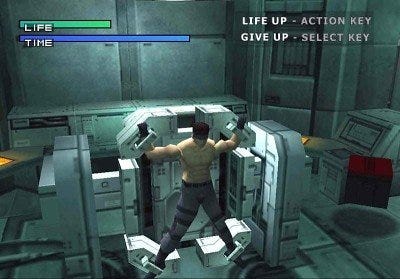
The first Metal Gear Solid is a linear, story-heavy title, but there's a point where your actions drastically affect the outcome. Midway through the game you get captured and have to rapidly mash a button to withstand torture. If your health gets too low you can submit (as I did) which results in your quasi-romantic interest, Meryl, getting killed.

Dying here yields no continues, and it can be a long way back to the last save point. While she's brought back in Metal Gear Solid 4 (the ending where she survives became canon), that wasn't until over a decade later, so for all intents and purposes your experience changes depending on your performance during that solitary scene.

2

Kelly before.

A more recent story-based stealth adventure with permanent consequences was Deus Ex: Human Revolution, wherein I messed up on the first mission by relying on the sort of safety nets inherent in other games. Early on in Human Revolution you're told to meet with your boss who will fill you in on an ongoing hostage situation. Since this is the beginning of the game, it was my natural reaction to wander around and talk to everyone. The hostages? "They'll be okay," I thought.

Even when my boss told me to hurry up, I assumed it was an empty threat. Just a voice in my ear nudging me in the right direction as Navi did all those years ago in Ocarina of Time. In that game I spent countless hours helping distraught townsfolk recover their lost chickens and dogs and the world didn't end. I figured the same would be true here while I caught up with the locals. 

Upon arriving at the crime scene I was berated by local law enforcement for taking too long. They told me the hostages were dead. It was my fault. I'd been playing Human Revolution like a videogame, not like a top level security officer on a time sensitive mission. Mad at myself, I took out my aggression by throwing a cardboard box at the cops, which must've made me a threat as they didn't hesitate to gun me down. From that point on I'd learned my lesson; don't be a jackass.

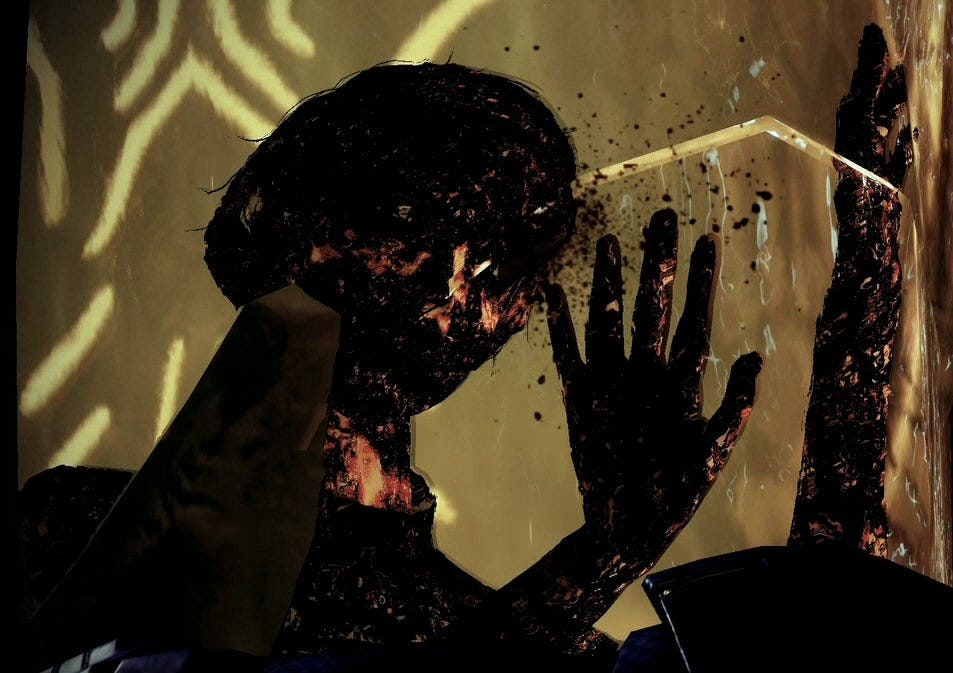
I faced a similar consequence in Mass Effect 2 where I made a beeline through the main quest figuring I'd save the sidequests until just prior to the endgame. This did not work out as I'd hoped when a late story mission ended with most of the ship's crew getting kidnapped. Much like in Human Revolution, I assumed my crew would be okay while I spent the next 10 hours helping my squad sort out their family issues. While this helped me get chummy with my shipmates, it resulted in my crew getting turned into a puddle of goo upon our arrival. A pity as I'd grown quite attached to my awkwardly flirtatious yeoman, Kelly.
3

Kelly after.

Such repercussions are refreshing because they encourage us to stop and consider the situation rather than rest on our gaming laurels and regurgitate the same principles that have dictated success and failure for decades. So why isn't this done more often?

It's partially due to prescribed narratives. A story can only stray so much before it stops resembling itself, and there are only so many different possibilities a developer can account for that can be burnt to a disc. But why aren't smaller decisions given the sort of weight they deserve?

One reason games steer away from permanent fail states is so players can see everything in a single playthrough. After completing all but one sidequest over the span of 50 hours in Fallout 3 it was heartbreaking to realize that the last of my major sidequests could not be completed because I'd killed the slave traders who gave it. 
4

I never could beat this part.

What I find more disconcerting is that by and large our industry is comprised of the same handful of pandering, ego-stroking fantasies. I can't tell you how many worlds I've saved, evil forces I've foiled, and people I've rescued. Maybe I'm just modest, but when NPCs thank me for saving their village, dog, or life I can't help but want to refer them to the dozen times I failed in the process.

By and large it feels like games have lured us into a false sense of security. Take your time, attack NPCs, pick the hilarious jerky dialogue option until you punch a reporter - these are the ways traditional game design has molded us into behaving, confident that there won't be any long-lasting negative effect. Inevitably you'll emerge victorious and be celebrated for being the best darned space marine/legendary hero/roguish adventurer there ever was. 

But the truth is I'm tired of winning. I'd prefer the bittersweet taste of victory that acknowledges the losses contingent on my shortcomings. I've saved the day so many times that it doesn't even phase me anymore, but losing Meryl, my crew, or a group of hostages due to my feeble thumbs, brash behaviour, or compulsive curiosity is something that continues to haunt me. If games are going to mature, they need to hold us accountable for our failures in addition to our successes.

Comments (36) Latest comment 6 months ago

Comments for this article are now closed, but please feel free to continue chatting on the forum!

  • napalm68 #1 6 months ago

    A great read, Jeffrey.

    I kind of like the fact that games are getting to this level. Non linear, but consequences for mucking up.
    Edited by napalm68 at 19/11/11 @ 07:41
  • mrharvest #2 6 months ago

    Fallout: New Vegas did the consequences thing quite well for a modern game. You have to pick who you side with - you can't finish most missions. The only thing is that it's a bit jarring when a Quest Failed notice pops up for something you've never even started, but hey.
  • CaptainQuint #3 6 months ago

    I award this article 10/10.
  • bf #4 6 months ago

    A very good read. The bit that bothers me the most about Arkham city is that it has choices that you are not allowed to make. You're given choices but if you make one that doesn't suite the plot the game takes it back. Makes me mad that does.

    I wonder if this development has something to do with games becoming more like stories than games? You're supposed to get a predetermined experience that is to be equal for everyone and not play a game where the story and experience develops around how you play.
  • Ferral #5 6 months ago

    Yeah, I like the narratives on some of the games. I did follow the orders on DXHR and thankfully saved the hostages on the first mission, there was an urgency in the voice. So I went off and done the mission then headed back and started the whole talking to everyone and finding where everything was.

    The whole thing with Demons / Dark Souls is a world that is in strife and torment. You have to be careful with alliances, dont just go killing NPC's for the fun of it, you never know when you may need them again. For example the first merchant you come across in Dark Souls in the Undead Burg, 40 hours in I still do a run to him to get my supply of standard arrows if I am round the shrine area. Next one to get arrows from is located in Sens Fortress across a jump near the boss Iron Golemn, so he is currently my goto guy as I am in Anor Londo.

    I agree that we need to see more consequences to the actions and decisions we make during playing these games. Granted there are only so many things a developer can think of and add to any given story / quest line. But there needs to be something there where it goes if you do this then you will pay for it someway later down the line.

    Take the excellent Elder Scrolls Oblivion for example. Near the end of the single player campaign.

    Warning Spoiler for those that have never completed Oblivion main quest!

    Oblivion gates open up outside each town which you have to close given what happened to Kvatch near the beginning of the game. You REALLY need to get these gates closed before the towns get destroyed. At which point I done one or two of them then went and done the entire Shivering Isles expansion as I found the gates to be a bit tedious having to do them in quick succession. Nearly 30 hours later ingame (Dont know how many days or weeks I spent in the Isles but 30 of our hours must have been a few weeks ingame) after completing Shivering Isles I decided to go back to the main quest and closed the gates. Lo and behold the towns were there just fine, no one dead and everything as it should be with just the marks outside the town to show that there was once a gate there. There was no consequence to me going off doing something else.

    Lets hope narration continues to improve and other developers decide to look at the success of the Mass Effect series and Souls series. They are definately landmarks in storytelling, they also have the balance right when it comes to action and consequence.
  • Jonny5Alive7 #6 6 months ago

    As the article mentions, i think Mass Effect is great for this. If you don't do the right things people do actually die and that consequence is carried all the way through all three games. To the extent that in ME2 if you fail loads of stuff Shepard actually dies himself, so in ME3 you would get none of your back story.
  • Moshbag #7 6 months ago

    The problem with these so called consequences is that you can just reload your game to correct your 'mistake'. The fact you can't do this in Demon's Souls or Dark Souls is one of the many reasons they stand above all others.
  • RedSparrows #8 6 months ago

    Civ has produced moments like this.

    When you underestimate the enemy, or actually have to abandon a continent. The struggle, the loss, the escape - these don't crop up that often.
  • Whitster #9 6 months ago

    This can have the opposite effect as well. Several of my work colleges, not au fait with RPGs but still gamers, brought ME2 due to all the hype kicking up around it at the time. Discussing endings one day it appeared I was the only one in the office who survived with most of the team and crew still alive, since most of them had ploughed through the story in ten hours or so and lost all their characters in the assault on the Reaper base then died at the end, while I spent 40 odd hours scanning planets and doing any mission that came up. Needless to say most of these players won't be coming back for ME3 since they have no story to continue.
  • GamesConnoisseur #10 6 months ago

    I admired Deus Ex Human Revolution for having all my hostages dead when I arrived cos I was rafting about with the hackings at the office etc, and also the given example of Mass Effect 2 with the kidnapped crew all gone!

    Having meaningful consequences in games, make the right choices that much more sweeter and appreciated, rather than corralled into it due to the narrative designs, the most fugly example is FFXIII.
  • metalangel #11 6 months ago

    A good article. The issue is, all too often you can treat it as "just a game" so when a game then expects you to take it seriously and hurry, it can seem a bit unfair when you fail. After all, you can't read the developer's mind to know this is a moment when you have to hurry. DX: HR can't make it's mind up, for example. Hurry to that first mission, but waste time in the hubs later as there are some sidequests that you can't save until later.
  • Ryze #12 6 months ago

    My mates used to always pass me the pad in Metal Gear Solid during 'that part'.

    Track & Field / Athlete Kings master!
  • coomber #13 6 months ago

    This is why I tend to miss out sidequests in a lot of RPGs. If you truly roleplay a character, as I do, then you are not going to want to travel around a world to find someone's lost family heirloom when you know there is a demonic siege underway and you're needed there.

    But one game allows you to play out cause-and-effect more than any other this generation and has not been mentioned yet (and I urge Jeffrey Matulef to play it): Alpha Protocol.
  • Notallowedhere #14 6 months ago

    Surprised to see an article like this and no mention of the Dead Risibg franchise where the entire game mechanic is based on consiquence of actions, and in some cases criticised by reviewers for exactly that.
  • King_of_Hyrule #15 6 months ago

    The problem is that quickly responding to the apocalyptic treath that looms over every game, means you will miss out on the little side stories that are often more fun and personal than the big "the world is doomed" overarching story. Plus games actually reward you for not listening to them. Just started skyward sword for example (no spoilers) you wake up and you're supposed to rush off to see zelda, but if you hang around and help people first you get rewarded with quite a lot of rupees and Zelda isn't going anywhere anyway.
  • Tormeh #16 6 months ago

    It seems youhaven't played th Witcher series. Geralt never truly wins, he just comes up on top of a big pile of rubble.
  • Nithron #17 6 months ago

    @metalangel Yeah, it's that inconsistency that kind of ruins the effect. Perhaps they should have made some kind of in-game indication? Like, added a note to your quests menu that says it's urgent and time-dependent, without outright breaking the fourth wall, just to get the point across.
  • DyingAtheist #18 6 months ago

    I'd argue that consequence heavy games should only ever be a sub-genre of gaming. A consequence heavy game requires an entirely different mindset to play, and can be very unpleasent for obsessive compulsive players (like me) that want to save all the hostages or rescue the crew of the Normandy II. I'd say consequence heavy games are the same as high difficulty games (or in Dark Souls case both) where some players want nightmare difficulty or realism while others want to feel powerful or find easier enjoyment. Just because an individual prefers higher difficulty or no consequences, it does not necessarily follow that the games industry is failing in some way for not making all games in that mold.
    Edited by DyingAtheist at 19/11/11 @ 16:53
  • Schmoke-n-a-pancake #19 6 months ago

    I've no problems with consequences, as long as they are spelt out clearly. You really need to know what the repercussions of your decisions will be. I don't think Mass Effect 2 did that well at all.
  • DBLue #20 6 months ago

    @Schmoke-n-a-pancake To be fair, right after your crew is kidnapped you have a compulsory conversatin with Jacob and Miranda where they disagree on whther to save them straight away or do some more resource gathering and side-missions - and you are asked to choose.

    The choice doesn't affect what you do afterwards (you can say "Let's save them straight away" or something and still fool around the galaxy). It's just the game telling you something IMPORTANT might come out of your choice and you should make up your mind at that moment).

    Some people complain it's annoyingly hard to do everything right in Mass Effect 2 (not saying that is your case), but acing the game was never the objective, I think. It's about doing what you want and living with the consequences .

    In my second playthrough, my crew turned into goo because I wanted to take Tali's loyalty mission with Legion in my party, which can't be done until the last milisecond. I dindn't regret it. Okay, just a little.
  • Ninja_Tino #21 6 months ago

    Everyone survived in my Mass Effect 2 playthrough, although having to choose who does what at the end was seriously tense as I didn't want to fuck up. In reality, if I did, I would've just reloaded a save, so I think in this instance choice would've just been an annoying factor. It's a tricky thing to get right.
  • coomber #22 6 months ago

    @DBLue "...acing the game was never the objective, I think. It's about doing what you want and living with the consequences ."

    Exactly. Getting it wrong and knowing your actions caused someone to die is what makes it brilliant. I only played the game through once and managed to keep everyone alive but I wouldn't have regretted wiping them all out.
  • Stomp224 #23 6 months ago

    A fantastic article, and I hope devs are paying attention! Reminds me a little of how in Bioshock saving the Little Sisters was supposed to be the tougher choice, as you would get less ADAM and thus be struggling for upgrades. That they felt the need to neuter this with the 'gifts' from Tenenbaum made me quite sad.

    Also, just to comment on Demons' / Darks Souls; Sometimes, NOT killing certain NPCs results in negative effects and leading to missing out on certain items or plot details.

    Its a nice little double-edge sword; Punishes you for attacking at random, while also punishing you for not reading deeper in to the NPC's personality and comments. It can also keep things fresh on subsequent play throughs by choosing certain characters over others.

    All in all, another reason Dark Souls is my GOTY :D
  • Nova1977 #24 6 months ago

    You forgot Witcher 2, where your actions caused an entire village to be raped and slaughtered. Love games where your actions affect the gameworld, but I like the games where you don't see the aftermath right after you've made the decision.
  • Schmoke-n-a-pancake #25 6 months ago

    Post deleted at 09:51:11 12-12-2011
  • WeakOrbit #26 6 months ago

    Surprised there was no mention of Heavy Rain? Thats pretty much driven by consequences.

    But anyway yeah I killed the pyromancer in the barrels in Dark Souls and then ground about 80,000 souls as I thought the bloke in the building would revive him. Nope that was for covenants I'd wronged. And nobody else sells Iron Flesh.
  • WillTheSecond #27 6 months ago

    @Whitster: Tell them to replay the game! It's ME2, it's worth it!
  • Powerstreak #28 6 months ago

    @Schmoke-n-a-pancake There's no point if you want to know exactly what will happen. There's no thought or deliberation if you're just picking your exact preference so there's not really anything added to the gameplay.
  • TheNonk #29 6 months ago

    A valid argument, dependent what kind of game you play. A story-driven action or adventure title? Fair play. A purely skill-based affair? No dice.

    NOTHING has even come close in my 30 years of gaming to the thrill I felt after completing all of PGR2 on Platinumn. Failure was NOT an option in my 3 month endeavour.

    In terms of a plot being rewarding (albeit one without many 'choices' in), you need to play Breakdown on the original Xbox.
  • winstoninabox #30 6 months ago

    @Nithron Well said. You need to know what kind of game you're playing, and the game should make that clear to you. Especially if some missions are time-dependent, but others allow you to put them off indefinitely while you wander around shooting pigeons.
  • Schmoke-n-a-pancake #31 6 months ago

    @Powerstreak How does the concept of missing out on content because of some vague insinuation that something bad might happen add to the gameplay? If your decision is going to have a consequence it needs spelt out. That doesn't mean word for word tell you what will happen, just truly draw your attention to the magnitude of what is required. Mass Effect 2 did not do that. And it unjustly punished gamers who play in a very different way.
  • Sutorcen #32 6 months ago

    Well said Jeffrey. I couldn't agree more.
  • smokinPipe #33 6 months ago

    What a great article.
  • butler` #34 6 months ago

    Superb article.


    MGS was different because it wasn't afraid to cross the line between game and RL. I remember the torture scene being almost that: torture on me personally as I spammed away at the controller, eager not to fail or let my hero down. (Psycho Mantis fight is another good example of this.)

    Diablo 2/3 is also a great example as it is one of the few games that still heralds perma death to this day. Hardcore is the pinnacle of gaming for me. Nothing short of actual competitive gaming (with rank or money on the line) comes close. It's not for everyone, but for those that can appreciate it, it takes the experience to a whole new level, often creating a meta-game of sorts, and even changing the way you play (i.e. no music, TV in the background).
  • steviepunk #35 6 months ago

    Good article.
    Very true that few games really make you live with your decisions and actions, and I can see how Batman AC may require some things to be done to fit with the plot, but the example covered in the article could easily be managed by some different dialog when reaching the end of that mission.

    For me, the game that really disappoint when it came to decisions and consequences was Fable 3. Fable 2 had managed this reasonably well (until the DLC came out), but Fable 3 had promised a lot more - ie. you gather followers by making promises that you have to keep when you become King.. but this was let down both by the rather one sided choices offered once you were King and more so by the fact that you did not get to choose what promises you made.

    I guess it's one of these things that a game needs to establish early on, as DXHR does, and it needs to be true throughout, not much point in adding a few decisions later in the game that then catch you by surprise.
    Edited by steviepunk at 21/11/11 @ 14:45
  • Moz #36 6 months ago

    @Moshbag While the Demon's /Dark Souls strict save policy is good for tension are really make every choice count, it doesn't allow for imperfections in the game. Some times you end up pushing the wrong button or the game screws something up and not being able to go back a correct that can really spoil the experience. When playing Heavy Rain, I shot someone I didn't want to because the controls at that point for put the gun down and shot weren't that clear and to rectify this I had to play the whole chapter again remembering every choice I'd made up to that point.

    So until we have a 1 to 1 control scheme where every movement in the game is a true representation of your intent (i.e. star trek like holoroom, so unlikely in our life time if ever possible) there should always be an option for user defined saves it's not like you have to use them, learn some self restraint or every time you save, save over you last save. But being stuck with consequences that could hinder your further enjoyment of the game just seem moronic.

    FTR I've played both ME and ME2 exactly once with a continued character and don't plan on repeat plays until I've finished ME3 for the sake of concurrent story and in my game Tali is Dead
    And I only ever went back to previous saves when the consequences of the actions had been unclear, from a bad design choice rather than narrative ambiguity.