Ratchet and Clank: All 4 One
Not-so-super Smash Bros.
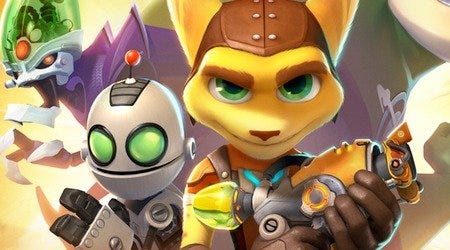

Co-op gaming looks easy. Just take a one player game and stick another playable character in it, right? Bingo! Instant co-op! That's the approach that a lot of games take, and it's to Insomniac's credit that it has broken out of the traditional platform game mould for its underdog mascot's first fully co-operative adventure. It's just a shame that breaking out of that mould has left both characters and developer lost in a fog of half-baked ideas, restrictive level design and simplistic gameplay.
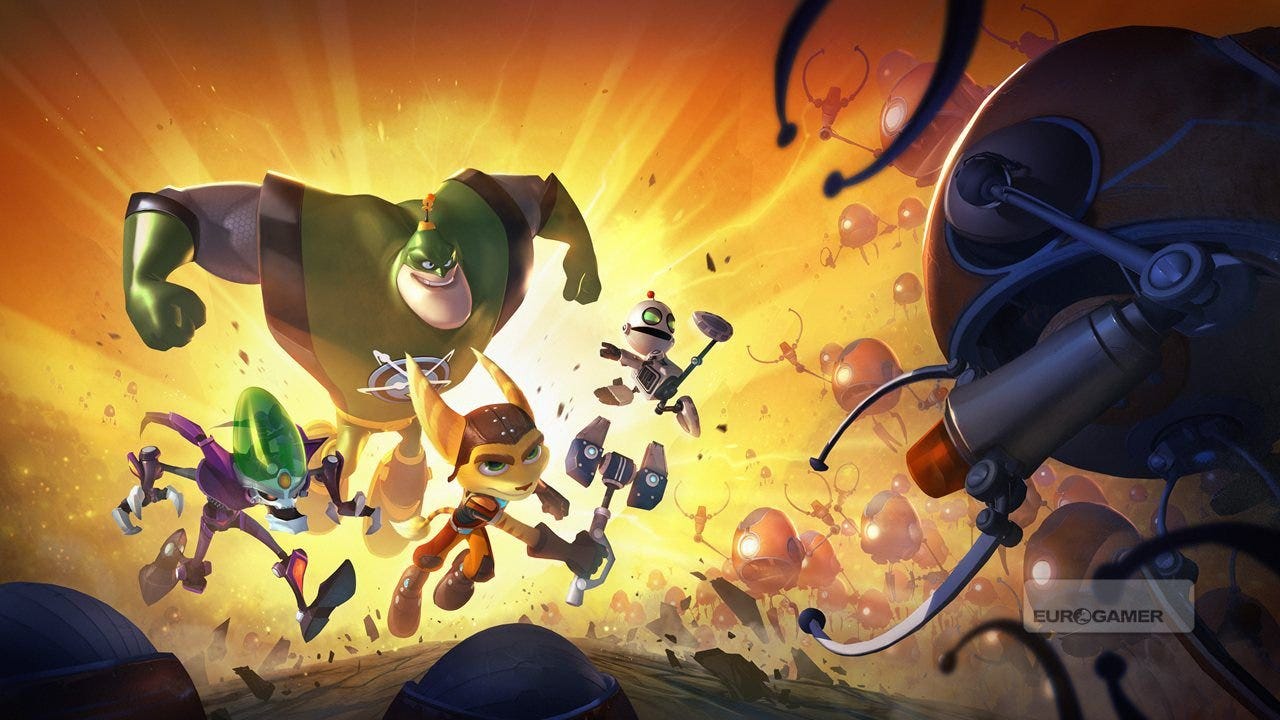
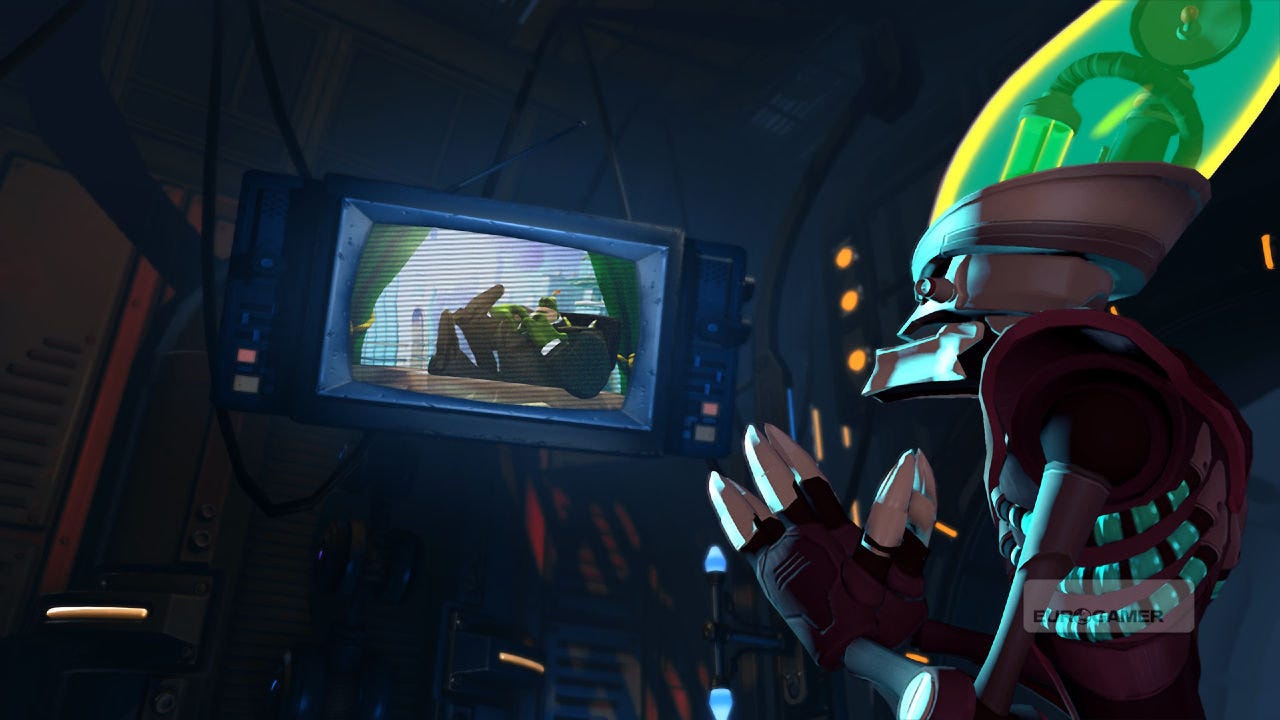
The plot, for what it's worth, finds Ratchet and Clank forced to team up with ineffectual superhero Qwark and perennial villain Doctor Nefarious when all four are snatched by something called the Creature Collector. In the tradition of The Defiant Ones and Enemy Mine, former rivals must work together to survive.
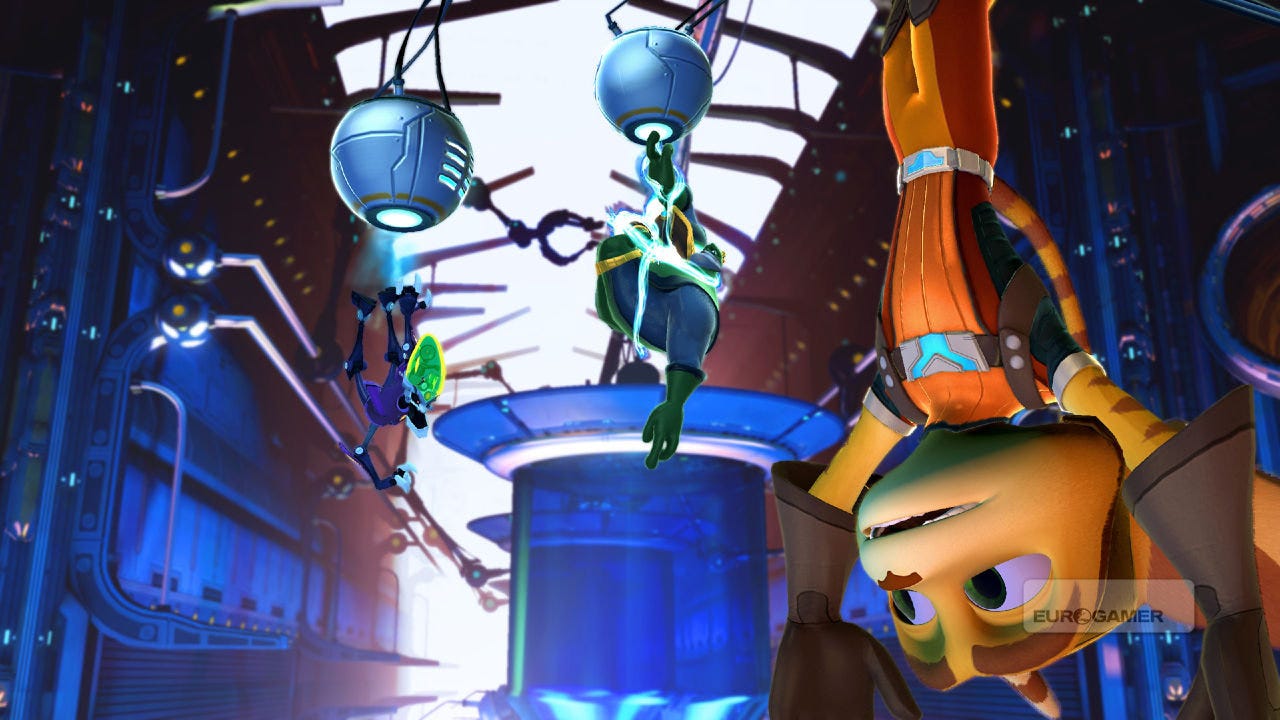
"Work together" is a somewhat relative term, however. This is a co-op game in the sense that up to four players are on-screen at the same time. Sometimes two or more players will have to stand in the same spot and press a button at the same time. More rarely, you'll have to collaborate to get an electrical creature into a socket, with one player holding it open while another fires it in. Some larger turrets must be distracted, allowing one player to slip behind and deliver a killer blow to the obligatory weak spot.
Mostly, however, you'll be tumbling your way through a series of long-winded stages, smashing endless crates and destroying wave after wave of enemies. Inventive weapon design is a hallmark of Insomniac's work, so it's no surprise to learn that, while the destruction quickly becomes tiresome, there are at least lots of bizarre ways to wreak mayhem.
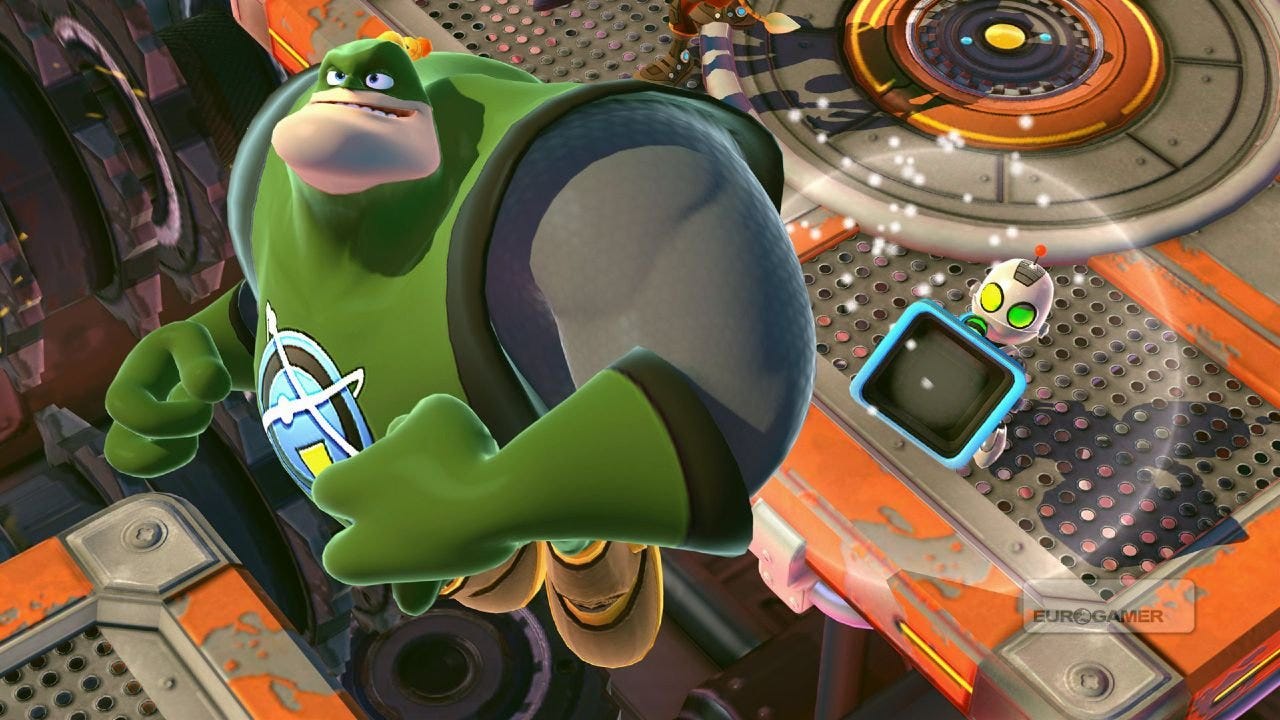
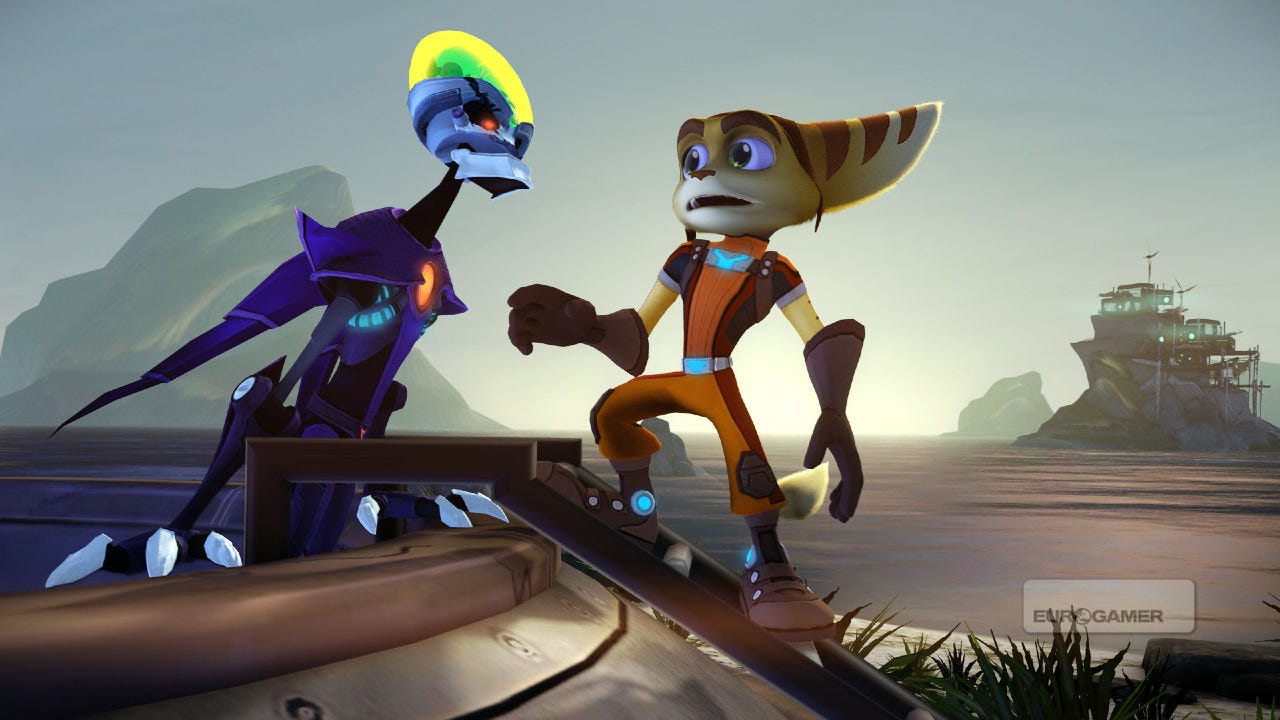
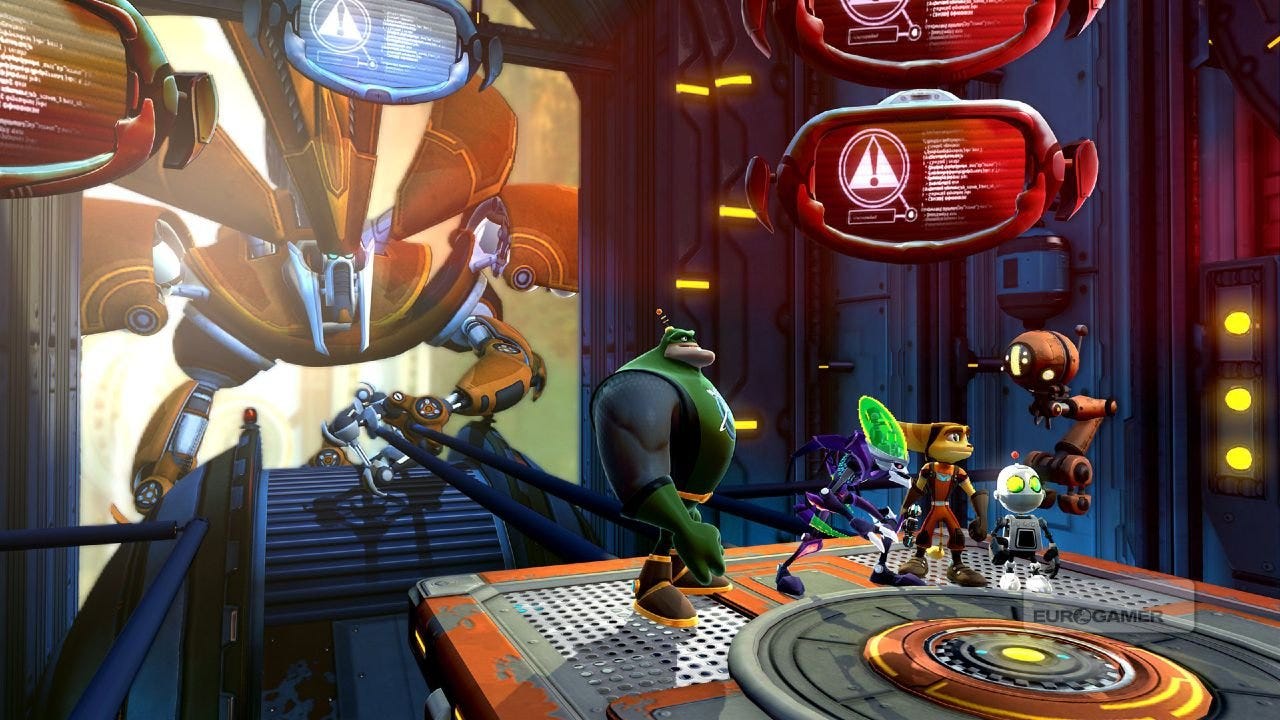
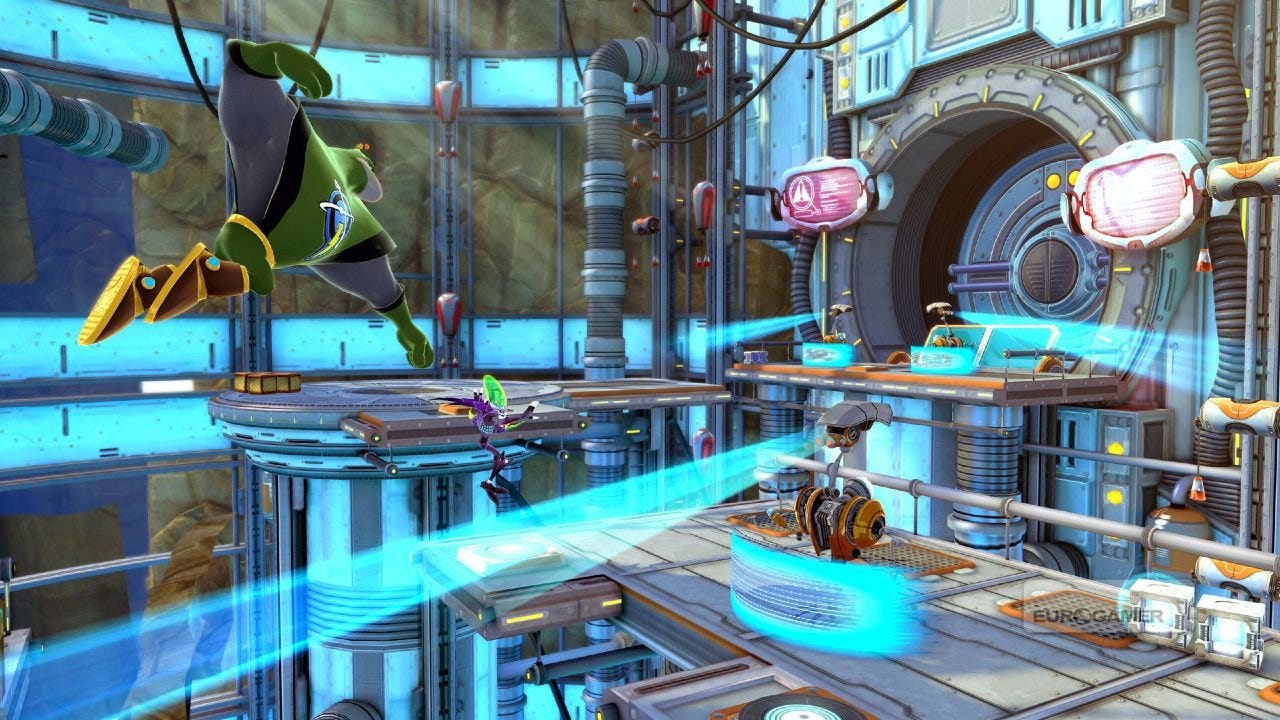
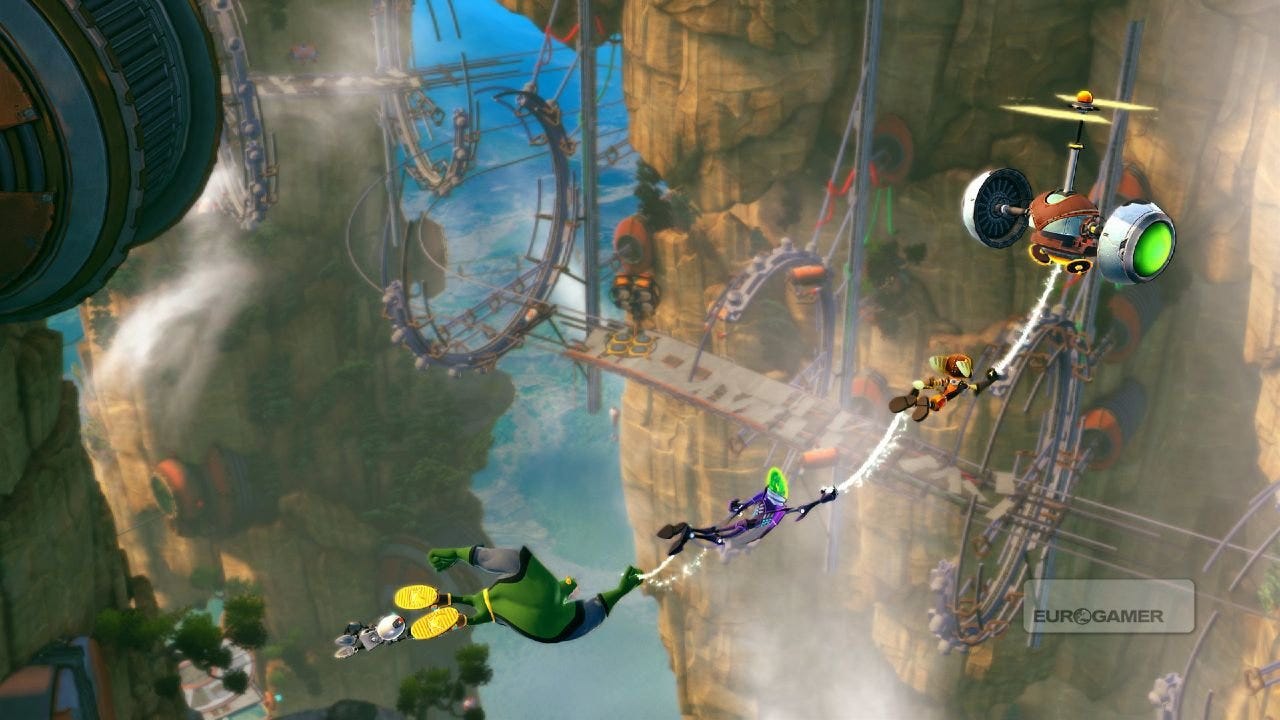
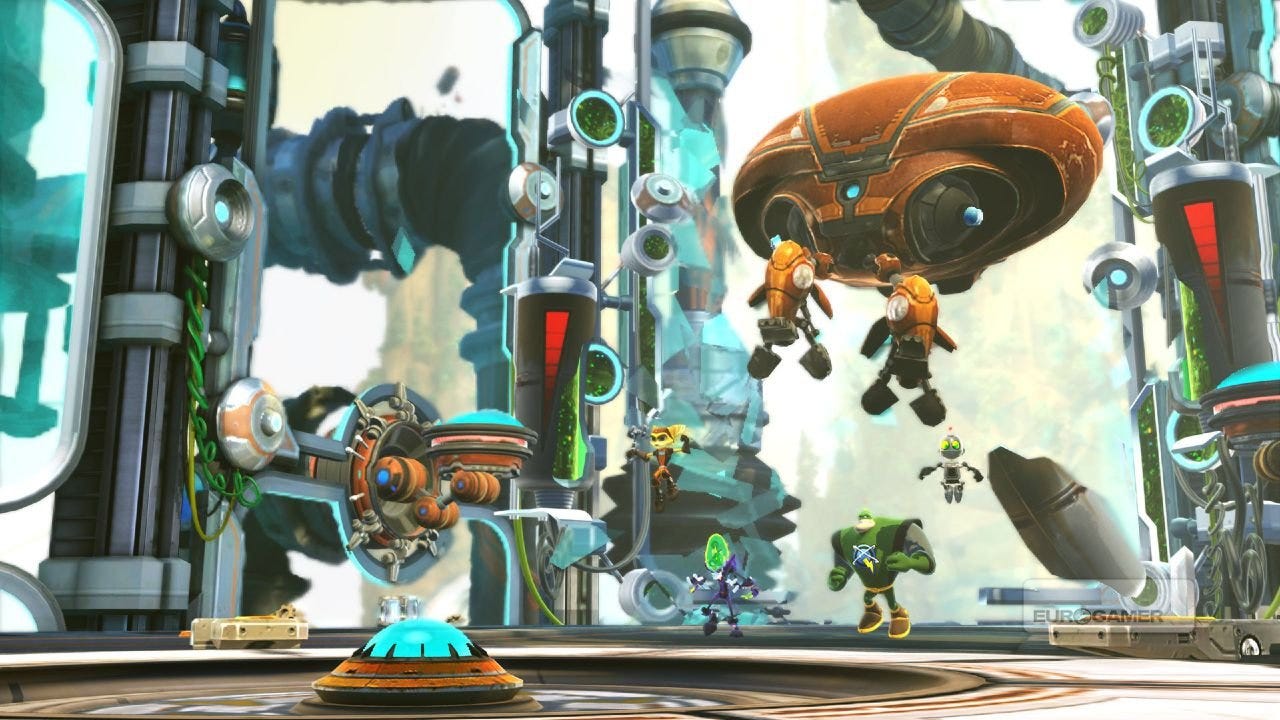
There are freeze rays and flamethrowers, decoys and combat drones, guns that produce thunderclouds or turn enemies into fluffy little critters. But, crucially, there's no incentive to use any of them beyond satisfying your curiosity. The first gun you get - the Combuster - is as effective at the end of the game as it is at the start. Smashing things with a melee attack will get you through most of the encounters. And while weapons can be upgraded, it's a simple three-tier process with boosts for ammo, power and "elite", which offers some surprise augmentation for a huge cost.
If players using the same weapon focus their fire on the same enemy, the combined effects can be marginally more useful than just blasting away at random, but not so much that it becomes an essential tactic. There are no enemies that require a particular mode of attack, no obstacles that require anything more than cursory strategies - spam those buttons and you'll be fine.
For all Insomniac's wit and verve in world building, this is a terribly flat game. Anything that might give one player an advantage, or just a point of difference, has been hammered down to ensure the game plays the same for everyone. Even the characters, so distinctive in the original games, are here reduced to four identical avatars with no distinguishing abilities.