Saturday Soapbox: Pay Up or Shut Up

Why we should stop moaning and spend more on our games.

Last week, John decried the rise of the free-to-play game and, by extension, its cousins in the murky world of digital business models: micro-transactions and downloadable content.

His sense of gaming as escapism was being endangered by the commoditisation of every last scrap of virtual worlds, he felt. "Regardless of how you dress the window, there's no getting away from the fact that players are now living in a shopping centre, rather than a world set apart from the real-world monotony of earn and consume, earn and consume," he wrote.

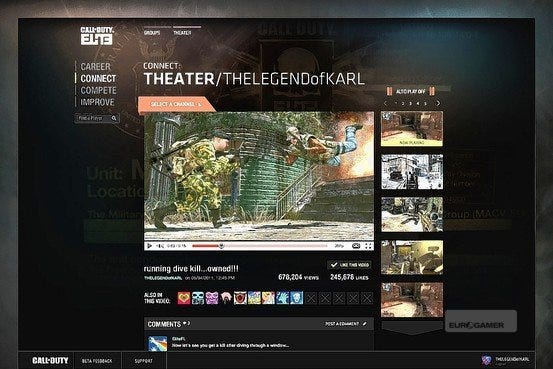
He's not alone. Just look at the hostile player reaction to recent announcements of monetised game services such as Call of Duty Elite, the EA Sports Season Ticket or Diablo III's real money auction house. Greedy publishers are squeezing us dry and nickel-and-diming our hobby to within an inch of its life - so runs the common refrain.

I understand the sentiment, but I can't agree with it. Everything about games is changing: the way we play them, the amount we expect of them, how they are made and how long for. If you expect the way we pay for them to stay the same, you're kidding yourself.

John reasoned that we don't pay enough up front: game prices have remained static despite inflation and skyrocketing development costs, so game makers are turning to the back end to make up the difference. But I think he's only half right.

The change isn't being driven by finances, in the first instance, but by the ubiquity of online gaming. Today, most games are networked by default, and that doesn't just change our relationship with them - on a fundamental level, it changes what they are.
1

Call of Duty Elite is modelled on Halo's Bungie.net service - which, unfortunately for Activision, is free.

Now, a boxed console game - a Call of Duty, say, or a Street Fighter - can sustain a player for hundreds of hours of entertainment, to the exclusion of all other gaming. It becomes a hobby in itself. It's far less disposable than the games we used to play, and the hooks that assist such deep and long engagement - the persistence, ranking and rewards - are as much a product of players' rabid enthusiasm for the never-ending online experience as they are the making of it.

Endless enjoyment for us means endless work for the developers. An online game is not a discrete work of art that can be polished and perfected; work on it is never done. It requires constant maintenance, rebalancing and refreshment with new content, over and above the need for customer service and technical support.

The sums just don't work. If you want this, you have to pay for it.

That cuts both ways: if you don't want it, you shouldn't have to, which is why I don't think the cover price should be bumped up. That's just forcing single-player fans to subsidise the multiplayer crowd.

Ultimate Marvel vs Capcom 3: never admit that your sequel was originally a downloadable add-on. Ever.

How can game makers hold the interest of these passionate communities and turn a profit from their toil? The crudest approach is used by Capcom for its highly regarded fighting games: it builds obsolescence into them.

Fans were dismayed, but hardly surprised, when the veteran Japanese developer announced that Ultimate Marvel vs. Capcom 3 would be released a mere nine months after the original game. A devoted community with almost nowhere else to go will inevitably migrate to the new version for its new characters and tweaks - but complain that they're being held over a barrel as they do so.

"It should be DLC," some argue, but the truth is that extending a game's financial half-life through expansion rather than replacement scarcely goes down better. Look at the regular invective aimed at the Call of Duty multiplayer map packs from gaming's great Satan, Activision. Notwithstanding the generally high quality of their design and the immense and enduring popularity of COD online, they're held to be overpriced rip-offs propagated through playlist peer pressure.

In both these instances, the issue is one of perceived value. There's a failure to understand that you're paying not just for what's new, but for your continued enjoyment of a rarefied pastime that's tailored to your tastes, regularly updated and, pound for hour, offers unparalleled value.

There's a difference between these - content packs designed to recoup the hidden costs of maintaining an online game - and such meaningless commoditisation as Oblivion's infamous horse armour, World of Warcraft's huge-earning celestial steed or the $70 monocle that sparked a player uprising in Eve Online. Apart from the miscalculated value of the items themselves, WOW and Eve already charge subscription fees for their maintenance, while Oblivion has no online life to support.

The problem is that this difference isn't being explained very well. "We see gaming as a service, not a product," games companies say - parroting a phrase coined by Valve's Gabe Newell - before trying to sell us that service disguised as product. Nervous of charging players for something they're accustomed to getting for free - despite its clear value to them - the publishers offer a spoonful of content to help the medicine go down.

Things are changing. COD Elite and the EA Sports Season Ticket aren't content as such; they're entirely optional and additional paid-for services (not very appealing ones, I grant you) based around popular online games. But the shift in emphasis just seems to baffle gamers further; they react as if being offered the option to pay extra for something they didn't have before is somehow stealing from their mouths.

Educating players that online gaming is something that both needs and deserves to cost money is not going to be easy. Marketers and game designers alike are still experimenting, and I'm the first to admit that a perfect formula has yet to be found. Certainly, some are much more elegant than others.

2

Diablo III's auction house: radical and controversial, but could free player trade be the future? Only if the game supports it.

The Diablo III auction house - in which Blizzard will allow players to trade game items with each other for cash, and take a cut of each transaction - sounds controversial and mercenary. But as I realised when investigating it in depth last week, it's actually an exceptionally subtle scheme: it's optional, aimed specifically at hardcore players, rewards players as well as Blizzard and doesn't break the game design or fiction. If it works, it ought to provide Diablo III with an organic, self-sustaining financial ecosystem with the minimum of forcing from the developer.

Imaginative bonus services tailored to the game design, like this auction house, could be the future. The logical alternative - a subscription fee - seems unpalatable if offers access to anything less than a WOW-sized universe of content (in part because Microsoft has set the precedent of charging for online gaming at the platform level with Xbox Live).

At the other end of the scale, we have the free-to-play model. Although this can work very well for session-based multiplayer games - Team Fortress 2 and League of Legends are great examples - I agree with John that the way it devalues the central gaming experience leaves a bad taste in the mouth.

EA Sports Season Ticket: 'Even a banshee wants to save money.' But are gamers prepared to spend it?

The odd thing is that the extension of single-player games through paid add-ons is far less controversial. Although the quality and value for money of much single-player DLC is debatable, you won't find many objecting to it on principle; paying money for a new car or a few hours of questing is a transaction people understand. But paying for a continuing service that offers dozens of hours of entertainment, for some reason, we don't get.

Yes, we're being asked to pay more for our games. But that's because we get more out of them than we ever used to. They're bigger, they last longer, they're more adaptive, more social and better supported. They have almost limitless potential.

If you're not interested, you can walk away and on to the next thing. If, however, you want to go deeper, be prepared to reach a little deeper into your pocket for it. The games deserve it; the people who make and maintain them deserve it. Is it really too much to ask?

Comments (138)

Comments for this article are now closed, but please feel free to continue chatting on the forum!

  • Loading...hold tight!