Patapon 3
The rhythm of war.

Don't play Patapon if you suffer from insomnia. It's even more difficult to sleep at 4am with a tiny monocular army's chants of PON PON PATA PON reverberating around your head. Your every input in Patapon 3 is echoed and embellished by a chorus of little voices, cheering and yelling and marching perfectly in rhythm, and the insistent beat drives on and on long after you flick the PSP power switch for the twelfth time, and try to drift off.
It gives you a sense of power that most god games strive for in other ways. Controlling with rhythm is a very primal thrill. When it's going well you feel like an omnipotent beat-master guiding those tiny warriors on to victory. The slightest slip, though, and it's all over – you lose the beat, your army stands confused, your fingers fumble, and whichever imposing 2D creature you're fighting munches your Patapons like a handful of cashews.
There's a wonderful game in here. Patapon at its core is addictive, exciting and full of sensory thrills, and the artistic direction is superb. But getting in the way are thick layers of character and inventory management that do more to confuse than enhance.
Patapon's synthesis of rhythm-game and strategy is still fascinatingly unusual. The face buttons are drums – pata, pon, don and chaka – and through various combinations of the four, you order an army of teensy creatures to march, attack, defend, jump, retreat and so on. Drum perfectly in rhythm and they fight with more spirit; miss a beat and they'll be confused for a few turns.
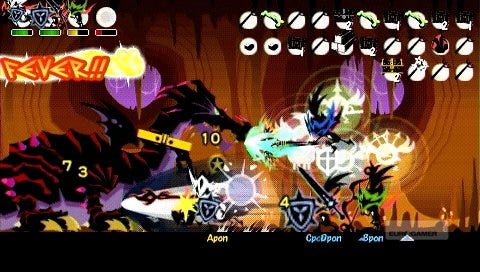
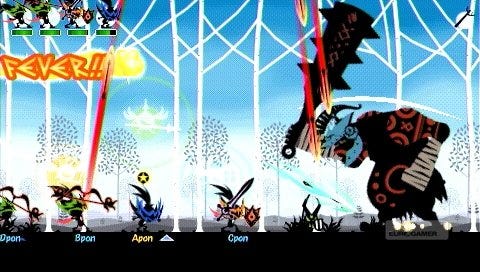
All the four-beat commands are helpfully laid out at the bottom of the screen, but eventually they become instinct. The battles are as much about reading enemies' moves as keeping the rhythm. You must develop an eye for telltale signs that herald strong attacks, getting the Patapons well out of the way of giant clubs, swiping claws or streams of fire from a dragon's mouth.
It's presented in a beautiful shadow-theatre style. Patapons and their foes are black silhouettes with splashes of colour set against eye-catching, detailed backgrounds. The music – ever the backbone of the Patapon series – is superb, with flourishes of triumphant metal on top of the insistent beat of the drums and tribal, high-pitched yells of the miniature army.
Where before you were a god to the Patapons, beating a heavenly drum, now you play the role of a Superhero Patapon, leading the army and managing it from a central camp. There are only three other Heroes in your party, meaning you're in charge of fewer Patapons than ever before, but the control that you have over them is much greater.
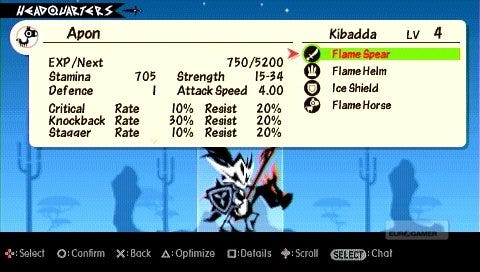
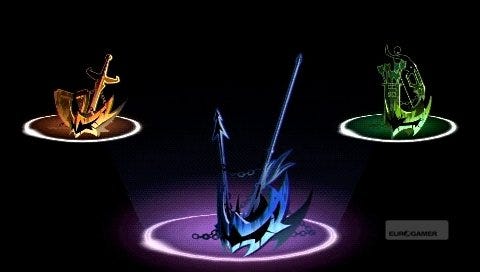
Managing these four Heroes might not sound too hard, but it's extremely complicated. Each Hero has several different classes, which you switch between and level up separately. All of them can use different weapons, found within chests dragged home from the battlefield. There are huge trees of passive skills, and menus full of active ones that you have to select. There are options, options everywhere. Unfortunately, there's nothing except the loading-screen tips to tell you what any of it actually does.
This is one of a few reasons why Patapon 3 is extremely hard – so difficult that it feels impenetrable for the first few hours, for veterans too. Even if you're already intimately familiar with the rhythm battling, which in itself is quite nuanced and demanding, the character and equipment management could easily stump you. Patapon 2, which was itself way more complicated than the original, didn't come close to this level of obfuscation.