Star Wars: The Old Republic

Better off Jedi.

It's early November and EA has taken over an imposing nightclub in London's not-so-stately pleasure dome, the O2, for a showcase of its typically bulging 2011 slate. It's the usual round of presentations, interviews and hands-on slots in 20-minute chunks – but one game is getting special treatment, an entire working day all to itself.

Star Wars: The Old Republic is certainly a special case. I'm not sure I believe EA Louse's anonymous and unsubstantiated claim that it has already cost $300 million to make. (Including eventual marketing, infrastructure and customer support set-up costs? Maybe.) From what I've seen of it, I'm not a total convert, but I'm also not about to declare it "a joke" or predict it will be "one of the greatest failures in the history of MMOs". Let's face it, it would face some stiff competition there.

But there's no doubt that The Old Republic is a huge, costly, high-stakes project for EA, for LucasArts and for BioWare. And despite its dream marriage of the globally popular Star Wars universe with the unbounded yet unrealised potential of the post-Warcraft MMO, it's not a guaranteed success, either.

For the last two years, the Old Republic publicity machine has been content to stress what makes it different from the competition – namely its licence and BioWare's fully-voiced storytelling style – but its qualities as an MMO remained vague at best. Perhaps that was wise; BioWare is a respected RPG studio, but hardly a titan of online gaming, and it had some catching up to do.
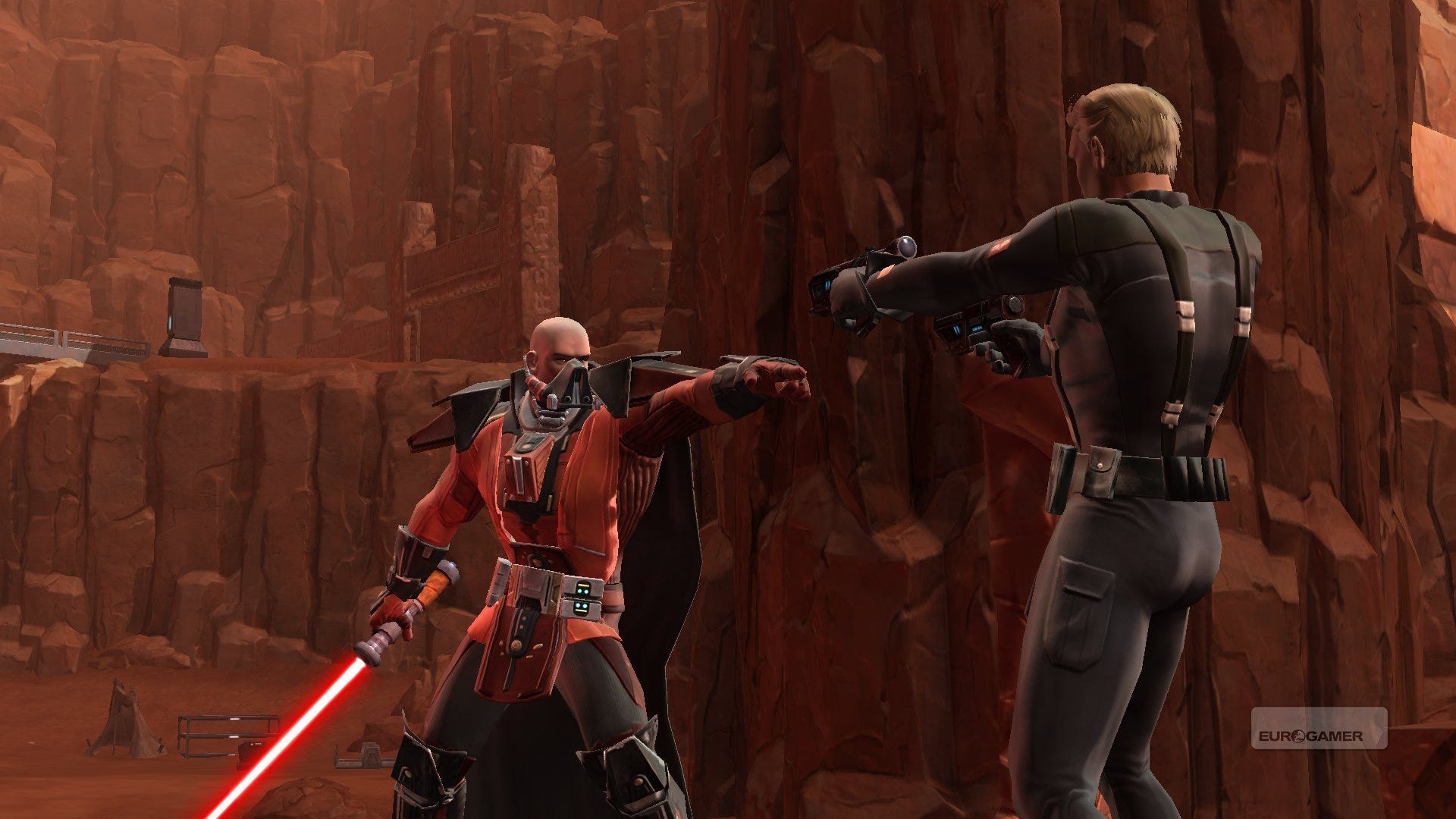
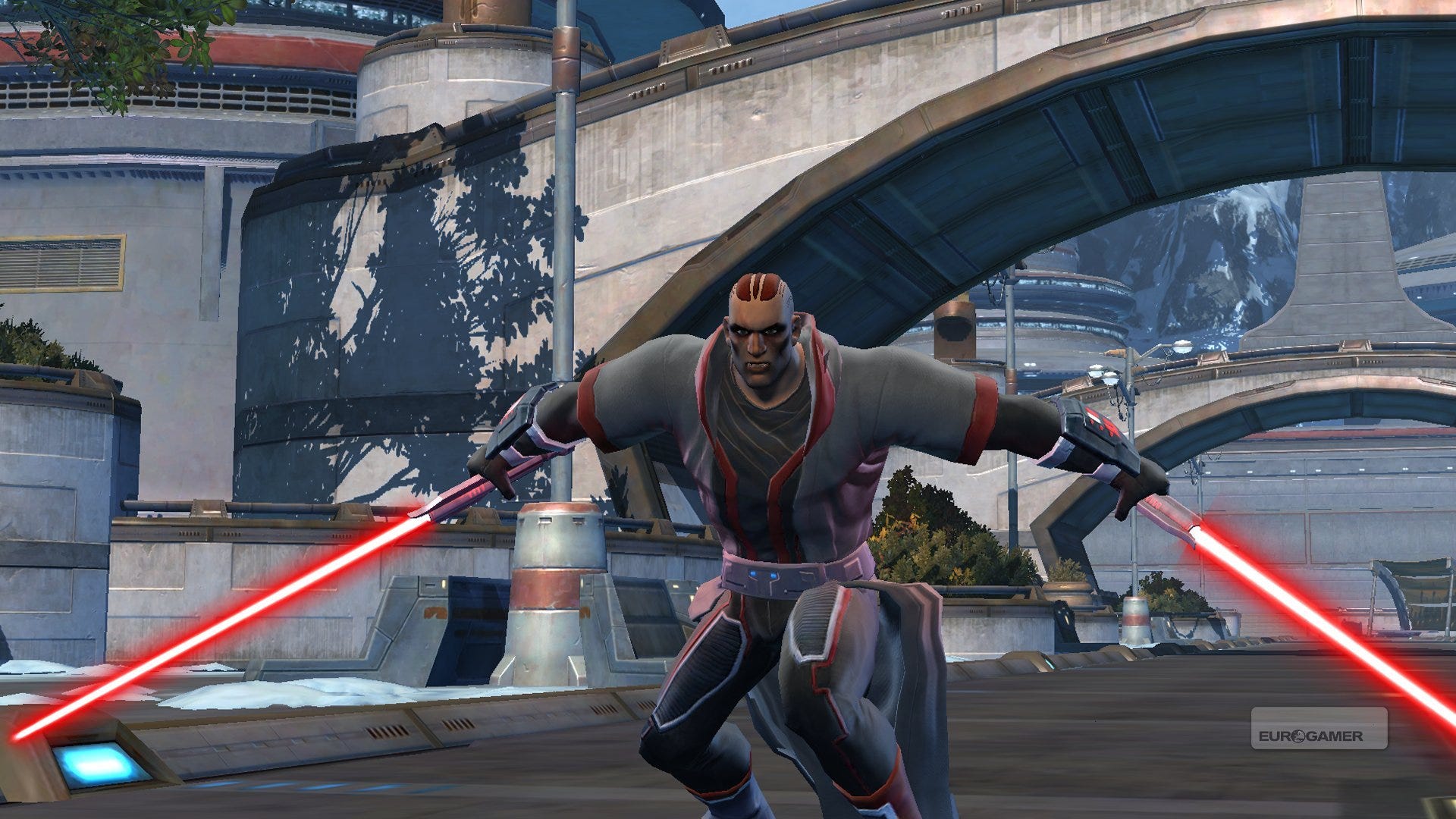
But the questions can't be dodged forever. It is time, at last, to see the game in what will be its natural habitat: hours and hours of play on live multiplayer servers. That's what this day is for.

We get to play through most of the starter area for Jedi characters – of both the Knight and Consular classes – on the planet of Tython. We also try a "Flashpoint", which in some ways is The Old Republic's equivalent of a dungeon; an intense, scaling multiplayer experience that blends heavy combat with narrative drama.

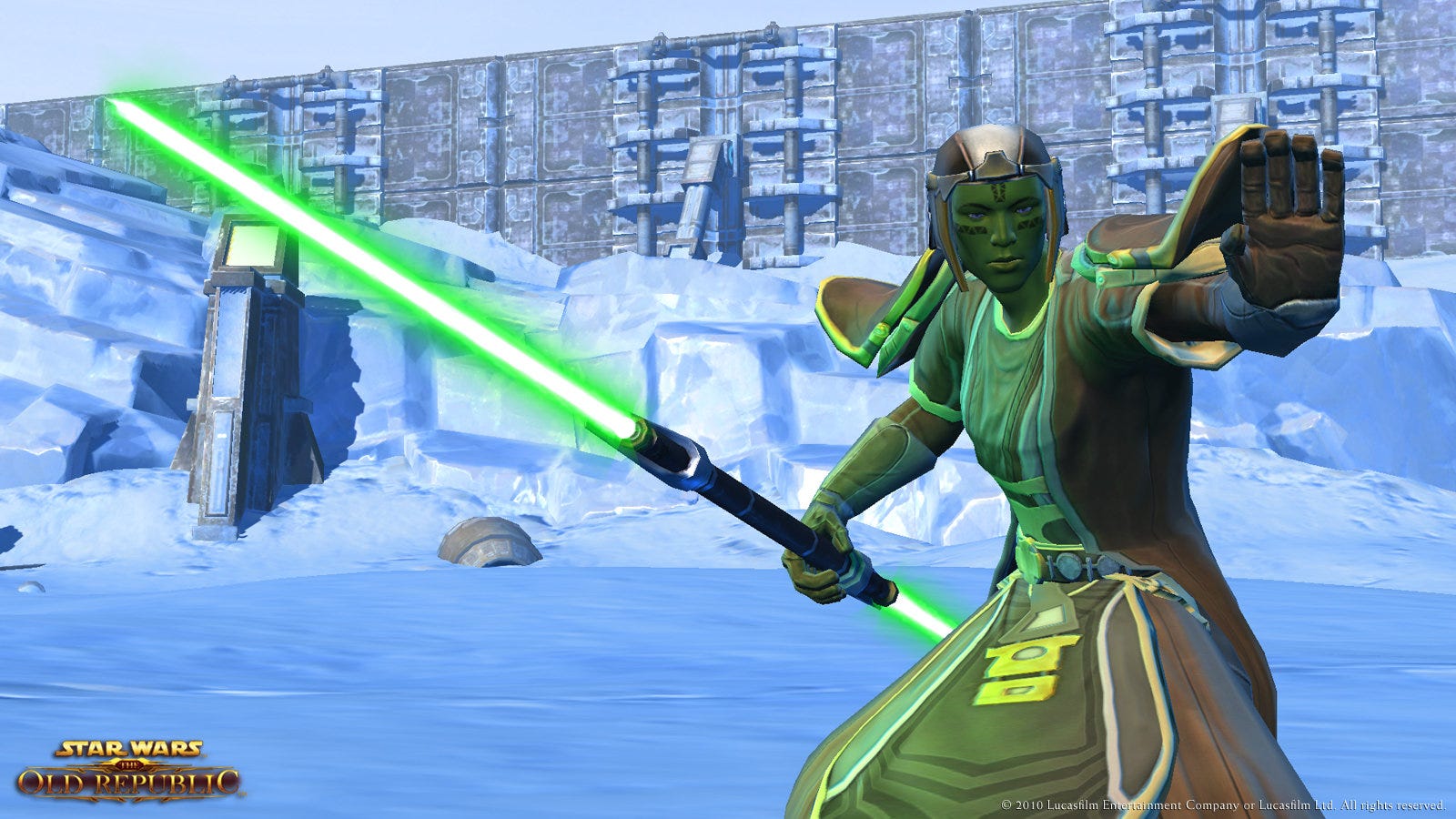
On Tython, you begin as a padawan – a Jedi student, for the uninitiated – and complete your training while sorting out local unrest and uncovering some secrets of ancient Jedi history. The quest lines culminate in you assembling your own lightsaber and becoming a Jedi at level 10.

There aren't many surprises here; it's a classic MMO starter zone (the words "dig site" feature within the first two minutes), albeit a well-executed one. You're not using the Force on rats and diseased boars, but groups of marauding Flesh Raiders and malfunctioning droids.

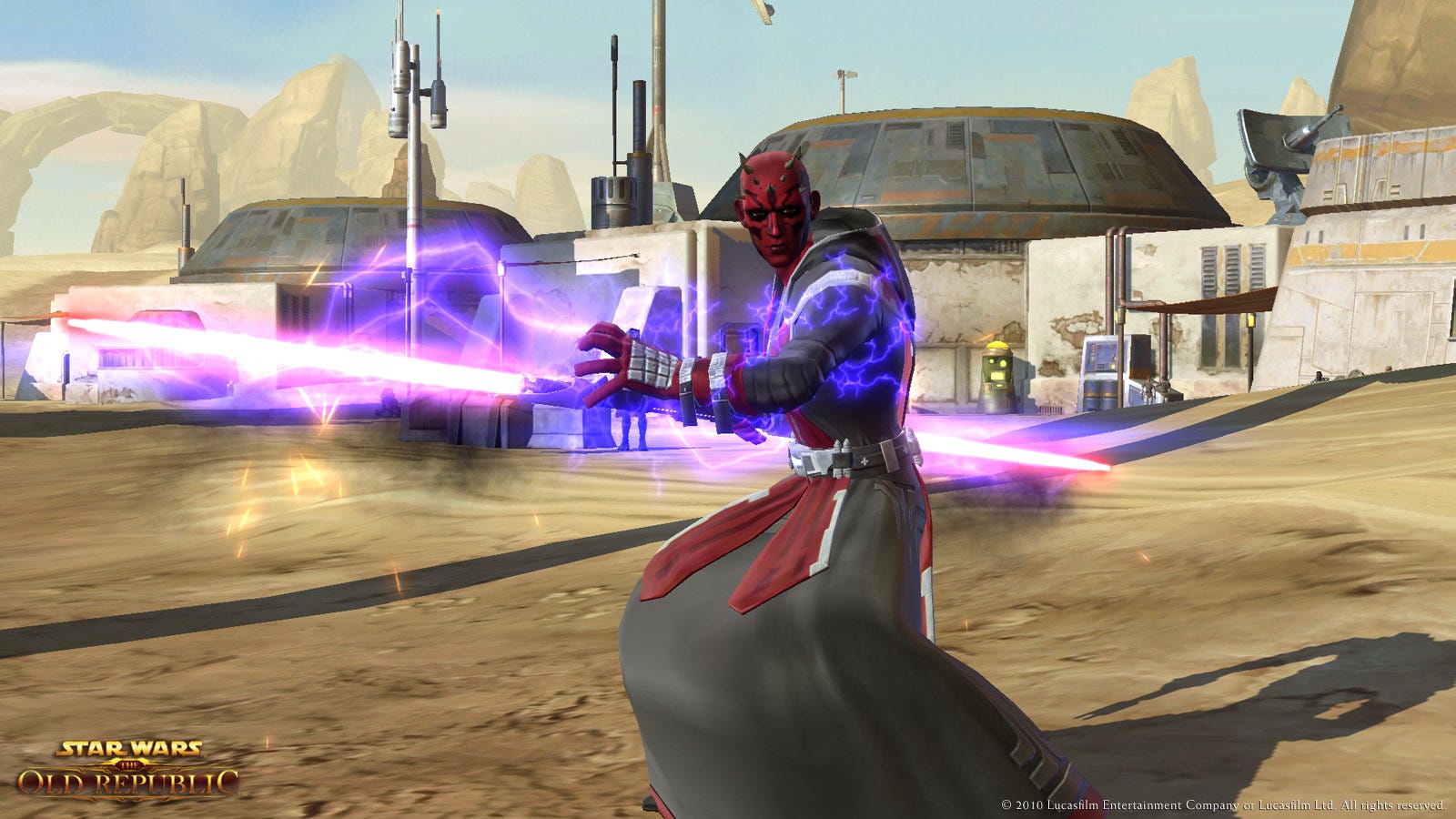
I pick a Jedi Consular, a Yoda-inspired magician of the Force and, along with its opposite number the Sith Inquisitor, probably the closest the Old Republic has to a traditional fantasy MMO caster and healer. Although both Jedis mix lightsaber combat with Force powers, the Knight leans towards acrobatic melee combat while the Consular uses crowd-control to fight from a distance.
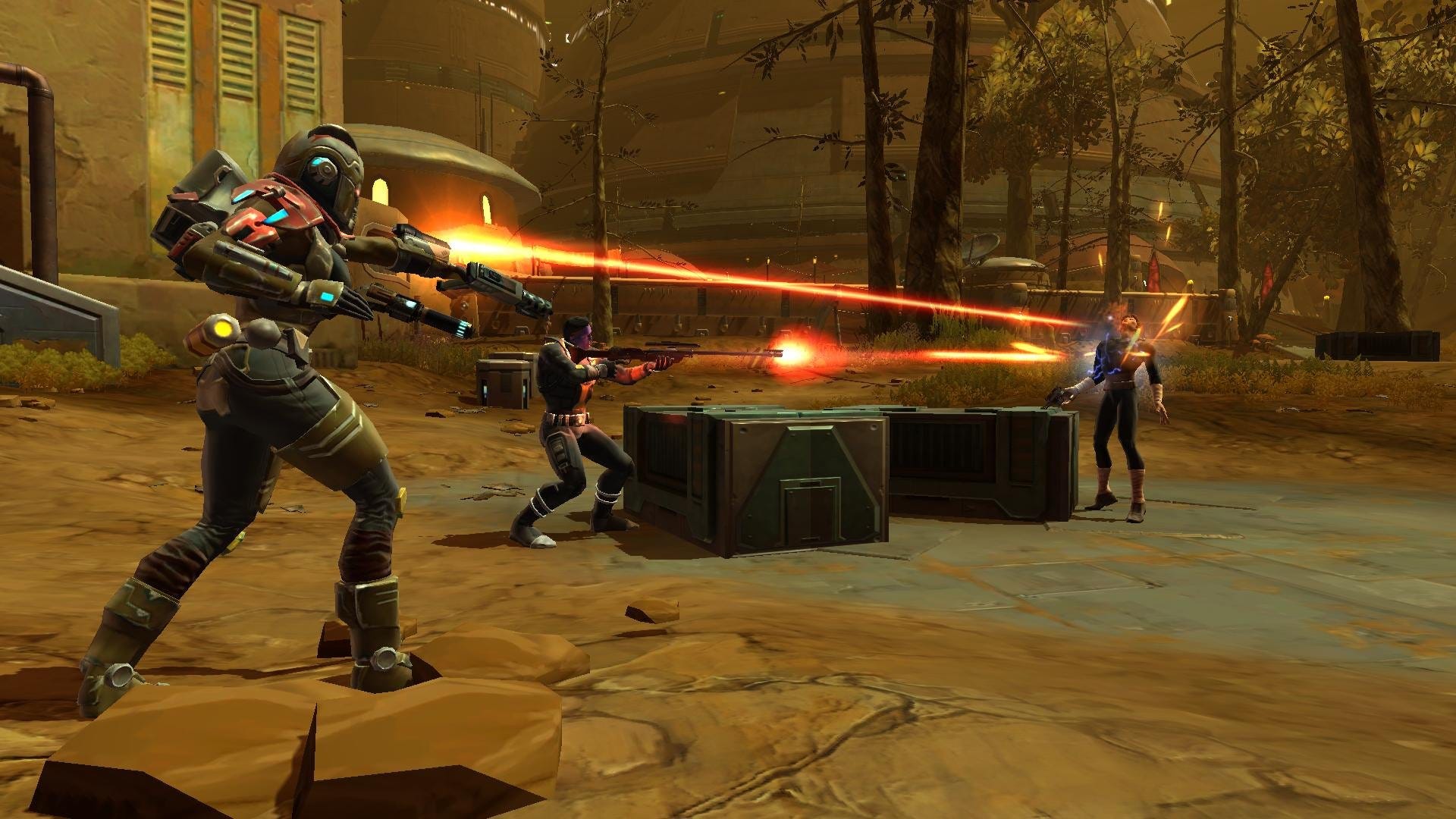
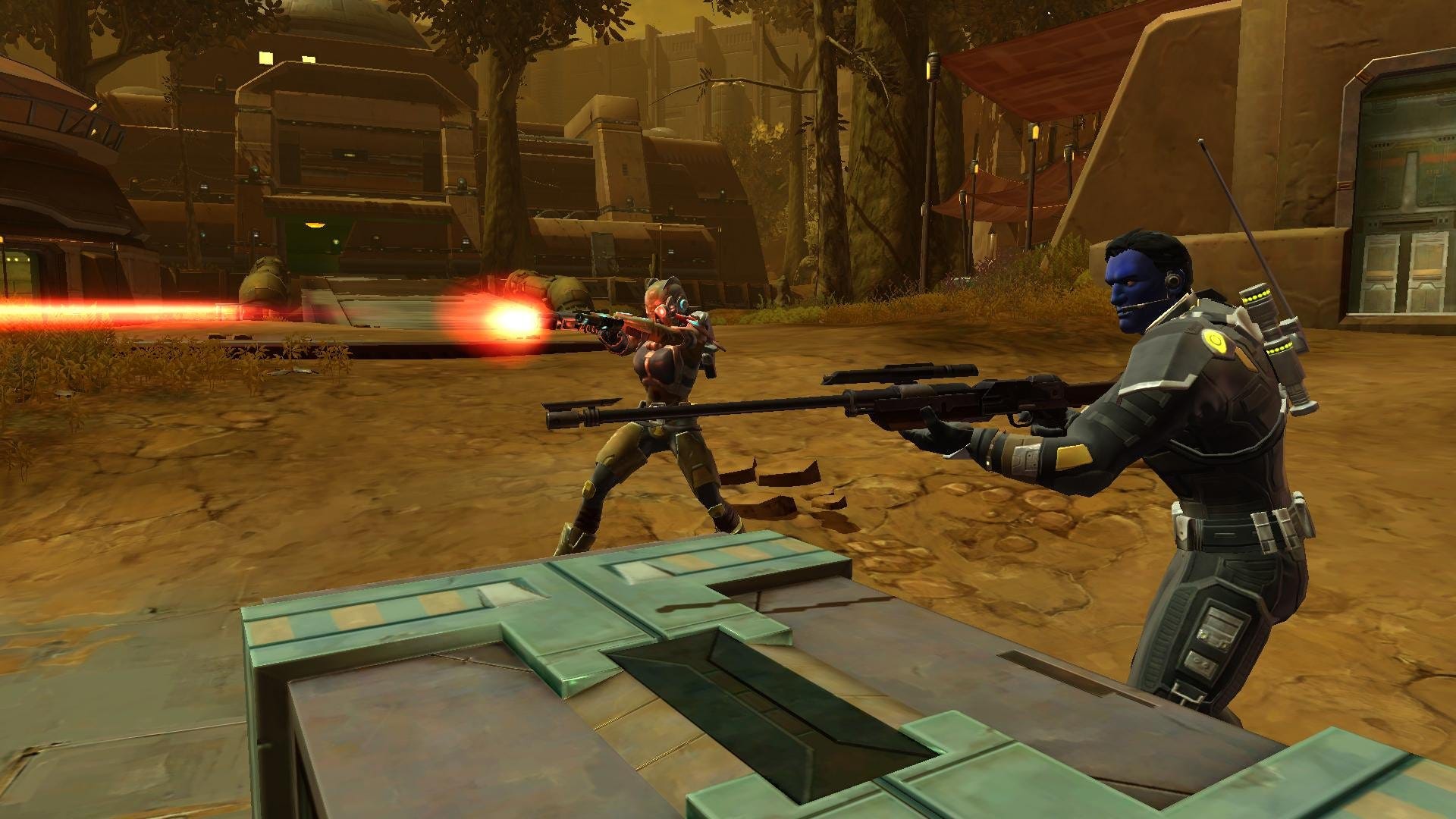
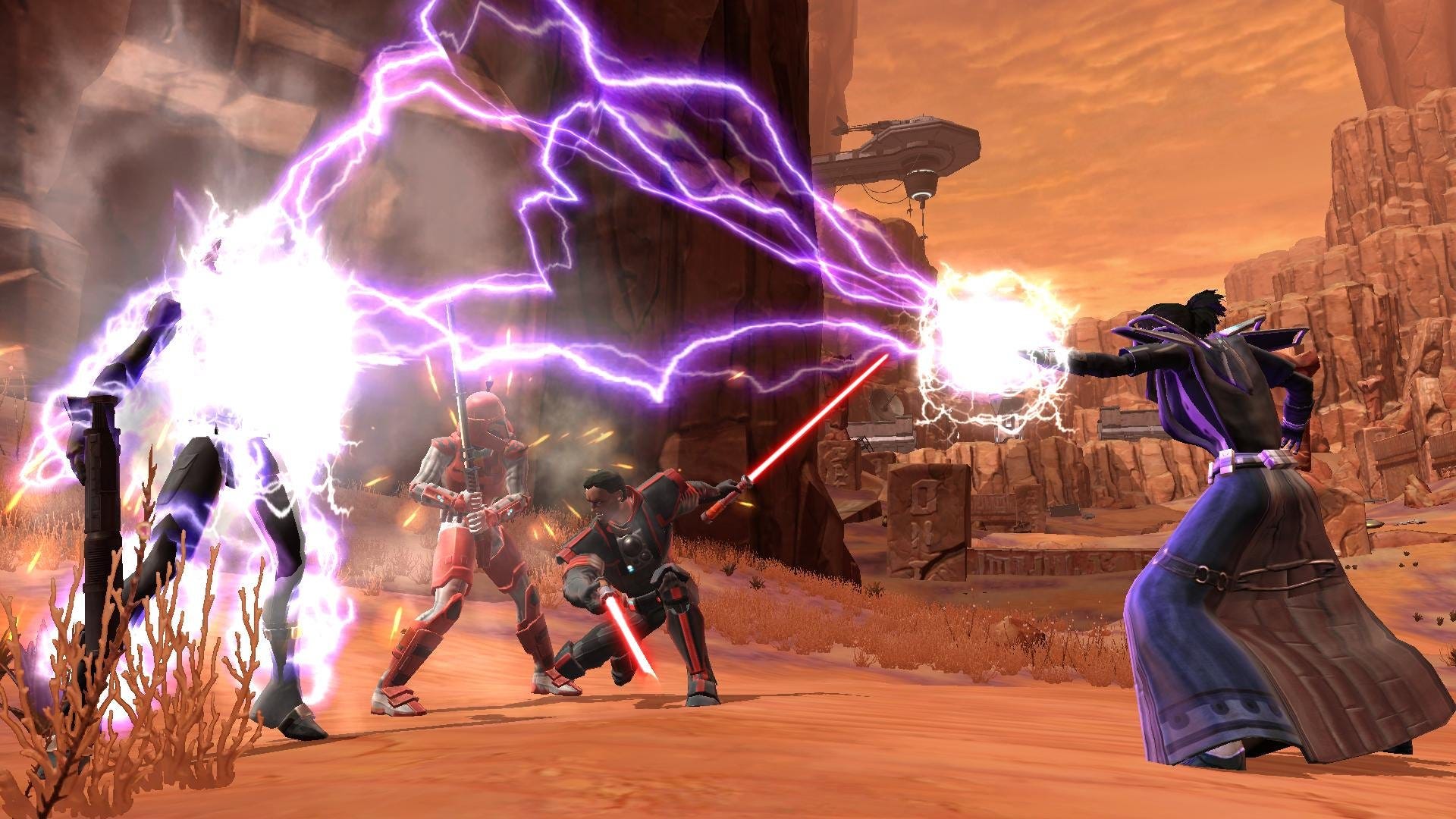
The Consular's skills still have a satisfying physicality to them, with the focus on telekinesis allowing you to suspend enemies in mid-air, pepper them with debris, knock them back with a Force Wave or rip rocks out of the ground to hurl at them. At low level, each ability has a clear, distinct function and balances well with the rest of the suite.

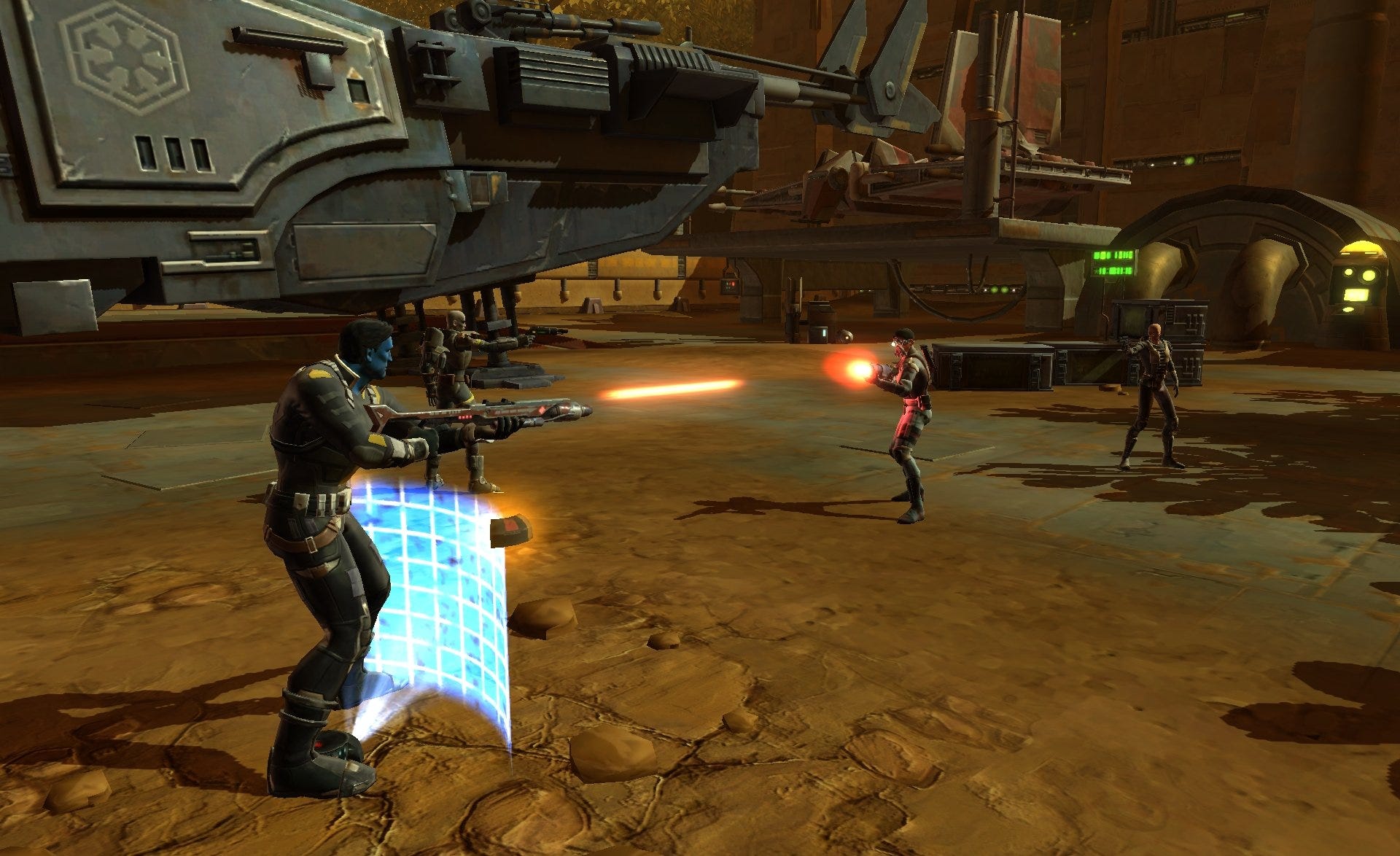
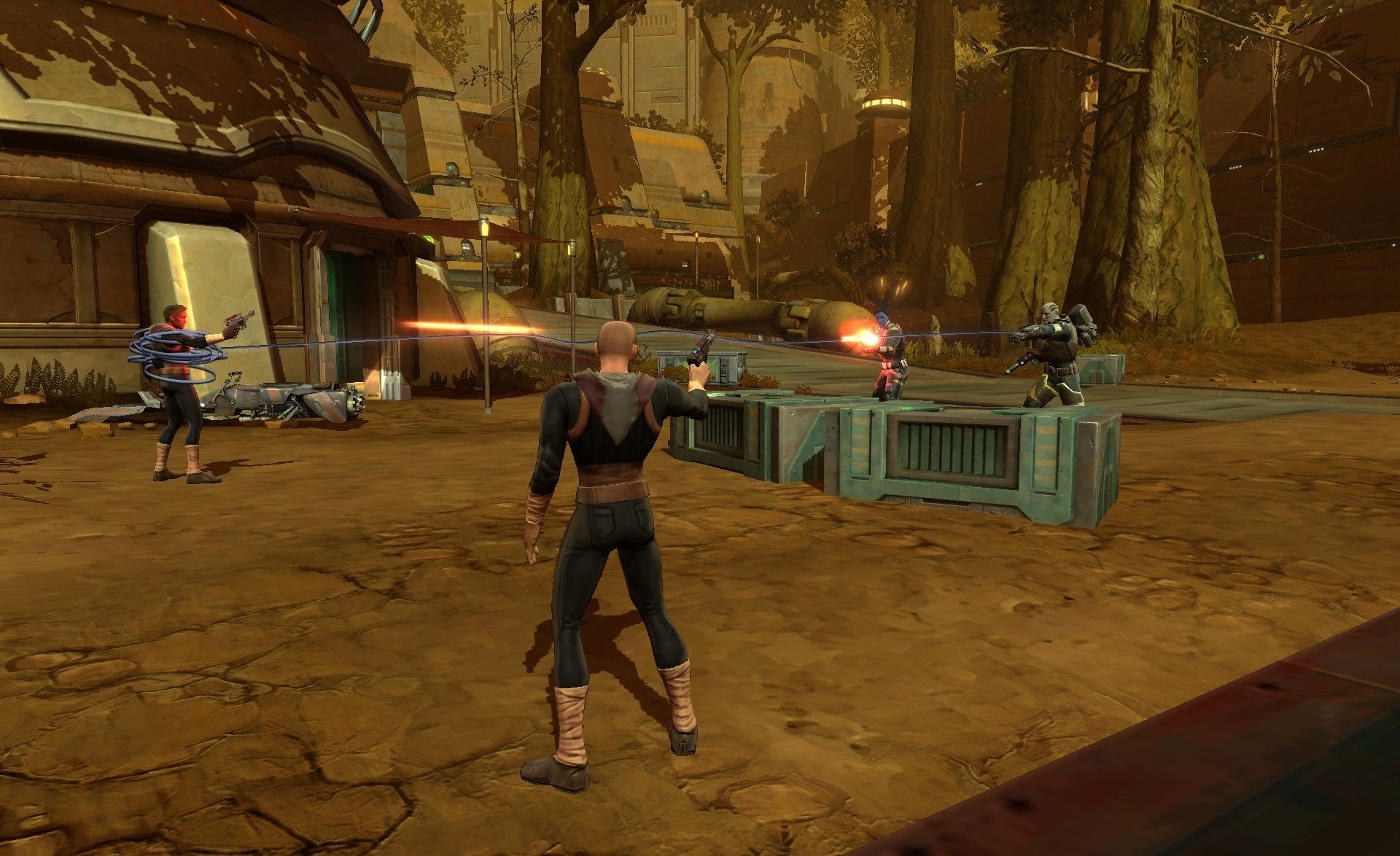
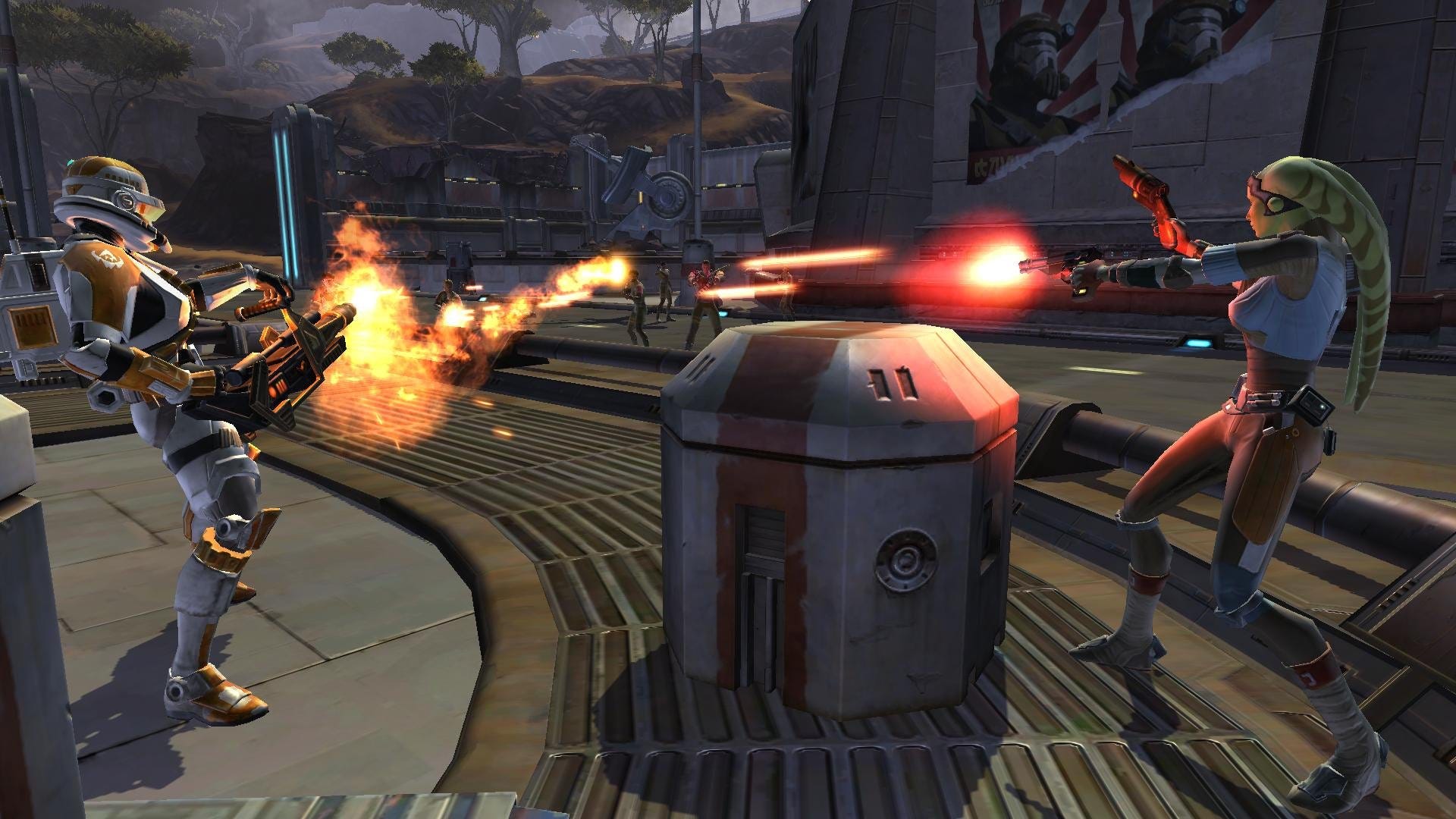
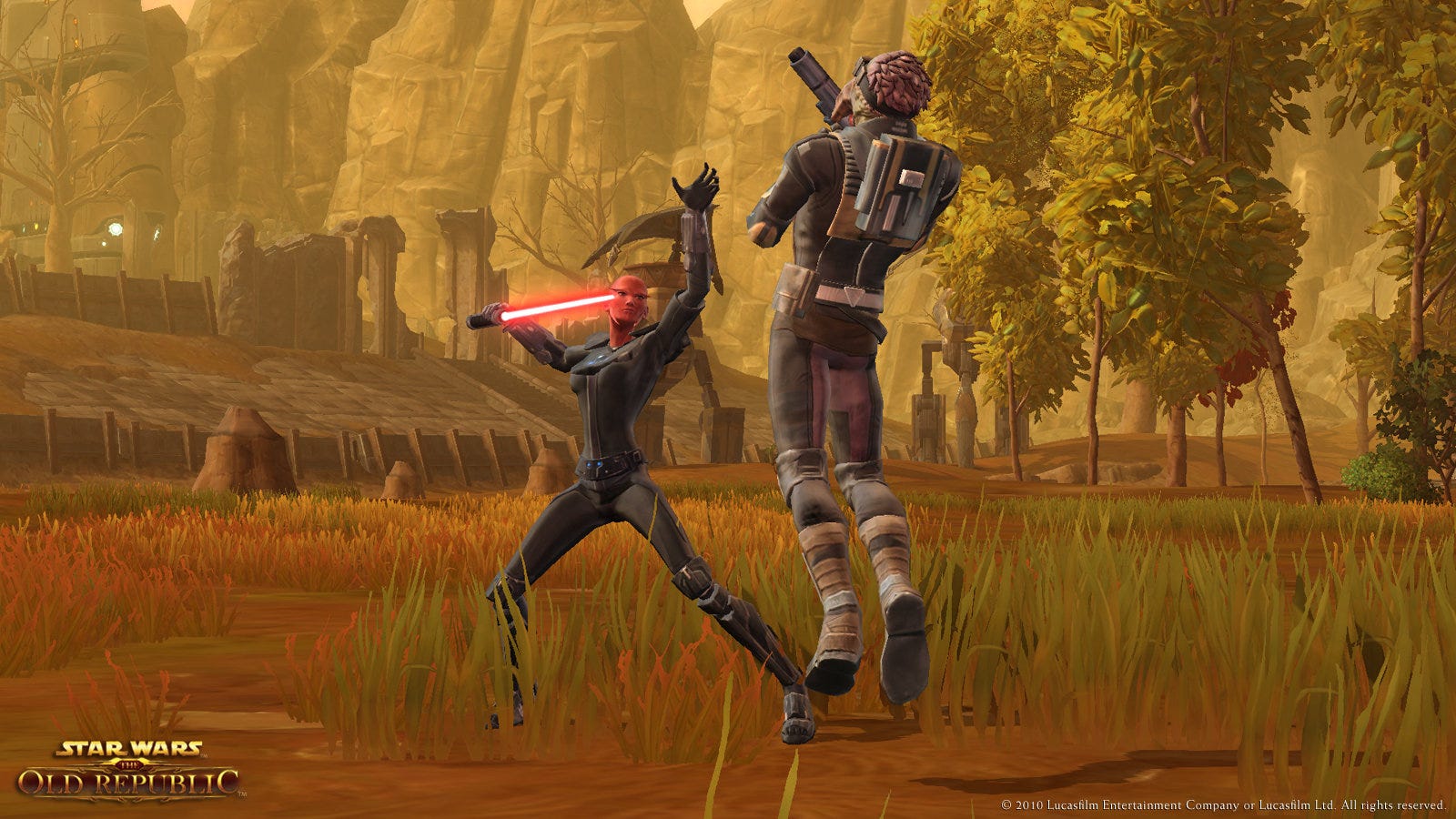
There's no disguising the combat's roots in EverQuest and World of Warcraft, although BioWare's insistence on the player fighting multiple enemies at once as the norm rather than the exception does lend it its own flavour. So does the dynamic and unmistakeably Star Wars orchestral music which swells around you as you begin to fight; it can't help but make clicking on skills seem more epic and exciting.

Earlier builds of the game were unchallenging in the extreme, but a lot of tuning work has clearly been done, and it's now involving enough to require an alert mind. This is surprising and quite refreshing, given the autopilot questing offered by the early stages of modern-day WOW and its ilk, although I wouldn't be surprised to see the difficulty rolled back a little before launch for reasons of mass-market accessibility. Still, for today's purposes, it serves to illustrate that the combat is not without depth and the skills not without interesting utility.

Missions flow smoothly into each other and around this rocky, rural zone; the storylines aren't especially memorable, but they are at least present and make some kind of sense. They're well structured, and I particularly liked how the standard-issue kill-counter quests were only offered as automatic secondary objectives en route to some more interesting and meaningful goal.

But although combat holds the attention, the overall pacing is very slow. There are some languid travel times between strung-out locations and the decision to voice every single line of the script, completely expunging text-boxes from the game, has its most laborious effect during this sort of bread-and-butter MMO gameplay.

Put simply, the basic missions and forgettable characters at this level aren't interesting enough to sustain the cinematic presentation. Also, in a persistent multiplayer context, all this chatter has another, oddly immersion-breaking effect. Seeing other players standing around in a motionless, non-interactive trance while they page through lengthy conversation cut-scenes (represented by a buff called, appropriately enough, "conversation stasis") makes it feel as though everyone is playing in their own world, not yours.

If my day with The Old Republic has a big surprise, however, it's how well the conversation system works when playing together in a group in the Flashpoint.

Set in the mid-teens, this Flashpoint has a group of Republic players, joined by their AI companions, board a chartered ship to get to Coruscant. Needless to say, the journey doesn't go too smoothly and the heroes face an Imperial boarding party, act as bodyguard for Republican ambassador and pick sides in a political intrigue. It felt a lot more recognisable as a chapter in a BioWare game than the hybrid questing back on Tython.

Once again, pacing is an issue. It's a longish instance, over an hour, and there's a lot of running back and forth, backtracking along nondescript gangways and endlessly clearing trash (to use the dungeoneering term for disposing of middle-ranking groups of enemies). Boss fights are few and far between and, barring the final encounter, don't have very interesting mechanics – but to be fair, this Flashpoint is from early in the game.

The loose class designs – all are strong damage-dealers and fairly durable, all are able to revive comrades – don't seem to interact with each other in particularly interesting ways, and no strong co-operative dynamics came to the fore. It's still an enjoyable run, but perhaps more reminiscent of an indiscriminate action-RPG blast than the tight, clearly-defined tactics of MMO tradition.

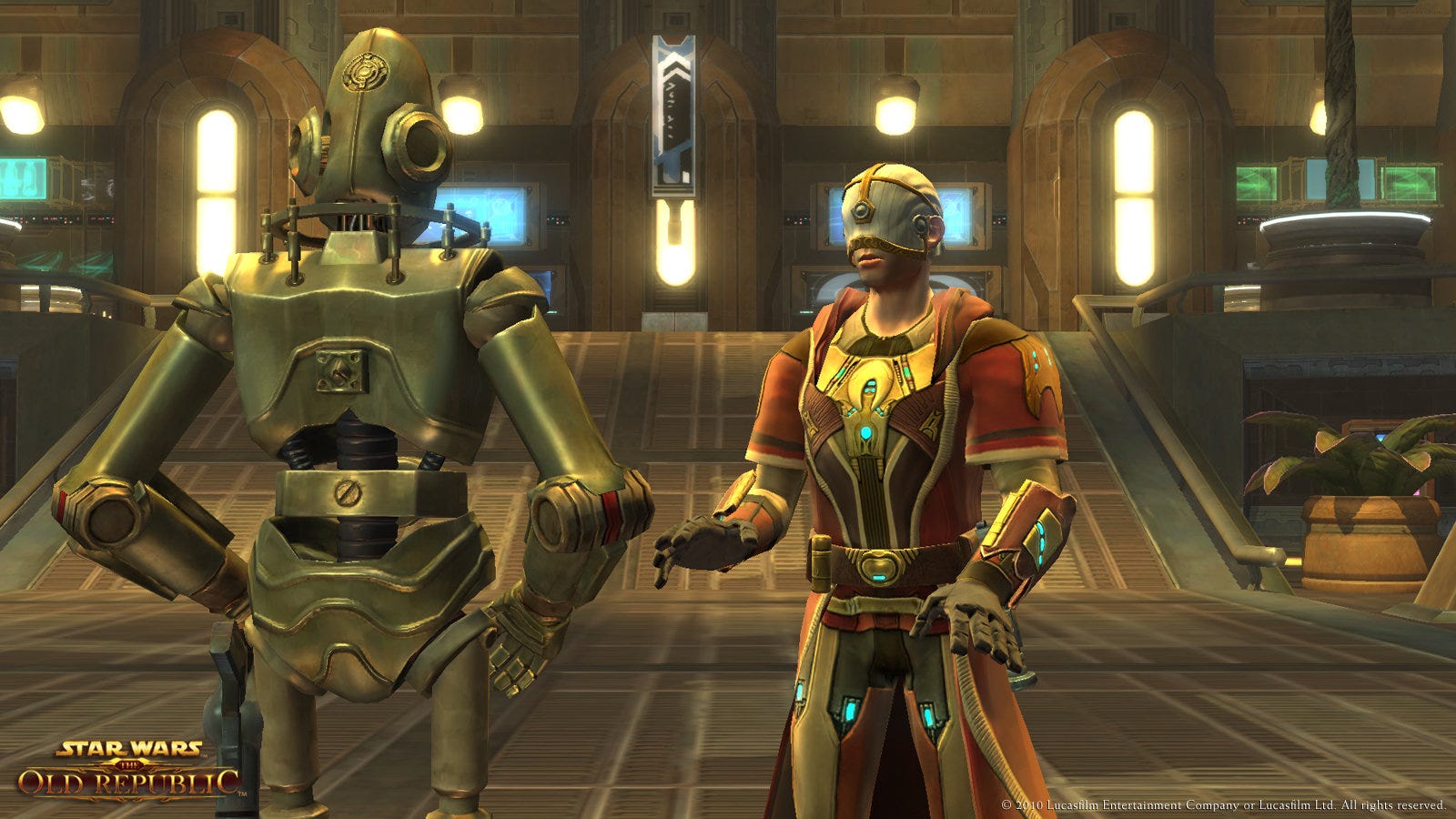
Dialogue scenes, however, add welcome spice to this otherwise slightly stodgy meal. How BioWare would bend its trademark conversation trees and adaptive stories to a multiplayer setting has been a principal concern about The Old Republic; the solution, it turns out, is elegantly simple and surprisingly compelling.

Every player picks a line of dialogue (or doesn't) against the clock, and a dice-roll dictates who gets to speak. The tension's raised when you're not sure if you'll get to influence the conversation the way you'd like, and this actually makes you more aware of the consequences of your words and the attitude of the character you're playing.

Over the course of this episode I got progressively more engaged in what was going on and more interested in what my character, and my companions' characters, had to say; the speaker influences events, but the option you pick personally affects your characters' alignment towards dark or light.

It's a gentle but significant encouragement towards group role-playing, in other words, and that is absolutely no bad thing. It's an interesting aspect of MMOs' roots in tabletop RPGs that was in danger of being lost forever, presented in a palatable and modern fashion that never requires you to type the word "forsooth".

Over a day's play, Star Wars: The Old Republic settles into a polished and comfortably familiar MMO rhythm that does enough to meet expectations, while lagging a few paces behind the rollicking questing of WOW: Cataclysm, or the snappy and seamless delivery of Guild Wars 2 (which impressed so much at Gamescom this year).

Occasionally, it shows flashes of originality, flair and Lucas-powered matinee excitement that set it apart. We'll need even more time with it to tell if the romance of Star Wars and BioWare's narrative ambitions can carry it past its rivals. But we've seen enough, at last, to believe that The Old Republic is a real MMO, and no-one's idea of a failed one.

Comments (74)

Comments for this article are now closed, but please feel free to continue chatting on the forum!

  • Loading...hold tight!