The Art of Fable III

Science and industry.

A few weeks before the launch of Fable II, I had a chance to speak to two of the key artists on the team about their vision for the project and how they'd gone about creating the game's unique look. With the launch of Fable III looming, Lionhead invited Eurogamer back to talk to the art team once again.

I sat down with the game's art director, John McCormack, and concept artist Mike McCarthy, to discuss how their work has changed since Fable II, where the inspiration for the new game has come from - and how the lands of Albion have changed since we last visited them.

Eurogamer: When we spoke about Fable II a couple of years ago, I asked you what the main things you wanted to improve on were and you had a pretty big list. So, the same question again - when you finished Fable II, what things did you know straight away that you wanted to do differently next time?

John McCormack: By the end of Fable II, we weren't entirely happy with the engine, for a start. There were problems with the characters, some of the lighting and environments, which we wanted to improve on - we wanted to push the technology a little bit further.

To be honest though, the real problem was the focus of the art direction. In Fable II, we had the highwayman aesthetic, along with a sort of tarot card aesthetic coming from the Theresa character. We tried to focus on those - but as the design went on, stories changed and it ended up deconstructing a little bit.

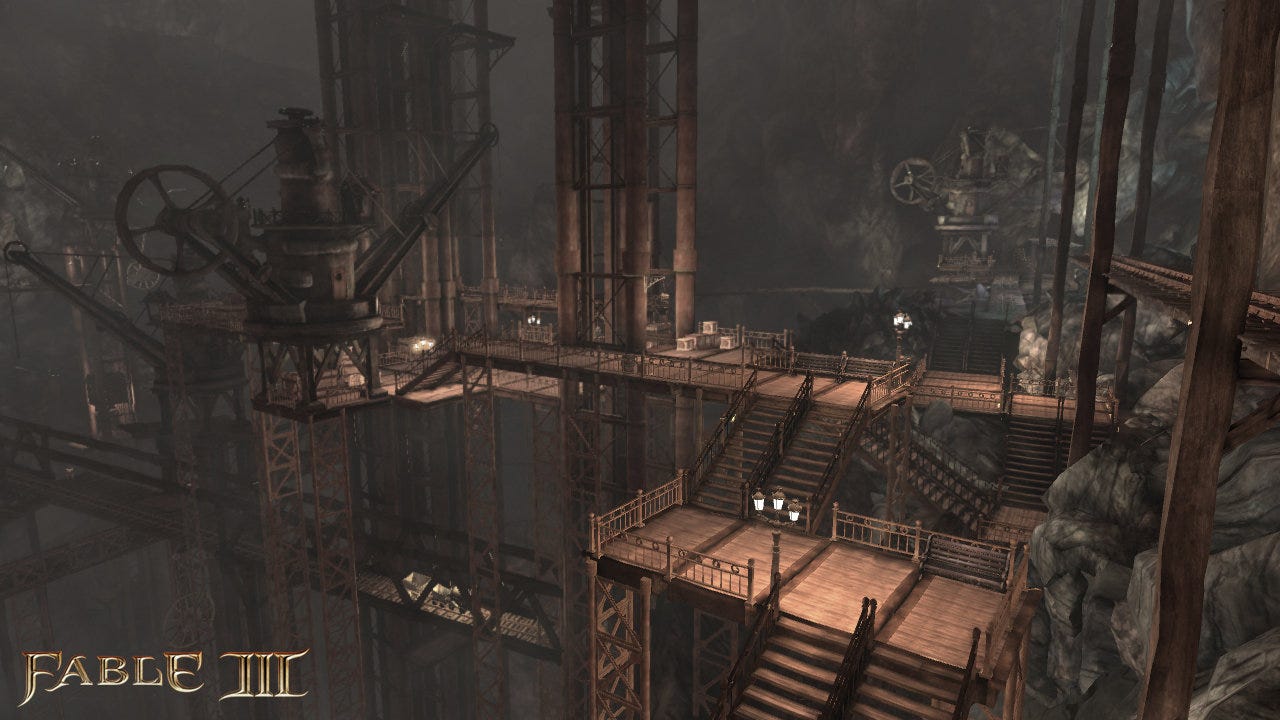
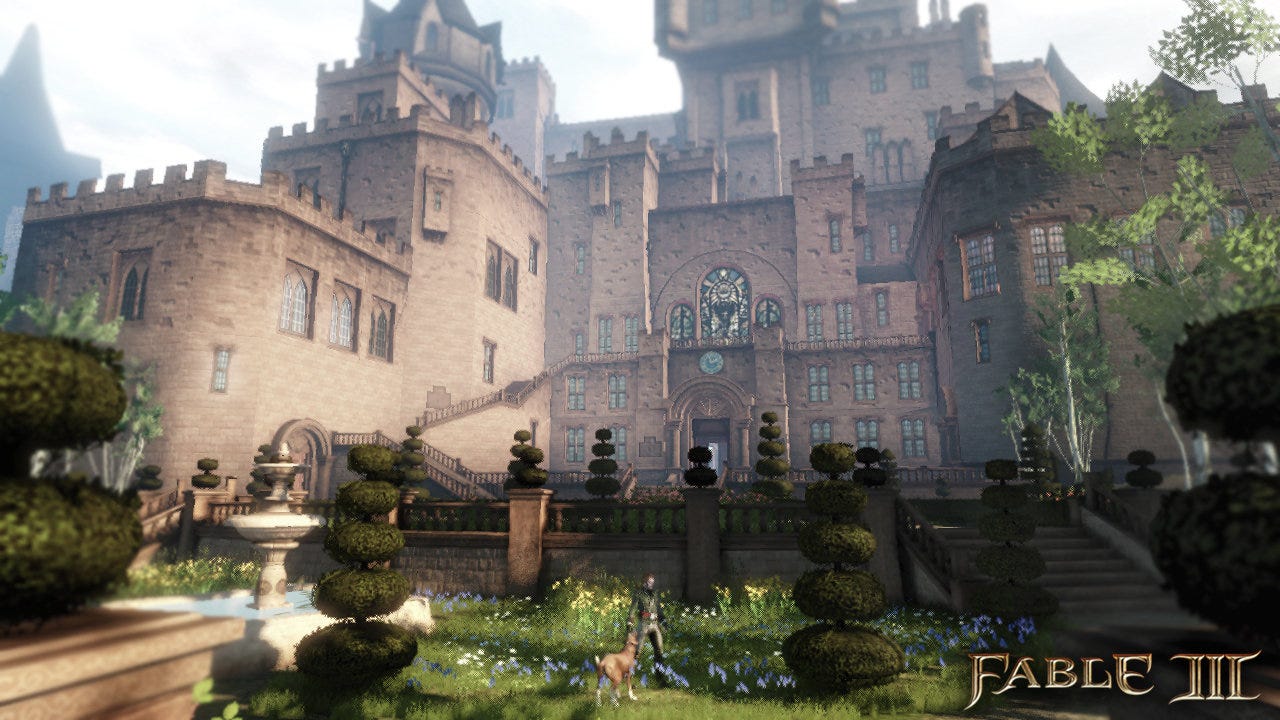
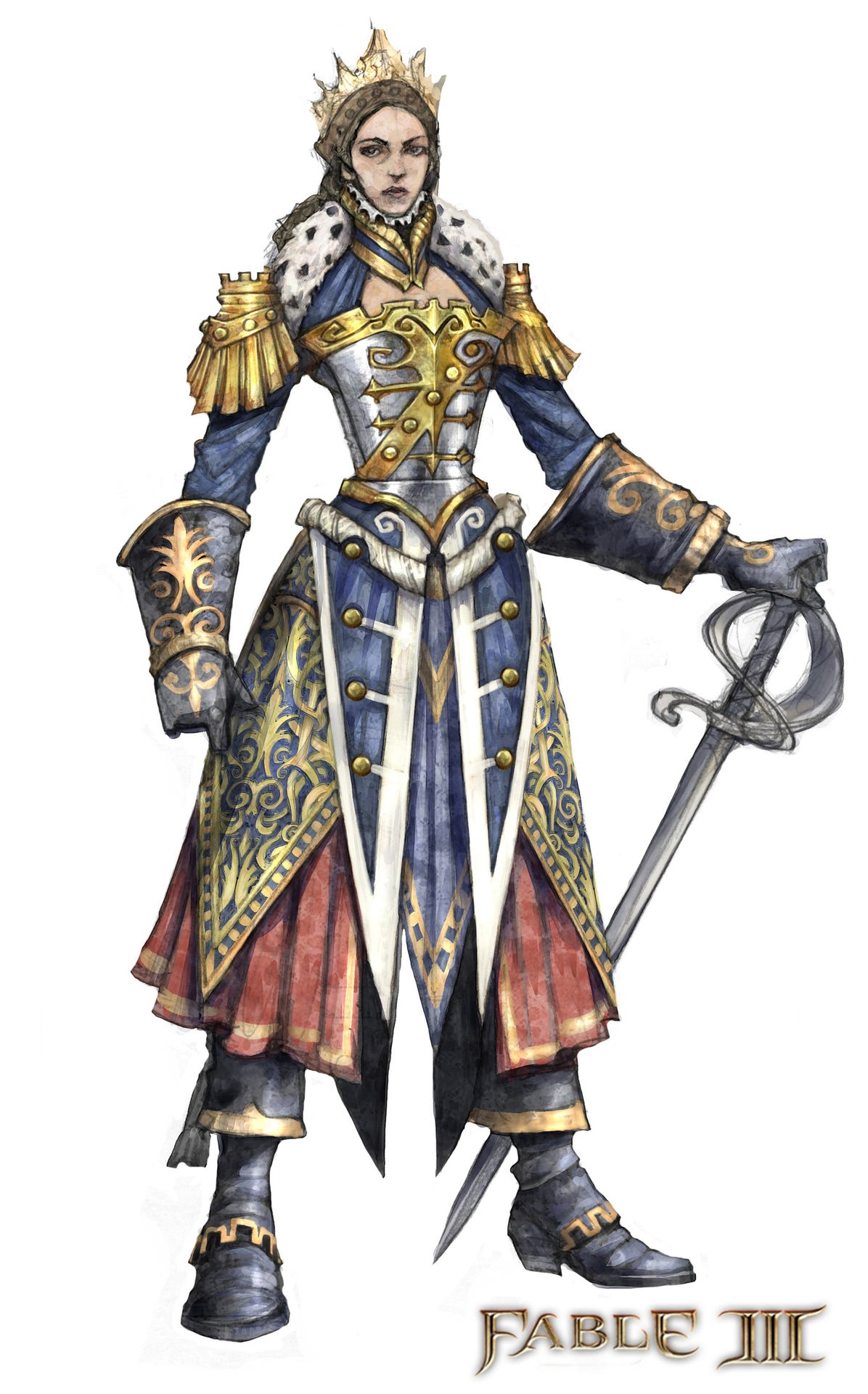
This time, we sat down with the designers and decided to name exactly the words which would define Fable III, and to focus all of the art direction down that alley. We ended up with "revolution" as the key word, and with the industrial revolution as the main theme. We've looked at the European styles of architecture, painting, clothing, fashion - the whole lot - as defined by the industrial revolution, as well as by colonisation and exploration. It's a much tighter artistic style.

Eurogamer: How did you manage to maintain that focus this time, to prevent it from drifting away the way it did in Fable II?

John McCormack: We were stricter, this time. There were a lot of good discussions which made sure that the entire project stuck to a visual track. Although we wanted to go down an industrial route, it's so tempting to drift off, to explore different avenues. Occasionally you have to go "no, no no no! Back to industrial!" - to keep it focused in that sense.

Mike McCarthy: I think it really helped that this time we had some very strong themes right from the start. In Fable II, the story drifted about a bit - but this time we had a strong theme, the industrialisation of the whole of Albion, and with the character, the whole revolution theme.
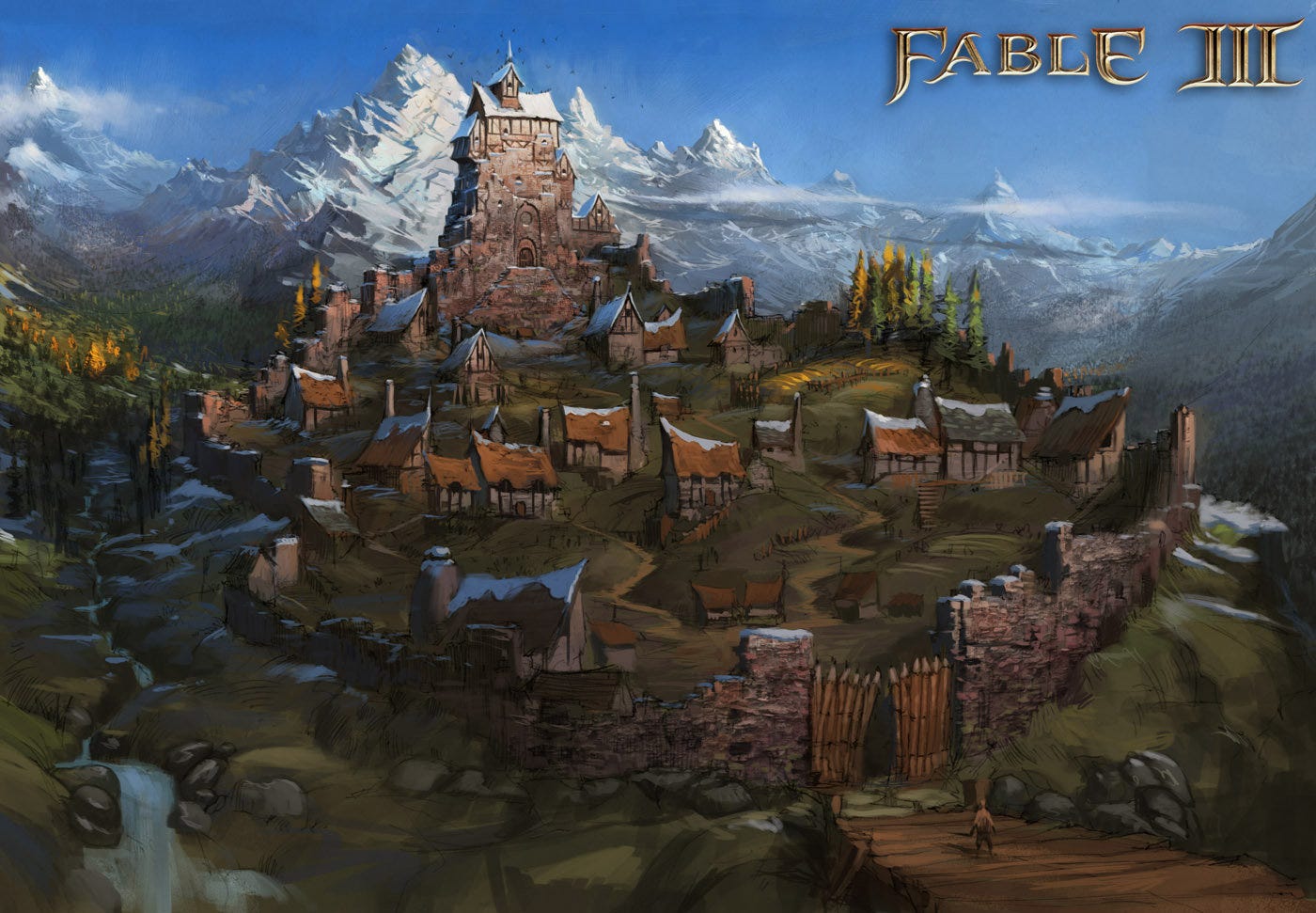
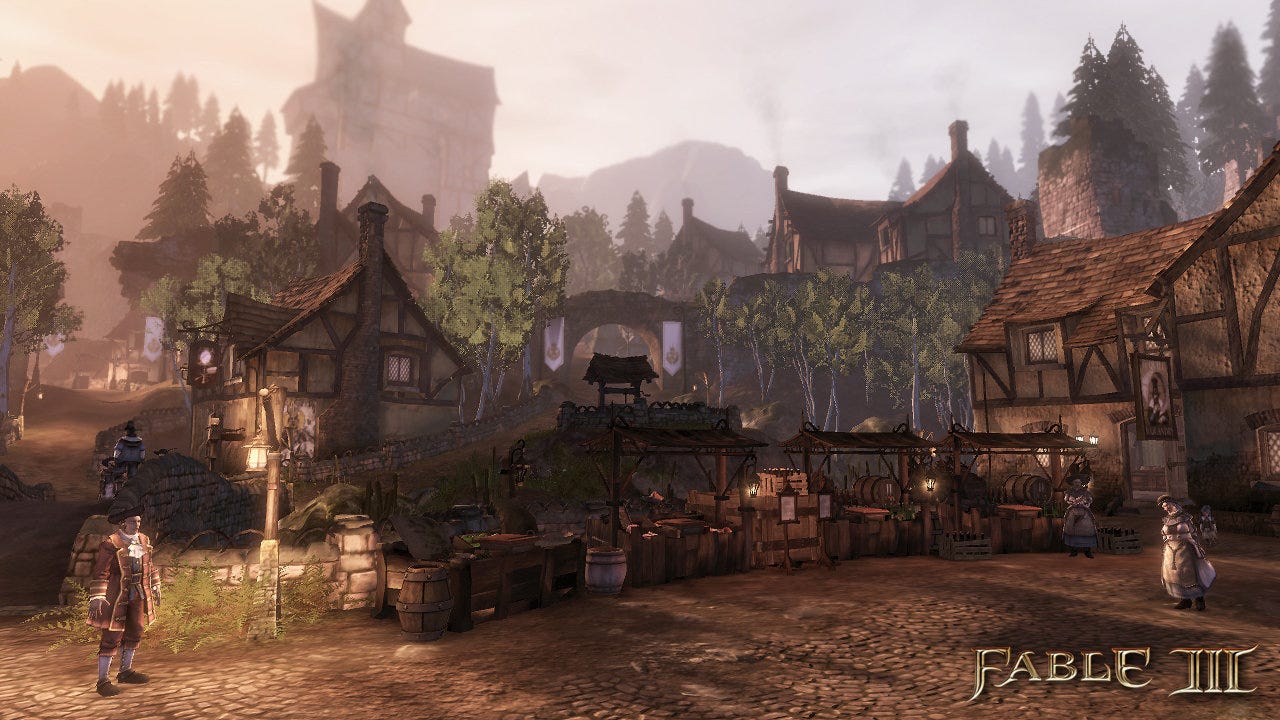
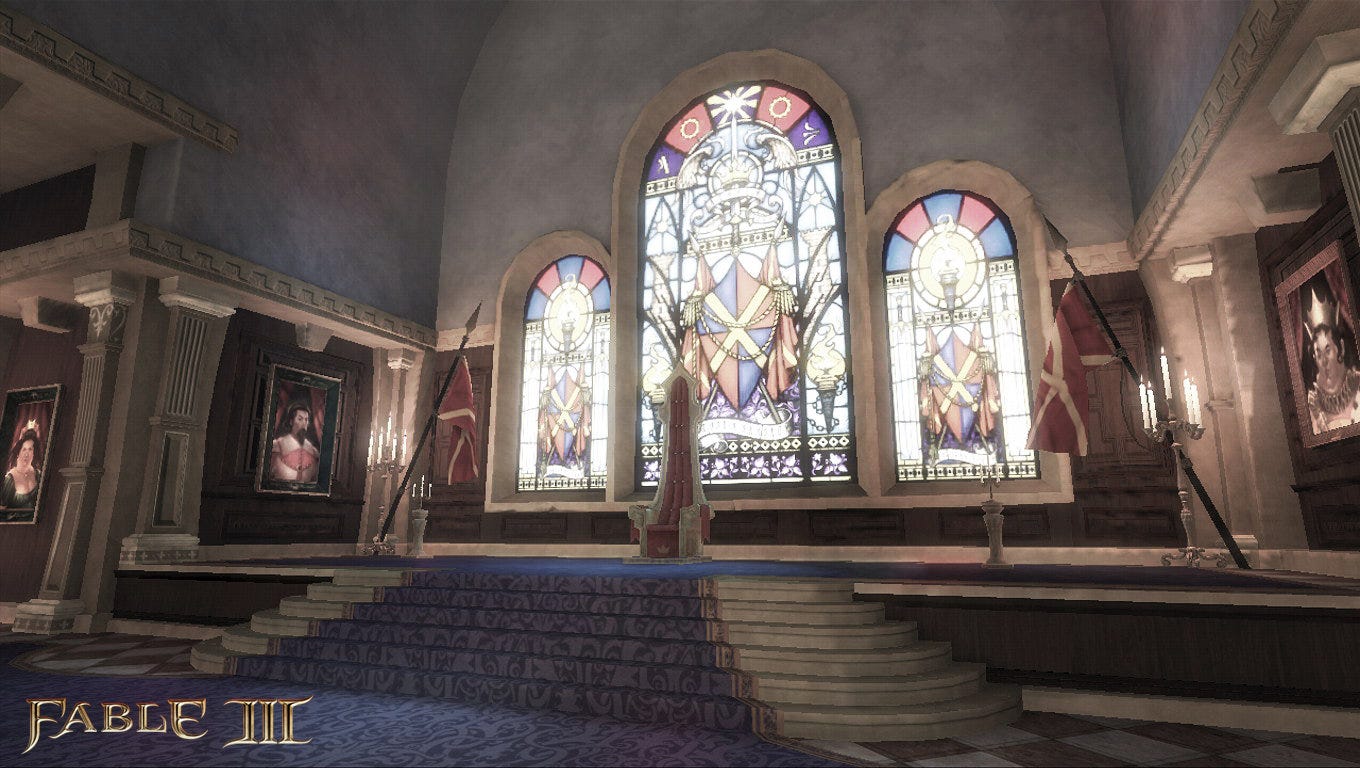
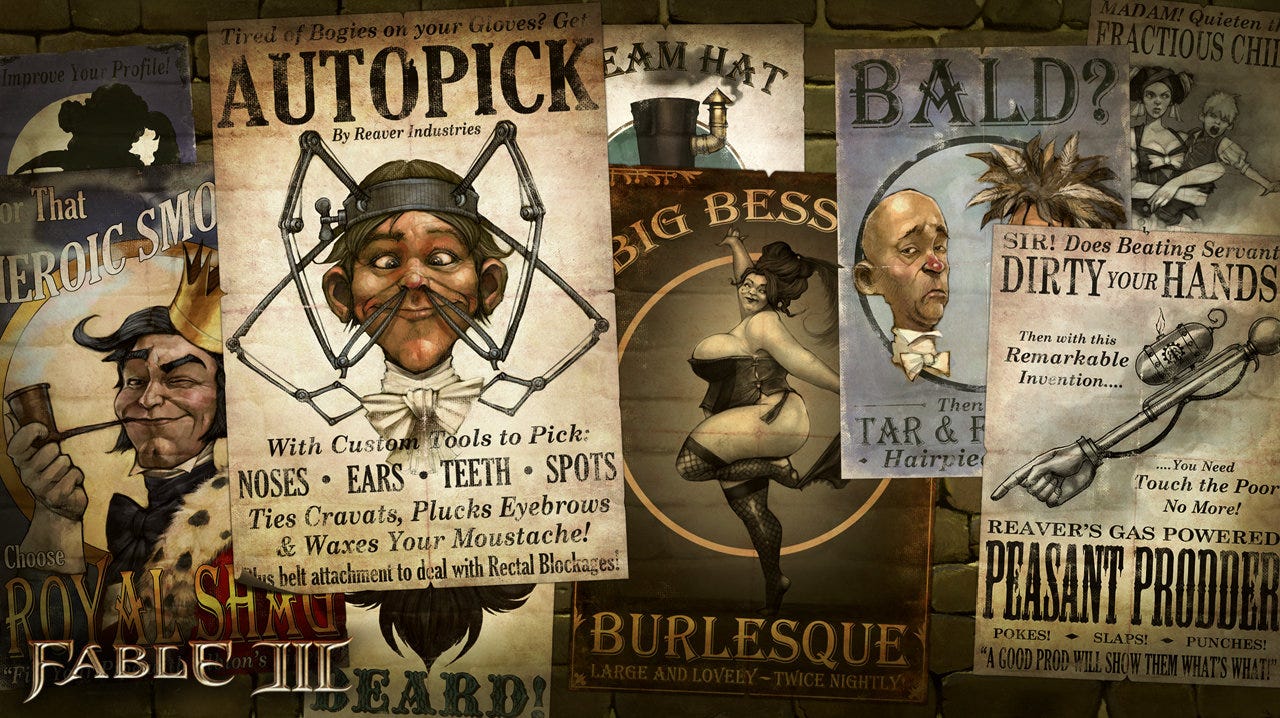
John McCormack: The Fable franchise has always had a strong class system, a hierarchy built into the structure of its towns. This game, in particular, is the one where it's most obvious, most exploited - it goes the whole way from the king down to child labour, and the player navigates every rung of the ladder between them.

It's much easier for us if there's a strong narrative like that to guide the visuals. That's the main focus that we had for this game - to get a strong narrative, which everyone understood early on.

Eurogamer: The artists had two different challenges - Aurora, a whole new continent where you can cut loose and do lots of fun stuff, and Albion, which is familiar to players already. Was it as much fun to work on Bowerstone again as it was to build something totally new?

John McCormack: I actually fought for a long time for us to completely set Fable III somewhere else - as an artist, you don't want to be bogged down too much and repeating anything. So we have the Aurora thing, which is really exciting, and we all got sucked into that - we got to create our own language, our own religion, our own race of people... Everything from the incense burners in the houses right up to the carvings they've made in the side of mountains, everything was meticulously detailed. Artists, especially art directors and concept artists, love nothing more than to explore that.

That made the idea of looking at Bowerstone a bit less exciting, obviously. But, as it turned out, we actually thrived on the Bowerstone stuff - especially once we started getting into the idea of the early industrial revolution. It was actually quite exciting.

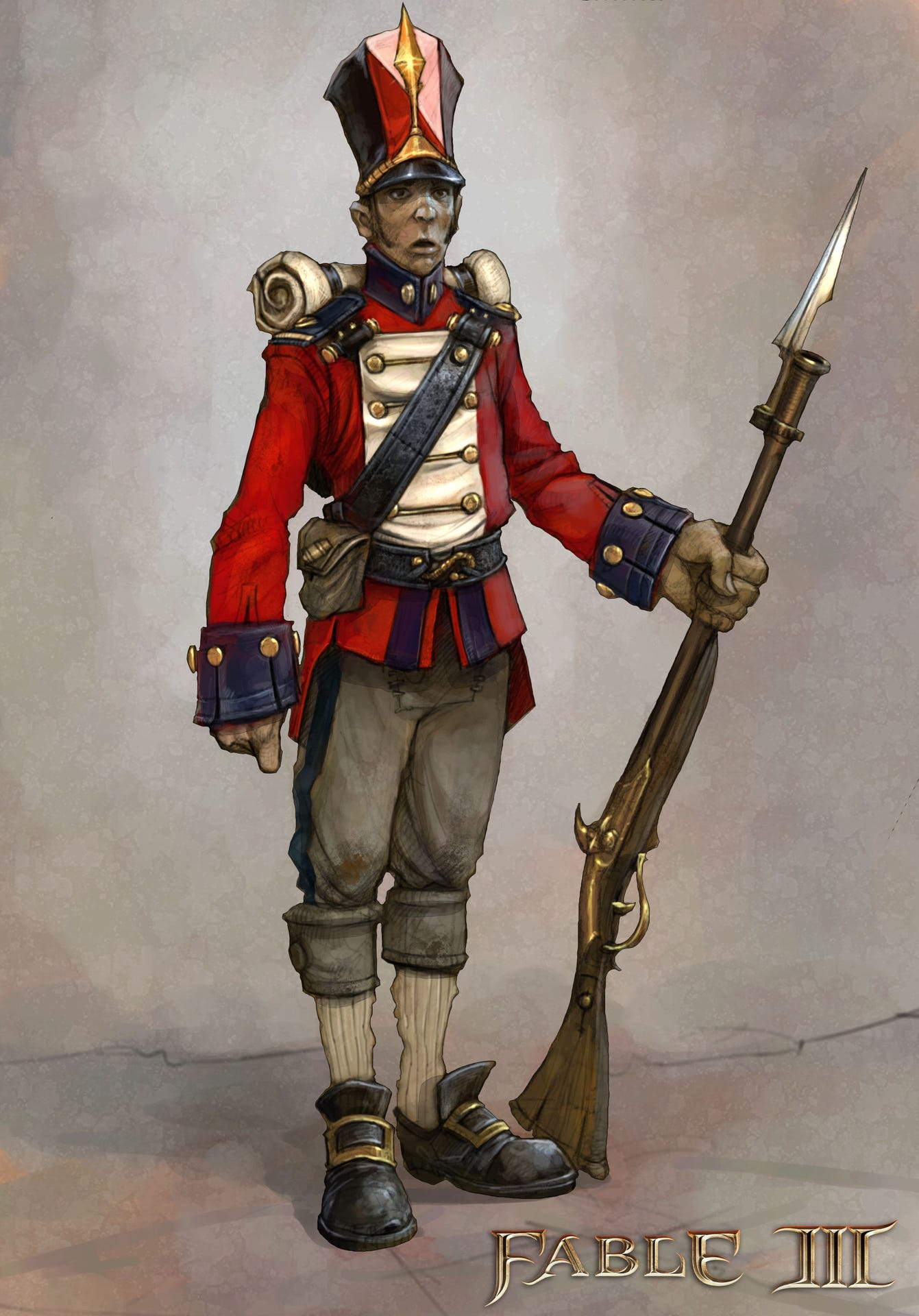
It was quite instinctual too - we knew that the story involved war, and munitions, and colonisation... It just clicked, and we all said, "Napoleonic! Let's watch Sharpe! Let's get Sharpe's Rifles, come on!" That's when the look of the soldiers clicked, the military uniforms...

With the industrial revolution, you had the post-industrial world - that's when everything worked. You had the Great Exhibition, and science, and everybody looking at these great wonders of the modern world. But we're exploring the pre-industrial revolution, when everything was broken, and experimental.

That was actually more exciting, because you've got these people running factories and so on, and they're all trying stuff out for the first time. They're making guns in Bowerstone, sending people to war with them, and they just blow up - they don't really know how to make these things, but they're trying. That gave us a lot of room for inventions. We could think from the point of view of early industrial ideas, what those people would have done.

Eurogamer: It was a point in history where things weren't set in stone - we didn't know what worked and what didn't, so we could have gone in any direction.

Mike McCarthy: They believed that they could do anything. That's the thing. They believed that anything was possible.

John McCormack: Yeah, and hardly anything ever worked!

Eurogamer: Last time around, you moved from Xbox to Xbox 360 - so you had a lot more power to work with. How much of a leap forward have you been able to make this time? Have the engine guys unlocked a lot more potential, or is it just a matter of polish?

John McCormack: I think it's more that they've understood the engine they were building better on this game. The framework was there, and it's the polish now. For us, it's as if they'd started switching things on in Fable III. They'd go, click, there's your specular! And we'd go, oh look, everything's shiny! Click, there's your normal maps... Ohh!

They just started plugging in the nice-to-have features in the engine that we'd always wanted, and which just weren't available for Fable II. The engine team have been really happy about that, because the nice-to-haves are what everyone wants to work with. They've really enjoyed this one, getting to play with the fun stuff - and the artists have loved it, because what we see in our heads and what we see in our development tools actually started popping into the game in this project.

Eurogamer: Presumably this time around you also had the advantage of actually having a working engine, right from the outset.

John McCormack: Oh god yes. Absolutely. That was by far the biggest problem on Fable II. I mean, Fable II was a pretty successful project, but it was really scary towards the end, because we were working in the dark with the engine. We'd build things without knowing how it all hangs together - then suddenly the lights are all switched on and you just pray it's not horrible! You'd think, please be like what it was in my head, oh please...

This time it's been much better, actually having an iterative process - the artists build something, drop it into the game, and then iterate within the engine's already working lighting system. Everything was synched with the editor, so we could do something in our 3D package, and the change would appear in the engine.

4

Eurogamer: It sounds like a more relaxed project than the last two - well, maybe not relaxed, but less stressful.

John McCormack: Well... It was relaxed from the point of view that we knew exactly the theme of the game, everybody was aware and everybody was trained up. We were all raring to go. That doesn't stop the fact that it was an RPG being developed in, essentially, two years.

Mike McCarthy: You'll always overreach yourself. You'll always decide to do 10 more things than are really possible. That's the nature of doing a project like this - you think, oh, so it's all working, so we can do fifty million levels then! No, no you can't. No.

The good thing is that, because your aims are so high, you're able to go through and decide which are the strongest parts, and keep all the strongest stuff. The stuff you're cutting is the second and third rung of ideas. You've got the pick of the ideas, which is a really nice position to be in.

Eurogamer: You've mentioned the scale of the game - can you compare that with Fable II, as an example?

John McCormack: It's... I don't know the logistics yet. It's definitely bigger than Fable II by a long way, but it's bigger in breadth, as well. We've got a lot more variation in this one. As you said, we never had an engine before - now, with the engine, iteration is faster. We're working at 10 times the speed we ever did on Fable II.

The design is honed, too. Out of around 20,000 assets we made for Fable III, I'd genuinely say that only about six didn't make the cut. The only things we dumped were things where maybe the artist had a migraine, or something, and created one of the most hideous things I've ever seen... [laughs] You just get blips like that, but we were more efficient this time.

5

Eurogamer: Since the first Fable, you've moved away from the big armour, big swords, traditional fantasy aesthetic. Why did you decide to do that? Have you had any resistance to it?

John McCormack: We never want to lose our dark fairytale roots. We always intended to have creatures, but they're not in your face - they never have been. It's not a traditional fantasy world, but with Fable 1, we weren't brave enough in our style. We didn't make the world we wanted to make. We thought, well, we should have a dragon - that's just what we're expected to have.

By the end of Fable 1, we'd got a better idea of exactly what Albion is and what it means to us. As much as we're moving away from the chunky armour and the dragons and so on, we'll never deny that in any way. We'd never say that we're not a fairytale fantasy game - we will always be that.

Mike McCarthy: We've always wanted it to be more about the creepy, dark, European or Celtic style folklore. The kind of fairytale that's very charming and quite eerie, but where utterly hideous things happen. If you read original fairytales, they're absolutely horrible - all sorts of terrible things happen, but in a very charming, dark, strange way, rather than having some guy in armour riding a dragon who comes and saves a village. It's more underplayed and eerie than that.

John McCormack: Plus, we want to create a world that actually makes sense in terms of its technological progress. Industrial progression does kill, or try to drive underground, all of that strangeness - it becomes folklore. The people in the game talk about the events of Fable 1 in that way - "Did that happen? Did trolls exist?" You know, they heard about it when they were kids. That's the natural order of the world, this stuff is driven underneath, into the woods.

Mike McCarthy: It also starts to inhabit the very stuff that's driving it underground. Everything starts to get slightly effected by the stuff that's going on underneath - so it's all a bit crooked and strange.

Eurogamer: Is that one of the appeals of the Industrial Revolution, as a setting? If you look at literary history and social change in Europe, that's definitely the point where a lot of traditional fairytales and beliefs are pushed out to the margins.

John McCormack: Yeah. They believe in science, in industry, but they don't believe in any of the old stories. We quite like the the juxtaposition of having a hero - your character - walking into a bar, wearing a giant glowing sword, a blue beard, a tattoo-laden glowing wedding dress, and announcing, "I'm the hero of Albion!"... And everybody laughs at you.

Then as soon as you cast a spell and set something on fire, they run screaming. It's crazy, it's something they don't believe in. The stories of creatures, of hobbes and balverines and all that - that's something they tell their kids, it doesn't actually exist.

Mike McCarthy: In Bowerstone, they've got bigger problems anyway - like the fact that the king keeps killing anybody who doesn't do what he says. That's going to be your major consideration, rather than whether there are trolls in the forest - the fact that people are kidnapping your kids and making them work in factories.

Eurogamer: You talked about being stricter in your approach - is that, in part, why Aurora is there? To give you a creative outlet that isn't restricted by those rules?

John McCormack: Yeah... That's gone through all kinds of experimental iterations. It was made of ice at one point! As soon as any creative group sees a gap, we all just scream and run towards it - all shouting, "Right, okay, the whole place is made of SHOES!" No, no, calm down everybody, just calm... [laughs] We got stuck right into that. It was really exciting. It still is.

3

Mike McCarthy: I think that's one of the pleasures. We've got really strong art and design teams, and it's brilliant when you all get to talk about a completely new land - and just go mad, go completely mental and come up with all this stuff. Then you can haul it back. Making things slightly more subdued is always much easier than to take a really boring idea and try to make it exciting.

Eurogamer: Does any of the other stuff go into a drawer somewhere and you think, right, that's something for Fable IV?

John McCormack: Well, at the moment it goes into the artbook! It's all related to Fable, so it'll always be in the background and useful, even if we ever decided to set a game...

Mike McCarthy: In a land made of shoes.

John McCormack: Before Fable 1, I meant, doing a prequel. We've got this plethora of unused artwork, with so many ideas in there.

More on Fable III

Eurogamer: You guys must love the artbooks, particularly the concept artists - you finally get to actually show people what you've been doing.

Mike McCarthy: It's really lovely actually, yeah. So much - literally 99 per cent - of the stuff you do as a concept artist goes no further than that. It gets given to a 3D artist who makes a model, and that's it. It's fulfilled its purpose. So it's great that now it gets used, it's a really big kick to see it in a book form. There's something about it which makes you feel... It makes you feel like a real artist! [laughs]

Eurogamer: Plus, you can bring home to your parents and go, look, I do have a real job!

John McCormack: That's exactly it, though! We did the Art of Fable II book, and as soon as I handed it to my mum, she said, "Oh my god! Look at that! Did you do that?" Well, yeah, I've been doing it for 10 years. But she doesn't play games. She'd never seen it.

Eurogamer: So artbooks exist to harmonise the family relationships of the art team?

Mike McCarthy: It's just to convince other people that we have actually got useful jobs!

John McCormack: We've got a library upstairs - I've been collecting the concept art of games and films for years. I've got thousands of books of it, and I'd always wanted to have one that we'd done. Well, we got one last time, and we're doing one again this time, as far as I know - it's going to be great.

Fable III is due out for Xbox 360 on 26th October, with a PC version to follow later.

Comments (38)

Comments for this article are now closed, but please feel free to continue chatting on the forum!

  • Loading...hold tight!