The History of BioWare
They just keep rolling.

Have you ever wondered what your doctor thinks about while they're poking and prodding you? If you lived in Edmonton, Canada, in the mid '90s there's a chance your doctor was thinking, "Gee, I wish I was making computer games instead of rummaging inside this diseased colon". At least, that's how it might have played out if you were the patient of Dr Greg Zeschuk, Dr Ray Muzyka or Dr Augustine Yip. And if you had a diseased colon.
For it was in 1995 that this clinical trio turned their back on the rollercoaster world of medicine for the rock solid job prospects of boring old videogames. Most specifically, role-playing games - a pastime that, in its pen and paper form, had kept them amused through medical school. Originally working out of Greg's basement, and calling themselves BioWare (a medically appropriate name, from the Greek "Bio" meaning from the chemist, and "Ware" meaning stuff), they set about forging what would become one of the most influential developers in the RPG genre. Considering they've only been around for just over a decade, and have only produced eight games (plus sundry expansions, of course), it speaks highly of their near faultless track record that the name BioWare has become industry shorthand for state of the art craftsmanship and innovative storytelling. With Mass Effect, their latest and possibly greatest game yet, about to make grown men cry, it seems like the perfect excuse to bring the Johnny-Come-Latelys (not to be confused with Johnny-Come-Minkleys) up to date.
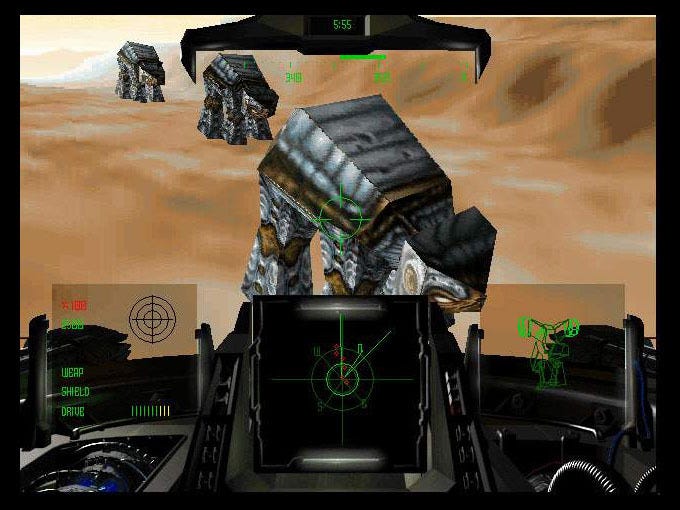
Of course, the PC gaming scene was already abuzz when BioWare appeared on the scene, thanks to the new fangled 3D graphics cards which, in conjunction with the PCI expansion slot appearing on motherboards, meant that even less technically adept gamers could quickly and (fairly) easily upgrade the visual muscle of their gaming rig to accommodate ever more impressive games. The mould-breaking likes of Quake and Half-Life were on the way but Shattered Steel, BioWare's debut, proved to be more than capable of delivering the sort of graphical thrills these gamers craved, boasting the world's first deformable terrain in a game. Commanding a series of robotic "Planet Runners", the mech-mashing game was a lot more action-orientated than you'd expect, given BioWare's later RPG centred reputation. Even so, it still showcased many of the hallmarks which would come to define their style - compelling narrative environments, dynamic music and, in the form of various talkative AI systems, shrewd use of character and dialogue to set the scene. The game was actually developed with help from another developer, Pyroteck, but even before Shattered Steel was completed, BioWare already had a more ambitious project in mind.
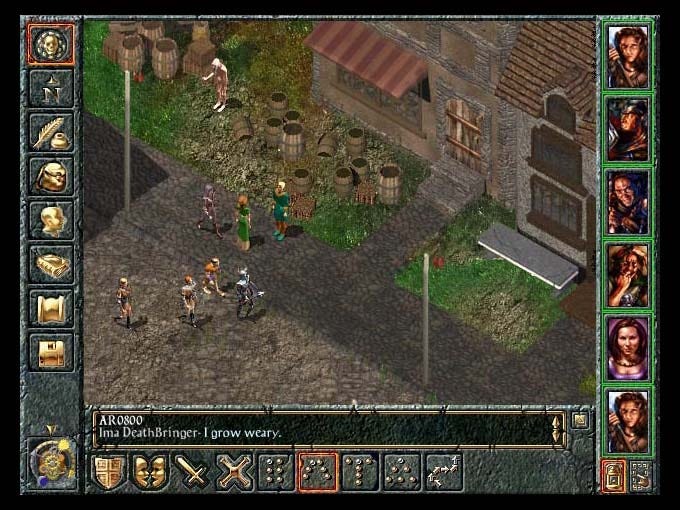
Battleground: Infinity was the title, and it was a game that would help to change the face of computer role-playing games forever. Don't worry if it doesn't ring a bell, you won't have played it. Or, at least, not under its original title. See, an early build of the game was shown to prospective publishers and it caught the eye of Interplay, which had been casually stroking the rights to Advanced Dungeons & Dragons like Blofeld's cat. Before you could say "convenient corporate synergy", BioWare was hard at work converting Battleground: Infinity into Baldur's Gate, and condensing the hefty AD&D 2nd Edition rulebook into something that could work as a real-time computer game. Somewhere between Shattered Steel and Baldur's Gate, co-founder Aug Yip left BioWare to return to medicine but, amazingly, Ray Muzyka has since claimed that none of the 60-strong team that wrestled this mammoth project to completion had ever worked on a videogame before. Even so, the powerful RPG engine that eventually grew out of the lengthy development process, named Infinity Engine after the game's original title, was licensed out and went on to form the seductively curved backbone of such classics as Planescape: Torment and Icewind Dale.
Computer RPGs were hardly struggling in 1998, when Baldur's Gate finally arrived. The early to mid nineties had already seen a revival of the genre, with enormously influential games like Elder Scrolls, Fallout, Jagged Alliance and Diablo all appearing in this period, while venerable series like Ultima and Might & Magic continued to clock up sequels and expansions. Despite such fierce competition, and even though die hard Dungeons & Dragons players got a bit squiffy about some of the changes made to their holy rulebook, the response to Baldur's Gate was overwhelmingly positive. Review scores hovered around, and often above, the magical 90 percent mark while the game found itself perched atop many Best Of lists by the year's end.
BioWare plunged straight into work on the first expansion disc, Tales of the Sword Coast, offering four new areas, increased experience caps and tweaked gameplay to stop thieves being too damn good at their job. Around this time the company also returned to the action genre, developing the sequel to Shiny Entertainment's MDK. This gave them their first sniff of the console pie as, along with the PC version, the frantic and off-beat shoot-'em-up graced both Dreamcast and later the PS2.
With that brief diversion into console action out of the way BioWare snuggled back into the snug embrace of AD&D for another few years, with the altogether inevitable (and wonderfully unpronounceable) Baldur's Gate II: Shadows of Amn dropping stone cold science in late 2000. Fans were chuffed to be able to import their existing characters into this new adventure, and were rewarded with a game of even greater scope. While other RPGs had already set off down the path of relentless hackandslash (yes, Diablo, we're looking at you) Baldur's Gate continued to offer more interesting ways of interacting with the game-world than merely slicing everything into ribbons. Different character classes could conquer and then maintain the various strongholds within the game, while the plot shifted according to the alliances you forged with NPC characters. It was, unsurprisingly, smothered with love and kisses from PC gamers and critics alike and still remains lodged in the upper reaches of every list of the Best Games Ever that matters.
Obviously, by this time the name BioWare had become synonymous with quality hand-stitched RPG entertainment, but the sheltering umbrella of Interplay had buckled and snapped under financial duress. Our plucky band of dice-rolling heroes took shelter under the wing of Infogrames, which is what Atari was called before Infogrames bought the real Atari and realised Atari was a better name than Infogrames. Got that? Good.
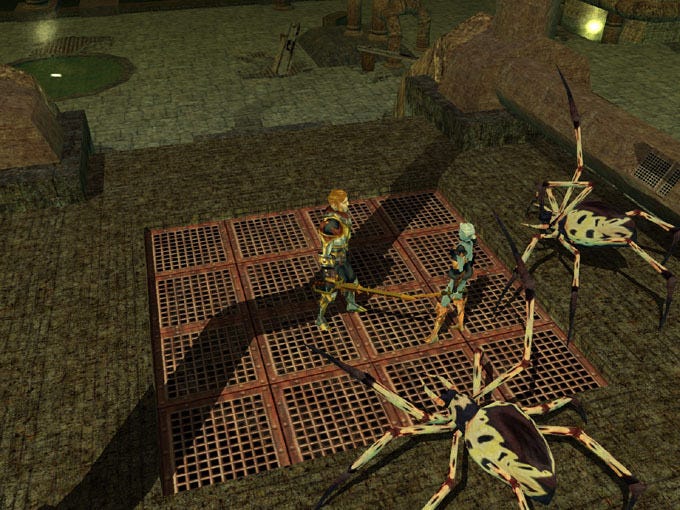
Neverwinter Nights was their first project for their new paymasters, released in 2002, and it once again found them knee deep in the Advanced Dungeons & Dragons rulebook (3rd Edition this time, fact fans). A part remake/part sequel to the original Neverwinter Nights, the first ever graphical MMORPG which ran on AOL from 1991 to 1997, this new project required even greater feats of graphical trickery, and so the Infinity Engine was packed into mothballs in favour of the Aurora Engine, which didn't sound as cool but looked loads nicer so that's OK.