Headline-writers no doubt miss Phil Harrison's bullish proclamations about the downfall of rumble and the power of PlayStation 3 to crush its rivals, but his successor as president of Sony Worldwide Studios, Shuhei Yoshida, has arguably done a lot of good for the company's image since his appointment. Polite and measured in conversation with the press, he even does the unthinkable now and then and compliments the opposition, rather than referring to Microsoft and Nintendo in abstract terms and smirks.
Even the day after Sony's gamescom conference, at which the platform holder finally took action on the PS3 price, introduced a new PS3 form factor, previewed motion controller revelations at the Tokyo Game Show, and took significant steps to adjust the PSP's trajectory, Yoshida is humble and candid, and happy to agree that many of his company's initiatives are a work in progress. Read on to find out what he had to say about the PS3 Slim, the motion controller and development for the PSPgo.
Eurogamer: Do you think the PS3 Slim and the associated price cut will be enough to silence people who have been complaining about the high price?
Shuhei Yoshida: Not all people, but many people will be happy to hear the price.
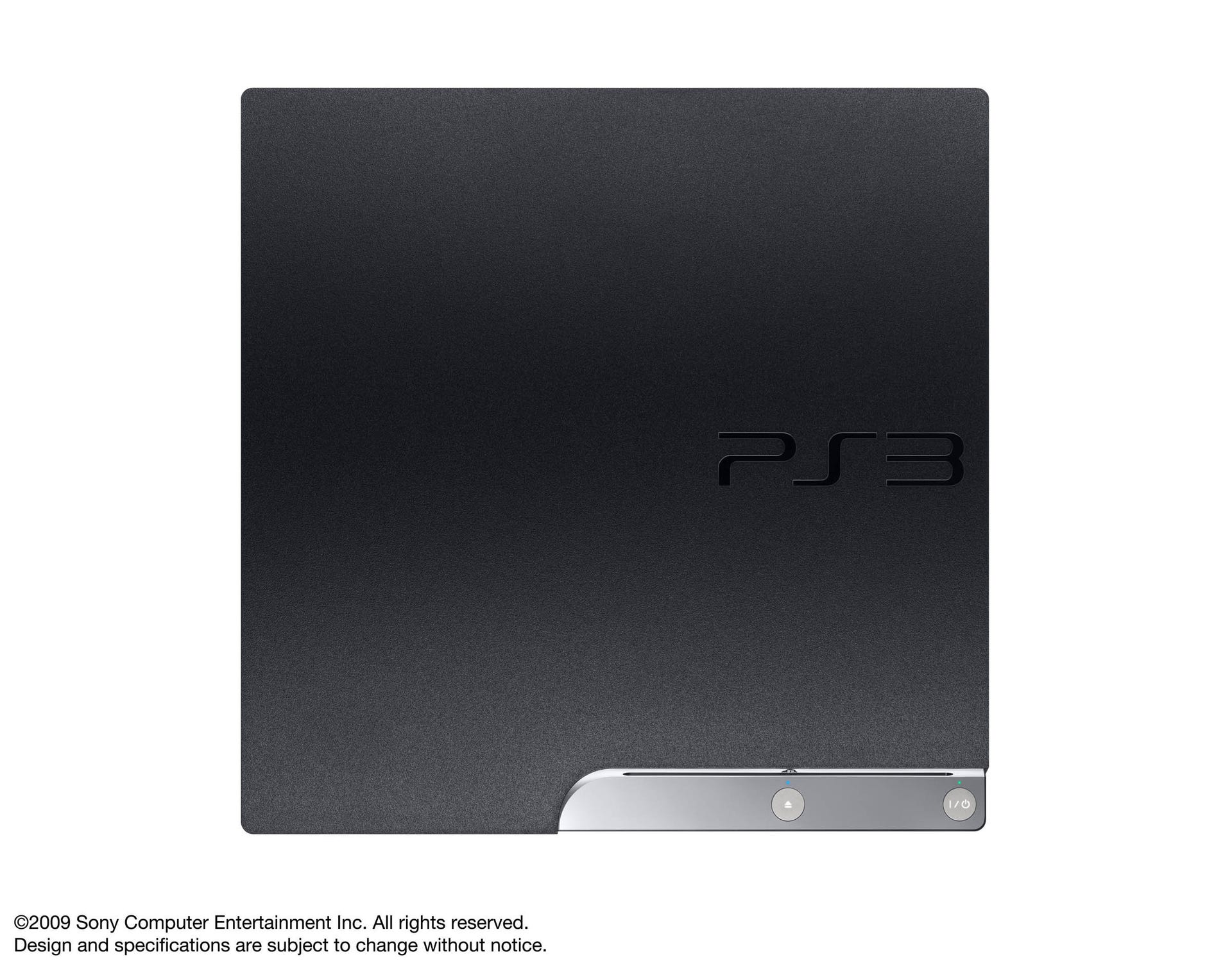
Eurogamer: How is the new PS3 different technically, and how were you able to achieve the gains you've made in space-saving and power-saving?
The new, "more eco-friendly" PlayStation 3, due out imminently for a new lower price of £249.99.
Shuhei Yoshida: It's basically more eco-friendly. It's smaller, and uses less power. That's great. You can save some money from paying utilities. But mostly it's a natural-evolution shrinkage of components, so we can make the same product cheaper so we can pass on the savings to consumers. Nothing really from game development standpoint changes from existing PS3 to new PS3.
Eurogamer: I was surprised you were able to make the kind of space-saving gains you were able to make, because obviously PS3 packs in a lot of equipment and already cost you loads to make. Is it cheaper to make this new unit?
Shuhei Yoshida: It's definitely cheaper to make compared to the generation that's in the market. If you have noticed, we have made several changes during the PS3 period, not just in size of disk drives, but also we continuously combine components or introduce newer, smaller, space-saving components. It's a continuing process. But this new PS3 is different - we are taking much bigger steps, and that has significant cost-saving effects. When you look at our history, we never stop; we continue to work on it.
Eurogamer: So you imagine that one day there will be an even slimmer PlayStation 3.
Shuhei Yoshida: [Laughs] That's a good question. The Blu-ray drive takes up some space, so...
Eurogamer: Another thing that was mentioned at your gamescom conference was the fact that it might be worth turning up at the Tokyo Game Show to find out about the motion controller.
Shuhei Yoshida: No promises! We did show some of the actual game footage for the first time [at the conference] though.
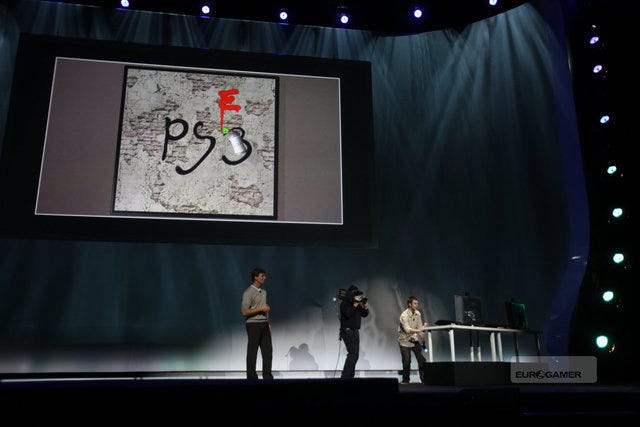
The motion controller made a strong impression at E3, despite the looming spectre of Microsoft's ambitious Natal, announced the previous day.
Eurogamer: At E3 you said that development kits were only just going out to developers, so they must have had them for a little while. What sort of feedback have you had and how is it helping you with the product?
Shuhei Yoshida: This motion controller development is unique from a hardware development strategy standpoint. In the past, SCE used to approach hardware development from the hardware dream - the engineers wanting to really focus on cutting edge, advanced technologies. But this motion controller, even the reason we developed it came from software teams, so the involvement of our teams, some of our game teams, with the hardware groups and the US R&D groups has been very, very tight, and it's been an iterative process.
Way before we showed the demos at E3, we were working on the prototypes. It's been an iterative process that we are still continuing, so every version gets better and better and has some features added or removed. We are still continuing that process.
Eurogamer: Do you think you're close to the final design for it now?
Shuhei Yoshida: Yeah I think so. Ha ha. We have to finish sooner than later.
Eurogamer: Do you intend people to use two at once or can you play with one? Are the individual wand units going to be identical or will they have different functions?
Shuhei Yoshida: The ultimate goal or wish for us is if you have two controllers, like we demoed at E3, we can do something really amazing. It's like putting your arms into the TV, like a gaming space, and you have total control of the 3D space in front of you.
But because of cost-of-goods and, you know, people have to have the PlayStation Eye camera as well, we are approaching the launch by making sure that all games that we create can be played with one controller and the camera. We will also introduce options for if you happen to have more than one controller available. Experiences will be enhanced if you purchase a second.
We are trying to make the entry barrier as low as possible, but I'm looking forward to introduce more advanced things you can do with having two in your hands.
Eurogamer: Do you think the fact you're using something that you already have, the PlayStation Eye, is almost a kind of philosophical shift for Sony, rather than going after the absolute cutting edge as Microsoft has done with Natal?
Shuhei Yoshida: We have already done the camera-only solution, and we are still doing it, like EyePet - you can do very interesting, amazing things with just the camera. But with the camera-only solution, there are certain limits we all know about. By combining the already-existing camera technology with advanced sensors internally, I think we are trying to hit the right balance of cost and the features.
Eurogamer: So it wasn't really so much a thing of not going to the cutting edge - you felt the camera was perfectly good for what you wanted to do.
Shuhei Yoshida: Yeah. I think we're still going for cutting edge in terms of what we can do.
Eurogamer: Looking at the PSP and the Minis initiative, how long has that been in the making and what sparked it off?
PSPgo, which launches on 1st October for £224.99, will be joined by 15 Minis at launch, and those registering their device before 10th October get Gran Turismo PSP for nowt.
Shuhei Yoshida: The thinking was that with the development of PSPgo, as we decided to add the digital-only solution, of course the big question is how to deliver content to this new device. The infrastructure of the internet gets better and more and more people have decent broadband speed, but still UMD can hold more than 1GB, and lots of our games have already hit the maximum limit, so the user experience of downloading 1GB game to PSPgo is not ideal. We wanted to send a message that you don't necessarily have to use all the content to the capacity of the media, you can create more content and sell for cheaper price. Apple has proven that there are lots of people willing to try things out if it's very easy to download and an affordable price.
So this is more about targeting and positioning of contents for the PSP platform than the technical aspect of things. Still developers use the same toolkit - and we did lower the price of PSP toolkit to help make the entry barrier lower. We are also working on some process improvements so that when the game is made it's an easier experience for developers to get the game out on the market. We are still working on that side.
Eurogamer: There was a report that the pricing was going to be €5 or lower. Is that right?
Shuhei Yoshida: I don't think we've announced that. [One of our fleet of PR chaperones interjects: "No, we're going to be announcing the price closer to launch, but it will be competitive."]
Eurogamer: Is this competitive with the iTunes App Store? With Xbox Live or PSN?
Shuhei Yoshida: The price points talked about sounds right [laughs] for consumers and expectations.
Eurogamer: You've mentioned UMDs a few times, and obviously there are plenty who own them who want to know what will happen with them. Will they be able to get the games they have onto PSPgo somehow?
Shuhei Yoshida: We are still in discussion on what we can do.
The horribly-named Xross Media Bar (it means nothing!) is undergoing a bit of a revamp in firmware 3.0, although Yoshida expects changes to be incremental from here on.
Eurogamer: On the subject of PS3 firmware 3.0, one of the things Microsoft did last year was to redesign their interface due to the volumes of content. Do you think the changes in this 3.0 update are sufficient to cope with things like the video-on-demand service that's coming to Europe later this year, and the volumes of software you're going to have to have on the XMB these days?
Shuhei Yoshida: I think it's the right step forward, and especially we wanted to make the PlayStation 3 a bit more alive-feeling, something you want to boot up every day and see what's going on.
As you said, there are more and more contents on the PSN store, so you may miss something that might be very relevant to you - the games you're playing every day, new content might have just appeared, but is buried in the layer of menus on the store. So things like 'What's New' are trying to customise the experience so what you do gets reflected in what you see the next day.
We are taking one step at a time to make it a bit more manageable and make it easier for consumers to navigate through.
Eurogamer: Do you think you'll need to revise it as dramatically as Microsoft did at some point, or will you be able to stick with the current cross-media-bar layout for the long term?
Shuhei Yoshida: I think we have the fundamentals in there, so the approach we are taking is to make managing your digital content easier in terms of how you get it and how you move it from PS3 to PSP. We are also updating the Media Go software to manage your PSP products. Definitely there's no [claim that] this is the ultimate user interface for the PS3, but the incremental approach that we are taking I think is the right way to go.
Eurogamer: One thing that I've felt about Sony for a while is that you seem to focus on creative games, like Heavy Rain, and take a chance on them. As someone who's intimately involved in development across the platform, how do you balance that creative need against the commercial imperatives that you face?
Shuhei Yoshida: Well, sometimes the most creative products give the biggest financial success, so we are very optimistic that when we take a chance, we take a chance on something we totally believe in.
We know that not everything we bet on will be successful, but we are very lucky to be able to work with very creative people like David Cage's group or Media Molecule, so as long as we see the developer has a vision and also the keen and tenacity to get things really done, we will continue to support them.
Shuhei Yoshida is head of Sony Worldwide Studios.