Pro Evolution Soccer 2011
Back in the game?

They say the same thing every year. Pro Evolution Soccer is reborn! We've learned our lesson! We're not just slapping more lippy on the last PS2 version! So it's been quite painful to struggle through the last few releases. Last year's PES 2010 felt like a step in the right direction, but it was more tentative than it let on, building new layers of tactical customisation and a slightly improved range of movement onto what was fundamentally still the same creaky old game we loved five years ago.
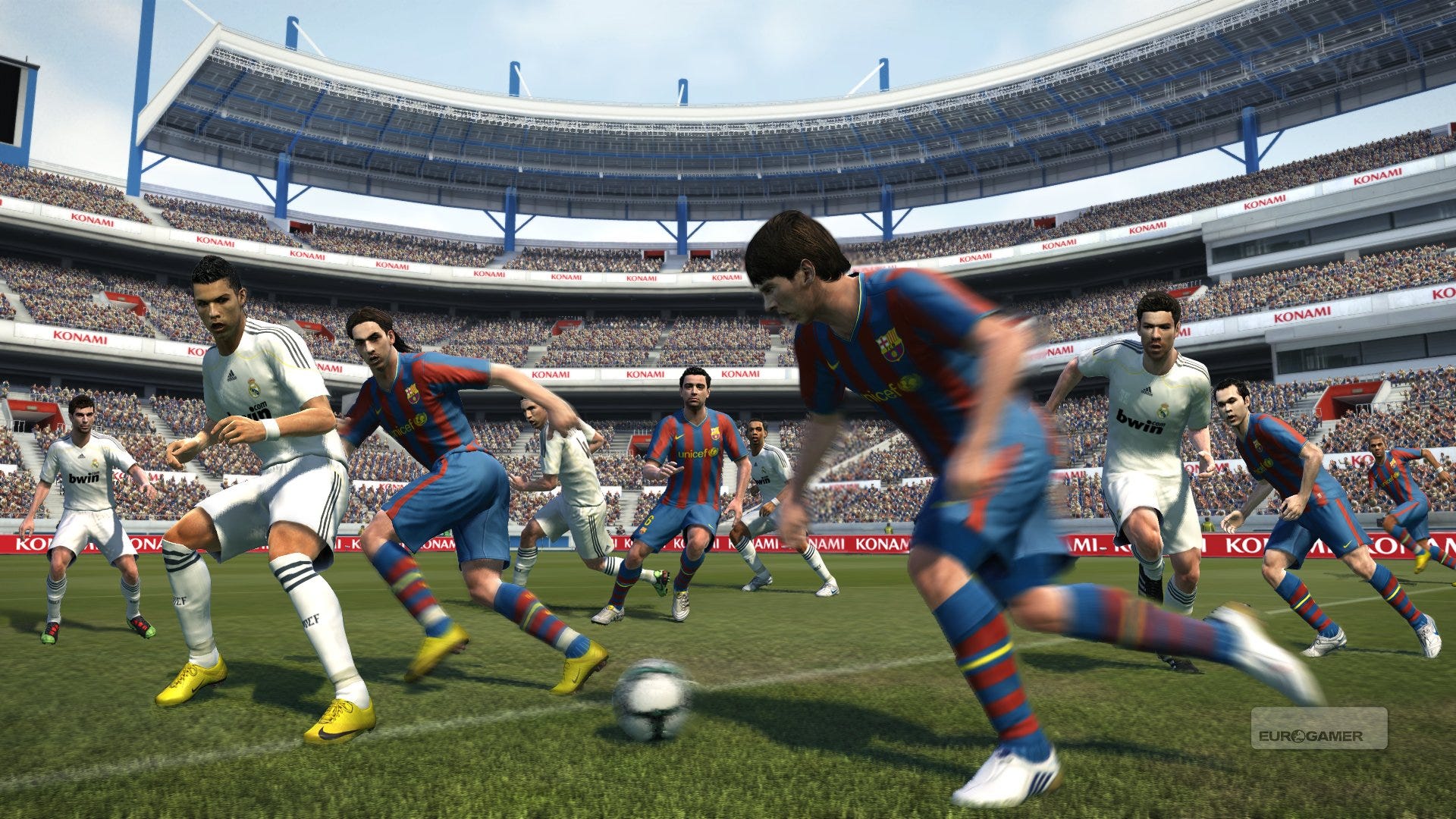
PES 2011 is genuinely different and it's evident from the first kick-off. The new player models and animations aren't just an impressive iteration on last year's - they're a complete change. Players now move naturally in the majority of instances, and coupled with a greater range of directional movement the game is crisp and realistic.
Even the likenesses - the one area you'd perhaps cut Konami slack as it tries to revamp everything in the space of 12 months - are believable. Okay, Stephen Ireland looks like Jason Voorhees, but Fernando Torres looks like Fernando Torres and Wayne Rooney looks like Wayne Rooney, which must be a morale boost for the Konami team given that he's usually FIFA's cover athlete.
Development is clearly ongoing in some cases, as tackling still looks clumsy in places and the ball sometimes appears to be tied to sprinting players' boots by a short length of string, but it's fair to say that even at this early stage PES' graphical overhaul closes much more of the gap to the mature FIFA engine than we expected. It looks really good.
It's the same story in gameplay, although it's more of a work in progress. The power bar for passes and through balls creates a greater sense of control than in recent instalments, although there are still occasions when you feel the game is misjudging your intentions by passing to the wrong player.
The option to hold L2 and pass manually in any direction may be PES 2011's secret weapon, however, as once you get your head around it you find you are less reliant on the game to think for you. Why put yourself in the hands of the through-ball game logic when you can measure your own trajectory and pace of delivery?
Defending is another area that has seen studied change. Typically in PES (or FIFA) we hold the pressure button, or mash the secondary pressure button so that an AI player runs over to the ball carrier while you manually try to second-guess your opponent with the player under your direct control. There's also the jockey feature for holding attackers at bay. But in PES 2011, the direction you hold the left stick determines the kind of pressure you exert on the ball - holding it up, standing tall, or sticking a foot in.
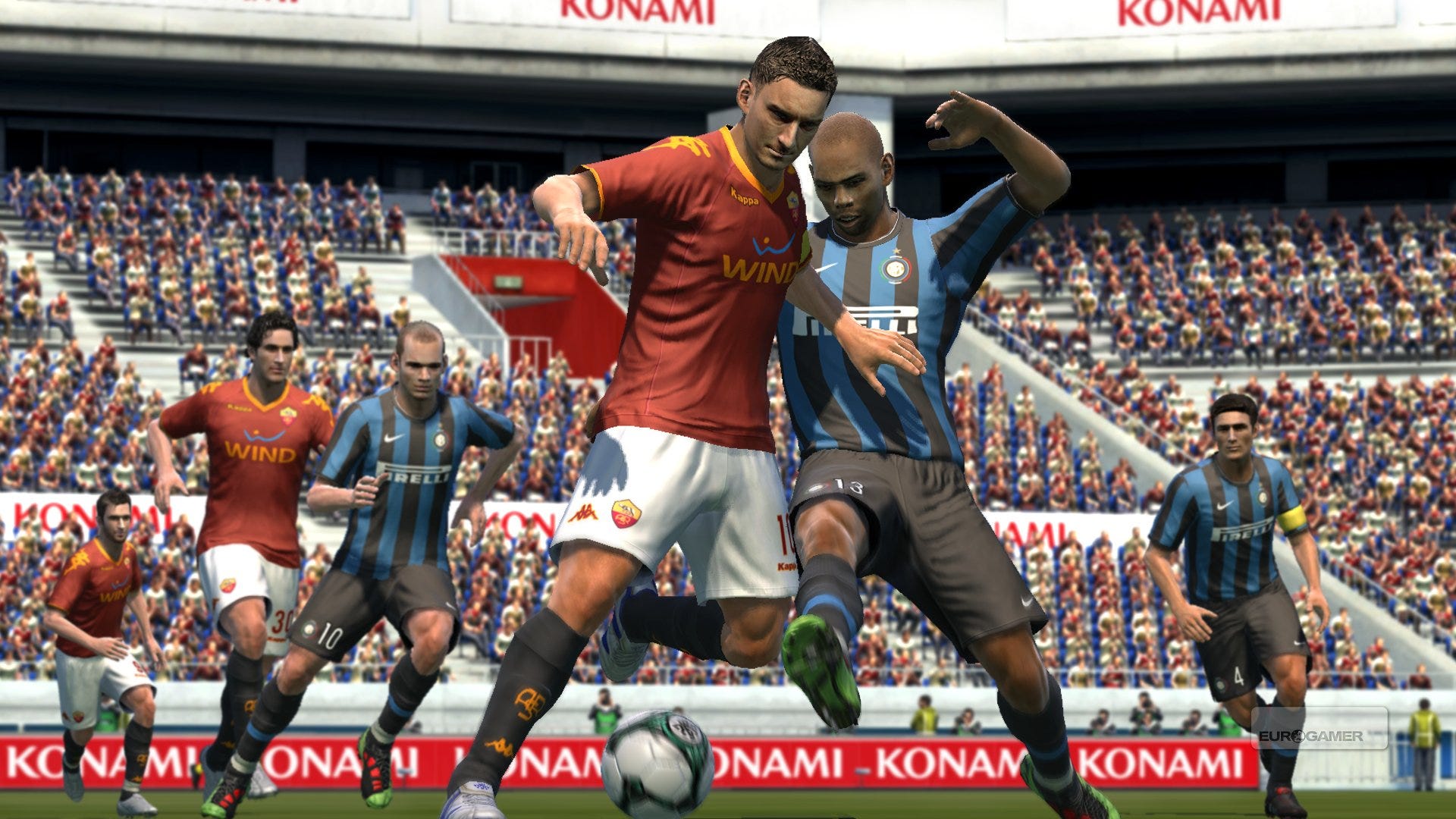
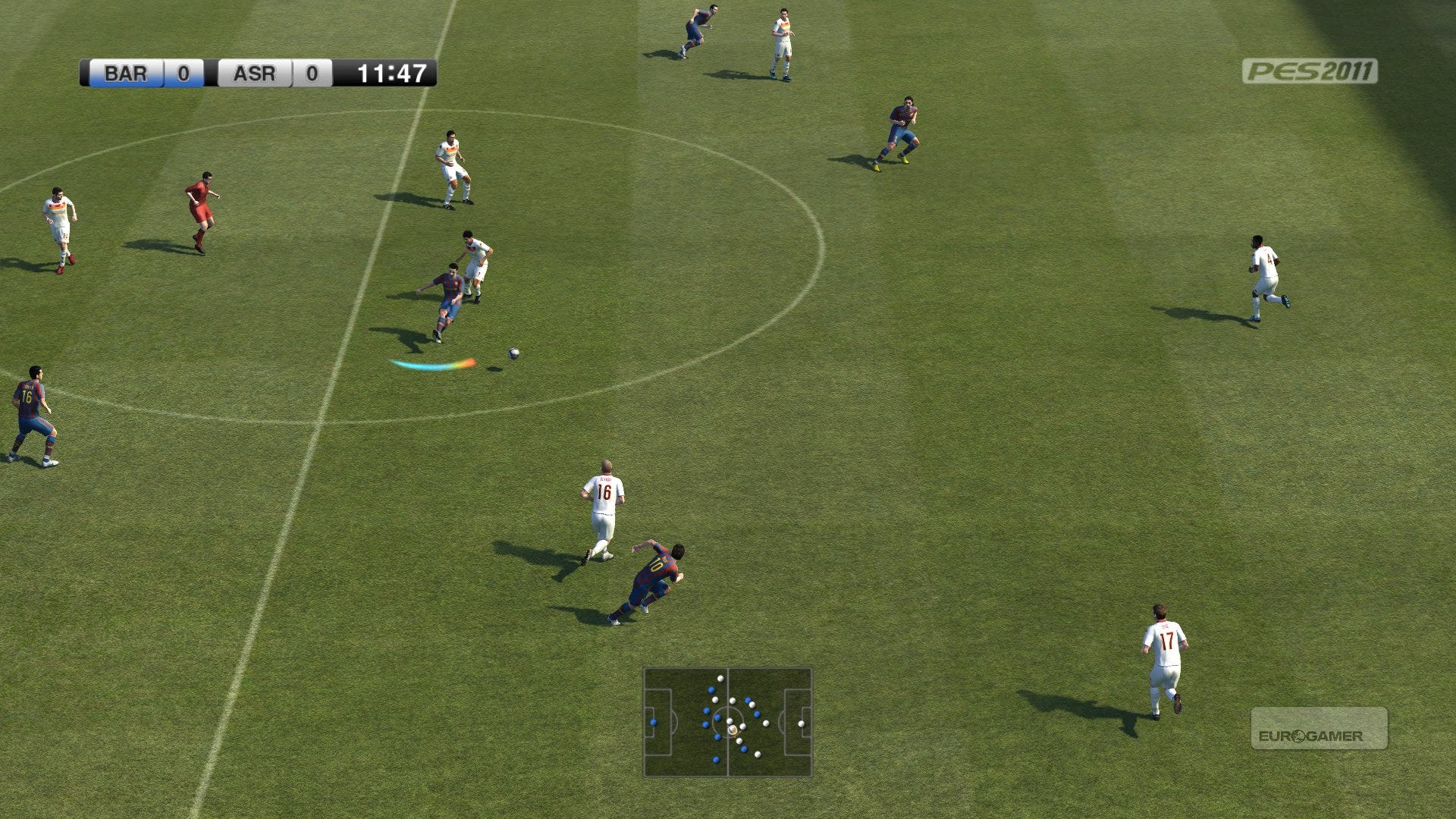
To begin with it feels a little awkward to be pushing the stick toward your own goal while you're advancing up the pitch, but it becomes more natural with practice and feels like a simpler vocabulary of defending options in tight situations, allowing you to tailor your interventions to be cautious or aggressive as you want.
Ball physics are perhaps less finalised. At times on the default speed setting it feels like you're firing a beach ball around the ground, such are the sudden bursts of deceleration or ballooning effects of an overpowered shot. But it's most of the way there, and there's still time for Konami to play around with this. It certainly doesn't bobble around the way it has done in recent instalments.
There are other areas that still need work too - you still see rather a lot of successful diving headers on the end of hopeful crosses, for example, and the AI in particular is incomplete, with players ignoring the ball too often, allowing long, slow passes to reach their destination when they would be easy to intercept, or simply not noticing a ball bouncing loose nearby when they should.
But Konami was obviously keen for people to play the new PES early this year - in fact, this is the earliest we've ever been sent a copy of the game to hang onto, rather than having it brought down for an afternoon then removed again - and you do feel that's because the team is proud of these first steps toward reinvention. Rightly so, because while FIFA remains a slick and addictive juggernaut, PES 2011 is certainly back playing the same sport when some, myself included, had questioned whether Konami had the muscle to recover the deficit against its mammoth competitor.
PES 2011 isn't just an attempt to grab a handful of FIFA's shirt in the run-up to the next Christmas set-piece, however, and has a few tricks of its own as well. One of the more impressive could be this year's evolution of the pre-match planning screens, where players can customise formations to suit key players, design tactics that come into play in certain situations and bind their favourite feints and tricks to specific button combos.