NVIDIA's Roy Taylor

On the future of graphics and having a bigger installed-base than consoles.

Graphics chip maker NVIDIA is the closest thing the PC games market has to a platform holder. It may have its dalliances with consoles - it makes the RSX, the chip which powers the PS3's graphics, for example - but the beating heart of the company is the GeForce series of PC graphics cards, which have been the most popular cards among PC gamers for several years.

Never a company to shy away from controversy, in recent years NVIDIA has been outspoken on everything from PC game piracy to what it sees as the damaging behaviour of PC sellers who use integrated graphics chipsets in their machines. Recently, the firm's favourite target has been Intel - whose chips, it claims, aren't as important as graphics cards in terms of system performance.

We caught up with Roy Taylor - the firm's VP of Content Business Development, which basically means he's "head of videogames" - to find out what's in the future for NVIDIA, for the PC market in general, and why we should be holding off on that Quad-Core CPU purchase.

Eurogamer: A lot of the performance you've been getting out of the PC recently has been through multi-card, SLI solutions. Is that the future for graphics cards, or are there significant advances still to be made in single-chip technology?

Roy Taylor: At the same time, we're going to continue to develop SLI - and the reason for that is scalability. The problems which we're solving, in graphics, physics and AI, are all to do with scalability. As a result of that, it doesn't matter how powerful a high-end part we make - you're always going to get an even better experience if you have two of them, three of them and so on. So we're committed to both.
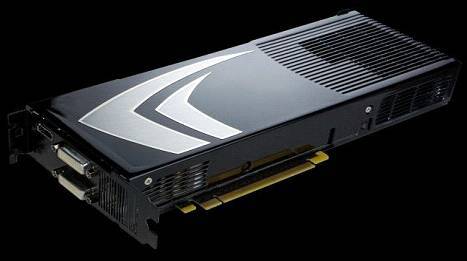
1

NVIDIA will always continue to develop high-end graphics cards - the 9800GX2, for instance, seen here - according to Taylor.

Eurogamer: Do you see SLI as being a "hardcore" option, or is it something that developers can reasonably create games for now?

Roy Taylor: So the first part of the answer is that it's been a very successful product in the enthusiast space. However, I think to answer the question more fully, as we see greater scalability through the increased use of physics and AI in games, the appeal of having two cards is going to broaden. Therefore, I think we'll see SLI breaking out of the enthusiast market, and becoming more mainstream in terms of its adoption.

Eurogamer: Do you see Intel essentially as a rival, given that most people have a set amount of money to spend on a PC - and they have to choose, primarily, how much of that goes on the CPU and how much on the GPU?

Roy Taylor: We do believe however that until now, too much emphasis and money has been spent on sequential or serial processing, and not enough on parallel processing. That's why we've been pushing the Optimised PC platform, which says that if you spend a little bit less on your serial processor, and a little bit more on your parallel processor, you'll have a more balanced PC.

We don't believe that we're in competition - in that we're not trying to get rid of the CPU. We do believe that there ought to be a better spread on the load inside the PC. So, do we consider them a competitor? Right now, no. Do we think that there's justification for a more balanced PC? Yes. That might change in the future, depending on if and when Larrabee [Intel's new GPU, due to appear by the end of this year] ever turns up, but right now, they're not strictly speaking a competitor.
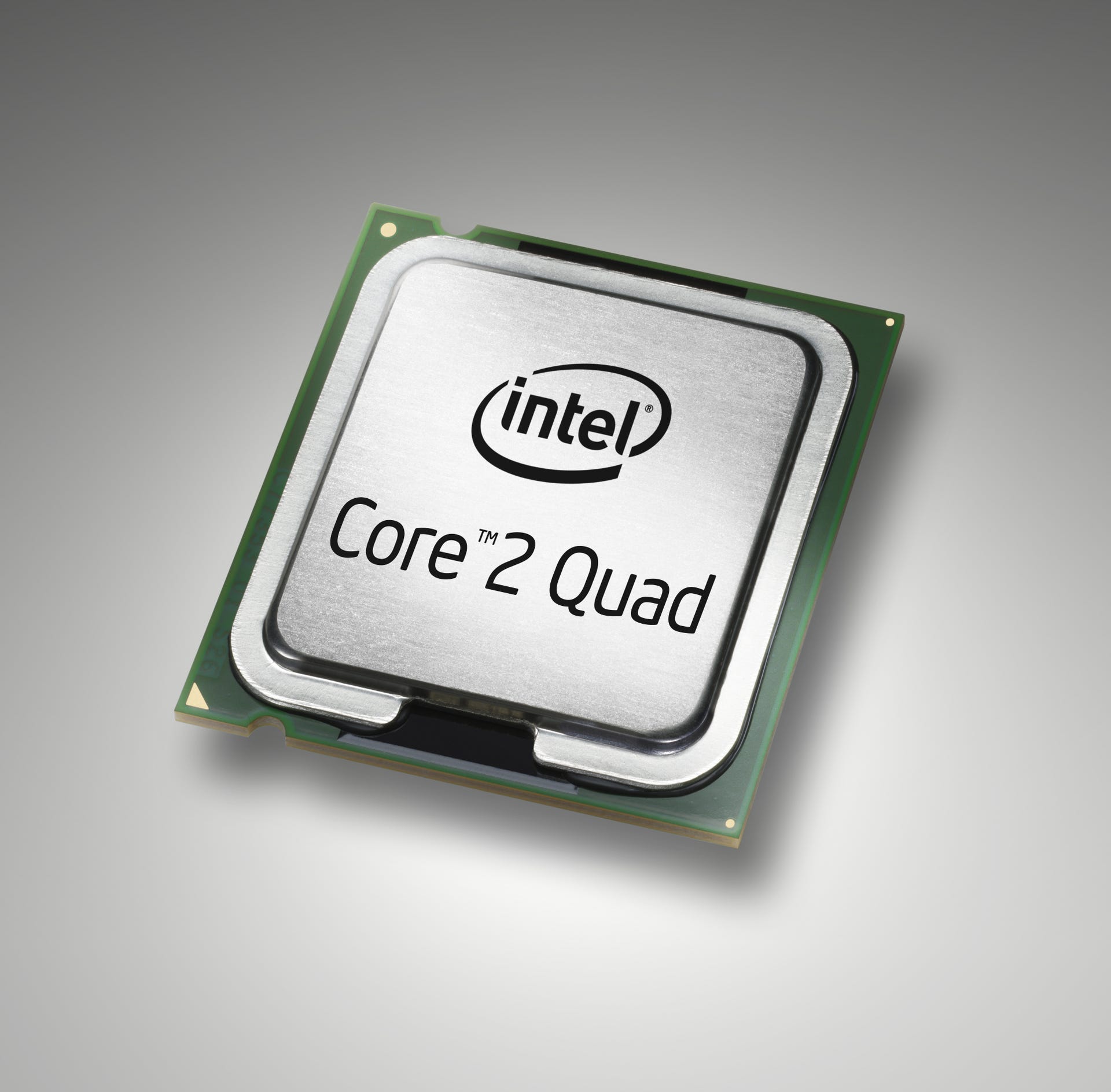
2

Taylor says Intel isn't seen as a competitor, but that NVIDIA doesn't see a future of multi-core CPUs.

Eurogamer: Intel must see you as a threat of some description. You're essentially saying that you'd like to stop the push into quad- or eight-core processors, and demote their role to a single, sequential unit doing housekeeping. It's hardly a bright future for them, is it?

Roy Taylor: Well, I think that if you look at the facts, the facts are that for just about anything you want to do in a PC today, a parallel processor adds more value than the serial processor. Whether it's gaming, video encode or decode, or any kind of multimedia task - our parallel processor adds more value as you increase the number of processors than you get on a serial processor. We didn't invent that situation - that situation is just where it's at today.

Eurogamer: One question which always comes up whenever we discuss the PC market is piracy. The "is PC gaming dying?" debate is nonsense, of course, but we're at the point of the cycle again where the consoles are turning out gaming experiences comparable with high-end PCs - and they don't have the piracy problem that the PC does.

Roy Taylor: I think that we're going to see more digital authentication, and we're going to see more of an approach that says that PC games aren't products - they're a service. You're going to start out with a basic service, which is the game, and then increase the value of that service through patches, mod packs, expansions, maps and so on. That's the direction it's going to go, because the pirates are just killing the developers - and I think it's really unfair what they're doing.

In terms of your other point, which you're right, is related - in terms of where PC development sits relative to consoles, I think we have to face the facts - the value of consoles is such that no-one is going to make a PC-exclusive game in the future. Why would they? Why would they ignore consoles? That said, PC gaming is changing - and consoles don't threaten PC gaming. They're just different. Adapting to that and understanding that is what I think is really, really important. Most PC gamers also own consoles - not all of them, but a lot of them. What we're seeing happen is that, yes, people are developing for Xbox 360, for PS3 - but they're also developing for PC.

The console is now a baseline. If you look at Gears of War or Assassin's Creed, they came out on console and they were great experiences - but the PC versions had additional aspects to them that also made them attractive, whether you owned the console version or not. The PC version was better. That's something that people need to get their heads around - the console is a baseline, the PC is going to be an improved version. That's an exciting future, and that's why I don't see anything threatening about console at all.

The other aspect is that in the past, PC gaming development meant pandering to the lowest common denominator - which meant some poor integrated graphics. Today, developing a PC game means starting at a console, and console graphics are way above integrated graphics. That means the baseline is getting better. Now we're going to add to that version additional features, additional content, to make the PC version even better.

3

Modern PCs take many shapes, but you don't need to spend more than GBP 1000 to get one that can play every game out there, Taylor points out.

Eurogamer: When you talk about the baseline being better, that's great for people who have systems that can run games at that level - but aren't you concerned that PC gaming is leaving swathes of older machines, especially laptops, behind?

Roy Taylor: If you look at the last set of Mercury numbers, on the face of it, we're number two behind Intel - these are the figures for all graphics parts. But this doesn't take into consideration "double attach". Last year, 2007, according to publicly available statistics there were 366 million graphics solutions shipped - integrated and add-in cards. However, there were only 273 million CPUs shipped.

Eurogamer: So people with integrated graphics have also installed an add-in card...

Roy Taylor: That's called double attach, and once you take out the double attach number, you can see that that's not the case. NVIDIA is number one, and has been number one for a long time. That's the number we're sharing with publishers. There is now a justifiable return on investment for making good 3D, good graphics in your games, because there is a very large installed base of GeForce gamers. We estimate that we have over 180 million active GeForce users. That's a much bigger installed base than PS3 or Xbox 360!

Eurogamer: When you say GeForce users, though, how far back in the GeForce family are you going?

4

NVIDIA makes the RSX graphics part inside PS3, but Taylor points out that GeForce's installed base is many times bigger than any of the next-gen consoles'.

Roy Taylor: A very successful PC game sells 2 to 3 million - well, we have more than enough GeForce users for that too. Crysis has sold over a million copies on PC, despite everything. BioShock sold over a million on PC. Pick any successful PC title you can think of - selling over a million is being done, and will continue to happen. So I wouldn't say that we're leaving people behind. We've sold enough GeForce GPUs to more than justify the return on investment.

Eurogamer: Even when you see the "enhanced" PC version, it might run at a higher resolution, but the graphics aren't that far ahead of what you'll get on a console. The developer isn't going to go back in and re-do all of the art for the PC version. Doesn't that mean that people who invest in high-end GPUs are going to end up running games which don't look as good as they should because they're designed for an inferior system?

Roy Taylor: Well, I think the console makers wouldn't say that they're hugely inferior...

Eurogamer: Maybe not now, but in a few years' time they certainly will be.

Roy Taylor: The second part is what we're doing with physics and AI, and it's really exciting. We purchased AEGIA a little while ago, and one of the things that's come out of that is our ability to accelerate the PhysX API for physics on the GPU. With over 30 million GeForce 8-series GPUs shipped, there's a good return on investment for that - especially since the physics acceleration on the PC is transferable back to console, or vice versa.

On the PC, though, we can scale more. Let's take particle physics, which is pretty easy to understand. What we're going to be able to do is this - we'll be able to blow a building up, for example, and have a thousand pieces of debris on the console. When we transfer it across to PC, we'll be able to scale it up to say, twenty times that - twenty thousand pieces of debris coming off in the PC version, at the highest end. A baseline PC will probably be equal to a console - a thousand bits of rubble. The high end, the guys with the SLI systems and the higher-end GPUs? They'll have twenty thousand pieces of rubble. So they're going to get a great return on investment for their better GPU machine. That's really cool, and very easy to get your head around.

Physics today is made up of particles, fluids, soft bodies and cloth. If you look at the baseline, for a CPU compared to a massively parallel GPU, we can scale twenty times faster than a quad-core CPU on particles, six times on fluids and five times on soft bodies and cloth. That's real world figures.

Eurogamer: When you talk about all these advantages, at the end of the day you're still talking about what are, at the very high end, expensive machines. Now, you'd argue that some of that is because there's redundant processing power in there - people are doubling up on GPU and CPU when they don't really need to...

5

Popular BitTorrent site Pirate Bay reskinned itself this April and many laughed along, but Taylor can't abide piracy in any form.

Roy Taylor: My argument, and I've been slightly controversial on this, is that you don't need to go for a super high-end one. You can go out today and buy a GBP 700 or GBP 1000 PC, and that PC will play anything you can throw at it - it doesn't have to have a high-end, quad-core CPU in it. It needs to have a CPU, don't get me wrong, but by putting a more powerful GPU in it and spending a little less money on the CPU, you're going to get what we call a balanced or optimised PC. It doesn't have to be a GBP 3000 PC to play games. Just spend a little but more money on the GPU.

Eurogamer: Is that message getting across to gamers?

Roy Taylor: It's a fair question. The evidence would suggest that we have needed to do more in terms of spreading the message - that you don't have to spend that much money. That said, I would hate for people to think that we're in any way against those great gaming PCs. They're wonderful machines, they provide great experiences.

Eurogamer: They put a lot of money in NVIDIA's coffers, you're hardly going to argue against that any time soon!

Roy Taylor: [Laughs] Not just that, they also do deliver a fantastic experience. Who wouldn't want one, right? We just don't want to exclude other people. I think that what we're trying to do with the Optimised PC message is solve that exact problem - to make it clear that if you want to spend that much money, that's a great thing to do and you will have a great experience, but you don't have to do so in order to enjoy PC gaming. That's our message with the Optimised PC Platform.

Eurogamer: Will you ultimately turn Optimised PC into a seal of quality? Will we see certain machines or specifications carrying a badge or a seal - or is it a more general set of guidelines?

Roy Taylor: We applaud Mark Rein on this - if just a few more developers were to stand up and do what Mark Rein at Epic has done, which is to say, "stop shipping integrated graphics, which absolutely hurt PC gaming". If Fujitsu-Siemens, Packard Bell, Lenovo, Medion and other PC makers listened to that a little bit harder - and to be fair, in Europe they generally do, to a greater extent than they do in America - then more PCs would be capable of playing more good games, and they would be good for everyone. It would be good for the industry, it would be good for gamers.

6

Games like Assassin's Creed demonstrate that PC gamers are getting the best versions, says Taylor, although he's quiet on the five-month gap between releases...

Eurogamer: Those PC makers also tend to market heavily towards family, "entertainment" PC markets - which seems irresponsible, given what you're saying.

Roy Taylor: That's why those companies need to be asked why they're shipping some models that are basically not fit for the purpose of anything that isn't writing an email.

Eurogamer: If you look at NVIDIA's range, you've got a huge number of cards available on the market, but the numbering is meaningless - a higher number doesn't necessarily mean better performance, there are different configurations in terms of memory or clock speed. The only way a consumer can work it out is to read hardware sites. It's not a great consumer experience - isn't there a need for a simplification of what you offer?

Roy Taylor: Yes, there is. The simple answer is yes. We hear you, and you're not the first people to raise it - it is a challenge that we're looking at right now. There is a need to simplify it for consumers, there's no question. We agree. We think that the people who understand and know GeForce today, they're okay with it - they understand it. But if we're going to widen our appeal, there's no doubt that we have to solve that problem - so the simple answer is just "Yes".

Roy Taylor is NVIDIA's VP of Content Business Development.

Comments (72)

Comments for this article are now closed, but please feel free to continue chatting on the forum!

  • Loading...hold tight!