Mike McCoy of Ubi Soft Montreal

Interview - Rainbow Six : Raven Shield's lead designer introduces us to the third game in Tom Clancy's tactical action series

Sporting a combination of addictive gameplay and Tom Clancy inspired storylines, the Rainbow Six series has proven a critical and commercial success over the last few years, gathering a legion of hardcore fans. With the latest installment in the series - Raven Shield - enjoying not only a long overdue change of engine but also a new development team, we caught up with lead designer Mike McCoy at a recent press event in the wilds of Slough to find out more...
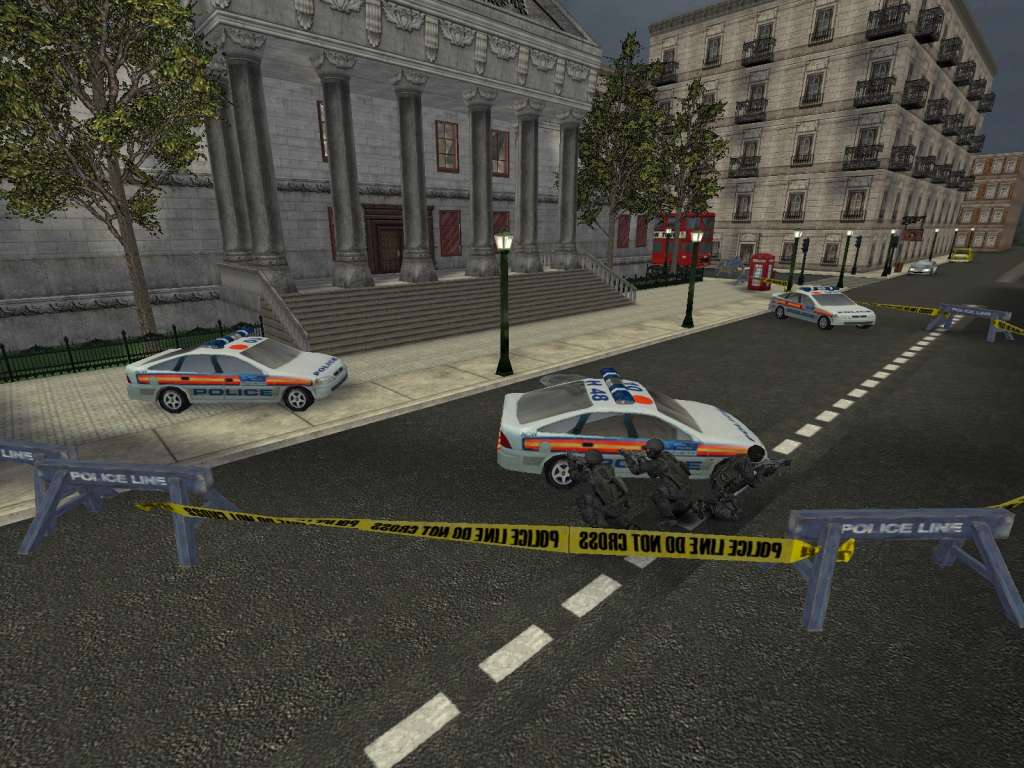
Rap Sheet

'Mike McCoy of Ubi Soft Montreal' Screenshot e305b

Rainbow Six comes to the UK

Although Mike hasn't worked on any of the previous Rainbow Six games, he's been a fan of the series "since day one", blagging copies of the latest games from his friends at Red Storm. He's no stranger to the gaming industry either, having started out working at iMagic on flight combat simulator iF-22 amongst other titles.

"Then I left and went to Sinistar Games and I did Shadow Company, did a lot of work on some titles that were proposed but never picked up, and clean-up work on things like Dukes of Hazzard and Batman, whatever they needed at the time. Sinistar Games was bought out [by Ubi Soft] about the same time that Red Storm was, so they got me to Montreal from there. I had a really good relationship with the producer on Raven Shield, and when they decided to take a different design direction than they had previously proposed, they decided to call me up."

Mike's background isn't restricted to game design though - as well as cultivating an interest in guns and military history, he's also spent three and a half years working in a Sheriff's office, where he had a varied career. So what did he get up to there? "Drug raids, you name it. Everything. I worked traffic, I worked domestic, I repo'd cars for the Sheriff's office for a while, I did everything they had to offer."
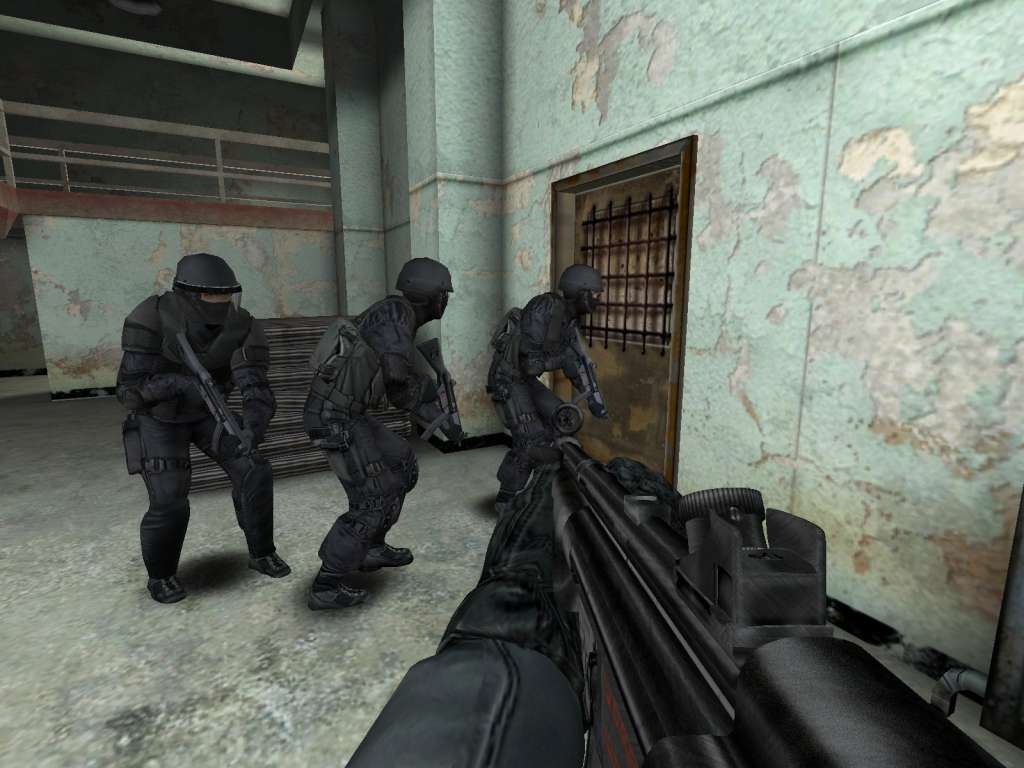
Under Pressure

'Mike McCoy of Ubi Soft Montreal' Screenshot e301b

What's behind door number three?

That kind of experience obviously comes in handy when you're working on a franchise like Rainbow Six, where authenticity is key to the game's success. And while there have been some changes, the focus is still "absolutely" on realism. "You make a mistake .. sorry, you're dead."

One aspect of this that drove some people up the wall was the lack of an in-game save system, and this is set to continue with Raven Shield. "It was something that we looked into", Mike confirmed, "but once you get in-game saves in, it really changes the pace of the game, because the pressure's off. With in-game saves you would clear a room, save it, clear a room, save it... That's a different gameplay. With Raven Shield you can do everything right except for one room, and you can lose. So the pressure and the tension is there. When you take the tension out of Rainbow Six you really lose the feeling of it."

"For the same reason we took a lot of windows out of doors, because when you can see what's on the other side of the door it's not that surprising. When you have a mirror and you look around a corner, you're taking all the tension out, you're ruining the pace of the game. And that's the same reason why we didn't go with the in-game saves. Now, in Ghost Recon the areas are vast and you've got a lot of area to cover and you need to do those things. But in Rainbow Six, no. I would think it's against what the game is."
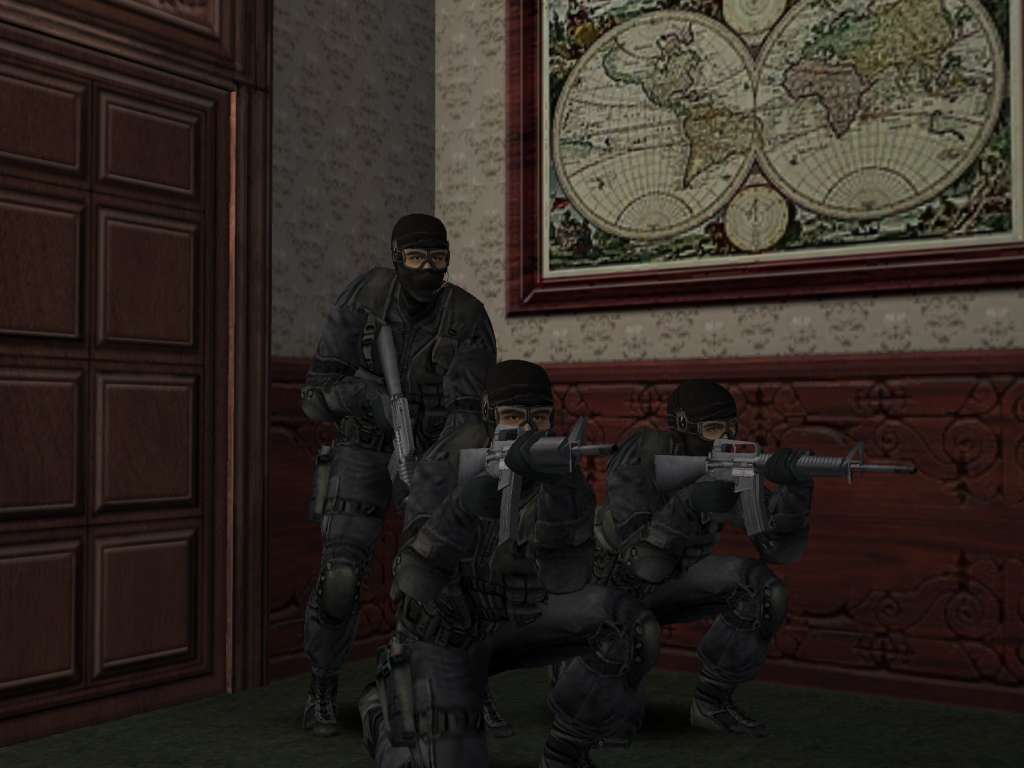
The Customer Is Always Right

'Mike McCoy of Ubi Soft Montreal' Screenshot e310b

Rainbow stop to check the map

One part of the game that has undergone changes to make Rainbow Six less intimidating to new players is the planning phase. "Players play the game in about four ways", according to Mike. "By themself, by themself with three extra lives behind them, with a plan someone else made, and with a plan they made."

"Before in Rainbow Six, you had to go through every screen in the planning phase to get to the end. What people tended to do was say 'go, go, go', and it would get to the end and then say 'you can't start the game because .. you need at least one waypoint and an insertion zone'. We decided, forget that, we'll make it automatic. The game has to be smart enough to know that. If the guy is hitting go and purposefully bypassing everything, it's because he wants to go. What we'll do is give him himself and three guys behind him, and that way he can play the game in the first two ways. It's easy, it's clean, you go quick."

As Mike pointed out, "it's the customers who are paying money for the game, and we should allow them to play the game in any way they want to play it". This is one reason why the game's online and mod communities are so important to the developers, and why they're working hard to make sure that Raven Shield meets their expectations. "When we were first designing the game, we tore the internet up finding stuff. What do they want? What are the big things that are missing? How do they want to change it? We looked at all the fan mods that were made, and said 'are there any things in there that we can take and incorporate into the game?' We're making the game for the fans. Our hope is that the original fanbase will be totally excited about it, and that we'll bring a ton of new people into it as well."
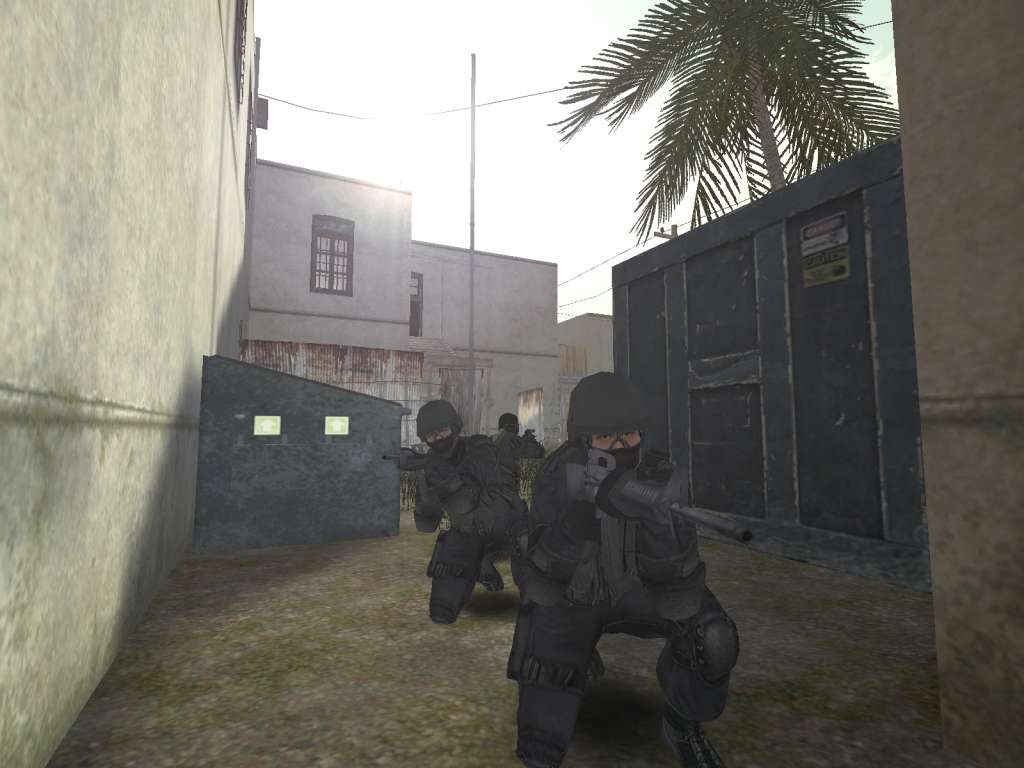
Unrealism

'Mike McCoy of Ubi Soft Montreal' Screenshot e304b

The wonders of the Unreal engine

Speaking of mods, one of the advantages of the move to the Unreal engine (apart from the obvious increase in eye candy) is that mod makers should be better served by Raven Shield. "The tools and the engine are great, and people already know how to use them", Mike enthused. "That's going to be a huge bonus to our game, because the community's going to be able to make mods for it almost immediately. They made mods for Rainbow Six and they didn't have modding tools for that at all. So now imagine that they can make professional mods with professional tools; it'll be even better."

As for Ubi Soft Montreal themselves, the Unreal engine provided "an incredibly good backbone to build a game on", saving development time and helping them get up to speed quicker. "It let us focus 100% of our effort on making a good game. Instead of designing another engine from scratch, there was enough good stuff out there that it was like, 'Well, why make them learn new tools, why reinvent the wheel? This is a good wheel, we can roll with this.'"

"We didn't have to worry about making a good engine, so we put all our programmers on gameplay, on game features. Our first goal was to make Rainbow Six : Rogue Spear in Unreal, and once we had the look and the feel and the mood all set, then we started enhancing it. We went into a lot more detail on the weapons, in that we have more weapons and we also have attachments you can put onto the weapons. In Rainbow that's one of the really big realistic factors, playing around with the weapons. We spent a lot of time with the AI, we spent a lot of time with the planning phase, making it less intimidating but just as functional. So basically what we've done is version three. We didn't want to depart so drastically from the old ones that we would alienate the fan base."

To Be Continued...

Given the focus on improving the weapons and AI behaviour in the latest Rainbow Six game, it's no surprise that Ubi Soft Montreal have brought in technical advisers to ensure the game is as authentic as possible. Mike Grasso is part of that team, and on Monday we'll be talking to him about his work on Raven Shield, his law enforcement experience, and his company's past work as consultants on classic movies ranging from Young Guns and The Untouchables to Heat.

Comments (11) Latest comment 10 years ago

Comments threads automatically close after 30 days, but please feel free to continue chatting on the forum!

  • skalmanxl #1 10 years ago

    That's some huge screens there guys...
  • otto #2 10 years ago

    One aspect of this that drove some people up the wall was the lack of an in-game save system, and this is set to continue with Raven Shield. "It was something that we looked into", Mike confirmed, "but once you get in-game saves in, it really changes the pace of the game, because the pressure's off. With in-game saves you would clear a room, save it, clear a room, save it... That's a different gameplay.

    but later...

    As Mike pointed out, "it's the customers who are paying money for the game, and we should allow them to play the game in any way they want to play it".

    Anyone else spot the inconsistency here?
  • Max Diablos #3 10 years ago

    The lead designer is trying to impose his own immature view upon the rest of the world. As far as I'm concerned the designer should never impose their will on the player outside of the game. If the player gets bored, frustrated, or a real world event interferes, the option should always be there for a player to save the game.
  • Gestalt #4 10 years ago

    He does have a point though - if you can quick save it completely destroys any tension and reduces the sense of danger. That's why something like Operation Flashpoint (where you only get one or two saves a mission usually) is a lot more atmospheric than Max Payne (where you're quick saving every five or ten seconds). IMO anyway. YMMV. :)
  • Max Diablos #5 10 years ago

    He does have a point though - if you can quick save it completely destroys any tension and reduces the sense of danger.

    I fully appreciate the point. But, he's still trying to squeeze people into his game design when external pragmatics suggest otherwise. A good compromise I'm in favour of is the option to allow or disallow game saves at the start.

    It's all very well understanding level design and people. But, you must understand the complex relationships between the two. In that respect I treat his opinion as being the equivalent of beta-software.
  • otto #6 10 years ago

    elvis - on the one hand he says, go ahead, ignore all the meticulous planning and positioning which is the whole point of this game and dive in for a killfest - then he says "ooh no mid-mission saves" cos that would change the 'gameplay' by ruining the tension. You can't have it both ways. Personally, I'm all in favour of allowing the player to play it any way he wants: tactical and highly realistic, or plain vanilla shooter. Like the man said, we pay for the damn thing. As long as the option's there to play the "designer's cut", why should he care? One thing's for sure, though, without mid-mission saves I won't go near it.
  • Gestalt #7 10 years ago

    "A good compromise I'm in favour of is the option to allow or disallow game saves at the start"

    It's a nice idea, but I'm not convinced it would work in practice. If you design the game to be challenging for someone who saves it will be very hard for someone who doesn't, and if you design it for someone who doesn't save it will be too easy for people who do. You'd need a seperate difficulty setting, maybe with different AI reaction times and accuracies, for each so that the save version would be less forgiving than the no-save.
  • skalmanxl #8 10 years ago

    It's funny. Since it doesn't have a save feature ingame, people will bitch that it's too hard. If there were a save feature ingame, people would complain that the game is too easy to beat. Simple as that.

    Imho AvP Gold had a excellent feature. You had a diffrent number of saves depending on the difficulty level. The harder the game got, the lesser saves you got. Wise choise.
  • otto #9 10 years ago

    skal - true, people will always bitch no matter what - but ultimately they can't justify their bitch if the designer allows them to choose their own difficulty level (pace Gestalt's comment). Then all the 133t hardcore types can set it to Nightmare level with saves disallowed, while wimps like me can enable full quicksave every two metres, and normal people can save at checkpoints or something.

    Gestalt said: "You'd need a seperate difficulty setting, maybe with different AI reaction times and accuracies, for each so that the save version would be less forgiving than the no-save." I disagree. That seems to be making it a whole lot more complicated than necessary. Balance the game for 'normal' difficulty, allow saves at checkpoints as suggested, then let the wimps play it easy (let's face it, we're going to cheat anyway) and the loonies play it ultra-hard. Why make the AI easier for the people who select the hardest difficulty, just because they can't save??

    edit - tidied up
    Edited by 2 at 21/07/02 @ 11:47
  • skalmanxl #10 10 years ago

    If you design the game to be challenging for someone who saves it will be very hard for someone who doesn't, and if you design it for someone who doesn't save it will be too easy for people who do. You'd need a seperate difficulty setting, maybe with different AI reaction times and accuracies, for each so that the save version would be less forgiving than the no-save

    Isn't that over complicating things. Specially as AI have a hard time already with trying to shoot through walls, or get stuck in doors just because it knows I'm there.
  • Max Diablos #11 10 years ago

    Gestalt;

    It's a nice idea, but I'm not convinced it would work in practice. If you design the game to be challenging for someone who saves it will be very hard for someone who doesn't, and if you design it for someone who doesn't save it will be too easy for people who do.

    A game is essentially a progression through a series of experiences of variable difficulty. Saving options can theoretically be pure auto-save, save-points, limited saves, and unlimited saves. There is also the relationship between the game and the gamer to consider.

    The justification for design controlled saving is that an inability to save at will forces the game to be experienced as the designer intended. Pay careful attention to the word "experience", it's what this discussion is revolving around.

    The experience can be distilled into the two extremes of designer and player controlled saves. If the save options are set at the point a new game is started the player has a clear choice to experience the game as designed or as designed with experience modifications imposed by the players choice to manually save or not.

    The design difficulties you talk about are false. There is no need to compromise a design because of being able to save or not being able to save. But, compromising the players ability to save at will must be justified.

    In some respects I see the save/not-save design decision as being no more than a fad. So-called "serious" designers are grabbing hold of the latest trend in how to inject urgency and atmosphere into their otherwise shallow and unengaging games, without fully thinking through the ramifications of their decision. This is not the sort of thing that should arbitarily be imposed on gamers. Ideas, like software, can be guilty of suffering from the patchware syndrome. Some designers mouths shouldn't be let out in public without beta-testing.