How to make a Cataclysm

We meet the men tearing WOW to pieces: world guru Alex Afrasiabi and systems legend Greg Street.

World of Warcraft: Cataclysm is a uniquely ambitious expansion to an MMO, or to any kind of game, for that matter. Alongside the usual hefty suite of new content and features - a raised level cap, new endgame, two new races, new profession, guild levelling, new Battlegrounds - is a complete overhaul of the questing and levelling experience of the original game.

The architects of this revolution, then, are facing some unique challenges. Alex Afrasiabi, the lead world designer, isn't just crafting a new story; his team is remodelling Azeroth's geography, architecture and politics, planning new routes through the game, deciding where vintage quests need to be chucked out and replaced with new ones. He's messing with our memories.

Lead systems designer Greg Street - known to WOW acolytes as Ghostcrawler, the feared and revered "blue" who holds the power of nerf or buff over their class - is spending even more time swinging the axe. He's orchestrating a ruthless simplification of WOW's RPG system and restructuring the advancement path of every single class; he's even cutting features that weren't in the game yet, namely the Path of the Titans, a high-level customisation trail intended to be one of Cataclysm's headline draws.

You can read about the changes in detail in our hands-on impressions of Cataclysm, garnered from a day in Blizzard's Orange County offices earlier this week. Below, we ask Afrasiabi and Street what it's like to remake a world.
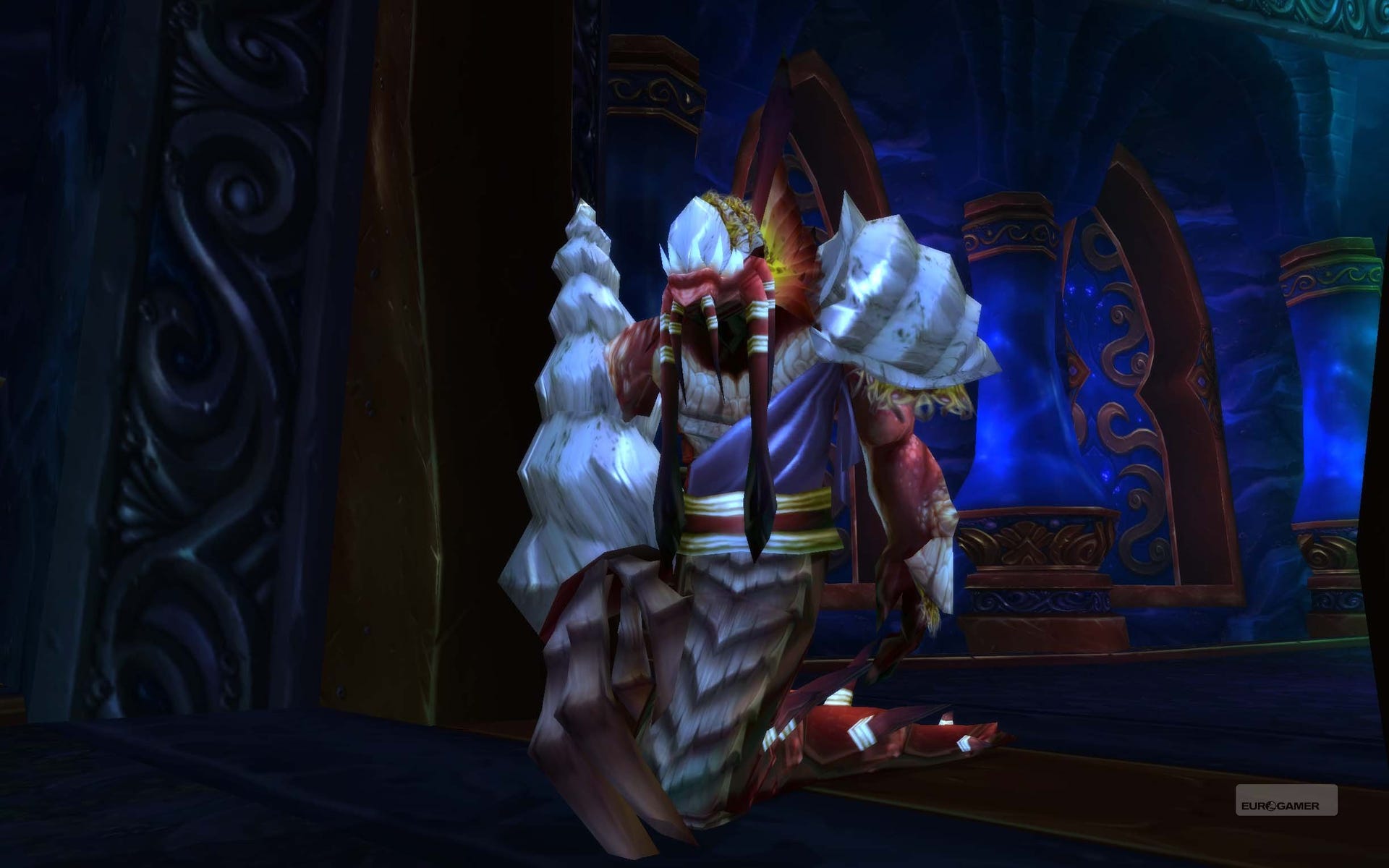
Eurogamer: One of the first things you showed us today was the new version of the Horde capital Orgrimmar. It was weird visiting a changed Orgrimmar - somewhere that's become almost like a home town for me over the last five years. Has it been painful to make some of the changes you've made to the world?

1

Alex Afrasiabi: It hasn't been painful. I think our intent has always been to make things better, more awesome, more fun, cooler.

You bring up Orgrimmar, it's an interesting example. Orgrimmar, for us, we were never fully happy with it. We went through several iterations of the old Orgrimmar, and at the end we really just ran out of time to make it cool. We thought it was OK, it was functional and it represented Orcs in a pretty good way, but it never let us fully stretch out and really make the kick-ass zone that we wanted to make.

That's what Cataclysm has really allowed us to do - it's to go back, no pain involved really, and take these places that we really wanted to give more time or attention to and just make them as awesome as they could be.

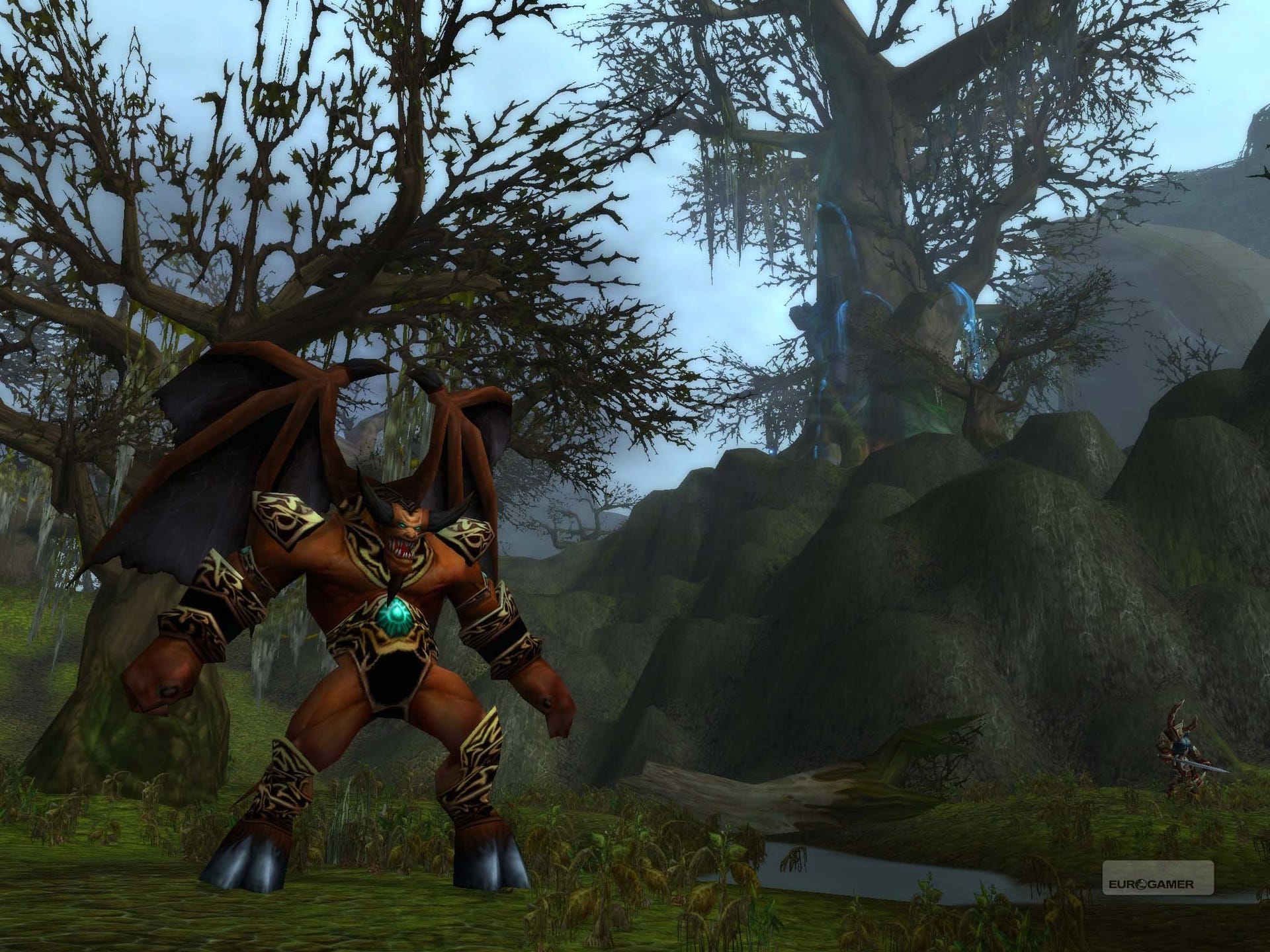
Greg Street: We do occasionally run into, "Oh, you can't remove that quest, that's my favourite quest, how can you get rid of that!" For a while, Hogger, the Gnoll in Elwynn Forest was gone, and people were like, "You can't remove Hogger!" So they stuck him back in. Linken's Boomerang in Un'Goro is gone, and players say, "That's an iconic quest, I love that quest, that was the only ranged weapon I can get for my Paladin."

Yeah, there's a lot of that. But we're trying to tap into that to some extent. The Cataclysm is supposed to be a little bit scary. You know, it's a big time of change, and so we want to make players curious, maybe even shock their system a little bit that in some cases things are so dramatic.
2

Eurogamer: Is there an equivalent to those kind of changes on the systems side?

Greg Street: Changing the talent trees has been pretty big, changing the way the stats work, we only have one rank of spells now. They feel minor to players that may not raid or high-level PVP a lot, but some of the buff and debuff systems, the dispel mechanics... There have definitely been some sacred cows that we've gone after that make some players upset and confused. But hopefully they'll understand we think it's for the best for the game and not just arbitrary change.

Eurogamer: Do you enjoy doing that a bit? Getting stuck into a system that everyone takes for granted and getting rid of it?

Greg Street: Yeah, it's kind of the bold move, it's one of the things I think that designers who are down in the trenches might not consider that that's even on the table, and so one of the joys as a lead designer is saying, "Let's get rid of this. Let's just cut it. Let's cut weapon skill." "What? You can't cut weapon skill, it works, and the combat mechanic depends on it!"

So it is fun that way. It shakes up the team a little bit too I guess, not in a malicious sense but it gets them kind of excited and thinking about different ways to handle things.

Eurogamer: You told us that you decided to cut the Path of the Titans because you want to avoid over-complication of WOW. But how do you balance that against players' desire for new stuff?

Greg Street: Oh, that is probably the hardest part of my job. We have players who've been with us for six plus years, because they started in the beta, who want something new, they want to see different things.

And then we have new players, particularly younger players... A lot of the original WOW players came from other MMOs, and now we're getting new players who've never played an MMO before. They may have played console games, and to them even mastering mouse movement is really difficult.

And then to look at all this, I mean it's just a gigantic game, so it can be very intimidating. One of the core Blizzard philosophies is concentrated coolness, so we're trying to make sure we have a small number of things with a lot of depth, rather than just kitchen-sinking, throwing in lots and lots of stuff.

Eurogamer: That must be quite a management job on a game that's now almost six years old.

Greg Street: It is, and the Path of the Titans is a great example where I think there's a really good core idea there, and I think someday we can pull it off, but we just weren't happy with the direction it was going.

It felt like we were going to have to explain it a lot, players were going to be confused about how it worked, it was going to have some unintended effects... Like, it looked like we would encourage players to get to level 85 as fast as possible. Some people are going to do that anyway, but it's not really the goal to have players skip through the levelling process.

3

We'll see where we are in a few years and maybe bring it back, but...

Eurogamer: Is there a particular class that you thought needed an overhaul more than the others?

Greg Street: I think the Paladin is one I'd say probably needs some of the most work, it got a lot of work in Lich King but it's still not quite there. Each individual role, the damage, healing and tanking all have problems, in some cases they're over-powered but a little simplistic in other cases, so we definitely want to address that. Without changing - you know, it's a very popular class, I think it's our most popular class at the moment, so we don't want to make it unrecognisable either.

Eurogamer: Are you going for an overall change in the tone of the game?

Alex Afrasiabi: Absolutely. That's a challenge with making an MMO, right? Because if we don't do things like a Cataclysm to the old world, for the most part, the world stays static. Things don't necessarily change, NPCs don't age, events don't ever pass.

It's definitely going to be a different story, but I think in a good way. Cataclysm represents two things, the physical destruction and upheaval of the world, but also political upheaval. There's a lot of things changing.

If you step into Westfall for example, you actually see a Westfall five years after the Defias Brotherhood has been defeated. Northrend took its toll on the Alliance. They put a lot of time, effort, money and resources into winning this war against the Scourge and the Lich King, and that had an effect back home.

4

We actually see that a lot of the poor and the destitute and the people who came out of jobs because of that, or the haggard war veterans, ended up migrating into Westfall and there's all these homeless citizens that are uneasy about what their future holds. It actually has an interesting quest line that I think leads into some pleasant, interesting surprises for that zone and for the Defias.

Eurogamer: What kind of percentage of the old-world quests have been changed?

Alex Afrasiabi: So - here's a number for you. Wrath of the Lich King shipped with about 1000 quests, a little over. Cataclysm will ship with... we're tracking to ship with over 3000 new quests.

Eurogamer: And how many have you lost?

Alex Afrasiabi: Quests? Or brain cells? Ha ha, no. We've lost quite a few. A lot of zones had complete redos. If you look at the 80-85 game, that's probably around 1000 quests, and the rest of the 3000 are in the old world. So it's significant.

Eurogamer: What were the criteria for you, when you were deciding which zones needed a complete overhaul?

Alex Afrasiabi: That was one of the first things we did - generate a list. And it turns out that it starts at level 1 and goes down to level 60 in order of importance. But with that there are some complications, there are certain zones that fall in the middle of that range that we felt were fairly terrible in terms of flow or questing or whatever it might be. The Barrens comes out as one of those zones.

So our main criteria was making sure that the experience from 1 to 60 was up to the standards of Northrend. And then just triaging that list and figuring out that, at the end of that list, once we get down to the Silithus and Wintersprings of the game world, while they're really cool zones and we'd like to spend more time on them, they're probably not as important as a Barrens, because they're at that point now where you could probably go to Outland.

Greg Street: I'm very excited about the low-level experience. I think the quest designers have done a great job of making the players feel important and making them feel heroic even at low levels.

I'm really happy with what we've done with the way we notify players that new skills are available and kind of celebrating gaining a level, things like that. It just feels streamlined and polished, and we hold players by the hand a little more rather than just throwing them into this ocean and saying, "Learn to swim!"

Eurogamer: I'm excited about the idea of starting again. WOW's always been about the levelling for me, the journey.

Alex Afrasiabi: Are you a Horde player?

Eurogamer: Yeah.

5

Alex Afrasiabi: Cool. I think you'll have a good time. I think you'll have a good time regardless, but the Horde twist is... interesting.

Eurogamer: When it comes to the dungeon and raid design, do you think you've got that sorted, or do you still feel the need to explore new ideas there?

Alex Afrasiabi: Always. Absolutely. That's always been one of our driving forces behind raid and dungeon design, which is keep it fresh, keep changing it. Which is kind of strange, because most design actually doesn't work like that. But dungeon and raid design is a different beast. You really want to be careful that you don't remain stagnant.

That's a big risk, sometimes you fail, sometimes you don't get the desired result or effect and sometimes you anger the players, and we don't want to do that. But at the same time, we understand that had we not changed our raid design from the Molten Core days, people probably wouldn't be raiding today.

It's interesting, because the Molten Core model was completely functional. Pretty simple raid, right? Big zone, bosses, trash, loot. And while the fundamentals haven't really changed, the way that we approach raid design and the way we do make raid design system changes has completely changed.

6

Eurogamer: What's the overall aim of the broader changes to the raid philosophy - the ability to split 25-man raids, the flexibility on lockouts? What do you want the change to the raiding scene to be?

Alex Afrasiabi: We want a raid to be a raid. We don't want you to feel obligated - and when I mention certain things that we viewed as failures, Coliseum's one of those zones that we have mixed feelings about. The design itself was really cool, we liked a quick raid which was really the intent of it.

But something we learned, it was a harsh lesson, was: four lockouts. That had some pretty negative repercussions, because to maximise, if you were a player that was min-maxing the zone or min-maxing your character, which a lot of raiders do, you had to run that zone four times. The whole purpose of it being a quick, short, cool, fun raid was obliterated.

It also started making less and less sense to have this division between 10 and 25 raiding in terms of loot item levels. It actually caused some issues for us in terms of tuning as well, because it's very difficult for us to tune a zone knowing full-well that there are two tiers of items right off the bat... So how do you tune for that and still make it challenging for all groups? Difficult. So we ended up having to make 10-person raiding easier, for example, and we did that consciously.

And so it was causing some tuning problems, it was causing some psychological issues I would say from a raiders' perspective in terms of, "Is my 10-person raiding worth less than 25?" We don't think so. We understand the logistics of putting a 25-person raid together, there are some hurdles to overcome, but we think that the disparity was too great.

Greg Street: Our design for Lich King was to give players a lot more flexibility, both in terms of the classes that they brought and whether they preferred to do 10 versus 25.

The problem was the way we set up the rules, we were actually encouraging people to run both 10 and 25 every week, which just got to be a little draining. It's fun to raid once a week, it gets a little old if you feel like you need to raid four, five, six nights a week in order to do a 10 and a 25 of some of these longer dungeons.

So our new model is: you pick which you like the best and you just stick with that.

Eurogamer: You've got a similar thing going on in the new PVP system, where you're encouraging choice between Battlegrounds and Arenas. But isn't it sometimes trying to dam the tide? There seems to be a desire among players to absolutely maximise everything they play in the game. Can you stop them?

Greg Street: Well, they're gamers, so they're trying to game the system. They're kind of trained to do that. So it's up to us to put in a system that rewards the kind of behaviour that we want players to do and that a lot of players would prefer to do. So for example, we're putting caps on the amount of the highest-level PVP and PVE currency that you can earn in a week.

7

Alex Afrasiabi: I don't think there's anything wrong with min-maxing. I don't think anyone will make that argument. Min-maxing's part of this genre, part of gaming actually, it doesn't have anything to do with MMOs. I play Mafia Wars or anything on my iPhone and I have this natural tendency as I evolve in the game to try to maximise my playtime and style.

Where it does become a problem is where what we call 'degenerate gameplay' evolves. Where something like a Coliseum situation comes out, where we provide a lot of options for the player, and in order for the player to maximise, they have to ride all those options... It actually does wear and tear them down, and eventually they start to feel badly about what they're doing. And we don't want that.

Eurogamer: On the PVP side, Battlegrounds are a major new focus... What do you think the impact is going to be on the Arena scene? Might it be diminished? Because currently a lot of people play Arenas just because it's the route to the best gear.

Greg Street: Oh, I think that's totally right. I think it will get the players out of Arenas who don't enjoy Arenas, who are only doing it for the gear, and give them another alternate way to acquire that gear. So I think in that sense it will be healthy for the game, because we won't be forcing people to do something they're not really having fun doing.

Eurogamer: It strikes me that the PVP side of the game is one that's always in flux, that's always there but not quite there. There's been nothing quite like the big steps that WOW has made in raiding. Do you think you're ever going to be able to make that leap in PVP?

8

Greg Street: That's a good question, I mean, WOW was never designed from the ground up to be a PVP game in the same way that, say, StarCraft II is designed to be a PVP game. I think if we had done that, I wasn't even here, but the designers would have made some very different choices in terms of how they set it up and structured it.

It's just a lot of fun, I think, and it'll be even more fun when rated Battlegrounds are in, but... We're not really trying to push every player into PVP. We're kind of OK with PVE being more popular and PVP having a smaller audience, as long as there are players that are enjoying it and feeling like they're getting their money's worth out of it.

Eurogamer: Have you put a lot of pressure on yourselves for the next expansion?

Alex Afrasiabi: Eh, you know. We'll take them as they come. It's certainly... they're always different in some form or another. We'll see. I feel great about this expansion and I have no doubt that the next expansion, whatever that might be, is going to be just as awesome if not more awesome.

Comments (20)

Comments for this article are now closed, but please feel free to continue chatting on the forum!

  • Loading...hold tight!