It's one of the boldest steps so far in the evolution of downloadable content, as gaming edges closer to a purely digital future. EA's decision to stem the tide of second-hand sales by including a single-use code in its key titles, promising free bonus goodies for those who buy their games new and requiring those buying used games to pay extra for the same content, has proven predictably polarising among gamers.
With the scheme now in full swing, it seems like the ideal time to cast a critical eye over what, exactly, you're missing out on if you're one of those monstrous creatures who buy their games used - and whether it's worth the additional money you'll have to fork out to regain access to the bonus material.
It seems sensible to start with the game that, in many respects, was the flagship for the so-called "Project Ten Dollar" concept. Mass Effect 2 even went to the trouble of dreaming up an in-game justification for the system, enticing you to join the Cerberus Network and rewarding you with material for allying yourself with the Space BNP.
Access to Cerberus is free if you have a working code, but costs 1200 Microsoft or BioWare Points - about £10, €15 or $15 - to activate if you've picked the game up second hand. Certainly around the time of the launch there was a flurry of Network activity, with a seemingly generous spread of freebies for the loyal customer.
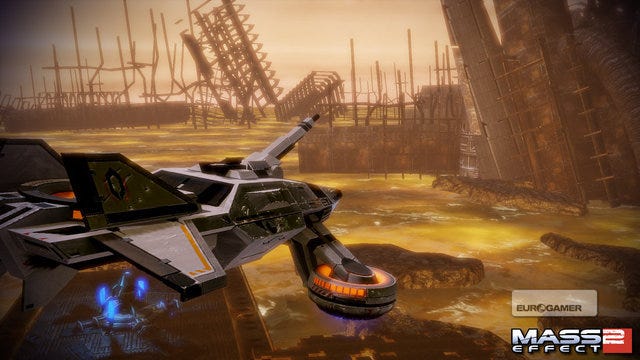
Mass Effect 2's Hammerhead debuted in the Cerberus Network
The "Price of Revenge" mission pack was the one with the most tangible benefit to the game, adding scar-faced merc Zaeed to your crew, and delivering him inside an enjoyable side quest. Less essential was the Normandy Crash Site, which not only risked spoiling the game's opening surprise before you'd even pressed Start, but was a curious addition in itself. Wandering the shell of your ruined starship, listening to eerie voice recordings of supporting players from the first game, the biggest gameplay decision was where to plant your tribute marker. An interesting idea, placing emotional context ahead of more traditional RPG benefits, but something most gamers could happily live without.
More useful was the Cerberus Armour, which boosted shields and health, and came with the Eviscerator Shotgun. The Arc Projector was another handy free weapon, a heavy cannon that comes in very handy on Insane Mode play-throughs. Network subscribers also got the Firewalker pack, granting a sneak preview of the Hammerhead vehicle used in the paid-for Overlord DLC.
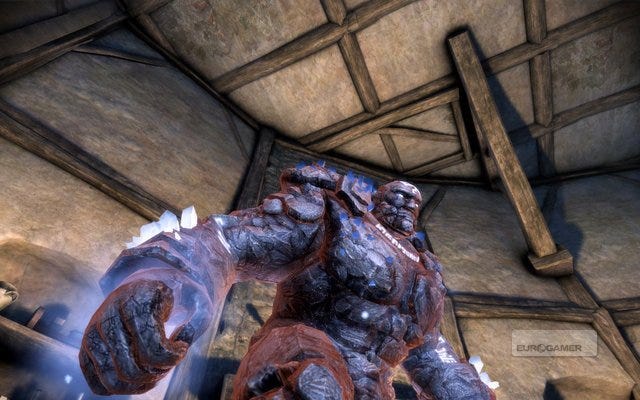
You shouldn't be without Dragon Age's Shale, but you'll have to pay for the privilege.
The BioWare website promises that more content is still to come, but it seems safe to say that having offered up enough goodies to match the price tag, the Cerberus Network has grown a little dusty of late. Added together, what's been offered so far certainly represents a nice spread of bonus morsels for players with a free code, but with more and more DLC added to the pile subsequently, it's less than essential for second-hand buyers. When you can mix and match from the other weapon and armour packs, and opt for the arguably more useful and interesting Katsumi over Zaeed's grumpy chops, there are other - often better - ways to spend your money than signing up for the Cerberus Network.
BioWare's other major recent RPG release, Dragon Age: Origins, has been less splashy with its ten-dollar gifts. As well as a free Blood Dragon armour set (which also unlocked a futuristic version in Mass Effect 2), the game's sole voucher-unlocked DLC was The Stone Prisoner. Bought separately, this sets you back the obligatory 1200 Microsoft or BioWare Points, or £11.99 on PSN.
On the plus side, the quest adds Shale to your party, easily one of the greatest videogame characters to debut in recent memory. The quest itself is hardly massive though, and since subsequent DLC additions to the game have all been priced at around half The Stone Prisoner's asking price or even lower, it's hard not to suspect the cost has been bumped up to justify the "ten dollar" conceit. Cheeky.
But the overall benefit is definitely worth it, which perhaps makes this the best example of what EA is trying to do, at least from the publisher's perspective. Playing through the game without Shale is something I, personally, wouldn't want to contemplate - but I don't know if I could justify spending that much extra on what is, essentially, one character. In other words, and if I hadn't done it already, chances are I'd be buying a nice new copy, just like EA wants, to get my free Shale.
Of course, DLC plays a different role in single-player quest-based titles. In the realm of the multiplayer shooter, things are more precariously balanced. For Battlefield: Bad Company 2, the question of downloadable content is fast becoming a sticky situation. DICE has quite nobly declared that it won't charge for new maps. EA, on the other hand, would obviously like very much to charge for new maps. Unfortunately, the solution to this problem seems to involve no new maps for anyone.
Bad Company 2's VIP Map Packs are the worst value "ten dollar" DLC.
Those who trade in their VIP code from a freshly-wrapped, shop-bought copy of the game have been treated to four VIP Map Packs, but since each one has offered only small remixes of the existing online experience, it's hard to gauge their independent value. As with the BioWare titles, opting into the system with a second hand copy requires an outlay of 1200 Microsoft Points, but when the VIP treatment so far has consisted of different combinations of existing games modes and maps, the feeling that this is the sort of thing that once would have been part of the basic package is hard to shake. (VIP access is free to PC gamers, however.)
So, technically, second-hand players should feel under no obligation to fork out for VIP status. Except, whenever an FPS has different players with different map and mode configurations available, you end up splitting the community into the "haves" and "have nots". Playlisting reduces this problem, slightly, but it's still galling to be left behind if everyone else moves on to some combination - such as Rush on Atacama Desert, unlocked last week in VIP Map Pack 4 - that you can't access.
In other words, while there's not much value in paying the extra VIP cost, a lot of players will eventually feel obligated to do it anyway, resulting in bad feeling for Bad Company.
If there's an EA game that has come closest to getting the "ten dollar" philosophy right from a player's perspective, it's Skate 3. The locked-off content for this knee-skinning skateboard sim is social in nature, not gameplay-related. Cash in your code and you get access to community features that let you share your own skate park designs and upload videos and pictures, as well as opening up other players' creations and clips for your amusement.
Nothing essential, in other words, but the sort of features that certainly enhance the game. And since those without a code can buy the Skate Share pack for just 800 Microsoft Points or £7.19 on PSN, it's an easier impulse purchase to make if and when you decide you need to connect.
It's perhaps revealing that the first non-EA game to dip a toe in these premium DLC waters has opted for a similar approach. THQ's UFC Undisputed 2010 cordons off its online features for those with codes, but buying in costs just 400 Microsoft Points or £3.19 on PSN. It's easy to bristle at competitive brawling being sectioned off, especially if you don't have friends to play against on the sofa, but by framing the online action as a camp where you can socialise with other fighters, train alongside them and set up sparring matches, it's a little easier to swallow.
Skate 3's Skate Share is pitched just right, though.
It's unlikely that the core concept of Project Ten Dollar will go away any time soon. It costs the publishers very little to implement, and presumably holds back the tide of early trade-ins, at least for that all-important post-launch honeymoon period. For the gamer who eventually picks up these games second-hand, the situation is less clear cut.
The DLC on offer, at least so far, is usually good enough to make for a pleasant freebie, but often doesn't do enough to entice those customers at the other side of the deal. Most of the time, second-hand owners will feel compelled to pay up not because they're getting something uniquely enjoyable, but because the game has been designed to feel incomplete without it. In other words, EA is twisting their arms rather than taking them by the hands, and it's doubtful how long manhandling customer expectations will pay off for. As long as they're available, people are unlikely to stop buying used games - but they may stop buying DLC if they feel they're being treated like second-class customers just for their frugal shopping choices.
But there is some hope. By picking the right part of the game to fence off, choosing something that is inessential yet desirable, and not pricing it at ridiculous levels just to punish second-hand buyers, publishers could still claw back some money from the used market without splitting their communities in half. Whether corporate giants will be able to see the long-term benefits of more carrot, less stick is another question...