Farewell, Father
Charting the rise and fall of Ken Kutaragi.
At 9am one June morning in 1989, the rocky but brilliant career of a 38 year-old engineer at Sony almost came to an untimely end. The venue was the Consumer Electronics Show in Las Vegas, and despite the early start - 9am isn't a popular time in a city with as many partying opportunities as Vegas - the main hall at the event was packed.
Everyone was there to hear about the Play Station - a new product from Japanese videogame giant Nintendo which would integrate CD technology from consumer electronics firm Sony with the indisputable gaming prowess of the soon-to-be-launched SNES console. Sony's executives and engineers had been showing off the product proudly only the night before. It would be the world's first hybrid console, featuring a SNES cartridge slot and a CD drive side by side, with both formats available to game developers.
When Nintendo of America's then-chairman Howard Lincoln took the stage, there were already rumblings that everything wasn't quite going to plan - but nobody quite expected to witness something which went on to taint Nintendo's corporate reputation in Japan for over a decade. Instead of announcing a partnership with Sony, as planned, Lincoln stunned the audience by revealing that the company was now working with European electronics firm Philips - with the Play Station project being abandoned.
Shock waves rippled around the audience, around CES and around the entire Japanese business community - but it's likely that nobody felt the shock quite so profoundly as Ken Kutaragi.
Since joining Sony, his career had been defined as much by controversy and conflict as it had by a flair for great engineering decisions; on many occasions, he had found himself in direct opposition with people at the huge corporation far, far more senior than he was. Each time, he had survived - but Play Station was his baby, and Sony had just received the most public snub in its history over this project. It's very likely that on that morning in June 1989, Howard Lincoln's words made Ken Kutaragi's career flash before his eyes. This, surely, was the end of the road.
The Road Less Travelled
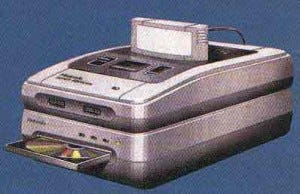
The ill-fated SNES-CD.
Kutaragi's career at Sony began in the mid-seventies, directly after he graduated with a degree in Electronics from the University of Electro-Communications in Chofu City, a small but highly regarded university in a bustling district of Tokyo. His appointment at Sony's digital research labs was his first full-time job.
Not much is written about Kutaragi's early life. We know that he was a habitual tinkerer, the kind of child who takes apart toys rather than playing with them. He was probably encouraged by his father, who ran a small printing company; while at school, Ken worked in the evenings on the printing machines. It didn't interfere with his school work, though, and he consistently achieved high grades - although he focused mostly, unsurprisingly, on more technical subjects.
At Sony, he had a chance in the late seventies and early eighties to work on exotic technology which has subsequently come to be a major part of the daily lives of almost everyone in the developed world. He came to the attention of his superiors for his work on technology like LCD displays and digital cameras, cutting edge technologies which go some way to demonstrating his obsession with driving forward the march of processing power and technological progress.
While it's his ability as a problem-solver and his engineering talent that are always remarked upon from this era, it seems likely that Kutaragi was also aided by an outspoken, brash manner which was atypical for Japanese workers of his generation. In most Japanese companies, that would probably have seen him confined to a desk by a window and never heard from again - but Sony in the eighties was ruled by engineers, not by executives.
In this environment, someone brilliant but outspoken like Kutaragi could thrive; being respectful of authority meant less than having engineering flair. It helped, of course, that he had the ear and the support of the king of all of Sony's engineers, Norio Ohga. Ohga, a trained opera singer who had been offered a job at Sony after writing a scathing letter to the company about the quality of its tape recorders, was president of Sony from 1982 to 1989, and CEO from 89 to 1999.
Kutaragi was, in a very real sense, his protégé. His own unconventional history as a complaining consumer who became president of the company gives a clear idea of why he would have supported Kutaragi whenever he rocked the boat. In fact, Ohga saw Kutaragi as a huge asset in a company which was filled with tired, excessively conventional engineers. His ability to make waves and to show up superiors who were getting in the way of progress made him into an ideal tool for trimming dead wood from the over-laden firm.
Playing The Game
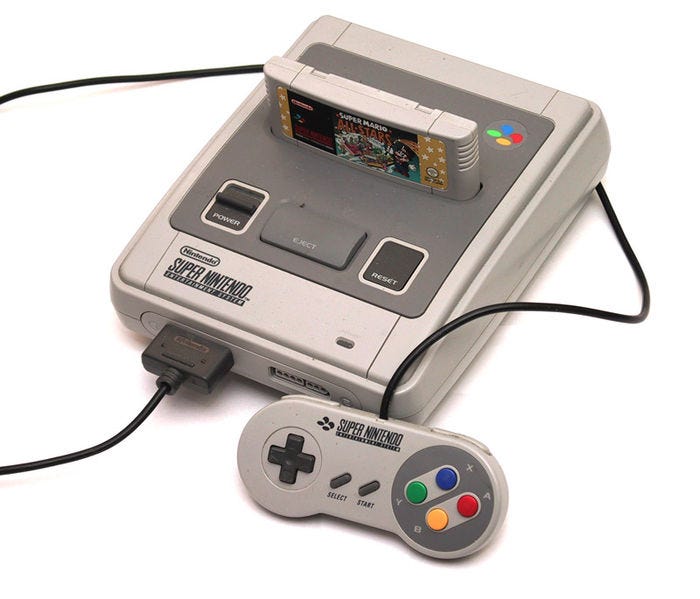
Kutaragi fathered the PlayStation, but you had heard from him before. In this case literally.
At this stage it's probably worth mentioning that although videogames had been popular in Japan since the early eighties, there's no evidence that Kutaragi was actually anything remotely like an avid player. He was undoubtedly fascinated by the technology behind interactive entertainment - but if anything, the approach used by pioneers of the medium like Nintendo's Gunpei Yokoi would have been anathema to Kutaragi.
Yokoi, the creator of products like Game And Watch and the Game Boy, believed in a philosophy called "Lateral Thinking of Withered Technology" - essentially, taking old, well-understood and cheap components ("withered technology") and finding new, interesting ways to create entertainment with it. Nothing Nintendo made used cutting-edge technology; it just used relatively old technology in radical new ways. It's a philosophy which persists in Nintendo to this day - but to Kutaragi, whose entire career had been a life-long obsession with the cutting edge, no approach could have been less attractive.
However, when Nintendo came knocking, he was still quick to answer. In rare interviews, he has said that he realised the potential of videogames from watching his daughter play on her Famicom (NES); whatever the impetus may have been, he clearly believed in the market enough to take on a contract from Nintendo to create a sound-chip for its upcoming 16-bit console. Although the NES was still at the height of its success, Nintendo was conscious of the number of competitors who were launching systems, and its thoughts had already turned to the next generation of systems by 1986/87.
It's typical of Kutaragi's approach to work that he didn't actually tell any of his superiors about the Nintendo deal. Sony had no interest in videogames, and it's unlikely that bosses at the firm would ever have approved of his working on a chip for a Nintendo console. Undeterred, Kutaragi simply set about designing the chip in secret - eventually producing the design for the SPC700, the groundbreaking audio chip which allowed the SNES to seriously outclass all of its rivals in terms of sound and music.
Sony's executives were apoplectic when they found out about the project, and not for the last time, Kutaragi's career had a near-death experience. However, he was rescued by the intervention of Norio Ohga, who approved of the project, and allowed Kutaragi to complete work on the chip. You probably never realised it, but your first encounter with the work of the man who became known as the Father of PlayStation was actually on the SNES; every note of music or sound effect you heard was processed through the unique chip he designed.
Crucially, his work on the SPC700 chip also made Kutaragi into something of a favourite with Nintendo. The bridges he had built to the gaming company with this project meant that when Nintendo started thinking about using disc technology in the SNES, it turned to Kutaragi. Sony had vast experience of the CD-ROM format, and Kutaragi already had a hand in the SNES hardware; the match-up made sense.
Within Sony, any further gaming projects were viewed with hostile eyes, with the entire market still being seen as a fad - but with Ohga's blessing Kutaragi was able to embark on another, more ambitious project with Nintendo. They would build two devices - a SNES add-on, called SNES-CD, and a Sony branded console which would play either SNES-CD games or conventional Nintendo cartridges. It would be called the Play Station.
Turning Point
Which brings us back to that June morning in Las Vegas, when Howard Lincoln took the stage and very publicly smashed - or so he thought - Sony's aspirations in the gaming space. Much has been made of Nintendo's actions at CES that year. It was depicted in Japan as a complete betrayal, not least because it was outrageous to the Japanese business community that one Japanese company could dump another at the altar, in favour of a European rival. Moreover, in subsequent years, it has been portrayed as Nintendo's greatest error - since in dropping Sony, the firm essentially created its own greatest rival and sealed the fate that would see it confined to second place in the industry for at least a decade.
For Nintendo's incredibly outspoken and honest boss, Hiroshi Yamauchi, neither of those things mattered. He believed - and he was probably correct - that the deal that had been signed with Sony was completely catastrophic for Nintendo. Under the terms of the contract, Sony - which had created the technology for the CD-based games - would actually control the SNES-CD format. It alone would have its hands on the reins of this format, essentially removing Nintendo's control over releases on one of its own consoles. To Yamauchi, whose fierce sense of independence continues to thrive at Nintendo to this day, the idea of handing away control of software to a third party was unthinkable. He sent Lincoln and Nintendo of America president Minoru Arakawa to Europe to negotiate a deal with Philips at the eleventh hour - one which would give Nintendo control over all of its licensed software on the system.
The intricacies of the contract, however, probably didn't matter much to Ken Kutaragi that morning. His project had just been killed by Nintendo in the most public and embarrassing way possible. Sony, dipping a cautious toe into the videogames market, had just been dumped at the altar by the company whose alliance he had sought out and championed. This time, surely, the bosses at Sony who had opposed his efforts would have the last laugh; after gaining a reputation as a hatchet-man who brought down his own superiors, Kutaragi would finally be felled by executives who would be delighted to see him go.
It's interesting to wonder how the videogames industry would look now if that had happened - but Kutaragi was saved, once again, by Norio Ohga. If this were a Grimm brothers tale, Ohga would almost certainly appear with a wand, wings, and a remarkable ability to turn Kutaragi's pumpkin into a fine chariot; his regard for the engineer, coupled with a distinct feeling within Sony that Nintendo should be "punished" in some way for stinging the firm in this manner, led to him defending Kutaragi and the firm's videogame efforts.

PlayStation - eventually relaunched as PSone - sold more than 100 million units of hardware in its life.
Sony decided to push forward with its gaming ambitions regardless of Nintendo's "betrayal", and while the SNES-CD was shelved, the Play Station lived on. Nintendo was caught wrong-footed by Sony's decision; it's clear that the firm believed that Sony would never continue with a games system without Nintendo on board. Concerned at the idea of Sony launching SNES-compatible systems, Nintendo resorted to litigation to prevent the Play Station hitting the market - but an injunction claiming that the Play Station name belonged to Nintendo failed, and Sony was free to bring the system to market in 1991.
Nintendo shouldn't have worried - at least, not yet. The first Play Station was a disaster; industry lore suggests that only 200 of the consoles, sporting a SNES-CD drive (for which no games were produced), were ever produced. By 1992, Sony had worked out a deal with Nintendo which would see it producing consoles with SNES cartridge ports, but with Nintendo still making all the profit from the games. This, of course, was pointless; videogame hardware is traditionally sold either at a loss or a tiny profit margin, and the money comes from sales of licensed software.
Kutaragi saw this - and with the SNES hardware growing increasingly outdated, he finally had an opportunity to ditch Nintendo's "withered technology" and strike out to create something more powerful and cutting edge. By 1993, he was heading up a project at Sony to create an entirely new, CD-based console with powerful 3D capabilities. It would be called the "PlayStation" (note the dropped space between the two words), and would no longer have any ties to the SNES.
Climbing the Ladder
In late 1994, the PlayStation launched in Japan. In September 1995, it arrived in the USA and Europe. We all know the rest of the story, at least as far as PlayStation is concerned. Nintendo's rival console, the N64, was the last home system to use cartridges for software, as PlayStation pushed the advantages of its CD-based software and the infinitely cooler Sony brand to their fullest extent. PlayStation became the console that defined a generation, that opened up gaming to the wider world, and unsurprisingly, was the first console to sell 100 million units - a milestone it reached in 2005.
The success of the PlayStation made Kutaragi's position at Sony unassailable, for the first time. His mentor, champion and guardian, Norio Ohga, was by now CEO and Chairman of Sony Corporation, and had approved the creation of a whole new group within Sony to handle the PlayStation - Sony Computer Entertainment, or SCEI. Kutaragi was placed in charge of the division.

Topping PlayStation would prove difficult - and wasn't a process without its own problems - but once again Kutaragi repaid Ohga's faith in him.
The stunning success of the PlayStation allowed Ken Kutaragi to build an empire at SCEI. US and European divisions - SCEA and SCEE respectively - opened up, staffing numbers swelled, marketing budgets went through the roof, more and more production facilities were brought on stream, development deals were signed and studios opened. Money was pouring in; the PlayStation rapidly became the shining jewel in Sony's tarnished crown. Sitting atop this empire was Kutaragi himself, the rogue engineer who was now turning around the fortunes of the corporation.
As early as 1997, Kutaragi was tipped as Sony's next boss. Despite being a maverick within the company, Norio Ohga's faith in him had paid off; SCEI was the most important business within Sony. It seems certain that Kutaragi was keenly aware of the speculation that he might be a future leader of the company, and it's almost as certain that he desired the position. He had strong views on how Sony's business should be run, and moreover, the idea of going from being an outspoken maverick to the head of the corporation would have appealed to him - not least because of Norio Ohga's own remarkable climb up the ladder.
In 2000, Sony launched its second console - the PlayStation 2 - into a market which was still reeling from the firm's unexpected dominance of the previous generation. SEGA, whose CD-based Saturn console had been a complete flop in the face of competition from the PlayStation, launched a new system called DreamCast to rival the PS2 - but a combination of Sony's better-known brand, stronger software support and inspired decision to support the burgeoning DVD disc format meant that the DreamCast was obliterated within months.
Microsoft, which would later launch the Xbox, still hadn't announced any plans to enter the console space; Nintendo was struggling manfully onwards with the N64, and wouldn't launch the GameCube for a number of years. The PS2, unopposed in the market and riding on a wave of popularity unseen by any game system before or since, outstripped sales of its predecessor. Kutaragi's star continued in the ascendant, as his risky gamble on the system - a research and development investment of around $2.5 billion - turned into an immense payout, with SCEI rolling in revenues of around $10 billion a year.
One major change at Sony, however, was less fortuitous for Kutaragi. Norio Ohga had named Nobuyuki Idei, formerly a director at Nestlé and General Motors, as Sony's next president - and in 1999, Idei became CEO of the company, taking the position of Executive Chairman from the semi-retired Ohga in 2000, and eventually becoming CEO and Chairman in 2003. Kutaragi had lost his oldest and most senior ally at the company, but with his personal empire at SCEI continuing its rapid growth and widely seen as Sony's strongest division, his position still seemed as secure as he could have hoped.
The Engineer's Dilemma
Nobuyuki Idei was about as far from Norio Ohga as you could imagine from a CEO. He was the first CEO of Sony not to come from engineering stock, and it showed. His appointment was hugely controversial within Sony, but considered to be a measured success within the business community - he was ruthless in his reforms at the firm, and started to turn around the internal perception that Sony should be engineering-led and focus on the company's profitable but underfunded content businesses.
When Ohga left Idei in charge, he told his successor to trust Kutaragi - and initially, Idei did exactly that. Kutaragi continued to be given a free hand at SCEI, and while Idei made sweeping changes to the rest of Sony, his reforms barely touched the hugely profitable videogames division.
Meanwhile, Kutaragi started planning bigger and bigger things for SCEI. His vision for videogames now saw the games console sitting at the heart of the living room, as the key entertainment device for a digital future. It's a vision which he had nursed since before the launch of the original PlayStation, and one which was shared by rivals at Microsoft, who were pouring money into their own game console project in a desperate attempt to head off Sony's efforts at controlling the living room via the PlayStation.
It's not really clear when, or why, Idei decided he didn't trust the Father of PlayStation. In some respects, it was probably down to the traditional schism between businessmen and engineers; Idei being the former, and Kutaragi the latter, the two men would have had radically different views on how Sony should be run. Kutaragi's outspoken and undiplomatic manner would almost certainly have rubbed the reserved Idei up the wrong way entirely, and seemed merely arrogant where to his predecessor, Ohga, it seemed like a breath of fresh air in a company suffocating under double-talk and politeness.
It can't have helped that this was around the time when Kutaragi started to earn his reputation as "Crazy Ken". His personality, which was given to brash pronouncements and hyperbole, had made him unpopular with many people at Sony from the outset of his career - but now, this controversial figure was also the most senior spokesperson for PlayStation. Few gamers who were around at the time of the PS2 launch will have forgotten his amazing comments about the ludicrously named Emotion Engine CPU, or his claim that the console would be like "jacking in to the Matrix".

Ken Kutaragi and Sony Worldwide Studios boss Phil Harrison at E3 2006.
SCEI couldn't very well hide away its own boss, despite his tendency to make outrageous statements - but at the time, it didn't matter very much anyway. The PlayStation and its successor were so wildly successful that Kutaragi's excessively effusive nature almost looked playful, and it's arguable whether his hyperbole did any damage to the brand. Success forgives many failings. However, what's not known is how this was received within Sony itself. With the benefit of hindsight, it seems almost certain that Kutaragi's newfound public persona did little to endear him to Sony's senior management, and specifically to Nobuyuki Idei.
At this time, it was widely expected that Kutaragi would succeed Idei when he resigned. There was simply nobody else in the frame for the role, and SCEI continued to march solidly onwards; even the launch of rival consoles from Microsoft and Nintendo seemed to be doing nothing to slow down the growth of Sony's astonishing games business. However, Idei made a surprising decision; he announced that he would be remaining at Sony for two years longer than originally planned, so that he could be at the firm for its 60th anniversary.
It was a somewhat weak excuse from a man who wasn't noted for being particularly sentimental about such occasions - especially not compared to the firm's previous engineer-CEOs, who had lived and breathed Sony all their lives. Within the company, the rumours about Idei's real intent were all focused on one thing, and Sony insiders are all fairly clear on why they think Idei hung around for longer than expected. Idei had trusted Kutaragi, as Ohga had instructed him, but he no longer thought that Kutaragi would be able to lead Sony effectively. Instead, he believed that his last task at Sony should be to ensure that Kutaragi did not succeed him.
Falling Star
To an external observer, however, Kutaragi's star was still rising - and shining brighter than ever. In 2003, in fact, Idei promoted him to a vastly senior role within Sony Corporation, making him into Deputy Executive President, Chief Operating Officer, and Vice-Chairman. No longer merely in charge of the videogames division, Kutaragi had - it seemed - been rewarded for his success with control over Sony's entire consumer electronics division. He was, the business community reasoned, now clearly in line to succeed Idei.
Moreover, he was now free to apply his ideas to turning around Sony's fortunes in the consumer electronics market. This, however, was the catch. Sony had been losing ground for some time in this area, and was faced with tough competition from rivals such as Korean firm Samsung, which was pulling ahead of Sony in the LCD market. Moreover, Kutaragi was deeply unpopular in parts of the consumer electronics division, having openly criticised the division's failure to compete effectively with Apple's iPod in the media.
In other words, Idei set up Kutaragi to fail - and fail he did. In a year and a half at the helm of consumer electronics, his efforts did little to improve the division's position in the market. He relied on engineering solutions to problems, and believed that developing superior technology was the key to beating the firm's competitors. In pursuit of that, he ruthlessly pruned away anything which he saw as a barrier to engineering flair - essentially removing the sort of managers he himself had butted heads with as a young engineer, but this time, from a position of absolute power.

'Crazy Ken's love of the cutting edge led to all manner of interesting PS3 design decisions.
The problem was that Sony's technology was already good - it was being outmanoeuvred not on engineering, but on innovation. It had missed the iPod revolution entirely, with the bitter irony being that the iPod was not actually a cutting edge piece of hardware. In fact, it was a device which followed Nintendo's old philosophy of "lateral thinking with withered technology" - the very philosophy which Kutaragi himself had shunned from the inception of SCEI.
Kutaragi's efforts were failing, and moreover, they were creating massive rifts in the electronics group - where he proved to be a controversial and divisive figure. His combative strategy, which had worked so well as an underdog, simply lost him friends as a senior executive. With Ohga gone, Kutaragi found himself exactly where Idei wanted him - completely out on a limb, with his only support coming from Idei himself.
Given enough rope to hang himself, Kutaragi had just managed to prove to Sony's top executives and board members that he wasn't the man for the top job. In his place, Sony took the extraordinary step of appointing its first non-Japanese boss - Welshman Howard Stringer. While Kutaragi had struggled with the poisoned chalice of the home electronics business, Stringer had been excelling as the head of the Sony BMG content business. Idei positioned him as an ideal candidate, replacing him as the favourite in the race to the top - and Kutaragi's ambitions of ever leading Sony died.
When Idei retired in 2005, Stringer took the reins - and Kutaragi lost his seat on the board and control of the home electronics and semiconductor divisions. He returned to his position at the head of SCEI, focusing on the launch of the vastly delayed and over-budget PlayStation 3 - but despite the end of his ambitions to lead Sony, Kutaragi's fall from grace was far from over.
End of the Road
The rocketing growth of SCEI had slowed down, which was to be expected after such an astonishing decade, but moreover, there was trouble brewing for the division - both outside and in. On the outside, Sony was facing growing criticism over the PlayStation 3 - which was delayed, and moreover, vastly expensive. On the inside, it's widely rumoured that Kutaragi had disguised the truly enormous costs of the PS3 research and development effort from Sony's board.
Nothing is certain about this, and details are scarce, but it's certainly true that as head of the consumer electronics and semiconductor divisions, he would have been in a position to use some of their budgets - rather than SCEI's - on the development of the console. When he left those roles, the true extent of the cost of the PS3 would have been revealed to his successor - leaving Sony keenly aware at last of just how much Kutaragi, who had spent $2.5 billion to launch the PS2, had staked on the success of PS3.
Meanwhile, Kutaragi's "Crazy Ken" pronouncements became more and more wild, and more and more widely reported. The "jacking in to the Matrix" comment about the PS2 proved to have been merely a prelude, as the outspoken engineer - perhaps angry at being jilted for the top job he had lusted after - completely stopped restraining himself in public.
He lashed out at Microsoft, claiming that the Xbox 360 was merely an "Xbox 1.5" and accusing the firm of targeting the PS2, rather than the forthcoming PS3. He defended the PS3 price point, saying that it was the kind of machine people should work overtime to afford. Among countless pronouncements that made headlines on specialist websites - and sometimes in mainstream publications - around the world, those ones stand out in memory. While such statements are fine to make internally, Ken's tendency to talk to the press in this way made many others within Sony, and SCEI, deeply uncomfortable with their boss' public pronouncements.
Another nail in the coffin came when, at the Tokyo Games Show in September 2006, Kutaragi gave the keynote address at the opening of the show - the same keynote which had been used a year before by Nintendo's Satoru Iwata to introduce the Wii's motion control system to the world for the first time. The world's press thronged the room, expecting to hear details of software, online services - anything to fill the gaps left in the public's knowledge of the PS3. Instead, Kutaragi chose to treat them to a lengthy, rambling discussion of his new pet subject, the future of networked computing - the kind of topic an engineer loves to talk about, but far from what was expected from the boss of a top platform holder only months away from his much-maligned system's launch.
The press crucified Kutaragi for that and many other slip-ups - and it rapidly became clear that within Sony, the Father of PlayStation was no longer loved as the family's patriarch. One very senior Sony Computer Entertainment figure, speaking off the record late last year, commented that Kutaragi "only opens his mouth to change feet". With the battle for hearts and minds slipping away from Sony, the brilliant engineer who had created the firm's games division in the first place became a public embarrassment - while in private, executives fumed at his handling of the PS3's development and launch.

The Father of PlayStation takes centre stage at his last E3.
It was no real surprise, then, when at the end of last November, Kutaragi's descent continued. He was replaced as president of SCEI by former SCEA boss Kaz Hirai, although he was promoted to Chairman in the same move. Still, it was clear to everyone that this was no happy promotion - and nor was it the end of Sony's retribution for Kutaragi's mistakes.
On April 26th 2007, Sony announced that Kutaragi was to retire. Like his mentor, Ohga, his retirement will see him taking on the role of Honorary Chairman - a non-executive role which is, in essence, a desk at the window with no real work to do. Kaz Hirai will take on his role as CEO, reporting to Sony's group CEO Howard Stringer.
At 56 years of age, for someone to retire from a senior role like Ken Kutaragi's is almost unheard of in Japan. His removal from the top spot in SCEI is not a voluntary one; it is both a punishment for his own failures with regard to the PS3, and, by extension, an offering to shareholders angry at the losses sustained by the firm in the development of the console, and the negative press surrounding it. His head has rolled - perhaps pre-empting changes such as a price cut, perhaps merely as an act of contrition for past failures. Whichever is true, the Father of PlayStation has been put out to pasture.
The sad part of this tale is that Kutaragi will almost certainly be remembered more for his Crazy Ken moments than for the immense, lasting impact which he had on the videogames industry. He risked his career time and time again to pursue his belief that Sony should enter this industry, and was willing to put his own neck on the line in pursuit of a dream - perhaps not the dream of mass-market gaming, but at the very least, the dream which ultimately led to mass market gaming being a reality.
Kutaragi is not only the Father of PlayStation, but the father of modern console gaming. His fall from grace has been rapid, shocking, and yet almost entirely of his own making; an engineer at heart, he was ill-equipped to deal with the executive world which he tried to conquer. However, his contribution to this industry, and this medium, is undeniable. It's a sad fact that many people are remembered for their big mistake, rather than their many achievements - Gunpei Yokoi is still perhaps best known for creating the Virtual Boy, rather than the Game And Watch, the Game Boy or the ubiquitous D-Pad.
Kutaragi will never be loved like Miyamoto; he leaves no legacy of instantly recognisable characters and franchises, and his showmanship was always outspoken and arrogant, rather than humble and playful. However, we can hope that in a few years time, when the dust settles on the controversy surrounding the PS3, Kutaragi will be remembered not for the Emotion Engine or jacking in to the Matrix; not for working overtime to afford a PS3 or for the Xbox 1.5; but for having the courage to fight Sony's own management to create a console called the PlayStation, without which many of us simply wouldn't be reading a games website, and for the countless hours of enjoyment people around the world have had with his creations.
You may also like...
-
Happy Action Theater Review
-
ModNation Racers: Road Trip Review
-
Sony confirms PS Vita 1st Party digital only game prices
-
Call of Duty: Black Ops has best game ending ever, says Guinness World Records
-
Motorola Xoom 2 Tablet Reviews
-
Mass Effect 3 Demo: The First 20 Minutes
-
Why Devs Owe You Nothing
-
DICE working on multiple Battlefield 3 fixes
-
Sony explains PlayStation Vita game price strategy
-
EGTV: Eurogamer playtests PlayStation Vita
-
Halo 4 Master Chief action figure flaunts new suit design
-
Tim Schafer: publishers aren't evil
-
3DS Ambassador Super Mario Bros. game updated
-
Apple begins Foxconn factories inspections
-
App of the Day: Monkey Bump
-
Face-Off: Final Fantasy 13-2
-
Digital Foundry: PS3 Skyrim Lag Fixed?
-
Fallout: New Vegas dev asks fans what game they would like it to Kickstart
-
UK Top 40: Kingdoms of Amalur: Reckoning beats Darkness 2
-
Activision: games are relationships, "brands in people's lives"
-
Sony's $50m Vita marketing campaign targets PS3 owners
-
Rockstar mulling LA Noire 2 development
-
Retrospective: Star Wars Episode I Racer
-
Metal Gear Solid 5 expected between April 2013 and May 2014
-
Metal Gear Solid 3D demo on eShop this week


Comments (144) Latest comment 5 years ago
Comments threads automatically close after 30 days, but please feel free to continue chatting on the forum!
Comment below viewing threshold Show
Good job overall though!
Comment below viewing threshold Show
No, he's been given a window job. On the japanese businessman scale, that's considered far more unpleasant than simply dying.
Comment below viewing threshold Show
Actually, the PS3 probably is Sony's last console.
Comment below viewing threshold Show
sorry what disaster sold more than 360 did in the same time frame.
wont mention wii different type of console
Comment below viewing threshold Show
as predicted by our resident expert analyst!
anyway... long live the playstation brand. and long live videogaming!
Comment below viewing threshold Show
PS3 is great. I owe many great gaming memories to this guy & Miyamoto.
Comment below viewing threshold Show
As much as I'm slightly an Xbox Fanboy (Like Roop), even I can't deny the impact the playstation has had on this industry. People such as Ken Kutaragi should be remembered and honoured by all gamers, not just those of the PlayStation ilk.
*Raises glass to Ken- Daddy PlayStation*
Comment below viewing threshold Show
Hiding spending from the board? You're getting into Nick Leeson territory there.
Comment below viewing threshold Show
As mental as he could be, it was a lot of that mock-insanity and passion that gave us what we have in terms of the PlayStation legacy.
I would also like to rasie my glass to Ken...
Comment below viewing threshold Show
That is all.
Comment below viewing threshold Show
I think it probably was right for Ken to go, but it's still sad that a man who contributed so much to Sony as a business has been treated so poorly by that very business.
Thank you, Ken.
Retire in Peace.
Comment below viewing threshold Show
Why?
Sony as a whole is an entertainment electronics business it's in their DNA to make stuff like this, it's like them stop making the walkman because it's being humped by the Ipod.
Comment below viewing threshold Show
That's because you're looking at the PS3 as piece of entertainment kit rather than a huge black hole swallowing your life's savings. Sony have sunk billions into developing it just like Microsoft did with the XBox. Unlike MS however Sony really can't afford to throw money around. It's not that Sony are about to go bust, it's just that they have been a poor company to invest in for a long time now and the shareholders want blood.
Comment below viewing threshold Show
Typo in the third paragraph: "but nobody quite expected to witness something which went on the taint Nintendo's corporate reputation"
Somebody set the sub-ed up the bomb!
Comment below viewing threshold Show
Anyway, good ol' Ken; where'd we be without him, eh?
(Probably playing our Dreamcast 2...)
Comment below viewing threshold Show
"Actually, the PS3 probably is Sony's last console."
Lol. Yeeeeah, ok.
Comment below viewing threshold Show
"That's because you're looking at the PS3 as piece of entertainment kit rather than a huge black hole swallowing your life's savings"
If you life savings only amount of a few hundred quid, I would politely suggest you shouldn't be spending money on a games console of any kind.
Comment below viewing threshold Show
Actually, the PS3 probably is Sony's last console.
Quit while you're ahead, I'd say.
Comment below viewing threshold Show
Wow you haven't seen Sony of late have you?
Sony Pictures says hi.
Comment below viewing threshold Show
Its interesting that many of the typical internet audience, with their goldfish memories, can be so quick to dismiss Ken as some mad old idiot. As if the last couple of E3 shows define his contribution to gaming.
In fact, anyone with an ounce of grey matter would recognise that he was one of the key players in inventing the Playstation brand....
DO you hear what I'm saying!? He invented the PS ffs! One of the most significant consumer products of the last decade!
Even people eating a large bowl of fanboy porridge every day for breakfast would have to be prime idiots to not recognise how that is far from something that any old dude walking in off the street could achieve.
Comment below viewing threshold Show
Thanks indeed Ken...
Comment below viewing threshold Show
I remember a while back that SCEE slashed 160 jobs. Apparently, that news and Ken leaving office, really just shows the extent of pressure Sony is having at the moment regarding the PS3. This looks quite grim indeed for Sony. I can see the one person having the last laugh from this is Bill Gates.
As for Ken, there are reasons why someone like him did not have got the top job. And his boss surely knew that. But now we never know what would actually happen if he did get the top job. Personally, I think Sony would probably in a better shape now if he did. PS3 development would probably got more money, hence quicker release, and minimising the damage Xbox 360 can do to it.
Comment below viewing threshold Show
But it didn't, Ken is a wanker
Comment below viewing threshold Show
"Actually, the PS3 probably is Sony's last console."
Hahahahaha!
Oh, were you serious?
Comment below viewing threshold Show
A good read though, thanks for that.
Comment below viewing threshold Show
As for Ken, you're certainly right that he'll never be loved but - though I've never been a fan - we all certainly have to thank him. Do you think Nintendo would have made Wii had Sony not backed them into a corner?
Comment below viewing threshold Show
/applauds
Comment below viewing threshold Show
Don't pin the Wii on ol' Krazy Ken; the man's got enough to answer for!
Sayonara, Kutaragi-san. You truly were a beautiful, tiny nerd.
/holds up lighter.
Comment below viewing threshold Show
MS can't throw money around anymore either. Why else do you think they invested relatively little in the development of 360? Or made the ridiculous decision to remove the HDD? Or charge crazy amounts for add-on HDD's, flash memory, wifi adaptors, etc? Yes they offer 'choice' but make sure you pay bigtime if you made the wrong one.
MS's money throwing days are over. Their cash reserves, while still significant, are rapidly deminishing. The outlook of their future cash flow has never been worse and they don't seem capable to turn things around. MS's days of ruling the tech world are long gone.
But anyway, thanks Kaz for all the enjoyment PSone and PS2 have and still are giving me.
Comment below viewing threshold Show
@Les, 300 million dollars lost on the last quarter, surely Microsoft is still burning money, but as usual not faster than they can print Licenses
Comment below viewing threshold Show
I guess he had to go really after the PS3 debacle.
Comment below viewing threshold Show
see ya later innovator.
Comment below viewing threshold Show
Oh while we are here, thanks for the awesome music on the SNES
"Norio Ohga. Ohga, a trained opera singer who had been offered a job at Sony after writing a scathing letter to the company about the quality of its tape recorders"
That's just fantastic....
Comment below viewing threshold Show
hmmmm
Comment below viewing threshold Show
I think the PS3 is going to be a disaster for Sony. Its a disaster on my credit card.
Comment below viewing threshold Show
Reminds me of the great gaming times I had with the PlayStation (such a breath of fresh air at the time) and the PS2. Ken's a bit of a legend in the overall scheme of things, it's a pity he seems to have misjudged the market slightly this time around. I wonder where SCEI will go from here?
Comment below viewing threshold Show
There are plenty of companies that have a license to print money. Doesn't mean they fund and put up with lost making ventures forever.
Comment below viewing threshold Show
Now on to a bright future with Kaz and Sir Howard!
Comment below viewing threshold Show
Please, the guy you owe your jobs to? Fuck off. He made great contributions to the industry but it would still exist without him. So fuck off.
Very enjoyable article btw.
Comment below viewing threshold Show
having been the laughing stock of the gaming world for quite some time now it is nice to remember his earlier succeses and applaud the attitude that did without question change gaming.
it will be interesting to see what, if anything kaz can do to rescue the ps3. a price cut alone isn't going to do it (as we can see from the japanese sales figures).
Comment below viewing threshold Show
cunts.
Comment below viewing threshold Show
I´d LOVE to read more like that.
/bow Rob
/bow Ken
Comment below viewing threshold Show
Everything I've read about the PS2 & PS3, however, make them sound far more interesting from an engineering perspective than programming. That would explain why, eh?
Comment below viewing threshold Show
f3rrari - He was very publicly demoted not once, but twice, and has now been forced into retirement. I think the word "fall" is perfectly appropriate. I perfectly accept that Ken Kutaragi has done more with his life than I have ever done in mine, and I think the depth of my respect for the man should be evident from this article - but that doesn't change the truth of what has happened to him in the last three years.
Comment below viewing threshold Show
Although I wish you hadn't killed sega...
Comment below viewing threshold Show
Indeed and actually nigh-on-impossible if your first was a smash and the second smashed the first.
Tis the way of things ...
Comment below viewing threshold Show
There's no doubting that the situation is pretty grim at Sony Towers but things like the 160 redundancies are just as likely to be merely an influencing manouvre by people like Harrison and Stringer to force a conclusion to what I'm sure they were seeing as the impossible position they've been forced into by Ken's excesses ...
Comment below viewing threshold Show
Yeah I didn't know that either - having entirely skipped the previous PlayStation generations, this is where he would have 'touched' me in my gaming past. The sound of jumping inside an echoey cave in SMW for the first time is still in my head now 15 years on ...
Comment below viewing threshold Show
"As a less than satisfied PS3 owner his step down seems like an admission that the PS3 is deeply flawed.
I think the PS3 is going to be a disaster for Sony. Its a disaster on my credit card."
You are the next CEO of Sony and I claim my five pounds!
As to whether the Xbox will go away due to losing money, well...
I'm not sure what's happening at Microsoft Towers these days, but I do know that Mr. Gates gave the green light for the original Xbox project with the words (and I'm paraphrasing here) "Fuck Sony. Fuck them in the ass" - mainly, as Rob pointed out in his (excellent) article to stop Sony dominating the living room.
I think they're here for the long term
Comment below viewing threshold Show
Ken thought a decade ahead of his time - not bad at all, I'd say. PlayStation opened up the realm of 3D gaming. PlayStation 2 brought it to the next level. Tipping the hat, and here's to a good outcome for the PS3.
Comment below viewing threshold Show
Sayonara, Mr. Kutaragi!
Comment below viewing threshold Show
Those 'record profits' for the quarter were to a large extent caused by deferred revenue from the previous quarter, so take the 'record' with a little salt. MS stock has been pretty flat for the last 5 years, they're not the investors' champion they once were. Maybe it was the complacence because of their monopolies, maybe something else, but they've been surpassed as the key technology company by Google, Apple and others. As an innovator, MS isn't really relevant any more. Of course their existing monopolies will continue to deliver them impressive revenues for the foreseeable future but they've lost the ability to successfully leverage their monopolies into additional revenue streams.
"I can see the one person having the last laugh from this is Bill Gates."
No, it'll be Steve Jobs. Gaming will remain a niche for quite a while. But with Apple TV, Apple has a good value proposition (movies, tv shows, music and games) for the living room with the added benefit of it being cool. I wouldn't be surprised if at the end of the life cycle of current gen, more people will be playing very simple and very cheap games on their Apple TVs than on 360, Wii and PS3 combined.
Comment below viewing threshold Show
And thank you EG for a wonderfully insightful article. It's actually quite sad the way Ken fell from grace, he wasn't trying to do the wrong things, he simply worked from a different perspective then the market demanded.
Comment below viewing threshold Show
Something tells me Sony whispered this in Eurogamer's ear LOOONG ago
Comment below viewing threshold Show
But he was a hardware engineer in an age when it's all about the software. MS couldn't afford to lose the living room, it's major play is in it's IPTV backbone systems and the 360 is part of it.
There's seems no sort of cohesive strategy in the PS3, it's more like they've now got an expensive computing platform for the home, now what can they do with it? Ken was more focussed on what it could do rather than what it *would* do, IMHO.
AppleTV and iPhone - hard to tell with Apple because people by their kit because it "looks nice". What I can't fathom is why can't everyone else make their kit look sexy too.
Comment below viewing threshold Show
No it didnt.
3D graphics cards for pc's didnt come about until AFTER the ps1 when people with pc's started realising their pc's were shite in comparision.
Comment below viewing threshold Show
As you said yourself, your respect for the man is in the article. The piece was perfectly balanced between paying respects to one of the greats of the gaming industry, whilst charting the mistakes that person made (perhaps compounded by being given just enough rope to hang themselves) which led to their current position.
You deserve every compliment that's been given in this comments section.
Comment below viewing threshold Show
What that dude said about PS3 beeing the last PS console wasnt made up by him. I dont knwo if you read everything in this site but it was an something a Sony's spokesman said in an article. And don't tell me they dont know already they screwed up. They are just trying to make out of all that loss the PS3 has caused them some money. That stupid president of Sony if he had the guts had to wait at least 1 more year to leave and I bet everyone knows why. but I bet you he would get a heart attack. He brought his "future" to some guys that spent 600+ euros and left. How odd....
Comment below viewing threshold Show
"The legend will never die..... "
Comment below viewing threshold Show
The story mentioned he could get a "job next to the window" two times. I think that is Mr Fahey's assumption. About Norio Ohga relationship with Ken, it is a mutual beneficial relationship, not one sided as Mr Fahey mentioned. Ohga bet on the right horse and he won. Playstation saved Sony and Ohga reputation as Sony CEO. On the contrary, Nobuyuki Idei, BusinessWeek magazine nominated him as one of the "Worst Managers of 2005" due to the losses at Sony during his tenure. About Sony Electronic, Ken's strategy was right and pay off big time with Bravia LCD TV. Bravia is based on technical supremacy provide unparalleled quality that make it stand out, unlike ipod which base on marketing and life style which is ok, too.
Ken has contributed so much to Sony more than Howard Stringer and Nobuyuki Idei combined. M$ spend 21 billion dollars in 5yrs, still report 5 billion dollars lost. Ken did it in first try, defeat Nintendo and Sega. He deserved to be Sony CEO. Anything less than that is unjustified. I think many Sony Japanese employees felt the same way.
Ken's Sony legacy
PS3 outsold Xbox360 in all major market except the US. In first five months, PS3 sold totally 3.15m to date. Sony do better than Xbox360 did. To be fair, Ken's PS3 is not a failure. EA Vice President said he will only comment who win the console war two years later. Two years later Ken may be halt as visionary. May be Mr Fahey could write a story on how Ken rise again.
Ken's PS2 are still best after seven years, outsold all current and next gen home console. PS2 capture 40 percent of the whole console game sales last year. He left Sony with one of the highest profit center.
Ken's PSP sold 21 million units in two years. It is a beautiful machine. This put Sony well into the mobile market.
Just admit it, we will all missed his Koo Koo way of charisma. This remind me of Eminem - Without me.
"Now this looks like a job for me so everybody just follow me"
"cuz we need a little controversy, cuz it feels so empty without me"
Kazry Ken, I love the way you are. An Outspoken Hardcore Hardware Engineer. O.H.H.E
Comment below viewing threshold Show
Let it go mate... you are starting to sound pathetic here.
Comment below viewing threshold Show
I get sick of hearing this. Is it a different type of money that Nintendo currently has flowing into their bank account? Are Sony dollars and yen somehow worth more than Nintendo dollars and yen?
Is the loss Sony takes on every PS3 sold somehow healthier for the platform than the profit Nintendo makes on every Wii sold?
Does the fact that the Japanese chart this week contains zero PS3 games somehow not matter because the Wii uses cheaper hardware?
In the end the console makers and game publishers survive by making a profit mainly from selling games. If a console platform like the PS3 sells in smaller numbers and is really expensive to develop for, it won't sell as many games as a console platform like the Wii that sells in much larger numbers and is cheaper to develop for.
Comment below viewing threshold Show
Obviously Stringer is an important character in this play, but actually, his relevance to Kutaragi's decline within Sony isn't that huge. The two of them were played off against each other, by and large, but everything I've read, heard and found out suggests that the real players in that were Kutaragi and Idei. Stringer was merely on the sidelines, being groomed as Idei's successor.
As for Idei... Well, he was a controversial choice within Sony as much as anything else, and it's hard to get over a basic level of distaste for him in some regards. He was stuffy, traditional, and ultimately, he was a businessman in a company of engineers - that's bound to promote dislike. However, you should remember that as well as being named as one of the worst managers in the world (which came late in his career when Sony was facing serious, unprecedented competition in the consumer electronics market), he was also frequently lauded by analysts and business publications as the man whose plan was turning Sony around.
Realistically, we won't know how successful he was for another few years - but I certainly wouldn't jump the gun and suggest that he was awful, or that he was entirely wrong about Kutaragi, just yet. His actions regarding Kutaragi may seem underhanded, but recall that all he did was give Kutaragi the freedom to screw up - he handed him the rope, it was Ken himself who made his own noose.
Comment below viewing threshold Show
The article mentions that the original Play Station (note the space) was a flop and there were only 200 of the SNES-CD playing blighters made... Does anyone have a picture of it? News to me, (and there was me thinking I knew my games history...)
Comment below viewing threshold Show
I'd hardly call gaming niche when it already trounces Hollywood at the box office and will trounce it overall pretty soon, especially with the market being expanded so brilliantly by N.
Comment below viewing threshold Show
I'd have put John Bolton ahead of Rumsfeld in that list.
Comment below viewing threshold Show
Something tells me Sony whispered this in Eurogamer's ear LOOONG ago "
Well I told the world that heads were defo going to roll at Sony a couple of months ago on this very site but I wouldn't want to publicly take the credit or anything
Comment below viewing threshold Show
In revenue it might be bigger, but as a typical game costs about 10x as much as a movie ticket, the actual audience it reaches is still rather small.
Comment below viewing threshold Show
He pushed the industry forward to places its never been.
Comment below viewing threshold Show
I'd have put John Bolton ahead of Rumsfeld in that list
Don't forget Uwe Bole.
Comment below viewing threshold Show
But we know that. Look what they've been printing for tha last 18 months.
The market analysts have a greatly different opinion.
And so do more than three million consumers.
And so does the man in the street who (despite the media) says "yes I'll buy his latest console when it either gets cheaper or I have more money".
All the Internet buzz ever did was sell tickets for Snakes on a Plane, and flog a few naff teeshirts.
But roll on the denial...
Comment below viewing threshold Show
A family need money for food and patrol. Both products can bought by the same currency but the family need them both. Patrol is for transport. Food is to kept us alive.
Same principle apply here. Sony PS3 has HD next gen graphic. Nintendo has fun interesting controller. If you want HD next gen graphic, buy PS3. If you want fun interesting controller buy Wii.
Comment below viewing threshold Show
Play Station (with a space) prototype controller
And another
One of the prototype Play Stations (presumably the earlier one where they were still with Nintendo).
Comment below viewing threshold Show
Crazy Ken, thank you for the PlayStation!
Comment below viewing threshold Show
(fish=hours upon hours of great entertainment, solcialising also (at times) singular, captivating, eye opening monents of fun, anger and other fond memories)
Comment below viewing threshold Show
It was the 3DO, which had preceded Playstation by 2 years, that did all these. But the problem with the 3DO was that it way ahead of its time, and costed too much ($699.99), which was excused by claiming that it was a multimedia centre, not a simple games machine (reminds me of some current overprised console).
What the PS had was competitive price point ($299, cheaper than Saturn), hugely cool brand name at the peak of its game (Sony mid 90s), and great, inspired marketing department.
So even though Kuturagi was a pivotal figure in the Playstation history, he wasn't the main rason for the console's success.
Comment below viewing threshold Show
You are right! The number of reasons that make a successful console are beyond one person's comprehension. Just look at Dreamcast, Jaguar, Saturn and Xbox. Ken step up to the game and take risk, he won.
Comment below viewing threshold Show
I am not writing it to please everyone. My view of Xbox360 as hardware is a piece of Sh@t. As a console with game is better. If Xbox360 is more reliable and give me that WOW factor. I would write the story differently. I think that is what wrong with western internet media - don't say what they feel is right or wrong, the raw stuff instead just copying each other's work. Where is the analysis? They may have sponsors to worry. I don't.
Comment below viewing threshold Show
As far as Ken goes, it is well-known that the delay of the PS3 was partly due to a delay in the finalisation of the AACS standard, and the consequent scarsity of Blu-ray drives supporting it. A great deal more of Sony's R&D budget went towards building effective securty into PSP and PS3 than did for its previous consoles, a tactic that doubtless benefits the media divisions more than SCEI.
Comment below viewing threshold Show
- George Bernard Shaw
Bye Ken.
Comment below viewing threshold Show
"Sony in the eighties was ruled by engineers, not by executives"
Amen to that. But as an engineer myself, I know that having the lunatics running the asylum can't go on. Putting a tech fella like KK in charge was always going to end this way: too much tech, not enough biz always ends up in one stunning, tech wet dream with a budget and schedule blowout to rival the Iraq war. Sony needed to balance it, but unfortunately, it looks like they've gone too far the other way if KK is totally shut out and the bean counters put in charge.
But given the oh so logical image of big biz, it never fails to tickle me to see billion dollar decisions come down to a personality p*ssing match and sordid little backstabbing stunts determining managerial positions.
It has always p*ssed me off the howling and moaning that greeted each downgrade of the PS3. The dude sweated blood and fought to the end to get the biggest, baddest ripsnorter console under folk's telly's for a fraction of the cost of an equivalent PC. So what if he shot too high and couldn't deliver on 2 bloody HDMI ports at a reasonable price point? At least he *tried* to really stretch the envelope, unlike certain redmond-based folks who just put out a faster version of their previous console with barely a new concept to be seen.
God of War II is a fitting capstone for his PS career, and shows exactly what a phenomenal machine his team made in the PS2 (and their mistakes in making it so hard to get the best out of).
I firmly believe that, given a few years, the PS3 will be shown to be a much smarter long term move than all the short termist "teh d00m3d" merchants would like to whine about, when all the 360 crew are forced by Bill-co to upgrade to HDDVD to play the next wave of games, or it's dropped like a wet turd for the Xbox Mark 3.
Cheers Ken. Won't see another like you for a while. You're a star.
Comment below viewing threshold Show
I think blaming Nobuyuki Idei for Ken Kutaragi early retirement is like barking at the wrong tree. Yes, Idei denied Kutaragi the Sony CEO position but he didn't the crossed the line. The line is nobody tell Kutaragi how he should run his own Kingdom - Sony computer entertainment Inc. Howard Stringer, the TV guy CEO fire his staffs(160 job cut), removed his PS3 emotion chip and demoted Ken in his own division.
Imagining this, if Apple Inc hired a Japanese CEO call Ken Kutargai, Ken demoted Steve Jobs because he accused Steve Jobs didn't report everything to him and the cost of ipod is too high. What will Steve Jobs do? It is just that simple, Kutaragi retire because Japanese has deep sense of loyalty to their company. CEO don't have to ask, their employee will retire. That is the Japanese way.
I am disappointed at the media one sided flaming of Ken Kutaragi's failure. Howard Stringer want to make Sony more American. Sony Japan will resist that for sure. It is the only way the TV guy CEO knew how to manage. Ken Kutaragi is the casualty of this Americanize Sony. On CNN business2.0 Chris Taylor, repeat the same theme as Fahey - Ken hang himself. Is it so hard to admit their cultural difference behind this?
In console war, it is not spring but a marathon. I hope Howard Stringer will continue Kutaragis legacy and vision that is the least he can do.
A quote from the Eurogamer review of God of WarII by Kristan Reed
"visuals so routinely jaw-dropping that it makes a mockery of most of the so-called next generation title currently out there."
Kens comments about Xbox1.5 is not so Krazy after all.
We lost a console Icon today . Koo Koo Ken.
Comment below viewing threshold Show
I firmly believe in two years, ken would warp the next gen console war. He saw M$'s biggest weak is their hardware. No matter how good the software, if the hardware don't have wings, it won't fly. If M$ loose this round of battle, M$ will have little choice but to warp up their operation for good. To release another new console in less than four years is not an option. By then PS3 will reach economic of scale with comprehensive third-party support meant the new Xbox will never able to catch up. In M$ 25 year old history, nobody ever hand Bill Gate and Steve Ballmer a defeat on this scale - 21 billions spent with 5 billion lost. krazy Ken would be the first. A Star!? He is like the Sun in this console galaxy!
Comment below viewing threshold Show
Also interesting how readers have interpreted it as both pro and anti Sony... I suppose it depends on which side of the fence you sit.
smoothn00dle your poetic devotion to all things Playstation is laudable but you come across like a rabid fanboy. Who do you hope to impress? Even if you're Chung-Lung Kevin Shum of IBM protecting some interest in Cell BE your post aren't doing anything positive for your argument.
Comment below viewing threshold Show
[link url=http://www.meristation.com/v3/des_ articulo.php?pic=GEN&id=cw46334a11d9911&idj=
]http://ww w.meristation.com/v3/des_articu...[/link]
It's a plagiarism of your article in a major Spanish gaming website. They recycle Eurogamer stuff really often but this one is just sooo blatant. This time they didn't ever bothering thinking of another title. It's a word by word translation in many moments and the idea presented there is your idea, with your arguments.
Anything not exactly like your article is fabricated or misinterpreted. I really whish something could be done about this.
Comment below viewing threshold Show
And I hope to hear from Kutaragi again soon. The world needs better acts, not better words, and that's what he has done all these years!
Comment below viewing threshold Show
/ raises glass to Ken
Kampai!
Comment below viewing threshold Show
.. I remember when everyone predicted ps2 was going to be a failure when that launched at a high price with f-all games and didnt sell for a few months.
Comment below viewing threshold Show
Good point about the PS2, however this guy raises some good points also:
Why PS2 Succeeded, and Why PS3 Will Fail
The PS3 is certainly still in the race but it's not the favourite to win that it once was...
Comment below viewing threshold Show
\o/
Comment below viewing threshold Show
Following is what Ken said in interviews
"Technology alone is not enough."
"Some said our products were game machines, but we were convinced we were developing computers. We set our own computer road map, and our engineers piled up technical innovations along it. "
"We sought to make a big jump with the Playstation 3. Now that the Internet has spread and always-on connections and wireless are becoming common, we have an opportunity to expand real-time computing on the network. [Before the PS3,] real-time entertainment was enjoyed in the house. I wanted to develop the Cell processor to realize real-time computing over the network."
The following is interview with Silicon Knights' boss Denis Dyack by Matt Martin, Gameindustry.biz
Realistically though, do you see that happening in the future - a unified console?
"As technology gets better the perceptual threshold of each console gets smaller and smaller. So the value of the consoles becomes less and less. When the value becomes close to zero, with all these costs into research and development into the hardware, why make it any more? Why not concentrate where the revenue is - on making games and content. Maybe this won't be the last generation of consoles, maybe there will be another generation after this. But there will be just one place to play games. Maybe it's the internet and everything becomes so vast that we're playing across a distributed network and a unified service."
Ken Kutaragi and Denis Dyack, I think they both are on same brain wave. ken's PS4 vision was one big server like the movie "Matrix". Millions of Gamers log into the PS4 and experience a whole new world.
Comment below viewing threshold Show
What? The ps3, ken or both?
/coat
Comment below viewing threshold Show
Howard Stringer fired Ken. Media said Ken, he did it to himself. Roy say Idei did ken years ago. But it was Howard fired Ken's staff; interferences his domain-SCE and remove him from SCE operation. Howard was Ken's CEO. Ken's only option is to resign. That's obvious. Howard Stringer have a gift of firing people and a good politician. He still firing ppl today.
I think ken's best is yet to come. Ken's vision, experience, hardware insight and management skills make him a valuable asset. Now he is back into the ocean, if he survived next few years, he may change the world again one more time. Good luck!!
Pleasssse don't work for M$.....
Comment below viewing threshold Show
Long live the playstation!
Comment below viewing threshold Show
It depends how you define "fail", if you define it as not selling 120 million like the ps2 did, then i guess you might be right.
If you mean it'll fail because it sells less than the 360 or wii, then i cant see it happening.