Death Tank's Ezra Dreisbach

On Lobotomy, Powerslave and why the Saturn was crap.

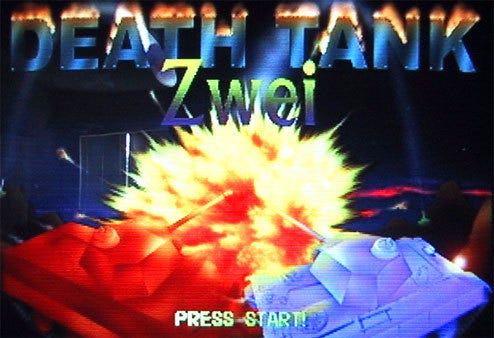
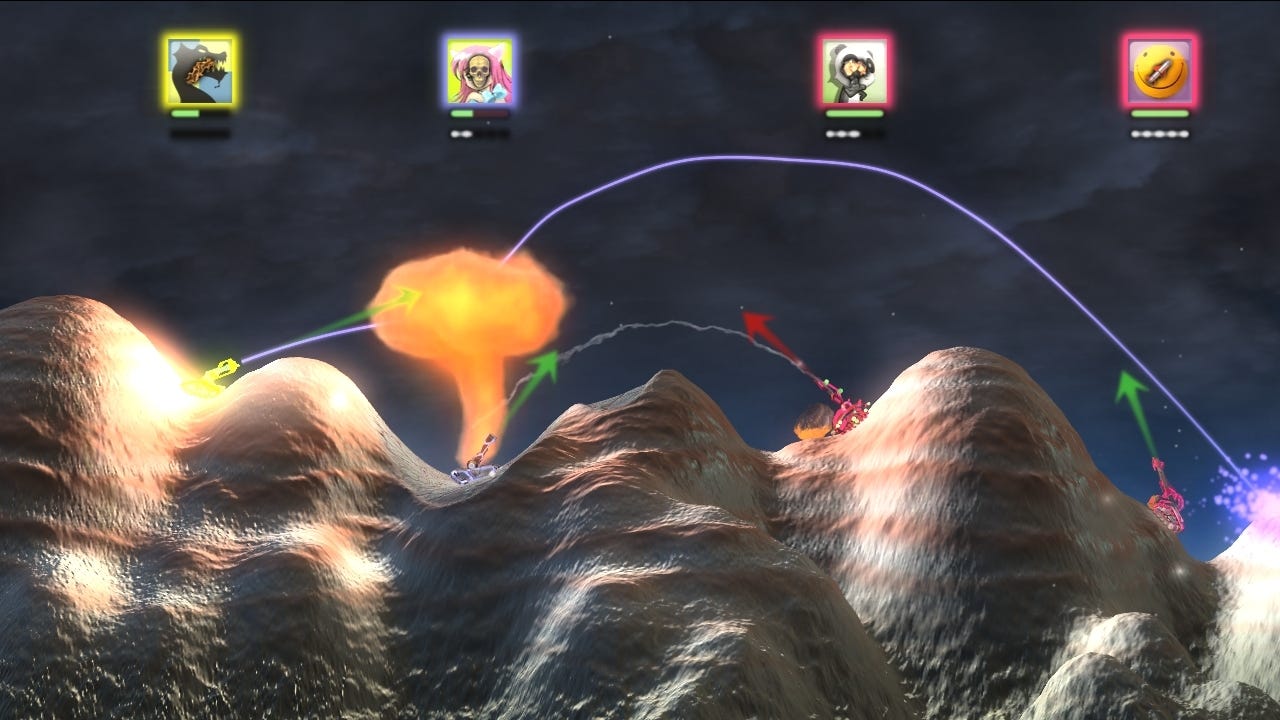
This week's Xbox Live Arcade release is an updated version of the legendary Death Tank, one of the most celebrated, and yet under-played party games ever developed. Devised and programmed by Ezra Dreisbach of Lobotomy Software, the full DT experience is difficult to convey, but it's usually described as a kind of real-time version of Scorched Earth or Worms, as if that's enough to convey the refined, distilled genius of this game. It isn't.

Of course, chances are that you've never played it, because getting access to the game was an ordeal in itself. To access the original version required a US copy of Saturn title Exhumed (aka Powerslave) and you needed to completely vanquish the game, not just by defeating the final level but also by locating hidden "Team Dolls" dotted throughout the levels - a task worthy of a strategy guide in itself. Even after that, you needed the Saturn's eight-player multi-tap to get the full party experience. Things got easier when Lobotomy released its Saturn conversions of Duke Nukem 3D and Quake, which auto-unlocked the improved Death Tank Zwei if you had an existing save-game from another Lobotomy release on your system.

Criminally under-exposed, under-played, and under-appreciated for a game some believe to be a classic of its era, Ezra Dreisbach has spent the last three years re-coding and retooling Death Tank from scratch exclusively for Xbox 360 with full Xbox Live support, brand new single-player game variations, and a handsome new set of graphics. Even the free trial version is rather good.

When Microsoft offered us the chance to talk to Ezra, we jumped at the chance. Aside from the excellent Death Tank, Lobotomy Software produced some of the most technically advanced software of its time, defying John Carmack's belief that Quake could never be converted to the Saturn. The company's PlayStation output - although limited - was similarly excellent, with the conversion of Exhumed/Powerslave proving to be even better on the Sony console than the Saturn original.

In this interview we step back in time, Kylie-style, to the mid-'90s, to the height of the Saturn/PlayStation rivalry, extract the full juicy details of the era from Lobotomy's perspective, and find out why the SEGA machine really was an "insane abortion". Then, remembering that we have an excellent new game to champion, we warp back to the present day and go in-depth on Death Tank for Xbox Live Arcade, and let the programmer tell you why he thinks it's worth 1200 of your precious Microsoft Points.
1

Eurogamer: Ezra, let's start with some history. Not a huge amount is known about the genesis of Lobotomy but according to internet bible Wikipedia, you and the other guys started out at Nintendo of America. Were any of the seeds for your subsequent work planted by what you did with Nintendo?

Ezra Dreisbach: That's really pretty inaccurate. The creative side of Lobotomy came from Nintendo, but the engineering side came from Manley and Associates, an early Seattle area game company. Lobotomy was my first gaming job, so my game programming heritage is really Manley by way of Lobotomy programmers Jeff Blazier and John Yuill.

Eurogamer: During that period, first-person shooters were already hugely popular on PC, but the overall impression was that the consoles weren't up to the job. Your game changed all that. What were you doing that nobody else could?

Ezra Dreisbach: Japan was still the real centre of console game development in those days and Japanese mostly didn't care about first-person shooters. So there wasn't a lot of other console FPS development effort. Later when Lobotomy made the Duke/Quake Saturn ports, people had got good at the PlayStation, but hardly anyone outside Japan cared about Saturn.

The main different thing about console FPS of that era is that every wall has to be diced into a grid of polygons. This is because there is no perspective-correct texture-mapping and, in the case of the Saturn, no way to clip. You really needed some custom tools to deal with/take advantage of this, and Lobotomy had Brew (made by David Lawson).

Eurogamer: Saturn versus PlayStation, let's put this to rest once and for all. You helped oversee two of the most technically accomplished games on those systems, so lay it out for us, which machine did you prefer from a technical perspective and why? What were the most rewarding and annoying aspects of both systems?

Ezra Dreisbach: I didn't exactly oversee anything. Jeff Blazier programmed the entirety of Lobotomy's PlayStation output. But it's not hard to tell the PlayStation is better.
2

The Saturn was really an insane abortion. The graphics hardware was made by guys that obviously wanted to just keep developing 2D hardware and tried to avoid learning anything about 3D. So they made this thing that was totally different from what everyone else in the 3D community was doing and missed some real key ideas, making some things (clipping) impossible.

And then the rest of the system had a whole other batch of warts caused (according to the internet) by a hasty pre-launch upgrade to match the PlayStation. They threw a whole bunch more parts in the box, and none of them worked out that great. The second processor in particular made it both more difficult to program, and impossible to fully utilise.

This probably ultimately doomed the Saturn. With so much different crap jammed in the box, it never got cheap for them to produce it.

Eurogamer: The challenge of getting maximum performance from Saturn always seemed to be linked with exploiting that dual-CPU set-up. How do the challenges of the '90s relate to working with parallelisation needed to get the most out of today's platforms?

Ezra Dreisbach: It's the same kind of deal, but on the Saturn you needed to use all the processing power available in order to get decent graphics performance. Today, there's plenty of easily programmable processing attached directly to the graphics hardware. So you don't need to struggle to use every resource to maximise graphics performance. You can, for example, make a perfectly good PS3 game while completely ignoring the SPUs. There are probably lots of peripheral tricks you can do, but it's not central anymore.

Eurogamer: Now that it's ancient history, can you tell us anything about the first Saturn versions of Duke Nukem 3D and Quake that were in development before Lobotomy took over? Were they really that bad? How did Lobotomy come to land the conversion work?

Ezra Dreisbach: We never saw them. At the start of that project we got the source code to the PC games and that's it. Those other guys were probably trying to port the PC source code to the Saturn, which I'm pretty sure is impossible. What Lobotomy did is take Powerslave and port the content of those games into it. We had to cut up the PC games' art to fit, rebuild the levels, and program new AI to run all the stuff in them.

I wasn't involved in how we got the contract. We probably got it because Powerslave was good for a Saturn FPS, and also because we underbid it. The ports contract turned out to be suicidal. Even while shipping both at reasonable speed, Lobotomy was unable to make payroll completely. This is because, straight ports being impossible, we had to almost rebuild each game. The immense effect required for this versus what we were paid for the "ports" is probably what sunk us.

3

Eurogamer: You were an established developer with a string of solid games and some incredible conversions, and yet to us gamers, it looked as though you just faded into the background...

Ezra Dreisbach: Between contracts is a dicey time for any small game company. Even healthy ones don't have much time to burn before they must sign a new one. When the port contract was complete, Lobotomy was deep in debt (mostly to employees). We tried to get a new development contract with someone but really we didn't survive long enough to have realistically signed one.

Eurogamer: Post-Lobotomy, we know that you moved onto the excellent PS2 Baldur's Gate titles, but can you fill us in on what you've been up to since then?

Ezra Dreisbach: After Champions of Norrath, I quit my job at Snowblind and started working independently on more experimental things. They were too experimental to become anything useful and eventually I needed to make money again. When I came back from the wilderness Xbox Live Arcade was selling a lot of copies, and I wanted to make something for it.

You don't often have a game design that you know works but yet no one else is exploiting. That eliminates the big gamble of trying to design something new, so Death Tank seemed like the lowest-risk project. Who knows if a lot of people will like it, but at least I'm pretty sure a few people will really like it.

4

Eurogamer: Let's talk Death Tank. What can you tell us about the genesis of the game?

Ezra Dreisbach: After Saturn Powerslave was finished there was some downtime. I wanted to make a multiplayer game using the Saturn multi-tap and I was thinking about the transformation that the idea of "real time" had brought to strategy games. I tried to think of other game styles that could be transformed by the same idea, and there it was. The name "Death Tank" comes from an Atari Combat-like game I had half-made some years before joining Lobotomy.

I started to put it together at work in my office, and it really had its debut at a party given by Paul Lange, Lobotomy's president. After that, the call to battle would be broadcast over the office intercom from the Lobotomy basement at noon and 5pm every day. Usually I would arrive about noon, so the first thing I did every day was play two 20-round games of Death Tank. This continued for what must have been at least a year while we worked on the PC FPS ports, and I used the feedback to gradually tighten the game into what it became.

Eurogamer: So here we are in 2009 and Death Tank's coming back via Xbox Live Arcade. With the 360 now over three years old, what took you so long? Surely XBLA and Death Tank is a bit of a no-brainer? What was the process in getting the new game developed and published?

Ezra Driesbach: Well, I've been working on it for all those three years. That is a very long time, by far the longest game project I've ever worked on. Maybe it's because the absence of a publisher means the absence of concrete deadlines and that would make any project expand to fill all available time.

Some of that time I spent on some pretty time-consuming experimental explorations. Some of which made it into the game, and some which didn't. I also spent a long time developing a Halo-style party matchmaking system. There's not a whole lot of content in DT, but I explored every avenue I could think of to try to make everything good. That's what really took the time up.

Eurogamer: Why Xbox Live only? Is there any reason you didn't favour PSN?

Ezra Driesbach: I've got to make money, or no more making games. Xbox Live is still selling the most, right? That's the main reason it's first, but I'm sure not unhappy about it. Xbox 360 is really great and Microsoft has been great to us as well.

Eurogamer: So was this an individual undertaking, or was there a team behind this new version? Is XBLA a viable vehicle for solo programmers in the industry?

Ezra Driesbach: I'm the only programmer on Death Tank, but working with artists from Snowblind has made a huge difference. Solo guys can certainly make a game good enough for XBLA, but unless you've got some genius idea like Tetris, you're really going to want some artists to work on it too.

Eurogamer: The Live Arcade version transitions from single-console party gameplay across to Xbox Live. How has the gameplay been adapted and improved, and how do the new version's local gameplay options stack up against online play?

Ezra Driesbach: Make no mistake, this is still a game you most want to play multiplayer. But there are now a couple options for single-player play. For one, you can add AI tanks to the game to play solo, or fill out your low player situation. The other is Arcade Mode: a fixed series of levels like an arcade game. There are a few different types of tanks that drop in, plus a flying enemy and platforms you have to jump jet onto. Stuff like that.

Death Tank in action.

The main changes to the core gameplay are some control changes in reaction to the new controller. The Jump Jets in particular are changed significantly. Pulling the analogue triggers together starts the jets, then individual triggers rotate the tank. I like this change a lot. It allows more freedom of action in the air, for example, flying upside down and shooting enemies below and you can really wipe out with some hilarious crashes.

The biggest real improvement is the team game mode. Teams are pretty fun.

Eurogamer: You talked earlier about spending a lot of time on experimental stuff. Has any of this manifested at all in the new game?

Ezra Driesbach: Well, by "experimental stuff" I mean like the simulation of the sand blowing across the dunes in the desert level. That one worked out. Then there's other stuff I made like an offline volume smoke renderer. That one worked good for making the smoke trails, but I also spent a lot of effort trying to make it render little movie clips I could use for explosions. That didn't work so well.

Eurogamer: Okay, it's sell-your-game time. For the uninitiated, what makes Death Tank still relevant today and graphics aside, how have you improved it since the original Saturn version?

Ezra Driesbach: There are not many types of multiplayer action games that have the depth necessary to sustain competitive play among advanced players. There are first-person shooters, real-time strategy games, fighting games and just a few others. Death Tank is completely different from these games and we played it at Lobotomy for hours every day until it had the same kind of depth. If I've done my job right, the XBLA game retains it.

6

I've wrapped this gameplay in the best networking I could make so that Death Tank will work as well as possible over packet-losing or high-latency connections. Also, it has the same kind of "party" system as Halo (among others), so you can easily join with your friends to enter matchmaking or play custom games.

Before, to play Death Tank you needed to have some obscure hardware and a lot of friends willing to show up at your house. Those few that could play it loved it. We loved it at Lobotomy. This release makes that experience available to everyone.

Death Tank is out now on Xbox Live Arcade.

Comments (25)

Comments for this article are now closed, but please feel free to continue chatting on the forum!

  • Loading...hold tight!