Born Under A Bad Sign
A history of good videogame villains.
I think it's fair to say videogames are fundamentally selfish exercises. And I mean that in a broad, all-encompassing sense: whether you're watching your gnocchi-shaped Mii squat its way into bikini season or conquering some remote alien backwater in the guise of a faceless space-bobby, the focus is on you, the player, and how absolutely amazing and sexy and important you are.
I suspect I'm investing a little too much faith in the altruistic predilections of the average game developer, but I like to think all this digital empowerment serves a societal purpose: you know, that even though we're gradually devolving into pseudo-annelids as a result of screen-worship, our wills are being steeled daily by all those dings and gamerpoints and congratulatory sex scenes.
The upshot of all of this feelgood back-patting and bicep-groping, though, is that we have very little time for adversity. Because most games spend so much time glorifying the almighty player, there isn't much left over for the villain.
Which is a tragedy, of course, because villains are crucial to stories. In some ways, they're the axis of any decent one. And whilst games aren't stories in the strictest sense, they tend to either generate them, or at least be interwoven with them.
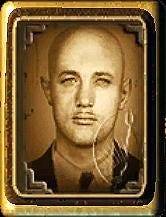
Frank Fontaine from BioShock.
Certain types of games address these concerns by forcing the player to adopt the dual role of protagonist and antagonist - see Wii Fit, where your vanity does battle with your indolence, or Guitar Hero, where your primary challenge is to train your useless pie-fingers into dexterous shred-machines - but others, such as RPGs, modern shooters, and anything that falls in the "action-adventure" catchall, rely on old-fashioned tricks such as writing, voice-acting, and clever game design to deliver their villains.
By the way: before we go on, please note that I'm not discussing boss monsters. Bosses are a design crutch only held atop the universally-derided likes of QTEs and overlong cut-scenes because so many people who play videogames are mad. Bosses have, in fact, frequently polluted the videogame-villain gene pool. Consider Atlas-slash-Fontaine in BioShock, whose appearance in the game's penultimate chapter has him transforming from a well-written and intricately-paced villain into an embarrassingly unsubtle and literal representation of the Greek titan.
Anyway. Last week, two things happened. First, I clicked and strafed my way through Modern Warfare 2, primarily so I could make snide comments about it to my clearly bored significant other. (This is my final recourse when I realise absolutely no one is going to pay me to talk about something.) Second, I beat the mustard out of Risen, judging it a thoroughly competent and detailed albeit rather staid mix of modern popcorn RPG and old-school slow-burn.
Having completed these two vastly different videogames, something occurred to me: both had awful villains, and for entirely distinct reasons, too. Modern Warfare 2's bad guy is actually quite nicely done in a Robert Ludlum kind of way. Problem is, his entire story arc develops without any player input whatsoever. It's cinema floss hastily stuck to chunky shooting set-pieces.
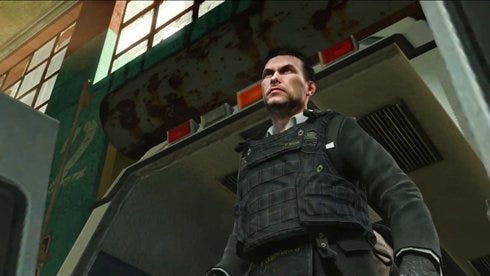
Vladimir Makarov from Modern Warfare 2. (According to Google anyway. Image-making man was too busy replaying Viva Pinata.)
Risen has the opposite problem. The player is given numerous opportunities to interact with and explore his primary antagonist - who develops in a similar fashion to Modern Warfare 2's villain, actually - but he's so unbelievably dull that there's no real point in doing so. Want to know his soul-consuming reason for going rogue, guys? He's wearing a magic monocle. No, really. Dr. Willy has better characterisation.
This needs to stop. A proper videogame villain, as in literature, theatre and film, needs to be a consistent, compelling, and at least vaguely sympathetic entity; they arguably have to be the most fascinating character in any given story, because it is through their actions that the hero's journey is necessitated. And in videogames, designers have to go a step further: the villain's relationship with the player should ideally be interactive and dynamic.
If developers can achieve this in their villain, the entire experience is lifted - there's a reason Double Dragon's finest moment is when testosterone compels your best brutha to turn on you, after all. On the other hand, if Axerazor Interactive has been taking notes from The Hottie and the Nottie, it can not only ruin a decent game-narrative, but the game itself, too.
Richard Garriott realised this back in 1983, having just completed Ultima III: Exodus. He noted the moral absurdity present in the vast majority of games of the day (including his own), where players were heroes because the instruction manual said they were, and villains were villains because that's who the players were told to kill. And in order to reach that "villain", players would murder, pillage, and plunder everything in punching range, while their enemy meanwhile did nothing particularly reprehensible other than maybe leer at a handmaiden or two while listening to Tears for Fears.
Garriott's first step in a multi-tiered solution was Ultima IV: Quest of the Avatar, which stripped the Ultima formula of any discernible villain, and instead focused on monitoring the player's adherence to Garriott's moral code, also known as the eight virtues of Honesty, Compassion, Valour, Justice, Honour, Sacrifice, Spirituality and Humility.
Subsequent Ultima games reintroduced proper villains, but this time Garriott strove to make them actively subvert and flout the virtue system introduced in Quest of the Avatar. In doing so, he was able to craft the series' most engaging storylines.

Ultima III. (This one was easier.)
Ultima V: Warriors of Destiny explored themes of absolutism (where the virtues were legally implemented with fascistic rigour), Ultima VI: The False Prophet touched on racism and intolerance, and Garriott's finest achievement thus far, Ultima VII: The Black Gate, was an unabashed, open-ended account of his feelings about The Church of Scientology and the Devil in Sonny Bono. (Sad footnote: the final two Ultimas are probably more instructive of the perils of aligning oneself with a corporate meganaut who doesn't understand your work schedule than anything more life-changing.)
The greatest examples of videogame villainy - and I continue to refer to the in-game rather than Stefan Eriksson variety - released since Ultima have predicated on its teachings. Consider Fallout: the Vault Dweller's arch-nemesis, The Master/Richard Moreau, is revealed to the player in tantalising snippets as the game's true main quest is gradually revealed. When you finally meet him beneath his cathedral - and be forewarned, Fallout virgins: his appearance and voice remain with you longer than you might wish - it never feels like pointless cheese included so you have a big monster to fight at the end. In fact, it's quite possible to convince Moreau to see the flaws in his own nefarious logic, thereby persuading him to destroy himself and his master plan.
It's an absolutely beautiful use of the full range of character stats available in an RPG, and, to my knowledge, it's only ever been repeated with such - forgive me - skill and class in Planescape: Torment.

Resident Evil: Nemesis.
If GURPS' only meaning to you is as the sound you might make after a few too many Slippery Nipples, perhaps you'd prefer to talk about Resident Evil: Nemesis. The titular Nemesis, Capcom's eyeball-shouldered mutant, wasn't exactly a work of majestic literary perspiacity, but you know what? He had the sense to actually chase Jill Valentine throughout her jaunt in Raccoon City, often appearing at the most inopportune (and genuinely unscripted) moments. As a result, the monster earned the player's fear and hatred almost entirely emergently.
As with the above examples, a videogame's villain should ideally become one with the game's mechanics, whatever they may be. One of my favourite uses of interactive villainy, the various "wolves" of Tale of Tales' The Path, made their presence known throughout your chosen character's forays into the woods outside grandma's house.
The Path, primarily, was a game about surrender - surrendering to the beauty in the forest, surrendering to the fact that meaning and context can only be fully understood after time and contemplation - so much so that in order to interact with anything, one had to stop moving completely and just bloody let it happen. And whenever the player attempted to subvert this - to try to find the "game" in The Path by running, looking for a way out, and so forth - they were punished: first with unbearably creepy music and atmospherics, and then, if they persisted, death. In The Path, the metaphorical beasts that punish and "kill" you and your type-A personality aren't villains in the way Richard Moreau is, but they're perfectly suited to the game in which they find themselves.
In my mind, however, the ultimate videogame villain - and the standard to which all virtual ne'er-do-wells should heretofore aspire; the truest representation of everything I've blathered on about above - is Kreia from Knights of the Old Republic II. KOTORII isn't a brilliant game by any stretch - it's buggy and sorely incomplete, even with the recent fan fixes - but Kreia is an unforgettable nemesis. In some ways, you'd think she deserved better.

Kreia from Knights of the Old Republic II.
If you've never played KOTORII, you probably aren't going to now, so let's do away with all this spoiler business. Kreia was, for all intents and purposes, KOTORII designer Chris Avellone's commentary on everything he found ridiculous not just about the Star Wars mythos, but the flaky heroism and morality present in post-Garriott videogames in general - in old lady form. In a game whose joys, frustrations, successes and failures were rooted entirely in dynamic storytelling and a light side/dark side morality system, coming to grips with Kreia's unusually multi-faced philosophical leanings was its ultimate challenge.
Initially presented as an ally and teacher, Kreia is fairly swiftly revealed to be a former Sith Lord - or Lady, I suppose. She isn't ashamed of this, though, and regards those halcyon days of mind-crushing and world-enslaving the way I might recall that night I painted my face red and walked my best friend around the city on a dog leash and fed him dog biscuits. All in good fun.
But she's not evil, though - not entirely, anyway. She holds equal disdain for both extremes of Light and Dark, and in her genuine, albeit twisted maternal love for you, the player, her student, she seeks to free you from such primitive, dualistic trappings.
She admires good deeds, but is scathing when your kindness and mercy leads you to, as my father would say, put a "negative investment" into someone. (To illustrate her point, she demonstrates how the beggar on Nar Shadaa whom you just helped becomes a target for bandits, and is quickly mugged and beaten.) In the end, she reveals that she hates the Force, the Jedi, and the Sith, and wishes that the galaxy were free to make its own decisions. Even when she turns on you at KOTORII's abrupt end - she wants you to kill her, as your "final lesson" - you can't help but see her as a flawed visionary.

Unrelated.
Kreia is the perfect villain for her flawless dialogue (written by Avellone), intelligent and subtle voice-acting (by Sara Kestelman), and the fact that she forces you to make choices. She makes you think about your actual in-game decisions, if only just to please her and get another chance at finding a crack in her adamantine facade. She's a tutorial, an incentive to explore moral avenues you might have otherwise ignored, and she's a decent end-boss. What more could you want, really?
Actually, I think I've just discovered why the tree spirits told me to write this piece. It's for you, Chris. I know Alpha Protocol has been delayed, and I hope you're taking every minute of those extra few months to make a villain that blows Kreia - and Planescape's Transcendant One, for that matter - out of the water.
Villains define games more than any of us realise when playing them; it's through their innovative design that the journeys we undertake in their name become compelling and worthwhile. You know this. So go forth, and spread evil in the name of progressive games design! Or vice versa. Whichever flots your jetsam.
You may also like...
-
Why Can't Games Do Sex?
-
Bethesda on Skyrim's viewable Morrowind, Cyrodiil: "maybe we'll use it one day"
-
Notch can match Schafer's $13m Psychonauts 2 budget valuation
-
Valve selling a virtual Team Fortress 2 ring for $100
-
Dear Esther Review
-
UFC Undisputed 3 Review
-
PC Mass Effect 3 does not support game pads
-
Fresh Resident Evil 6 details bleed in
-
Solitaire Blitz Preview: Why PopCap's Approach to Facebook Gaming is Anything But Casual
-
Comedian takes on Choose Your Own Adventure
-
Sony to shut down PSP Digital Comics service
-
Sonic 4 Episode 2 screenshots leak from Xbox Marketplace
-
Fresh Far Cry 3 teaser is full of swears
-
Remedy discusses Alan Wake 2
-
Street Fighter x Tekken PC release date announced
-
Will there be a PS3 version of The Witcher 2?
-
Eurogamer.net Podcast #100: Ellie returns! And we filmed it!
-
Darksiders 2 release date announced
-
Mojang won't sue FortressCraft dev, "bored" by Minecraft clones
-
Mass Effect 3 teaser trailer invades Earth
-
Twisted Metal film gets Crank writer/director Brian Taylor
-
Naughty Dog discuss Jak and Daxter development
-
Only Modern Warfare 3 made more money than Skyrim in 2011
-
Girl Vader stars in Kinect Star Wars trailer
-
Alan Wake PC version footage


Comments (74) Latest comment 2 years ago
Comments threads automatically close after 30 days, but please feel free to continue chatting on the forum!
Comment below viewing threshold Show
A short but sweet villainous tale.
Comment below viewing threshold Show
Arse, I see this has been said already!
Comment below viewing threshold Show
Though it's also a bit sad that videogames haven't managed very much on that level of sophistication in the intervening 16 years....
Comment below viewing threshold Show
edit: Looks like I am not the first to mention this.
Comment below viewing threshold Show
agreed! for me SHODAN is the best of the videogame villains, and arguably the most interesting character to come out of videogames at all. here's a great article that explains it better than I can: http://gi llen.cream.org/wordpress_html/?...
Comment below viewing threshold Show
The Grand Master in The Witcher was a decent villain I thought, interesting motivation and there were a number of key interactions with him during the game.
Comment below viewing threshold Show
And good shout on Sovereign & Saren, Xerx3s - I found Sovereign to be quite chilling. Saren was unexpectedly multi-faceted, as well, but didn't get as much exposure as Kreia
Comment below viewing threshold Show
Starkweather - Manhunt
Emile Dufraisne - Splinter Cell Double Agent
In both cases I couldn't wait to personally kill the bastards.
Comment below viewing threshold Show
Also Big boss - after MGS3 you sympathise with him
Comment below viewing threshold Show
then he's the villain in soul reaver, but think about it: he's the villain because we see things through raziel, whom he has wronged. and, although it clearly wasn't planned from the beginning, I love how the viewpoint changes progressing with the series.
I just wish the gameplay of those games was as good as it's story, characters and ambience. (the first soul reaver is the only one I really enjoyed. the rest... playing them was just a nuisance to go through in order to obtain the next cutscene)(just like brutal legend!)
Comment below viewing threshold Show
For me he is one of the most enigmatic foes - constantly attempting to recapture Princess Peach despite all of his previous attempts ending badly (often in a pit of lava). What drives him to struggle on in the face of repeated defeat? How has he been able to rebuild his empire so many times? What is it exactly he has planned for the young princess?
It keeps me up at night...
Comment below viewing threshold Show
Do you get paid by the word by any chance?
Comment below viewing threshold Show
My favourite villains, however, are those that are a metaphysical entity, or presence of which throughout the majority of the game can only be felt. The town of Silent Hill and GLaDOS in Portal are perfect examples of such.
Comment below viewing threshold Show
Consider... What's the difference between Dragon Age Origins and Baldur's Gate 2 as RPGs?
Gameplay: about level. BG2 has better magic, DAO has better melee.
Controls: about level. DAO has programmable tactics, BG2 has proper autopause.
Quest and NPC polish: an edge to DAO here.
Villain: DAO has an impersonal blight finally personified in a beastie with no personality and no dialogue. BG2 has Jonaleth Irenicus.
Final analysis: DAO is an excellent, polished, enjoyable CRPG but it's not as memorable as BG2. And it's the villain that makes the difference.
Comment below viewing threshold Show
I always felt sorry Kreia, she fights so hard to teach you to be free of fate, but in the end becomes trapped by her own teachings in to becoming what she most hates.
Also this article fails due to lack of SHODAN...insect.
Comment below viewing threshold Show
And Torment also has Ravel and Trias. It's just unstoppable in any discussion of plot and character, and makes things like Mass Effect look juvenile by comparison.
And where the fuck is SHODAN?
Comment below viewing threshold Show
Probably the only real disappointment in Uncharted2 was the clichéd stock villain (Bald! Russian! Scars! Scary!), and the horrible let down of a one-solution-repeated-endlessly running around in circles boss fight at the end.
Comment below viewing threshold Show
I quite like the villain who does what he does for the greater good (in their eyes). See Sarren.
Comment below viewing threshold Show
At least I think I understood the article to be about this. Nice article too.
Comment below viewing threshold Show
Yeah I guess it could be said that the real villains in the LoK series are The Hilden though you rarely see them which is another interesting concept. A villain who isn't actually in the game.
Comment below viewing threshold Show
You must be joking. I don't see how you can consider that to be a better developed character than Kreia. For a start, most of what that character is is how you play the game yourself. There isn't really much else aside from "This was a great jedi who because a sith lord and was quite good at it." You can't even call Revan the villain/antagonist as it is clearly Malak in the game. Kotor 2 even has more discussion about Revan's character than the first game.
@EarlBassett
The graphics update is a bit hit and miss, and you'll have to deal with the low poly, low res texturing anyway.
Comment below viewing threshold Show
bravo
Comment below viewing threshold Show
Phew, someone mentioned him. Such a great bad guy with great voice-over work done (by the chap who plays the baddie in my favourite Star Trek epsiode, the nasty Romulan torturer. Only found this out last week).
Not going to a game vs game analysis of Baldurs Gate II and Dragon Age but it really misses a villain of Irenicus's calibre.
Comment below viewing threshold Show
system shock 2: the texture update is worth it, as it stays true to the original look and feel. the model update, ("rebirth"
as to where you can get it: ebay.
Comment below viewing threshold Show
I loved Scenario B's tyrant in RE2! That bit you mentioned at the end was especially scary! I used up all my bullets killing him in the room and was pretty screwed when he came through the wall.
The way the Tyrant seems to be stalking you in RE2 is very well done. A lot more scary than Nemesis.
Comment below viewing threshold Show
The master in Fallout was Richard Grey.
Comment below viewing threshold Show
I really appreciated it in Resi 3: Nemesis, even though the thing didn't actually have a personality. A least it inspired some fear in the player.
Comment below viewing threshold Show
______________________________
(no spam)
Playstation/xbox/wii fans add me and check out my blog please http://luger992.wordpr ess.com/
Comment below viewing threshold Show
I played through KOTOR2 when eurogamer done the retrospective on the first one as I never went through being an evil twat. Kreia was more interesting a character when you know who she is and what she will become.
Comment below viewing threshold Show
The only problem with Sarevok and Irenikus is that, past nostalgia aside, they never got enough air time just like BG2's party membrers who had extra, but still much less than modern bioware games.
Comment below viewing threshold Show
and yeah, SHODAN is missed.
Comment below viewing threshold Show
I always thought you got more power to more effectively kick the other players around the server. Maybe that's just me though
Hasn't "fail" gotten old yet? I wish it would.
"Sarren or Sovereign can only be mentioned if you started playing game this gen. there, I said it "
And I'm sure there some guy older than you who could say Shodan should only be mentioned if you started playing games in the 90's.
Comment below viewing threshold Show
"fail" will only get old when some other internet word thats just as annoying takes its place. You could try to start a new craze yourself.
Also the voice over guy in Crackdown - you kinda thought it was coming but it still annoyed me that I had to do the dirty work.
Oh and G-man fro Half-life (not that you can tell what he is actually up to anyway).
Comment below viewing threshold Show
Oh but anyway, villains worthy of mention in the comment thread? I really like Doctor Breen in Half-Life 2. Brilliantly scripted, perfectly voiced, he's a prime example of the ineffective scapegoat villain. Before Andrew Ryan took you clubbing, you were obliged to kill Wallace Breen for... what exactly? It's a far more subtle articulation of the same issue. Ultimately, you're obliged to kill Breen because both the game and the G-Man intend it.
Comment below viewing threshold Show
an article on videogame villians that name-checks fontaine and not shodan is bound to raise some eyebrows. as for bioshock, it disappointed a captive audience of system shock fans by essentially making the same game but slightly worse in every aspect. that said, 'slightly worse than system shock 2' is a caveat that most of us can, and did live with.
and liking old PC games has never done much for my sense of self-worth.
Comment below viewing threshold Show
Also yes, Nemesis' appearances were scripted. Still had me on edge for most of the game though, even when he didn't show up and attack me.
Comment below viewing threshold Show
And you're all damn right - Shodan should be in there. And Kefka. And, imho, the Shadow Queen from Paper Mario too - not entirely sure why, but I found her quite disturbing
Comment below viewing threshold Show