Fear of Failure

Partying like it's 1999.
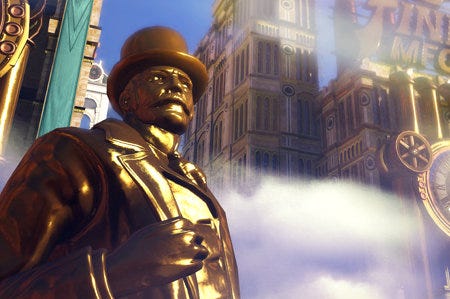
It says something about modern games that BioShock Infinite has been able to make headlines by adding a special "1999 Mode" where your in-game decisions will actually matter. If you've yet to hear about it, you can read our full run-down here, but in summary, it's a special difficulty mode where you'll be forced to make and live with your in-game choices. Where normally you'll be able to jack-of-all-trades your way through most situations, here - supposedly - everything will be a trade-off.

In short, it's being set up as a mode that's not afraid to let you fail - and that's practically unheard of these days. Sure, there are a few hold-outs like Dark Souls and indie games like Super Meat Boy/The Binding of Isaac that are willing to kick you in the face, but in your average AAA game? Forget it. These days, the worst we face is replaying a single fight a few times, or being irritated by a short walk back from a checkpoint. On the surface that might seem like a good thing, and in many cases it unquestionably is. Nobody enjoys failing miserably, especially when it only comes after hours of fighting impossible odds. We play games to win. Failure is a deeply bitter thing to swallow. But then, so is lemon pepper, and any cook can tell you how much a quick sprinkle can jazz up an otherwise bland meal.

If victory is assured, victory is meaningless. If you're never pushed, you never have an incentive to dig deep into a game's mechanics and make them work for you, whether it's figuring out a trick to confuse the AI or learning to love your stealth options instead of relying on brute force.
'Fear of Failure' Screenshot 1

Just to be clear, leave our Easy Mode options alone. Just in case...

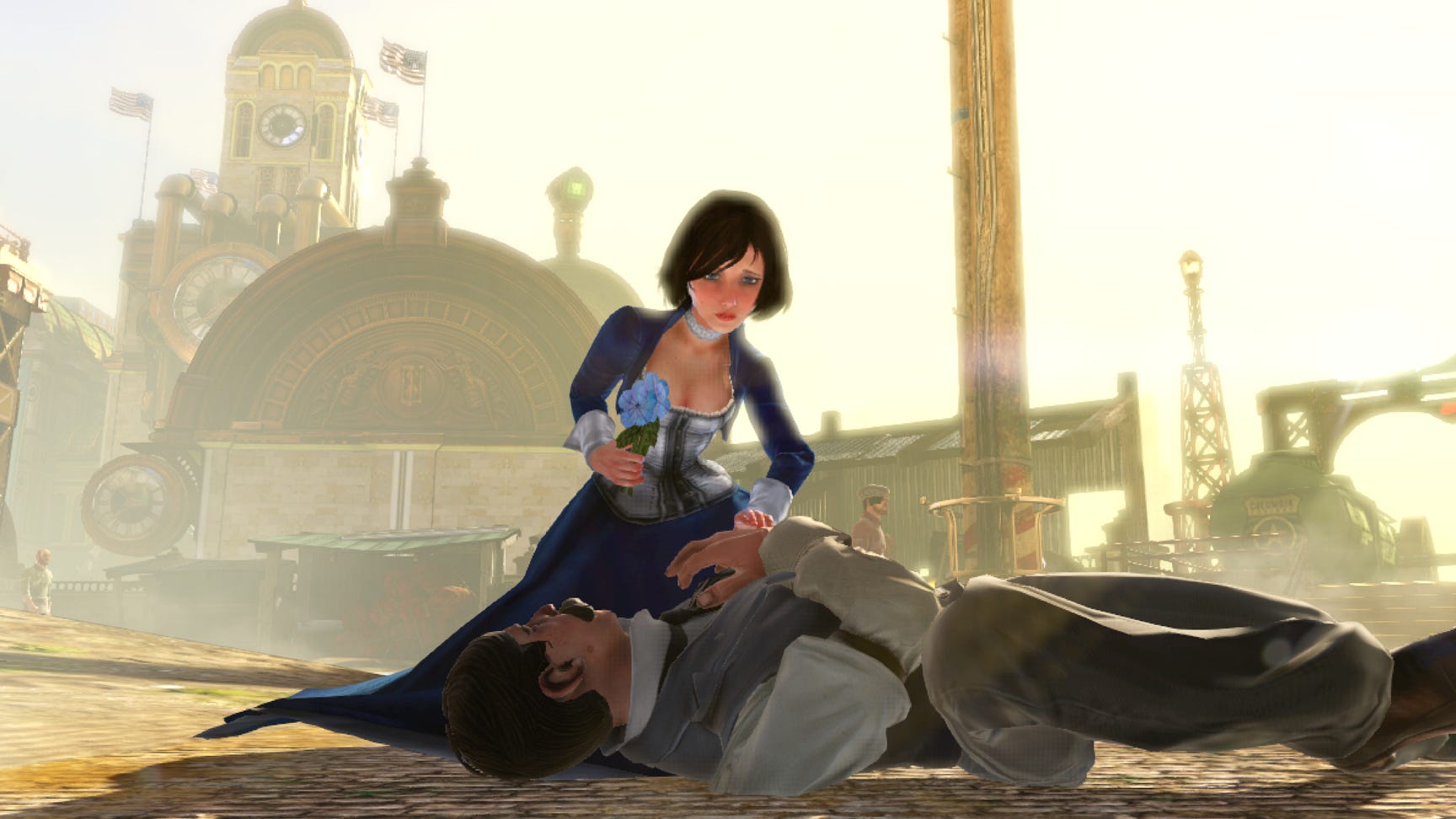
That said, BioShock Infinite is unlikely to be failure's best ambassador. Its return to old ways are specifically being pitched as a super-hard mode, and there are reasons that the things it's bringing back were dialed-down and allowed to die out. The biggest is that unless you know exactly what's coming later in the game, any decisions you make are inherently gambles, not tactics.

If later enemies can ignore your stealth build, if the pistol isn't good enough against the final boss, you're screwed in a way that's really not your fault and therefore not much fun. It's incredibly unlikely that Irrational will pull an Alpha Protocol here, but once bitten, twice glad to at least have the option to roll again. A handful of key, but non-game dooming choices in the main campaign should be enough to satisfy the itch to experiment, without ever landing you in more trouble than you can get out of. For a game like BioShock Infinite, that's how it should be.

But what of its sister/step-sister X-COM games?

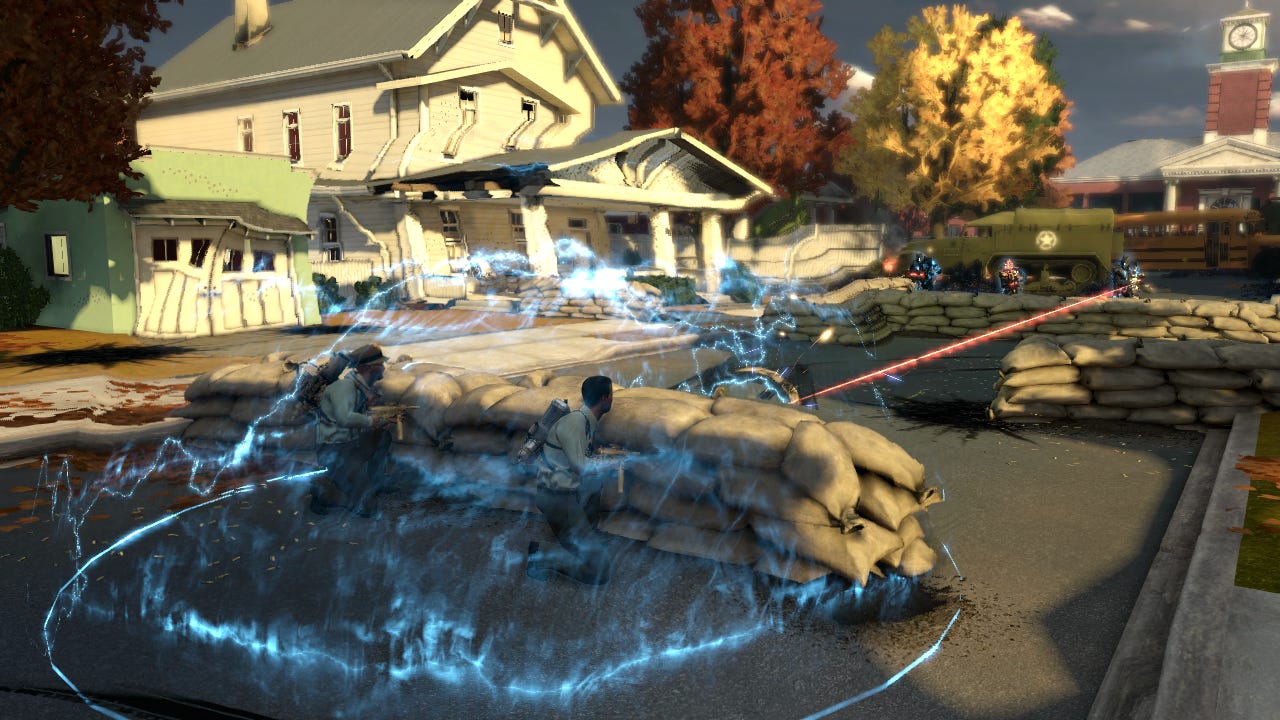
The original UFO: Enemy Unknown - coincidentally set, though not released in 1999 - was practically Failure: The Game, giving you the impossible task of defending a whole planet from an alien force you were desperately unprepared to handle. The sheer scale of the challenge, from building bases to intercepting UFOs to developing a life-long fear of Chryssalids, all meant you spent at least the first two-thirds of the game balanced on a knife-edge. Failure was inevitable. Even if X-COM prevailed, you'd lose many good men in the fight. That you'd spent so long developing them, kitting them out, and even naming them after friends all made that fact so much harsher. Victory wasn't assured. It was a fantasy.

And then, suddenly, one single moment forever burns the X-COM experience into the warmest part of your brain - the first time you feel the balance of power start to shift. In an instant, your reverse-engineered weapons become a match for anything the aliens can throw at you. With psychic powers, your soldiers become powerful enough to turn theirs into mere puppets. Your bases… no, your empire stretches out from one single, solitary outpost into a world-wide alien-busting network that makes the Men In Black look like investment bankers on a lunch-break.
'Fear of Failure' Screenshot 2

Achievement Unlocked: Completed Game While Watching TV.

It's one of gaming's hardest earned victories, paid for in blood and sweat, and made perfect when you finally get to go on the offensive and make those little grey bastards eat their own anal probes for breakfast. Metaphorically speaking, of course.

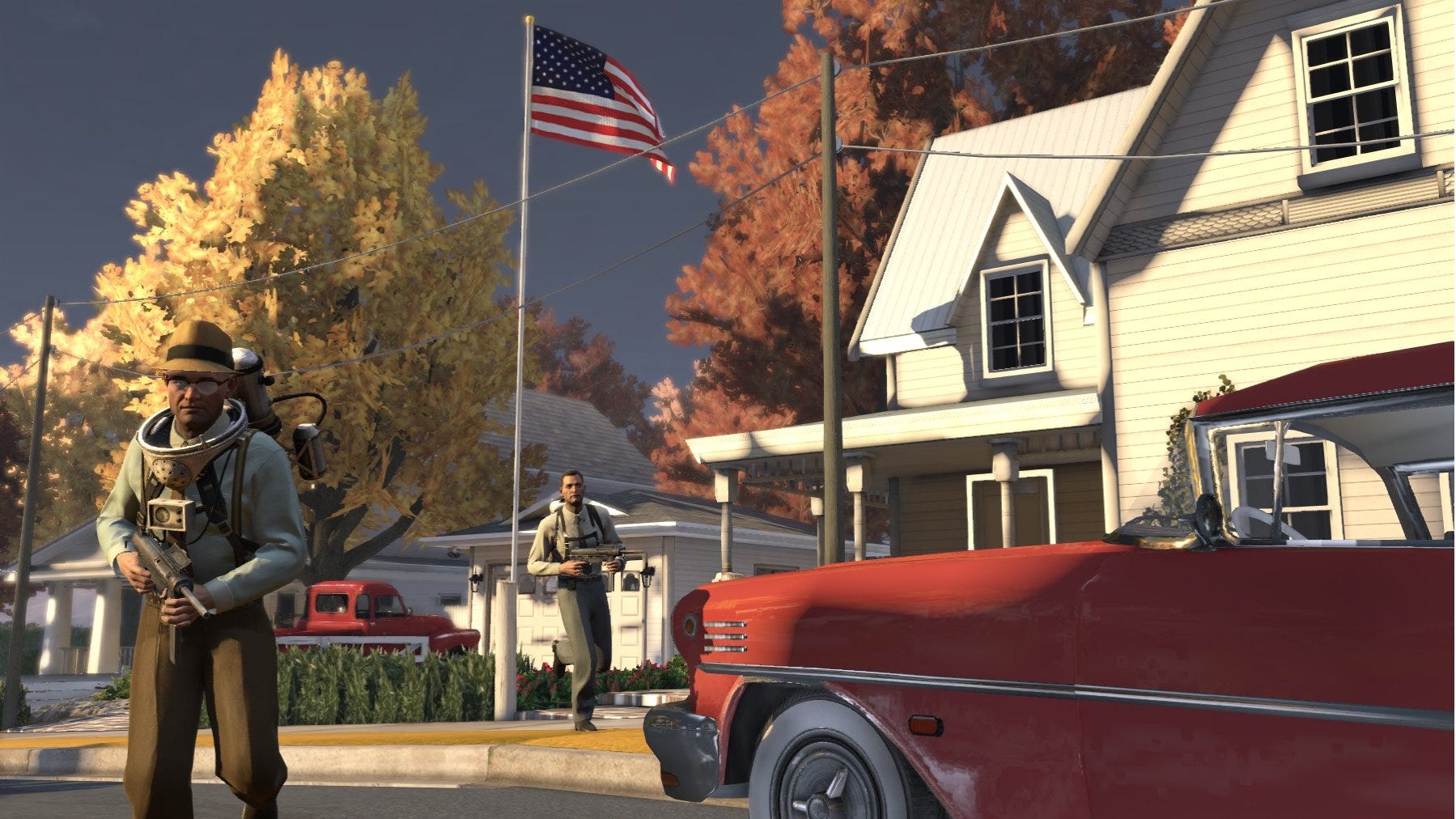
All the failures are in service of that moment - they're there to make it meaningful. Will the new games dare to offer anything similar? There's no excuse for Firaxis' strategy reboot not to, even if it does dull the pain a little in the name of a wider audience. The FPS? It's unlikely, and not without cause. "Fine! This time I'll try starting with two bases!" is a very different thing to "You mean I have to replay this whole thing?" - especially with it due to focus more on story than emergence.

Not all interesting failure has to come from the threat of a Game Over. Narrative driven games have a whole bag of tricks to play with - not least, bluffing. In Heavy Rain for example, you're led to believe that the characters could die at any time and that everything you do has consequences. In practice, it's very difficult to kill any of them for most of the story, or even screw anything big up.

Likewise, whatever your feelings about Mass Effect 2's suicide mission itself, there's no arguing that the shadow it casts over your first run through the game makes your big decisions feel more meaningful. Most games have been unwilling to go this far, preferring to spend their effort on alternate moral paths instead. but few of the ones that did have ended up regretting it.
'Fear of Failure' Screenshot 3

Without challenge, what are games but glorified theme park rides?

The key to making failure work is simple, yet incredibly easy to screw up - if you don't feel responsible, it's not your fault. Very rarely will anyone take the time to feel bad about failing an escort mission instead of complaining about bad AI. X-COM handled this by making absolutely everything in the world your responsibility, as (we assume) will its sequel.

Why should we want these opportunities to screw up? Put simply, the more games we get that embrace adversity, the more we'll assume that our decisions and successes will matter, and thus the more heroic our acts of heroism will be.

Raw challenge can play a part in that, as with BioShock Infinite and the original X-COM, but as Mass Effect 2 and Heavy Rain and many other games and moments prove, making you want to smash your controller is far from essential to the effect. Tension, hard decisions and the satisfaction of beating the odds are things we can all enjoy though, and much too important to either be demoted to mere unlockables, or left to be forgotten back in 1999.

Comments (67) Latest comment 3 weeks ago

  • persus-9 #1 4 weeks ago

    First make me care, make me think, then make me worry, then let me bask in relief that it all came out okay-ish.

    Bioshock made me care but didn't make me worry because the only thing I could screw up were fights and I can't worry about those because they're just tests of skill which I'll either pass or fail and since fail meant respawning it was really just pass elegantly or pass messily.

    Games which make me think but not care enough to don't make me worry which is where most puzzle games fall down for me. I think perhaps that is why I like Tower Defense games, they're puzzle games but they have a more immediate failure mechanic built in since the beasties are coming to get you! That makes me care enough to worry about my tower placements and makes be relieved when it all turns out okay.
  • Inmediasress #2 4 weeks ago

    Todays gamers generally only wan't handholding experiences because the industry breed it into them.
    This is basically a result of the mass appeal strategy the indsutry has taken this gen.
    This probably, will continue even more in next gen by alienating the niche fanbase and trying to hook even my grandmother.
    That's why we get more games that are like movies with choiches, it's not a bad thing now and then but turning the whole industry in this direction is failure.
    They want to chase after the movie and music indsutry in mass appeal but the thing is I don't see games ever becoming as widespread like the above mentioned.
    Simply because at the end you just make a movie if you go down that road too far.
    You either make games or movies.

    I do welcome their attitude towards a more challenging and punishing gameplay.
    I think I probably will pick this up seems to be shaping up nicely.
    Too many games go along the route of teh "awsome button" and "roll your face ond the keyboard" combat design.
    It is rather sad that nowadays having actual gameplay is something that needs to be paraded in a you know... a game???
  • haenkie #3 4 weeks ago

    Thanks for this great article!

    Now I know why there was no way to get ahead in X-COM, I started way to late playing it. Figuring it should at least give me a little chance to get up and going.

    I do like those games your talking about, then the reward feels much more like a reward instead of just something handed to you.
  • brider #4 4 weeks ago

    I know what he means about the feeling you get when you start to turn the tide in Xcom.
    The first time I managed to build a hover tank and shooting it into a group of aliens watching them all drop like flies after they'd killed so many of my poor guys made me feel like Alexander the Great lol
  • Whitster #5 4 weeks ago

    Your right about ME2 though, despite losing two characters in the end I'm still using that save for ME3 since I have to stick with the choices I made.
  • Overkongen #6 4 weeks ago

    This is why I loathe Superman. Him being practically impervious to harm, means that he never has anything at risk, which makes him boring.
  • hiscore #7 4 weeks ago

    The world is ready for a System Shock 2 HD remake. Enough of this vaseline most games have become. Give us back our virtual struggles!
  • misterdoctor #8 4 weeks ago

    Excellent article!

    Although, once I realized what the thesis was, I knew Dark Souls would not be too far behind as a citation to prove why failure is not always perceived as a de-motivational tool.
  • BiscuitPowered #9 4 weeks ago

    I got double-negged in comments last week for suggesting that Bioshock Infinite is a bit like Dark Souls with its no-turning-back option.
  • joeymoto108 #10 4 weeks ago

    I think this 'fear of failure' may be to do with the fact that a proportion of gamers have busy lifestyles. Not everyone has the time to complete games such as Dark Souls which require lots of trial and error and has a steeper learning curve/ slower sense of progression.

    I, however, love a good challenge; games which are too handholding or easy quickly become boring. Unfortunately though, many games at higher difficulties tend to just throw greater numbers of enemies at you who have higher health and can cause more damage, which IMO is simply a way of artificially increasing the difficulty and not really providing much more of an actual challenge.

    Games like Dark Souls should be praised for actually making you feel like you are struggling to survive but without feeling cheap.
  • theonlyix #11 4 weeks ago

    This is a game i will pickup - i thought i wouldnt, but for this, I WILL!

    its like with movies, the best ones are the ones that makes you think, makes you care, makes you really really wonder what the purpose really was.

    However, these are seldom massmarket approved. People rather see Mission Impossible 523 or something like that where action is assured, and no thinking is required.

    For me, and a few others around the world, thinking, imagining and wondering is more important - for us, these game modes are.


    Dont get me wrong, i like the "fastfood" approach aswell to games.... in many cases.
    Edited by 1 at 28/01/12 @ 11:33
  • Okamiwolf #12 4 weeks ago

    Reads the caption: "Without challenge, what are games but glorified theme park rides?"

    I could counter that without fun, entertainment and pretty eye candy, what are games but glorified, tedious work?
    Edited by 1 at 28/01/12 @ 11:33
  • millerlfc #13 4 weeks ago

    The XCOM/UFO memories are great, although gamers did have the option of 'cheating' by simply saving their games often and re-loading when things got FUBAR. I never did though, even when it was tempting as half your team get shot as they exit the dropship - or even worse if you had to abandon a mission with the last survivor as the rest of their team had been killed. One of the reasons it was never worth naming your men/women at the start of the game, they weren't going to last long anyway.
  • RichardC #14 4 weeks ago

    @millerlfc (stares up at ceiling, whistles...)
  • Daeltaja #15 4 weeks ago

    Having played through Dark Souls (My GOTY by far) I've been finding myself craving challenge more and more. I've been playing nothing by Isaac as of late and have Super Meat Boy waiting for me once I finish.

    The article hits the nail on the head; if a game is tuned tightly, then overcoming the challenge is incredibly rewarding.
  • phenom_x8 #16 4 weeks ago

    I knew it wasn't Eurogamers regular writer when I read the title and the 1st caption/picture alt text! Well done, Mr. Cobbet! You summed it up right! tried Xenus II white gold Recently,and I dont know why its feels greater than recent AAA games I've been played (except for DX HR,Portal and Witcher 2) !I think its caused by what you've said here ! Its allows me to fail and tried different method!
    BTW, great year for games (PC especially) with dark soul and this 1999 mode!

    Always wait for your next article at here, RPS and PCG!
    Edited by 3 at 28/01/12 @ 12:26
  • RichardC #17 4 weeks ago

    @phenom_x8 Thanks - good to be here :-)
  • spekkeh #18 4 weeks ago

    Great article, I agree with what you're saying, but I feel you left one thing hanging a bit.
    Nobody enjoys failing miserably, especially when it only comes after hours of fighting impossible odds. We play games to win.
    Actually, I feel the problem is that everyone, and the game designers especially, assume we play games to win. I want to complete games, not necessarily win. Because if you stop playing at only one-thirds in, it feels like such a waste. I would prefer it if we went to a model where it's okay not to win, and maybe the game world at the end is in a sorrier state because of it.

    For all the (rightful) derision the CoD series gets, I actually think they do something rather groundbreaking in the narrative department: protagonists die, but the game continues. Most CoD gamers may be playing it to live out power fantasies, the game actually does the opposite, it's sort of flipping you the bird, 'you died, the world doesn't care, here's another character that you won't be able to save'.

    Getting back to the article, I agree that failures are meaningful, and there are way too few of them in games nowadays, but they don't need to be there in order to set up a great victory. Great stories don't need to end happily. I don't play a story game to win. Or it could end happily, but then that should be the reason you'd want to play the game well. That's my main gripe with 1999 mode in Bioshock as it appears in the media: I'm all for meaningful consequences to your choices, but a heightened challenge in a story game is not meaningful to me. It should be the story that changes, not the speed with which you overcome a setpiece.
  • KDR_11k #19 4 weeks ago

    Yeah, generally total, unsalvageable failure only fits into emergent games, not story driven ones. Stories only work when you read them once which clashes with the concept of total failure that forces a restart of the whole campaign. Losing an AI War campaign or a Dwarf Fortress fort are much more acceptable despite invalidating much more of your play time. That's because in an emergent game it's usually fun to do something again while in a story driven game there are a lot of story moments that lose their value in a second or third or n-th run.

    Challenge and the associated failure are fairly important game mechanics to me, without them there's no feeling that you're truly a hero, that you're truly doing something special. Doesn't go well with set piece moments and linear stories though and shines a spotlight on the game mechanics instead of the set dressing which especially in today's FPS games is the weakest part. Not too much real, fair and fun challenge that can be added to a game where enemies with line of sight hit you based on a random generator and your only influences on that are killing them quickly and breaking line of sight until your health regenerates, especially since killing quickly is greatly improved by memorizing their pre-determined positions.
  • Capa26 #20 4 weeks ago

    Disagree with the example of Heavy Rain... not in principle, as it should have worked. The problem was I didn't give a fudge if any of the characters packed it in post-stupid twist. As persus-9 said, make me care first.
  • RandomTerrain #21 4 weeks ago

    Great article, I have to agree. More games ought to have real consequences for actions of the player. Sending you back to a checkpoint two minutes previously may work for some games where you can only win or lose but then what reason is there to care? Make it a deeper experience if you want your game to be remembered for a long time to come.
  • RichardC #22 4 weeks ago

    @spekkeh Agreed, and games like Silent Hill, Shadow of the Colossus, Ultima VIII and Kane and Lynch have played with that. One that springs instantly to my mind is I Have No Mouth And I Must Scream, which ends with most of the cast dead and the final survivor trapped forever trying to keep sadistic AIs under control in the hope that the last fragments of humanity can retake the planet. And that's the *cheery* ending they added when they figured a full-downer would be too bleak.
    Edited by 1 at 28/01/12 @ 19:06
  • RichardC #23 4 weeks ago

    @Capa26 I have many problems with Heavy Rain, starting with the story being cack-handed and full of holes, but the fake-outs almost all happen pre-twist.
  • KDR_11k #24 4 weeks ago

    Oh right, another game where failure is a key component of the gameplay is EDF. Not EDFIA, that's botched in the difficulty department but the Sandlot EDF games. A big part is pushing up the difficulty to get a chance of better loot and finding out how far you can push the difficulty with your current gear before getting mercilessly slaughtered. Of course it requires a lot of skill (and sometimes luck too) to survive with inadequate gear and if you die before finishing the mission there's no loot at all for you. That makes it all the sweeter when you find that insanely powerful (compared to your current arsenal) weapon as a reward for a tough struggle, even if it's actually a clunky monstrosity that has a high chance of killing you when you use it.

    Reports suggest that Kid Icarus for the 3DS will have a similar push-difficulty-for-loot mechanism. After I heard that I got excited about the game for the first time.
  • RichardC #25 4 weeks ago

    @KDR_11k Darkspore did something like that too. Keep playing missions and you'd get a better chance of rolling something good. (Though you would still be playing Darkspore, so swings and roundabouts...)
  • Syrette #26 4 weeks ago

    Sad I know, but I really hope that there isn't an achievement tied to completing it in 1999 mode.

    I'll be playing it through on a 'normal' difficulty because I want to enjoy the experience, not worry about being frustrated.
  • jaec #27 4 weeks ago

    That's what I loved about Cannon Fodder; if you made a mistake and people died, the world carried on. You were given new men to command and had to live with the guilt of getting Jops killed so soon in the game. I'll never forget that little gravestone on the hill.
  • Sharzam #28 4 weeks ago

    I think we need to define what 'hard' is. In a game like Rayman Origins it is all about your timing and skills with a control pad, in other games such as X-Com it is about your active choices and you live or die but what you decide. There are plenty of the former type but not so many of the later.

    Personally i think we need more games where choice matters. As pointed in the article it is not about game over but rather you make a descion and you have to see it thourgh. Whether it was the right one or not is part of the fun as stated its a gamble.
  • disappointed #29 4 weeks ago

    Where the point of a game is to be played rather than to be won, you get challenging gameplay. It's this stupid idea that if you don't complete the storyline, you haven't had your thirty-two quid's worth, that's ruining games. I haven't given a damn about a game's ending in years - they never live up to the promise, and with this sequel culture, they never reach a conclusion of any kind.

    And it's not like people don't want a challenge that includes repeated failure. Why do you think they play online?
  • newf #30 4 weeks ago

  • Geminosity #31 4 weeks ago

    The problem I have with 1999's model of 'difficulty' or 'consequences' is that it sounds mechanical. It's less 'choice' and more 'calculation'. I don't honestly believe that character stats/abilities you have to choose should ever be the difficult part, but rather the moral dilemmas in the game and the action itself. It should be about who you choose to save when two people are in danger. It should be about choosing sides. These are things I want to be irreversible; the Witcher games are a great example of this.

    If you want to give me some delicious challenge, keep it in the game, not in the UI or the talent calculators. While i'm sure some people love working out the intricate math behind a game, I'd rather not break my immersion in the name of false challenge. It feels less like a source of fiero and more like busy-work.
  • not_themilkybarkid #32 4 weeks ago

    The last time I got this feeling was playing Empire Total War. Launched an over-ambitious early invasion of France, and wound up fighting a 4 way war with Spain, French Rebels, the remnants of France proper and the Genoans for a good 15 years. It was a constant war of give and take attrition, and there were many times I thought I would lose it. The feeling when I finally managed to beat them back was amazing.
  • comedian #33 4 weeks ago

  • natureboy #34 4 weeks ago

    16 bits games where much better. The graphics may have been limited (back then they where cool and awesome that was all that mattered) but story line was always deep and fulfilling. Gamers were always satisfied and studios knew how to please. Today games are almost like movies and you get the feeling studios try too hard. I missed out on this classic BlackThorne back in the day and i played it some time ago on PS2 emulator and for me, it is much better than Heavy Rain: http://www .youtube.com/watch?v=WafqCyIwAWw
  • jimboton #35 4 weeks ago

    @Syrette If you're in just for the 'experience' then why do you care about achievements at all?

    Achievement: something that has been accomplished, esp by hard work, ability, or heroism
  • DoctorFouad #36 4 weeks ago

    great article !challenge in video games are what makes them fun ! or else it will be like watching a movie ! (I remember the difficulty of Jak2 but since jak2, naughty dog created easier game after even more easier game (Jak 3 than uncharted 1, than uncharted 2, than uncharted 3....) hopefully this would change....
  • Rens11 #37 4 weeks ago

    Mass effect 1 was more effective than 2 at tugging on your heart strings when wrex died in the first game and I had no saves were I could change it I was gutted but in the second where where anyone could die in the suicide mission just felt cheap to me
  • Syrette #38 4 weeks ago

    @jimboton

    I've anticipated this title for so long that I'd like to 100% it. I rarely replay single-players games though.

    Naturally I value having fun and enjoying the experience far higher than I do attaining achievements so if i can't get them all then fine.
  • spekkeh #39 4 weeks ago

    @DoctorFouad
    chal lenge in video games are what makes them fun ! or else it will be like watching a movie
    And movies are not fun?
  • Bander #40 4 weeks ago

    I have lots of games that I have never beaten, simply because I wasn't good enough at them. Couldn't solve a puzzle, need more practise etc..

    There have also been many games that I have beaten, or played for a while, got bored of and never returned to. Probably because they were repetitive and didn't demand much of my attention while I played them.

    The games industry seems to really hate used game sales. I would like to point out that I've kept all the games that beat me, because I'm not finished with them. I tend to sell the games that don't present a challenge.
  • DoctorFouad #41 4 weeks ago

    @spekkeh
    is eating not fun ?
    movies are fun but not video games fun ! movies are different than games.
  • TrevHead #42 4 weeks ago

    A game cannot be a game if you cant lose. To many games have a small penalty of death which totally cheapens the game. Thats what attracted me to Eve online because if you lose your ship its gone for good, no other game apart from shmups has had me sweating with aldrenaline while playing. Games like this are like crack to me

    Moving onto old school 1999 gameplay, these games arnt that hard as long as you have an idea how these games work. For example dont pumup all your points into an exotic weapon that has not ammo pick ups. Choose atleast 1 common mainstay weapon to act as a back up.

    Unfortunatly most of the kids have been spoilt with modern games and dont understand whats so fun about old school game design. Or how to play them properlly
  • drSchiwago #43 4 weeks ago

    "If victory is assured, victory is meaningless. If you're never pushed, you never have an incentive to dig deep into a game's mechanics ...."

    I strongly disagree on this statement. I'm not saying it is wrong, but it's only one valid approach and heavily depends on what one wants to gain from gaming.

    I'm not follow this cathartic approach where everything is about challenge and victory, my reward is the journey itself. Feeling relieved after beating a boss enemy, this type of feeling is not what I'm looking for. The fun of gaming for me isn't based on achievements of any kind also, like being fast or very good at it.

    I personally follow the entertainment approach (like I watch movies). I want to be immersed into a game, essentially looking for "the "flow"* and balance. Boss enemies, sections with a steep difficulty level or an endless fail-die-repeat-all cycle (the beloved Dark Souls) potentially distract me from what I'm looking for. The best a game can do for me is when it stops me from analyzing and thinking about it.

    While playing Dark Souls I became very distracted by the die-and-repeat routine. I asked myself why spending time on something which felt like a kind of sadomasochistic relation between me and the game designers. To clarify the issue, my frustrations didn't take place "within" the game, I more and more fell out of it and thought about why the designers exposed me to this. I guess for happy and successful Dark Souls players these "frustrations" only increase the immersion.

    In comparison to books & movies, who sits trough a movie in order to feel relieved or who wants to be "good" at watching movies? Is there someone who feels satisfied with being able to read through a book very fast?


    *This is why I like Mirror's Edge so much. This game is practically about creating a momentum and move through a level without interruption, the game also has a visual flow indicator. Games utilize a lot of indicators (visibility, etc.) but this is the only one I know that indicates "flow".
    Edited by 1 at 28/01/12 @ 16:22
  • makeamazing #44 4 weeks ago

    X-com (terror from the deep) is probably one of if not the top game experience i have ever had. Not only was the game solid (hard(, it took forever to play and you really wanted all of your guys to survive the mission, meaning lots of re-loads :D.

    Good good days.... In fact i am going to play it later today now...yay :)
  • WeakOrbit #45 4 weeks ago

    I'm really hoping that Bioware let our impacts from both Mass Effect 1 and 2 have the huge far reaching consequences.

    I want to storm against the reapers, hopefully with my rachni allies and battle hardened loyal team to prove to the council that humans are to be respected because they are the choices that I have made and I don't want a simple speech from a NPC. I'd like to see my decisions culminate in something epic rather than Good Job.

    Don't forget Final Fantasy Tactics and Tactics Ogre. If you weren't quick to revive a troop on the battlefield that you spent hours leveling up he was gone for good.

    And from the prior article on the 1999 difficulty setting
    "With every choice you make, there are irreversible implications, and if your choices guide you down a path not suited to your play style, you will suffer for it."
    I'm all for choice applying to certain things in computer games and each having a negative impact, but not on gameplay. I hate to bring up the tired issue of the Bosses from Deus Ex but since I focused mainly on a stealth/tranquilizer build I effectively sabotaged myself against them, due to my lack of powerful weapons. So hopefully there will be a work around for each playstyle rather than oops you upgraded your pistol to fire silently have a armored grunt who's able to zero in on you.
  • RichardC #46 4 weeks ago

    @WeakOrbit I would also accept an interplanetary dance-off. "Spectres don't fear the Reapers. Nor do Tali, Legion or Thane..."
  • stryker1121 #47 4 weeks ago

    The idea of "failing" a story driven game, that your choices will let you technically finish the game but at the expense of a main character's death or the bad guy getting away or the world ending because of what you did, is appealing. In ME2 I lost my favorite character (RIP Mordin) in the final battle but decided to roll w/ that save state b/c it felt like cheating to go back What I don't enjoy is difficulty modes that are one-shotting me left and right. That's not fun. I'm curious to see what Irrational will do w/ 1999 mode, but they need to strike a balance between challenge and fairness.
    Edited by 2 at 28/01/12 @ 17:21
  • DurzoBlint #48 4 weeks ago

    I agree with the main thrust of the article.

    But I do have to add that Mass Effect 2's suicide mission would've felt more meaningful if BioWare hadn't been really obvious about the fact you can save everyone by expending only a tiny bit more effort, or if they'd actually had the balls to ensure someone died no matter what.
  • TazerFan #49 4 weeks ago

    I have to admit I'm already a bit tired of hearing about this 1999 mode. What about it really warrants this much coverage?

    Edit- But that said, I completely agree with the author here. Nicely articulated and strongly argued.
    Edited by 1 at 28/01/12 @ 19:01
  • RichardC #50 4 weeks ago

    @DurzoBlint True, though the "Go now or continue preparing?" decision when the crew is kidnapped worked pretty well, I thought. I certainly didn't have all the upgrades by that point, but felt I had to launch the mission.
  • RichardC #51 4 weeks ago

    @TazerFan On its own, 1999 Mode doesn't interest me that much either. I very much doubt I'll be playing it, and certainly not first-time through. It was what sparked the article above though, and seemed like a good jumping on point - especially with the X-COM connection.
    Edited by 1 at 28/01/12 @ 19:11
  • WJF #52 4 weeks ago

    " In practice, it's very difficult to kill any of them for most of the story, or even screw anything big up."

    Tbf, my friend (who's utterly useless at games) managed to get Ethan killed about 3 hours in.

    To Heavy Rain's credit, it does then pretend you've completed the game anyway with a quick bit of plot, apparently. He spent the next few weeks feeling really proud about completing the game, but a little disappointed that it was so short.

    *shakes head sadly*
  • TooOldToGame #53 4 weeks ago

    Post deleted at 10:45:50 22-02-2012
  • RichardC #54 4 weeks ago

    @WJF Uh... how? AFAIK, Ethan should always survive to the end, or very, very close to it. I think there's an exception for if he gets arrested twice, leaving nobody with any idea where Shaun is, but I doubt you'd be able to do it that early into the game. Madison and Jayden have a couple of earlier deaths each, but all of Scott and Ethan's are fake-outs until the last scene.
    Edited by 1 at 28/01/12 @ 20:54
  • dsmx #55 4 weeks ago

    Finishing pursuit force on the psp is still one of my greatest memories in recent times and anyone who has played that knows what a bastard hard game that is, brutal, unrelenting and the punishment for getting it wrong at any point sends you back to the beginning of the mission.

    But crucially it never used cheap tactics to kill you, every time you died it was because you fucked up and that is what is critical to do when you make a hard game. Hard should never be unfair, every time you fail it has to be because of something you did not because the game decided fuck you your going to die a la COD2+ veteran mode. My blame for this difficulty problem in games is regenerating health yes it takes away the frustration of finding health packs but it makes it almost impossible to kill the player without resorting to cheap tactics to kill them, nade spam, the inevitable 1-2 shot kill sniper section, you get the idea we've all played games that use these kind of tactics.

    Why can't they make easy mode have regenerative health, normal you can only regenerate a certain amount of health otherwise you need a health pack and hard mode only health packs which are far fewer than in normal mode?

    So long as 1999 mode in bioshock doesn't go down the COD route for difficulty then I will definitely play it in that mode because I want to play a game that's a challenge, I want to be tested and I want to fail but there's almost no games that actually have a fair hard mode in them.
  • WeakOrbit #56 4 weeks ago

    @RichardC Yeah but only if the dance off is set to a certain Blue Oyster Cult song. The rhythm section determines who lives and dies.

    Also I don't want Mass Effect 3 to be the Cleveland show to Mass Effect 1 & 2's Simpsons.
    Edited by 1 at 29/01/12 @ 02:46
  • RichardC #57 4 weeks ago

    @WeakOrbit Well, they will be playing the war drums...
  • jennny #58 4 weeks ago

    I m a beautiful model, recently i find a good site and just wanna make more friends,so if you are interested ,maybe you can hit me up on ----S`u`c`c`e`s`s`f`u`l`m`i`n`g`l`e..C0M--- Sunrise555 there... thanks ! ======This is like my faveeeeee ive been eating it to lose weight :)
  • Skeeve #59 4 weeks ago

    While some are happy to laud the games that have beaten them and are sitting on their shelves without being completed, the simple fact of the matter is that those games will harm sales of sequels or subsequent games from that developer because there will be plenty of people who will remember the reason they didn't finish that game and won't want to waste their money the next time.

    While the idea that everyone should be able to complete every game fully is somewhat silly, it should be a more realistic aim for a developer to have for their game than looking to have a percentage of the people buying their game hitting a brick wall only a few hours into the game.

    There is still room in games for failure or for your choices having consequences, depending on the type of game, while working within the fairly reasonable constraint of not trying to block significant amounts of your game from some players.
  • WeakOrbit #60 4 weeks ago

    @jennny Typical model. Can't even spell.
  • frostcircus #61 3 weeks ago

    It's funny that my gut instinctively blames this on the 'casual' influence, despite the fact that it's my casual/non-gaming friends who often express the most frustration at the inability to fail. These are people who already find gaming fairly pointless to begin with, but they've all said things along the lines of "if I know I'm going to win, why am I playing?" One particular person, who I've had to struggle with to get them to play anything, has only really clicked with three franchises: Super Meat Boy, Earth Defense Force and Crash Bandicoot. All of them famous for their relentlessness. At this point I feel like I should develop these points into some kind of conclusion but I'm not sure what it is
  • WaveMaster #62 3 weeks ago

    I loved Super Meat Boy's tough-as-nails difficulty but only because it was balanced by its precision platforming. If I died hundreds of thousands of times because of the game and not because of my inability to navigate a level perfectly, I would've probably hated the game and quit after the first level.
  • Lukree #63 3 weeks ago

    Really good topic and article. As a 34 year gamer I am personally sick to death too easy games which have been designed with "press button to see something cool" attitude.
    If later enemies can ignore your stealth build, if the pistol isn't good enough against the final boss, you're screwed in a way that's really not your fault and therefore not much fun.
    In this scenario, shouldn't it be developers responsibility that the enemies scale based on players skill level and inventory?

    I remember one original Xbox racing title fondly in which you had an opportunity to race against AI player in a pink slip race. If you lost, you lost your hard earned and upgraded car and there was no way to prevent it by tampering with save files! Unfortunately I cannot recall the name of the game, but I suppose that was the one and only racing game which made me care how I drove and that I really knew the cources where these races were held.

    I haven't bought an Xbox game in two years as my gaming focus has shifted towards pc, but I just yesterday got aware of Dark Souls and ordered it immediately. It just sounds so good after all the button smashers. Propably finally a game which makes me care how I play and if I fail it's entirely my own fault.
  • madmaardigan #64 3 weeks ago

    I'm surprised Fable wasn't mentioned. Although the core gameplay is very easy, the save structure means narrative choices have an impact that would be lost if one could simply quickload & save.
  • uninspiredcup #65 3 weeks ago

    Consoles have ruined gaming.
    Your fault console nubs.
  • WJF #66 3 weeks ago

    @RichardC I'm not sure. Apparently he died around the part where there are vehicles (avoiding spoilers) and received a fill-in plot.

    I'll need to quiz him in more detail next time I see him, tbh, I was too busy being flabberghasted at the fact he missed out on 'the room' to go into detail
  • Obli #67 3 weeks ago

    In another interview with Levine, he mentions that the 1999 mode will be hidden away as a menu cheat, not something present from the beginning or unlocked when you finish the conventional 2012 mode.

    Big mistake. Why not encourage gamers to try and challenge themselves. If people choose to ignore a difficulty selection that is clearly labelled as hardcore, that's their fault. Stop manufacturing things for the lowest common denoiminator. Even though this 1999 mode is a good thing, it's still hidden away in such a way not to accidentally upset the casual softcore.

    Doom's difficulty selection was clear enough. If someone wants to try nightmare and get their ass handed to them, it doesn't take a genius to retstart the game and select a lower difficulty.