Pixel Art: The End of an Era?

Top developers take the pulse of the art form that defined gaming.

At a glance, the release of Kirby Mass Attack late last month was an inauspicious event. The umpteenth title in a series that has never really taken flight in Europe on a system recently put out to pasture, it huffed and puffed into the UK DS chart at number 30, just behind something called Horrid Henry's Horrid Adventure.

However, its passing could prove rather significant. With development shifting onto the more powerful 3DS, Mass Attack - with its charming, intricate, old-fashioned sprites - might be the last 2D pixel art title that Nintendo ever releases.

The humble DS is arguably the final platform where the decision to visualise a game by painstakingly filling in tiles of pixels is a pragmatic, technical necessity. With the 3DS boasting a considerable leap in horsepower over its predecessor, the only reason to develop a mainstream retail release using pixel art rather than more modern graphical techniques would be an aesthetic one.

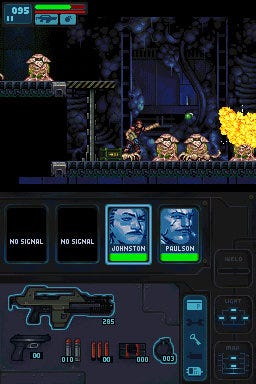
Matt Bozon, creative director at sprite specialists WayForward Technologies, whose wonderful 16-bit throwback Aliens Infestation might similarly be among publisher Sega's final pixel art projects, suggests that while we might see a handful of such titles on the 3DS, it's not a creative path many major publishers will likely take.

"There was a decline in pixel art on the Game Boy Advance, and there was even less of it on Nintendo DS," he tells Eurogamer. "And with the games industry quickly changing into a summer blockbuster movie-making model, the pixel isn't flashy enough to feed the masses."
Nintendo wouldn't offer a definitive answer when approached for comment, but Mass Attack's director Mari Shirakawa didn't offer much cause for optimism.

"The display resolution of hardware will certainly continue to improve and, as you say, the necessity of pixel art will most likely diminish," she explains.

"I think pixel art has a unique artistic charm that you can't find in polygon art and it is personally one of my favourite graphic styles, so it would indeed be sad to see pixel art being used less and less frequently.

"At the same time, I don't necessarily see this as a major loss since improved graphic display will help to expand the possibilities of games."

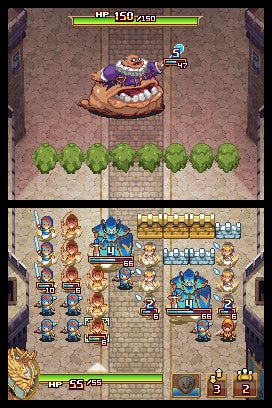
Along with Wayforward, Toronto-based Capybara Games is one of the few other Western studios still priding itself on its pixel art. The original DS version of this year's sublime puzzle RPG Might & Magic: Clash of Heroes sported some of the most skilful, charismatic sprite work since the 16-bit golden age. Capybara agrees that times are changing.

"On prior handhelds up to the PSP, the screen resolution was small enough that pixels were often the best choice for clarity," explains co-founder and lead artist Anthony Chan.

"As we move out of 'small screen devices', that limitation goes away. Many of the supremely talented pixel artists may migrate to doing HD 2D art instead - you can see this here at Capy, as well as with other studios like WayForward."

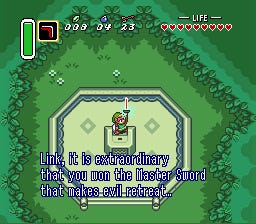
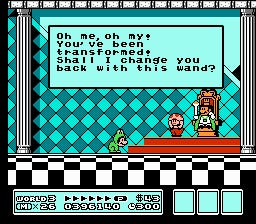
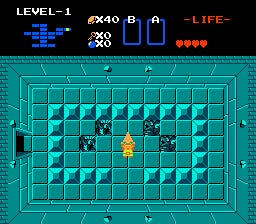
"So what?" you may ask. Well, for the generation whose formative gaming years came before the PS1 and N64 ushered in the 3D age, it would truly represent the end of an era. Iconic, reassuring and wonderfully expressive despite its simplicity, for many, pixel art is gaming. It's a cold-hearted, jaded gamer who doesn't feel a warm glow at the sight of a blocky Mega Man sprite leaping through the air or a 16-bit Link triumphantly hoisting a piece of the Triforce above his head.

"It would be sad [to see it go] because pixel art is intertwined with games. It's part of the fabric, part of its history," says Chan.

"It would be like forgetting there was hand drawn animation, as the film industry seems to have done. You have to know where things came from, see the evolution, and appreciate the ability to 'modernise' techniques that may not be modern themselves."

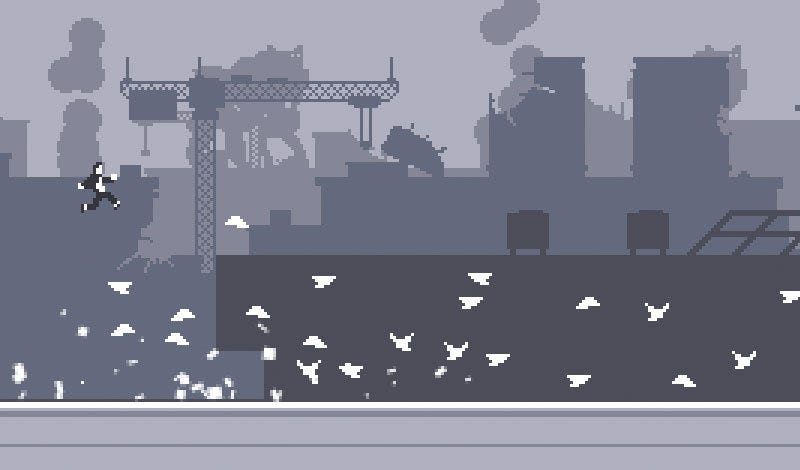
However, Adam Saltsman, creator of iOS pixel art free-runner Canabalt, argues that its appeal goes beyond just pure nostalgia. Its purity, precision and clarity have myriad benefits when it comes to crafting engaging gameplay. He argues that the rigid predictability of pixel-by-pixel animation is much easier for the player to process and respond to than more modern techniques.

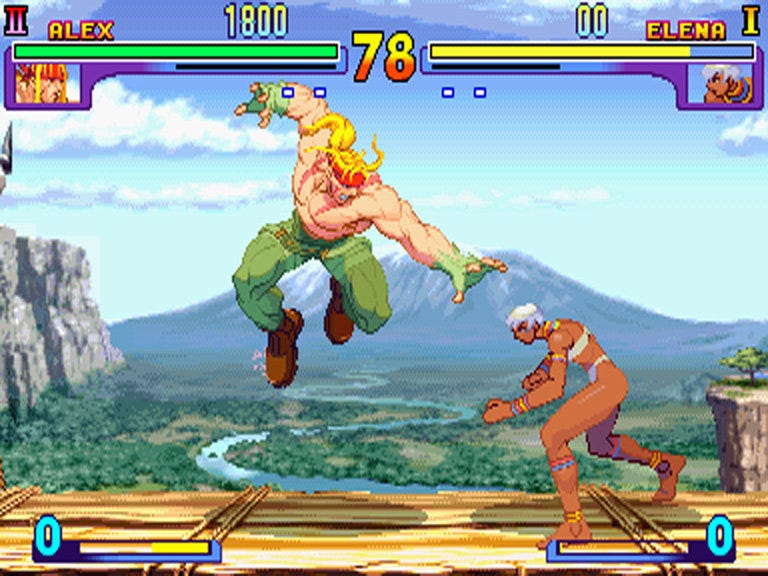
"You can see it in Street Fighter 4 versus Street Fighter 3," he explains.

"Even though Street Fighter 3 is in many ways a faster, more aggressive game, and in some ways a less accessible game, the fact that the animation is discretised and quantised makes it a lot easier to learn timings and understand what sort of things are going on.

"Your brain goes, 'Oh, when the animation is frozen in this pose, I press this button and that's the right timing.' While in Street Fighter 4 it's more like 'Once the leg starts to move off the ground and it's moved part way through this animation then I press whatever button'. You don't have a concrete signpost for training yourself.

"For timing-based games, for learning from interactive game systems, the fact that there is a style or language for quantised motion helps people learn and it's a really useful thing."

Chan adds that by asking the player to fill in a few blanks, the simplicity of pixel art also helps engage a participant in the game and fire the imagination in a way that more literal visual styles just don't have the power to do.

"On a conceptual level, the representational aspect of pixel art is both rewarding and challenging," he insists.

"Drawing a circle with two dots and a line is a representation of a face - it lets the player fill in the abstraction, interacting with the game in a visual sense as well as a 'mechanics' sense."

Above and beyond that, he argues, its abstract, precise nature helps maintain the fourth wall, whereas the quest for perfect photorealism in modern 3D visuals can highlight small-but-jarring imperfections that rip the player out of the experience.

"Pixel art lacks the distraction of 3D," Chan explains.

"The more real you get with 3D the more flaws you see in the assets - this happens far before the uncanny valley, but it is also greatly accentuated by it. With 3D emulating the real world, the player can easily mistake a game for being real, making issues with texturing, animation and even technical components like collision far more obvious."

Perhaps most importantly though, pixel art levels the playing field. You don't need huge budgets, massive teams, pricey tech and an expensive education to make a pixel art game. You just need passion, elbow grease and some artistic flair.

"There are few barriers to entry, results come quickly and it's possible to reach a professional standard much more easily than competing with a five star modern console game," reckons Wayforward's Bozon.

And it's this inherent efficiency that's helping keep the medium alive. While mainstream publishers might be moving on, indie developers have picked up the torch, fuelled both by nostalgia for the games of their youth and the fact that it's an affordable, accessible way to make stylish video games.

Digital delivery systems like the App Store, Steam and XBLA have liberated developers to make the kind of games they want to play - not what Activision or EA's mainstream agenda dictates. Duly, they've found there's a very receptive audience out there.

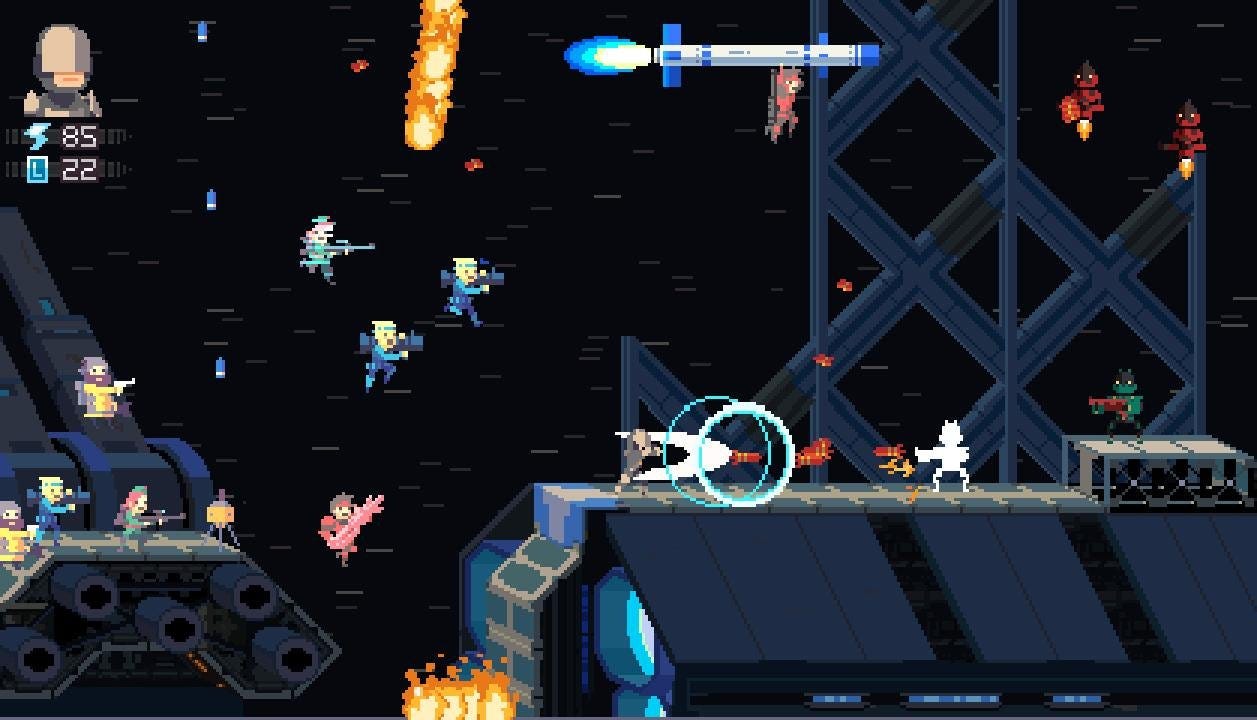
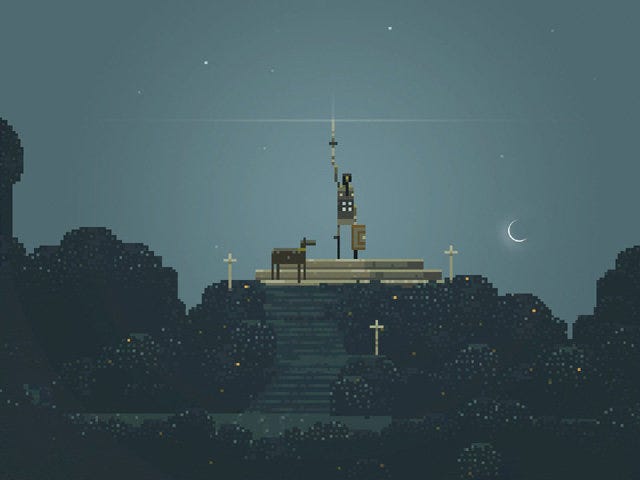
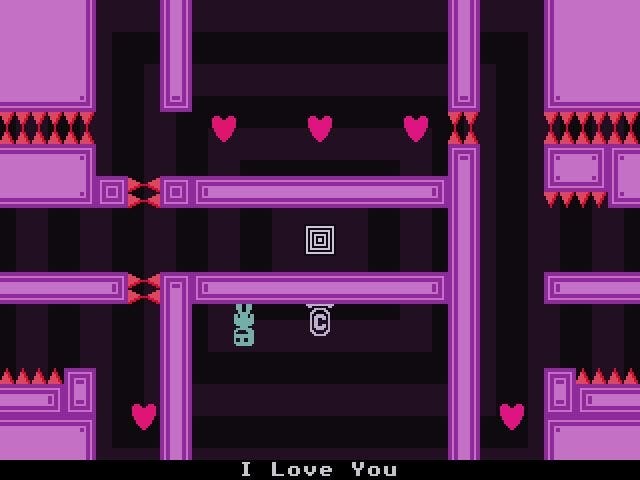
Saltsman's aforementioned Canabalt, lovely iOS puzzler The Last Rocket, brutal retrograde jumper VVVVVV, Wayforward DSiWare gems like Shantae: Risky's Revenge and Mighty Flip Champs, Super Meat Boy, Superbrothers: Sword & Sworcery, Cave Story, Tiny Tower, Game Dev Story, the Bit.Trip series, Capy's forthcoming Super T.I.M.E. Force... the list of fantastic - not to mention commercially successful - pixel-based indie titles goes on.

The small handful of developers still working with pixel art today do so because they want to, not because they have to. Unlike those working in 3D, they're not restricted by the need to nudge up poly counts, increase texture size and generally push the technical envelope. Pixel art is a medium that's much further along its own evolutionary path and as a result, designers can concentrate solely on making something truly distinctive, both from a visual and gameplay perspective.

"Remember the last 75 years of practical effects being the only form of special effects in film?" asks Bozon.

"Latex puppets and miniature sets were the only path until CG game along. Well, people are still entertaining the masses with puppetry, only now it's by choice.

"It's the same with pixel art. Creative people can work above the technology and set limits for themselves to create something that looks unique. So, you could say we're past the golden age of pixels, but are now free to use them purely for self-expression."

The one concern is the size of the potential market. Can it grow beyond grey-haired gamers ensnared by the promise of a return to simpler times? Is the sight of a primitive cluster of pixels a turn-off for the teen and pre-teen market - the generation raised on Halo and Call of Duty rather than Pac-Man and Gradius? Saltsman isn't too concerned.

"We used to wonder whether if you put old pixelated games in front of kids would they just basically barf because the game is so ugly compared to Super Mario Galaxy or whatever," he explains.

"My nephew might be slightly too old - he's seven or eight - but when he comes over he really loves to put on all the weird old super-pixelated games on my NES or Mega Drive. It's not the art that's a problem, it's the insane difficulty of the games. That's the part that shuts him down.

"My Mum can play pixel art games, kids can play them - I don't really think there's anything about it that's a problem," he continues.

"I'm just eager to move past the... you know when someone links you to that picture of Dino Riders and they're like 'Woah, dude, the '80s!', and that's the whole joke, the whole comment. I feel like we're so close to being out of that with pixel art, which would be really nice. I think that's been kind of an awkward phase and instead it will just be a useful tool which we can employ for communication sometimes."

For better or worse, in 2011, most AAA developers take their visual cues from Michael Bay, Spielberg or Pixar, striving to produce video games that look as little like video games as possible. While it's a little sad that it's left to resourceful indies to honour the pioneering work of the form's creative forefathers, it's great to see the likes of Capy, Wayforward and Saltsman step up to preserve - and innovate on - the one visual medium that the games industry can truly call its own.

"It's burned into pop culture, so I don't think it can truly go away," concludes Bozon.

"Techniques will get lost over time, but visionary styles will most likely stick. As a creative exercise, try to imagine a future where polygonal graphics are no longer the norm. Games that had cool visual styles will stick with us, but ones that were trying to achieve reality might not age well and look awkward. Hopefully, we can keep on using technology in new and artful ways."

Comments (48) Latest comment 6 months ago

Comments for this article are now closed, but please feel free to continue chatting on the forum!

  • Der_tolle_Emil #1 6 months ago

    It really depends in which context you talk about the graphic style. Sprites, pixel art, 2d graphics, raster graphics... pretty much all the same thing.

    For a moment there I thought the article wouldn't mention Metal Slug at all - one of the most beautifully drawn and animated series. Not mentioning that game would have made the entire article absolutely redundant.

    I really, really like pixel art. The old sprites of 8bit/16bit sprites just display the dedication and love from artists so much better than 3d models do. Not that I don't admire the work of 3d artists as well but there is such a subtle finesse in pixel art that I really adore. It's amazing how much difference a single pixel can make if you are working on a 16x16 sprite; I really cannot describe exactly what I find so fascinating about it, it just is.
  • TheMoonRat #2 6 months ago

    indeed; 2d games, sprite based games sure, but pixel art games? hmmmmmm. Almost as annoying as chiptunes being called "keygen music".
  • Stoatboy #3 6 months ago

    @FluffyTucker: It might be a slight retronym, but I'd have recognised it by the name pixel art when I was doing it on my Vic-20. I was editing pixels, and doing art. The name probably came about later, but it's technically correct. Modern 3D is about texels, not pixels. Hence the distinction.

    As I said - possibly a slight retronym. Black and white television was called "television" until colour televison replaced it. The names change to reflect the current state of affairs. It's not for the sake of being awkward - its about being practical.
  • Rev.StuartCampbell #4 6 months ago

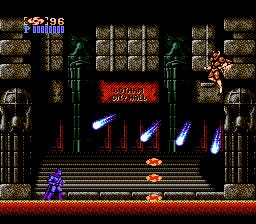
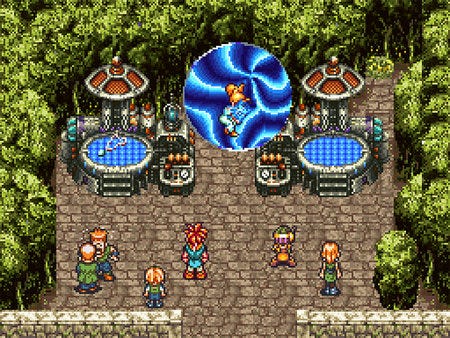
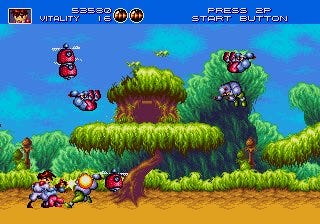
    What are games 1, 6 and 8 in that gallery?
  • Stoatboy #5 6 months ago

    @theMoonRat. In games using pixel art the artist chooses the colour of exact precise pixels. How can you not call that pixel art? It would be like saying you could do oil painting without oil paint.

    You work in pixels. The player sees the precise pixels you plotted. You always see pretty much exactly what they drew, not what a rendering engine has managed to derive from a 3d model rotated at an unknown angle, and lit by any number of lights.

    You get exactly what they wanted you to see.

    Closer to art, in my mind.
  • FredD #6 6 months ago

    @Rev.StuartCampbell Sorry that doesn't show up. The screens are:

    Gallery 1:
    1. Batman (1989, NES, Sunsoft)
    2. Chrono Trigger (1995, SNES, Square)
    3. Gunstar Heroes (1993, Sega Mega Drive, Treasure)
    4. Zelda: Link to the Past (1991, SNES, Nintendo)
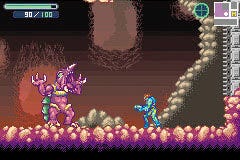
    5. Metroid Fusion (2002, GBA, Nintendo)
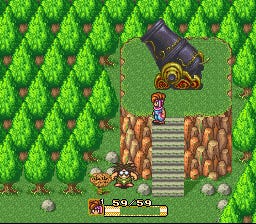
    6. Secret of Mana (1993, SNES, Square)
    7. Sonic The Hedgehog 2 (1992, Sega Mega Drive, Sega)
    8. Street Fighter 3 (1997, Dreamcast, Capcom)
    9. Super Ghouls 'n Ghosts (1991, SNES, Capcom)
    10. Super Mario Bros. 3 (1988, NES, Nintendo)
    11. The Legend of Zelda (1986, NES, Nintendo)

    Gallery 2:
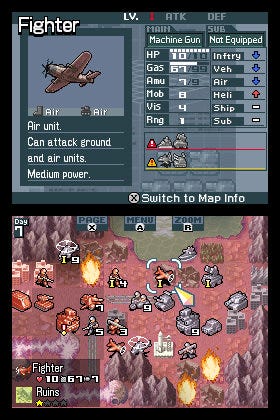
    1. Advance Wars: Dark Conflict (2008, Intelligent Systems/Nintendo)
    2. Aliens Infestation (2011, Wayforward/Sega)
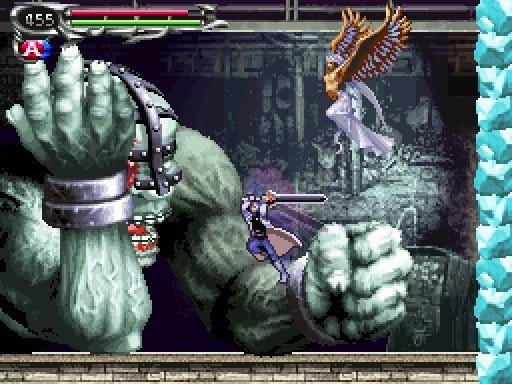
    3. Castlevania: Dawn of Sorrow (2005, Konami)
    4. Contra 4 (2007, Wayforward/Konami – US only)
    5. Henry Hatsworth in the Puzzling Adventure (2009, EA)
    6. Kirby Mass Attack (2011, HAL/Nintendo)
    7. Might & Magic: Clash of Heroes (2009, Capybara Games/Ubisoft)
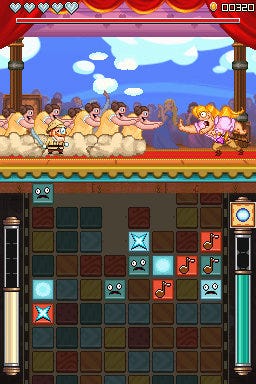
    8. The Legendary Starfy (2009, Tose/Nintendo – US only)

    Gallery 3:
    1. Canabalt (2009, iOS/Flash, Adam Atomic)
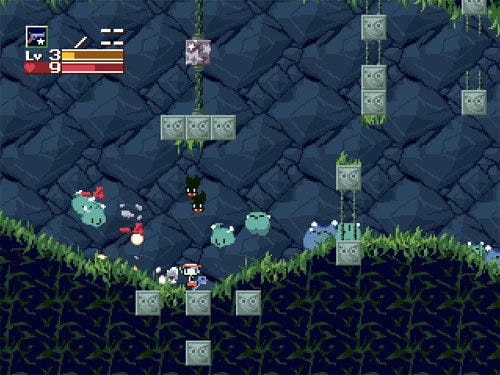
    2. Cave Story (2004, DSiWare/PC/WiiWare, Studio Pixel/Nicalis)
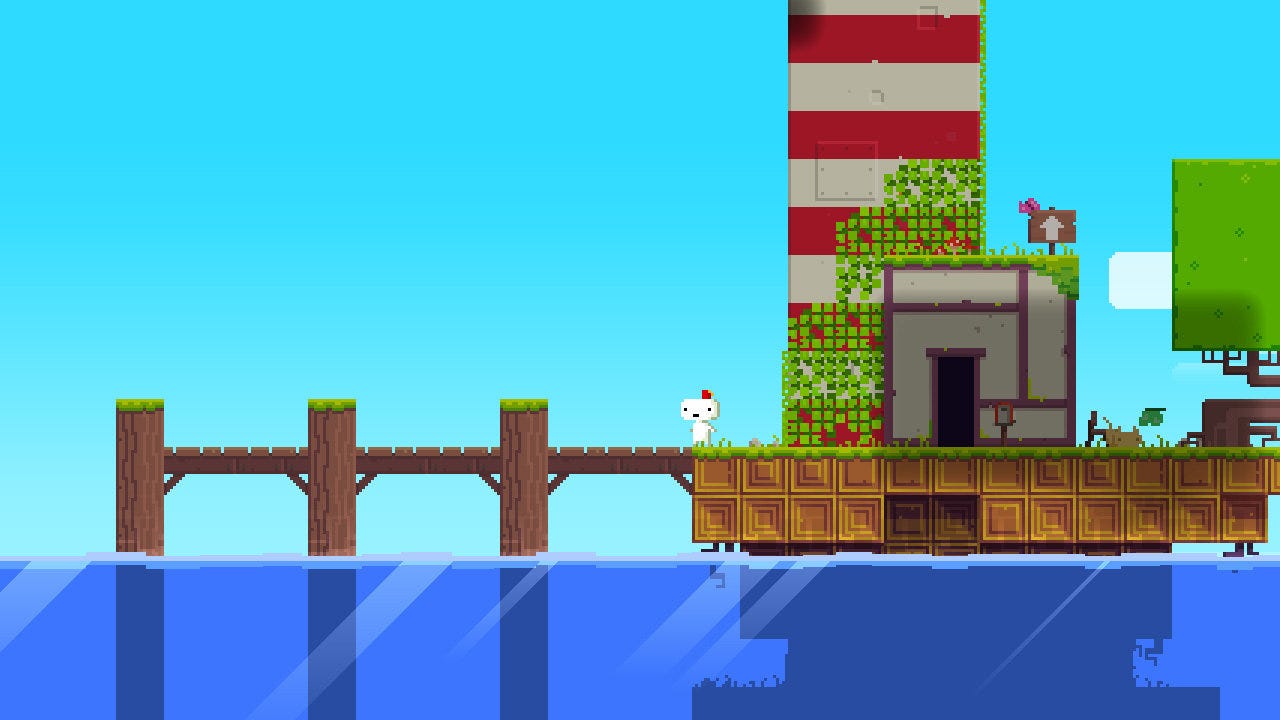
    3. Fez (2012, XBLA, Polytron)
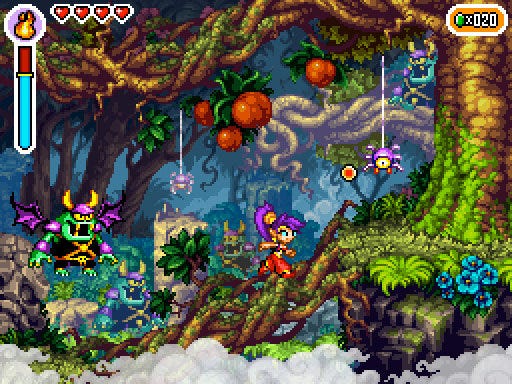
    4. Shantae: Risky's Revenge (2010, DSiWare/iOS, Wayforward)
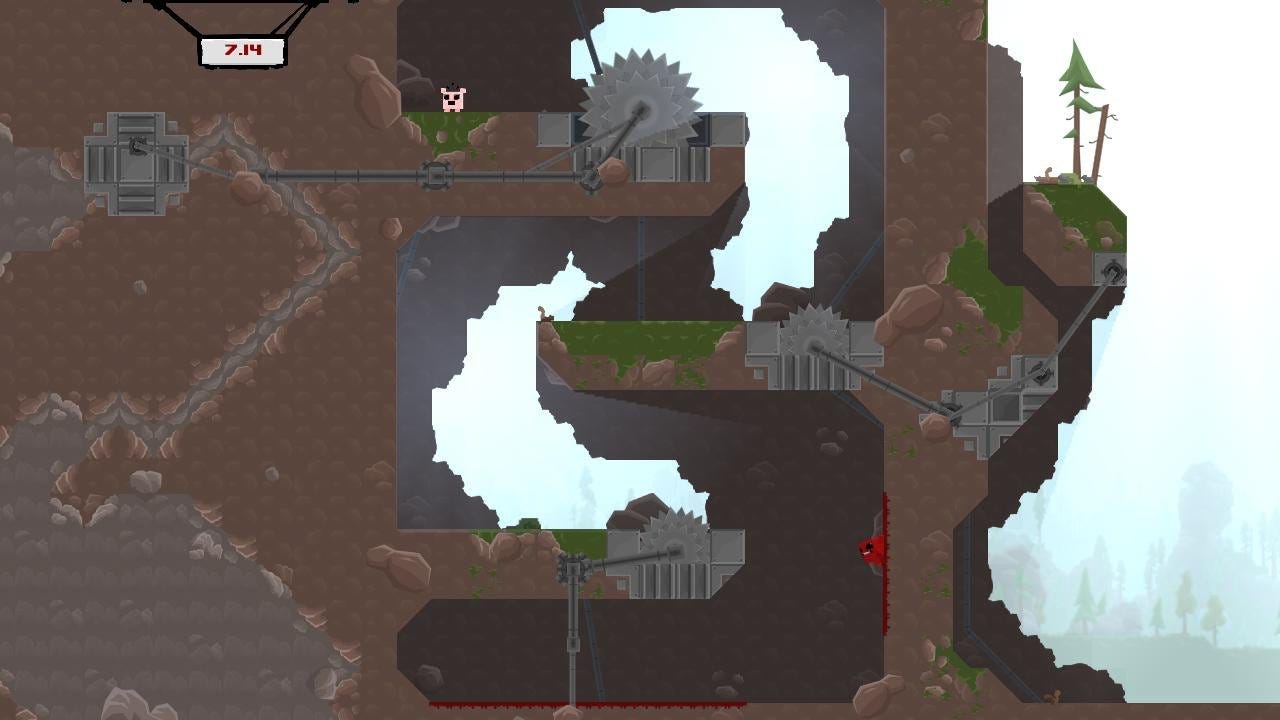
    5. Super Meat Boy (2010, PC/XBLA, Team Meat)
    6. Super T.I.M.E. Force (2012, TBA, Capybara Games)
    7. Superbrothers: Sword & Sworcery (2011, iOS, Superbrothers/Capybara Games)
    8. The Iconoclasts (2011, PC, Konjak)
    9. The Last Rocket (2011, iOS, Shaun Inman)
    10. VVVVVV (2010, Flash/PC, Terry Cavanagh)
  • lavalant #7 6 months ago

    2D "pixel art" games seem more real and immersrive, almost like a moving comic book. If Nintendo do decide to make another 2D metroid I can only pray they stick with it.

    Despite being a great game, I always thought Shadow Complex would have been better with pixel art.
  • NegativeZero #8 6 months ago

    What I think this comes down to is a question of good graphics vs good art direction. High quality art direction is often far, far more important than the technical side of things.

    Also there's no reason why 2D art has to die out. Look at some of the Vanillaware games for example, eg Odin Sphere, Oboro Muramasa, GrimGrimoire. The art in them is amazing, highly detailed and extremely fluid and it will continue to be amazing in HD as well, possibly even more so. Modern hardware lets you do so much if you put the effort in.

    Also, I'd argue that while the dedicated mobile games systems are pushing ahead, the enormous market for cheap, low-budget indie games on iOS, Android etc will keep pixel art going for years.
  • Rev.StuartCampbell #9 6 months ago

    "Sorry that doesn't show up. The screens are:"

    Cheers for that. The numbering is a bit variable depending how you're looking at the shots, but I managed to deduce that the ones I was wondering about were Cave Story, Super TIME Force and The Iconoclasts.
  • Obli #10 6 months ago

    "And with the games industry quickly changing into a summer blockbuster movie-making model, the pixel isn't flashy enough to feed the masses."
    This is a very sad sentence.

    What about Rayman Origins? Is that 'pixel art' or have I been fooled? That game is beautiful.
    Edited by Obli at 18/11/11 @ 08:19
  • number3son #11 6 months ago

    I agree with others in that it would be much clearer to refer to these games as "sprite-based" instead of "pixel art". I've never seen or heard pixel art used to describe anything except single, static images.
  • MENTAL1ST Verified Senior Software Engineer, Picsel UK Ltd. #12 6 months ago

    in 2011, most AAA developers take their visual cues from Michael Bay, Spielberg or Pixar

    Maybe there's some hope left, then.
  • Turrican_Freak #13 6 months ago

    I think that the difference between a pixel art sprite and a 2d one resides in the concept. Where in a 2d game, say the latest rayman, the pixels are used as a medium by the artist to draw a sprite, maybe trying to make you believe that the images are hand drawn and hiding the fact that they are drawn in a computer and displayed through the monitor's pixels, in pixel art the sprite is built taking advantage of the "squares" that are the pixels, to the point that the artist wants you to see all the squares.

    So no, rayman origins is not a pixel art game and almost all the 16 bit 2d platformers are.

    pixel art demo video made with Amiga http://www.youtube.com/watch?v=K7qchOx4oQc&feature=fvst

    non pixel art 2d game http://www.youtube.com/watch?v=thUQkWPineQ
    Edited by Turrican_Freak at 18/11/11 @ 09:11
  • Max_Powers #14 6 months ago

    It's interesting to see that while pixel or sprite art is less used in games it is making inroads in the arts market. These are some great pieces for instance:

    http://www.candb.com/en/artwork/22/8-color-club-faces.html
    Edited by Max_Powers at 18/11/11 @ 09:22
  • skankyjoe #15 6 months ago

    Rayman Origins i would imagine is an example of vector art, where strokes and fills are mathematical 'paths' that can be zoomed in and out, and only rendered out afterwards as pixels. I hope the explanation makes sense.
  • TruSmiles #16 6 months ago

    I absolutely love pixel art. It's not just a technique for 2D graphics in retro-inspired games anymore either, it's a legitimate style of art used outside of games too and I always get fascinated by artists that create their own pixel art, including isometric pictures. The level of detail is just incredible.

    I'm glad that the indie scene has brought about a revival of sprite based games recently. I would sooner see some detailed pixel art than some forced polygons.
  • rodpad #17 6 months ago

    iOS and Android gaming say no, "pixel art" is staying.
  • dr_zoidthrob #18 6 months ago

    It's how I started in the industry, and I still love it today. There's a charm and a character that you just don't get with 3D models.
  • wizlon #19 6 months ago

  • Freek #20 6 months ago

    The right art style for the right game. 2D pixel style fitts the indy scene. Simpel games, with a low production cost.
    3D fitts the big publishers more, cinematic and realistic games.

    And it's nice that it's gotten a point where that's a valid choice, that the technology is maturing to a point where it isn't one or the other due to forced limitations.
  • atrb79 #21 6 months ago

    What a great article - good to see these pieces that are passionate about games and their history. Thanks.
  • Dogme #22 6 months ago

    @FluffyTucker I totally agree with you. Pixel art sounds ridiculous!
  • Redeye #23 6 months ago

    There's more than enough room for pixel-based spritework and normal-mapped polymodels in this great big world of ours - heck, I'm still bashing pixels and loving every minute of it. :D
  • Dogme #24 6 months ago

    I look forward to seeing Mario in his next multi dimensional vertical and horizontal positional movement software!
  • Ptarmigandalf #25 6 months ago

    Maybe because I go back to when pixel art was a need, and not an affectation, but personally I won't miss it.
  • Ironic_War_Criminal #26 6 months ago

    The unfortunate thing is that for HD Consoles, Pixel Art is time consuming and expensive. For an example, creating the pixel sprites BlazBlue takes the developers up to 8 months to create and leaves them little margin for error on mistakes in the gameplay as anything that doesn't fit means a re-draw. Capcom moved to 3D for Street Fighter 4 and Marvel vs Capcom 3 as it allowed them to be more flexible with character movements and easily re-correct mistakes or moves that didn't look correct

    On top of that, Vector art is significantly easier to create and looks better in HD since it practically is traditional animation. Rayman Origins, Bloodrayne Betrayal and the upcoming SkullGirls, use the technique for example and all of those look pretty wonderful.

    Pixel art will probably remain the domain of indie games and smaller Japanese games but the rest of the industry has moved on. It's a shame, but progress has to be made (And the advances in games using vector means that hopefully some proper 2D games will still be made)
  • brennzky #27 6 months ago

    That Metroid Fusion pic is not from Metriod Fusion! Its either an older pic or from an indie fangame lol. I think its from the Return of Samus remake.
  • brennzky #28 6 months ago

    Hmm after doing some searching I do see more of metroid screenshots using that HUD. WTF, was the euro version different?? Has to be an early build or something...
  • Cobalt_Jackal #29 6 months ago

    "Its an end of an era"... Well DUH!. Technology moves on and advances all the time. I mean what do you expect? :rolleyes:.
  • DrStrangelove #30 6 months ago

    Nice article.

    Some time ago I noticed that I prefer the original Super Mario Bros to the 'enhanced' version in SM All-Stars. There's something pure and clear about it, perhaps some sort of equivalent to Minimalism in aesthetics. I really like that.

    Also, you should check out Starcraft for C64:

    http://www.youtube.com/watch?v=8B16eAS1dwA
  • johnw100 #31 6 months ago

    @FluffyTucker "pixel art" is the term to describe the graphics used. Its been around for decades. I was a pixel artist before 3d came along, you were called either a 3d artist or pixel artist.
  • Stoatboy #32 6 months ago

    @number3son: Sprites are only part of the story for pixel art though - they're a sub-set. On the Commodore 64 for example sprites were very specifically bitmaps (pixel images) that can move on a per-pixel basis, allowing smooth movement independent of the background graphics (which were character-based).

    The droids in Paradroid are sprites. The background art isn't. It's redefined characters. It's all bitmaps or pixel art, but it isn't all sprites.
  • FogHeart #33 6 months ago

    I really enjoyed No More Heroes (bear with me here) so buying NMH2 was a no-brainer. Same general concept as the first. Fight bosses, in between them participate in challenges, earn money, train at the gym. But this time around the last two were replaced with...pixel art games????

    I tried, I really did, but I just couldn't hack it. Why, what's wrong with me? I used to eat these games for breakfast! Now I can't maneuvre around a corner?

    The article says there's a sense of timing you can develop when playing sprite games that's harder to achieve with 3D games. Me, it seems I'd developed a new skill and completely lost the old one.

    I can't seem to get it back, so this allegedly brilliant game is still barely started :( I sometimes fire up the Wii and try again, but give up after 20 mins of trying to duck and jump to avoid 2D sprites of dumbells.
  • panathatube #34 6 months ago

    Iam almost 40 and yes there is some nostalgia about the good old ZX Spectrum CPC Amstrad and CBM 64 days. I remember my self playing oh mummy in my spectrum as a kid and imagening the dungeons, the spider webs, the mummies the likes; all of this by looking some pixelated dots and listening to some blips! 2d boosted my imagination. But to call pixel art 2d games is an overpompous word. I don't think 2d games will die out infact i have seen a streetfighter 2d game on pc that looked great recently (or was it a 2d like 3d game?). 2d will go on existing in casual games, but for mainstream games they will be very few new releases especially with the arrival of next gen consoles.
  • wizbob #35 6 months ago

    I can't say that nostalgia plays no part in my enjoyment of bitmapped games but it's telling that the games that came after, on the Playstation and Nintendo 64 look hideous to me now.

    What makes a sprite from a game like metal slug so fascinating is that you can see the craft that went into it, techniques like hand-dithered gradients, fake 3d highlights and anti-aliased pixels to indicate sub-pixel detail. It's not unlike the enjoyment people get from byzantine mosaics.

    The phrase 'pixel perfect accuracy' for platformers and fighting games rings particularly true after spending a night trying to vaguely wallop creatures with a two-handed sword in Skyrim.
  • Trent_Steel #36 6 months ago

    @DrStrangelove

    I'm exactly the same, the All-Stars version just feels wrong.

    Oddly enough, I prefer the All-Stars takes on SMB 2 and 3
  • anthonypappa #37 6 months ago

    aren't the people who draw the graphics with pixels, artists?

    making this pixel art?
  • TaniumZX #38 6 months ago

    I'd say the 'golden age' was earlier. Between the 1982 (commodore 64) and the end of the 16-bit era (c1993).
  • Paulie_P #39 6 months ago

    @Dogme I've always preferred the tri-axis positional movement Mario games over the old multi dimensional vertial and horizontal positional movement games.
  • Zomeguy #40 6 months ago

    For those that don't know what they are talking about, I will just paste the relevant wikipedia entry:
    The term "sprite" is often confused with low resolution 2D graphics drawn on a computer, also known as pixel art. However, sprite graphics (bitmaps) can be created from any imaginable source, including prerendered CGI, dynamic 3D graphics, vector art, and even text. Likewise, pixel art is created for many purposes other than as a sprite, such as video game backgrounds, textures, icons, websites, display art, comics, and t-shirts.
  • captain-future #41 6 months ago

    it will never die, if anything there's more 2.5D games than in the last years.
  • HermitArcader #42 6 months ago

    Post deleted at 09:17:39 22-12-2011
  • djkav #43 6 months ago

    No mention of the awesome pixel works of the Bitmap Brothers, Team 17 and Cinemaware.

    This article is dead without a worthy mention to those.
  • jamhead #44 6 months ago

    Where are the Amiga generation 'pixel art' references? Psygnosis, sensi software, and as mentioned above, the bitmap bros?

    HEATHENS!
  • TrevHead #45 6 months ago

    The problem with modern pixel art is that everybody is watching them on LCDs, you really need an old fashioned CRT to make pixel art shine.

    Thats why I generally prefer HD 2D art to low res pixel art on LCDs, although some of the modern indie blocky stuff looks ok, but much of that doesnt feel the same as old the fashioned stuff
  • Turrican_Freak #46 6 months ago

    @jamhead. Turrican! I can't understand why people seems to forget about the ami. It was way better than any other 16 bit console, and the developers that worked on it were awesome. Team17, Bitmap Brothers, Sensible Software. just to name a few. Have you ever tried Ruff'n'Tumble?
  • jamesslater #47 6 months ago

    @lavalant Anthony Chan's comment about pixel art's abstraction reminded me of Understanding Comics author Scott McCloud's idea of resemblance vs meaning (see http://scottmccloud.com/4-inventions/triangle/index.html).
  • cherryuk #48 6 months ago

    I thought pixel art is when games in the naughties do 'retro'. This term is especially used in graphic design where they use a certain isometric pixel style. Anything 8bit / 16bit is not considered pixel art in my opinion, this is the classic 2D era. How very dare you!