Radiant Silvergun
Be Attitude For Gains.

The tragedy is that it became the punch line to a joke. Jokes, even. The one about Sega's failing video game hardware business, for example, and how the only truly exceptional title for its Saturn - a PlayStation-beating shoot-'em-up, no less! - was released two years after the console war was already lost. Oh, Sega, hapless Sega!
Or the one about the men prepared to pay astronomical prices for fashionable imports: a £100+ eBay price tag evidence not so much of the game's inherent quality as of the demented collector mentality, where scarcity + demand + competitiveness pushes prices beyond all reason. Look at those guys! You could buy 150 copies of Angry Birds for that money!
But the true joke is that Radiant Silvergun should have been punched by tragedy. Its pseudo-successor, vertical shoot-'em-up Ikaruga, may have enjoyed some vindication for its forebear's misfortunes, fast becoming a cult classic and making its way around the world. But the Japan-only Radiant Silvergun is the better game, bringing together all of the themes of boutique developer Treasure's oeuvre into one glorious, tightknit experience that invites long-term study.
It combines the colour-coded puzzling of Silhouette Mirage with the weapon mixology of Gunstar Heroes and the giant multi-part bosses of Alien Soldier in a way that transcends tribute, instead making a bold, singular statement of its own. It is mesmerising, fascinating and without question one of the only games of the 32-bit era that is still relevant today. And it's now available in a new version on Xbox Live Arcade.
Radiant Silvergun also defies neat categorisation. Aesthetically, it's an orthodox shoot-'em-up. But it evolves the genre in fascinating ways that, perhaps due to the dearth of companies still working in the area, have never been borrowed or stolen. First in its fulsome inventory of innovation is the fact that there are no weapon pick-ups in the game. Rather, full use of all seven primary weapons is pressed into your hands from the offset.
The palette of attacks is based on three 'primary' weapons: the Vulcan (a tight upward stream of fiery bullets), Homing (a splay of weaker green bubbles that zip to the closest enemy) and Spread (two brilliant white explosions that fire off at 45-degree angles, the most powerful of the three base attacks). Combine two of these attacks and you get a new one that mixes the properties of its components.
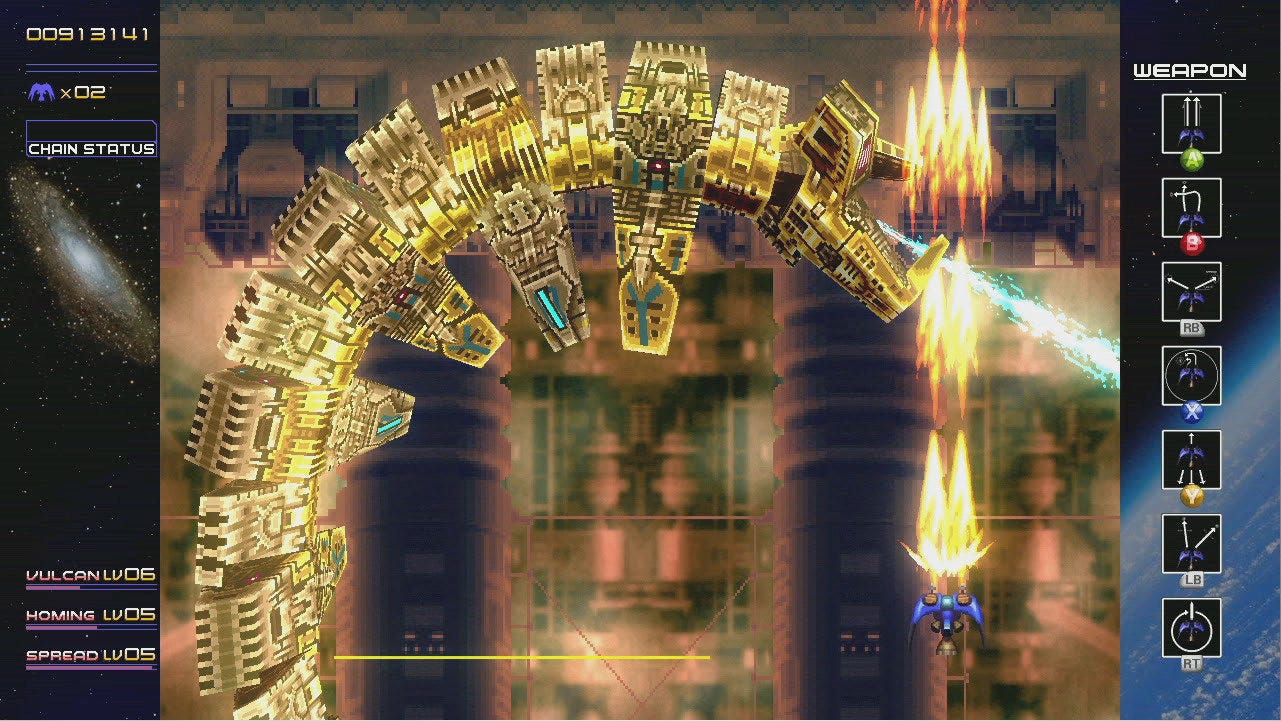
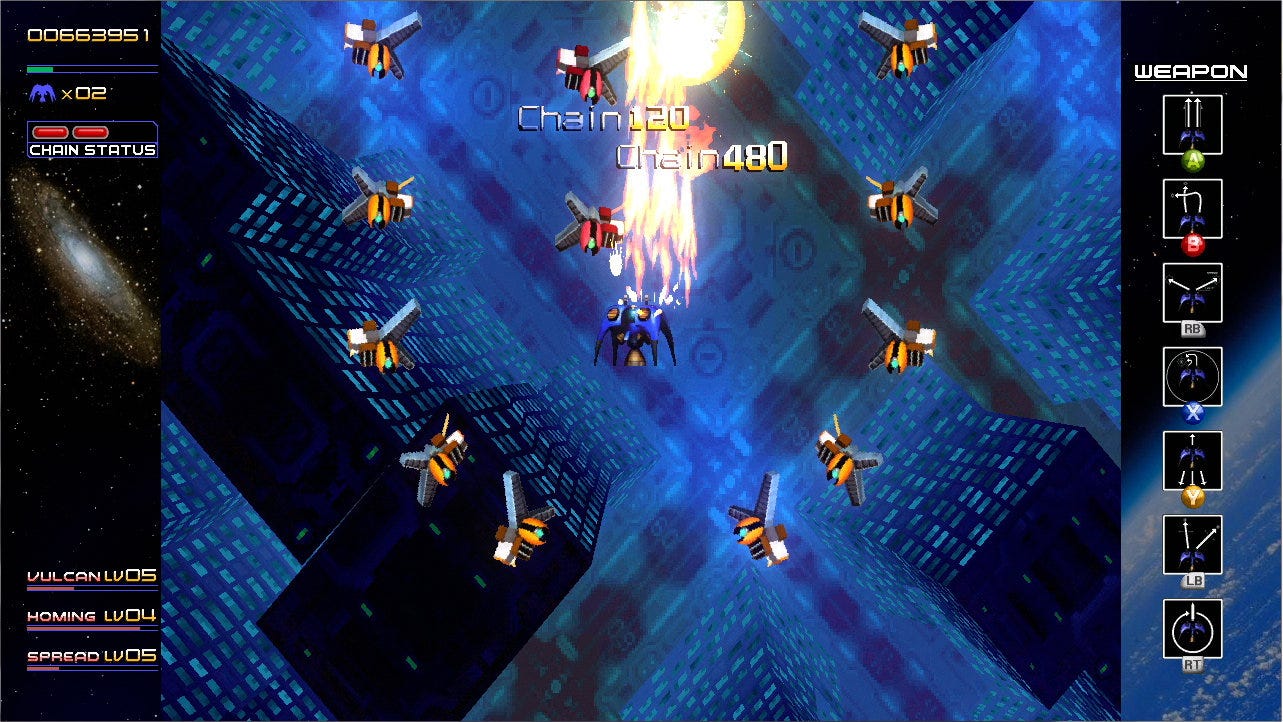
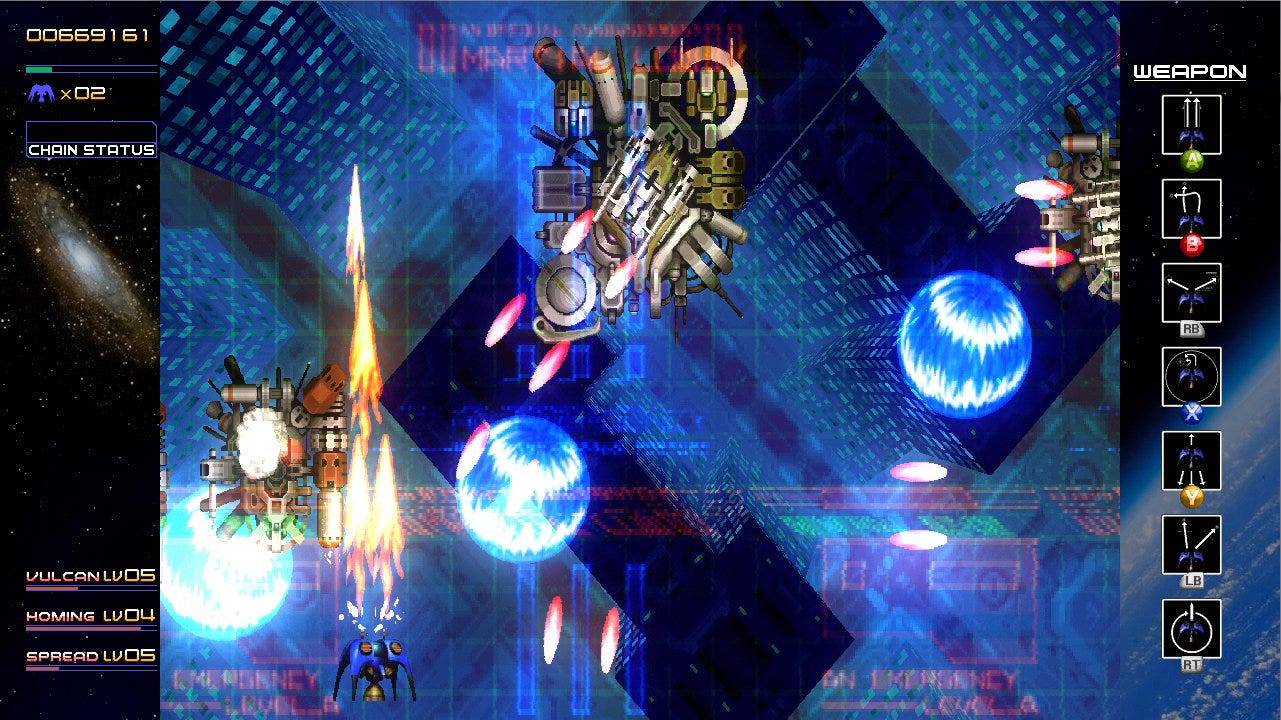
Strike all three at the same time and your ship swipes a tiny plasma sword out in front of it. This weapon has the capacity to absorb pink bullets and, when you've collected ten of these, can trigger a giant, scissor-like attack that swipes across the screen, rendering your ship momentarily invulnerable.
Each of the base weapons upgrade, not through floating pick-ups, but through usage, earning experience points with each takedown and 'levelling up' in turn. Focus solely on the Vulcan, for example, and it will hit harder and wider as the game progresses, leaving the two neglected attacks weak.
While seven weapons may seem like overkill, Treasure's skill is in making each one perfectly suited to a particular situation, and very often the mind game is in choosing the right tool for the right micro-scenario. What initially appears overwhelming soon becomes second nature, and Treasure's fine balancing of the weapons in the game outclasses any top-flight contemporary FPS you care to mention.
Next, every enemy in the game is color-coded red, blue or yellow. While it's possible to ignore this element of the game entirely, score attack players must master the order in which they take down enemies in order to bank the largest number of points. Shoot a red enemy followed by a blue enemy followed by a yellow one and you earn a significant points bonus. Alternatively, chain together enemies of the same colour and the point rewards scale indefinitely until the chain is broken, each set of three adding a multiplayer that can push your score into the stratosphere (levelling your weapons much more quickly as it does so).
As such, the best way to play is often in knowing which enemies to leave alone. It is perhaps the only shoot-'em-up where restraint is rewarded as much as offense and, when it all clicks into place, the sheer ingenuity of the level design - essentially a kind of puzzle - comes into dizzying focus.