Splinter Cell Trilogy HD
Ol' green eyes is back.

For a technical analysis of Splinter Cell Trilogy, check out Digital Foundry vs. HD Remasters.
Pzzvvveeeeeeeeeeee. Solid Snake may come with Otacon, a smoking habit and a bunch of amazingly strange bosses, but Sam Fisher packs one of the best sound effects in video games. The moment those night vision goggles spark up, you're not sat on the couch multitasking between toast and a DualShock anymore: you're off on a tense covert operation, wearing a tight rubber suit that jangles with weapons as you shoot people between the eyes just because they don't love America quite enough.
It's great stuff, and now the first three Splinter Cell games have been given an HD airing on PS3. (They'll be released together on disc on 16th September, or you can buy them individually from the PSN Store right now.) There are sharper edges, trophies to collect and, if you're remotely interested, stereoscopic 3D (although the thought of playing through these famously murky adventures while wearing hi-tech sunglasses may not have been the smartest idea in the world).
In recent years, Splinter Cell's changed, though. First Fisher went off to prison, and then he got a shot of arcade adrenaline in the form of Conviction: a game which moved so fast as you zipped from cover to cover that there wasn't even time to stick bodies in dark alleyways anymore. Has the age of mark-and-execute rendered the classic Splinter Cells slightly arthritic? Are the HD remakes good ports? And, more importantly, are they still good games? (Short answer: No, not really, and yes!)
Splinter Cell
The first Splinter Cell initially seems like a bit of a relic, but it's still undeniably wonderful in its brutality. Sam Fisher's original outing for Third Echelon is a game of reloads and patrol memorisation. Racing ahead is swiftly punished, and the ideal player is patient enough to inch through the darkness, wary of each new development. It's like Limbo for members of the GOP, in other words.
In an era of hints, waypoints and mini-maps, it's weirdly exciting to play a game that shoves you into a huge, intricate series of levels armed with almost no information to orient yourself. The genius of Splinter Cell, in fact, is how little it gives you to work with throughout the campaign.
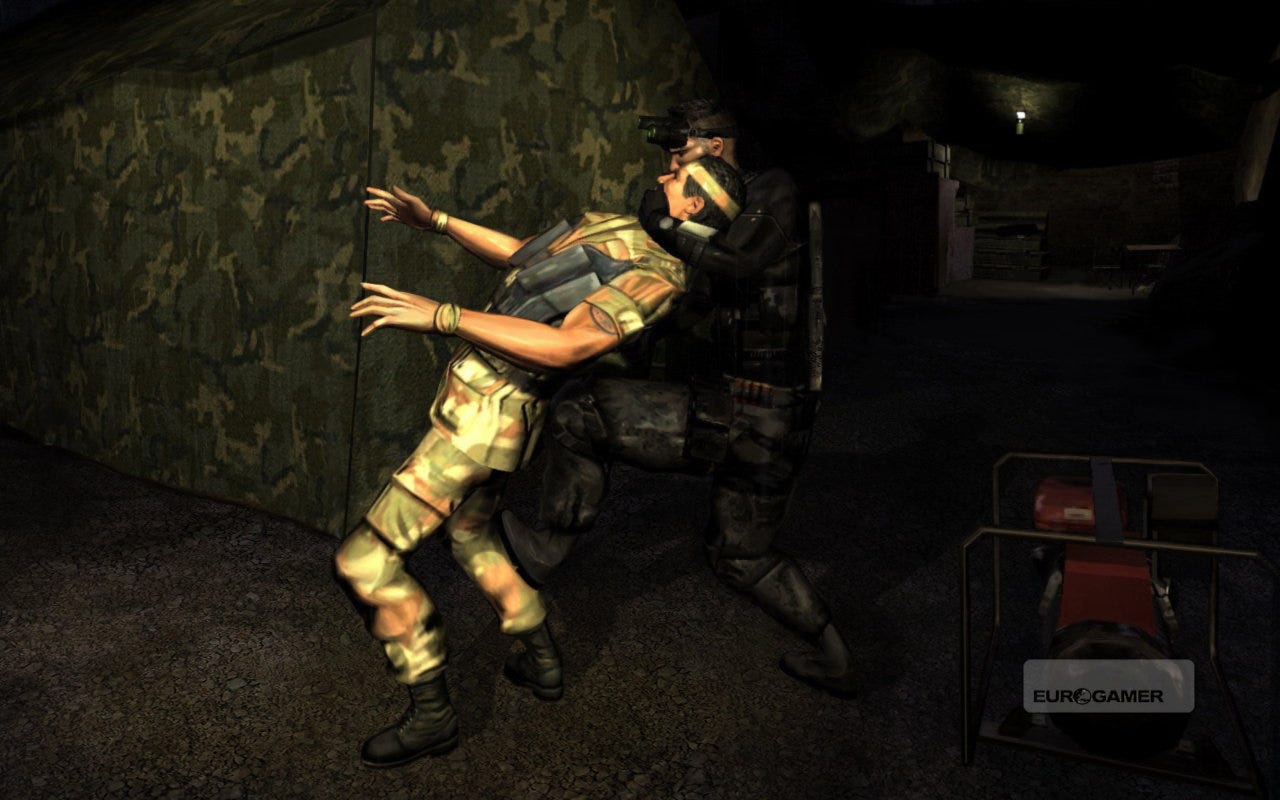
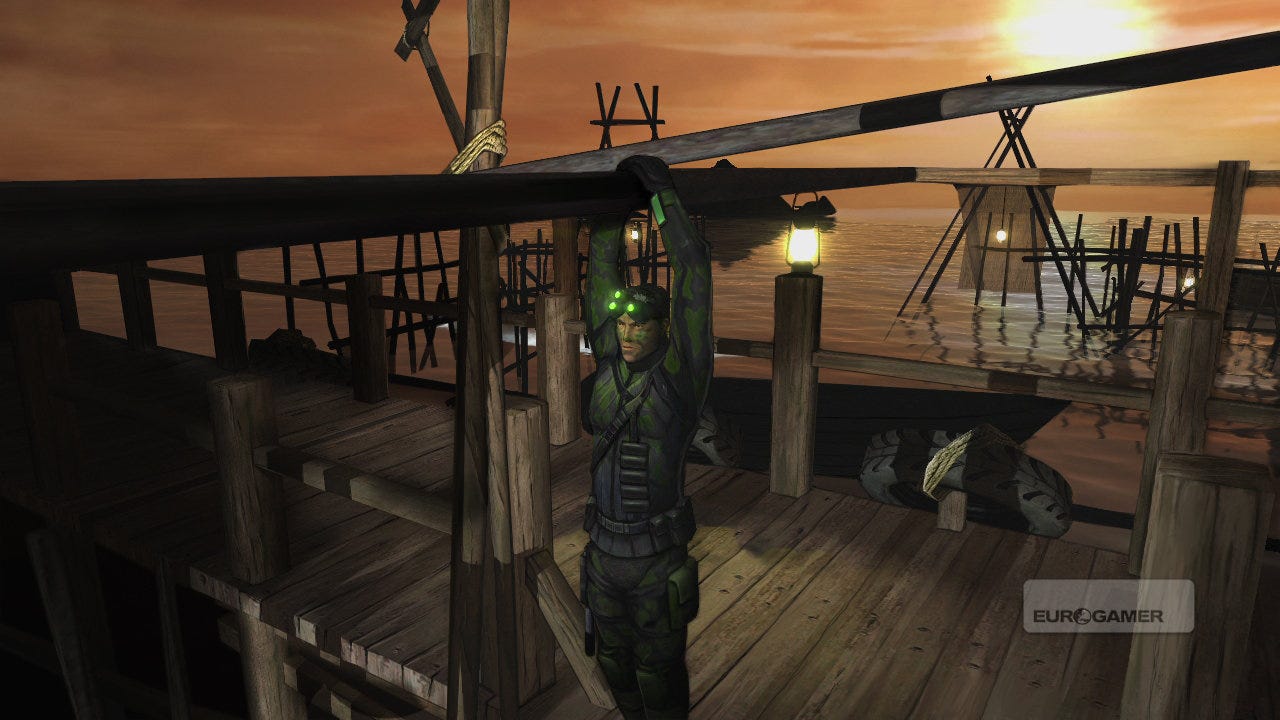
You may be able to snap necks and hide up walls just by doing the splits (a friend of mine who had been playing the game for quite a while once assured me that he could do this too, incidentally. He couldn't, and the doctors were very understanding) but when the mission prompt tells you to head to the nearby police station and ransack the morgue, you don't get a marker on a map that points to your destination. Instead, a long, exploratory trek lies ahead of you, and it probably involves quite a bit of hiding in bushes.
It's a little like that brilliant combination of strength and weakness that Rocksteady harnessed with Batman: Arkham Asylum, and here it makes for truly uncompromising stealth. Most Fisher standards are present in early forms in the first game. You may not be able to whistle just yet, but you can grab enemies from the shadows and shuffle around with corpses on your back, and you've got a pistol that works much better when you're using it on light bulbs instead of people.
The HD remakes have been taken from the PC versions, so if you played Splinter Cell on the PS2 or the GameCube the first time around, you're in for nicer art assets and animations as you creep through the night. Environments will be more detailed, and the interplay of light and darkness is a little prettier. It's a shame that the cut-scenes are so blurry, and that quick-saving and quick-loading - something you'll be spending a lot of time doing here - causes the kind of awkward screen freezes and audio dropouts that we don't really see in games that much anymore. Load times are pretty woeful in between missions, too, while the frame rate is no better than it was back in the days when the games were pushing their host platforms. It's a lacklustre HD update, then - but not even that can smother the mean-spirited delights of the original design.