"The whole time I was working in the industry, hardly a day went by that I didn't daydream of going off and doing my own thing."
Matthew Burns had an enviable job in mainstream game development. In the ten years since he joined the video game industry as a tester at Activision, his credits came to include two Call of Duty games and three Halo titles. His rise through the ranks was fast and steady, culminating in a producer position at Bungie where he worked on its killer franchise as well as the so-called "Peter Jackson Halo project." But despite being settled in a role many within the industry would aspire to, in 2009 he handed in his notice to set up a desk in a house in Seattle and, using his savings, began work on his own idea for a game.
"There's no smaller, practical game development team than 'me and some friends', so that route became more and more appealing as projects grew bigger and bigger around me."
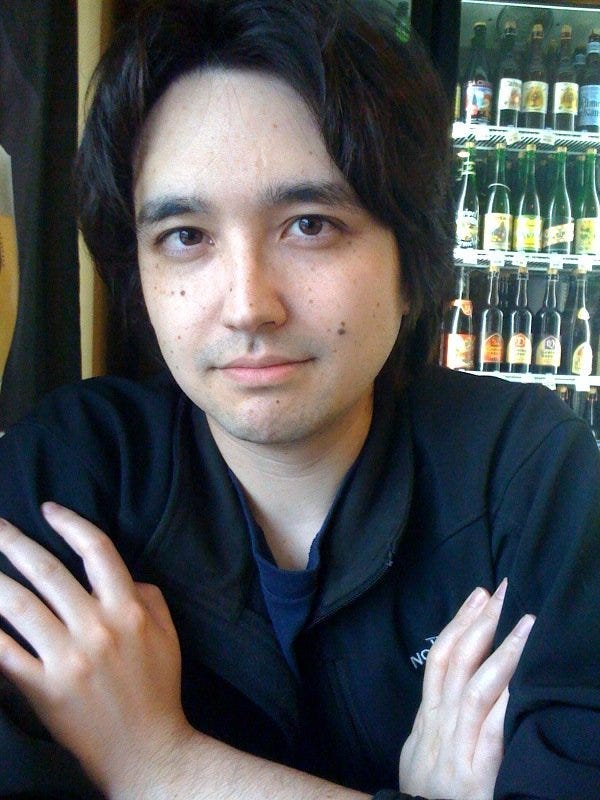
Matthew Burns traded life working on one of gaming's biggest franchises for pursuing his own ideas with Planck.
Rhodri Broadbent had an enviable job in mainstream game development. In the ten years since he joined the video game industry as a tester at Electronic Arts, his credits came to include Fable, StarFox Command, two of the PixelJunk PSN games and Buzz. His rise through the ranks was fast and steady, culminating in a Lead Designer role at Q Games in Japan. But despite being settled in a role many within the industry would aspire to, in 2010 he handed in his notice to set up a desk in a house in Cardiff, Wales and, using his savings, began work on his own idea for a game.
"Freedom to work on what I want was definitely the primary motivation. I wanted to work on more than just a few games the rest of my life, and to have a bigger influence in how those games were made. Going solo was just the best way for me to achieve that."
Luke Schneider had an enviable job in mainstream game development. In the fourteen short years since he joined the video game industry as a programmer at Outrage Games, his credits came to include Descent 3, Alter Echo, Red Faction II, The Punisher, and Red Faction: Guerrilla. His rise through the ranks was fast and steady, culminating in a Lead Programmer role at Volition. But despite being settled in a job many within the industry would aspire to, in 2010 he handed in his notice to set up a desk in a house in Illinois and, using his savings, began work on his own idea for a game.
In the formative days of the industry, aspiring game makers would tirelessly work on a game in their bedroom before sending it out to the most respected development studios in the hope of securing themselves a job to work on the next Mario, Tomb Raider or Halo. But recent years have witnessed a new trend, one that has seen some of gaming's hardest workers leave mainstream development to return to their proverbial bedrooms in order to work on their own ideas. Publishing platforms such as Xbox Live Arcade, PSN, Steam and the App Store have had a democratizing effect on game publishing. Now, as in the 1980s, it's possible for one-man bands and close-knit independent teams to design and release their own products to a global audience. And for those people for whom big team development has become a chore, a door to freedom and control has opened that was previously closed.
"I wanted to develop the concepts I had floating around in my head and I wanted to make games that haven't been made before," says Burns, explaining his decision to quit Bungie and pursue his own path with music game Planck. "You don't get to be very creative on these big games. There was a certain amount of disillusionment with the big game process too, in all honesty. There was a point – some time after I convened a meeting of over ten people, all with their own excruciatingly bad ideas, to "figure out the story," and I got yelled at for not including enough people – when I realized just how un-fun trying to manage a large team can be sometimes."
"It's really a great feeling to be able to adapt the gameplay so quickly and flexibly as you go along and discover what is fun about the game," explains Broadbent, whose first release, The 2D Adventures of Rotating Octopus Character was released on PSN in early June. "The ability to make huge gameplay and technical decisions without needing to write it all up, justify it to producers, maybe even call the publisher... it's so liberating. For example, a few days before submission I leapt out of bed at 3am and decided I had to implement a mid-air jump-cancel move. On trying it, this move was promptly scrapped at 3.15am, but the ability to try it just made me all the more confident in what we had."
Luke Schneider, who has found success with Radiangames in Xbox Indie titles such as Crossfire and Ballistic.
For Schneider, who has released a slew of popular titles on the Xbox Indie Games Channel under the Radiangames moniker, it's been about getting a more rounded experience of the journey a game takes from conception to release. "It's refreshing being able to connect directly with the fans, press, and community again. It's a new adventure, a new challenge, and, of course, you get all the glory," he laughs. "On the downside, you also get all the pressure to do well, and all the blame when things don't work out."
For a generalist like Burns, the chance to break free of the traditional restrictions that a formal creative role imposes has been a real benefit of striking out. "I like to work on a wide variety of things (I've had jobs doing art, music and writing) so it's great to work on something where I'm not boxed into any single discipline."
There are, however, some drawbacks. "One of the negatives is the uncertainty," says Burns, "you don't always know where your next paycheck will come from - although it could be argued that working in a big studio is no less uncertain, given how often layoffs and studio closures occur. On a game like Halo or Call of Duty there's plenty to worry about, but hoping you can pay the rent next month isn't usually one of those things."
Rhodri Broadbent's Dakko Dakko made The 2D Adventures of Rotating Octopus Character, recipient of the hallowed Eurogamer 8/10.
Money is both a burden and a motivator as an independent developer. With success stories such as Angry Birds and Minecraft, there's no shortage of me-too upstarts trying to replicate huge earners. But for Burns, it's less of a goal than you might expect. "I think some people get into indie development thinking that they will make a lot of money based on these crazy outlier examples, not taking into account the thousands upon thousands of really cool games made by small teams that have never made their money back," explains Burns. "But one hopes that people are going indie in order to do stuff that's new and interesting and stands out from the crowd. In business terms, Shadegrown Games is more about trying to answer the question of whether we can sustain ourselves by making the games we want to make and making them the way we want to make them."
Schneider, whose suite of Xbox Indie twin stick shooters have found critical acclaim, agrees, but freely admits that the financial pressures of working as an independent entity are real and often relentless. "I have few regrets apart from the fact that my initial plan wasn't a big success. Going solo was definitely the right decision for me, but I think I could have focused a little more on coming up with a plan to make money first, then one to do what I want second. I wish I had known that a $1 price point wasn't going to work out all that well for my titles, so I could have made the games a little deeper and unique and gone for $5 instead. But these are lessons along the way to the ultimate goal: to get to the point that I can take my time and make the games I want. I think that's all most game developers really want professionally."
One of the recurring issues for developers used to working in large teams who strike out alone is, inevitably, loneliness. "For the first few months, everything about working alone was bliss," says Broadbent. "By the fourth month I started to go a little stir crazy, and the isolation really started to kick in. I was working seven days a week, and at my desk pretty much the whole waking day. I stay connected via Twitter and IM, but that's not really enough. Since attending this years' Game Developer's Conference I have been much more pro-active in seeing other people, and I aim to get involved with other developers as often as possible."
Maintaining connections with other indie developers seems to be a necessity for all three developers in sharing knowledge, particularly as many of the lessons picked up in mainstream game development don't necessarily carry across to their new ventures. "The biggest piece of cautionary advice I'd have to my past self is: 'Don't assume anything you learned on big-budget games magically carries over to indie development,'" explains Burns. "Personally, it felt like going from being an electrician on a skyscraper project to being the architect and builder of my own home– despite them both being construction-related, in practice they're two very different things."
While there are important lessons that independent developers can learn from mainstream development – "Don't forget that your ultimate goal is to ship the game," says Burns while Schneider advises "Being professional and disciplined doesn't make you less indie, it makes you a better developer" – the overwhelming sense from talking to these developers is that large, traditional studios have much to learn from independents.
"Being multi-talented and trying all aspects of game development gives you a better understanding of game development in general and makes you a better team member and better at your job," says Schneider. "Large studios need to make sure their developers get opportunities in more than just the role they were hired for."
Crossfire's twist on the 2D shooter format has made it a favourite on Xbox Indie Games.
For Broadbent flexibility is the key advantage that indies have over their mainstream counterparts. "I've learned how important it is to listen to your game, and revise the core gameplay when you find something more fun, even if you're 60% through the development cycle. That moment when you realise everyone is having more fun with the editor than with the main game is your game telling you to make Sim City, not a top-down street racing game."
"The biggest lesson for mainstream developers to take from indie development is: calm down!" says Burns. "I don't know what it is about mainstream development – the burn rates, the publisher beat-downs, the fan expectations, or what – but on many of the big studio projects I've seen there is a certain propensity to flip out at the slightest bump in the road. Please, just calm down. The other lesson is, if someone wants to do the right thing, why not let them do it?"
And what's the big plan for these men? Having climbed the mountain to the top of the industry and jumped off, what's the ultimate goal? "I've never really been one for goals, more for adventures," says Broadbent. "There isn't a long-term plan yet because the whole venture was experimental. It has gone very well (PSN-related launch troubles aside) and as such I am looking at continuing on the current venture for the foreseeable future, but I don't have an ultimate objective beyond 'make fun stuff', and make enough money to buy more games and nice food."
Planck's rhythmical gameplay is a world away from the big budget shooters Matthew Burns previously worked on.
A year or two into their respective ventures, it's interesting to see that Burns, Broadbent and Schneider have no reservations recommending that mainstream industry workers should contemplate an independent life. "All personalities are different of course, but as a 'tweaker' by nature, and someone keen on messing with the status quo, it has been and remains a remarkably liberating and enjoyable endeavor," says Broadbent. "Placing all the responsibility on your own shoulders is daunting, but also encouraging and motivating. And of course all the rewards, the highs felt along any and all game development projects, are amplified many times over when the project is so much more personal, as it inevitably will be, no matter how invested in a larger project a potential indie might be."
"To anyone thinking of taking this path I say: do it," encourages Burns. "Most of the people in the industry who I have spoken to love the idea, they are just a little scared and need a nudge. The thing is, it almost doesn't matter if it works out or not in the end. The point is you have to try." Schneider agrees: "Yeah. Just understand that, once you go indie, it's going to be hard to go back to enjoying mainstream game development."
