Mindjack
Worth plugging.

The worst hacks aren't the kind that infiltrate security systems or unravel consoles, but the kind that write. A careless opinion spreads even faster than malicious code – and can be just as destructive.
Mindjack, sadly, is a game destined to fall victim to such opinions. I know that because, as I booted the game up, one thought stood out in my mind: that this was going to be bad. An unheralded, low-budget, third-person shooter from Japan? Made by a hodgepodge development team of questionable experience? Published by Square Enix, of all companies? I couldn't help but doubt.
For the first few hours, those doubts were justified. Over the following eight, however, they slowly began to dissipate, before turning into outright respect.
Mindjack is best described as a strange blend of Resident Evil 5, Uncharted and Minority Report. A very watered-down blend, but the elements are there nonetheless. The character designs, camera angle and fudgy controls are straight from Resident Evil 5, along with an evil corporation plotline. The basic duck-and-cover gunplay is reminiscent of the first Uncharted, flawed but satisfying, while the lead actor does a terrific Nolan North impression. The futuristic setting and tone vaguely recalls Minority Report, albeit in sporadic glimpses.
In spite of those obvious influences, Mindjack eventually rises above them to assume its own identity, mainly because of disciplined design choices, excellent pacing and one brilliant little feature: mind hacking. Mind hacking is the game's calling card, an ability that allows you to convert injured enemies to your side during combat, turning the tide of battle, but also allows you to leave your body and 'possess' neutral NPCs and team-mates, many of whom offer tactical advantages.
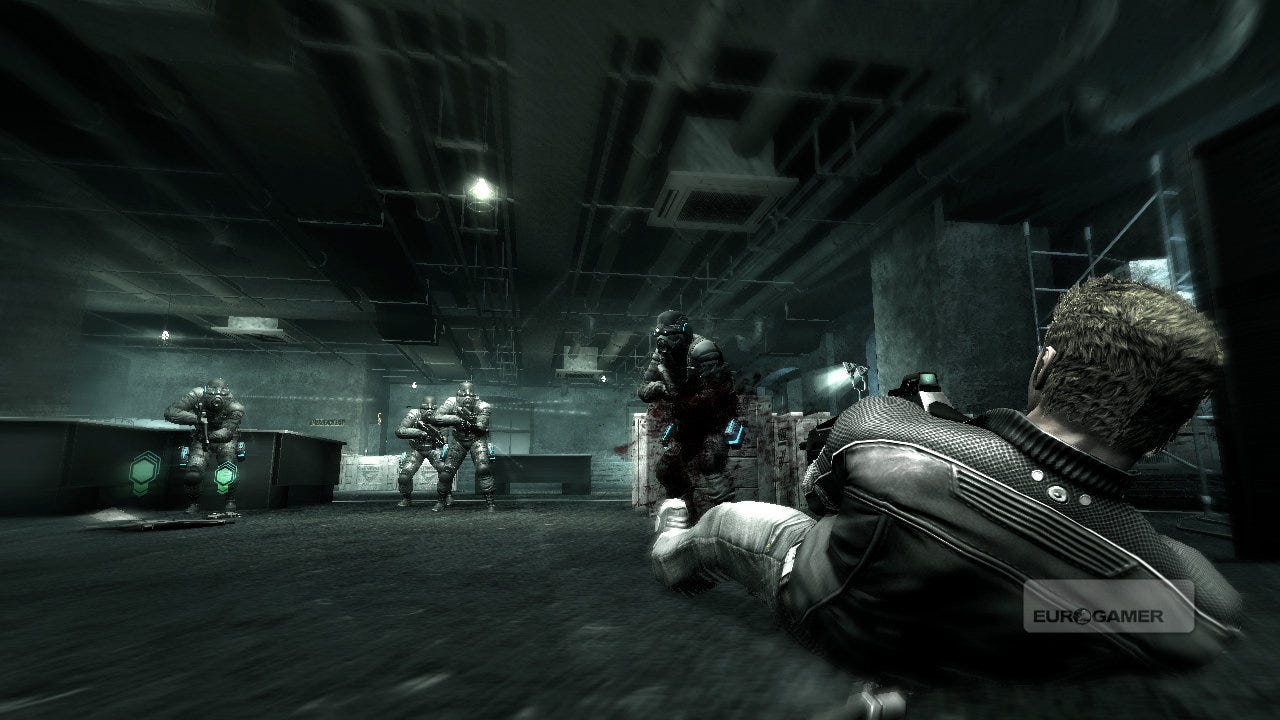
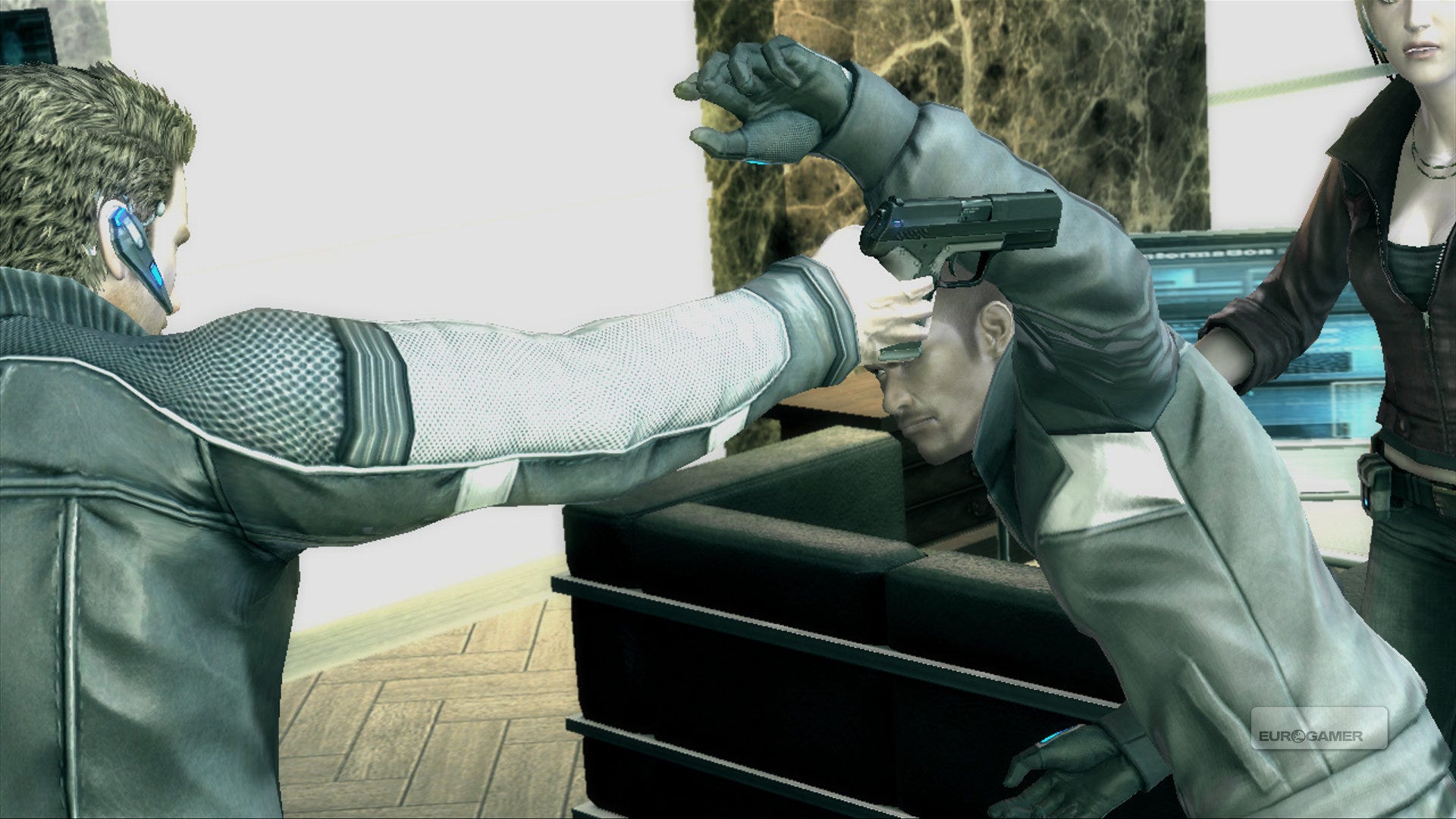
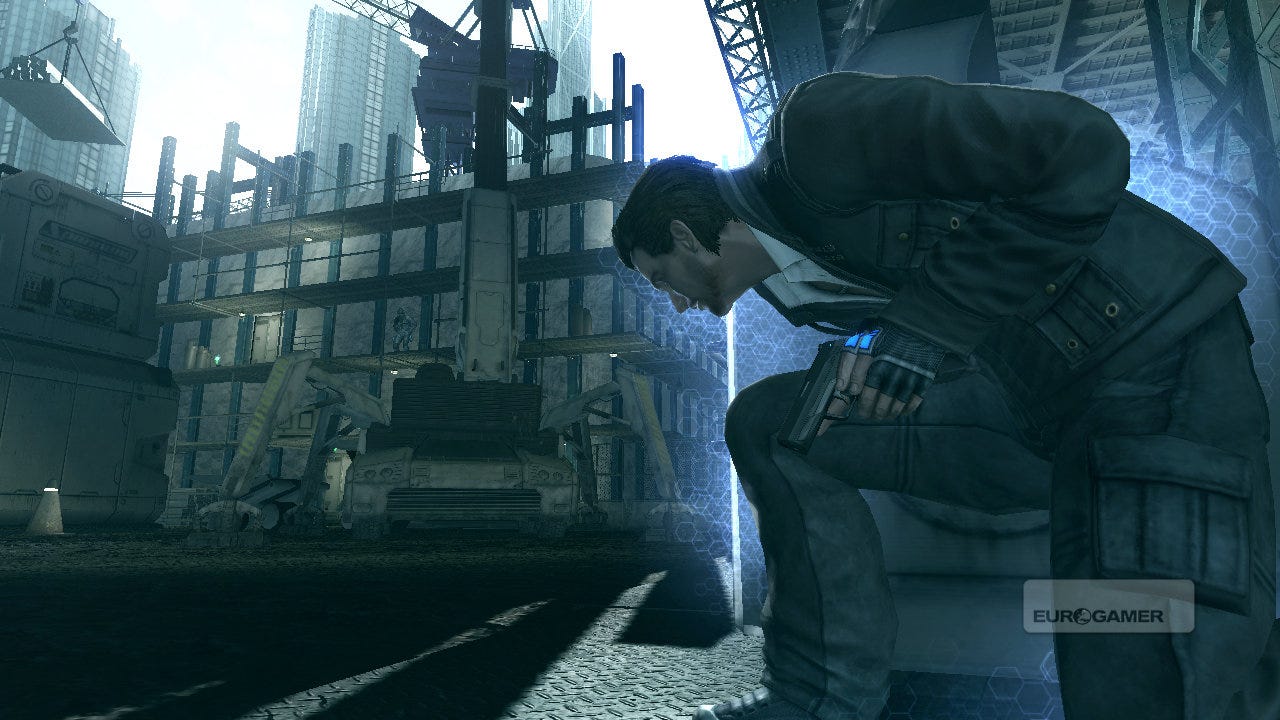
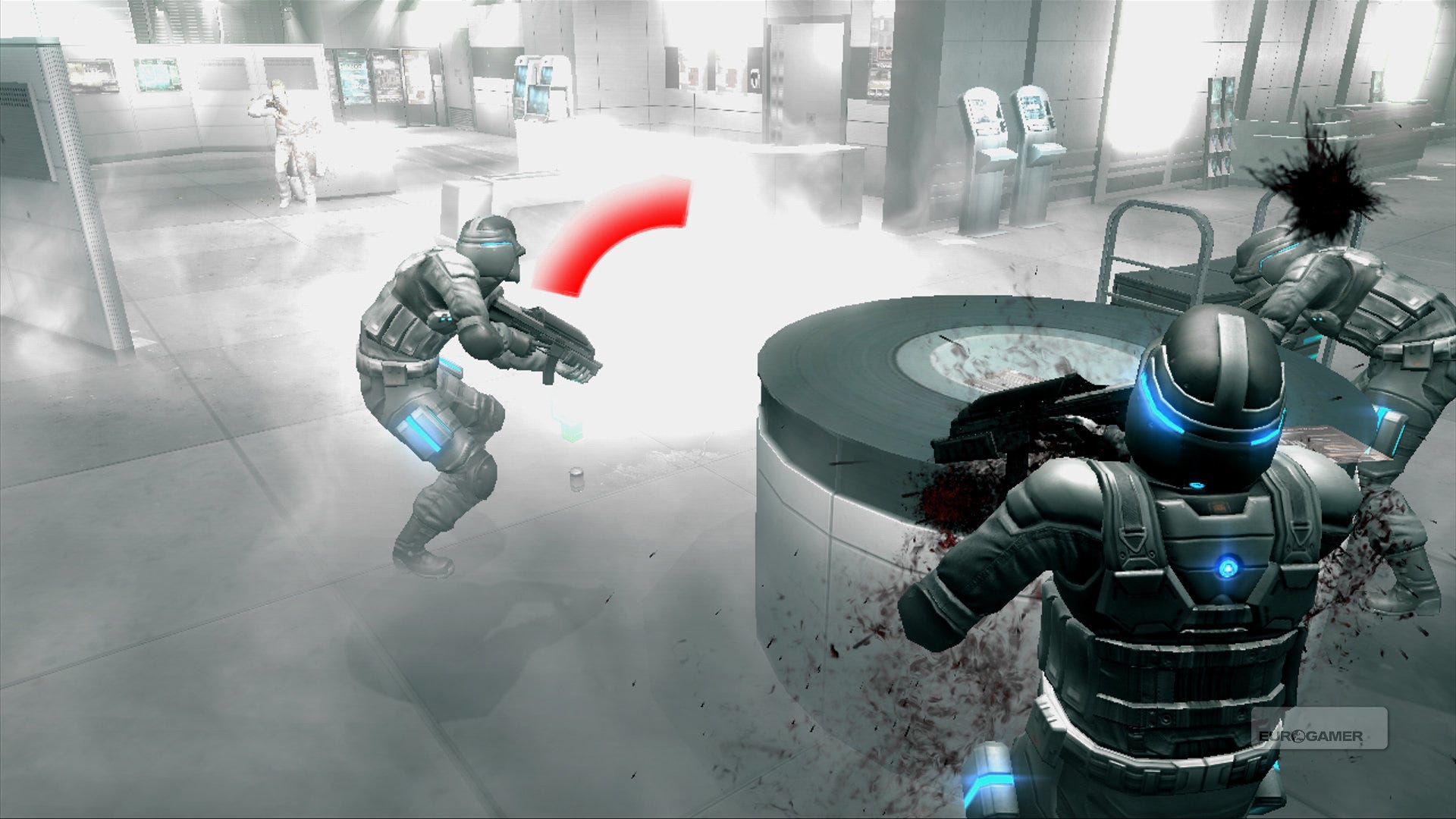
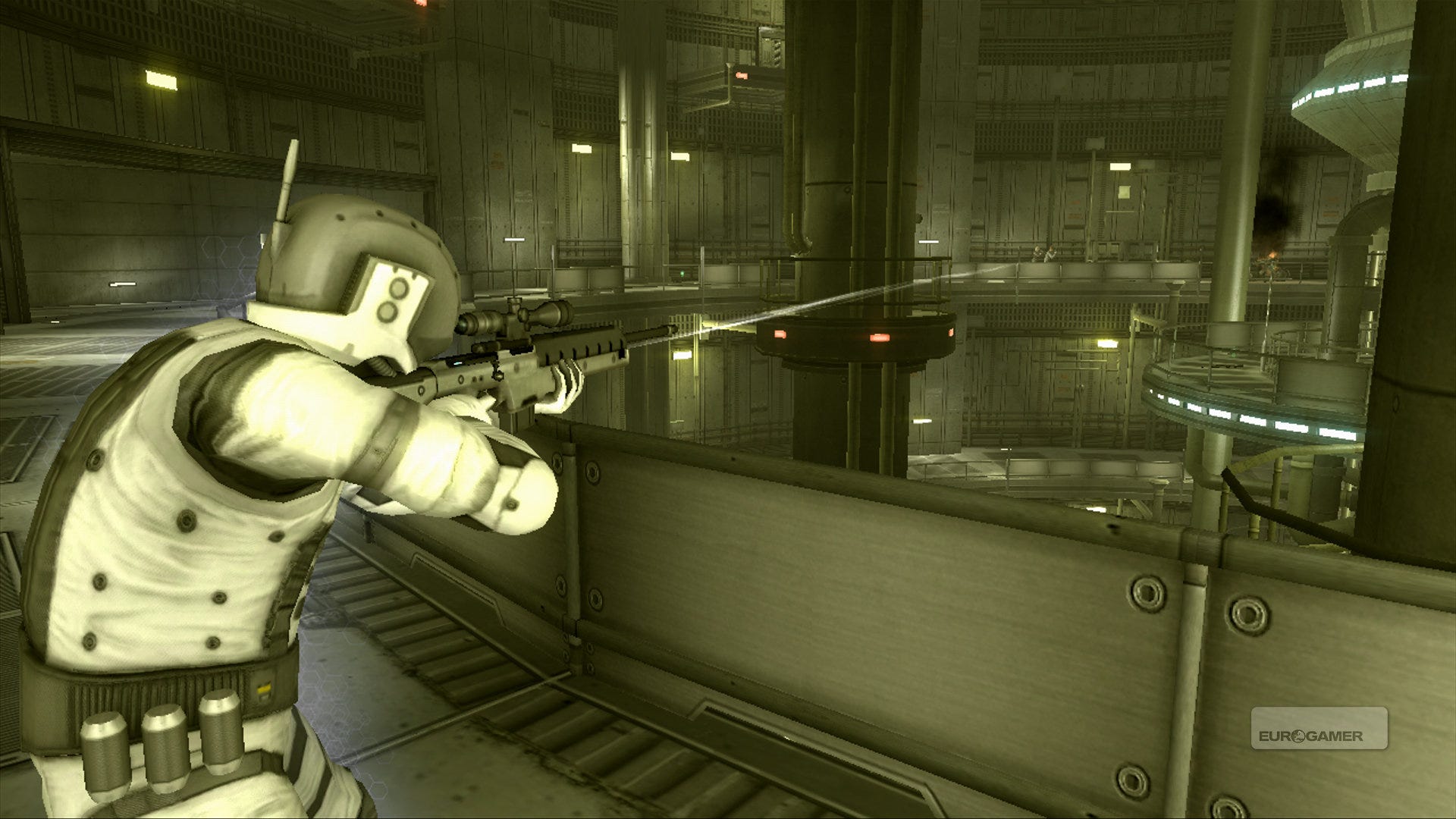
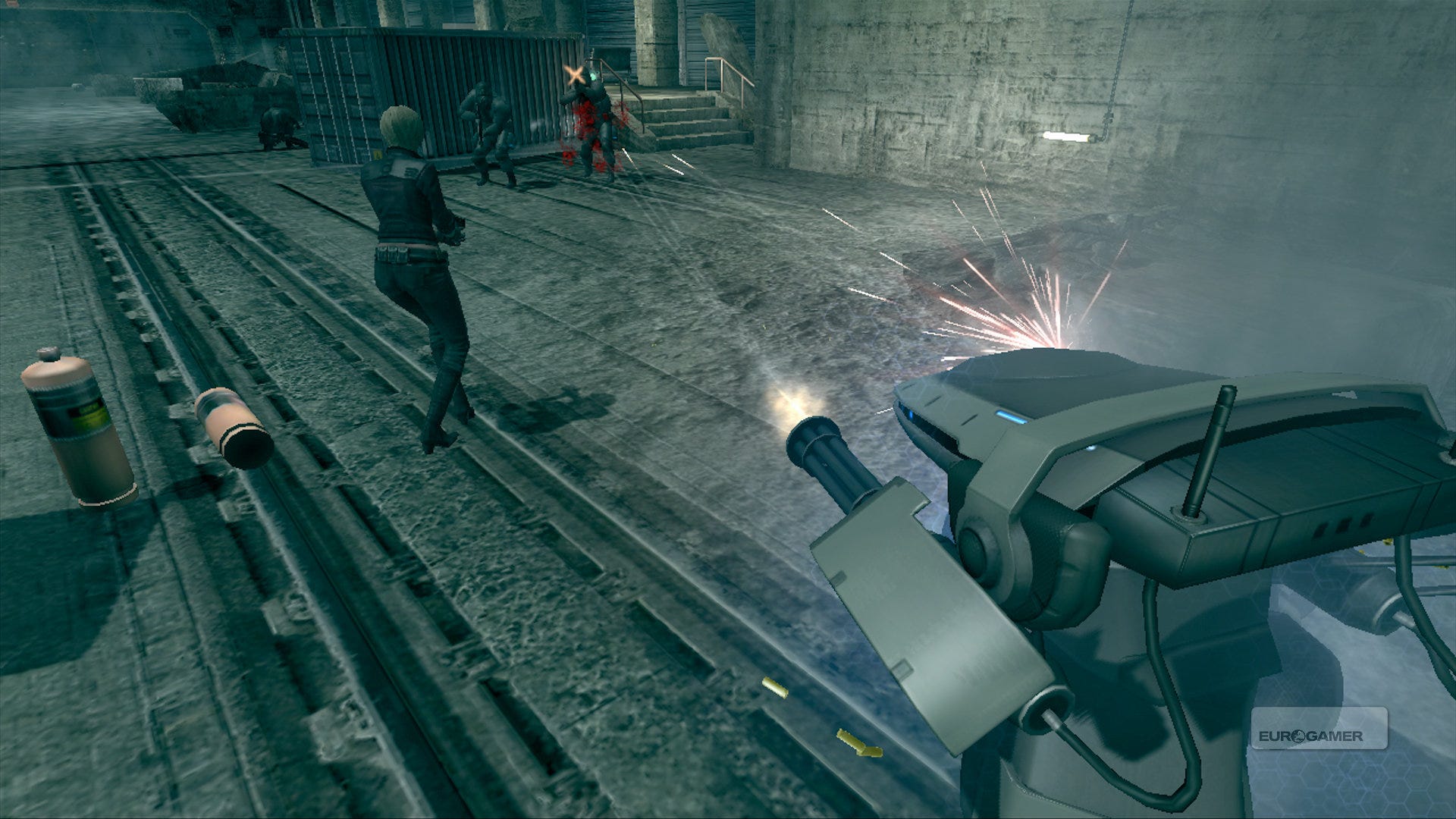
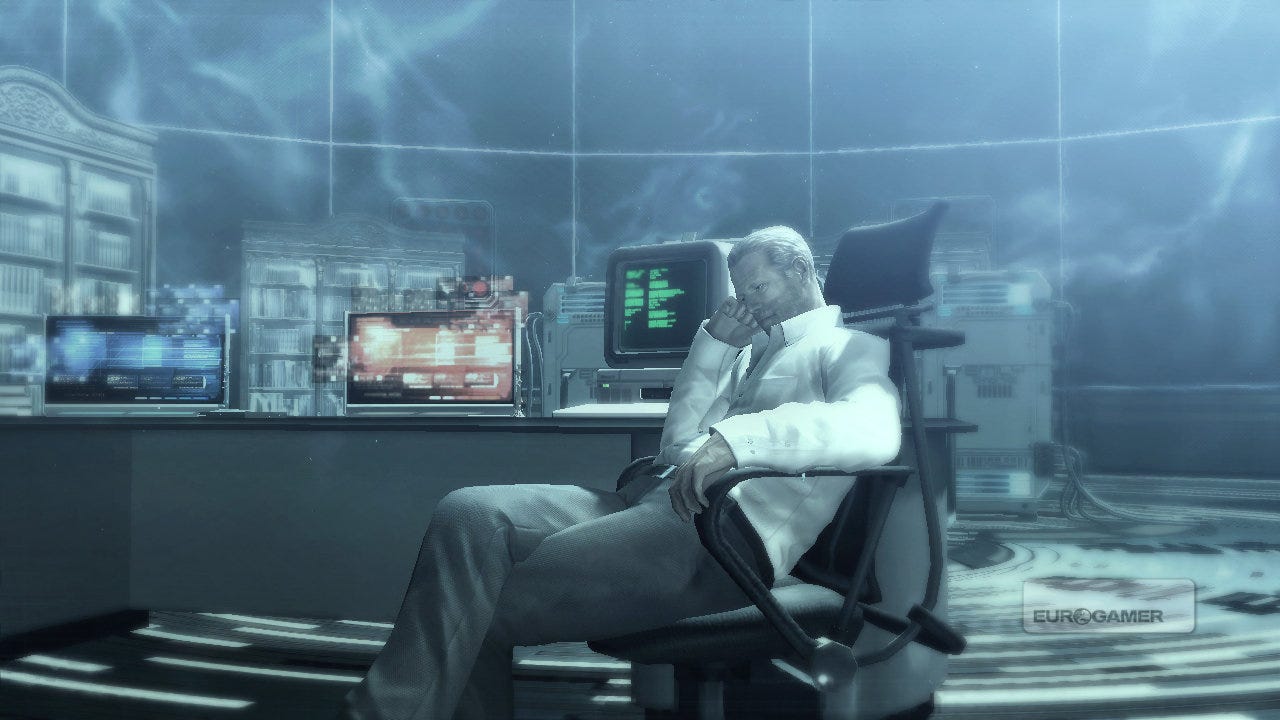
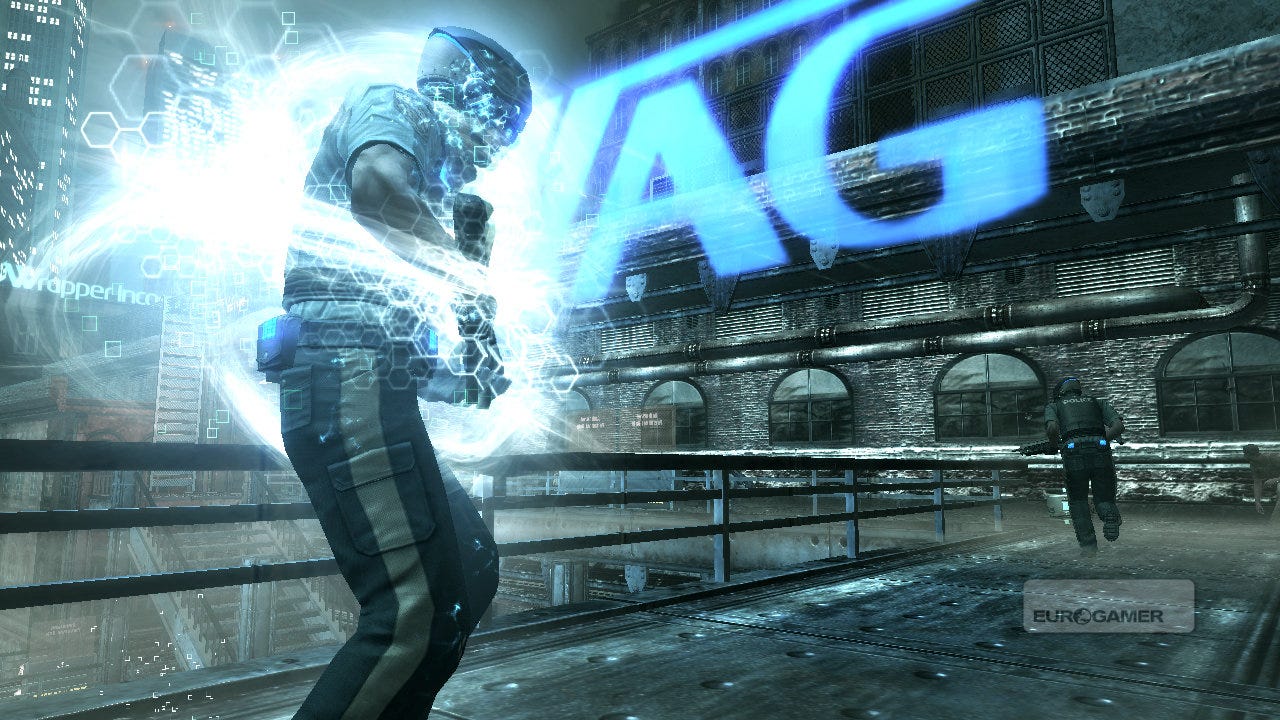
Instead of forcing this feature down the player's throat and designing every battle with linear mind-hack 'solutions', Mindjack simply introduces the concept and lets you decide how to use it. It shows an understanding of game design that, ironically, most Western shooters have eschewed in favour cinematic overload and set-pieces. You can choose when and whether to use mind hack – if at all – and the sense of empowerment and control is all the more satisfying as result.
The plot, meanwhile, was clearly written by a gamer. Mindjack is well-written, but not in the traditional sense. It might surprise you to learn that exposition is at an absolute minimum here, something we rarely say about Square Enix games. In fact, there isn't even an opening cinematic.
Instead, things start in an airport, with you playing as FIA agent Jim Something-or-other. Your orders are to follow an FIA target, Rebecca Weiss. There is no reason given. A few moments later Jim finds himself suddenly on the run with Ms Weiss, as dozens of FIA agents (think SWAT team) attack from all angles. At this point, it's easy to assume that Mindjack will completely ignore plot and characters in favour of shooting stuff, but that's only half true.
You will have killed hundreds of enemies before Mindjack's threadbare story begins to get under your skin, but it does get under your skin. Jim doesn't have a huge amount of dialogue, but what's there is well written and acted, with Nathan Drake-like quips and subtle hints at a troubled past. Even stranger is how self-aware the writing is, with plenty of nods to the bizarre premise. After a while you begin to wonder how the dialogue could be so solid, yet the subsequent plot holes so apparent.