Version tested: PlayStation 3
Few games leave no room for a sequel. It makes for poor business and, let's not forget, while the intended destination for most videogame makers is fun, the fuel that gets them there is potential profit. These days, if you want to make money from a blockbuster, the sequel is part of the business plan. But at the beautiful, altruistic core of LittleBigPlanet was the dream of a world that could not only nurture and grow life, but also sustain it. And nearly two years since its debut, this patchwork dimension is still achieving just that.
This simple little platform game and its idea lifted from PC game development – that giving your players the tools to make their own stuff after they've finished with your levels will not only maintain the life of your creation, but will enrich it and increase its value – has succeeded in building a community of amateur game designers. They deliver fresh content on a weekly basis, over three million levels to date. Not all of it is very good or interesting content, but enough of it is worthy of attention to keep LittleBigPlanet a perennially habitable planet.
So why the need for LittleBigPlanet 2, then? If the only type of content that could be generated by makers using the first title had been yet more woolly platformers, then it would make sense to create a spin-off, focusing on different styles of game. But the original game offered just enough flexibility to allow a creative designer to cajole its virtual ropes and pulleys into making a shoot-'em-up, or a giant calculator. On this basis, LittleBigPlanet's original dizzying potential precluded a sequel. No?
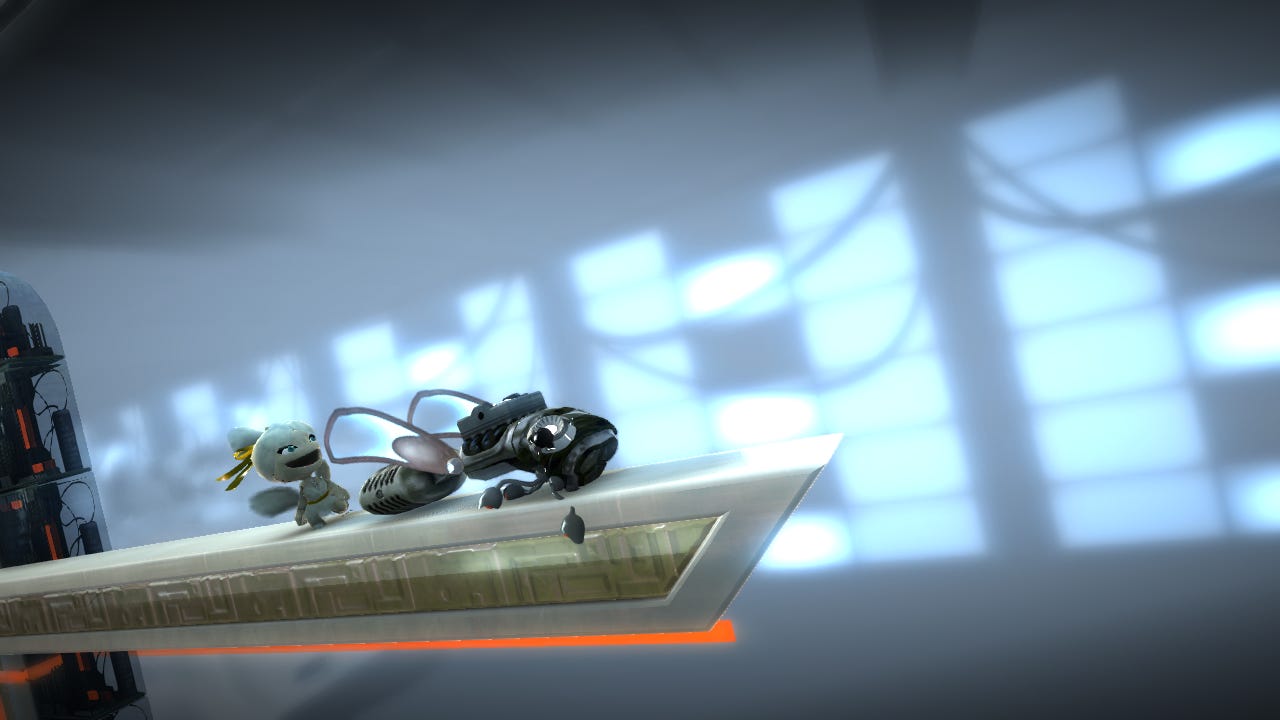
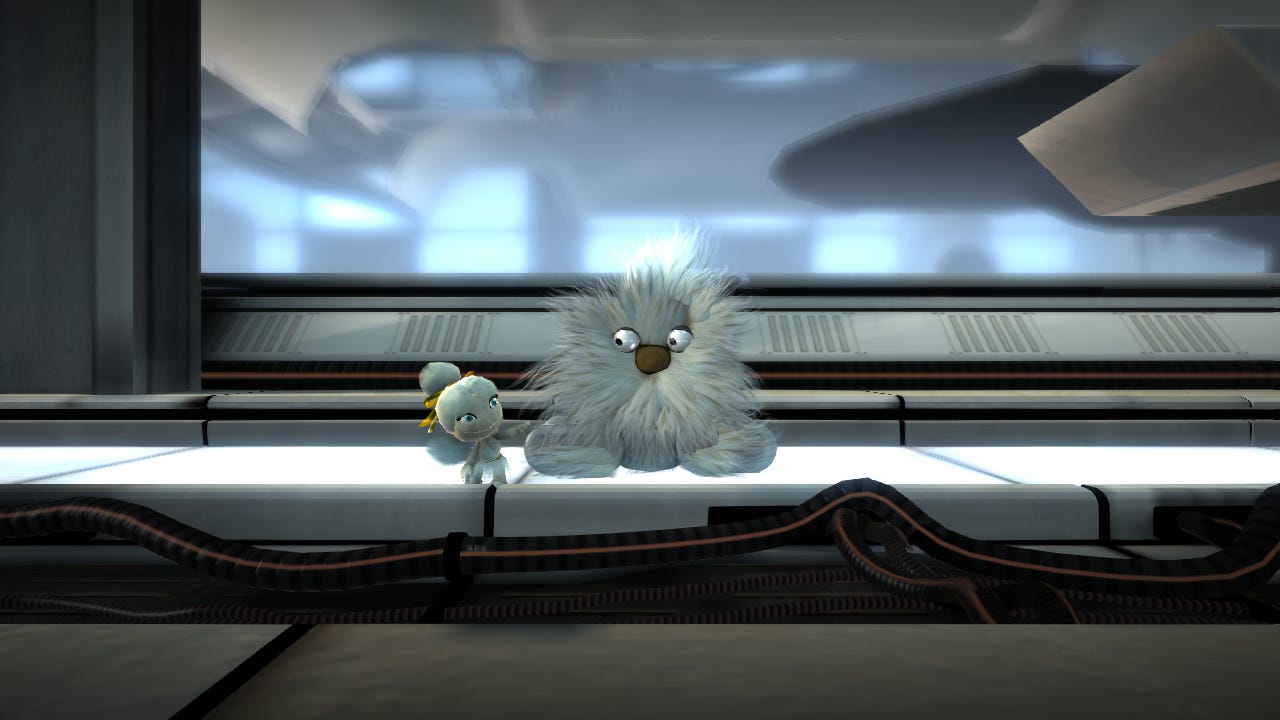
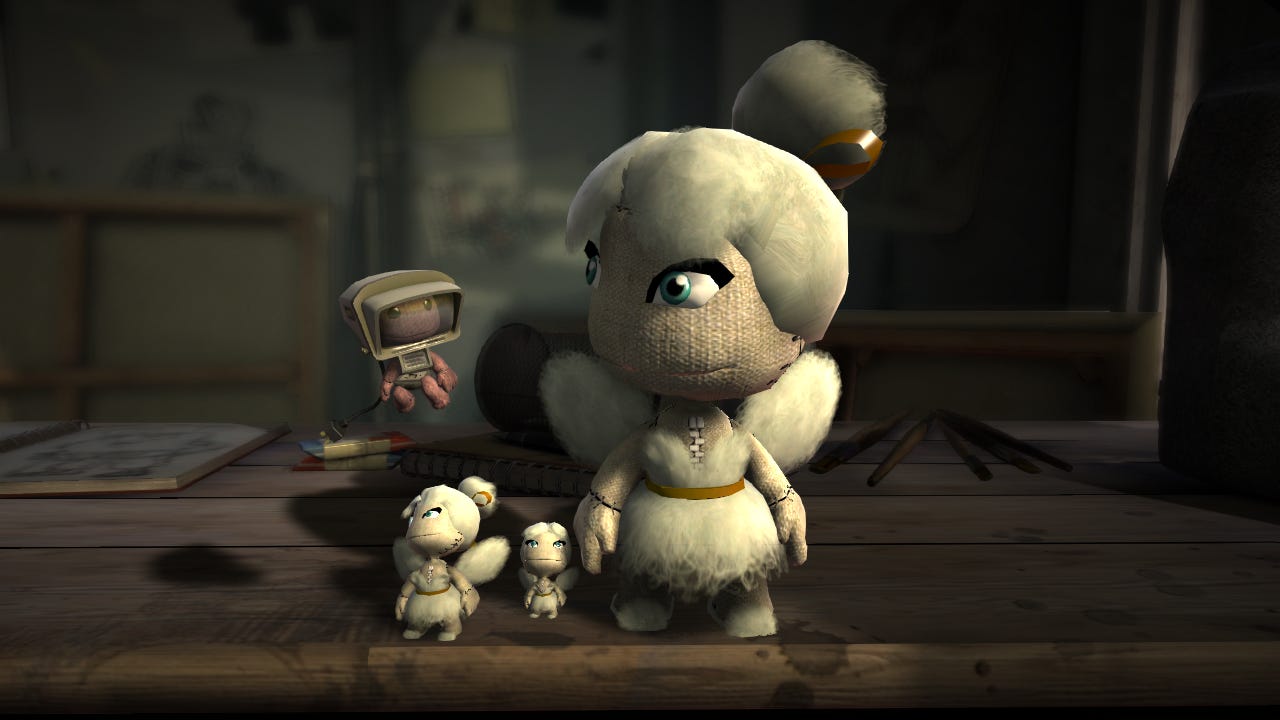
The first hour or so spent with that sequel will do little to convince you otherwise. Visually, this sequel maintains its predecessor's crafty, design-savvy aesthetic; as though Hartbeat were remade by Taschen. It's achingly pretty and art magazine-ish, not very much like how videogames usually look at all and all the better for it.
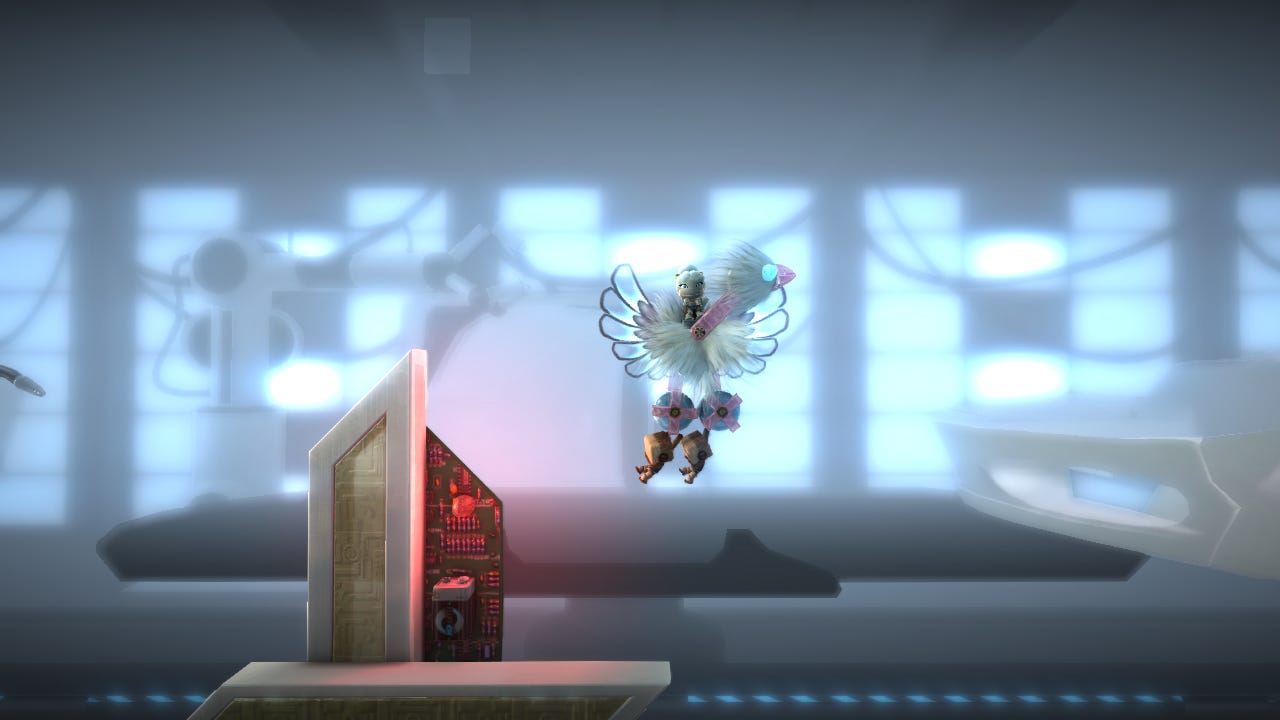
Structurally too, LBP2 is identical to its predecessor. Stephen Fry's warm, reassuring tones narrates the menu screens, which direct you one of three ways: into the six themed worlds that comprise the single-player campaign, towards the workbench where you can start work on your own level, or online, where you can sample those created by others. But before you can do anything else, you must complete the seven main stages that comprise the first world, thereby learning the basics of play.
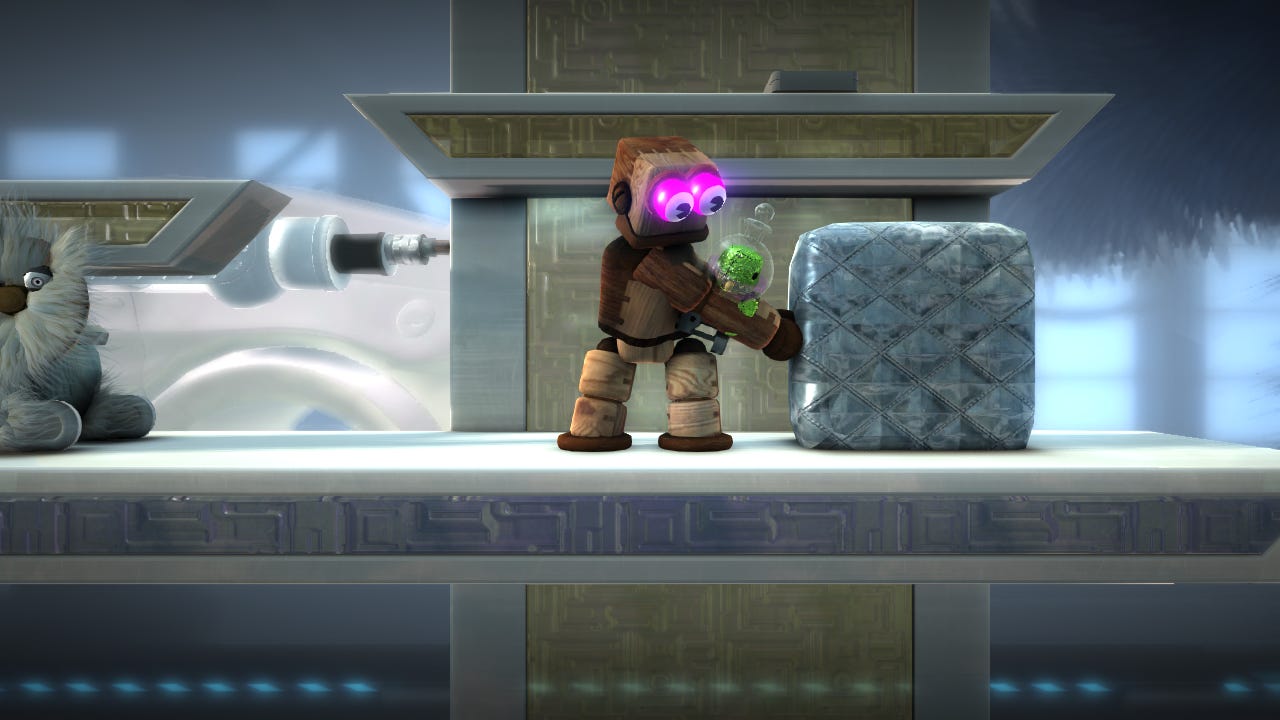
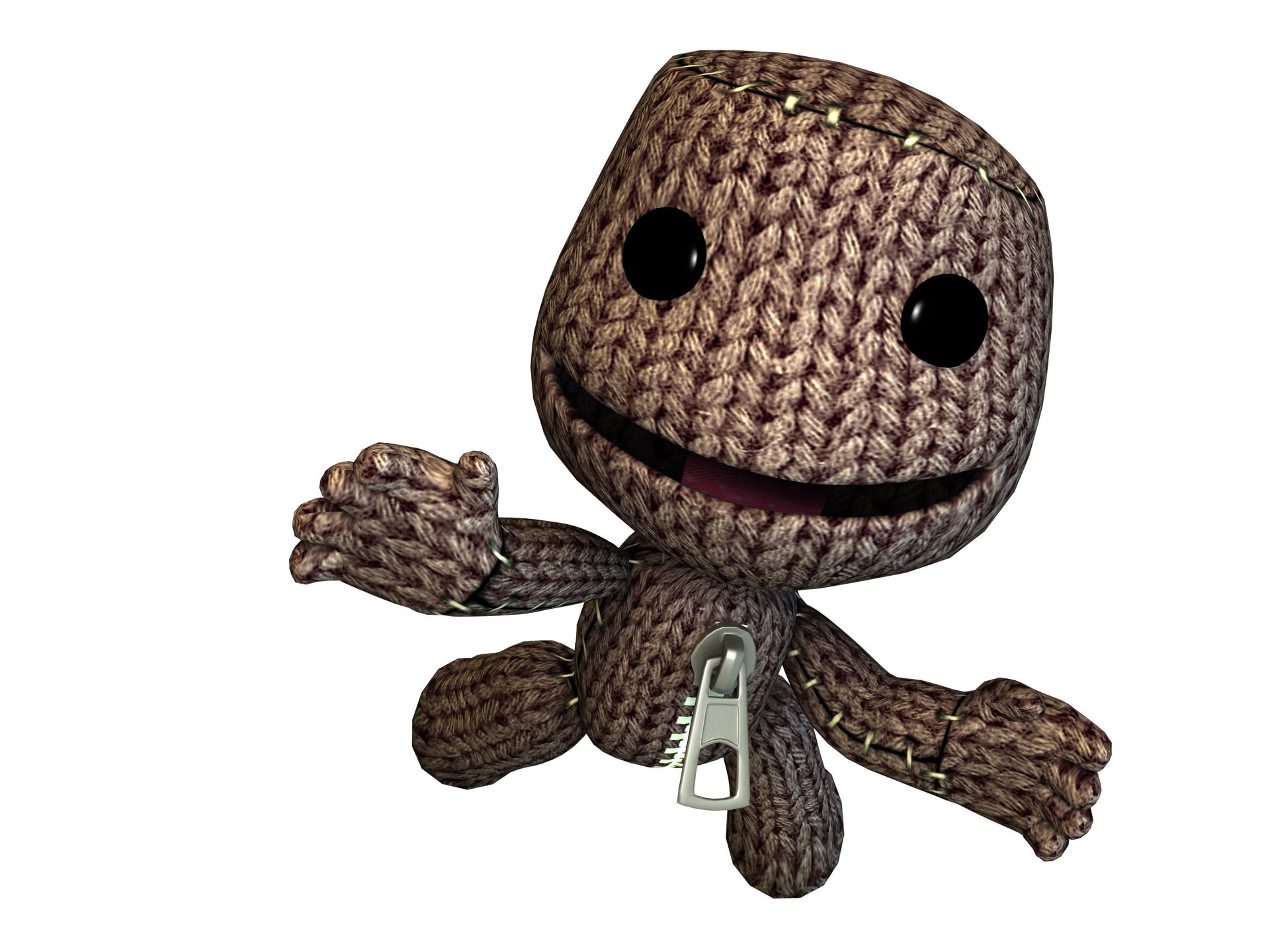
The platforming mechanics have been left untouched since the previous game – presumably to allow for compatibility with all of the user-created worlds born in the past 24 months. Sackboy still has a jump that lacks the nippy, digital precision of Mario's by some margin, yet can grab and pull certain obstacles for added flexibility, allowing developer Media Molecule to insert the cross-stitcher's equivalent of crate puzzles into the game's levels. Each side-scrolling stage exists on three planes: fore, middle and far, which can be hopped between in order to move behind or in front of obstacles. Jumping between planes is quick and seamless, but, as a feature rarely seen since the SEGA Saturn's Guardian Heroes, it still feels curiously anachronistic.
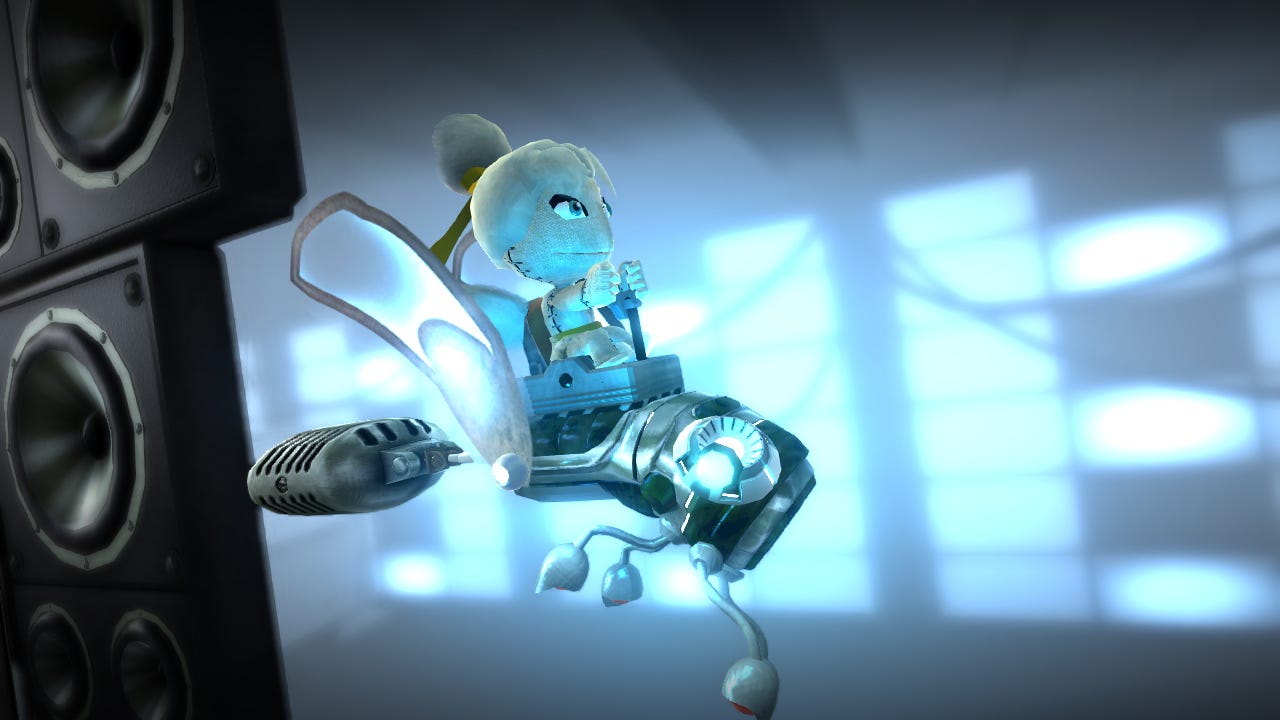
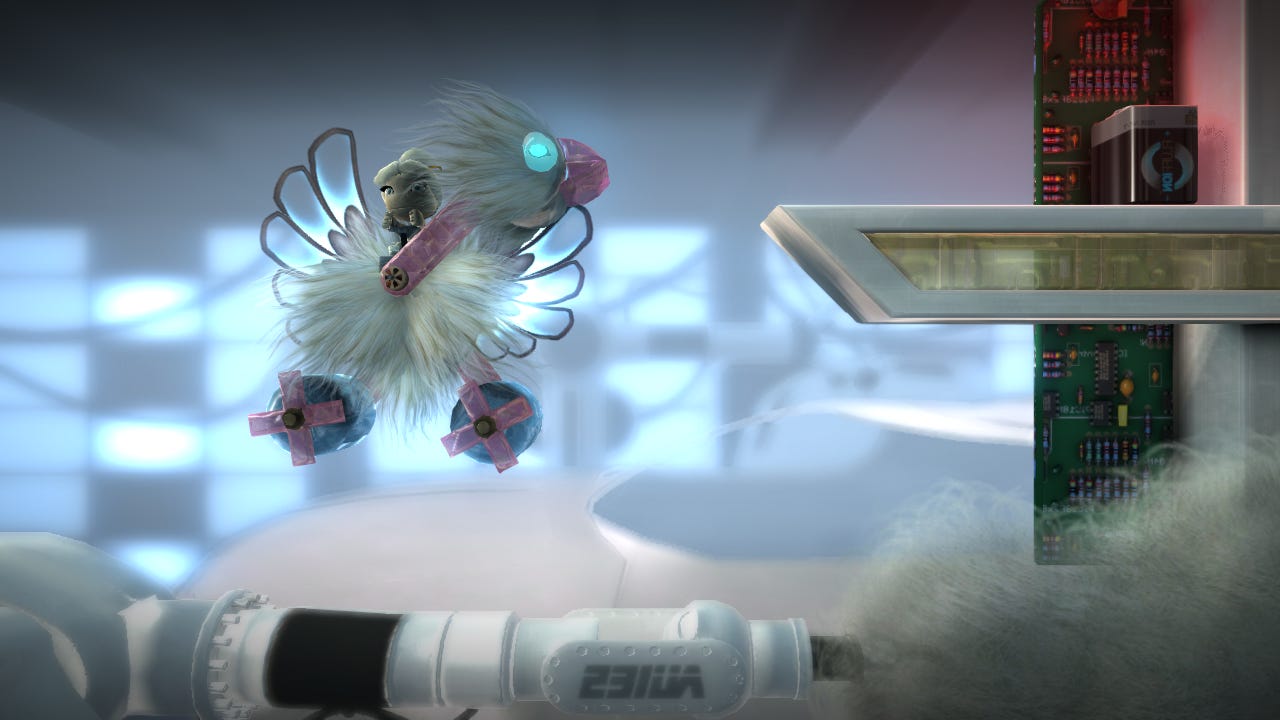
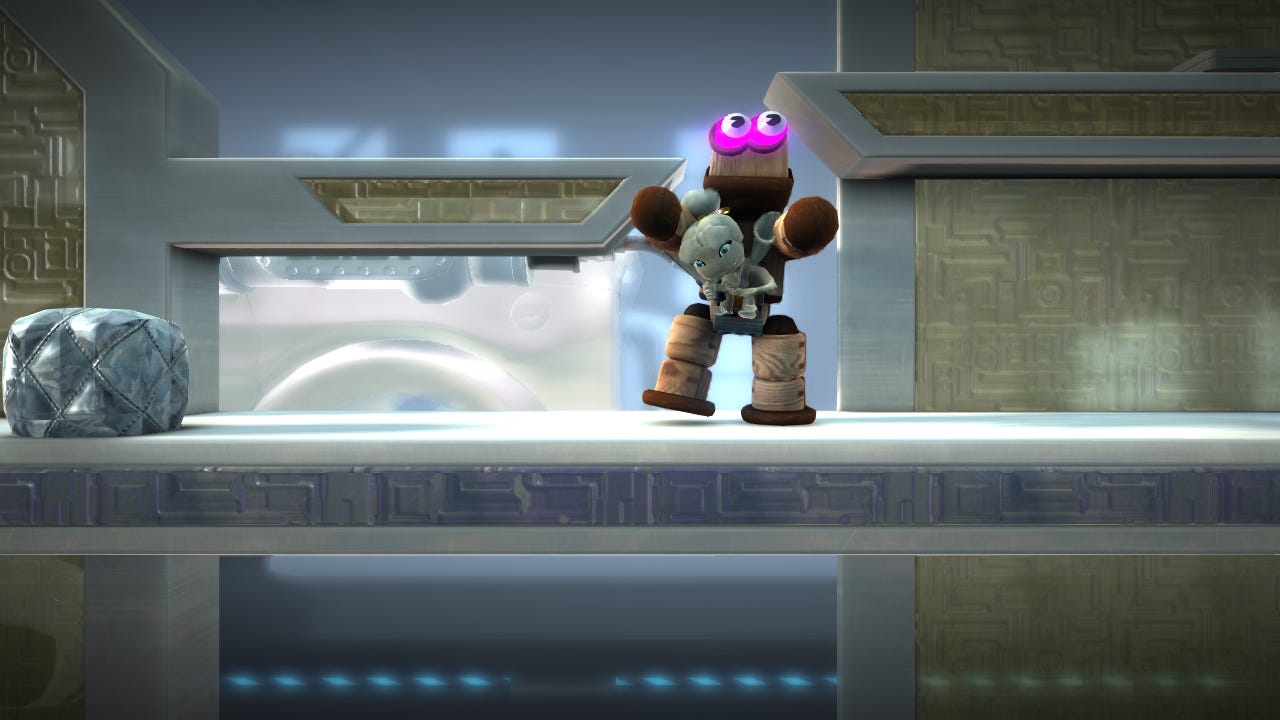
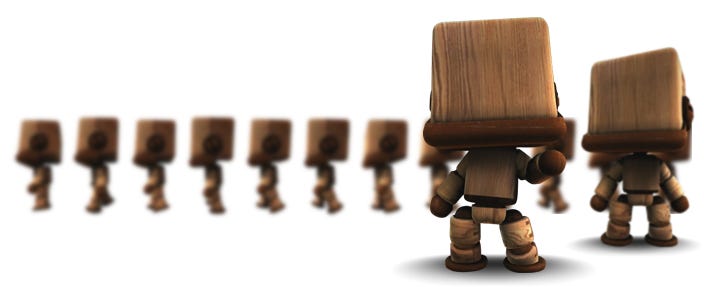
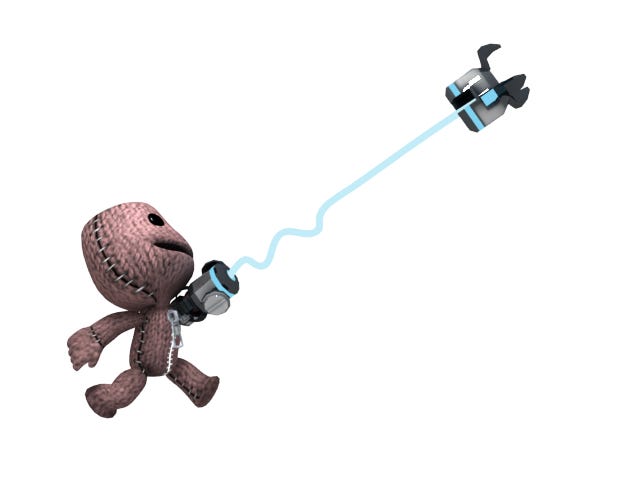
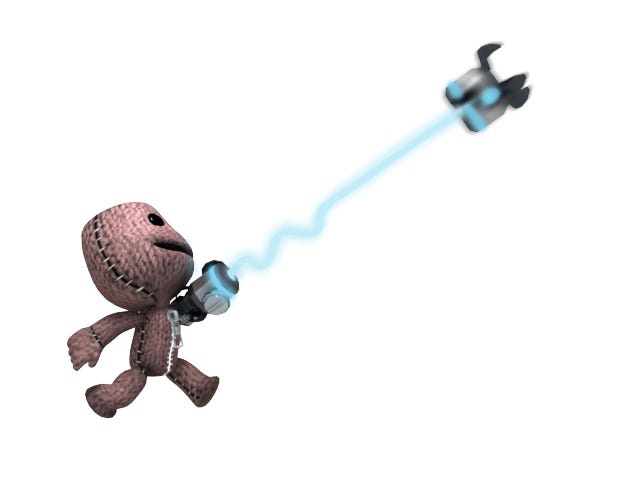
The level design is never anything short of robust, and, while this is still nowhere near as tight a platform game as Nintendo's strongest output, at its best it's really good. The palette of objects and ideas is richer than in the first game, and you'll encounter a greater range of environmental hazards than before. The palette of tools with which you can interact with the game is also richer, each world you work through pushing more makeshift gadgetry into your paws, from the delicious Sniper Trifle, to a grappling hook, used creatively throughout the campaign to swing and rope climb, to a trio of pilotable mecha-style soft toys, unveiled late in the game. These tools add much-needed diversity to the core stages, which happily improve in quality over the course of the experience on this account.
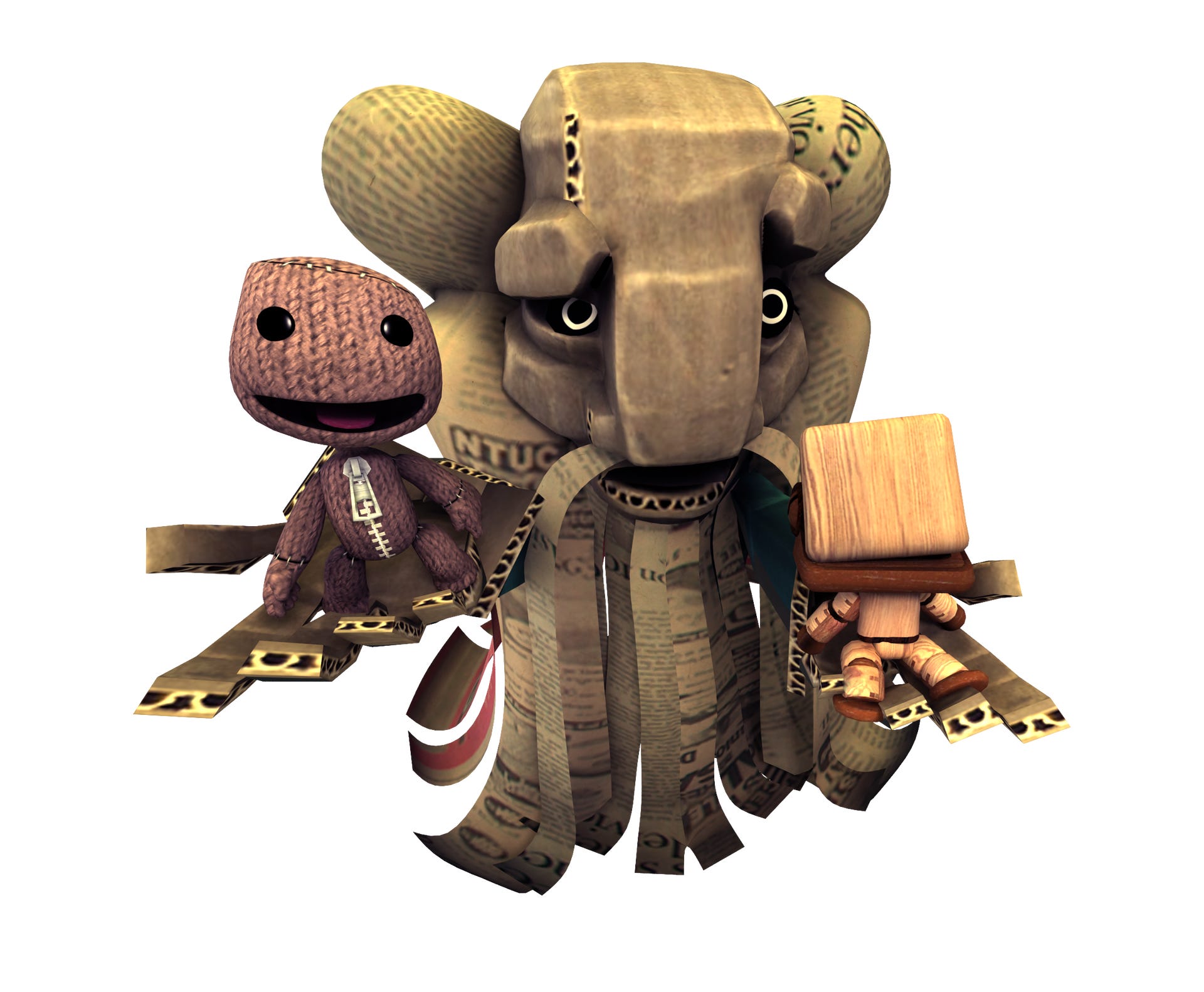
The weakest aspect to the game remains enemy design. This is a toolkit perfect for building rich, complex, textured levels. But when it comes to creating moving enemies, the DIY tools on offer to designers have seemingly stunted their imaginations. Enemies move like awkward clockwork toys, rarely following Sackboy's movements, instead simply patrolling lone set paths, exposing a weak spot when their back is turned. Few of the end-of-world bosses stick in the mind, their attack patterns rote and unimaginative, repeating the same moves till their weak spot is assaulted. As a result, LBP2's strongest obstacles remain those built into the worlds you navigate, rather than the creatures that patrol them.
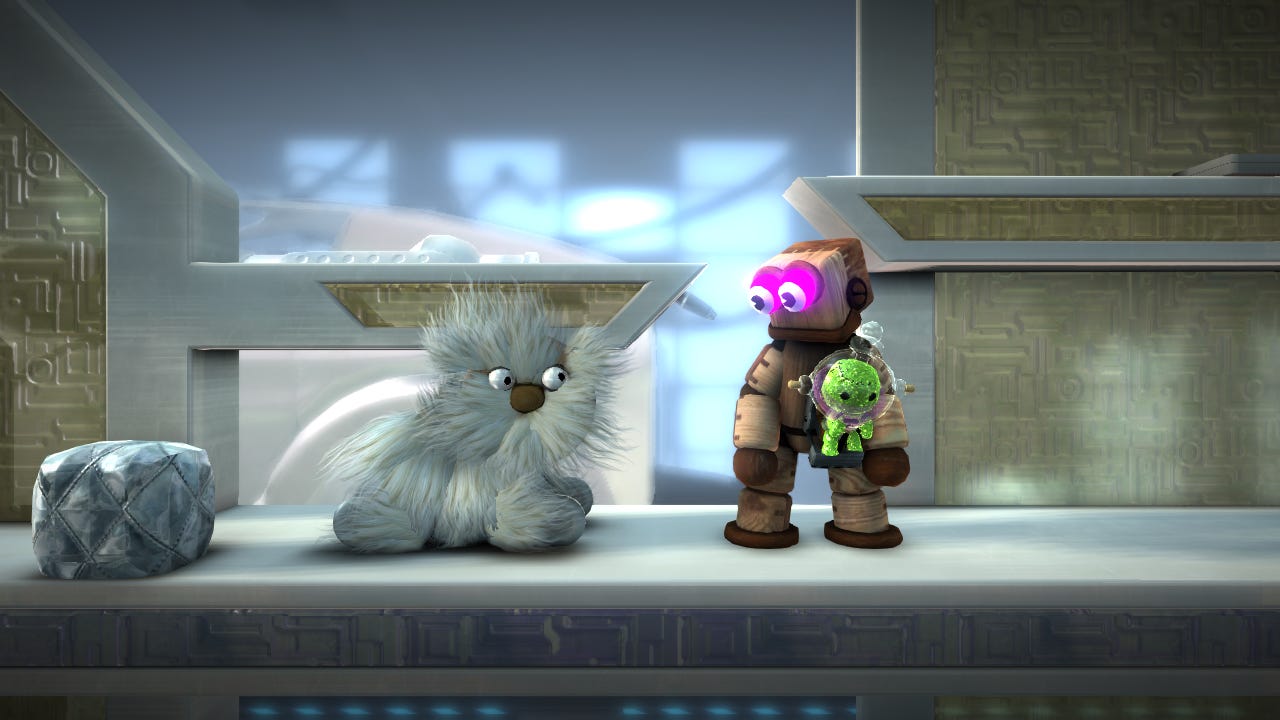
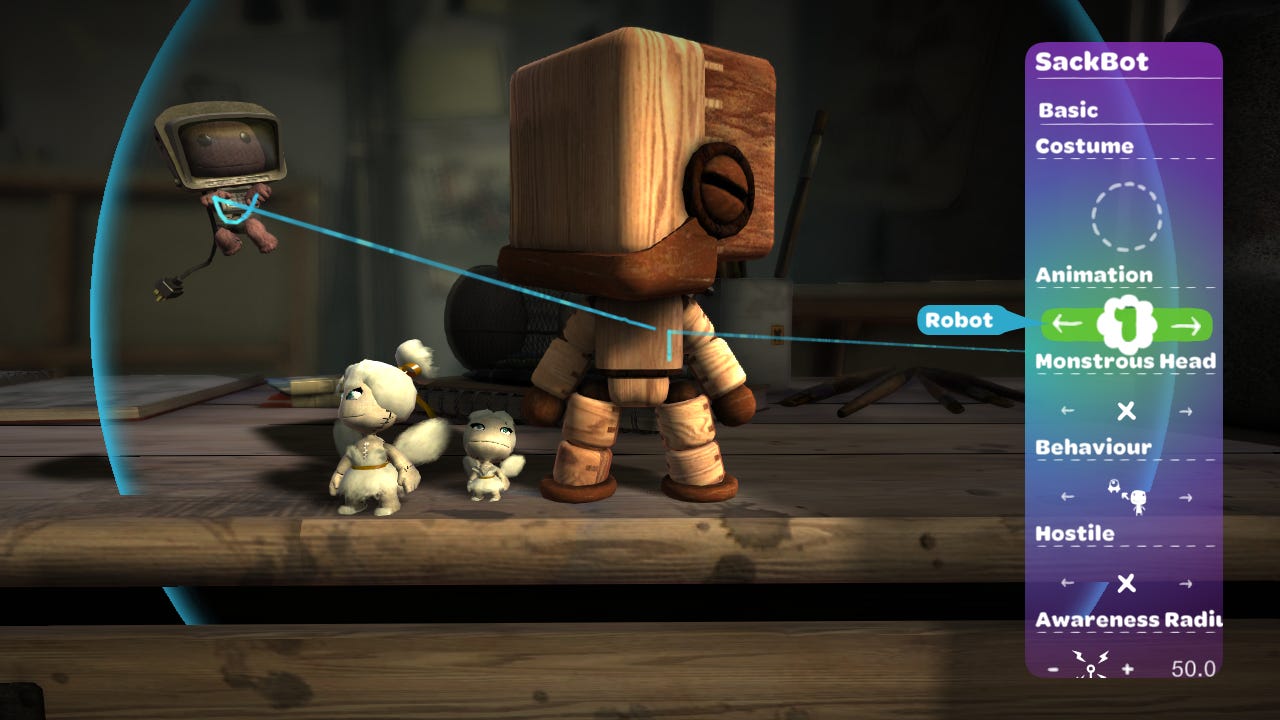
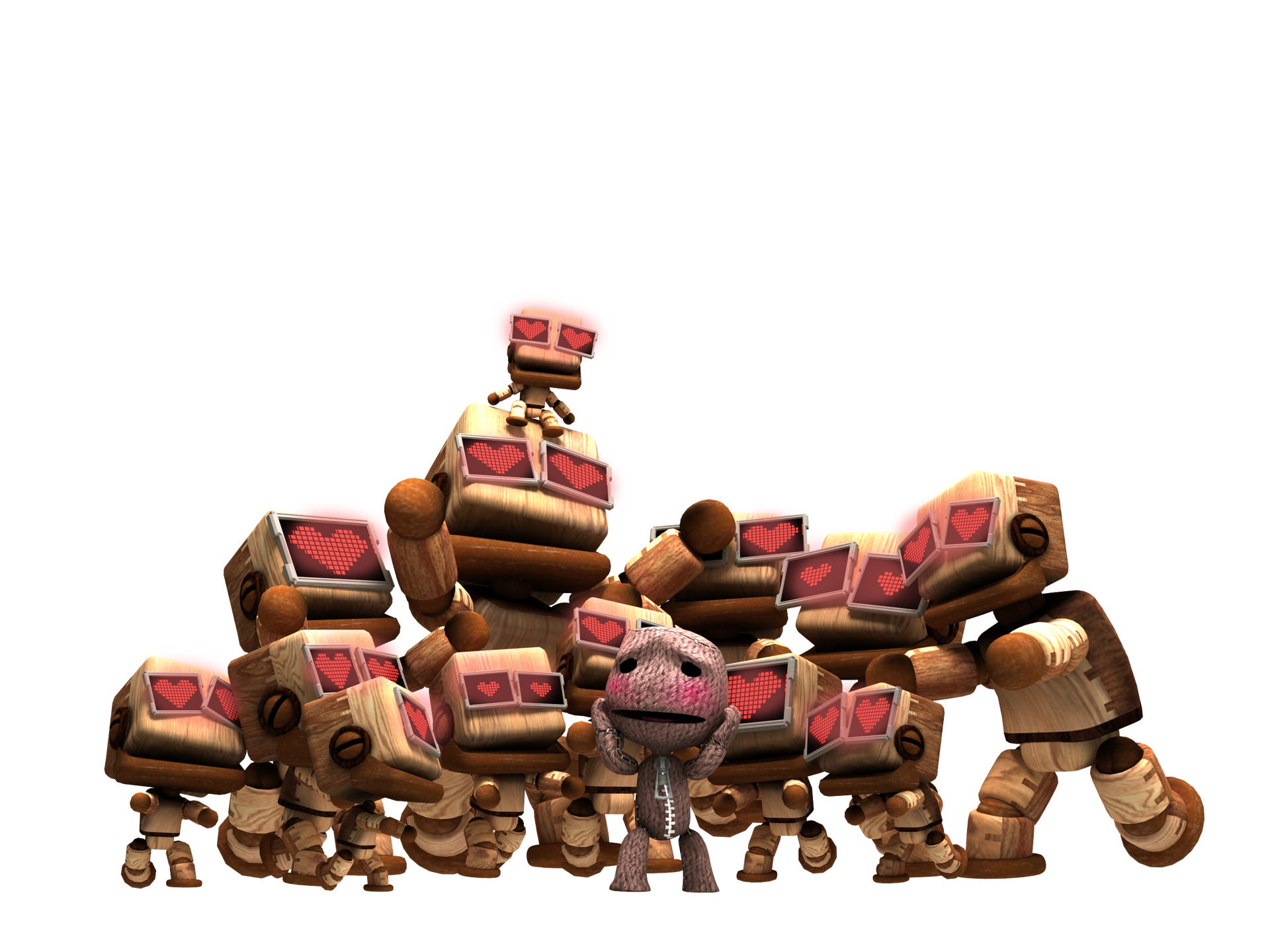
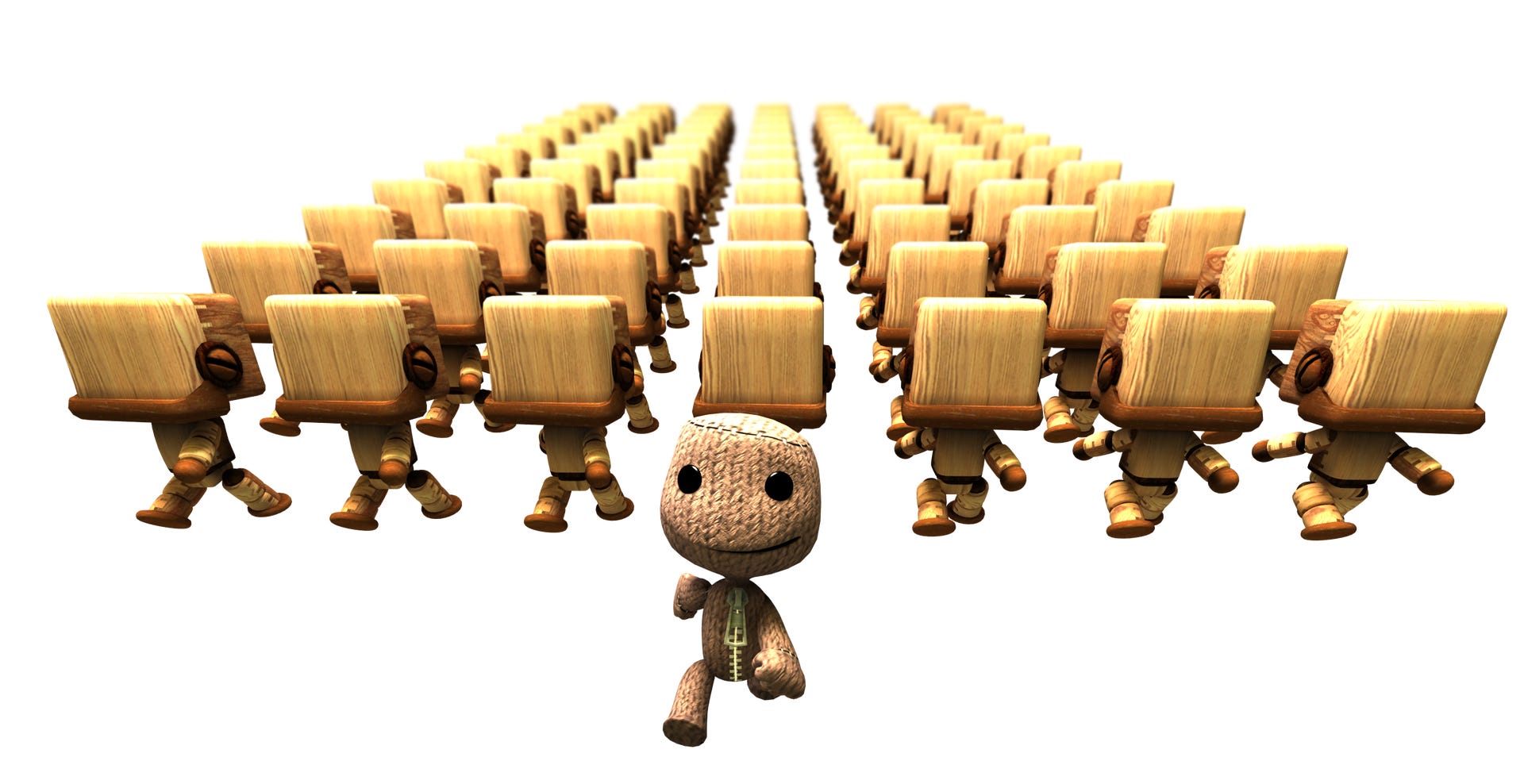
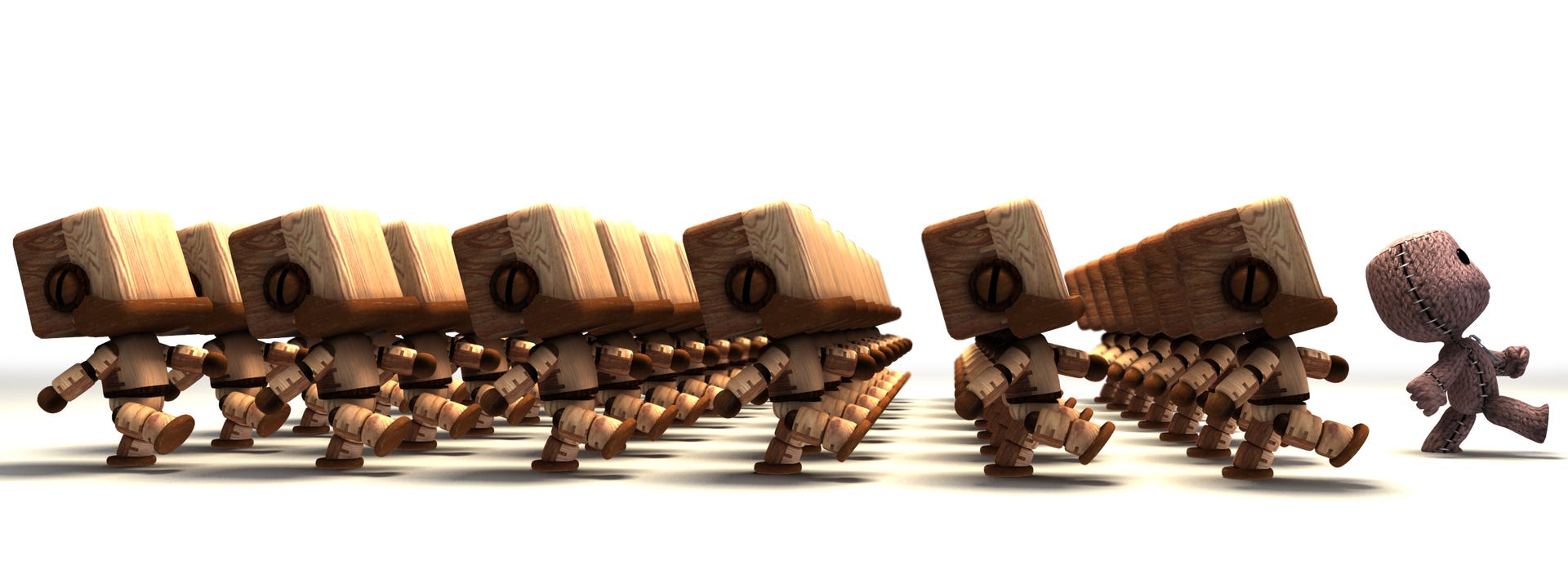
On the other hand, the levels in which you are asked to shepherd or lead friendly Sackbot charges are exceptional. With eyes for hearts, these knitted robots follow your Sackboy slavishly around a giant, clanging factory, being whisked into air tubes and thrown around as you desperately try to lead them in the right direction and keep each one alive. The custodian mechanic adds a new flavour to the somewhat simplistic platforming, because the number of Sackbots you manage to save at the level's conclusion increases the rewards in kind. Of course, each of these fresh design ideas has the added benefit of showing you what is possible with the toolkit when you get your hands on it.
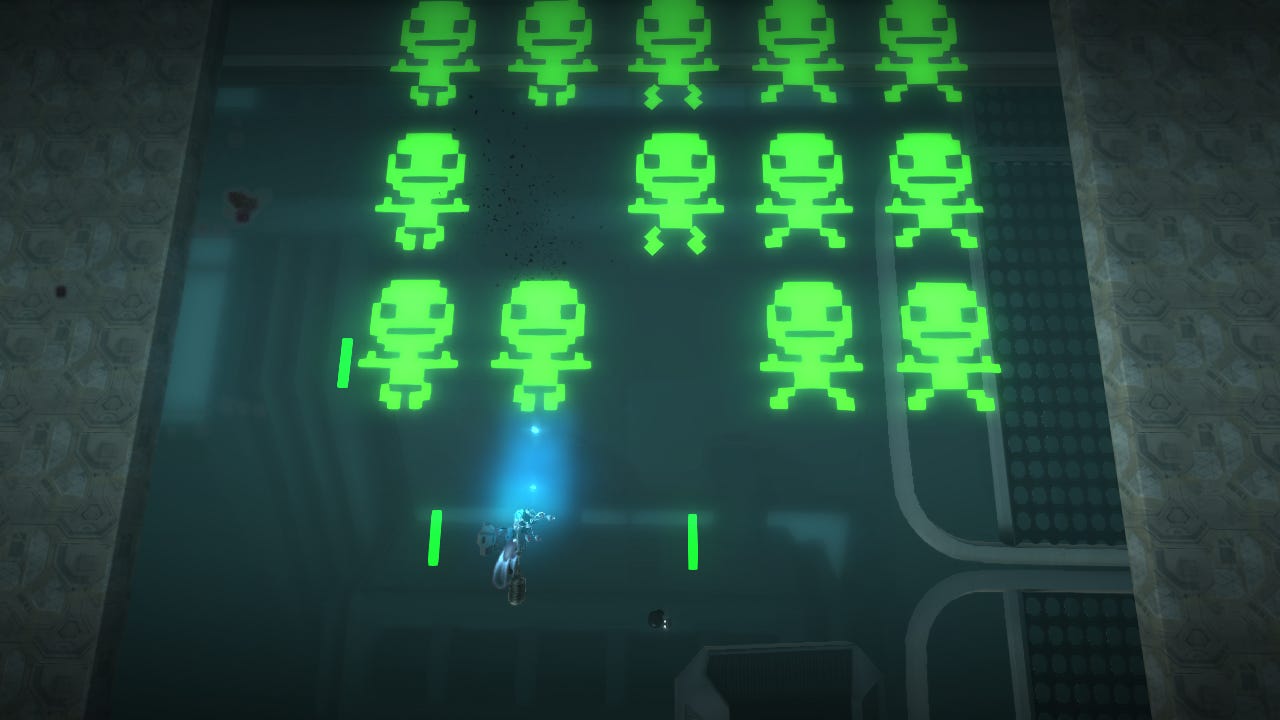
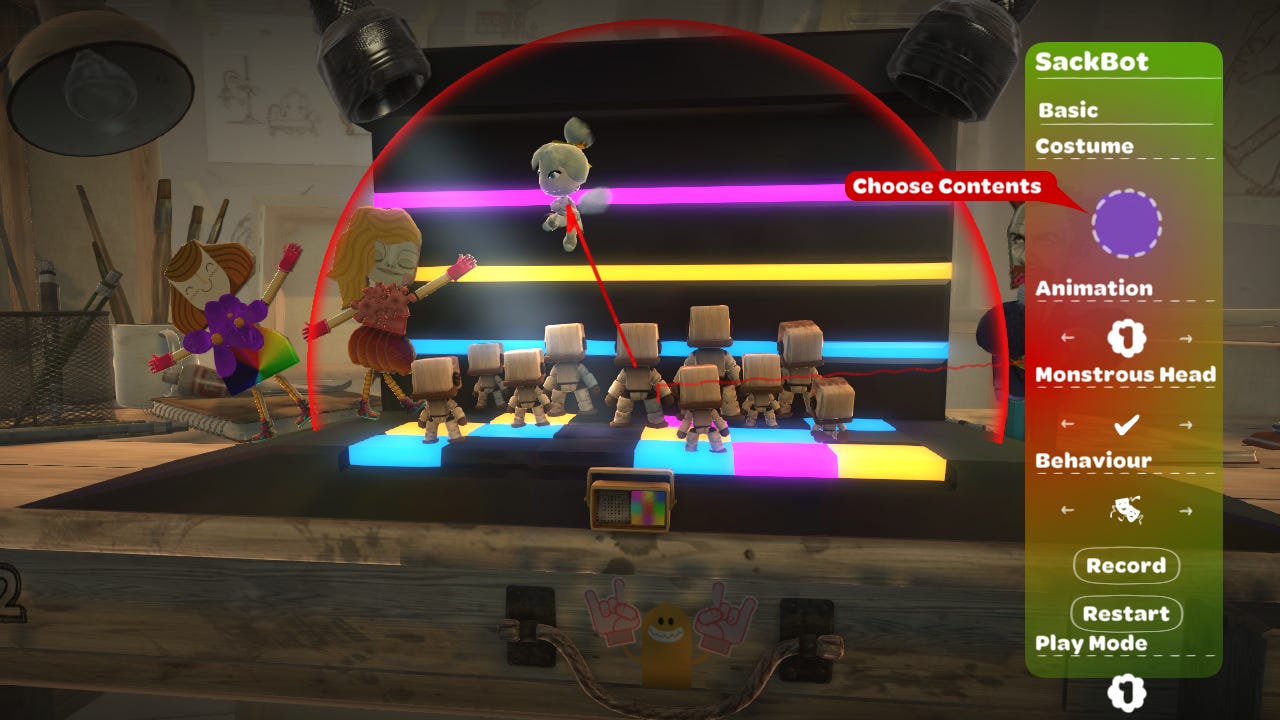
And it is only when you finally decide to look at the level-creation side of the package that this sequel begins to justify itself fully. Building a LittleBigPlanet level previously required players to have the inventiveness of Heath Robinson and the graft of the Egyptian slaves that built the pyramids. But for LBP2, the toolset has been expanded and at the same time somehow simplified. The key here is flexibility. The boundaries of game creation have been significantly widened in the sequel, so that creating a side-scrolling shoot-'em-up or a top-down twin-stick shooter, or even building a makeshift musical instrument is less a case of working around the toolset than working with it. For budding game designers, the overhaul is invaluable.
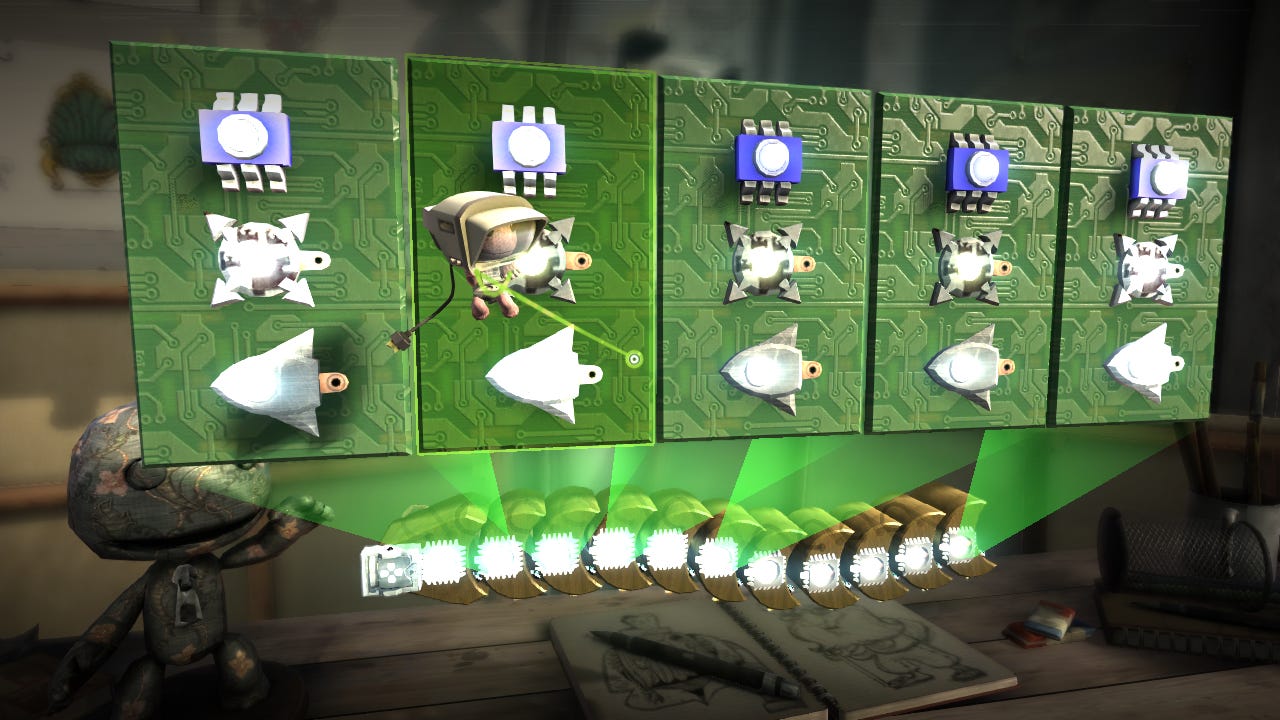
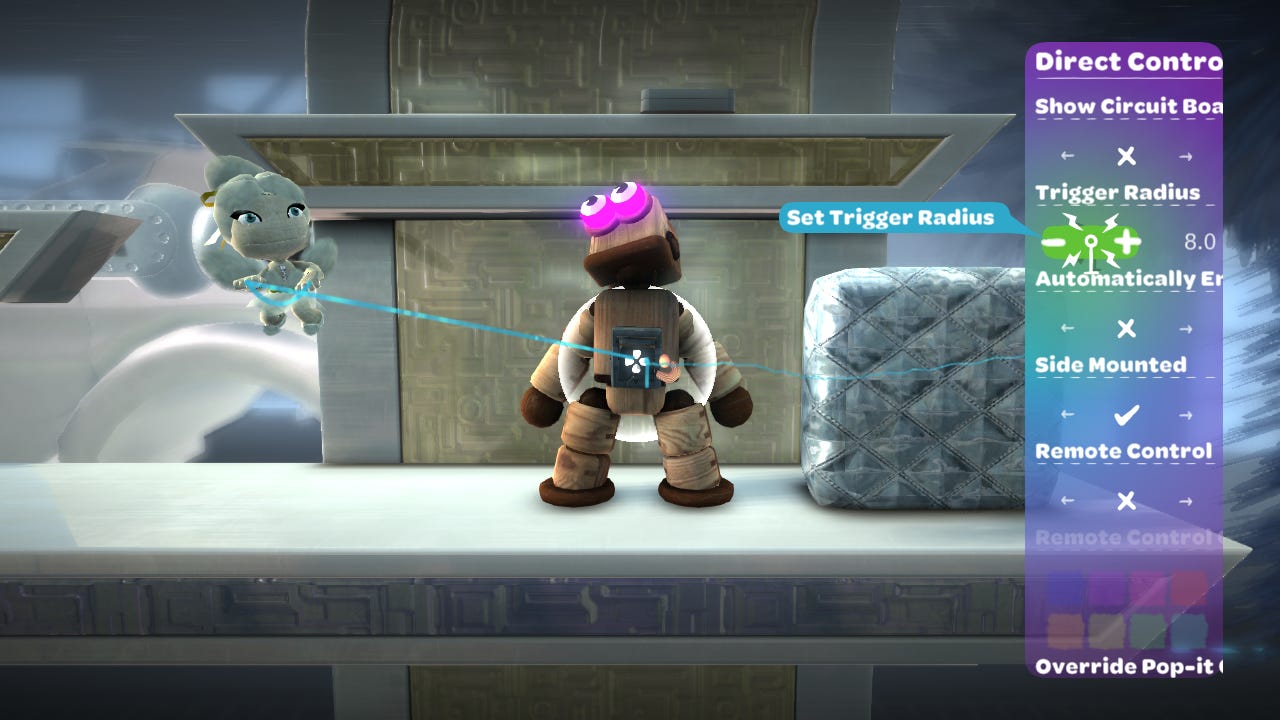
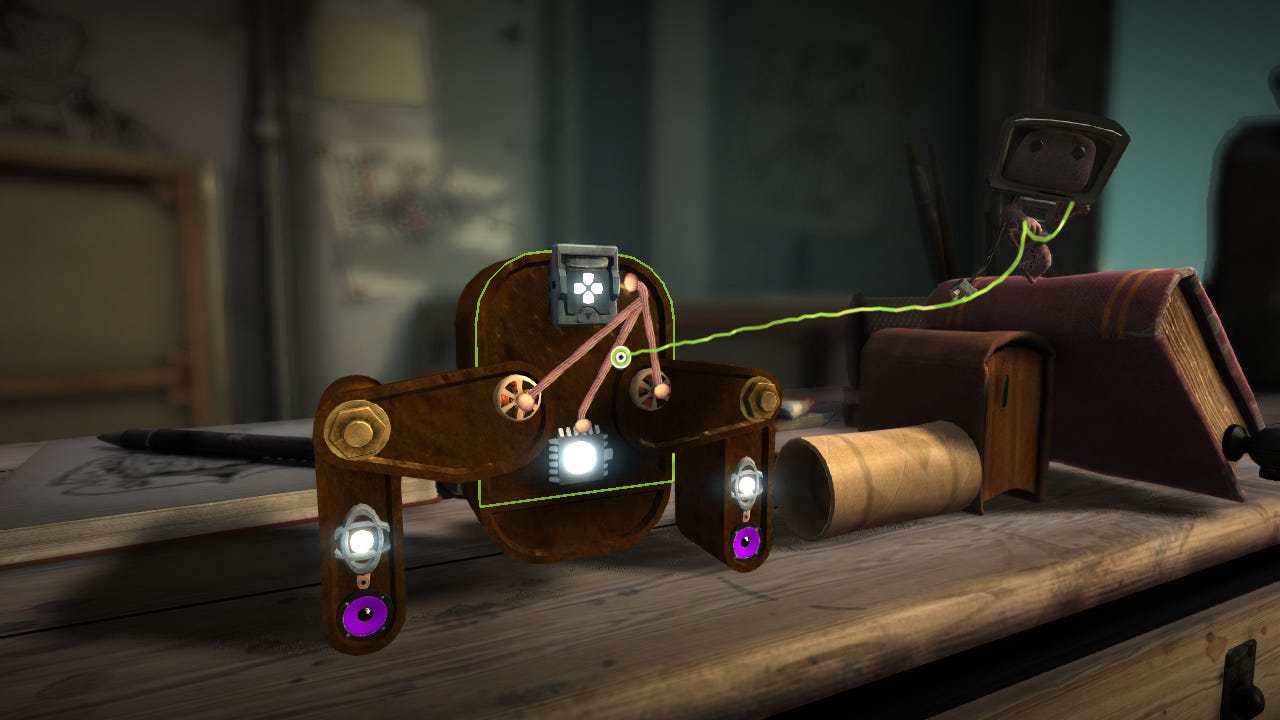
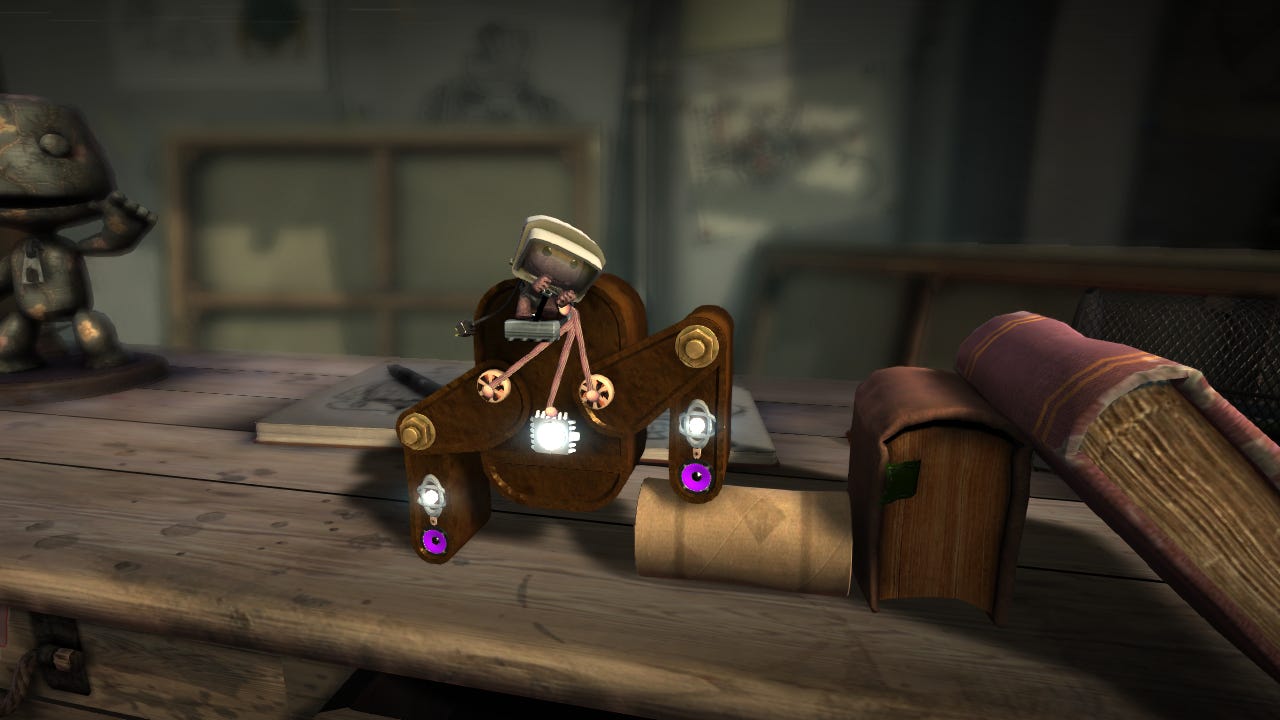
The introduction of the microchip is particularly significant. Now bosses, vehicles, puzzles and machines can be controlled by circuit boards that you resize, add switches and logic to, and then wire up. It uses far less 'thermometer' space (LBP's metaphor for system memory) while simultaneously allowing for far more complex behaviours. Media Molecule claims that the famous Little Big Computer logic can be condensed and shrunk onto a single microchip in LBP2, the significance of which will be directly in step with your own imagination.
LittleBigPlanet 2's first 15 minutes.
The developer's motto for the LBP2 toolkit is "A Handmade Arcade", the attract mode video showing some approximations of popular games such as Geometry Wars that have been created using it. This will no doubt be prophetic as we can expect to see a hundred thousand amateurish knock-offs of PSN and XBLA titles in the months following release. But when the wheat is separated from the chaff, there is little doubt that LBP2's online servers will play host to some extraordinary content.
The hope seems to be that entire small games will be crafted using the toolset, rather than mere curio levels that are good for a single playthrough and little more afterwards. Counter-Strike was created by amateurs using the Half-Life toolkit, and while it seems unlikely that anything as significant or enduring as that will be born from LBP2, there's a better chance than ever that a console game could, through the creativity and industry of its players, sprout something substantial rather than merely distracting.
Even if you have no interest in creating levels yourself, LittleBigPlanet 2 merits its existence, not only because of the potential novelties its users will create with the vastly improved toolset, but also for the stronger, more refined single-player campaign. Strip away the relentless good looks and the generous open-source playpen, and the bare, underlying platformer's shortcomings may hold it back from classic status. But as a package, as a concept, as an unfinished story, LittleBigPlanet 2 is a world apart.
9 / 10