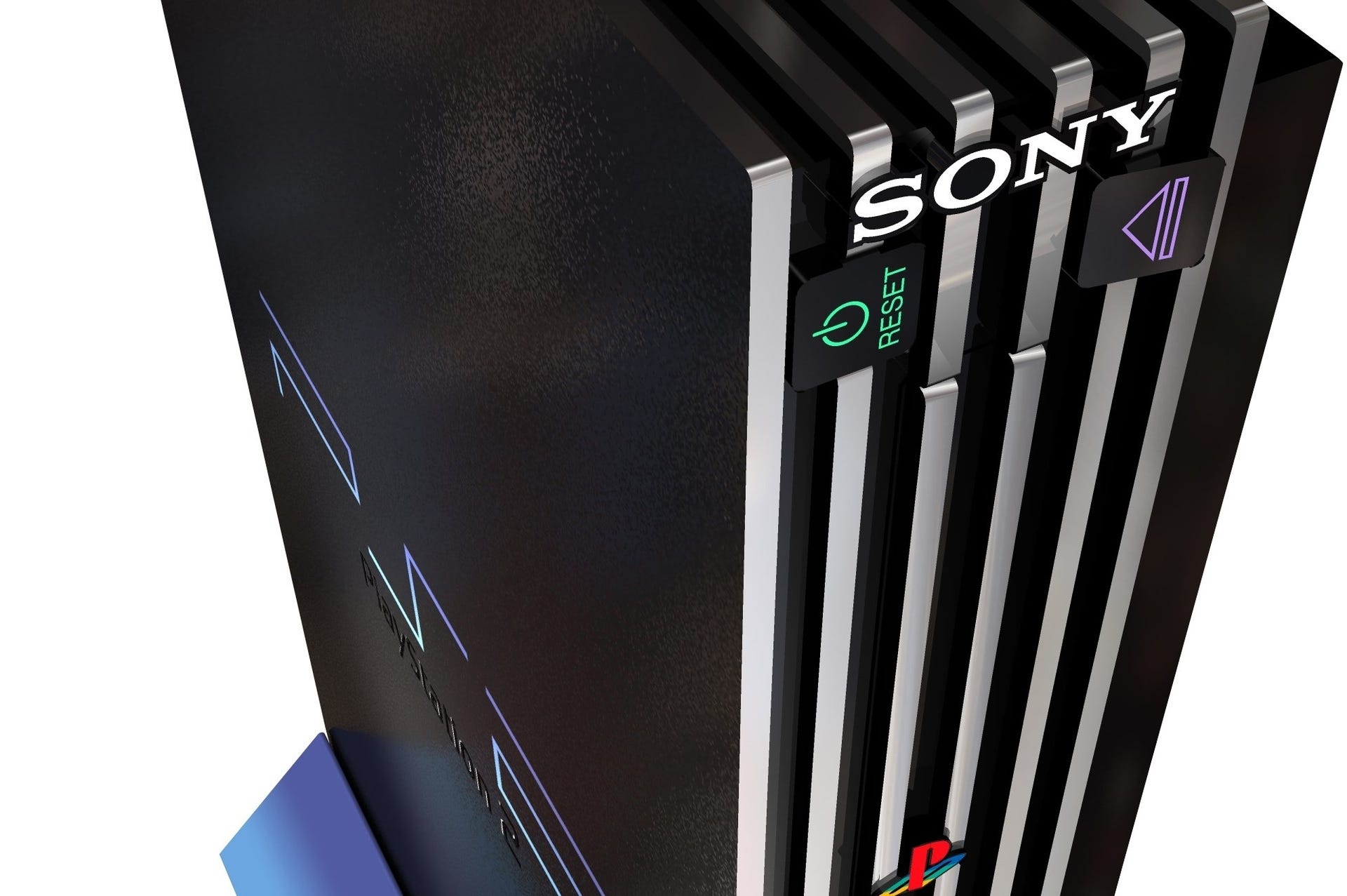
PS2: The Insiders' Story

Chris Deering, Phil Harrison and friends reveal all.

Today marks the 10th anniversary of the launch of PS2 in Europe. Here, someone who was there when it all began talks to other Sony staff, past and present, about what really went on behind the scenes.

The first thing I saw when I walked in the room was a duck wearing a suit. Next to him stood a grubby-looking mummy, trying to hold a glass of champagne in bandaged fingers.

In the corner, a guy in a wheelchair was talking to a girl whose eyes should have looked too far apart. She was sitting on a sofa next to a disembodied arm and a small boy. He looked innocent enough, but I knew he had conquered worlds.

This was my introduction to the games industry. It was Thursday 23rd November 2000, the eve of the European launch of PlayStation 2. Just three days earlier I'd started my new job as a copywriter at Sony Computer Entertainment Europe. Having been a gamer and a PlayStation fan for years, I felt like Charlie being given the keys to the chocolate factory.

Makes Twin Peaks look about as spooky as Rentaghost.

In fact I'd been given an invite to the PS2 launch party, hosted by hip London ad agency TBWA. They were responsible for the Third Place advert directed by David Lynch, as they had been for the Double Life and Mental Wealth campaigns.

It was the stars of these adverts I was now walking past as I headed for the bar. I was about to make the most exciting discovery yet in an already thrill-packed week - at games industry parties, all the drinks are free.

You know what happened next. Well, perhaps not the thing about the bottles of Bombay Sapphire and the guy from R&D who tried to put his business card down my bra. But those are other stories. This is the story of how PlayStation 2 went on to become the best-selling console of all time.

The machine still holds that title. According to Sony's latest figures, 147.6 million PS2 units have now been sold around the globe. That's approaching double the amount of Wiis shifted and 40 per cent more units than PS3 and Xbox 360 combined.

PlayStation 2's success was down to a combination of factors, such as well-designed hardware, a price point which quickly became affordable and great games. It was also about the calculated genius and bold business sense of the people behind the scenes, along with a healthy dollop of sheer luck.
3

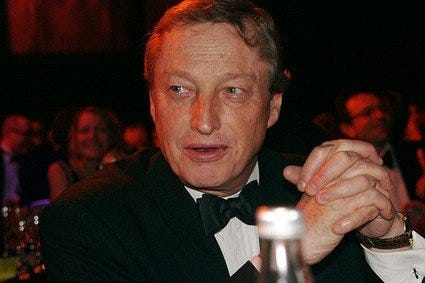
Chris Deering. He only wore this to the office on Fridays.

Sony's commitment to making PS2 a hit didn't begin with that launch campaign. It was established back in 1995, when Chris Deering left his native US to become the founding president of Sony Computer Entertainment Europe. Speaking today, he recalls taking a long-term view from the beginning.

"From day one on PS1, I started thinking about what I would do to make sure PS2 could win round two," Deering says.

"Nintendo and SEGA had never won two in a row. We used to say it was like winning two gold medals in two back-to-back Olympics - it just never happened. So I set that as a personal goal."

The first part of the mission went according to plan. PlayStation 1 became the first games console to achieve global sales of 100 million. It made gaming cool, as evidenced by the appearance of WipEout in nightclubs and Lara Croft on the cover of The Face, an event still cited by journalists as being about as culturally significant as the invention of books.

So Sony already had a strong fanbase onside, as senior PR manager Jonathan Fargher recalls. "We'd done some really cool things with PS1 and there was a kind of hype and expectation. There was a hell of a lot of good will towards PS2, people wanted it to do well," he says.
2

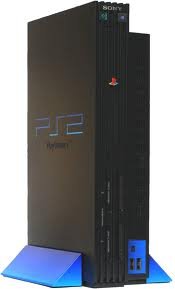
Hands up if you bought one of those 'stands'.

"It's hard not to look back then and look at things now. PlayStation as a brand was incredibly cool and cutting edge. People were genuinely excited. There was a level of buzz for the launch that was probably missing from later hardware launches." Cranking the handle on the internal hype machine was Chris Deering. He was the first member of SCEE staff to see the finished PS2 console, at a special event in Tokyo's International Convention Centre.

"I remember sending an email at 2am from Japan to all the employees in London, saying, 'It's better than we ever expected. This is going to be huge. I feel privileged to have even been in the room. This is history in the making.' It was beautiful."

UK managing director Ray Maguire was also impressed, if a bit more British about it. "The first time I saw the PS2 prototype it was just a shell made of wood. It was a complete step-change from PS1. Just the way it was constructed and designed... It was fresh, it was exciting. It looked more meaty and powerful."

However, impressive hardware isn't enough to win a console war, as Sony was aware. "A platform is only ever going to be successful as the games we produce for it," says Fargher.

Though no one would ever have said so at the time, not everyone in the company was confident all the games launching alongside the PS2 were blockbuster titles. That included David Reeves, then head of marketing and later Deering's successor as SCEE president.

"The line-up... I have to say we had a few dogs in there, like Fantavision," he says.

Fargher wasn't keen on Sony's first-party firework sim, either. "Some of the launch titles were OK, but they weren't... I mean, Fantavision... Three weeks after bonfire night and we were launching a game about fireworks.

"We got away with a hell of a lot," he admits. "At E3 we'd promised the world, basically. We'd promised games that would look like Toy Story. The games we delivered at launch, as with any platform... Not so much."

Even development champion Phil Harrison, who was head of Worldwide Studios by the time he left Sony, is prepared to admit that not all the games in the line-up were stellar. "Fantavision was great fun to play but I don't think it really fulfilled the promise of what PS2 hardware technology had been billed as being capable of," he says.

"I don't think, looking at the launch line-up, you would have extrapolated 148 million sales. It was a mixed bag. There was nothing there that you would have said was completely changing the way games were played.

"But getting any piece of software out for the launch of a new piece of hardware is an incredible undertaking. The hardware specification is a moveable target, the operating system keeps changing, the procedures for testing the games keep changing... So to launch a game with the hardware is a phenomenal achievement."

Just how important is the initial software line-up to a console's long-term success, anyway? At launch, it's all about getting consumers to buy into a brand. Or at least that was how Sony saw things back in 2000, as Alan Duncan, who today is head of UK marketing, explains.

"Those were the good old days when creative advertising agencies were the gods of marketing. Since then I've had to present PlayStation brand campaigns and it's difficult, because everyone looks at you as if to say, 'Are you mad?'"

4

No article which mentions the word 'PlayStation' is complete without this image.

Mind you, says Duncan, that was his own reaction on seeing David Lynch's Third Place advert for the first time. Good job the marketing boss was fully behind it, following a bit of nudging.

"The agencies really pushed us but we bought into their crazy ideas," says David Reeves.

"You can never say you're 100 per cent confident but research showed it would appeal to those people who were waiting for something to come out that was really wacky.

"I remember showing it to some of the managing directors and they looked at it and thought, 'They're crazy.' But in the next breath they thought, 'That's good.'"

And so the duck and the mummy and the disembodied arm made it to our television screens. But would the same advert get the bigwigs' approval today?

"No," says Duncan, without hesitation. "The role of TV has changed completely. Back then it was about setting up the personality of the brand... Now people interact with you via social media, and we're in a much more competitive marketplace."

PlayStation 2 did have competitors too. The Dreamcast had already been out in Europe for over a year by the time Sony's console arrived. But within six months, SEGA announced it was pulling out of the hardware market completely. So did PS2 kill the Dreamcast?

"That's tough to say but it was certainly a big contributing factor," suggests Simon Roberts, one of SCEE's games consultants back then and a senior producer today.

5

UK PlayStation boss Ray Maguire, not yesterday.

"SEGA did manage to mess that one up quite spectacularly, quite quickly... Although maybe it's unfair to say that. Sony is a major behemoth of a corporation with a lot of assets, clout and financial ability. SEGA was relatively new and it was probably too much for them to handle."

The Dreamcast may have been vanquished but there was another threat on the horizon. This rival had even bigger backing than Sony could provide, as Chris Deering knew.

"The Japanese were not too worried, but I knew Microsoft had five times more money than Sony. They could do anything they wanted if they put their mind to it," he says.

"So from day one, I assumed Microsoft was going to be a horrific competitor."

Deering needn't have worried so much. Xbox didn't launch till nearly 18 months after PS2 and never caught up. "We worked hard to make it as difficult as we could for them, but they didn't turn out to be as prolific and experienced as we thought," he says now.

"I overestimated their ability to get it together in Europe. They hired some good people but they were very US-centric. We built these huge defensive walls and they tended to work.

"But it was still 50 per cent luck - I'm not going to say I was a genius. I was just aware and focused."

One of Sony's key defensive strategies was to secure the support of other software publishers and their commitment to exclusive deals. "We courted third-parties intensely, like crazy," says Simon Roberts.

6

David Reeves. He is now head of Capcom, following a difficult operation to separate him from his conjoined giant PS2 box.

"I was on that team and I know how much effort we put into getting people on board, getting the right kind of games and giving them the right incentives."

According to Deering, this strategy came straight from the father of PlayStation himself. "Ken Kutaragi was very pro third-party. He said we should never allow ourselves to have more than a third of the software market or we'd drive away other investments, and I believed that."

Not everyone agreed with Chris and Ken, however. "The US paid lip service but in their DNA they still believed in the philosophy of companies like SEGA and Nintendo, who saw exclusives as nice to have for the royalties, but wanted their own titles to succeed," says Deering.

The bid to secure those big exclusives began, says David Reeves, at E3 2000. "A few weeks prior, we sat down and targeted the games we thought would be good for exclusivity. We had a list of about seven and a pot of money.

"We went off to LA and we were holed up in the Sunset Marquis hotel, where Chris and I shared a small villa. We invited the publishers in one by one and just worked through the list."

During these meetings, Deering and Reeves would offer incentives in exchange for exclusivity. These included a reduction in the platform fee, marketing support and new-generation dev kits.

"The last meeting of the day was with [Take-Two boss] Kelly Sumner," says Deering. (Reeves doesn't recall this being set up as an official meeting, by the way, but just "a few beers in the evening".)

"We picked up something called State of Emergency, which I don't think would have been on Xbox anyway. Then I said, 'What else have you got?'

"And they said, 'Well, we've got this Grand Theft Auto game... I suppose we could do a deal on that.'"

"Our technical people had said GTA III was not bad. It was innovative, but not a monster. I had just heard it was good. So I said, 'OK.'"

9

Remember when this was cutting-edge? Good times.

The precise details of the deal have never been revealed but according to Reeves, "It was remarkably cheap."

These days, says Harrison, it's no longer economically viable to secure exclusives, due to the high cost of development. "So I think PS2 was probably the last era in which you will see that happen in a meaningful way," he predicts.

For all that publisher deals were important to PS2's success, Sony's in-house titles were also key. The list is long, distinguished and peppered with landmark games, from Gran Turismo 3 ("Probably the first game that lived up to the expectations of the console" - Duncan) to SOCOM ("The fact we were doing online gaming was amazing," says Brooke).

But the game most mentioned by Sony alumni when you start talking classic PS2 titles is ICO - even though it "never, ever had any commercial success", as Maguire admits. "It was ahead of its time. People weren't looking for a relationship between two characters who interacted on the screen simultaneously."

ICO was the poster child for a component of PS2 which was close to Kutaragi's heart - the Emotion Engine. That was the brand name given to the machine's CPU, which had been designed with a specific philosophy of game design in mind.

"Kutaragi was a visionary," says SCE UK PR boss David Wilson. "Taken on its own it might seem pretentious, but to call it the Emotion Engine was making a bold statement about what we were out to achieve."

11

Ken Kutaragi - the brains behind it all.

According to Harrison there was science behind the concept, too. "The idea Kutaragi and his team of engineers established was that the CPU would be capable not just of number-crunching, but of delivering the kind of mathematical capability required to simulate emotion.

"That was a very wide and lofty goal and I don't think we realised it in quite the way we planned. But it was the start of a process where you changed the way games were developed, inside the code, to be more believable."

Harrison recalls attending a silicon chip conference in San Francisco where Sony's engineers presented the Emotion Engine in the form of an academic paper. "I was fascinated by the reaction because the hardcore silicon chip experts fell into two camps," he says.

"One was, 'I don't believe it. It's all made up.' The other camp was, 'I do believe it, but there's no way we're ever going to be able to manufacture it because it's too complicated.'

"Ken proved everybody wrong. You could build it, and you could build it in volume. That was the moment Sony Computer Entertainment went from being just a games company to becoming a major global player in silicon chip design."

The duck business wasn't the only PS2 ad David Lynch made - remember this one?

However, it wasn't the Emotion Engine which gave PS2 the power to reach an audience beyond gamers.

"The DVD player was a massive part of that," says digital content manager Jim Smith. "I bought my first DVD player six months before the console launched and it cost £499. They still cost that when PS2 launched, at £299. So PS2 was the cheapest decent DVD player you could buy."

The inclusion of a DVD player helped to move games consoles out of the bedroom and into the living room. "You didn't have to tuck it away in case someone came round," says Fargher. "It almost became a lifestyle accessory - people were proud they had a PlayStation in their lounge."

PS2's mass-market appeal was also increased by the addition of features which turned out to be more significant than Sony had imagined. "I think one of the defining features of the console, although we didn't really know it at the time, was the inclusion of USB ports," says Harrison.

"That proved to be a pivotal hardware choice. It allowed all kinds of alternative controllers to happen, from microphones to guitars to EyeToy."

It's easy to forget, in these days of voice-responsive cameras and magic light-up ping pong balls, that motion controlled gaming dates all the way back to PS2 days. And guess who was responsible for kicking the trend off?

12

Historians cannot be certain, but this may be the first ever example of videogame lifestyle photography.

"One of Phil's really great contributions was being passionate about EyeToy," says Deering. "It didn't have the full backing of the management over in the States. They thought it was too wussy, they were still SEGA-minded and anything that wasn't hardcore was possibly too effeminate for their image."

Harrison was EyeToy's champion right from the start. "It started when I gave a speech at the Game Developers Conference in March 1999. A guy came up to me afterwards and gave me his business card. He said something along the lines of, 'I think PS2 hardware is capable of doing machine vision, and I'd love to talk to you about it.'

"He ended up getting an interview and working for our R&D team in the US. And that guy was Dr Richard Marks."

Today, Marks is known as the man who explains the sciencey bits behind PlayStation Move and 3D gaming. But back then he was the creator of EyeToy, and the person tasked by Harrison with showing the technology to a room full of SCEE's software developers at an internal summit.

"I laid out a challenge," explains Harrison. "I said, 'Who wants to turn this into a commercial product? Because I think this is great technology, and it could be really pivotal for what we want to do in the future.'"

A young developer named Ron Festejo put his hand up. Harrison says he then did two very brave things: "Firstly, he voluntarily cancelled the project was working on. He said he'd seen other games that day which were better than his own game, and he didn't feel he could be competitive.

"Then, he said he really wanted to work on EyeToy. So it was a question of, 'Ron, meet Richard, now off you go.'"

By all accounts, Harrison had a way of making things like this happen. "He had a fabulous gift for presentation. He was sort of like the Barack Obama of high tech," says Deering.

"He could explain complex things well and, having come from indie development, he was conscious of the lot in life developers face."

This might explain why he developed what became known as the Phil Harrison Stare. If you were given the Stare, you knew you were in trouble.

"Yeah. I don't know if I ever experienced his full wrath, but I've seen that glint in his eye," says Duncan.

"Every creative and developer in our company knew they had someone on their side who would stand up to the fluffy marketing idiots, who would make sure we were doing a great job and doing the games justice. He understood marketing as well, so that was a really dangerous combination. There was no hiding."

10

Back in the day, Phil Harrison was to PlayStation what Cheryl Cole is to L'Oreal Paris Glam Shine Lip Gloss.

"People still hold a lot of respect for Phil and how straight down the line he was," notes Fargher. "He didn't dodge questions, no matter how difficult they were."

This made Harrison a favourite interviewee for games journalists, including me. And it was during an interview, years after I'd left Sony, that I found myself on the receiving end of the Phil Harrison Stare for the first time. I'd probably asked him something facetious about PS3. I can't remember the question, or his answer, but I can't forget the way he looked back at me with a gaze so icy it could have frozen lava.

"I'm not one for shouting and banging the table, but maybe I communicate my concerns in other ways," says Harrison. "But we were all in it together, we were all part of a team and we all wanted to be successful. I certainly didn't manage by fear." Everyone I talked to would agree with that.

They'd also agree that Chris Deering helped to foster the feeling of teamwork which existed within SCEE. He famously knew everyone's name and what their role was. And along with having a smart business brain, he's a man who knows how to party.

"The company had a 'work hard, play hard' mentality," says Harrison. "No one embodied that more than Chris Deering, the guy who would be last to leave the bar but always first in the office the next morning."

Everyone's got a Deering story. For many people it's the time he somehow got the bar of the Greenwich Industrial Park Holiday Inn to stay open till 3am, after what seemed like the whole company had gathered there following a Christmas party.

Some versions say Deering achieved this by making a single phone call, presumably to the boss of Holiday Inn himself. Others have him asking the bar staff to name their price. Many have him buying boxes of Grolsch and handing bottles round to the remaining stragglers even after the bar finally closed.

13

The scene of the infamous after-party. Yep, pretty wild.

Not even Deering himself is sure of the real story. "I may have paid the staff a couple of hundred quid to stay on longer. It was pumped up a bit as some sort of magic trick, but it wasn't a big thing," he says.

I was at that after-party, stumbling round in a dress I'd never let a daughter of mine wear, trying to ponce a cigarette off someone. "Oi mate," I said, tapping some bloke on the shoulder. "Got a spare fag?"

The man turned round and I almost fell over. I'd been at Sony for less than a month and I'd just called the big boss man "mate".

"Aaaa," I think I said. "Sorry. Hello. My name is Ellie. I work in, er, Creative Services."

"I know who you are, my dear!" said Deering with a hearty chuckle. "Now then, let's see if we can't find you that cigarette." And with that he began wandering around the bar, asking everyone he met for a fag "for my new friend Ellie, here". (I've since given up, by the way, so if I die of lung cancer it won't be his fault.)

With this sort of thing happening quite a lot, it's no surprise that it was under Deering's watch Sony gained a reputation for being a bit rock and roll.

There were conferences in the South of France, Malta, Portugal and the Canary Islands. There were meetings which would take place in various glamorous locations over the course of several days. "I remember starting a meeting in a hot spring in Reykjavik, then next we were all drinking vodka in Red Square," says David Reeves. "And Chris Deering had a Russian hat on."

Then there were the parties. The ones held in warehouses and under arches and in car parks. The ones where Sony staff and invited guests got to enjoy live sets from the likes of Pulp, Macy Gray, The Foo Fighters, Faithless...

14

Tragically no images of the Red Square incident exist. So here's a picture of someone else in a stupid hat instead.

"It just went with the time," says David Wilson. "We were riding the crest of a wave of optimism about being part of the social media landscape and there were a lot of people talking about videogames being the new rock and roll. It was completely fitting with that."

The best and most ridiculous party was held in East London. It took place in a warehouse big enough to hold the indoor fairground Sony had ordered as well as a huge stage.

"Jamiroquai walked out wheeling this PS2 and a TV on a trolley, going on about how he didn't want to stop playing to do the gig. We were so in awe," says Daniel Brooke.

Despite being booked to play for 40 minutes, Jamiroquai went on to perform a two-hour set. At one point Ronnie Wood, whose son's events company had organised the event, joined Jay Kay on stage for an extensive jamming session.

"I heard later that all Jay Kay was told was he'd been booked to play this Sony gig. So he was expecting to walk out on stage to see a bunch of Japanese salesmen in suits and he was really worried," says Harrison.

"But just before he went on he snuck a look round the corner of the stage and saw what kind of audience it was, and he knew it was going to be a good night."

According to Harrison, the parties were part of a strategy to keep employees motivated and proud to work for PlayStation. "When times are good it's important to share that good feeling with the staff," he says.

"It did get a little bit out of control at one point, when we were doing launch parties for games pretty much every month. So we cut back on that. Not necessarily for financial reasons, more... Health."

For all the good times, the wild parties and the ever-increasing sales figures, there were bad days at Sony, too.

"I remember a day about a month before the launch of The Getaway," says Reeves. "We realised there were a lot of brand names being used in the game that probably should not have not been used. It was things like L'Oreal and Coke.

"We had to tell the producer he had to take them out. And he said, 'I can't take them out.'

"We said, 'Sorry, you have to.' That was a very intense period.

"I think it delayed the release of the game by about three weeks because they had to remove them or blur them, and it was a lot of work, and they had to go through QA again, and it had gotten to alpha and it was kind of a beta but it wasn't really... It was a very frantic period."

Funny how they don't show all the times where you have to lean against the wall.

Most of the time, however, the bad days were caused by hardware issues. "We had a big supply problem. It's a high-class problem but it can be horrific, and it's very time consuming," says Deering.

David Reeves recalls an occasion when he received a call from Masaru Kato, today Sony's Chief Financial Officer, to tell him SCEE wouldn't be getting shipments in time for Christmas that year.

"So we hired a Russian company who had four Antonov aircraft, which in the old days were used for moving stuff in and out of Afghanistan - tanks and things like that," says Reeves. "We hired them to fly into Japan, pick up all the PlayStations and bring them into East Midlands airport.

"That saved us. But the following year was a bit hairy again because all the PlayStations on their way for Christmas got stuck in the Suez Canal."

Sony's supply issues weren't helped by the fact that machines were complex to manufacture. "There are thousands of components in a PS2," explains Harrison. "You can't ship a machine with a note saying, 'I.O.U. one graphics chip' or ' one three-cent capacitor'. If one piece of the supply chain falls over, the whole thing gets held up."

7

If only it had had a little blue light on the front.

Deering says there were also problems with the chip yield that the factories were achieving in the early days of PS2. "You budget for 50 per cent yield. If you're lucky you get 60 per cent; if you're unlucky you get 40 per cent. We had a yield as low as 20 per cent for a couple of months, and it was a nightmare."

But those problems didn't last. By the time Sony was ready to launch its next machine PS2 had firmly established itself as the number one console, opened up gaming to a new audience and asserted PlayStation's status as a fashionable, market leading brand.

Then everything changed. Nintendo and Microsoft kicked off the new console cycle with radically improved hardware. This time around Sony had to play catch-up, and to convince consumers to buy a console with a much higher launch price.

Today, Sony puts global sales of PlayStation at 41.6 million - so there's some way to go to beat PS2's record figure. Can PS3 even hope to match it?

"Yeah, I really hope so," says Alan Duncan. "But the business model's a bit different in a networked world. Selling as many boxes isn't the be-all and end-all any more."

Ray Maguire points out Sony has sold many more PS3 units at £199 and above than PS2 units at the same price. "We've got a long way to go, but most of the PS2 product we sold was sold at £150 or below," he says.

16

Just ten years ago, this image would have made any PlayStation fan vomit blood with excitement.

David Reeves agrees the price point is key, and believes reductions will tip the balance. "I saw a prediction recently that PS3 will probably have the highest installed base of all the next-gen consoles. I do think that will be true, eventually," he says.

"I think it can sell as many as PS2, maybe more," says Deering. "In the case of both PS1 and PS2, we sold more Slim units than original models. The PS3 Slim has only been out a couple of years.

"If you could get a PS3 for a hundred pounds... Can you imagine? It could go much higher and last longer."

Harrison sounds less optimistic. "I hope PS3 can match PS2, but I think the market dynamics are slightly different. It's much more competitive. For a large chunk of its life cycle PS2 didn't really have any competition anywhere in the world, so Sony was able to sell a huge number of units. If PS3 does reach the same level it will take longer and it will be a more difficult challenge."

Perhaps the final word should go to Chris Deering - the man who brought PlayStation to Europe, and who proved it was possible to be a market leader twice over.

"Ken Kutaragi is a genius, but he got a little bit unlucky with PS3. You can't be lucky enough to get three gold medals in a row."

Comments (69) Latest comment 1 year ago

Comments for this article are now closed, but please feel free to continue chatting on the forum!

  • Katana-Bob #1 2 years ago

    Better than the Gamecube then?
  • porkface Verified Features Editor, Eurogamer Network #2 2 years ago

    That's an incredible article, thanks EG.
  • lcmnick #3 2 years ago

    Post deleted at 12:48:44 14-04-2012
  • cianchristopher #4 2 years ago

    Brilliant article, and I really enjoyed hearing about how GTA III became an exclusive for the platform after a "few beers in the evening".
  • RodHull #5 2 years ago

    Excellent article. For some reason it doesn't mention the fact that a lot of us had to buy three PS2's thanks to it's remarkable early unreliability and Sony's utter lack of aftersales support. But hey, more fool me I guess.
  • retr0gamer #6 2 years ago

    Well designed hardware? It looked horrible and I've gone through 2 PS2's due to laser failure.

    Also funny that they are slagging off Fantavision considering it was a great game and the only good game they had on the console for a good 9 months.

    The launch line up was really laughably bad, the big game Tekken tag was a bit crap in my opinion. Nothing on the console looked as good as the bets looking games on the Dreamcast. I couldn't believe it was doing better than the Dreamcast. It was such a terrible console.

    Then GT3 came along and while I wasn't interested in the game it did look good.

    But then GTA3 came along and I had to take notice. I wanted one but it was Devil May Cry that made me realise I needed a PS2 and got one that christmas for myself.

    From a rough start the PS2 became one of my favourite consoles ever, I'm still playing games on it that I bought but never got around to playing. Even when the lasers failed on my PS2 I had to run down the shops and get a new one because I'd miss out on so much gaming without it. My Gamecube was a good secondary console but games were trickling on to it while the PS2 had at elast 1 must have a month.

    I hope Sony learnt their lesson trying to sell a console on brand name with the PS3. The PS3 had a terrible start and took even longer to get going but now it's taken over the 360 for me as a better console due to the exclusives.
  • Arcadiian #7 2 years ago

    /hugs Dreamcast.
  • dr_zoidthrob #8 2 years ago

    I once worked with someone that mooned Jarvis Cocker at a Sony show... not long after he'd invaded the stage at the Brits (when Michael Jackson was playing)

    Happy days...
  • ligurmatic #9 2 years ago

    /raises hand.

    £10 (or was it £15?) on launch day got me a lot of ridicule at work, but it made the machine look even more monolithic than it already did.
  • Essien #10 2 years ago

    Has it really been 10 years! The PS2 was the only midnight launch I've ever been too. I was seventeen, I had saved up for months to buy it, and as soon as I got it home I played SSX for three hours, despite having school the next day.

    Happy days.
  • finexi #11 2 years ago

  • kangarootoo #12 2 years ago

    Great article. Solid journalism.
  • b00n #13 2 years ago

    Fantastic article..!
  • bad09 #14 2 years ago

    I loved the PS2 but nowhere near as much as PS1, personally at the time with it's awful launch line up my poor doomed DC seemed a much better machine.

    There are great games I remember but most were games that finally saw their way elsewhere like the GTAs or Colin Mcrae. The Getaways and to a lesser extent the MGS games (TBH none are a patch on the PS1 game) were favourites but Sony seemed to drift away from the games I liked and their later PS2 life games were exclusives that bored the hell out me. Plus Tekken got really crap with Tag and 4, GT seemed to go from an amazing game to amazing but souless and sterile and Ridge Racer died (although I'd probably say that was done with Type 4 to be fair).

    It did amazingly well and sevrced me well as a games machine but just isn't the ultimate to me that others regard it as, it's quite low down the list in terms of favourite machines. MS came along with Live and the Xbox at just the right time for me.

    Speaking of MS, I think my tally on PS2s so far is 4 all bought myself, and most people I know have had a number of the console. RROD was nowhere near the problem Sony build quality was!


    Edited by bad09 at 24/11/10 @ 15:23
  • Old_Books #15 2 years ago

    Agree with retr0gamer. If I didn't own a 360 then the PS2 would be the least reliable console I've ever owned; great hardware my bottom...

    My favourite console ahead of the SNES and I still say it has a better games library than any of the current gen consoles.
  • WiseGuy #16 2 years ago

    Love old articles like this. Consoles and games, like really good music, makes me feel really nostalgic.
  • Halo.Jones #17 2 years ago

    Good to see some of the old gang talk about the past.

    It is true that we worked hard and we certainly partied hard as well. Spain, Greece, Malta, Disney Land Paris (Yup, we went, we saw, we emptied it of drink).

    Malta was brill, the last ever company conference. Phil did his bit dressing up as host from Buzz! I was on stage with a few others playing a game of Buzz! At the end, a shit load of yellow ducks came down and a massive duck throwing fight kicked off.

    PlayStation 10 year party was fun.. Dita Von Teese was there. That didn't go down well with human resources, but who cares, it was fucking great.
    Edited by Halo.Jones at 24/11/10 @ 16:30
  • geeza2020 #18 2 years ago

    Great article, it really made me long for the old days of being genuinely excited about new hardware launches (unlike all the Kinect and Move rubbish) before I became jaded (read: old).

    I personally didnt have any of the problems people mentioned above with PS2 hardware failures. I had the standard PS2 "chunky" model from 2001 and then I bought a slim model in 2005 (I think) when my chunky got a drink spilt on it. Never had a single issue with them until about a year ago when my slim model finally died. T'was a sad, sad day :(

    Happy Birthday PS2!


    P.S.I now own a 360 because the PS3 has been too expensive for years IMO!!
  • Dolly #19 2 years ago

    Absolutely brilliant article! Can't believe that it was 10 years ago today that the beast was first up and running in my Uni room...

    Does everyone remember the kerfuffle in getting one? Having to pre-pay for it and fill out bloody forms months in advance with the retailers? :)

    I personally feel we'll never see the single dominance of the PS2's kind again, due to the fact that it hit the DVD wave absolutely perfectly. The difference of going from VHS (which most people had lived with for 20+years) to DVD will never be repeated again, whether it's to Blu-ray or downloads etc, imho.

  • layleeloo #20 2 years ago

    Sorry but why the fuck is someone writing this whos first foray into gaming was the PS2? I've had shits for longer periods than this. How abot someone who has been gaming from the early NES days so they have things to compare the PS2 too. Honestly. Get your arse in Gear Eurogamer!
  • parablax #21 2 years ago

    ...She was sitting on a sofa next to a disembodied arm and a small boy. He looked innocent enough, but I knew he had conquered worlds. .....

    Amazing!
  • ShortRound77 #22 2 years ago

    That's a great read Ellie. Thanks! I still have my trusted ps2. It just sits there next to my ps3, looking pretty.
    Just can't get rid of it. Good to have it around in case of a sudden SSX 3-crave...
  • kangarootoo #23 2 years ago

    @layleeloo

    Given the article was based on interviews with people who were involved in the creation of the PS2, what value do you think frequent comparisons with other hardware would have brought to the piece?

    All I can say is its a good job you don't control the editorial, or we would have yet another mind-numbing head to head (only this time between the PS2 and the Dreamcast).
  • Dromedary #24 2 years ago

    I will never forget that Emotion Engine- and "Saddam is using these as a supercomputers" PR-bullshit. I will never forget that people actually bought this hype. I will never forget the dissappointment on my flatmates face when he got this PS2-thingy on launch day and started to play. Games looked like crap compared to my Dreamcast.

    Sure, things got better and all that. It was just a great example of lying as a marketing tool and a great example how stupid people can be.
  • Melchett #25 2 years ago

    A brilliant read, thanks Ellie. More like this please EG.

    Also- 10 years?! Where the hell did it go. I remember walking into Blockbuster on launch day with a bunch of school friends in our lunch hour. Somehow it felt like quite an event even though we couldn't afford one.
  • Darkuss #26 2 years ago

    Very interesting article. Keep them coming!
  • DaM #27 2 years ago

    Fantavision was the only launch title I was remotely interested in. Took about another year before there were enough decent games for me to get one.
  • kangarootoo #28 2 years ago

    @Dromedary

    Nobody ever said that Saddam was using PS2s.

    What they did say was that the PS2 was technically classified as a "super computer", and that due to the current political situation the export of super computers was restricted to certain countries, including Iraq (as super computers could be used as part of a nuclear enrichment program).

    Now we can disagree with whether the PS2 should have been classed as a super computer, but Sony didn't make that call. Of course they were happy to take advantage of the kudos such a tag afforded, but they didn't lie about anything.
  • dadrester #29 2 years ago

    This is fanboy fap material of the highest magnitude... and i LOVE it!!!! Absolutely brilliant article. Thanks Ellie!

    On a side note I once had a glass of Bollinger from the same bottle as Chris Deering (He was a speaker at EIGF), and an even better story about Phil Harrison. I was QA at the time and one of our games (the first that had AV chat support on PS3 I think) was being shown at some Sony event. Our Producer had asked if one of us could be on hand to demo the AVC functions, so I was in the office Playing him all day. His boss, our senior producer was called Phil, and I'd been told he was likely to have a shot of it too. Lee, the producer said "Phil's going to have a go". Up steps Phil Harrison... I tried my hardest to let him win. He was rubbish. I think I might have caught a glimpse of his terrifying gaze.

  • devil_badger #30 2 years ago

    I really enjoyed that article! Good work!
  • el_pollo_diablo #31 2 years ago

    One day someone's going to have to explain the whole Dreamcast cult thing to me.

    I'm not being sarcastic either. I always remember at the time thinking it was... well.... a bit of a failure.
  • Kamata #32 2 years ago

    No," says Duncan, without hesitation. "The role of TV has changed completely. Back then it was about setting up the personality of the brand... Now people interact with you via social media, and we're in a much more competitive marketplace."

    I dont think this is true. It's fair to say people do now interact through social media, but TV still plays a part in building brand personality in my opinion. As for being more competitive, not sure how that takes anything away from a decent advert.
    Edited by Kamata at 24/11/10 @ 16:37
  • lavalant #33 2 years ago

    I never thougt it was a great console, it launched with a no decent launch titles, the console was clearly underpowered from what had been promised (emotion engine bollocks) I always thought the textures looked muddy and bland compared to the Dreamcast, Cube and what the original xbox could do.

    It's software support and stellar games were it's saving grace, and obviously Sony's marketing genius.
  • dadrester #34 2 years ago

    One day someone's going to have to explain the whole Dreamcast cult thing to me.

    Just had some really good games. That's all.
  • FladgeMangle #35 2 years ago

    The Driver launch party was better than the Jamiriquai one they mentioned. Faithless played and they didn't run out of red bull half way through.

    Ye gods, been doing this for far too long...
  • andywilkie35 #36 2 years ago

    I can never decide which was the better console out of PS1 and PS2. Either way, one of them is the best console ever, and the other is second.
  • MDL199 #37 2 years ago

    For me the PS2 had the greatest library of games ever. I also never experienced any hardware issue's and my old chunky PS2 is still going strong and sits next to my PS3 next to the tv.
  • Stop-gap #38 2 years ago

    Good read. Happy Birthday PS2 :)
  • Zaiz #39 2 years ago

    *pines for the Dreamcast*

    Poor thing. I loved it so, it was a fantastic little console and the PS2 killed it, with...like, nothing I really wanted except Okami, Shadow of the Colossus, Ico, and something I've forgotten. The PS2 also took ages to get games that looked better than Dreamcast launch titles, the thing's success still confuses me. Chances are it was just brand awareness winning out(ie dumb consumers who don't weigh their options properly).
  • kangarootoo #40 2 years ago

    I just don't get this whole "the PS2 killed the Dreamcast" thing.

    Seriously, what would people have preferred to happen, that the PS2 didn't come out so that the Dreamcast could limp along without any competition? Would it have really served the games industry, and gamers the world over, if the PS2 hadn't been so popular as to naturally force all competitors to raise their game?

    Nothing killed the Dreamcast, it simply wasn't as popular. The PS2 came out, and lots of people wanted one. So it sold really well, and the Dreamcast didn't sell as well. I know DC fans always like to think it was sold to a mindless public that would have obviously chosen a Dreamcast if only they had paid closer attention... but it just doesn't work that way. It might have good marketing, but it also had good games that people wanted to play, and extra features that people appreciated.

    I'm by no means saying its good that the DC wasn't as successful, but you can't blame the PS2 for simply being more popular. You can perhaps blame SEGA for not supporting or marketing it well enough, but for some reason nobody seems keen on that option.
  • Gecks #41 2 years ago

    i did my comp sci dissertation on PS2 programming, and from my experience it really is quite a canny piece of kit, very powerful for the time - don't confuse poor launch software with poor hardware; that same hardware powered SOTC, black, et al. of course the GC and Xbox could beat it - they were launched some 18months later, as a loss leader (the PS2 was the result of some $2 billion R&D - sony built their own chip foundries whilst nintendo and ms were buying off-the-shelf components)
    Edited by Gecks at 24/11/10 @ 17:29
  • Ryze #42 2 years ago

    Excellent stuff.
  • gelf #43 2 years ago

    The PS2 has a great library of games, its a great console. The sad thing for many dreamcast fans such as me at the time is how it somehow destroyed the DC with an up to that point mostly substandard lineup by comparison. The truely great games came later.
    Edited by gelf at 24/11/10 @ 17:38
  • Incarta #44 2 years ago

    An enjoyable read. Two thumbs up.
  • stuarty_2003 #45 2 years ago

    Cracking chat, Ellie G.

    I never had a PS2, but Sony hit the nail on the head with the PS2 when it came to offline gaming, of that there is no denying.

    However, they got too ambitious with PS3. Hubris set in. Blu-Ray & Cell are not worth the R&D costs, considering they could have had a DVD, Power-PC architecture (like 360), and an nVidia card, which would all but rival what they have in the box now (with the exception of HD movies played from disc) for about half the price.

    In saying that, PS2 got it spot on for its time.
  • mattius30 #46 2 years ago

    Oh dear... this is all rather embarrassing... I still play Fantavision on occasion
  • carlosdfn #47 2 years ago

    What a fantastic read. Ellie, you friggin' rock!
  • Prehensile_Plant #48 2 years ago

    I bought one the first Christmas after it went to £199. That unit lasted me until 2007 - the second day of me running the thing all day as Final Fantasy 12 came out and it broke on me. Replacement unit is still happily sitting next to my 360, where it will remain until you can buy a PS3 that can play my large collection of obscure RPG PS2 games and costs £199.
  • gabrielbird #49 2 years ago

    Viva la Dreamcast.

    Damn you SEGA for not putting up a fight. I even bought that damn Arsenal kit which you sponsored back then!
  • barat #50 2 years ago

    Dreamcast was basically dead on arrival in the minds of most gamers.

    They were already considered a distant third in the game. I remember being blown away by the graphics in Soul Calibur and Crazy Taxi was fun. But the PS2 hype promised Toy Story-like graphics, DVD player, Tekken, Final Fantasy X, Ridge Racer 5 and a lot of stuff, so the 16-year-old me waited a year more for that. It seemed perfectly rational at the time.
  • Xephon1970 #51 2 years ago

    I can honestly say, without a shadow of a doubt, to this day this is my favourite console still.

    Despite all the fantastic games I've played on other consoles, this was when my true love for gaming was fully realised. I'd dabbled with the PSone and the Dreamcast, but my love lay with the PlayStation 2. Check my collection, I adored and still adore this machine, it gave me games from around the world and I remember with misty-eyed fondness my marathon weekend gaming sessions on it with GTA VC or ICO, or even Silent Hill 2.

    I still have games to finish on it, I'll get around to them someday.

    But for now, happy birthday PlayStation 2.
  • doug #52 2 years ago

    great article. this is why i read eg
  • cheekyjay #53 2 years ago

    Slightly off topic, but all this talk of unreliable machines inspired me to dig up my old consoles. PS2, which admittedly had a good innings, was well and truly dead, but my 1999 launch day Dreamcast is switched on a working like new with Shenmue 2 in the drive. Good times!
  • electrolite #54 2 years ago

    Great article, lovely stuff. Really enjoyed reading that.

    I wasn't at all interested at launch, I hadn't been a huge fan of the PS1 and was thoroughly enjoying my Dreamcast. Through the first half of 2001 the PS2 remained thoroughly unimpressive but then GT3 came out and a brilliant selection of titles followed in the build-up to Christmas 2001-GTAIII, Jak and Daxter, Pro Evo, Devil May Cry, SSX Tricky, Burnout, SIlent Hill 2, Tony Hawks 3 (all testament to the policy of courting third-parties) . It was suddenly irresistible and was still working when I foolishly sold it in 2007.

    Probably my favourite machine (well, maybe the SNES)
  • dagas #55 2 years ago

    It's got so many great games, I'm still playing PS2 every ow and then. Especially for JRPGs it's the best console ever without a doubt. If I could choose a console including all games for it to bring to a deserted island, it would be the PS2.
  • IneptPercy #56 2 years ago

    It does seem sony got the marketing and products fine for a good while.

    I remember the 'Don't buy a dreamcast the PS2 will be here soon' and it did work to a point as I remember many people I knew saying they would wait as the PS2 was out soon. It being the cheapest DVD player certainly helped for a while.

    But then they tried it again 'Don't buy a 360 the PS3 will be soon, it sort of worked but soon kept getting later and later and the 360 got a bigger share or the market', To be honest my initial thought was wait for the PS3, but then I saw PGR3 and £280 for the premium + I like xbox live on my good old xbox and the deal was done. Then the PS3 appeared at £425 and didn't seem to offer much more.

    It seems now I may never own a PS3 as the amount of time I spend games has reduced and I have a decent PC which gets most of the gaming.

    Happy birthday PS2, you gave us many happy years of gaming and you still do get some use now, shame your daddy got arrogant with your big brother but you still have a special place in our hearts.
  • Sevens #57 2 years ago

    Very interesting. Thanks for this article.
  • 3william56 #58 2 years ago

    The "I have conquered worlds" ad was, in my mind, one of the greatest ever.
    If there's anything that sums up why Sony has struggled in this gen, it's the loss of the rock'n'roll, cutting edge attitude. This goes right from the design of the console, to a lot of the games, to the ads.

    They had balls and 'tude, and it worked. Now, it's all a bit safe and middle aged. Good, but lacking in the jaw dropping impact some of the PS1 and 2 era had.

    BTW: Ellie - great article. And not a spot of sub Monty Python irrelevance comedy to be seen. Keep it going.
  • Surfaced #59 2 years ago

    As an American, this is partly why I've come running to your site, Eurogamer. This is actual journalism.
  • crickson #60 2 years ago

    Excellent article, really well done. I got my PS2 shortly after launch. I remember that demand was so high and stocks so low that customers had to take part in a sony-run pre-order scheme and pay a decent deposit to get one at launch. Alas, the DVD playback on mine was DOA for some reason. The shop I got it from had no others in stock so I had to wait months for a new one.

    Ah well, it was a great console anyway. I can't help but think the PS3 would have gained sales momentum much earlier if it HADN'T dumped backwards compatibility with the PS2.
    Edited by crickson at 25/11/10 @ 07:30
  • BBIAJ #61 2 years ago

    I'd say the reason that the Dreamcast failed was simple: SEGA simply ran out of money.

    Right from the DC's launch, they were struggling with a non-existent marketing budget, and once the PS2 arrived, the writing was on the wall for them as a hardware company.

    Of the various PS2's I owned, only one ever had a fault (the optical output didn't work out of the box), whereas both of my Dreamcast's are still working fine.

    And both consoles still get played on a regular basis, a testament to both console's software lineups.
  • onyxbox #62 2 years ago

    I got to have a little chat with Phil Harrison at the EG expo and you know what... he took the time to talk, asked me a few questions about what I'd seen around the expo and showed interest in what I had to say.

    I have a lot of respect for Phil Harrison
  • Zerobob #63 2 years ago

    "
    I loved the PS2 but nowhere near as much as PS1, personally at the time with it's awful launch line up my poor doomed DC seemed a much better machine. "


    Yeah I always thought the PS1 was more of a milestone. I remember loving my Dreamcast for ages after the release of the PS2, especially as a lot of games looked better on the DC than PS2; Soul Calibur was to die for and Crazy Taxi! The PS2 in its first year was dire until developers started making better games and I couldn't have felt happier after buying a Dreamcast at launch and playing almost arcade perfect conversions of games in my bedroom.

    The PS1 had Metal Gear and GTA 1 (if you didn't have a PC) Final Fantasy, Tekken, Tony Hawk...loads of great games which weren't available on the N64.

    Most importantly, although nobody likes to mention it, you could easily chip the PS1 allowing a lot of people to get a vast selection of games cheaply (and people did...a lot) which maybe had a great upside for the industry in general in that non-gamers got to experience of a lot of games they wouldn't have otherwise played, either because they didn't knew certain games existed without a mate 'doing them a copy' or couldn't afford a lot of games.

    Personally I just had an N64, but I still thought the PS1 had the biggest impact on gaming.
  • Duke100 #64 2 years ago

    Great article, thanks
  • Adgeman #65 2 years ago

    Reminded me the great time I had working at Sony. One of the best trip was a developer conference at Euro Disney. It's not many companies that can charter a Eurostar but SCEE was one of those as we blasted towards Euro Disney on the Sony Express. A cracking three days followed all wonderfully, and hugely offensively finished off by a Johnny Vegas show. I still have the video fo the event Hami and his guys made.
  • NegativeZero #66 2 years ago

    While it's true that the market has changed and the PS3 has much more competition preventing it from making that 150 million mark, we should also bear in mind that the hardware is planned to last much longer this generation before being superseded, and that the actual size of the video games market is a lot bigger in 2010 than it was in 2000 (something that the PS2 had a lot to do with). Honestly I'd be surprised if eventually the PS3 didn't get to similar levels of sales.

    It's interesting how many people are complaining about the PS2's build quality incidentally. My old PS2 from 2001 is still going strong. Never had any issues with it at all. Though perhaps it didn't get the same amount of focused play time since I've always had other consoles too, never used it as a DVD player, and have a network adapter so I can run my games off an old hard drive instead.

    For me, Sega were the worst offenders. Went through multiple master systems and mega drives and my Dreamcast's GD-ROM drive is all but dead now too. Microsoft not much better. Had disc read errors on the original Xbox and eventually it packed up entirely, just outside of warranty. Original 360 red ringed twice too. Never had a single issue with a Sony console. Guess that's just luck.
  • symmetry #67 2 years ago

    Great article, brought a tear to my eye even though I was an Xbox fan :)
  • CrumpledPaper #68 2 years ago

    Thanks for this article! Keep them coming! :)
  • Alestes #69 1 year ago

    The PS2 sure was a great machine, shame Sony removed the PS2 BC from the PS3!