Wings of Prey
Heir worthy.
Smoke-wreathed Sicilian vineyards are my sky, Prussian-blue firmament studded with black flak flowers is my ground. I'm upside down, hurtling along at 300mph, and there's a big juicy Messerschmitt sliding helplessly into the crucible of my gun sight. Ask me what I think of Wings of Prey at this precise moment, and I'll tell you it's the best WWII flight sim ever made.
The game's tragedy is that it's only the best WWII flight sim ever made some of the time. With the help of IL-2 Sturmovik's flight and aircraft models, Gaijin has reproduced the look, sound and feel of 1939-45 era dogfights astonishingly well. What the developers haven't managed to do is make those dogfights feel meaningful.
Yes, this is the latest in a long line of high-fidelity airware to ship with a teaspoon-shallow campaign system. Linear mission sequences might cut it in a genre like FPS, but in a plot-less flight title, they're a recipe for frustration and shortevity (and if that's not in the dictionary, it bally-well should be).
Wings of Prey's 21-link sortie chain stretches across Kent, Stalingrad, Sicily, the Korsun Pocket, the Ardennes and Berlin, with nary a mission choice or bonus scenario in sight. Cut-scenes and diary entries - confusingly, all voiced by the same weary American actor - narrate without panache or insight, never explaining why we are RAF recruit Barnaby Tuck one minute, and VVS stalwart Sergey Basov the next.
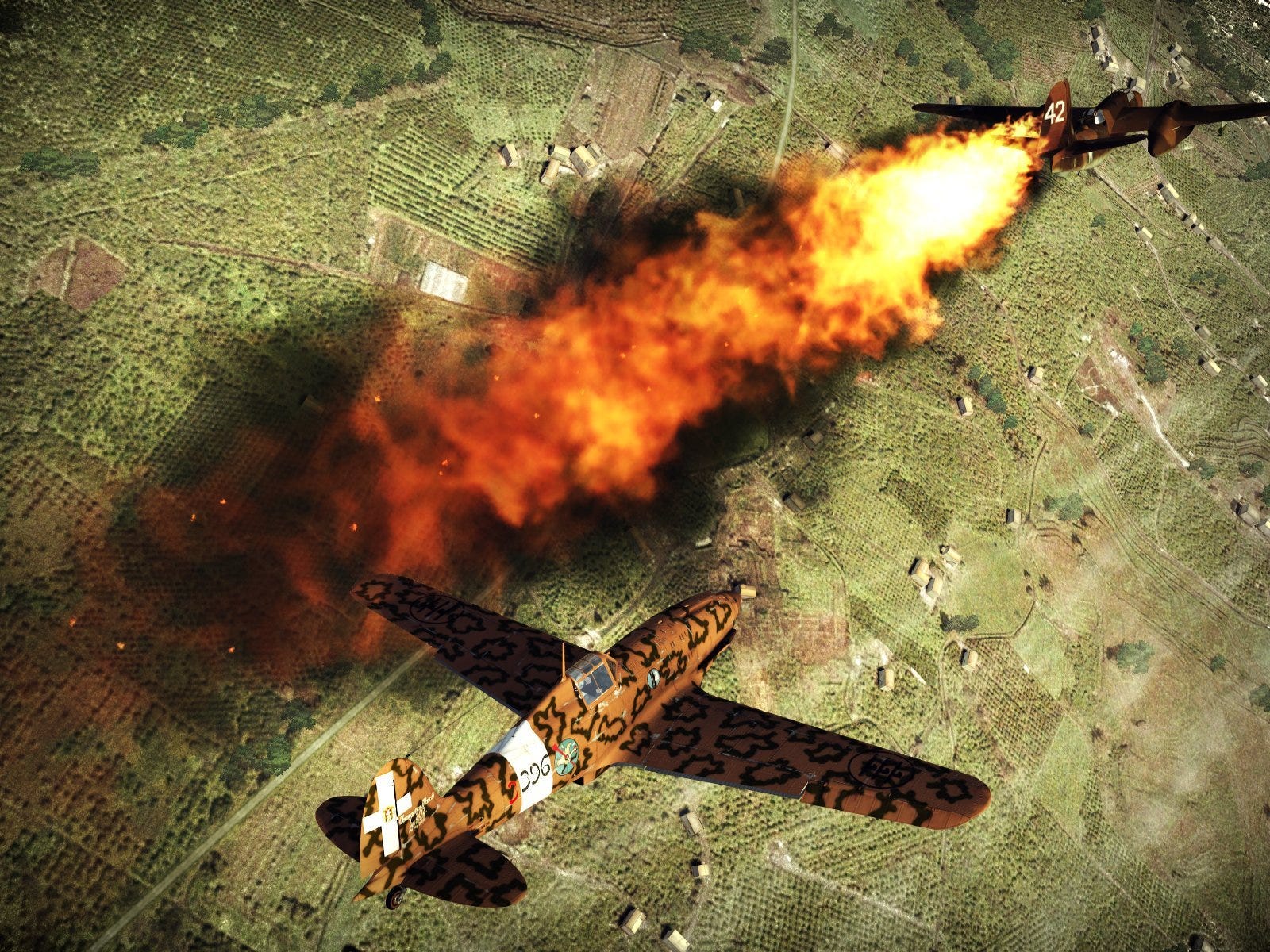
Go here, bomb that, shoot some of those down... gripping action is guaranteed, but the missions are so nakedly scripted, so obviously condensed, natural thrills like the adrenalin jolt of a scramble or the slow-ramped tension of a long-distance raid, never get a look in.
Dusting off one of the sim community's favourite refrains, what Wings of Prey really needed - what it deserved - was some sort of dynamic campaign or random sortie generator. The six stunning theatres are large enough for moving frontlines. Get a good haul of Panzers one day and the fascist advance falters! Fail to provide air support for the beleaguered Guards and the Red Army lose ground!
There was no need for anything as fancy as Battle of Britain II or Falcon 4.0's extraordinary unscripted wars. All that was required from the engine was a sense of continuity and a hint of uncertainty. What we've ended up with not only discourages replay, it may, thanks to some dodgy triggers and jagged difficulty spikes, mean many players never reach Berlin.

A generous selection of single missions and a skirmish generator even clumsier than IL-2's don't compensate for the lazy campaign. If you stick around - and you almost certainly will - it will be because no other sim on your shelf offers sky skirmishes that are quite so brutal or beautiful.
Even cruising the short distances to objectives is a delight in this game. Gaijin's landscape and lighting people are the real heroes of this sim. The earthen canvas pivoting beneath wingtips combines the pleasing irregularity of satellite imagery with the charming clutter of handmade terra-firma. It's the finest combat flight sim terrain into which I've ever had the pleasure to crash.
Top-notch trees and intelligently scattered buildings mean you can drop to hedge height without jeopardising the illusion. And low flying is something you'll do plenty of if you choose to play with target icons deactivated (recommended). During Sicilian sorties I regularly found myself shedding height so as to better spot the smoky/dusty spore of ground targets, and straining to pick out the leopard-spotted Macchi C.202 fighters against the sun-baked hills.
Cities like doomed Berlin and poor ravaged Stalingrad are particularly handsome. Flashing over the sea of rooftops and ruins in a Me-262 or La-5, chances are you'll be too exhilarated to notice the lack of railways, or the odd missing landmark (Where's the iconic grain elevator?). The scenery is there to gobsmack and immerse not aid navigation - a fact underlined by the extremely basic toggleable map with its always-on player, enemy, and objective icons.