Virtual Console: SEGA Mega Drive
The Sonic boom-bust years.

Sonic The Hedgehog
Nobody had ever seen a game as fast and slick as Sonic back in 1991. Yuji Naka's command of the inner workings of Mega Drive knew no bounds, and visually, Sonic managed to make most other games available at the time look ponderous, dull and dated by comparison.
With slopes, loops and spring-laden level design, the emphasis was on relentless speed and impressively colourful visuals above anything else. But with catchy tunes and endless secrets to uncover, its legendary status was always assured - and it's not hard to imagine that this will be one of the most downloaded titles on the Virtual Console service.
Playing it now will perhaps inspire more sorrow than nostalgia. Sorrow at SEGA's recent lamentable attempt at a next-gen version, sorrow that the manic thrill of playing it more than 15 years later hasn't endured as much as expected, and nostalgia at revisiting the refined simplicity of this fiendish ring-collecting classic.
Retro rating: Five stars
Space Harrier II
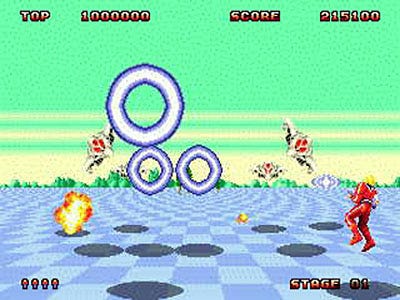
If you're old enough to remember seeing an original hydraulic-powered Space Harrier arcade machine for the first time in 1985, you'll recall the jaw-dropping sense of awe at glimpsing The Future right in front of your eyes. The slick moving floor effect. Screen-filling boss monsters. Holy crap! Sadly, played in the confines of your own home, the game was exposed as being a bit crap.
Essentially a basic third-person 3D shooter, it came along at a time long before gaming systems were capable of rendering 3D scenes with any conviction whatsoever, and you spent most of your time trying to avoid bullets and obstacles before they completed their three frames of animation.
Sure, the sprites were gigantic for the time, and it was a bold in-your-face experiment in all sorts of ways, but it's a museum piece, nothing more. Trying to play the sequel over two decades on is a horrendous journey back in time, and a perfect example of something that should be locked away in a time capsule. And no, it's not just because the Mega Drive couldn't handle the sprite scaling as well as the arcade hardware - it's just torture to play.
Retro rating: One star
Altered Beast
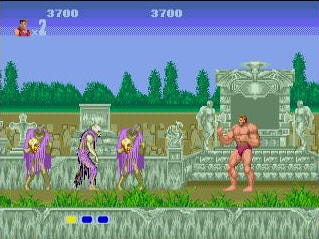
Wise From You Gwave! Another early arcade port that has dated rather horribly in the intervening years, but one that might be remembered fondly by some for the impact it had at the time.
Notable for the spontaneous transformations into different creatures throughout the game (including tiger, bear and werewolf), it, nevertheless, is designed around the popular brawler template that so many games of the era sported at that time.
In other words, it's a standard, garish little number with big bold characters with little in the way of animation, and a limited move set consisting of punch, kick and jump.
Playing it now inspires the kind of retro horror that we dread, and the amount of fun you can have with it quickly runs dry. One for hardcore retro fetishists only.
Retro rating: Two stars
Golden Axe
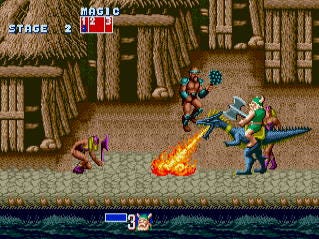
Unsurprisingly, the makers of Altered Beast extended the successful formula to a similar side-scrolling brawler the following year (1989) with the addition of co-op play no doubt helping it to become one of the most popular games of its time.
With the choice over a dwarf, barbarian or an Amazonian female, the gameplay was a relentless succession of encounters against even bigger enemies, and despite its horrible simplicity, it still has an inescapable charm that endures.
Having said that, arcade purists should beware: Although the Mega Drive was definitely capable of arcade perfect ports, corners were often cut thanks to the cartridge costs, and this was one such example - though the presence of extra levels more than makes up for the simplified animation.
Retro rating: Three stars
Gunstar Heroes
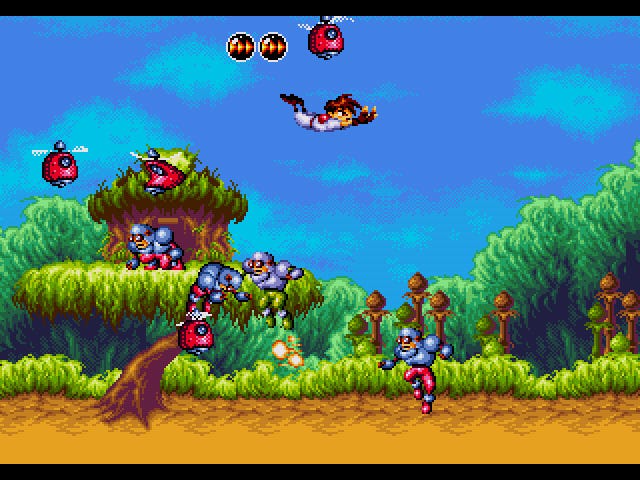
Treasure's side-scrolling run-and-gun title is a fine example of what 2D gaming was about in 1993, and a game which still inspires wistful recollections from many.
Similar in look and feel to the Metal Slug titles, it has an interesting weapon combo system and hugely challenging level design which particularly appealed to hardcore players.
Well worth putting the time into even now, but it'll give you a bloody nose if you're not ready to invest endless repeat play required.
Retro rating: Four stars
ToeJam & Earl
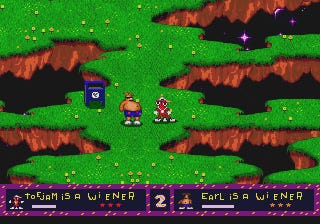
What a thoroughly odd little game. You guide a three-legged red alien or a fat orange alien across simplistic green landscapes in search of pieces of their spaceship, and try to avoid the various Earthling enemies that shuffle around in their way.
With a shuffling gait and an inability to get a bloody move on, boredom rapidly sets in as you slowly waddle from place to place, picking up power-ups and random tat with little explanation, and even less incentive for doing so. The main innovation was the inclusion of a two-player co-op facility, allowing the screen to split into two if you strayed too far from one another.
Don't bother with this one unless you've got some peculiar urge to be disappointed with your childhood.
Retro rating: Two stars.
Ecco The Dolphin
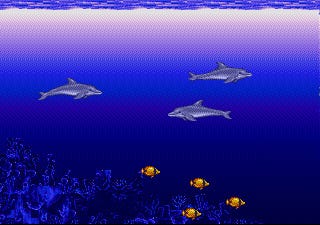
There haven't been too many side-scrolling swimmers released in the history of gaming, but here's one from 1993.
Many expected it to be a twee little game for kids, but they couldn't have been more wrong, with a dark and difficult title with a convoluted storyline to leave the nippers crying themselves to sleep.
Although the visuals and controls still feel slick and worthy enough to be truly representative of the era, the annoying need to worry about coming up for air was a real frustration as you get further into the game. Interesting, but by no means an essential glimpse into the past.
Retro rating: Three stars
Ristar
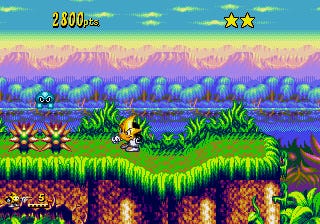
A bit of a lost gem, this one. At first, it Ristar looks like another by-the-numbers 16-bit platformer, but actually has a lot going for it.
Taking the more methodical approach to side-scrolling platforming, Ristar has more than a whiff of Rayman about it (and predates it), with extendible arms that can grab hold of things well out of reach of the main character - including enemies who he can grab hold of and destroy.
With a well-judged learning curve, spot-on controls, some interesting level variations and some of the best visuals ever seen on the Mega Drive, this is arguably one of the best Mega Drive games currently available on VC.
Retro rating: Four stars
Dr Robotnik's Mean Bean Machine
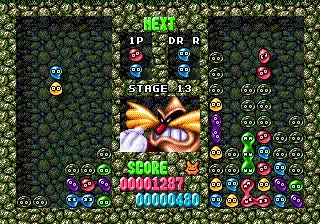
Taking its cue from Nintendo's relentless milking of the Mario franchise, SEGA decided to shoehorn Sonic and its cast into a whole host of unrelated games to enhance their sales potential.
This, for example, is a fairly unapologetic reskin of Puyo Pop, a game which was fairly typical of the early '90s obsession with falling block puzzlers. In this one, you have to group together four 'beans' together in a variety of ways to clear them off the screen.
Best played against a fellow human bean (couldn't resist it, sorry), it's simple, solid, addictive, timeless fun that hasn't really dated like so many of the games you'll find in retroland.
Retro rating: Four stars
Columns
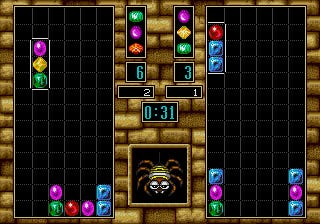
Back in the days before puzzlers got re-branded with cute console icons, Columns played things straight.
Released in 1990, this is an enduring falling block title that's every bit as playable and addictive as it ever was.
The premise in Columns is to, once again, eliminate blocks/jewels of the same type by rotating and lining them up as they drop down the rectangular play area.
Once you slot three of a kind together, they disappear and any shapes resting above them drop down into place. Got it? Get it.
Retro rating: Four stars