Trauma Team Review

Medical miracle.

Version tested: Wii

Uniquely, the Trauma Center franchise almost has an entire genre to itself. Seemingly content that Atlus has the 'surgery sim cum fantastical bioterrorist soap opera' sewn up, few developers have attempted to impinge on its territory, with DS title Lifestyle: Hospital Affairs about the only notable rival.

This may have led to Atlus taking its eye off the ball somewhat, with recent titles suffering more than many sequels from the law of diminishing returns. After all, there's only so many times you can drain the cytoplasm, slice out the tumour, apply the gauze and rub in the antibiotic gel before the sudden need to perform CPR becomes the predictable norm rather than a shocking mid-op twist. While the games have always suffered heinous delays making their way to Europe, the fact that the still-enjoyable DS iteration Under The Knife 2 shows no sign of being localised two years after its US release perhaps tells its own story.

Sensibly, then, Atlus has decided a reboot is in order with this new Wii game, splintering the narrative into six pieces, each focusing on a different doctor and a different discipline. Gone are regulars Derek Stiles and Angie Thompson, and noticeably absent (for the most part) are epidemics of bizarre synthetic diseases. The result is the freshest Trauma title since the first Under The Knife, and perhaps the series high point to date.

Naturally, there's still a fair bit of 'normal' surgery, or as normal as surgery gets when you're controlling a red-eyed amnesiac with indie-band hair who's currently serving a 250-year sentence for mass murder thanks to his apparent involvement in a bioterrorist attack. The mysterious CR-S01 (if CR doesn't stand for Chiral Reaction, I'll eat my forceps) is offered the chance to slice a mere two years from his sentence if he assists in a particularly tricky procedure that's actually child's play by the series' rigorous standards. As it wouldn't be much of a game if he immediately returned from whence he came, he naturally stays on for a few more ops, each gaining in intensity until you're defibrillating an eight-year-old with the FBI about to burst through the ER door.
1

Paramedic Maria Torres gets arguably the trickiest tests, including one blistering mission where you have to keep several patients alive until backup arrives.

There's nothing here that will be unfamiliar to franchise vets, but the controls feel more instant and precise than ever. Additional icons over wounds act as helpful reminders of which tool to pick up next, eliminating the awkward fumbling that could occur in the previous games when you forgot whether this was the GUILT strain that liked to lacerate internal organs, or the one which liked to disappear and cause random tumours. It's as much fun as it ever was, with the frustration factor significantly lessened. A good start.

After Sakura Wars: So Long My Love, paramedic Maria Torres is the second feisty and shouty Latina with enormous bosoms I've played as this year. Her First Response procedures are essentially surgery combined with plate-spinning as you switch between patients at the scene of explosions, crashes and collapsed Ferris wheels. With a limited toolset you often need to improvise, jamming biros down throats, applying tourniquets to stem bleeding, and cutting victims' jeans off to reveal that yes, they have got huge pieces of metal sticking out of their legs.

You'll occasionally need to talk to patients to find out where they're hurting, but often they merely shout that their friend/daughter/second cousin is trapped in the rubble, thereby giving you another ball to juggle but an extra chance to improve your score. It's a real balancing act, perhaps slightly tougher than most disciplines, and certain to appeal to those who've aced the ultra-hard X missions in the previous games.

The brilliantly-named Hank Freebird is the resident orthopaedist, a gentle giant who looks like a cross between Arnie and The Thing from Fantastic Four. His operations represent something of a change of pace, with the patient's vitals no longer a concern and no time limits to worry about; instead there are five hearts at the top of the screen which deplete when you make a mistake. Here there's a ‘chain' system which affects your score; whether you're cutting out a piece of synthetic bone, drilling into a patient's tibia or affixing a metal plate with screws, impeccable work will see your chain increase.

A neat touch has the music gradually fading in as you progress, with a sparse backing rising in volume and a thumping beat added. It adds a little more excitement to non-life-threatening procedure, though the use of the Wii controls here is anything but routine. Whether it's feeling a powerful buzz of rumble in your palm as you drag a drill through bone between two narrow guidelines, or executing a hammering motion to whack a new ball joint into place, the use of the remote here is exemplary.

Endoscopy is next, and probably the game's weakest link, despite an inspired use of the machine in the latter stages and the presence of a ninja butler in technician Tomoe Ichibana's storyline. Thrusting the remote towards the screen mimics the real-life motion alarmingly well (and given how often games fail to make such a movement work, Atlus' skill here is remarkable) but otherwise controls feel awkward. As the nunchuk is used to move the camera viewpoint, you need to press C to both open the tool selection wheel and the same button to confirm which you want to use.

2

While the stories get more realistic, diseases look ever more alien. Excised polyps resemble Dragon Quest slimes without the smiley face, while tumours are shiny, gelatinous blobs.

Couple that with a lock-on system that can be capricious when dealing with multiple wounds in a small area - pretty much every op, then - and you've got a recipe for frustration. It's a nice idea in theory and a little practice goes a long way, but you'll really need to work to get a decent rank on this. Even a Trauma Center veteran like myself struggled to get above a B.

The final two areas are something completely new for a franchise previously resistant to change. In her review of Second Opinion, Keza MacDonald spoke of the game's debt to House, but the snarky, scruffy, chain-smoking diagnostician Gabriel Cunningham is perhaps the most direct reference to date, even if he does come with a hairstyle that even David James would balk at. He's partnered with a talking computer, the RONI system, and there's some nice back-and-forth between the two as the likeably irascible Gabe finds he's more than met his match in the machine.

A successful diagnosis requires you to flit between the examination room, your office and the image analysis lab, talking to and examining the patient, checking scans and X-rays for potential abnormalities before matching up the symptoms with potential illnesses. It's fascinatingly technical at times, using authentic medical terminology throughout. Even if ultimately much of it boils down to spot-the-difference, it's an interesting insight into an unfamiliar world.

Forensics, meanwhile, often feels like a totally different game, one which could easily become a new spin-off of its own. Trauma Center fans may remember Naomi Kimishima from the Z missions in Second Opinion, but even if not, she's one of the game's most interesting characters. She also represents one of its rare sojourns into fantasy territory, her phone able to relay the last words of the corpse currently lying on her table - through the remote's speaker, naturally. It's a creepy and effective device to hook you in as you piece together the mysterious circumstances surrounding the death.

Again, there's plenty of to-ing and fro-ing here, as Naomi hops between her computer, the evidence room and the scene of the crime, gathering information and utilising FBI pal 'Little Guy' to analyse evidence and ultimately solve "the mystery of how life's flame was extinguished", in Naomi's slightly melodramatic terms. There's definitely something of Phoenix Wright in how this all works, combined with the evidence-linking of the recent Ace Attorney Investigations, and Another Code's multiple-choice questions which check you've been paying attention.

Despite the appearance of a maniacal bomber, and a dose of gallows humour (Naomi is referred to as The Corpse Whisperer) it's also quite po-faced in comparison to the other disciplines - most notably in one particularly troubling early case which offers a genuinely dark and disturbing conclusion. Elsewhere, there are mad bombers, helicopter chases and pretend superheroes, and the series staple that is the suicidal girl who eventually realises she just wants to live, dammit, but a couple of cases definitely enter darker territory than we've seen before.

3

The plot gets soapy and sentimental at times, but it earns those moments through the quality of its storytelling and its warm, good-natured characters.

While every doctor has his and her own story, the plot threads weave together, so as CR-S01 you may get to operate on a patient Maria has just put into an ambulance, or to perform an endoscopy on a patient you recently diagnosed. As you can switch between characters whenever you fancy, this can occasionally lead to mishaps, such as knowing a patient's condition before you've examined him, but then you still need to analyse his symptoms to arrive at the obvious conclusion. There's also a final case which involves every character, and which only unlocks when you've completed all previous procedures, which should take a good 20 hours. Factor in the co-op modes and additional Specialist difficulty and you've got a game that will take you a fair old while to finish.

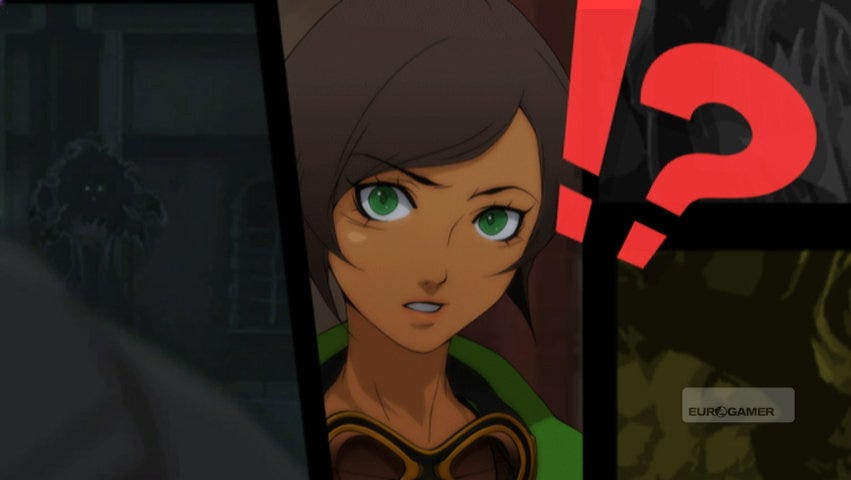
It's rare to see a third-party Wii game that's quite so polished, with terrific comic-book story sequences (all voiced, and effectively at that) and some superb interface design that has the fingerprints of the Persona series' Masayoshi Sutou all over it. More importantly, the controls - Endoscopy quibbles aside - are among the most efficient, responsive and well-calibrated of any Wii game, while there's an admirable variety in the operations, even within each individual section. And thankfully you can skip the pre-op chat any time you want to replay a mission for a better score.

With a super-easy Intern difficulty, the accessibility of the controls and the brilliance of the presentation, there's probably no better time for newcomers to jump in. And though the truth remains that the Wii remote is no substitute for a touchscreen and stylus when it comes to slicing and suturing, even series veterans will likely agree that this is as good as the Trauma series is likely to get.

9 / 10

Trauma Team is out now in North America. There are no currently no plans for a European release.

Read the Eurogamer.net scoring policy

Comments (65)

Comments for this article are now closed, but please feel free to continue chatting on the forum!

  • Loading...hold tight!