Sword of the New World
Tests your mettle - and, sadly, your patience.

If there's one thing Koreans love.... Well, actually, if there's only one thing Koreans love, it's probably delicious kimchi, but if there are two things which Koreans love, then the other one is probably massively multiplayer games.
Okay, I confess that by the end of this review, I'll probably have thought of about twelve things Koreans like better than massively multiplayer games, such as "having better mobile phones than everyone else" and "Bae Yon Joon".
The point stands, though; Koreans love MMOGs with the kind of affection that British gamers normally reserve for annual updates to football games and chav racing simulators. It's a love which can often seem unconditional and irrational. Korean MMOGs have a habit of subjecting their players to hours upon hours of tedious, mindlessly repetitive gameplay, delivering a seemingly endless treadmill of monster-killing with remarkably little variety or reward to spice things up.
However, there are certain things Korean MMOGs do wonderfully. They are arguably second to none when it comes to Player Vs Player systems, for example; and while some accuse the nation's games of having an astonishingly similar art style, others would hasten to point out that most of them still look absolutely gorgeous.
And so, to Sword of the New World - the latest Korean title to make an attempt to win over Western gamers to its charms, and one for which we've been holding out high hopes for several months.
Dulled Blade
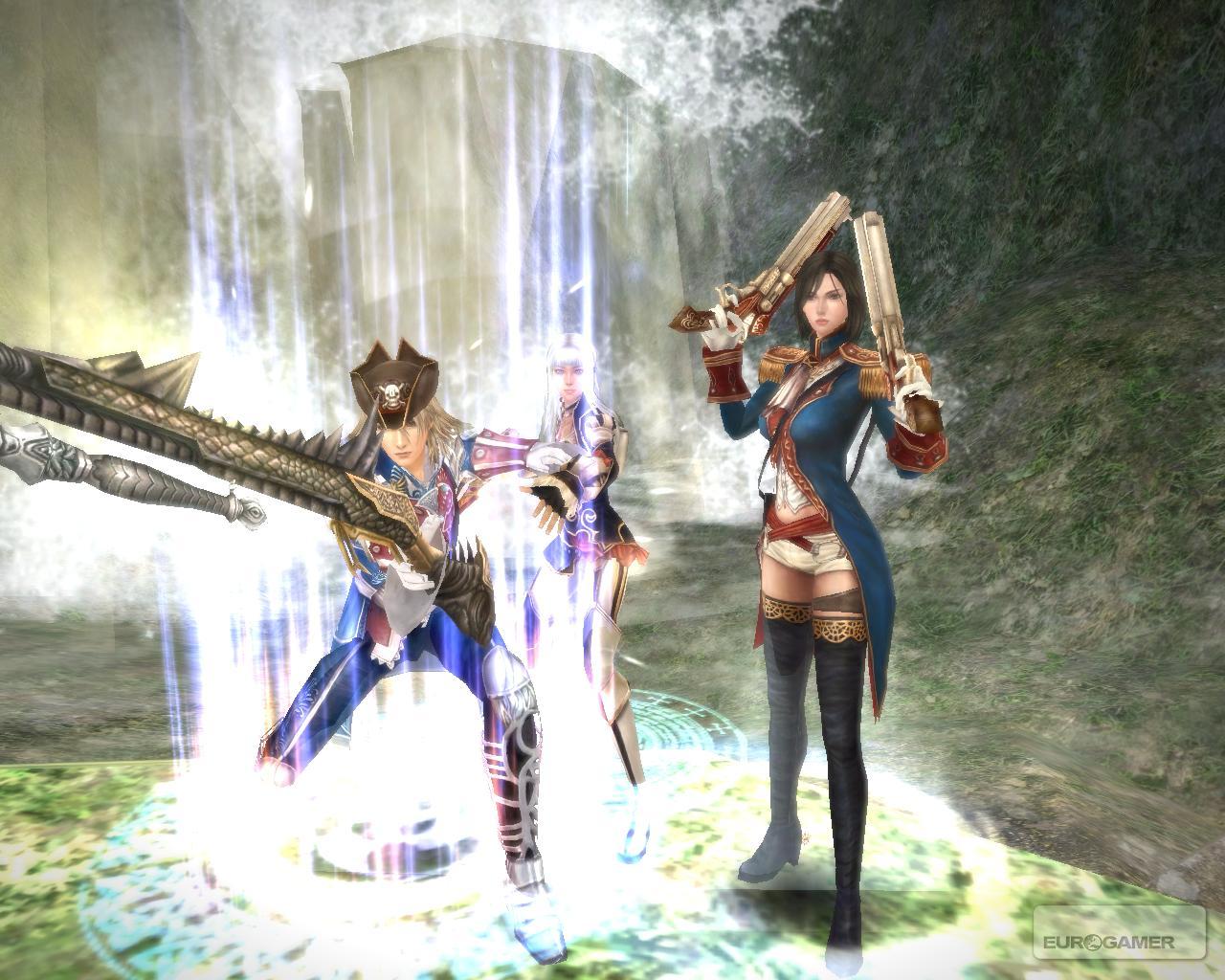
Our hopes for the game were pinned, quite simply, on just how different it seems from the competition. The single most unique element about SOTNW (or Granado Espada, as it's known in Korea) is that it introduces the concept of multiple character control to the MMORPG space - a change which should, in theory, cause a sweeping overturn of many of the conventions of the genre.
In essence, multi-character is something with which almost everyone who has played an offline RPG will be familiar. At any point in the game, you directly control three characters in your "party"; should you choose to join a group with one other player, there'll be six characters in the overall party, and so on. Your characters have a certain degree of intelligence, and will auto-attack in battle unless they're told not to; each of them levels up independently, and you can combine any group of characters you like from your "stable" to make up a party.
Although this might sound very reminiscent of Final Fantasy XII, for those who have played Square's most recent opus, it's actually not quite that clever. Sword of the New World has nothing to match up with FFXII's subtle and hugely customisable Gambit system; instead, your party's AI is altogether more basic and you'll need to trigger special attacks and the likes yourself, using shortcut keys or on-screen menus.
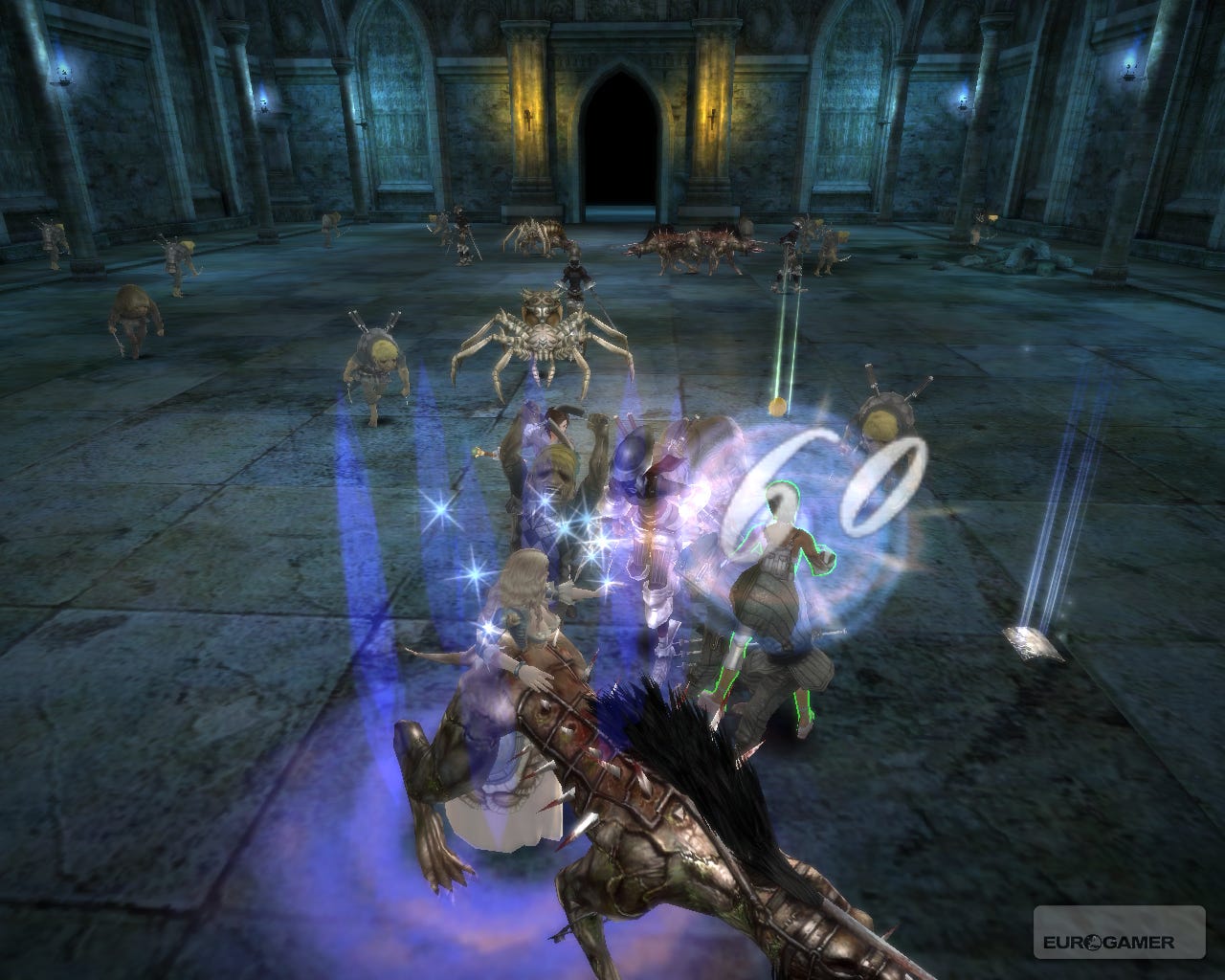
In theory, this sounds like a perfect set-up for a game which can be played solo - and that's not an entirely unfair assessment. Early on, you don't even need to slot a healer (a Scout, in Sword of the New World's lexicon) into your party, because the enemies you fight will drop healing items like confetti. As you progress, party balance becomes more important, but it's still perfectly possible to fight your way through early encounters solo.
However, later in the game you'll definitely need to team up with other players. The endgame is incredibly heavily focused on PvP (although you can actually be attacked by other players from level 6 onwards, which is remarkably frustrating given that you lose experience points for being killed - and can even drop down a level under some circumstances), and most of that is group PvP - but long before that, you'll find that you need to party up to avoid being wiped out in the experience grinding sections of the game.
Strike one; despite the party system promising a departure from the conventional model, the game still obeys the old rules of "solo for a while, then party if you don't want to get your arse kicked". If you're always in a party when you play MMOGs, this won't bother you - but a lot of players like to have a choice, and Sword of the New World loses brownie points for presenting the illusion of a choice and then kicking your arse unexpectedly anyway.
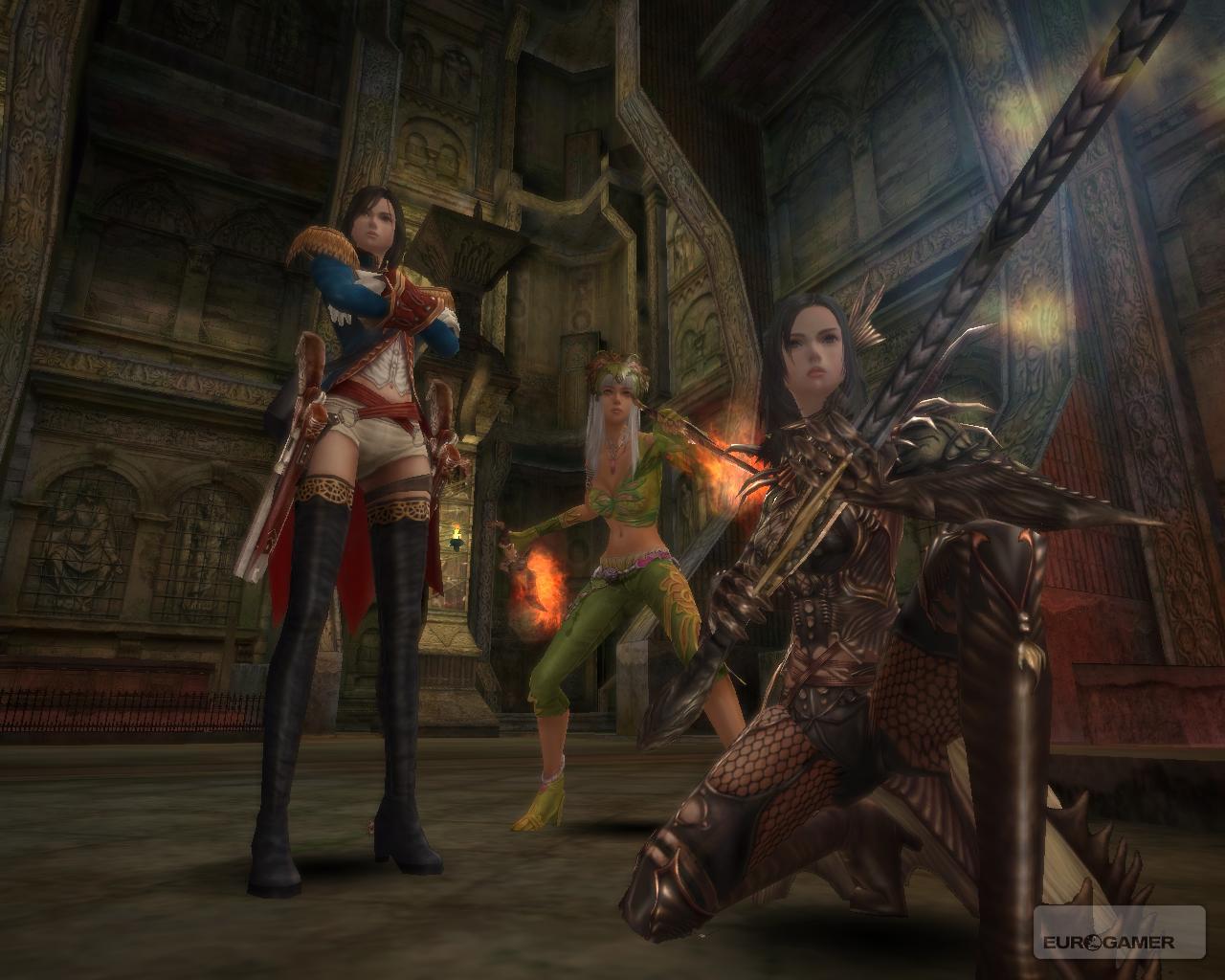
By the time you reach this point, you'll probably already be battling through a certain sense of disillusionment with Sword of the New World. At first, controlling a party is a novelty - as is the game's technique of throwing loads of enemies at you at once. Other MMORPGs tend to see you battling one or two monsters at once; Sword of the New World regularly sees you fending off a dozen beasts, a mechanic which is of course enabled by the game's party dynamic.
However, the novelty wears off quite quickly when you realise that having introduced such an interesting and fundamentally different aspect to the game's combat, the creators then proceeded to do their level best to haul quests and progression back into the realms of the tediously familiar.