Sam & Max Season 2
Episode five and the season as a whole.

And so the second episodic adventure with Sam & Max comes to a close. The final episode - What's New, Beelzebub? - is very much of a piece with the previous entries in this season. That's to say that it's exquisitely written, packed with some of the best humour ever seen in games, but curiously disappointing as an actual game.
There's no faulting the presentation, the only persistent technical grumble is some sluggish loading times, but the criticisms have become wearily familiar over the past few months. Once again the action revolves around the same old street, with a few remote locations to jaunt between. This time it's Hell, with the Freelance Police entering the underworld to rescue the souls of all the characters who have died during the season. Of course, this means that pretty much everyone to have crossed their path gets to come back, including Hugh Bliss, Brady Culture and Santa Claus, and there are also some brief excursions to miniaturised locations from episodes past.
What is more troublesome is how routine the actual gameplay has become. With that in mind, rather than simply reiterating the same praise and criticism for the final episode, consider this a look back at the season as a whole, how the episodic format is working out, and the implications it has for gameplay.
Telltale deserves plenty of praise for being arguably the first commercial developer/publisher to actually deliver on the episodic gaming promise. Each new chapter arrives on time, every month, for a very reasonable price - which is more than most have managed. The storyline may have wandered a little to begin with, but the past few episodes have drawn together the various plot threads in a mostly satisfying way. There'll inevitably be some groans at the big reveal as to who's been behind this season's skulduggery, and the way the earlier episodes are roped into the larger story isn't entirely convincing, but it holds together a lot better than most game storylines.
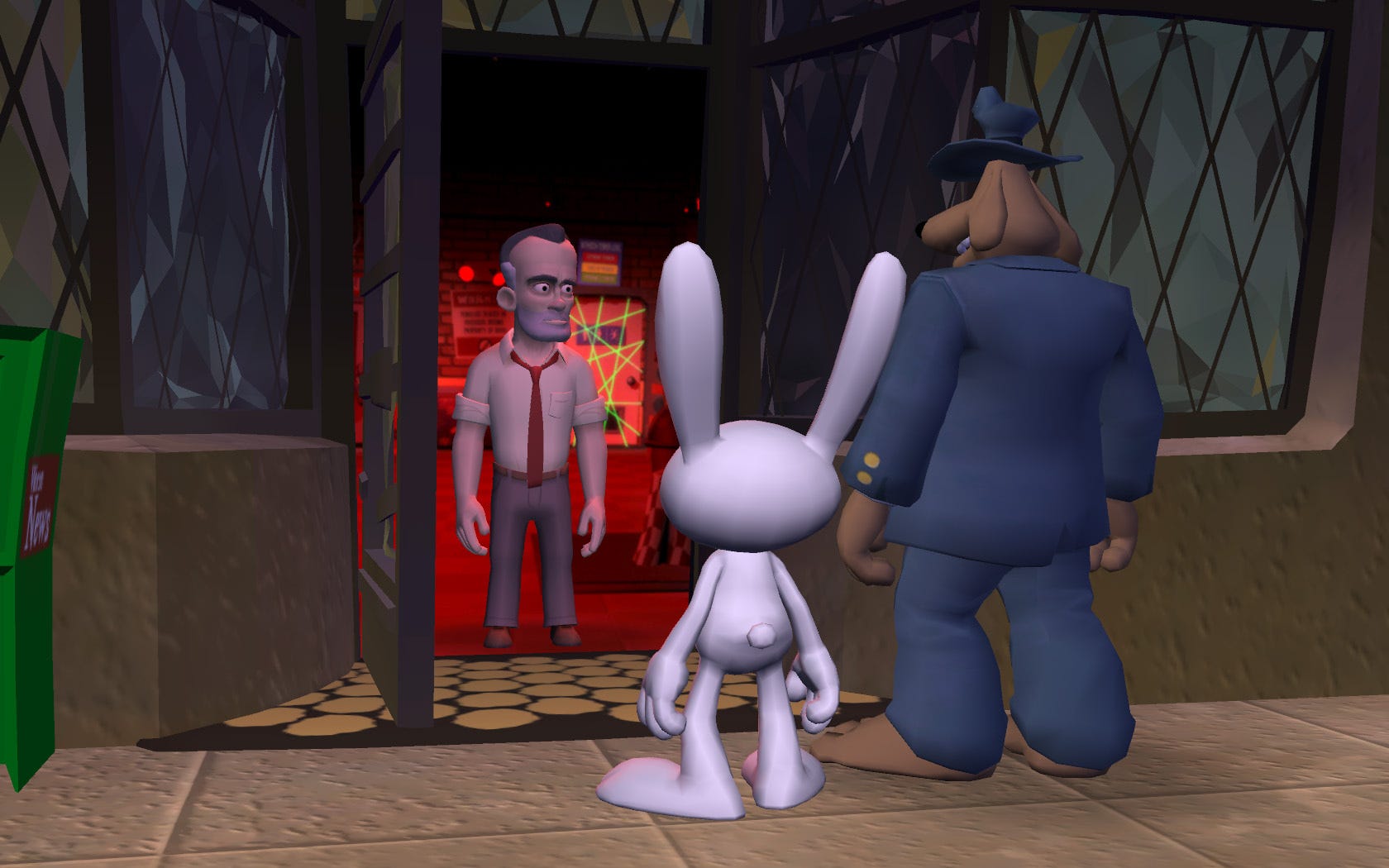
But the point-and-click genre is one mired in convention, and the Sam & Max revival has fallen awkwardly in the middle of where the genre has been and where it needs to go in the future. One of the recurring complaints - from me, anyway - is that the episodes seem to be getting easier. This is certainly true of the final chapter which, while slightly longer than its predecessors, is no more challenging. There are a couple of puzzles that will slow you down, but even then it's generally a case of knowing very quickly what needs to be done but struggling to figure out how.
Now, I've never been an expert at point-and-clickers. It's a genre I have a lot of affection for, but I'm not ashamed to say that I often had a magazine tips section to hand when working through Monkey Island 2 or Indiana Jones and the Fate of Atlantis. Sam & Max, 2008 edition, seems to go out of its way to avoid the sort of obtuse solutions that used to typify the genre - which is good - but doesn't seem to have found a balance between testing the player and coaxing them through to the next episode. A few hours of gameplay is fine for a game delivered in this fashion, but only if those hours feel substantial as both a game and a story.
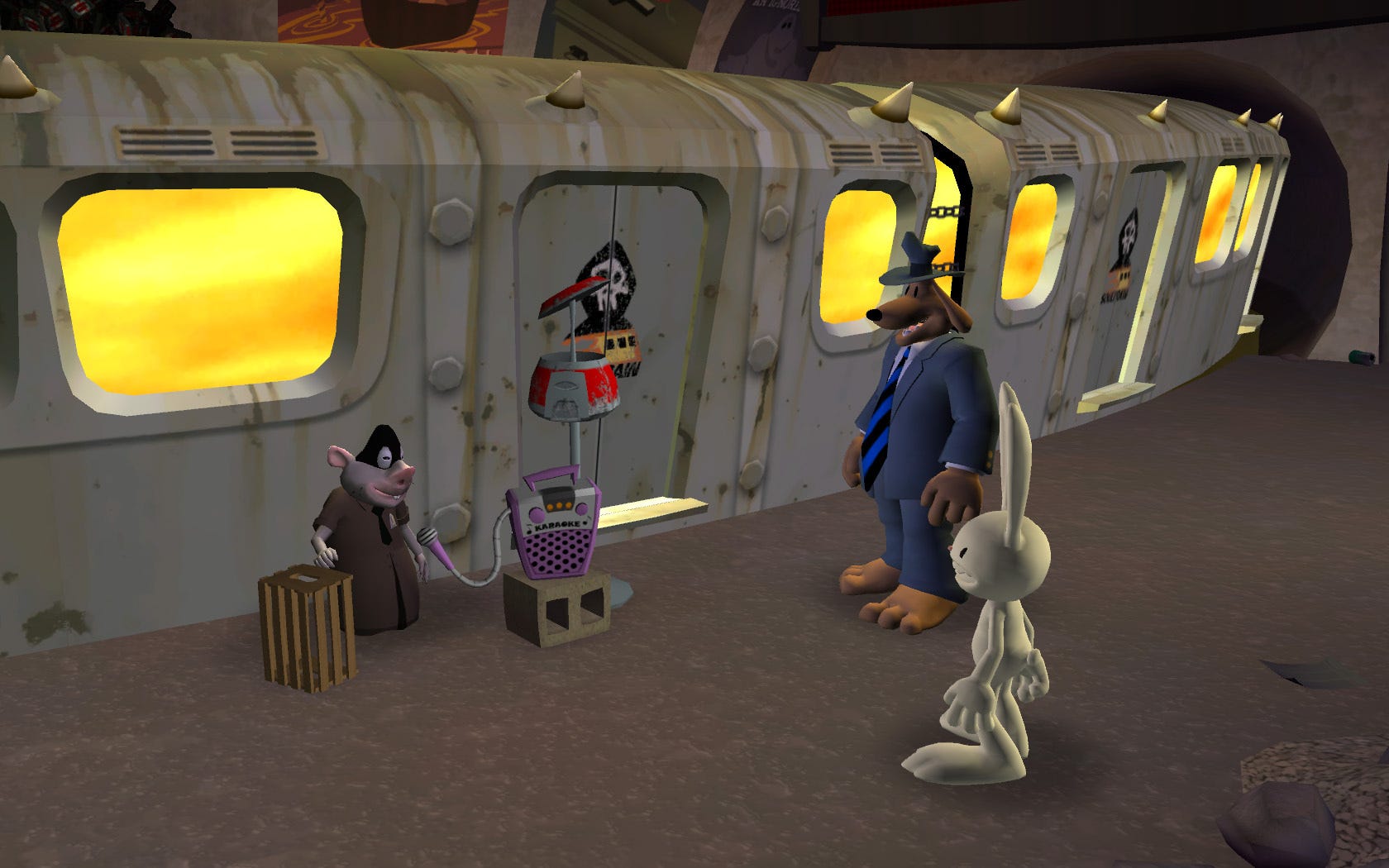
This is compounded by the necessarily small play areas and limited inventories of the episodic format, and then compounded further still by the fact that, by now, anyone familiar with the Sam & Max universe will almost always be one step ahead of the puzzles. There were several moments in episode five where I'd be told that I needed to find a certain object, or it'd be suggested that I'd need a certain type of object, and I'd already have it in my inventory. Equally, there are several moments where you find an object in one screen, only to use it in the next. For the most part, these aren't puzzles - at least not as adventure gamers know them - but rudimentary inventory games. Fetch quests, really, but with not very much to fetch. Nothing in this episode, or any of the previous episodes, had me stumped for more than a few minutes. That's not a boast, but an indication that most gamers will breeze through Season 2 without too much trouble.