The decision to open up the PSP to smaller snack-sized downloadable games is hard to fault. After all, it's often from these low-risk, high-concept projects that the brightest ideas emerge. Heading off competition from the iPhone is also clearly a factor, which is why the initial 13-strong line-up feels less than convincing - despite some absolutely fantastic titles.
Pricing is certainly area where the Minis concept feels poorly developed at launch, especially since gamers can be strangely more sensitive to price differences at the lower end of the scale. None of these games comes in much under the £2.50 / 3 barrier and there's certainly nothing to compete with the pennies-priced lower tier of the iPhone range, where gamers can gamble on an impulse purchase with greater confidence.
Meanwhile, with seven of the 13 opting for a top bracket £3.99 / 4.99 price point, many titles are already nudging up against some of the cheaper offerings elsewhere on the PlayStation Store. This makes it hard to determine what, exactly, the point of difference is for the Minis range.
Such commercial quibbles will hopefully settle down as the Minis line becomes more established and developers find the ideal balance between profit and price promotion. In the meantime, let's take a look at what sort of first impression the games themselves have made.
Alien Havoc
- £3.99/4.99
Bubbling to the top of the list for purely alphabetical reasons, Alien Havoc fails to impress as an introduction to the world of digestible PSP downloadables.
You guide an alien around rural locations, kidnapping cows and taking them back to your flying saucer. Farmers will try to stop you, naturally, and must be stunned with thrown objects to ensure safe passage. Each level becomes a question of working out the fastest route to your bovine victims, while minimising human encounters or dodging automated hazards as they follow fixed patrol paths.
It's all basic puzzle game stuff, and it both looks and feels like something that would be more at home on a primary-age educational website. The pace is slow enough to make the "Havoc" part of the title feel misleading, while fudged collision detection ensures that the split-second dodges required later in the game are frustrating in all the wrong ways.
If it were a 59p iPhone app it might be easier to overlook such clumsy and uninspired construction - or at least not feel too aggrieved when you delete it - but by staking a place at the top end of the Minis price list, Alien Havoc draws too much attention to its shortcomings.
5/10
Bloons
- £3.49/3.99
The first of several iPhone ports making the leap to PSP, Bloons draws fairly obvious inspiration from Peggle. Inviting comparisons to one of the most popular and carefully honed casual games of recent years isn't a particularly smart move, but PSP owners looking for something similar will probably glean enough amusement from the result for its lack of personality to be a secondary concern.
You're popping balloons rather than pranging pegs, but the concept is much the same: direct your dart, let fly and try to burst the required number before you run out of shots. Variety comes quickly, as the levels conspire to hide the balloons behind blocks and obstacles that must be either destroyed or circumnavigated through careful aiming.
As a concept, it works. The physics is decent enough, but the game itself never finds the tone or hook that elevates its gameplay model into something truly compelling. On the iPhone you at least had the tactile interaction of touch-screen aiming. Using the PSP buttons, the rather ordinary game underneath isn't disguised nearly as well.
6/10
Brainpipe
- £3.99/4.99 PC
This deliberately trippy offering wears its psychedelic visuals like a shield, bombarding the player with swirling colours at an epileptic pace. It's almost enough to distract from the fact that the game isn't particularly satisfying or even all that interesting.
You're controlling an iris as it travels down the titular Brainpipe. Steering past obstacles while scooping up floating rune fragments is the aim of the game, but the response from the PSP's stubby stick is far from conducive to the instinctual reactions the game demands. Sluggish to start moving, but then irritatingly skittish when it comes to fine navigation, you never feel completely in control.
Mitigating this is the ability to slow down time, a power that allows you to line yourself up for an unimpeded passage past hazards, or to grab a problematic rune at the edge of the play area. Slowing things down also heals any damage you may have taken, a curious decision which renders the early stages both frustrating and simple at the same time. It's only when you reach the end of the game's 10 stages that you're in any real danger of being permanently pulverised by the rush of barriers and blocks in your way.
The lazy comparison would be Rez or any of Jeff Minter's tubular acid trips, but those all had fiendishly precise and beautifully balanced gameplay elements purring away under their glowing vectors. Brainpipe has the looks but not the heart and since the only evolution in gameplay is that it gets faster, the sparse 10-stage layout only offers long-term appeal to those who care about score-chasing.
5/10
Breakquest
- £2.49/2.99
Breakout with a physics twist, Breakquest is held back by control that is never as precise or smooth as it could be, but the gameplay itself offers ample reason to accommodate the flaws.
The key difference is that the playfield has more wide-ranging and consistent physics than the usual bat-and-ball title. Power-ups that are struck while falling will be knocked off-course, while dangling obstacles will spin and swing, forcing you to reappraise trajectories on the fly. You can also exert a little extra gravity on the ball, tugging it towards the bottom of the screen. While this leads to a lot of accidents to begin with, it proves to be a useful ability once mastered.
With 100 levels, and some cunning design that tests your brain as much as your reflexes, the only persistent issue with Breakquest is the initially annoyance of the sluggish stick control. Get past that, and you've got a solid pick-up-and-play game.
7/10
Fieldrunners
- £3.99/4.99
One of the best tower defence games on the iPhone, Fieldrunners makes the move to PSP without losing any of its appeal. In Classic mode, you must fend off 100 waves of enemies using four tower types. Extended mode adds another two towers to play with, while Endless mode speaks for itself.
All towers are available from the start, provided you have the cash to pay for them. Enemies pour into the playing field, and using gun turrets to herd them into long winding gauntlets is - as always - the secret to success. Should 20 enemy units make it through your field and out the other side, it's Game Over.
What Fieldrunners lacks in variety and depth it makes up for in sheer rabid pace. Enemies come thick and fast, and as you creep towards the hundredth level you'll be upgrading and rearranging your towers to cope with veritable floods of soldiers, tanks and helicopters, often from several directions at once.
With a clean, pleasing visual style and gameplay that reveals its nuances through natural play, Fieldrunners is a wonderfully crafted casual nugget. It's a shame that more hasn't been added for this version, but that's no reason not to surrender to its charm.
8/10
Fortix
- £3.49/3.99
An RPG-flavoured spin on the old Qix template, Fortix requires you to box off the gameplay area by guiding your knight across hazardous terrain, trailing his box-making line behind him. Your goal is the fort on each map. Once boxed in, the area is claimed and you move on to the next.
Complicating matters are such genre clichιs as roaming dragons and cannons, which will unleash shots whenever you leave the safety of the screen's edge. If your knight - or an unfinished line - takes a hit, then you lose a precious life. Thankfully, cannons can be destroyed by boxing in catapults, which then turn and fire, and a lot of the strategy comes from working out how to activate all the catapults without being blown to bits. Different terrain affects your movement speed, while walls force you to take dangerous detours.
It's a clever twist on an old standard but the cannons prove to be an irritation rather than a true challenge - their fast, ruthless volleys reducing too much of the game to a painstaking crawl, claiming a few pixels of space at a time as you inch towards a vital catapult. Fun, then, but in need of balancing.
6/10
Funky Punch
- £3.49/3.99
Another iPhone refugee, and another title that seems to misunderstand the potential of miniature gaming. Rather than build something small but perfectly formed, based around an immediately accessible and brilliantly simple hook, Funky Punch tries to cram a 3D fighting game into its tiny download. It fails.
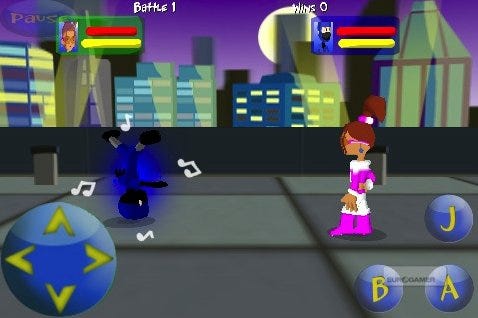
With a cast of characters all based on an embarrassing 1993 interpretation of the word "funky", the game valiantly attempts to recreate the pace and depth of a true fighter, but is undone from the start by stodgy feedback, imprecise button response and a frankly ugly design aesthetic. Mashing gets the job done more often than not, while trying to play the game properly leads to inconsistent results.
Ultimately, all Funky Punch has going for it is the price. It's certainly cheaper than Tekken, but it's also a pale shadow of virtually all its genre peers. If you value frugality over actual value for money, then by all means give this a spin.
3/10
Hero of Sparta
- £3.99/4.99 iPhone
Similar to Funky Punch in the way it tries to squeeze a square peg into the round hole of pick-up-and-play pocket-money downloads, Hero of Sparta is aimed at a very peculiar market - essentially God of War for people who don't want to buy God of War. The appeal is presumably seeing something that looks like an established brand for a budget price, but the clunky reality simply reinforces the fact that sometimes you're better off with the real thing.
You're a stereotypical Spartan warrior, marooned in a strange land and forced to hack and slash through eight stages to find your way home. Defeated enemies spew colourful orbs, which top up your health, magic or experience, and new equipment can be earned in each area. Basically, everything that God of War does, Hero of Sparta copies, only with an awkward not-quite-right feeling that price can't dispel.
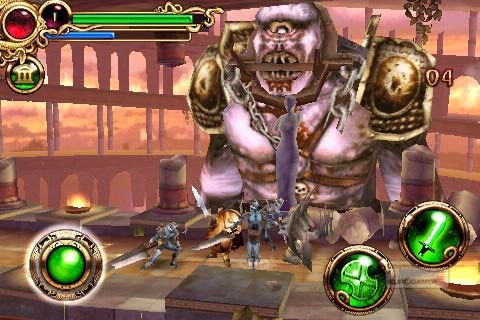
Attacks feel languorous and disconnected, while the laughable Quick Time Events are so laidback as to feel pointless. There are sporadic platforming sections, which rely on floaty context-sensitive jumps, but after mashing through three stages of gluey, repetitive brawling, I'd had more than enough.
Games like Hero of Sparta exist because developers think that casual handheld gaming is little more than a knock-off factory; that offering up diminished and compromised versions of familiar hits is what the market needs. The titles that truly impress on bite-sized platforms are rarely those that try to ape "proper games", but the ones that turn hardware and storage restrictions into opportunities and innovations. Hero of Sparta isn't one of those games, and there are better Minis more deserving of your money.
4/10
Kahoots
- Price: £2.49/2.99
Lemmings in the style of LittleBigPlanet is your soundbite for this one, as you guide creatures apparently made of Blu-tac through perilous platforming environments. You do this by switching the blocks beneath their feet, so that bouncy jump blocks propel them safely over spikes, or trap doors drop them to levels below. Hampering your plans are bolted blocks which can't move, forcing you to think around problems - often using the wraparound screen to find new routes.
Each of the 50 stages has a slice of cake that makes for a tempting secondary objective, and the whimsical presentation does a lot to enhance the already solid puzzling. Quite apart from the bits-and-bobs handmade design style, the game even has a potential star in Pegbeast, a bizarre creature made from household items who explains new gameplay elements in song before each level.
Cute without being twee, packing in a lot of fun ideas without smothering the accessibility, Kahoots is a lovely little gem and one that deserves extra praise for resisting the temptation to grab the greedy £3.99 price point.
8/10
Pinball Fantasies
- £3.99/4.99
While a lot of the PSP Minis have arrived on the platform via the iPhone or the PC shareware scene, Pinball Fantasies has a more impressive vintage, with its roots in the fertile soil of the Amiga.
Originally developed by Battlefield outfit DICE, it is quite simply one of the best pinball games ever. This near-perfect port offers all four themed tables - funfair, road race, gameshow and graveyard - and backs them up with a physics model that still impresses. There's the chance to pass the PSP from player to player, and a tap on the Select button flips the play area to make full use of the screen. You lose some of the info pane at the top, but it's a worthwhile trade off.
It's just a great pinball game, with intelligent table design that manages to pack in features without losing focus. I cherished the version I had for the homebrew GP32 handheld, so the sight of it resurrected once more for the PSP is a genuine joy.
9/10
Tetris
- £3.99/4.99
It seems a bit redundant to review Tetris, what with it being the most popular game ever, but sometimes all it takes is a polished Greatest Hits package to remind you just why it has endured for so long.
Too many Tetris variants make the mistake of drenching the finely tuned simplicity of the original game under pointless gimmicks, but this is a restrained and worthy modern update that keeps the essentials clutter-free. At the same time, the periphery is tweaked with a raft of alternate modes and a compelling Trophy-style reward system.
It's easy to take such a game for granted, but it's impossible to resent the addition the addition of such a stalwart of casual handheld gaming - especially in such a handsome edition.
9/10
Vempire
- £3.99/4.99
Yet more fun with coloured blocks, this time in a shell that mashes up Puzzle Quest with Hexic. The aim is to battle your way through various fantasy landscapes by rotating squares of blocks to form horizontal or vertical lines. Filling up a potion bottle before the timer runs out is the ultimate goal, but there's another meter slowly filling at the same time. When this reaches the top, the stage's resident monster appears to muck things up.
You can match gold bars to earn enough cash to unlock your own monstrous assistants - basically special attacks that impact the playfield - and each trio of stages is followed by an optional bonus level where you can obtain items to enhance your skills further.
The art style is very appealing, with lots of crisp cartoon sprites, but the core gameplay feels truncated and shallow. There's limited strategy, and the rudimentary play mechanics never offer the sort of nuanced long-term challenges that sustain games of this ilk. Vempire certainly isn't a bad game, but it probably would have benefited from a few more months of work on the basics.
6/10
