PlanetSide
Shooting for the moon.
Giant, bipedal war machines stalk through the hills, small groups of tanks roll in determinedly, while around them infantry move up and engineers lay down defences, fix up damaged vehicles. Soldiers select equipment from a mobile re-spawn vehicle, squatting under a shimmering cloaking dome. Overhead, aircraft dogfight, while a dropship, braving anti-aircraft fire, flies over the besieged base and discharges a contingent of soldiers, some nestled inside bulky exo-armour with formidable firepower. Defenders man gun turrets and return fire from the parapet that tops the base's imposing walls. The battle rages. Welcome to PlanetSide.
Released back in May 2003, PlanetSide was yet another bellicose videogame vision of the future. But unlike previous games involving humans fighting a future war, PlanetSide was unique in that those doing the scrapping were exclusively other players. Potentially thousands of other players, working with a remarkably diverse array of hardware to create unprecedented, elaborate gameplay. That elaborate play survives to this day, with much of what PlanetSide offers yet to be bettered by any game, FPS or MMO. Call of Duty 4's multiplayer, for example, may offer diversity in its weapons, but you're still on small-scale maps on servers that only support small numbers of players. PlanetSide is massive. An entire world at war.
Although the massively multiplayer FPS had been born a few years earlier with World War II Online, PlanetSide improved considerably on the formula. It promised to transform the FPS genre. It didn't. But for those of us who got hooked on PlanetSide, it was a landmark in gaming.
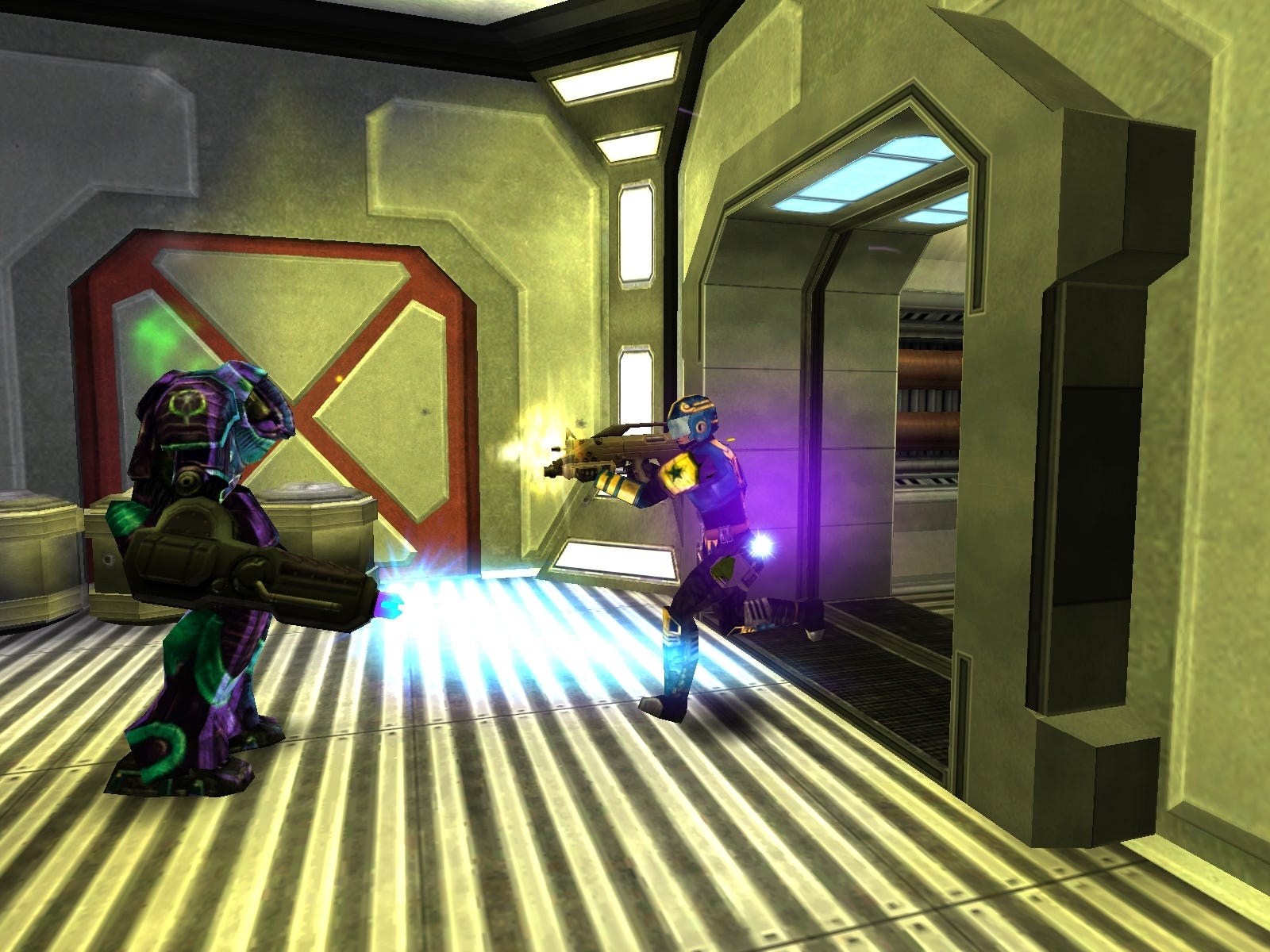
Since a peak in late 2003, PlanetSide starting losing popularity, many online gamers forsaking its twitch-based but frequently laggy play for more traditional RPG pleasures. Today, the PlanetSide community is a pale shadow of its former self, purportedly less than a third of the 75,000 subscriptions the game peaked at in late 2003. Playing these days, however, it's hard to even believe there are 20,000 subscribers frequenting the two remaining servers. (The five-year anniversary of the game in May 2008 was marked by an effort to reinvigorate the action by the combining the two North American servers to form the new Gemini. Meanwhile, the European server, Werner, can be deathly quiet.)
And yet, the things that made PlanetSide so remarkable back in the day are still worth writing home about. For those who've never had the pleasure, PlanetSide was built around a simple premise - humanity went through a wormhole, established colonies on the newly discovered planet Auraxis, the wormhole collapsed, the colonies came to blows. These colonies formed the game's three empires: the New Conglomerate, sporting blue and yellow armour and nominally driven by an ideology of fighting tyranny; the Terran Republic, the remnants of the old earth order, clad in suitably fascistic red and black; and the Vanu Sovereignty, who found ancient alien tech (lots of hot plasma, basically) and wear slinky purple outfits. The backstory is hardly relevant though. PlanetSide is about persistent, perpetual combat, not narrative. And about comradeship.
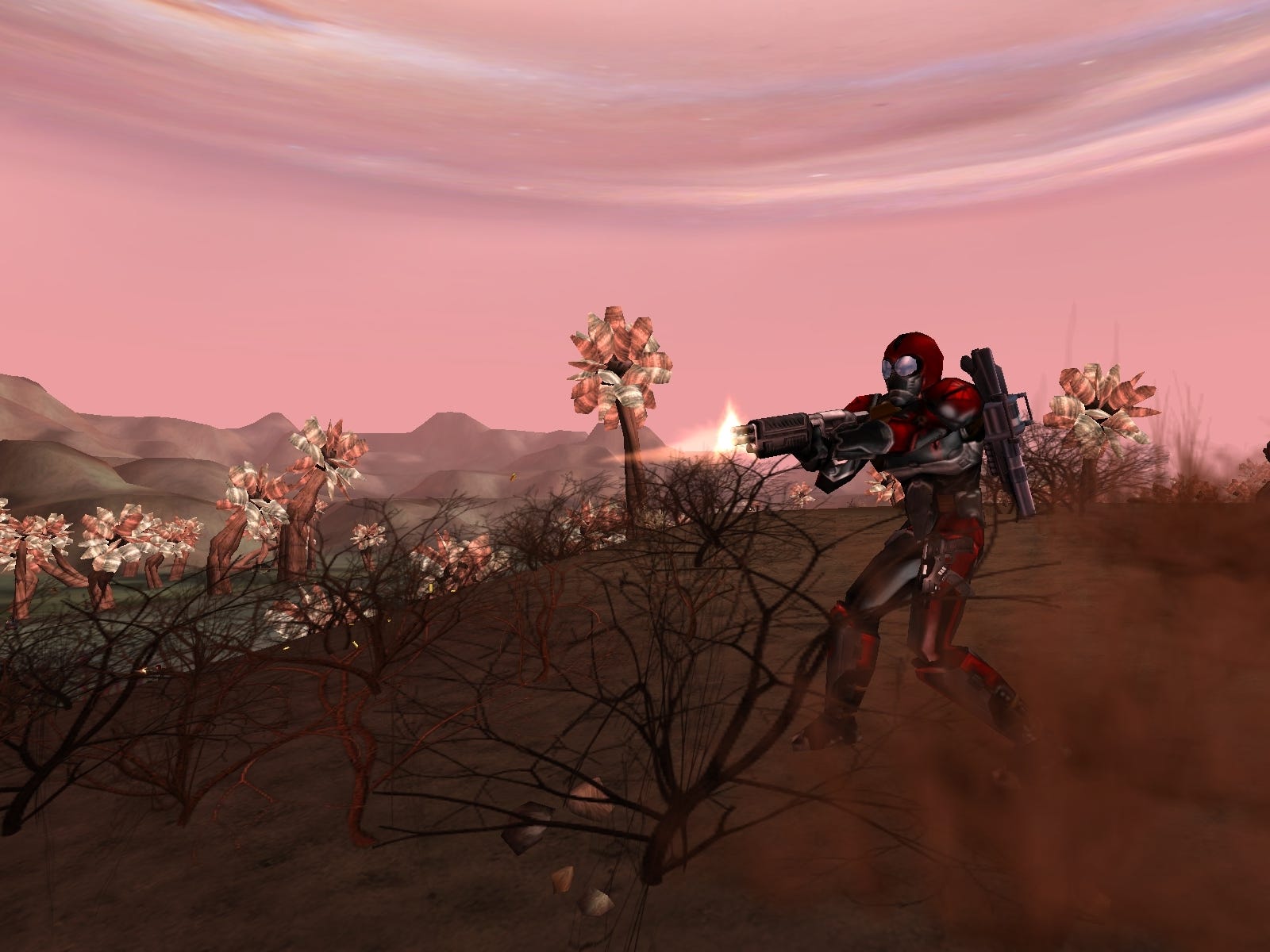
I've never experienced such a sense of gaming comradeship as in the heyday of PlanetSide, when the massed members of your Outfit (the equivalent to a guild) set out with a mission to conquer a particular swathe of Auraxis. The planet was initially made up of ten continents, but after 2003's Core Combat expansion pack it also included caverns, ostensibly designed to offer a semblance of urban combat. The game's setting was altered further in August 2004's The Bending, which saw the continents become planetoids, though that didn't affect the game's dynamics notably. Something that did affect the dynamics, however, was October 2004's Aftershock, which introduced the aforementioned bipedal mecha: BFRs (the acronym stands for Battle Frame Robotics, honest). For many, this hardware thoroughly shafted the game's balance, and in tandem with the release of World of Warcraft caused some serious migrations.